

解説 / Description
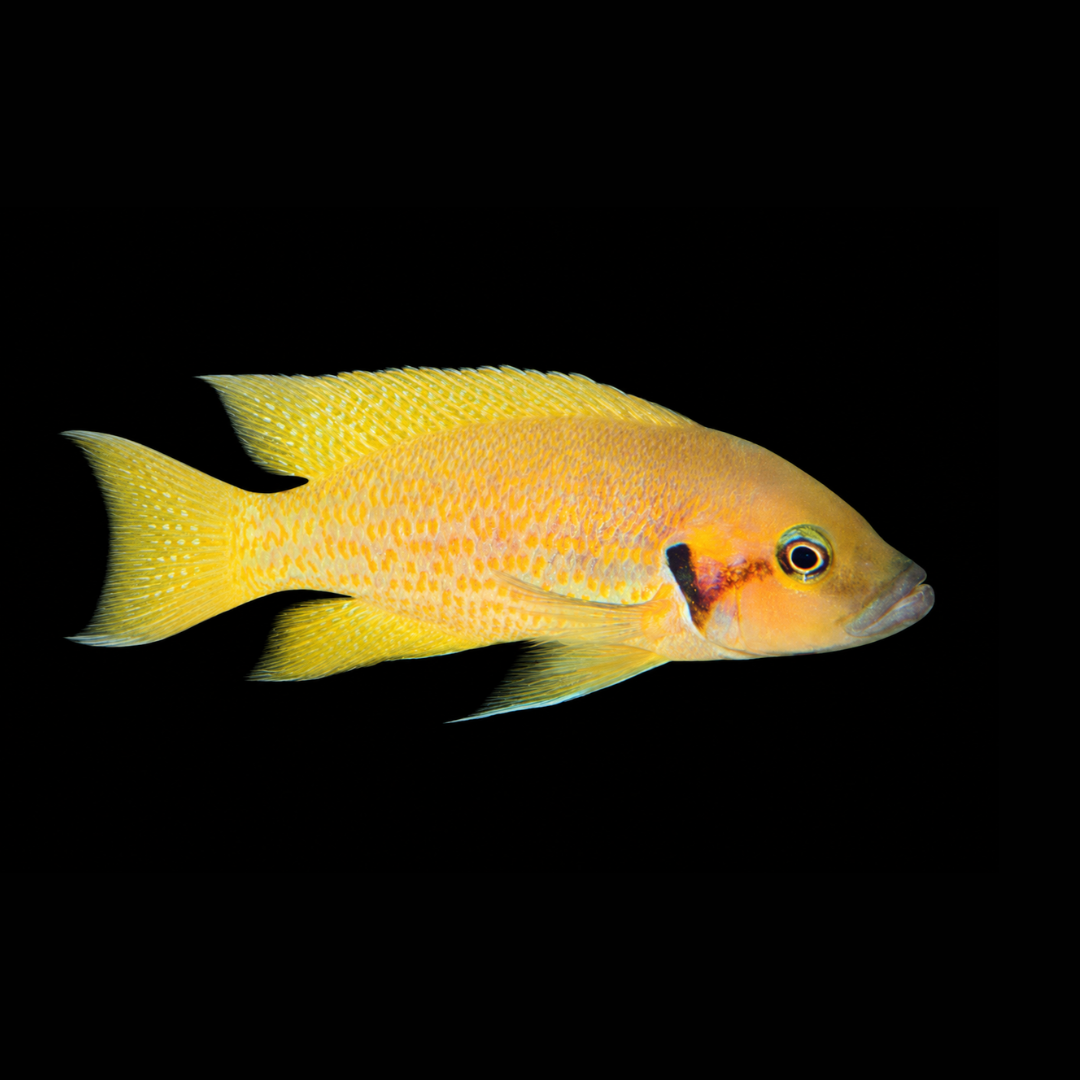
ネオランプロローグス・ヘリアンサスは、タンガニーカ湖のコンゴ民主共和国沿岸に分布する小型のランプロローグス族シクリッドです。体色は黄色からオレンジイエローで、頬から鰓蓋にかけて入るV字状の暗色模様と、糸状に伸びる尾ビレが特徴です。自然下では水深2〜7mほどの浅い岩礁域に暮らし、岩から大きく離れずに生活します。小型ながら縄張り性があり、繁殖時には洞窟や岩の隙間を中心に防衛行動を見せます。また、系統学的研究では本種が「育児を助ける個体を伴う種」の一群に含められており、先に育った若魚などが繁殖群に残る社会性も本種の大きな特徴です。分類上の扱いは情報源によって異なり、Eschmeyer’s Catalog of Fishesでは現在Neolamprologus splendensの異名とされていますが、観賞魚流通や一部のデータベースではNeolamprologus helianthusの名が引き続き使われています。 Neolamprologus helianthus is a small lamprologine cichlid from the Democratic Republic of the Congo shoreline of Lake Tanganyika. It has a yellow to orange-yellow body, dark V-shaped markings across the cheek and gill-cover region, and a filamentous caudal fin. In the wild it inhabits shallow rocky areas at roughly 2–7 m depth and remains closely associated with the rock substrate. Although small, it is territorial and defends caves and rock crevices during breeding. Phylogenetic research has placed this taxon among the “brood-care helper species,” a group in which older young or other subordinate fish may remain with a breeding group. Taxonomic treatment differs among current references: Eschmeyer’s Catalog of Fishes currently treats N. helianthus as a synonym of Neolamprologus splendens, while the name N. helianthus continues to be used in the aquarium trade and by some databases.
基本情報 / Basic Information
| 学名 / Scientific Name | Neolamprologus helianthus Büscher, 1997 ※Eschmeyer’s Catalog of Fishesでは現在、Neolamprologus splendensの異名として扱われています。Currently treated by Eschmeyer’s Catalog of Fishes as a synonym of Neolamprologus splendens. |
|---|---|
| 通称 / Common Name | ヘリアンサス、サンフラワー・シクリッドSunflower cichlid, Helianthus cichlid |
| 分類 / Family | シクリッド目・カワスズメ科・プセウドクレニラブルス亜科・ランプロローグス族・ネオランプロローグス属Order Cichliformes, family Cichlidae, subfamily Pseudocrenilabrinae, tribe Lamprologini, genus Neolamprologus |
| 英名 / English Name | Sunflower Cichlid |
| 分布 / Distribution | アフリカ・タンガニーカ湖固有。コンゴ民主共和国沿岸のルナングワ川以北に分布するとされ、タイプ産地はモバの南約110kmに位置するカマコンデ付近です。Endemic to Lake Tanganyika in Africa. It is reported from the Democratic Republic of the Congo shoreline north of the Lunangwa River; the type locality is near Kamakonde, about 110 km south of Moba. |
| 最大体長 / Max Size | 最大標準体長は約5.7cm。尾ビレの糸状に伸びた部分を含む全長では、これより長く見えます。Maximum recorded standard length is about 5.7 cm. Total length appears greater when the filamentous caudal-fin extensions are included. |
| 寿命 / Lifespan | 本種に限定した信頼できる寿命データは確認されていません。長期飼育では、水質の安定、適切な栄養、慢性的な闘争ストレスを避ける管理が重要です。Reliable species-specific lifespan data have not been established. For long-term maintenance, stable water quality, appropriate nutrition, and avoidance of chronic aggression stress are important. |
飼育環境 / Aquarium Environment
| 水槽サイズ / Tank Size | 成立したペアを単独で飼育する場合でも、底面積を確保できる75cmクラス(約70L)以上を目安にすると管理しやすく、日本の規格水槽では90cm規格水槽を選ぶと余裕があります。複数世代の群れを維持する場合や他種との混泳、幼魚を複数導入して自然なペア形成を待つ場合は、90cm規格水槽以上を基本に考えます。水量だけでなく、縄張りを分けられる横幅と退避スペースが重要です。Even for an established pair kept alone, a tank around 75 cm long and approximately 70 L or larger provides a more manageable footprint; in Japan, a standard 90 cm aquarium offers a useful margin. A standard 90 cm aquarium or larger is preferable for multi-generation groups, community setups, or when starting with several juveniles and allowing a pair to form naturally. Floor area, territorial separation, and retreat space matter as much as total volume. |
|---|---|
| 水温 / Temperature | 24〜27℃を目安に、急激な変動を避けて維持します。夏季に28℃を大きく超える状態が続く場合は、冷却ファンや水槽用クーラーを検討し、同時に十分な曝気を確保します。 Maintain approximately 24–27°C while avoiding sudden changes. If temperatures remain well above 28°C during summer, consider an aquarium cooling fan or chiller and provide strong aeration. |
| 水質 / Water Quality | アルカリ性の淡水を維持し、pHはおおむね8.0〜9.0を目安に、数値そのものより安定性を重視します。日本の軟水地域では、サンゴ砂やアラゴナイト、カキ殻、タンガニーカ湖産魚向けのミネラル剤・緩衝剤を利用し、GHとKHを中〜高めの範囲へ急がず調整します。製品や地域の水道水によって適量が異なるため、硬度は測定しながら管理してください。海水魚のように比重1.020〜1.025へ上げる必要はなく、本種は淡水魚です。アンモニアと亜硝酸は検出されない状態を維持し、硝酸塩も低く保ちます。Maintain alkaline freshwater, using roughly pH 8.0–9.0 as a guide while prioritizing stability over chasing a particular number. In soft-water areas of Japan, coral sand, aragonite, oyster shell, or dedicated Lake Tanganyika mineral and buffer products can be used to raise GH and KH gradually. Because the required dose varies with local tap water and the product used, hardness should be adjusted with testing rather than by a fixed recipe. There is no need to raise specific gravity to marine levels such as 1.020–1.025; this is a freshwater fish. Ammonia and nitrite should remain undetectable, with nitrate kept low. |
| レイアウト / Layout | 大小の石を安定して組み、複数の洞窟、狭い割れ目、視線を遮る壁を作ります。単に隠れ家の数を増やすだけでなく、強い個体から弱い個体が見えなくなる配置が重要です。底床は細目の砂を薄めから中程度に敷けば、掘る行動も観察できます。サンゴ砂やアラゴナイトは水質の緩衝にも役立ちますが、岩組みは底床の上に不安定に載せず、崩落しないよう固定してください。Build a stable rock structure with multiple caves, narrow crevices, and visual barriers. The key is not merely providing many shelters but creating positions where subordinate fish can completely break line of sight with dominant individuals. Fine sand allows natural digging behavior. Coral sand or aragonite can also contribute to buffering, but rocks should never be balanced insecurely on loose substrate. |
| 注意点 / Precautions | 高pHでは有害な非イオン化アンモニアの割合が増えるため、立ち上がっていない水槽への導入は避けます。強い生物ろ過と十分な酸素供給を用意し、週1回を基本に20〜30%程度を換水します。換水時は新水の温度、pH、硬度を大きくずらさないことが重要です。縄張り争いで一匹だけが角に追い込まれている場合は、様子見を続けず隔離できる予備水槽やセパレーターを準備します。At high pH, a greater proportion of total ammonia is present as the more toxic un-ionized form, so never introduce these fish to an immature aquarium. Provide strong biological filtration and high oxygenation, with roughly 20–30% weekly water changes as a baseline. Match replacement water closely in temperature, pH, and hardness. If one fish is being persistently pinned into a corner, do not simply wait; have a spare aquarium or divider ready for immediate separation. |
餌と給餌 / Feeding
| 餌の種類 / Diet | 主食には小粒の高品質シクリッド用ペレットや顆粒フードを使えます。補助的にブラインシュリンプ、ミジンコ、カイアシ類、冷凍アカムシなどの小型動物性餌を与えると食性の幅を持たせられます。スピルリナなど植物質を含む餌も織り交ぜると、雑食性に対応しやすくなります。Use a high-quality small cichlid pellet or granule as the staple. Supplement with brine shrimp, daphnia, copepods, and frozen bloodworms to provide small animal prey. Foods containing plant material such as spirulina can also be rotated into the diet to suit its omnivorous feeding ecology. |
|---|---|
| 給餌のポイント / Feeding Tips | 1日1〜2回、短時間で食べ切れる量を与えます。繁殖を狙う場合でも高タンパク餌だけに偏らせず、複数種類を少量ずつ組み合わせるほうが安定します。黄色からオレンジ色の発色維持には、アスタキサンチンなどのカロテノイドを含む観賞魚用飼料が役立ちます。牛ハツなど哺乳類由来の脂肪が多い餌を常用する必要はありません。Feed once or twice daily in portions that are consumed quickly. Even when conditioning fish for breeding, avoid relying exclusively on very high-protein foods; a varied rotation of small portions is more balanced. Prepared foods containing carotenoids such as astaxanthin can help maintain the yellow-to-orange coloration. There is no need to use fatty mammalian meats such as beef heart as a regular food. |
性格と混泳 / Temperament and Tank Mates
| 性格 / Temperament | 小型ながら縄張り性があり、岩の隙間や産卵場所を中心に防衛行動を見せます。ペア形成や産卵をきっかけに攻撃が強まることがあり、とくに同種個体が逃げ場を失った状態は危険です。一方、本種は育児を助ける個体を伴う種の一群に含められており、若魚が繁殖群に残る場合もあります。群れが安定するかどうかは個体関係や水槽条件によって異なるため、追われ続ける個体がいないか継続して観察します。Although small, this species is territorial and defends areas around rock crevices and spawning sites. Aggression may increase after pair formation or spawning, and conspecifics are at particular risk when they cannot retreat. At the same time, this taxon has been placed among species with brood-care helpers, so older young may sometimes remain within a breeding group. Whether a group remains stable depends on individual relationships and aquarium conditions, so persistent harassment should be monitored closely. |
|---|---|
| 混泳の相性 / Compatibility | 最も確実なのは本種主体の種水槽です。十分な広さがあれば、中上層を遊泳するシプリクロミス属など、岩穴を直接奪い合いにくいタンガニーカ湖産魚と組み合わせられる場合があります。ただし60cm規格水槽では混泳余地が小さく、90cm規格水槽以上を推奨します。近縁のブリチャージ系や外見の似たネオランプロローグス類は、縄張り競合だけでなく交雑や系統混乱の懸念があるため、繁殖個体の純系維持を重視するなら同居させないほうが安全です。意図的な過密飼育は攻撃を分散できる場合がある一方、水質悪化や慢性ストレスを招きやすく、一般家庭では第一選択にしないほうが管理しやすい方法です。A species-focused aquarium is the safest choice. In sufficiently large tanks, open-water Lake Tanganyika fishes such as Cyprichromis species may sometimes work because they compete less directly for rock caves, but a standard 60 cm aquarium offers little margin for community keeping; 90 cm or larger is preferable. Closely related brichardi-complex fishes and similar Neolamprologus species should be avoided when preserving pure breeding lines because of territorial conflict and possible hybridization or lineage confusion. Deliberate overcrowding can sometimes disperse aggression, but it also increases water-quality and chronic-stress risks and is not the easiest first-line strategy for a home aquarium. |
病気と対策 / Diseases and Prevention
| かかりやすい病気 / Common Diseases | ヘリアンサスだけに特有と確認された代表的疾病は知られていませんが、水質悪化や輸送ストレスが重なると、白点病、細菌性のヒレ傷み、食欲不振、腹部膨満など一般的な観賞魚のトラブルが起こります。とくに闘争による外傷は二次感染の入口になりやすいため注意します。No major disease is known to be uniquely characteristic of N. helianthus, but poor water quality or transport stress can lead to common aquarium problems such as ich, bacterial fin damage, appetite loss, and abdominal bloating. Injuries caused by aggression deserve particular attention because damaged tissue can become a route for secondary infection. |
|---|---|
| 対策と予防 / Prevention | 新規導入魚は可能なら別水槽で状態を確認し、急なpH・硬度変化を避けて時間をかけて水合わせします。日常管理ではアンモニア・亜硝酸を0に保ち、硝酸塩を低く抑え、十分な酸素供給と定期換水を続けます。治療薬を使用する場合は病名を決めつけず症状を観察し、製品表示に従います。治療よりも、安定したアルカリ性水質、適切な給餌、過度な闘争を起こさないレイアウトが最も重要な予防策です。When possible, observe newly acquired fish in a separate quarantine tank and acclimate them gradually to avoid abrupt shifts in pH and hardness. Keep ammonia and nitrite at 0, nitrate low, oxygen high, and maintain regular water changes. If medication is required, assess the actual symptoms rather than assuming a diagnosis and follow the product label. Stable alkaline water, balanced feeding, and a layout that prevents excessive aggression remain the most important preventive measures. |
増やし方(繁殖) / Breeding
| 雌雄の判別 / Sexing | 外見だけでの雌雄判別は難しく、成魚でも雌雄はよく似ています。オスが平均してやや大きくなる傾向はありますが、個体差があるためサイズだけでの判別は確実ではありません。繁殖を狙う場合は、幼魚を複数導入して自然に相性のよいペアが形成されるのを待つ方法が現実的です。Sexing by appearance alone is difficult, and adult males and females are externally very similar. Males tend to be slightly larger on average, but size varies between individuals and is not a reliable sexing method by itself. For breeding, starting with several juveniles and allowing a compatible pair to form naturally is a practical approach. |
|---|---|
| 繁殖形態 / Reproduction | 洞窟や岩の隙間に産卵する基質産卵型です。口内保育型ではありません。親魚は産卵場所の周囲を防衛し、孵化後も稚魚を保護します。さらに本種は協同繁殖を行う種として報告されており、先に育った若魚や従属個体が縄張り防衛や繁殖群の維持に参加することがあります。This is a cave- and substrate-spawning cichlid, not a mouthbrooder. The parents defend the spawning site and continue protecting the fry after hatching. The species has also been reported as a cooperative breeder, with older juveniles or subordinate group members sometimes participating in territory defense and maintenance of the breeding group. |
| 繁殖のポイント / Breeding Tips | 複数の狭い産卵候補地を用意し、ペアが落ち着いた場所を選べるようにします。産卵後は親に任せると自然な保護行動を観察しやすく、稚魚が遊泳を始めたら孵化直後のブラインシュリンプや細かく砕いた稚魚用飼料を少量ずつ与えます。最初の子世代が残ったまま次の繁殖が進むことがありますが、個体数が増えるほどろ過負荷と縄張り圧が上がるため、成長に応じて90cm規格水槽以上への拡張や分離を検討します。ペア形成後に余剰個体への攻撃が強まった場合は、コロニー化を期待して放置せず、隔離を優先します。Provide several narrow potential spawning sites so the pair can choose a secure location. Leaving the brood with the parents makes it easier to observe natural parental care. Once fry become free-swimming, offer newly hatched brine shrimp or finely powdered fry food in small amounts. A later brood may appear while the first generation is still present, but increasing numbers also raise filtration load and territorial pressure, so consider moving to a standard 90 cm aquarium or larger, or separating groups as they grow. If a newly formed pair begins severely attacking surplus fish, prioritize separation rather than assuming a colony will automatically stabilize. |
雑学と豆知識 / Trivia and Fun Facts
| 1. 「ヒマワリ」を背負った学名 / 1. A scientific name inspired by a sunflower | 種小名helianthusは、成魚の鮮やかな黄色からオレンジ色の印象にちなむ名称です。ヒマワリ属の学名にも使われる語で、観賞魚として見たときの第一印象がそのまま名前になったような魚です。若魚では色や模様の印象が成魚ほど完成していないことがあり、成長と環境への順応によって本来の暖色が見えやすくなります。The species name helianthus refers to the striking yellow-to-orange appearance of adults. It is the same word used in the scientific name of the sunflower genus, making this one of those aquarium fishes whose name immediately evokes its visual character. Juveniles may look less fully colored, with the warm adult tones becoming more apparent as they mature and settle into good conditions. |
|---|---|
| 2. 1997年の記載とカマコンデのタイプ産地 / 2. Described in 1997 from the Kamakonde area | 本種はHeinz H. Büscherによって1997年に記載されました。タイプ産地はコンゴ民主共和国のカマコンデ付近で、モバから南へ約110kmのタンガニーカ湖岸です。ホロタイプはベルギーの王立中央アフリカ博物館に収蔵されています。観賞魚としては華やかな魚ですが、その名前には採集地点と標本に基づく明確な分類学的な出発点があります。The species was described by Heinz H. Büscher in 1997. Its type locality lies near Kamakonde on the Democratic Republic of the Congo shore of Lake Tanganyika, roughly 110 km south of Moba, and the holotype is deposited in the Royal Museum for Central Africa in Belgium. Behind its bright aquarium appearance is a precisely documented taxonomic origin tied to a real locality and preserved type specimen. |
| 3. 独立種か、N. splendensの異名か / 3. Separate species or a synonym of N. splendens? | 分類学的には現在も扱いが完全には統一されていません。FishBaseやGBIFではNeolamprologus helianthusを独立種として掲載していますが、Eschmeyer’s Catalog of Fishesは2026年7月更新時点でNeolamprologus splendensの異名として扱っています。そのため、学術情報を読む際には「ヘリアンサス」という名前だけでなく、N. splendensとの関係にも注意すると理解が深まります。観賞魚市場では今なおN. helianthusの名が識別名として広く使われています。Its taxonomic treatment is still not fully uniform. FishBase and GBIF continue to list Neolamprologus helianthus as a species, while Eschmeyer’s Catalog of Fishes treated it as a synonym of Neolamprologus splendens in its July 2026 update. When reading scientific material, it is therefore useful to consider the relationship between “helianthus” and N. splendens rather than relying on the name alone. In the aquarium trade, N. helianthus remains widely used as a practical identification name. |
| 4. V字模様は近縁群を読み解く手掛かり / 4. The V-shaped facial pattern is a clue to its relatives | ヘリアンサスの頬から鰓蓋にかけて見えるV字状の暗色模様は、本種を見分ける重要な特徴です。近縁群では顔面ストライプの形が分類や進化を考える手掛かりとして研究されてきました。とくにN. brichardiとN. pulcherを対象とした研究では、顔面模様と系統関係が単純には一致せず、似た模様が平行的に生じた可能性が示されています。これはヘリアンサスのV字模様そのものが平行進化したと直接証明したものではありませんが、顔の模様だけで近縁関係を単純に判断できないことを示す重要な知見です。The dark V-shaped markings across the cheek and opercular region are important identification characters of helianthus. Facial stripe patterns have been studied as clues to classification and evolution among related fishes. In particular, research on N. brichardi and N. pulcher found that facial patterns did not map simply onto genetic relationships and suggested repeated parallel evolution of similar patterns. This does not directly demonstrate that the V-shaped pattern of helianthus itself evolved in parallel, but it shows why facial markings alone cannot be treated as a simple guide to close relationship. |
| 5. 顔認識研究は近縁種N. pulcherで実証 / 5. Facial recognition was demonstrated in the relative N. pulcher | ブリチャージ系シクリッドの社会性を語る際、「0.5秒以内で仲間の顔を見分ける」という研究結果がしばしば紹介されます。ただし、その実験で直接調べられたのはヘリアンサスではなく、近縁のNeolamprologus pulcherです。N. pulcherでは顔面の色模様が個体識別の手掛かりとして使われ、見慣れた個体と未知個体を非常に速く区別できることが示されました。ヘリアンサスも社会性の高い近縁群に属しますが、同じ認知能力を同じ速度で持つと断定するのではなく、近縁種から得られた興味深い比較材料として理解するのが正確です。A frequently repeated fact about brichardi-type cichlids is that they can distinguish familiar from unfamiliar faces in about half a second. Importantly, the experiment directly demonstrating this was performed on the close relative Neolamprologus pulcher, not on N. helianthus itself. N. pulcher uses facial color patterns as cues for individual recognition and can discriminate familiar and unfamiliar fish extremely rapidly. Helianthus belongs to a similarly social group, but it is more accurate to treat this as compelling comparative evidence from a relative rather than claim that the exact same recognition speed has been demonstrated in helianthus. |
| 6. 協同繁殖は「家族」だけとは限らない / 6. Cooperative groups are more than a simple family | 系統学的研究では、ヘリアンサスは「育児を助ける個体を伴う種」の一群に含められています。先に育った若魚などが繁殖群に残る社会性は、本種を理解するうえで重要な特徴です。ただし、協同繁殖シクリッドの研究では、育児を助ける個体と繁殖個体の血縁関係や群れへの加入経路が種によって異なることも分かっています。そのため「親と実の兄姉だけで構成される家族」と決めつけるより、繁殖個体と従属個体からなる社会群として捉えるほうが正確です。Phylogenetic research places helianthus among the “brood-care helper species.” The tendency for older young or other subordinate fish to remain with a breeding group is therefore an important part of understanding this taxon. Research on cooperatively breeding cichlids also shows that relatedness and routes of group membership can vary among species. It is therefore more accurate to describe these groups as social units of breeders and subordinates rather than assume that every helper is simply an older full sibling. |
| 7. 日本ではブリード個体が中心 / 7. Captive-bred fish dominate the Japanese trade | 日本国内の販売記録では、台湾ブリード、ドイツブリード、国内ブリードとして扱われた例が確認できます。販売価格は産地、サイズ、状態、入荷時期によって変わるため、固定的な相場を置くよりも、由来の表示、体型やヒレの状態、餌食い、同居魚から受けているストレスを確認して選ぶことが大切です。Japanese sales records document fish offered as Taiwan-bred, German-bred, and domestically bred. Prices vary with origin, size, condition, and shipment timing, so it is more useful to assess documented origin, body shape, fin condition, feeding response, and social stress than to rely on a fixed market price. |
| 8. 「塩を入れる魚」ではなく「ミネラル組成を整える魚」 / 8. Think mineral balance, not marine salinity | タンガニーカ湖産魚の飼育では「塩を入れる」という表現が独り歩きしやすいのですが、重要なのは海水に近づけることではありません。必要なのは、炭酸塩による十分な緩衝力と、カルシウムやマグネシウムなどを含む適切な硬度を安定させることです。日本の軟水では専用ミネラル剤が便利ですが、測定せずに食塩や人工海水を大量添加する方法は適切ではありません。ヘリアンサスにとって大切なのは、高比重ではなく変動の少ないアルカリ性の淡水です。Lake Tanganyika fishkeeping is sometimes simplified into the advice to “add salt,” but the goal is not to turn the aquarium into seawater. What matters is adequate carbonate buffering and an appropriate level of minerals such as calcium and magnesium. Dedicated mineral products are useful in soft Japanese tap water, but adding large quantities of sodium chloride or marine salt without testing is not an appropriate substitute for water chemistry management. For helianthus, the priority is stable alkaline freshwater, not high specific gravity. |
まとめ / Conclusion
ネオランプロローグス・ヘリアンサスは、鮮やかな黄色からオレンジ色の体色、V字状の顔模様、岩礁の隙間を中心とした社会行動をあわせ持つタンガニーカ湖産シクリッドです。小型ではありますが、限られた空間に詰め込んで気軽に飼える魚ではありません。安定したアルカリ性の硬水、十分な酸素とろ過、そして個体同士の視線を切りながら逃げ場を確保できる岩組みが、落ち着いた飼育の基本になります。 Neolamprologus helianthus combines vivid yellow-to-orange coloration, V-shaped facial markings, and social behavior centered on rocky shelters. Its small body does not make it a carefree fish for a cramped aquarium. Stable alkaline hard freshwater, abundant oxygen and filtration, and rockwork that breaks line of sight while providing genuine escape routes form the basis of safe long-term maintenance.
相性のよい個体が繁殖場所を確保し、次の世代が加わっていく様子を観察できることは、本種を飼う大きな魅力です。一方で、若魚が必ず群れに残れるわけではないため、追われる個体の有無を見ながら必要に応じて分離します。水質を急激に作り変えず、縄張り性を前提に一匹ずつの関係を観察することで、この小さなシクリッドが持つ色彩と社会行動の両方をじっくり楽しめます。 Watching compatible fish secure a breeding site and later generations appear is one of the main rewards of keeping this taxon. Older young are not guaranteed to remain safely within the group, however, so persistent harassment should lead to separation when necessary. By avoiding abrupt changes in water chemistry and observing individual relationships with territorial behavior in mind, aquarists can appreciate both the coloration and social behavior of these small cichlids over the long term.
気になる道具や飼い方を見つけてみませんか?
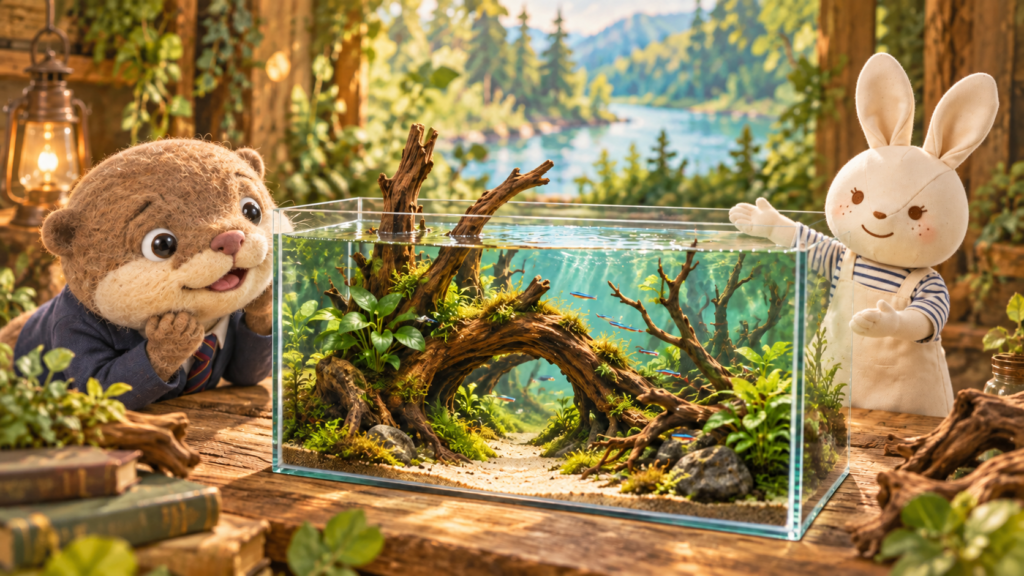 アイのアクアグッズ案内水槽の流木の選び方|枝・マングローブ・アク抜きとおすすめ商品水槽に小さな森を作る流木。枝流木やマングローブという名前の違いから、魚の隠れ家、水草の取り付け、浮く・水が茶色くなるときの準備まで、アイとコタロウが商品とともに案内します。記事はコチラ →
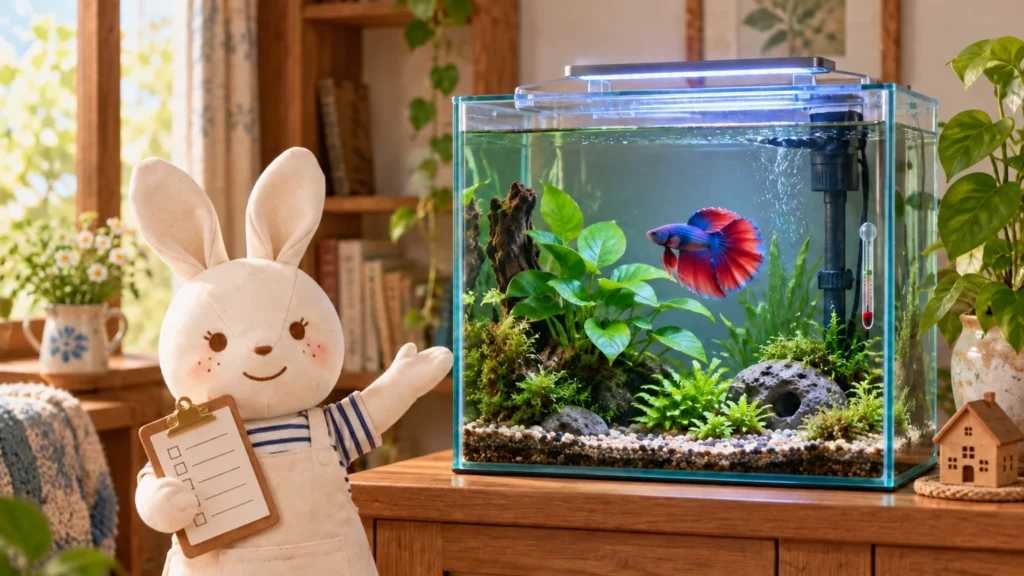 アイのアクアグッズ案内ベタの一匹飼いを楽しむ|水槽・ヒーター・ふた・フィルターの選び方ベタの一匹飼いに向く水槽容量、ふたと空気層、ヒーターと水温計、弱い水流のフィルターを、コタロウとアイの会話で分かりやすく解説します。記事はコチラ →
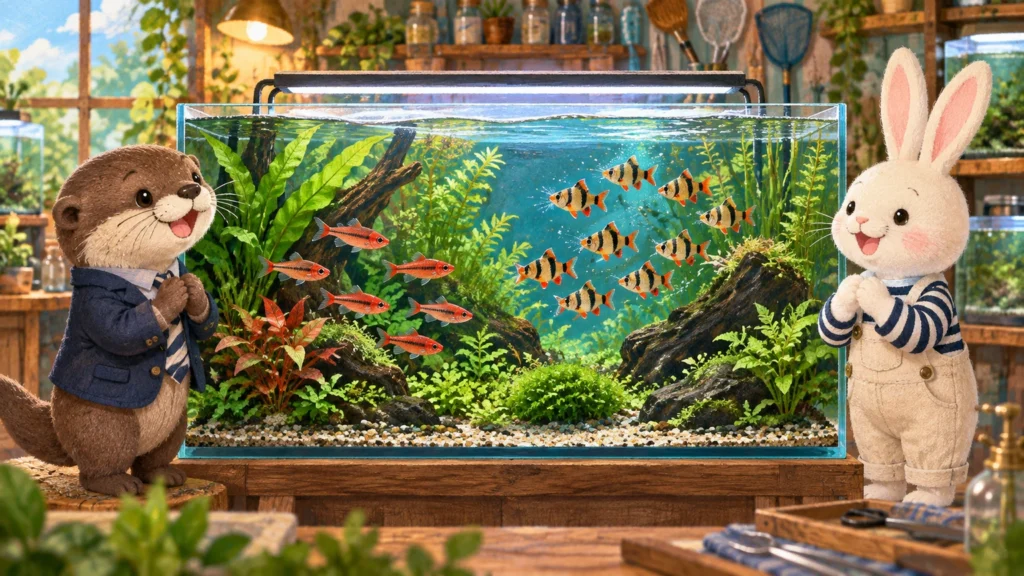 アイのアクアグッズ案内バルブの仲間に合わせる飼育用品|チェリーバルブ・スマトラ・中型種の水槽とろ過道具の特徴や使い方、選ぶときのポイントをアイが紹介します。記事はコチラ →
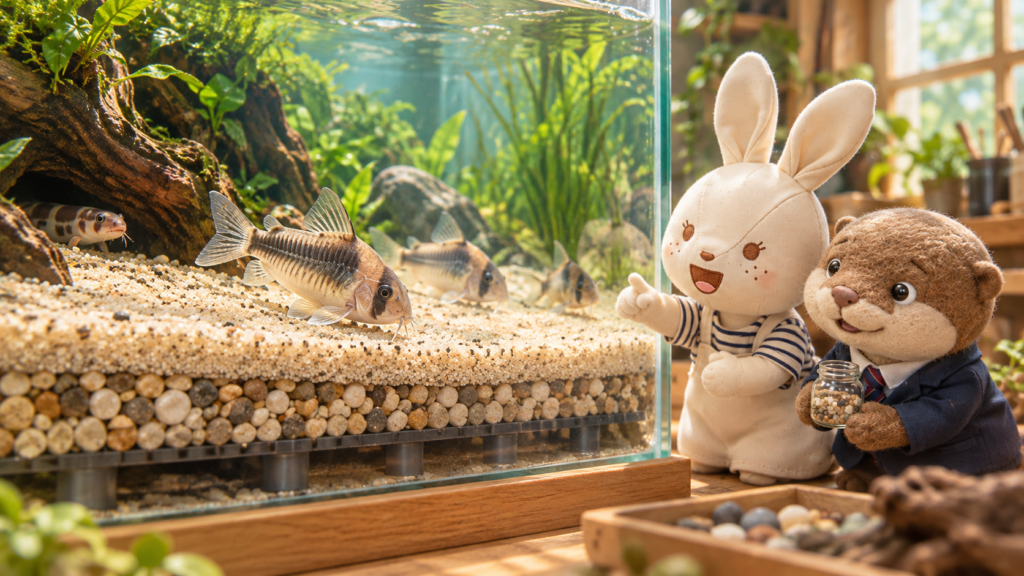 アイのアクアグッズ案内水槽の底砂の選び方|砂・砂利の違いとおすすめ商品道具の特徴や使い方、選ぶときのポイントをアイが紹介します。記事はコチラ →
さまざまな飼育テーマをご紹介。リンク先の記事には広告・商品紹介が含まれます。
案内・紹介記事一覧へ →分布マップ
Neolamprologus helianthus はアフリカのタンガニーカ湖固有で、コンゴ民主共和国側の南西岸、ルナングワ川以北からカロ・カマコンデ周辺にかけての限られた沿岸域に分布するとされています。
※この地図は文献上の分布情報をもとにした概略表示です。マーカーは分布地域を把握しやすくするための代表地点であり、実際の採集地点を示すものではありません。
参考文献
-
Fricke, R., Eschmeyer, W. N. & Van der Laan, R. (eds.). Eschmeyer’s Catalog of Fishes. California Academy of Sciences.
Neolamprologus helianthus Büscher, 1997
学名、記載者・記載年、タイプ産地、タイプ標本、現在の分類上の扱いを確認する資料。 -
Büscher, H. H. (1997). Ein neuer Cichlide aus dem Tanganjikasee: Neolamprologus helianthus (Cichlidae, Lamprologini). Die Aquarien- und Terrarienzeitschrift (DATZ), 50(11), 701–706.
FishBase掲載の原記載書誌情報
本種の原記載。形態、色彩、タイプ産地などの基礎情報の出典。 -
Froese, R. & Pauly, D. (eds.). FishBase. Neolamprologus helianthus.
FishBase Species Summary
タンガニーカ湖固有であること、分布、水深2〜7mの浅い岩礁域、岩への強い依存、食性、最大体長などを確認する資料。 -
GBIF Secretariat. GBIF Backbone Taxonomy: Neolamprologus helianthus Büscher, 1997.
GBIF Species Record
Neolamprologus helianthusを独立した種名として扱う現行データベース側の分類情報を確認する資料。 -
Sturmbauer, C., Salzburger, W., Duftner, N., Schelly, R. & Koblmüller, S. (2010). Evolutionary history of the Lake Tanganyika cichlid tribe Lamprologini (Teleostei: Perciformes) derived from mitochondrial and nuclear DNA data. Molecular Phylogenetics and Evolution, 57(1), 266–284.
Molecular Phylogenetics and Evolution
ランプロローグス族内での系統的位置と、育児を助ける個体を伴う繁殖様式を持つ系統群との関係を確認する資料。 -
SeriouslyFish. Neolamprologus helianthus (Sunflower Lamprologus).
Species Profile
水槽内での水温・水質、必要な底面積、岩組み、縄張り性、給餌、基質産卵型としての繁殖など、飼育条件を種別に確認する専門資料。 -
Francis-Floyd, R., Watson, C., Petty, D. & Pouder, D. B. Ammonia in Aquatic Systems. University of Florida IFAS Extension.
UF/IFAS FA031
高pH・高水温ほど毒性の高い非イオン化アンモニアの割合が増えること、生物ろ過とアンモニア管理の重要性を確認する資料。 -
Yanong, R. P. E. Fish Health Management Considerations in Recirculating Aquaculture Systems—Part 3: General Recommendations and Problem-Solving Approaches. University of Florida IFAS Extension.
UF/IFAS FA101
アンモニア・亜硝酸、pH、アルカリ度、硬度、溶存酸素などの安定管理、新規導入魚の隔離、日常的な健康観察を支える資料。 -
Francis-Floyd, R. & Petty, B. D. Disorders and Diseases of Fish. MSD Veterinary Manual.
MSD Veterinary Manual
水質悪化、過密、ストレス、隔離不足と疾病の関係、白点病などの寄生虫症、細菌感染、外傷後の二次感染を含む一般的な観賞魚の疾病管理を確認する資料。




コメント