

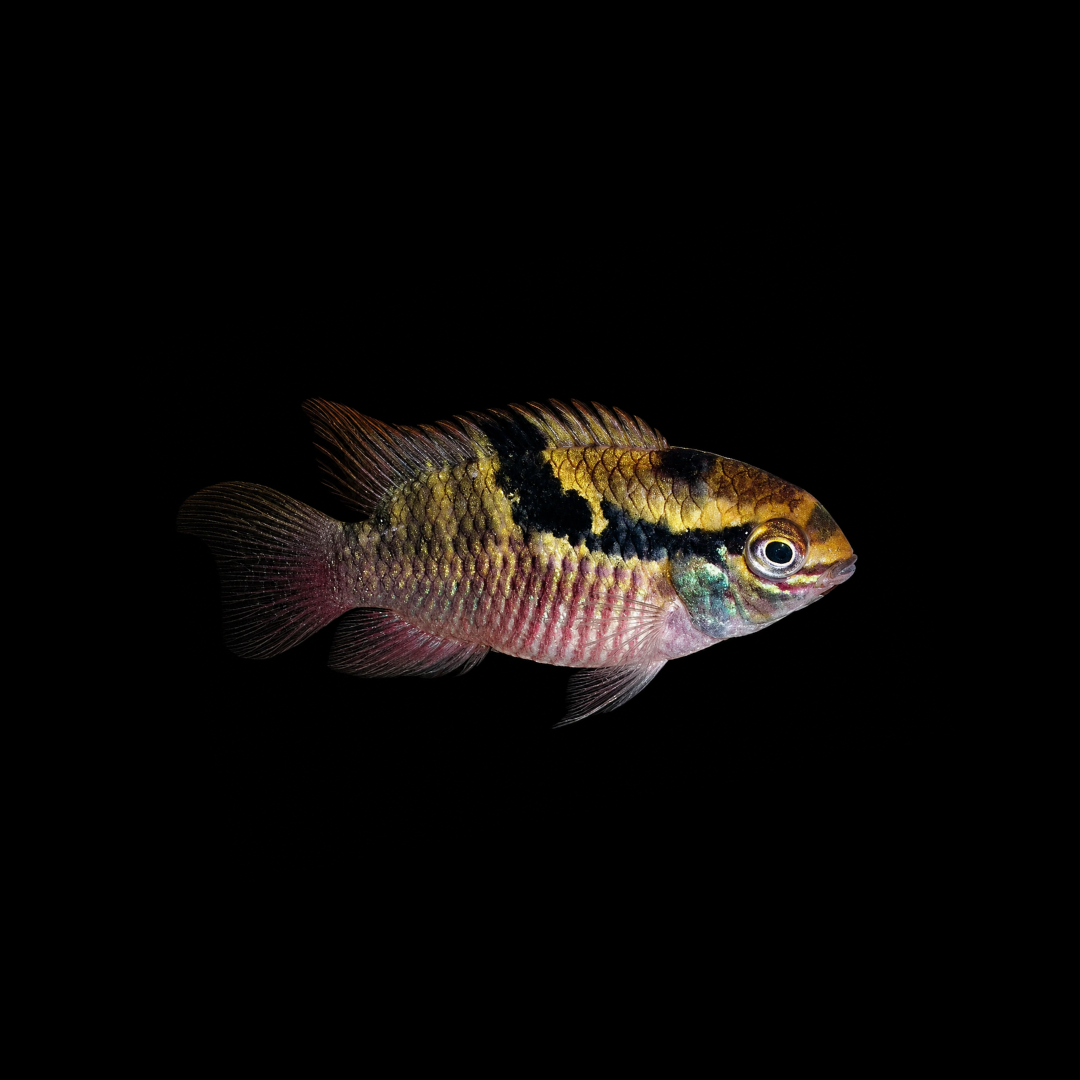
解説 / Description
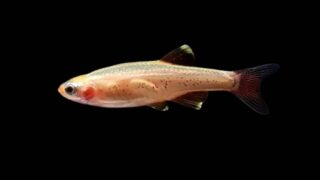
レタカラ・タイエリは、ブラジル、コロンビア、ペルーのアマゾン川流域に分布する南米産シクリッドです。レタカラ属の中では最大級で、全長は最大12cmほどに達します。幼魚では淡い真珠色の体に眼を通る暗色帯が目立ち、成長すると黄褐色から金色の光沢が増し、鰭に青みが見られる個体もいます。体高に加えて体幅も出るため、全長の数字以上に存在感があります。繁殖期を除けばシクリッドとしては比較的穏やかで、十分な遊泳空間と隠れ家を確保すれば混泳水槽でも飼育できます。以前はエキデンス属に分類されていたため、古い文献や流通名では「エキデンス・タイエリ」と記されることがあります。 Laetacara thayeri is a South American cichlid distributed in the Amazon basin of Brazil, Colombia and Peru. It is among the largest species in the genus Laetacara and can reach about 12 cm in total length. Juveniles are relatively pale, with a conspicuous dark band through the eye; as they mature, golden-brown highlights become stronger and some individuals show bluish tones in the fins. Its deep, thick body gives it more presence than its length alone suggests. Outside the breeding season it is relatively peaceful for a cichlid, and with adequate swimming space and cover it can be maintained in a community aquarium. Older literature may still list the species under the former combination Aequidens thayeri.
基本情報 / Basic Information
| 学名 / Scientific Name | Laetacara thayeri (Steindachner, 1875) |
|---|---|
| 通称 / Common Name | レタカラ・タイエリ、レタカラ・タエリ、旧学名の組み合わせに由来するエキデンス・タイエリThayer’s dwarf acara, Thayeri dwarf acara; formerly Aequidens thayeri in aquarium literature |
| 分類 / Family | シクリッド科(Cichlidae)・レタカラ属(Laetacara)Family Cichlidae, genus Laetacara |
| 英名 / English Name | Thayer’s Dwarf Acara |
| 分布 / Distribution | 南米のアマゾン川流域に広く分布し、ブラジル、コロンビア、ペルーから記録されています。ペルーではティグレ川、ウカヤリ川、ヤバリ川、アマゾン川流域、ブラジルではソリモンエス川、アマゾン川、下流トロンベタス川、下流ネグロ川流域などで知られます。流れの緩い水域に生息し、沈木や根、落ち葉が多い岸辺などと結びつきの深い魚です。Widely distributed in the Amazon basin of South America, with records from Brazil, Colombia and Peru. In Peru it is known from the Tigre, Ucayali, Yavari and Amazon drainages, and in Brazil from the Solimoes, Amazon, lower Trombetas and lower Negro drainages. It is associated with slow-moving habitats rich in submerged wood, roots and leaf litter. |
| 最大体長 / Max Size | 最大約12cm(全長)。飼育下では個体差や飼育条件によって、これより小さいサイズで成熟することもあります。Up to about 12 cm total length. Aquarium specimens may mature at a somewhat smaller size depending on the individual and conditions. |
| 寿命 / Lifespan | 本種に限定した信頼できる標準寿命の資料は乏しく、明確な年数は確立されていません。安定した水質、過密を避けた環境、偏りのない給餌による長期飼育を前提に考えるのが適切です。A well-established species-specific lifespan is not available in reliable references. Long-term maintenance should therefore focus on stable water quality, low stress and a balanced diet rather than assuming a fixed number of years. |
飼育環境 / Aquarium Environment
| 水槽サイズ / Tank Size | 成魚の飼育には90cm規格水槽(約180L)を推奨します。ペア形成や繁殖時には縄張りが生じるため、複数飼育や混泳では90cm規格水槽以上の広さがあると、視線を切るレイアウトや退避場所を確保しやすくなります。A standard 90 cm aquarium of about 180 L is recommended for adults. Because pairs become territorial when breeding, a 90 cm tank or larger also makes it easier to create visual barriers and escape areas in group or community setups. |
|---|---|
| 水温 / Temperature | 22~28℃。日常飼育では23~26℃程度が扱いやすく、急激な温度変化は避けます。 22-28°C. A stable 23-26°C is convenient for routine maintenance, with sudden temperature changes avoided. |
| 水質 / Water Quality | 弱酸性から中性の水を基本とし、pH6.0~7.5程度を飼育上の目安にします。軟水寄りの環境が扱いやすく、急激なpHや硬度の変化は避けます。日本の水道水でも条件が合えば飼育できますが、地域によって水質が異なるため、導入時は元の飼育水との差を確認して慎重に水合わせを行います。アンモニアと亜硝酸は検出されない状態を保ち、硝酸塩の蓄積を抑えます。Aim for slightly acidic to neutral water, around pH 6.0-7.5, with relatively soft conditions and no sudden shifts in pH or hardness. Tap-water chemistry varies by region, so compare it with the fish’s previous water and acclimate carefully. Keep ammonia and nitrite undetectable and prevent excessive nitrate accumulation. |
| レイアウト / Layout | 細かく角のない砂を敷き、流木、枝、石、丈夫な水草で視線を遮る場所を作ります。アヌビアスやミクロソリウムのように流木へ活着できる水草は掘り返しの影響を受けにくく、浮き草は照明を和らげるのに役立ちます。モモタマナなどの安全な落ち葉を加えると、生息環境に近い雰囲気と自然な探索行動を引き出しやすくなります。強い水流よりも、十分なろ過能力を確保しつつ穏やかな流れにします。Use fine, smooth sand with driftwood, branches, rocks and robust plants to create visual barriers. Epiphytic plants such as Anubias and Java fern are less vulnerable to digging, while floating plants help diffuse bright light. Safe leaf litter such as Indian almond leaves can encourage natural foraging behavior and create a habitat-like appearance. Provide efficient filtration without excessive current. |
| 注意点 / Precautions | 普段は比較的温和でも、ペア形成後や産卵期には縄張り意識が強くなります。狭い水槽では弱い個体が追い詰められやすいため、隠れ家と退避経路を複数設けます。ワイルド個体を導入する場合は、輸送による痩せや擦れ、寄生虫などがないか観察し、可能であれば検疫水槽で状態を整えてから本水槽へ移します。Although usually peaceful, established pairs can become strongly territorial during spawning. In cramped aquaria subordinate fish may be relentlessly chased, so provide multiple shelters and escape routes. When introducing wild-caught fish, check for weight loss, transport abrasions and parasites, and quarantine them whenever possible before adding them to the main aquarium. |
餌と給餌 / Feeding
| 餌の種類 / Diet | 良質なシクリッド用顆粒・沈下性ペレットを主食にし、冷凍アカムシ、冷凍ミジンコ、ブラインシュリンプ、イサザアミなどを副食として組み合わせます。植物質や藻類由来成分を含む人工飼料も適度に取り入れると、食事の偏りを防ぎやすくなります。Base the diet on high-quality cichlid granules or sinking pellets, supplemented with frozen bloodworms, Daphnia, brine shrimp and mysid-type foods. Including prepared foods with some plant or algal ingredients helps maintain dietary variety. |
|---|---|
| 給餌のポイント / Feeding Tips | 1日1~2回、短時間で食べ切れる量を基本にし、人工飼料と冷凍餌を組み合わせて偏りを避けます。繁殖を狙う場合も、特定の餌だけに偏らせず、食欲や体型を見ながら良質な餌を安定して与えることが大切です。Feed once or twice daily in portions consumed within a short time, combining prepared and frozen foods to avoid an unbalanced diet. When conditioning fish for breeding, continue to offer a varied, nutritious diet while monitoring appetite and body condition. |
性格と混泳 / Temperament and Tank Mates
| 性格 / Temperament | シクリッドとしては比較的穏やかで、非繁殖期には同種を含め落ち着いて過ごすことがあります。ただし個体差はあり、成熟すると順位争いも見られます。繁殖期は別で、ペアが産卵場所を中心に明確な縄張りを作り、侵入魚を強く追い払います。Relatively peaceful for a cichlid, and outside breeding periods it may coexist calmly even with conspecifics. Individual temperament varies and mature fish can establish a dominance hierarchy. During breeding, however, a pair may defend a clearly defined territory with considerable determination. |
|---|---|
| 混泳の相性 / Compatibility | 中上層を泳ぐ中型テトラ、ハチェットフィッシュなどの穏やかな魚と合わせやすく、適度な遊泳魚は本種の警戒心を和らげることがあります。コリドラス類や小型プレコ類とも混泳できますが、繁殖時には卵や稚魚へ近づく底物が激しく追われる場合があります。口に入るほど小さな魚、小型エビ、攻撃性の強い大型シクリッドとの組み合わせは避けます。Peaceful medium-sized tetras and hatchetfish are often suitable companions, and active midwater fish can make shy specimens feel more secure. Corydoras and smaller loricariids may also work, but bottom dwellers approaching eggs or fry can be attacked during breeding. Avoid fish small enough to be swallowed, dwarf shrimp, and highly aggressive large cichlids. |
病気と対策 / Diseases and Prevention
| かかりやすい病気 / Common Diseases | 本種だけに特有の代表的な疾病は知られていません。一般的な熱帯魚と同様に、白点病、細菌性の鰭傷みや体表感染、輸入個体では体内寄生虫や鰓寄生虫などに注意します。水質悪化や過密、強い追尾ストレスが続くと発症リスクが高まります。No characteristic disease unique to this species is widely recognized. As with other tropical freshwater fish, watch for ich, bacterial fin or skin infections, and—especially in wild imports—internal or gill parasites. Poor water quality, crowding and persistent aggression increase disease risk. |
|---|---|
| 対策と予防 / Prevention | 十分に立ち上がった水槽へ導入し、定期的な部分換水と底床の汚れ除去で有機物の蓄積を抑えます。新魚は検疫し、食欲、糞、呼吸、鰭の開き、体表の擦れを観察します。治療が必要な場合は症状を特定してから薬剤を選び、むやみに複数薬を併用しないことが大切です。ブラックウォーター化そのものを治療と考えず、あくまで清浄で安定した水質を優先します。Introduce fish only to a mature aquarium, perform regular partial water changes, and remove accumulated organic debris. Quarantine newcomers and monitor appetite, feces, respiration, fin posture and skin condition. If treatment is required, identify the likely cause before choosing medication and avoid unnecessary drug combinations. Blackwater conditions are not a substitute for clean, stable water. |
増やし方(繁殖) / Breeding
| 雌雄の判別 / Sexing | 幼魚では雌雄判別が難しく、成長するとオスの方が大きくなりやすく、背鰭や尻鰭の後端がより尖って伸びる傾向があります。メスはやや小柄で、鰭先が丸みを保つことが多いものの個体差があるため、外見上の1点だけで断定するのは避けます。繁殖を狙う場合は、複数の若魚を育てて自然なペア形成を待つ方法が実用的です。Juveniles are very difficult to sex. Mature males tend to become larger and may develop more pointed extensions to the dorsal and anal fins, while females often remain smaller with rounder fin tips. Because individual variation is substantial, avoid relying on a single external character. For breeding, raising several juveniles and allowing pairs to form naturally is a practical approach. |
|---|---|
| 繁殖形態 / Reproduction | 雌雄で卵や仔魚を守る基質産卵型(オープンスポウナー)です。ペアは平石、流木、幅広い葉などの表面を掃除し、メスが産卵した後をオスが追って受精します。産卵数は数百個に達することがあり、メスが卵の近くを守り、オスが周辺を警戒する行動が見られます。水温にもよりますが、卵はおおむね3日前後で孵化し、その数日後に自由遊泳へ移ります。A biparental open substrate spawner. The pair cleans a flat rock, wood surface or broad leaf; the female deposits the eggs and the male follows to fertilize them. Spawns may contain several hundred eggs. The female commonly remains close to the clutch while the male patrols the surrounding territory. Depending on temperature, the eggs generally hatch in around three days, with free swimming beginning a few days later. |
| 繁殖のポイント / Breeding Tips | 繁殖を狙う場合は、ペアが落ち着ける広さを確保し、平石や幅広い葉など複数の産卵基質を用意します。清浄で安定した水質と偏りのない給餌で親魚の状態を整えることが基本です。若いペアは最初の卵を食べることがありますが、繁殖経験を重ねると育児が安定する場合があります。自由遊泳後の稚魚には孵化直後のブラインシュリンプ幼生を少量ずつ複数回与え、スポンジフィルターなど稚魚を吸い込みにくいろ過を使います。For breeding, give the pair ample room and offer several spawning surfaces such as flat stones and broad leaves. Stable, clean water and a varied diet are the foundation of good conditioning. Young pairs may eat their first clutch but can become more reliable with breeding experience. Once the fry are free swimming, offer newly hatched Artemia nauplii in small, frequent portions and use fry-safe filtration such as a sponge filter. |
雑学と豆知識 / Trivia and Fun Facts
| 1. 1875年に記載された「セイヤー」の魚 / 1. A fish named for Thayer in 1875 | 本種はフランツ・シュタインダハナーによって1875年にAcara thayeriとして記載されました。種小名thayeriは、1865~1866年にブラジルで行われたセイヤー探検隊を支援したアメリカの実業家・慈善家ナサニエル・セイヤー・ジュニアに献名されたものです。探検隊がもたらした膨大な魚類標本は、その後の南米淡水魚研究の重要な材料となりました。現在の学名で著者名と年が括弧に入るのは、最初の記載時とは属が変わったことを示しています。Franz Steindachner described the species in 1875 as Acara thayeri. The specific name honors the American financier and philanthropist Nathaniel Thayer Jr., who supported the 1865-1866 Thayer Expedition to Brazil. The expedition yielded a major collection of South American fishes that became important material for later ichthyological study. The parentheses around the author and date in the current name indicate that the species is no longer placed in its original genus. |
|---|---|
| 2. エキデンスから「ほほえむアカラ」へ / 2. From Aequidens to the “smiling acaras” | 長くAequidens thayeriとして扱われた後、スヴェン・クランダーが1986年にレタカラ属を設立したことで現在の組み合わせになりました。Laetacaraという属名は、ラテン語で「陽気な、幸せな」を意味するlaetusと、南米でシクリッド類を指すacaráに由来します。口元から頬にかけての模様がどこか微笑んで見えることから、英語圏ではレタカラ類を“smiling acaras”と呼ぶことがあります。現在、レタカラ属には7種が広く認められています。After a long period in which it was commonly treated as Aequidens thayeri, the species took its present generic placement when Sven Kullander established Laetacara in 1986. The generic name combines Latin laetus, meaning happy or cheerful, with acará, a South American vernacular term for cichlids. The facial markings can give members of the genus a smiling expression, leading to the English group name “smiling acaras.” Seven species are currently widely recognized in the genus. |
| 3. 同属種との見分けに役立つ鱗と尾柄 / 3. Scales and caudal markings help distinguish the species | 分類学的には、頭部側面に櫛鱗が見られることや、尾鰭基部に明瞭な暗色斑を欠くことが、近縁のレタカラ類と区別する重要な形質として用いられます。水槽越しに鱗の微細構造まで確認するのは難しいものの、流通魚を同定するときには「体色だけで決めつけない」ことが大切です。特にレタカラ類は幼魚期の外観が似ることがあり、産地情報や成魚の斑紋も合わせて判断する必要があります。Taxonomically, ctenoid scales on the side of the head and the absence of a conspicuous dark spot at the base of the caudal fin are useful characters for separating L. thayeri from related Laetacara species. The scale structure is difficult to inspect through aquarium glass, so identification should never rely on color alone. Juveniles of several Laetacara species can appear similar, making locality information and adult patterning valuable additional clues. |
| 4. 落ち葉産卵と「葉を運ぶ」逸話 / 4. Leaf spawning and the leaf-carrying anecdote | 幅広い葉を産卵基質として利用することは、レタカラ・タイエリの飼育下繁殖で知られています。一方、日本の観賞魚資料では「卵の付いた落ち葉をくわえて移動する」という逸話が紹介されることがありますが、この行動を本種に一般的な繁殖生態として扱うだけの十分な学術的裏付けは示されていません。飼育上は、葉を含む平坦な面を選んで産卵する基質産卵魚として理解し、卵付きの葉を運ぶ行動を本種固有の習性として断定しないのが適切です。Broad leaves are well documented as spawning surfaces for Laetacara thayeri in aquarium breeding. Japanese aquarium literature also sometimes repeats an anecdote that the fish moves an egg-bearing fallen leaf in its mouth, but there is not sufficient scholarly support to treat this as a general reproductive behavior of the species. It is therefore more accurate to regard L. thayeri as a substrate-spawning cichlid that may choose broad leaves, without presenting transport of the egg-bearing leaf as a defining species trait. |
| 5. 「最大級のレタカラ」だが、典型的な荒くれ中型シクリッドではない / 5. Large for Laetacara, but not a typical bruiser | レタカラ属には小型種が多いため、最大12cmに達するタイエリは一段大きく見えます。それでも、非繁殖期の性格は比較的穏やかです。この「サイズ感と温和さの組み合わせ」が本種の大きな魅力で、アピストグラマほど小さくはないけれど、強い大型シクリッドほど荒くない魚を探す人に向いています。ただし、口に入る小魚を捕食する可能性と繁殖期の縄張り性は忘れてはいけません。Because many Laetacara species are small, a 12 cm L. thayeri appears conspicuously large within the genus. Yet outside the breeding season it is generally much calmer than many medium-sized cichlids. This combination of body presence and moderate temperament is a major part of its appeal. It suits aquarists seeking something larger than an Apistogramma but less combative than many larger cichlids, while still requiring respect for its predatory mouth size and breeding territoriality. |
| 6. 日本では「いつでも買える魚」ではない / 6. An intermittent species in the Japanese trade | 日本ではワイルド個体とブリード個体の両方が流通しますが、定番種のように通年で大量供給される魚ではありません。入荷の有無や流通量は時期によって変わり、産地やサイズによって価格にも差が出ます。幼魚は色彩が控えめに見えやすいため、成長後の体格や発色、シクリッドらしい繁殖行動まで含めて魅力が伝わりやすい種類です。In Japan, both wild-caught and captive-bred specimens enter the aquarium trade, but the species is not supplied year-round in the large numbers typical of common aquarium fish. Availability changes with the season, and prices vary with locality and size. Juveniles can look understated, so much of the species’ appeal becomes clearer as its adult body shape, coloration and cichlid breeding behavior develop. |
まとめ / Conclusion
レタカラ・タイエリは、最大12cmほどに成長するしっかりした体格と、控えめながら成長とともに深まる色彩、そしてシクリッドらしいペア形成や子育てを楽しめる魚です。派手さだけで目を引く種類ではありませんが、成長や繁殖に伴う行動の変化を観察するほど、落ち着いた魅力が伝わってきます。 Laetacara thayeri combines a substantial body of up to about 12 cm with restrained coloration and the pair formation and parental care typical of cichlids. It is not a species that depends on instant flashiness; its appeal becomes clearer as the fish matures and its behavior changes with breeding condition.
十分な広さの水槽に砂、流木、隠れ家を用意し、弱酸性から中性の清浄な水を安定して維持すれば、普段の穏やかな姿と繁殖期のはっきりした縄張り行動の両方を観察できます。強い攻撃性ではなく、体格の存在感とシクリッドらしい行動をじっくり楽しみたい飼育者に向く一種です。 Given a spacious aquarium with sand, wood, ample cover and consistently clean slightly acidic to neutral water, the species can show both calm everyday behavior and clearly defined territorial behavior during breeding. It suits aquarists who want to enjoy the presence and characteristic behavior of a South American cichlid without choosing a highly aggressive species.

気になる道具や飼い方を見つけてみませんか?
 アイのアクアグッズ案内エンゼルフィッシュの飼育用品|高さのある水槽・ろ過・水草・餌の選び方道具の特徴や使い方、選ぶときのポイントをアイが紹介します。記事はコチラ →
 アイのアクアグッズ案内金魚を長く楽しむ飼育用品|水槽・フィルター・エアレーション・水換え道具の特徴や使い方、選ぶときのポイントをアイが紹介します。記事はコチラ →
 アイのアクアグッズ案内水草トリミングの道具とやり方|ハサミ・ピンセットを水草に合わせて選ぼう伸びすぎた水草は切っていい? 有茎草の差し戻し、前景草の絨毯、流木のモスを整える場面から、水草用ハサミ・ピンセット・ゴミ取りネットの選び方と片付けを紹介します。記事はコチラ →
 アイのアクアグッズ案内水槽用浄水器の選び方|水換えを楽にするタイプとROの違い道具の特徴や使い方、選ぶときのポイントをアイが紹介します。記事はコチラ →
さまざまな飼育テーマをご紹介。リンク先の記事には広告・商品紹介が含まれます。
案内・紹介記事一覧へ →分布マップ
Laetacara thayeri は南米のアマゾン川流域に広く分布し、ブラジル、コロンビア、ペルーから記録されています。ペルーではティグレ川、ウカヤリ川、ヤバリ川、アマゾン川流域、ブラジルではソリモンエス川、アマゾン川、下流トロンベタス川、下流ネグロ川流域などで知られています。
※この地図は記事に記載されたアマゾン川流域での分布をもとにした概略表示です。表示範囲は正確な分布境界を示すものではありません。また、マーカーは分布域を把握しやすくするための代表地点であり、実際の採集地点・標本記録地点を示すものではありません。
参考文献
-
Fricke, R., Eschmeyer, W. N. & Van der Laan, R. (eds.). Eschmeyer’s Catalog of Fishes.
California Academy of Sciences. Laetacara thayeri の現行タクソン情報
分類・有効学名・原記載・分布 -
Kullander, S. O. (1986). Cichlid Fishes of the Amazon River Drainage of Peru.
Swedish Museum of Natural History, Stockholm. PDF
レタカラ属の分類・形態・ペルーにおける分布と生息情報 -
Ottoni, F. P. (2018). Update of diagnoses, information on distribution, species, and key for identification of Laetacara species (Teleostei, Cichlidae, Cichlasomatini).
Vertebrate Zoology, 68(1), 47–63. 論文ページ
レタカラ属の分類・識別形質・分布 -
Froese, R. & Pauly, D. (eds.). FishBase: Laetacara thayeri.
FishBase. 種情報ページ
最大体長・水温・pH・硬度・底中層性・分布 -
Linke, H. & Staeck, W. (1994). American Cichlids I: Dwarf Cichlids — A Handbook for Their Identification, Care and Breeding.
Tetra Press. ISBN 1-56465-168-1.
南米産小型シクリッドの飼育・行動・繁殖管理 -
Petty, B. D., Francis-Floyd, R. & Yanong, R. P. E. Management of Aquarium Fish.
Merck Veterinary Manual, Professional Version. 資料ページ
水質管理・導入時の観察・検疫・バイオセキュリティ -
Petty, B. D., Francis-Floyd, R. & Yanong, R. P. E. Parasitic Diseases of Fish.
Merck Veterinary Manual, Professional Version. 資料ページ
白点病を含む寄生虫症・鰓や体表の寄生虫・ワイルド個体で注意すべき寄生虫 -
Petty, B. D., Francis-Floyd, R. & Yanong, R. P. E. Bacterial Diseases of Fish.
Merck Veterinary Manual, Professional Version. 資料ページ
細菌性の体表・鰭・鰓の感染、水質悪化・過密・輸送ストレスなどの発症要因




コメント