

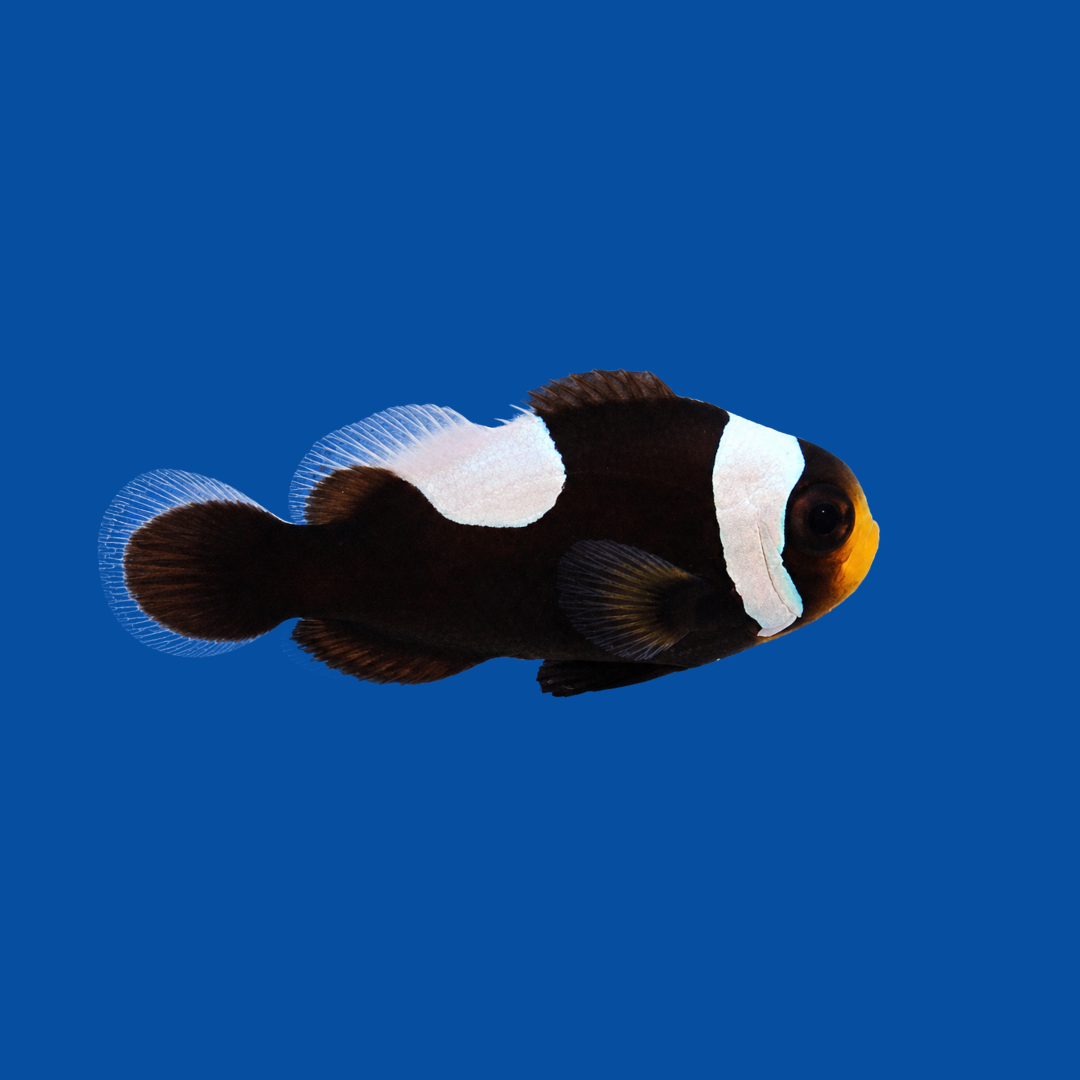
解説 / Description
トウアカクマノミは、目の後ろにある幅広い白帯と、背中をまたぐ鞍状の白斑が印象的なクマノミです。口先から頭部には橙色から赤色が残り、成長した個体では暗い体色との対比が際立ちます。サンゴ礁域の砂地やシルトの多いラグーン、内湾などに生息し、イボハタゴイソギンチャクをはじめとする宿主の周囲を生活の拠点にします。全長は最大約13cmで、成熟したペアは宿主や産卵場所の周辺をよく守ります。 The saddleback anemonefish is recognized by a broad white band behind the eyes and a large saddle-shaped marking across the back. Orange to red coloration usually remains around the snout and head, standing out strongly against the darker body of mature fish. It inhabits sandy or silty areas of coral-reef lagoons, sheltered bays and harbours, where a host anemone—especially Haddon’s carpet anemone—forms the centre of its territory. The species reaches about 13 cm in total length, and mature pairs actively defend the area around their host and spawning site.
基本情報 / Basic Information
| 学名 / Scientific Name | Amphiprion polymnus (Linnaeus, 1758) |
|---|---|
| 通称 / Common Name | トウアカ、サドルバック・アネモネフィッシュSaddleback anemonefish, Saddleback clownfish |
| 分類 / Family | スズメダイ科クマノミ属Family Pomacentridae, genus Amphiprion |
| 英名 / English Name | Saddleback anemonefish |
| 分布 / Distribution | 従来の広い意味でのAmphiprion polymnusは、琉球列島から東南アジア、ニューギニア、オーストラリア北部、ソロモン諸島にかけての西太平洋に分布するとされてきました。日本では沖縄本島以南で確認されています。近年は北部型をAmphiprion annamensisとして分ける分類が採用され始めており、地域ごとの分布境界は再検討の途上にあります。In the traditional broad sense, Amphiprion polymnus has been reported across the western Pacific from the Ryukyu Islands through Southeast Asia to New Guinea, northern Australia and the Solomon Islands. In Japan it is known from Okinawa Island southward. Recent taxonomic treatments increasingly recognize the northern form as Amphiprion annamensis, and the exact geographic limits of the two taxa remain under review. |
| 最大体長 / Max Size | 全長約13cmAbout 13 cm total length |
| 寿命 / Lifespan | 本種に限定した信頼性の高い寿命資料は、野外・飼育下とも十分ではありません。明確な年数を断定せず、長期飼育を前提として設備と管理計画を整える必要があります。Reliable species-specific lifespan data are limited for both wild and captive fish. Rather than relying on a fixed number of years, keepers should plan for long-term care and maintain equipment and husbandry accordingly. |
飼育環境 / Aquarium Environment
| 水槽サイズ / Tank Size | 単独個体または若いペアでは、約100L以上の60cmワイド水槽を目安にします。成魚ペアや混泳では、底面積を確保しやすい約150L以上の90cm規格水槽が適しています。成熟すると縄張りが広がるため、水量だけでなく、見通しを遮る岩組みと退避場所も重要です。For a single fish or a young pair, use roughly 100 L or more, comparable to a 60 cm wide aquarium. A mature pair or a community setup is better housed in a standard 90 cm aquarium of about 150 L or more. As territorial behaviour strengthens with age, floor area, visual barriers and secure retreats are as important as volume. |
|---|---|
| 水温 / Temperature | 24〜27℃を目安に、日内変動を小さく保ちます。高水温期は溶存酸素が低下しやすいため、十分な水面攪拌を行い、必要に応じて冷却ファンや水槽用クーラーを使用します。 Maintain 24–27°C with minimal daily fluctuation. Because dissolved oxygen declines as water becomes warmer, provide strong surface agitation and use a cooling fan or aquarium chiller when necessary. |
| 水質 / Water Quality | 比重1.023〜1.026程度、pH8.0〜8.4を目安にし、アンモニアと亜硝酸が検出されない状態を維持します。硝酸塩は低く安定させ、目安として20mg/L未満を保つと管理しやすくなります。換水時は新しい海水の水温と比重を水槽に合わせ、急変を避けます。Aim for a specific gravity of about 1.023–1.026 and pH 8.0–8.4, with no detectable ammonia or nitrite. Keep nitrate low and stable; below about 20 mg/L is a practical husbandry target. Match the temperature and salinity of replacement water carefully to avoid sudden change. |
| レイアウト / Layout | 遊泳できる開けた空間と、視線を遮りながら身を隠せるライブロックを組み合わせます。自然環境を意識する場合は細かな砂地を一部に設けますが、底砂は必須ではありません。飛び出し事故を防ぐため、配線部の隙間まで含めてフタを整えます。宿主イソギンチャクがいなくても飼育できます。Combine open swimming space with live rock that provides secure shelter and breaks lines of sight. A fine sandy area may be included to echo the natural habitat, but substrate is not essential. Fit a secure lid, including around cable openings, to reduce the risk of jumping. A host anemone is not required for successful aquarium care. |
| 注意点 / Precautions | 導入直後は強い警戒心を示すことがあり、成熟後は縄張り性が目立ちます。新たに迎える魚は検疫し、クマノミ類同士の争いを避けてください。イボハタゴイソギンチャクは大型化し、強い刺胞で他魚を捕らえることがあります。移動個体が水流ポンプに巻き込まれる事故もあるため、導入には成熟した水槽と十分な安全対策が必要です。Newly introduced fish may be highly cautious, while mature individuals often become strongly territorial. Quarantine new arrivals and avoid conflicts with other clownfish. Haddon’s carpet anemone grows very large, has powerful stinging cells and may capture tank mates. Wandering anemones can also be injured by pumps, so they require a mature aquarium and thorough physical safeguards. |
餌と給餌 / Feeding
| 餌の種類 / Diet | 海水魚用の良質な顆粒・ペレットを主食にし、冷凍イサザアミ、ブラインシュリンプ、クリル、細かく刻んだ海産エビ類などを補助的に与えます。植物質を含む人工飼料も組み合わせると、栄養の偏りを抑えやすくなります。Use a high-quality marine pellet or granule as the staple diet, supplemented with frozen mysid shrimp, brine shrimp, krill and finely chopped marine shrimp. Including prepared foods with algal ingredients helps broaden the nutritional profile. |
|---|---|
| 給餌のポイント / Feeding Tips | 成魚は1日1〜2回、幼魚は少量を2〜3回に分け、短時間で食べ切れる量を与えます。導入直後の個体が人工飼料を食べない場合は、冷凍餌で摂餌を確認してから、少しずつ人工飼料へ切り替えます。食べ残しは早めに取り除き、水質悪化を防ぎます。Feed adults once or twice daily and juveniles two or three small meals, offering only what they finish promptly. If a newly introduced fish refuses prepared food, first confirm feeding with frozen items and then make a gradual transition. Remove uneaten food before it degrades water quality. |
性格と混泳 / Temperament and Tank Mates
| 性格 / Temperament | 環境に慣れるまでは物陰に退くことがありますが、定着した成魚は大胆に泳ぎます。特にペア形成後や産卵期には、宿主と産卵場所の周囲を強く守るため、縄張り性は強めと考えて管理します。It may retreat into cover until settled, but established adults usually swim boldly. Territorial defence becomes especially strong after pair formation and during spawning, when the fish protect both their host and the nest area. |
|---|---|
| 混泳の相性 / Compatibility | 安全性を優先するなら、1水槽につき相性の確立した1ペアを基本とします。同種の追加個体や他種のクマノミは、激しく攻撃される可能性があるため避けます。十分な広さがあれば、体格と遊泳力があり、過度に攻撃的ではない海水魚と混泳できますが、小型で臆病な魚は追われてストレスを受けることがあります。新魚導入時のレイアウト変更は、既存の縄張りを弱める助けになる場合があります。For the safest arrangement, keep one established pair per aquarium. Additional saddlebacks and other clownfish may be attacked persistently and are best avoided. In a sufficiently large system, robust but not excessively aggressive marine fishes can be suitable tank mates, whereas small timid species may be stressed. Rearranging rockwork before adding another fish may help reduce the advantage of an established territory. |
病気と対策 / Diseases and Prevention
| かかりやすい病気 / Common Diseases | 海水性白点病、ウーディニウム病、ブルックリネラ症などに注意します。白点、粉を吹いたような外観、粘液の増加、呼吸の速さ、体を物にこすり付ける行動、食欲低下は異常の手掛かりになります。ただし、外見だけで病名を断定することはできません。Watch for marine ich, marine velvet and brooklynellosis. White spots, a dusty appearance, excess mucus, rapid breathing, flashing against objects and loss of appetite are warning signs, but appearance alone is not sufficient for a reliable diagnosis. |
|---|---|
| 対策と予防 / Prevention | 新魚は隔離水槽で観察し、導入時は水温と比重を急変させないように水合わせを行います。過密、急な水質変化、相性の悪い混泳を避け、毎日の摂餌、呼吸、体表を確認してください。治療薬は病原体によって選択が異なります。銅系薬剤を含む多くの薬剤はサンゴ、甲殻類、イソギンチャクに有害なため、本水槽へ自己判断で投入せず、原則として隔離水槽で専門的な助言のもと使用します。Observe new fish in quarantine and acclimate them without abrupt changes in temperature or salinity. Avoid crowding, unstable water and incompatible tank mates, and check feeding, respiration and skin condition every day. Medication depends on the causative organism. Copper and many other treatments are harmful to corals, crustaceans and anemones, so do not dose the display aquarium without a confirmed plan; treatment should normally take place in a hospital tank with expert guidance. |
増やし方(繁殖) / Breeding
| 雌雄の判別 / Sexing | 雄性先熟で、未成熟個体はまずオスとして成熟し、社会集団の中で最も大きく優位な個体がメスになります。次に大きい個体が繁殖オスとなり、メスが失われるとオスがメスへ性転換します。本種では繁殖オスも比較的大きくなるため、体格差だけでの判別は確実ではありません。This is a protandrous hermaphrodite: individuals mature first as males, and the largest dominant fish in the social group becomes female. The next-largest fish is the breeding male, which changes sex if the female is lost. Breeding males can also become relatively large, so size difference alone is not always conclusive. |
|---|---|
| 繁殖形態 / Reproduction | 優位な雌雄1ペアが繁殖する基質産卵魚です。平らな石、貝殻、タイル、素焼き鉢などの硬い面に粘着性の卵を産み、主にオスが胸びれで水を送りながら卵を守ります。水温などの条件によって差がありますが、卵はおおむね6〜10日で、消灯後の夜間に孵化します。The dominant male and female form the breeding pair, and the species is a substrate spawner. Adhesive eggs are placed on a hard surface such as a flat stone, shell, tile or clay pot, and the male performs most of the guarding and fanning. Incubation varies with temperature and other conditions, but hatching generally occurs at night about six to ten days after spawning. |
| 繁殖のポイント / Breeding Tips | 相性の確立した成熟ペアを、安定した水質と落ち着いた環境で飼育し、栄養価の高い餌を偏りなく与えます。取り外せるタイルや素焼き鉢を産卵面として用意すると、孵化直前に卵を育成水槽へ移しやすくなります。仔魚を育てる場合は、孵化前からシオミズツボワムシと植物プランクトンを準備し、成長に合わせてブラインシュリンプ幼生、細粒人工飼料へ段階的に切り替えます。Keep a compatible mature pair in stable water and a quiet setting, and provide a varied, nutritious diet. A removable tile or clay pot makes it easier to transfer the eggs to a larval tank shortly before hatching. Prepare marine rotifers and phytoplankton before hatch, then move gradually to Artemia nauplii and fine prepared foods as the larvae grow. |
雑学と豆知識 / Trivia and Fun Facts
| 1. 鞍のような白斑と「頭赤」 / 1. A white saddle and a red head | 英名のSaddlebackは、背中をまたぐ白い斑紋を馬の鞍に見立てた呼び名です。和名のトウアカは「頭赤」に由来し、胴体が暗くなる成魚でも、口先から頭部にかけて橙色や赤色が残る特徴をよく表しています。上から見ると、鞍状斑が丸みを帯びたハート形のように見える個体もいます。The name Saddleback compares the broad white marking across the back to a horse’s saddle. The Japanese name Toaka means “red head,” describing the orange or red coloration that remains around the snout and head even when the adult body becomes dark. From above, the saddle may appear softly heart-shaped in some individuals. |
|---|---|
| 2. 砂泥底を選ぶクマノミ / 2. A clownfish of soft-bottom habitats | クマノミというと、岩礁やサンゴの隙間を泳ぐ姿が思い浮かびます。しかしトウアカクマノミは、シルトを含むラグーンや港湾の砂泥底でよく見られます。岩の割れ目が少ない開けた環境では、宿主イソギンチャクが隠れ家であると同時に、縄張りと繁殖の中心になります。宿主の周囲を絶えず見回る姿は、この生息環境と深く結び付いています。Clownfish are often pictured among rocks and corals, yet saddlebacks are strongly associated with silty lagoons, sheltered harbours and sandy or muddy bottoms. In an open habitat with few rock crevices, the host anemone serves not only as shelter but also as the centre of the territory and breeding site. Their constant vigilance around the host reflects this unusual habitat. |
| 3. 産卵床を運んでつくる / 3. Carrying material to build a nest site | 粘着性の卵を産むクマノミには硬い産卵面が必要ですが、砂底では適当な岩が見つからないことがあります。琉球列島とパプアニューギニアで行われた観察では、トウアカクマノミが貝殻やウニの殻、ヤシの葉、人工物などをイソギンチャクの下へ運び、その上に産卵する行動が報告されました。周囲にある物を利用して繁殖場所を整える、柔軟な営巣行動です。Clownfish need a firm surface for their adhesive eggs, but suitable rock may be absent on a sandy bottom. Observations from the Ryukyu Islands and Papua New Guinea reported saddlebacks carrying shells, sea-urchin tests, palm leaves and even human-made objects beneath the host anemone before spawning on them. This flexible nest-building behaviour allows the pair to create a breeding surface from whatever is available nearby. |
| 4. 学名の整理が進んでいる / 4. A taxonomy still being refined | 国内の水族館や魚類資料では、トウアカクマノミにAmphiprion polymnusの学名が広く用いられています。一方、2026年7月時点のEschmeyer’s Catalog of FishesとWoRMSは、北部型のAmphiprion annamensisを有効種として扱っています。2026年に公開されたゲノム研究のプレプリントも、両者の大きな遺伝的分化を報告しました。ただし、プレプリントは査読前の研究であり、日本産個体群を含む分布境界や和名との対応は、今後さらに整理される可能性があります。Japanese aquarium and ichthyological references still widely use Amphiprion polymnus for the saddleback found in Japan. As of July 2026, however, both Eschmeyer’s Catalog of Fishes and WoRMS recognize the northern form Amphiprion annamensis as a valid species. A 2026 genomic preprint also reported strong genetic differentiation between the two. Because that study had not yet completed peer review, and because the range boundary and Japanese-name usage still require clarification, further taxonomic revision remains possible. |
| 5. 世界と日本では評価の尺度が異なる / 5. Global and Japanese assessments use different scales | 広い意味で評価されたAmphiprion polymnusは、IUCNレッドリスト2017で低懸念に分類されています。一方、日本では環境省の海洋生物レッドリスト2017で情報不足とされました。低懸念は世界規模での評価、情報不足は国内で判断材料が足りないことを示す区分であり、両者は単純に優劣を比べられるものではありません。日本の生息域が沖縄本島以南に限られることから、魚だけでなく宿主イソギンチャクを含めた継続的な調査が重要です。In the broad sense used for the assessment, Amphiprion polymnus was listed as Least Concern by the IUCN Red List in 2017. In Japan, the Ministry of the Environment’s 2017 Marine Red List classified it as Data Deficient. These categories refer to different geographic scales: Least Concern is a global assessment, whereas Data Deficient indicates that the national evidence is insufficient for a firmer conclusion. Because the Japanese range is limited to Okinawa Island and areas farther south, continued monitoring of both the fish and its host anemones is important. |
| 6. ブリード個体という選択 / 6. Choosing a captive-bred fish | 人工繁殖個体は、人工飼料や水槽内の環境に慣れている場合が多く、導入後の摂餌を確認しやすい傾向があります。ただし、すべての個体が丈夫とは限らず、検疫と丁寧な水合わせは欠かせません。由来が明確で、店頭で落ち着いて泳ぎ、呼吸が安定し、餌を食べている個体を選ぶことが大切です。ブリード個体の利用は、野生採集への依存を減らす選択にもつながります。Captive-bred fish are often accustomed to prepared food and aquarium conditions, making their feeding response easier to confirm after purchase. This does not guarantee that every individual is robust, and quarantine and careful acclimation remain essential. Choose a fish of known origin that swims calmly, breathes normally and accepts food. Supporting captive breeding can also reduce dependence on collection from the wild. |
まとめ / Conclusion
トウアカクマノミは、砂泥底のイソギンチャクを中心に暮らし、必要に応じて産卵に使う材料を運び、営巣場所を整える、クマノミ類の中でも独自性の高い種です。頭部の赤みと背中の鞍状斑はよく目立ち、成熟したペアが宿主の周囲を守る姿からは、自然環境への強い適応が感じられます。 The saddleback anemonefish is one of the most distinctive members of its group, living around host anemones on soft bottoms and even carrying suitable material into place when a spawning surface is needed. Its red-orange head and broad white saddle are immediately recognizable, while the determined defence shown by a mature pair reflects its close adaptation to an open, sandy habitat.
飼育では、十分な底面積、安定した海水、退避場所、成熟後の縄張り性を見越した混泳計画が欠かせません。宿主イソギンチャクは必須ではなく、まず魚が落ち着いて暮らせる環境を完成させることが優先されます。由来と健康状態を確かめて迎え、日々の食欲と呼吸、個体間の関係を観察することで、その力強い行動と端正な模様を長く見守ることができます。 Successful care depends on adequate floor area, stable seawater, secure retreats and a stocking plan that anticipates territorial behaviour in adulthood. A host anemone is not essential; the first priority is a well-prepared aquarium in which the fish can settle safely. By selecting a healthy fish of known origin and observing appetite, respiration and social behaviour each day, keepers can appreciate its confident movements and striking pattern over the long term.

気になる道具や飼い方を見つけてみませんか?
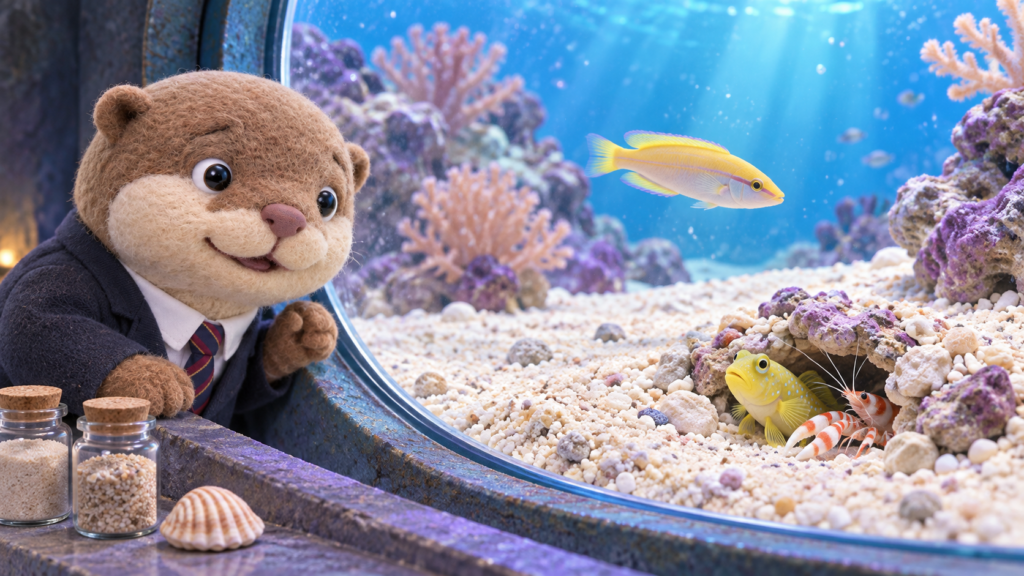 アイのアクアグッズ案内海水魚の底砂の選び方|サンゴ砂・ライブサンドとおすすめ商品道具の特徴や使い方、選ぶときのポイントをアイが紹介します。記事はコチラ →
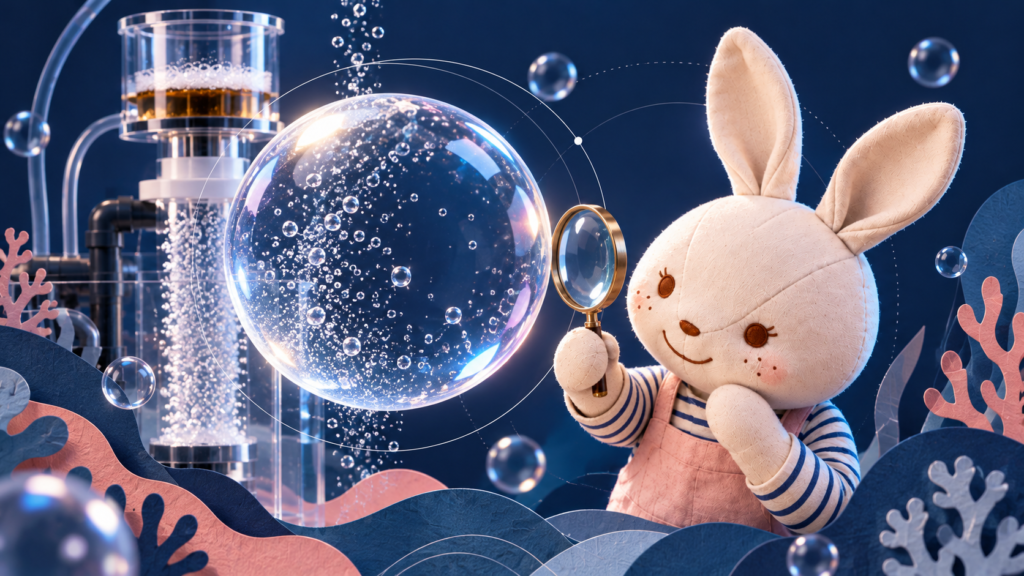 アイのアクアグッズ案内あい先生のアクアグッズ深堀り!|泡で汚れを取り出す? プロテインスキマーの歴史と仕組み道具の特徴や使い方、選ぶときのポイントをアイが紹介します。記事はコチラ →
さまざまな飼育テーマをご紹介。リンク先の記事には広告・商品紹介が含まれます。
案内・紹介記事一覧へ →分布マップ
琉球列島から東南アジア、ニューギニア、オーストラリア北部、ソロモン諸島にかけての西太平洋に分布するとされます。日本では沖縄本島以南で確認されています。
この地図の印は、分布イメージを示すために西太平洋上へ置いた概略代表地点です。実際の採集地点や個体の確認地点、厳密な生息範囲を示すものではありません。地域ごとの分布境界は、分類の見直しに伴い再検討されています。
参考文献・根拠資料
トウアカクマノミの記事について、分類、分布、生息環境、飼育管理、繁殖、病気および安全上の注意を確認するために選定した資料です。店舗、通信販売、個人ブログ、まとめサイトは含めず、学術論文、公的研究機関、博物館系データベース、獣医学資料を優先しています。
飼育数値の扱いについて
記事に記載した水槽容量、24〜27℃、硝酸塩20mg/L未満などは、トウアカクマノミだけを対象に生存限界を測定した実験値ではありません。種の体格と縄張り性、繁殖研究で用いられた環境、一般的な海水魚の水質管理資料を組み合わせた保守的な管理目安です。特に100L・150Lという水槽容量には、直接対応する査読論文がないため、参考文献から確定値として引用しないでください。
分類・学名
-
Fricke, R., Eschmeyer, W. N. & Van der Laan, R. (eds.). Eschmeyer’s Catalog of Fishes: Amphiprion annamensis.
California Academy of Sciences.
北部型の学名、原記載、異名関係、現在の有効名としての扱いを確認する資料です。分類は更新される可能性があるため、記事公開後も定期的な再確認が必要です。
California Academy of Sciencesで確認 -
World Register of Marine Species. Amphiprion Bloch & Schneider, 1801: taxon list.
WoRMS Editorial Board.
Amphiprion polymnusとAmphiprion annamensisを含む、クマノミ属の受容名と異名関係を照合する海洋生物分類データベースです。
WoRMSで確認
分布・形態・生息環境・宿主
-
Bray, D. J. Amphiprion polymnus.
Fishes of Australia, Museums Victoria.
西太平洋から琉球列島にかけての分布、最大体長、2〜30mのシルト質ラグーンや港湾という生息環境、共生するイソギンチャクの情報を支える博物館系資料です。
Fishes of Australiaで確認 -
Fautin, D. G. & Allen, G. R. (1992). Field Guide to Anemonefishes and Their Host Sea Anemones.
Western Australian Museum, 160 pp.
クマノミ類と宿主イソギンチャクの同定、分布、共生関係を整理した基礎的モノグラフです。宿主種との関係を説明する際の中核資料として使用できます。
Smithsonian Institutionの書誌情報を確認
性転換・産卵・仔魚育成
-
Moyer, J. T. & Nakazono, A. (1978). Protandrous Hermaphroditism in Six Species of the Anemonefish Genus Amphiprion in Japan.
Japanese Journal of Ichthyology, 25(2), 101–106. DOI: 10.11369/jji1950.25.101
日本産6種を対象に、最大個体がメス、次位個体が繁殖オスとなる社会構造と、社会的に制御される雄性先熟を組織学的・野外観察から示した研究です。トウアカクマノミも調査対象に含まれます。
J-STAGEで論文を確認 -
Moyer, J. T. & Steene, R. C. (1979). Nesting Behavior of the Anemonefish Amphiprion polymnus.
Japanese Journal of Ichthyology, 26(2), 209–214. DOI: 10.11369/jji1950.26.209
砂底で貝殻などを宿主イソギンチャクの下へ運び、硬い産卵面を確保する営巣行動を支える種固有の観察研究です。
J-STAGEで論文を確認 -
Chen, C.-M., Ho, Y.-S. & Chen, W.-Y. (2003). Breeding Behavior of the Saddleback Anemonefish (Amphiprion polymnus) and Its Larval Rearing Study.
Journal of Taiwan Fisheries Research, 11(1&2), 29–38.
粘着性沈性卵、孵化条件、仔魚の大きさ、24.8〜29.0℃での育成、初期のワムシ給餌と成長に応じた餌の移行を扱う、本種に直接対応した繁殖研究です。
台湾水産試験所で抄録を確認 -
Roux, N. et al. (2021). A star is born again: Methods for larval rearing of an emerging model organism, the False clownfish Amphiprion ocellaris.
Journal of Experimental Zoology Part B, 336(4), 376–385. DOI: 10.1002/jez.b.23028
別種を対象とした研究ですが、クマノミ類の繁殖ペア管理、安定した水温と窒素化合物の管理、取り外せる産卵基質、ワムシなどの生物餌料培養を体系化した査読済み飼育プロトコルです。本種固有の数値を示す資料としてではなく、共通する飼育技術の補助資料として用います。
PubMed Centralで全文を確認
飼育環境・水質・検疫
-
MSD Veterinary Manual. Management of Aquarium Fish.
Merck & Co., Inc.
新規水槽の立ち上げ、アンモニア・亜硝酸・硝酸塩の測定、生物ろ過、導入前の環境安定化など、観賞魚飼育の基本管理を確認する獣医学資料です。
MSD Veterinary Manualで確認 -
MSD Veterinary Manual. Environmental Diseases of Aquatic Animals in Aquatic Systems.
Merck & Co., Inc.
低酸素と高アンモニアが魚へ直接的な危険をもたらすこと、水質の影響が魚種、飼育密度、システムによって変わることを確認する資料です。記事内の数値を一律の安全限界として扱わない根拠にもなります。
MSD Veterinary Manualで確認
病気・診断・投薬上の注意
-
MSD Veterinary Manual. Parasitic Diseases of Fish.
Merck & Co., Inc.
海水性白点病の原因となるCryptocaryon、ウーディニウム病の原因となるAmyloodinium、Brooklynellaなどの症状、顕微鏡検査による診断、病原体に応じた治療の必要性を確認する資料です。
MSD Veterinary Manualで確認 -
MSD Veterinary Manual. Protistan Parasites of Fish.
Merck & Co., Inc.
白点、過剰な粘液、呼吸促迫、体をこすり付ける行動などが複数の寄生虫症で重なることを示しており、外見だけで病名を断定しないという注意を支えます。銅やホルマリンなどの薬剤は診断と濃度管理を前提に扱う必要があります。
MSD Veterinary Manualの一覧表を確認
最終確認日:2026年7月12日。分類データベースと獣医学マニュアルは更新されるため、記事改訂時にはリンク先の更新日と受容名を再確認してください。




コメント