

解説 / Description
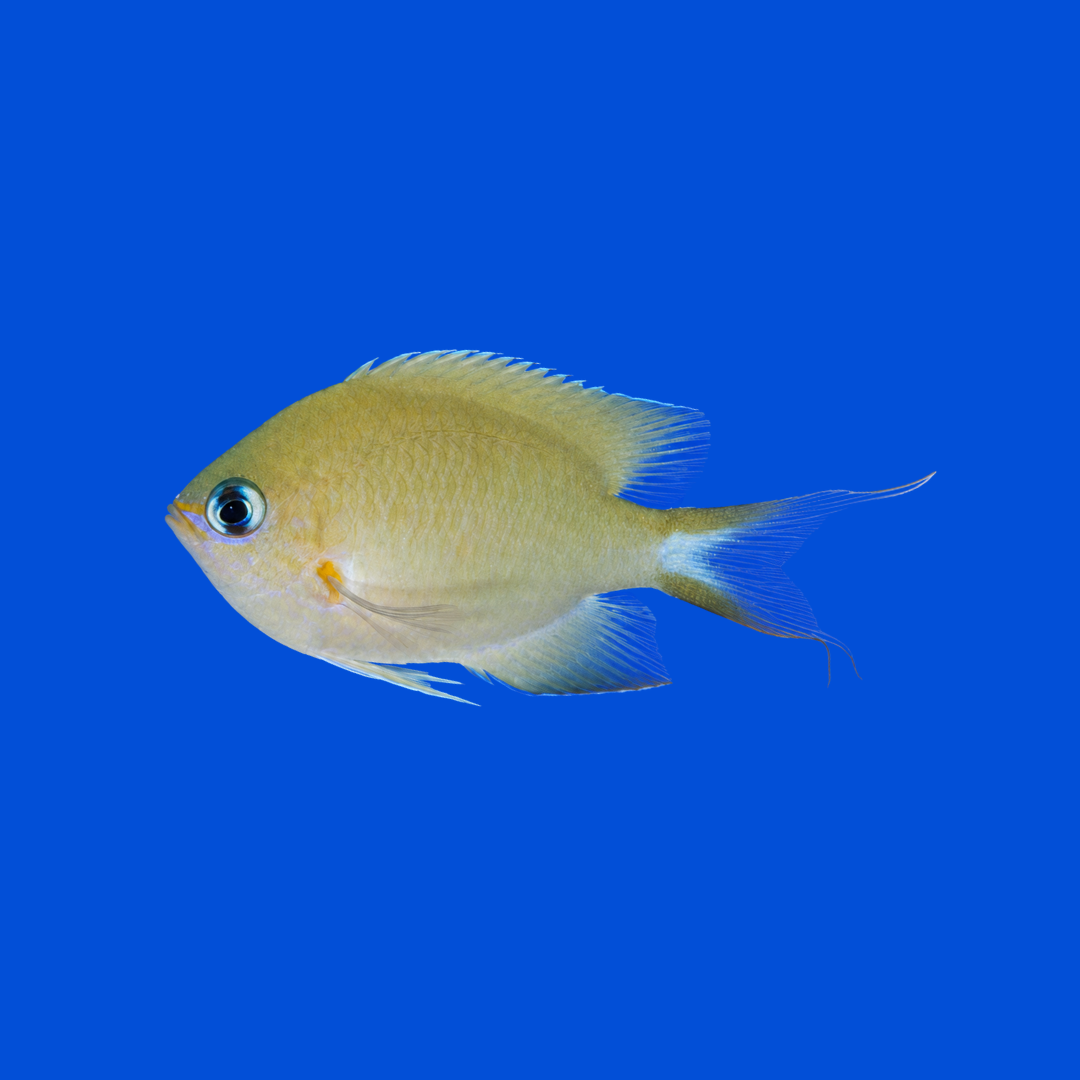
アンボンスズメダイは、胸鰭の付け根に入る明るい黄色斑と、上下が濃く縁取られたハサミ状の尾鰭が印象的なスズメダイの仲間です。かつてはChromis属として扱われていましたが、近年の分子系統解析を受け、現在はヒメスズメダイ属Pycnochromisに整理されています。自然下では外洋に面したサンゴ礁外縁やドロップオフを好み、潮に乗って流れてくる小さな動物プランクトンを活発に捕食します。水槽内でもよく泳ぎ、サンゴを傷つけにくいリーフセーフな海水魚として楽しめますが、複数飼育では同種間の順位争いが起こりやすいため、十分な遊泳空間と隠れ家の設計が大切です。 The Ambon chromis is a damselfish noted for its bright yellow spot at the base of the pectoral fin and its scissor-like tail with dark upper and lower margins. It was long treated under the genus Chromis, but recent molecular phylogenetic work has placed it in the revived genus Pycnochromis. In the wild, it favors outer reef slopes and drop-offs exposed to oceanic water movement, where it actively feeds on small drifting zooplankton. In aquariums, it is an active, reef-safe marine fish that usually leaves corals alone. However, groups may develop strong social hierarchies, so generous swimming space and carefully arranged refuges are important.
基本情報 / Basic Information
| 学名 / Scientific Name | Pycnochromis amboinensis |
|---|---|
| 通称 / Common Name | アンボンスズメダイ、アンボンクロミスAmbon chromis, Ambon damselfish |
| 分類 / Family | スズメダイ科・ヒメスズメダイ属Family Pomacentridae, genus Pycnochromis |
| 英名 / English Name | Ambon chromis |
| 分布 / Distribution | 東部インド洋から西部・中部太平洋に広く分布します。インドネシア、フィリピン、パプアニューギニア、ミクロネシア、フィジー、トンガなどで見られ、日本では八重山諸島や小笠原諸島などでまれに観察されます。Widely distributed from the eastern Indian Ocean to the western and central Pacific. It occurs around Indonesia, the Philippines, Papua New Guinea, Micronesia, Fiji, Tonga, and nearby regions. In Japan, it is rarely observed around areas such as the Yaeyama Islands and the Ogasawara Islands. |
| 最大体長 / Max Size | 約10cmAbout 10 cm |
| 寿命 / Lifespan | 本種に限った詳細な寿命データは多くありませんが、安定した海水環境で数年程度の飼育が期待できます。Species-specific lifespan data are limited, but several years of aquarium keeping can be expected in a stable marine system. |
飼育環境 / Aquarium Environment
| 水槽サイズ / Tank Size | 単独または温和な魚との少数混泳でも、最低60cm規格水槽が目安です。複数匹で群泳感を楽しむ場合は、90cm規格水槽から120cm水槽以上、できれば150Lから250L以上の水量を確保すると安定しやすくなります。For a single fish or a small community with peaceful tank mates, a standard 60 cm aquarium is the practical minimum. For keeping a group, a standard 90 cm aquarium to a 120 cm tank or larger is recommended, ideally with 150 to 250 liters or more of water volume. |
|---|---|
| 水温 / Temperature | 24℃から27℃を目安に安定させます。夏場に水温が上がりやすい環境では、水槽用クーラーの使用が安心です。 Maintain a stable range of 24 to 27°C. In warm seasons or warm rooms, an aquarium chiller is strongly recommended. |
| 水質 / Water Quality | 比重は1.023から1.025、pHは8.1から8.4を目安にします。硝酸塩は20ppm未満を維持し、アンモニアと亜硝酸が検出されない安定した環境を用意してください。外洋リーフにすむ魚なので、強力な濾過とプロテインスキマーによる高い溶存酸素量が適しています。Aim for a specific gravity of 1.023 to 1.025 and pH 8.1 to 8.4. Keep nitrate below 20 ppm and maintain an established system with no detectable ammonia or nitrite. Because this fish comes from outer reef habitats, strong filtration and a protein skimmer that supports high dissolved oxygen are suitable. |
| レイアウト / Layout | 中層から上層には広い遊泳スペースを残し、背面や下層にはライブロックで洞窟、アーチ、オーバーハングを作ります。複数飼育では、弱い個体が視線を切って逃げ込める複数の避難所が特に重要です。サンゴをつつきにくいリーフセーフな魚なので、サンゴ水槽との相性も良好です。Leave open swimming space in the mid to upper water column, while arranging live rock along the back and lower areas to create caves, arches, and overhangs. In groups, multiple refuges and visual barriers are especially important so subordinate fish can escape attention. It is generally reef-safe and is well suited to coral aquariums. |
| 注意点 / Precautions | 流れのある外洋性環境に適応しているため、弱すぎる水流や酸素不足は不向きです。ウェーブメーカーで中から強めのランダムな水流を作りつつ、魚が休める岩陰も用意します。複数匹を後から追加すると攻撃を受けやすいため、群れで飼う場合は同時導入が基本です。This species is adapted to oxygen-rich, current-exposed reef habitats, so weak circulation and low oxygen are unsuitable. Use a wavemaker to create moderate to strong random flow while also providing shaded resting areas among the rockwork. When keeping a group, introduce individuals at the same time because later additions are often targeted by established fish. |
餌と給餌 / Feeding
| 餌の種類 / Diet | 動物性の海水魚用人工飼料、細かい粒状フード、フレークフードをよく食べます。栄養の偏りを防ぐため、冷凍イサザアミ、冷凍コペポーダ、ビタミン強化ブラインシュリンプなども組み合わせるとよいでしょう。It readily accepts marine carnivore pellets, small granules, and flake foods. To support balanced nutrition, supplement these with frozen mysid shrimp, frozen copepods, and vitamin-enriched brine shrimp. |
|---|---|
| 給餌のポイント / Feeding Tips | 自然下では一日を通して小さなプランクトンを拾い食いするため、1日1回の大量給餌よりも、1日2から3回に分けて少量ずつ与える方法が向いています。複数飼育では一か所に餌を落とすと強い個体が独占しやすいため、水流に乗せて広い範囲へまくブロードキャスト給餌が有効です。In nature, it feeds on small plankton throughout the day, so two to three small meals are better than one heavy feeding. In groups, broadcast feeding across a wide area helps prevent dominant individuals from monopolizing food. |
性格と混泳 / Temperament and Tank Mates
| 性格 / Temperament | 他種に対しては比較的温和ですが、同種間では順位争いがはっきり出ることがあります。成長に伴って水流の当たる場所や餌の流れてくる場所を縄張りのように主張し、弱い個体を追うことがあるため、見た目の穏やかさだけで小型水槽に多く入れないようにします。It is generally peaceful toward other species, but social ranking can become obvious among its own kind. As it matures, it may claim high-flow feeding spots and chase weaker individuals, so avoid crowding a small tank simply because the fish appears gentle. |
|---|---|
| 混泳の相性 / Compatibility | ハタタテハゼ、ファイヤーゴビー、小型のクマノミ類、おとなしいベラ類、小型ヤッコ、ロイヤルグランマなど、生活圏や性格が大きくぶつからない魚と相性がよいです。スカンクシュリンプや貝類などのお掃除役とも同居しやすい一方、気性の荒いスズメダイ類や、本種を食べてしまう大型肉食魚との混泳は避けます。Good tank mates include firefish, dartfish, small clownfish, peaceful wrasses, dwarf angelfish, royal grammas, and other species with compatible temperaments and different microhabitats. It usually coexists well with cleaner shrimp, snails, and other clean-up crew animals. Avoid aggressive damselfish and large predatory fish that could swallow it. |
病気と対策 / Diseases and Prevention
| かかりやすい病気 / Common Diseases | 海水白点病、ウロネマ病、トリコディナ病、ブルックネラ病などに注意します。特に輸入直後や購入直後は、長時間輸送や水質変化の影響で免疫力が落ちていることがあるため、白点、呼吸の速さ、体表の赤み、ヒレの閉じ、過剰な粘液を観察します。Watch for marine ich, Uronema infections, Trichodina, and Brooklynella. Newly imported or newly purchased fish may be stressed by shipping and water changes, so observe carefully for white spots, rapid breathing, red lesions, clamped fins, and excess mucus. |
|---|---|
| 対策と予防 / Prevention | 購入後はメイン水槽へ直接入れず、可能であれば2週間から4週間ほどトリートメント水槽で観察します。アンモニアと亜硝酸を出さないこと、硝酸塩をためすぎないこと、水温を急変させないことが基本です。薬浴が必要な場合、銅系薬剤はサンゴや甲殻類に強い害があるため、必ず別水槽で行います。Do not add new fish directly to the display tank if quarantine is possible. Observe them in a separate treatment tank for about two to four weeks. Prevent detectable ammonia and nitrite, avoid excessive nitrate accumulation, and keep temperature changes gradual. If medication is needed, copper-based treatments must be used only in a separate tank because they are highly harmful to corals and crustaceans. |
増やし方(繁殖) / Breeding
| 雌雄の判別 / Sexing | 外見だけで雌雄を判別するのは難しい魚です。繁殖期にはペア形成や産卵場所の防衛行動などから推測できる場合がありますが、一般的な観賞魚飼育では明確な判別は容易ではありません。Sexing by appearance is difficult. During breeding, pair formation and nest defense may provide clues, but reliable sex identification is not easy in ordinary aquarium keeping. |
|---|---|
| 繁殖形態 / Reproduction | スズメダイ科らしく、岩や死サンゴなどの硬い基質に粘着性の沈性卵を産み付けるタイプです。産卵後は主にオスが卵を守り、胸鰭で新鮮な海水を送って孵化まで管理します。Like many damselfish, it lays adhesive demersal eggs on hard surfaces such as rock or dead coral. After spawning, the male primarily guards the clutch and fans it with the pectoral fins until hatching. |
| 繁殖のポイント / Breeding Tips | 水槽内で産卵行動が見られる可能性はありますが、ふ化後の仔魚は非常に小さく、浮遊生活を送るため育成難度は高いです。安定した水質、栄養状態のよい親魚、微細な初期餌、仔魚専用の育成環境が必要になります。Spawning may occur in aquariums, but rearing the larvae is difficult because the hatchlings are tiny and planktonic. Stable water quality, well-conditioned adults, suitable microscopic first foods, and a dedicated larval rearing setup are required. |
雑学と豆知識 / Trivia and Fun Facts
| 1. 学名に残るアンボン島の記憶 / 1. A name that remembers Ambon Island | 種小名のamboinensisは、本種の模式産地であるインドネシアのアンボン島に由来します。1871年にピーター・ブリーカーによって記載された当時、アンボン島を含むモルッカ諸島はヨーロッパの博物学者にとって多くの海洋生物が知られる重要な地域でした。小さなスズメダイの名前には、サンゴ礁の生き物を世界の分類学へつないだ歴史が静かに刻まれています。The species name amboinensis refers to Ambon Island in Indonesia, the type locality of the species. When Pieter Bleeker described it in 1871, the Moluccas, including Ambon, were an important region for European naturalists studying marine life. The name of this small damselfish quietly preserves a piece of taxonomic history linking coral reef animals to global science. |
|---|---|
| 2. ChromisからPycnochromisへ / 2. From Chromis to Pycnochromis | アンボンスズメダイは長い間Chromis amboinensisとして親しまれてきました。しかし、2021年に発表された大規模な分子系統解析により、従来のChromis属が自然なまとまりではないことが明らかになり、本種を含む一群にはPycnochromisという属名が復活しました。日本ではこの属にヒメスズメダイ属という標準和名があてられ、現在の学名はPycnochromis amboinensisとして扱われます。The Ambon chromis was long known as Chromis amboinensis. However, a major molecular phylogenetic study published in 2021 showed that the traditional genus Chromis was not a natural single lineage, and the genus name Pycnochromis was revived for a group including this species. In Japan, the standard Japanese genus name Himesuzumedai-zoku is applied, and the current scientific name is Pycnochromis amboinensis. |
| 3. 見分ける鍵は黄色斑と尾鰭 / 3. The key markings are the yellow spot and tail pattern | 似た雰囲気を持つマルスズメダイやヒレグロスズメダイと迷ったときは、胸鰭基部の黄色斑と、尾鰭の上下に入る濃い縁取りを確認すると同定しやすくなります。幼魚や若魚では青いきらめきが強く出ることもあり、水中写真では小さな体に複数の識別ポイントが詰まった魅力的な被写体になります。When distinguishing it from similar species such as Pycnochromis ovatiformes or Pycnochromis atripes, check for the yellow spot at the base of the pectoral fin and the dark upper and lower margins of the tail. Juveniles and young individuals may show a stronger blue sheen, making them appealing subjects for underwater macro photography. |
| 4. ダイバーが楽しむ「ネコ目」の表情 / 4. The cat-eyed charm admired by divers | 日本のダイバーの間では、幼魚から若魚のきらめく眼が「ネコ目」のように見える魚として語られることがあります。暗いドロップオフの壁沿いでストロボ光を受けると、黄色斑、白く抜ける鰭先、細く伸びる尾鰭が浮かび上がり、地味に見える成魚とはまた違った繊細な美しさを見せてくれます。Among some Japanese divers, juveniles and young fish are admired for sparkling eyes that can look almost cat-like. Along dim drop-off walls, strobe light can highlight the yellow pectoral spot, pale fin tips, and slender tail filaments, revealing a delicate beauty that differs from the more subdued adult appearance. |
| 5. 外洋リーフの魚らしい飼い方 / 5. Aquarium care inspired by the outer reef | 本種を美しく飼うコツは、外洋に面したサンゴ礁外縁の環境を水槽内で思い描くことです。強すぎて一方向だけの流れではなく、酸素をたっぷり含んだ変化のある水流、開けた遊泳空間、すぐ逃げ込める岩陰、そして少量を何度も食べられる給餌リズムがそろうと、アンボンスズメダイらしい軽やかな泳ぎが引き出されます。The best way to keep this species beautifully is to imagine the outer reef environment it comes from. Rather than a single harsh current, provide varied oxygen-rich flow, open swimming space, nearby rock shelters, and a feeding rhythm of small meals offered several times a day. Under these conditions, the fish can show its natural light and active swimming style. |
まとめ / Conclusion
アンボンスズメダイは、一般的なスズメダイ類の丈夫さを持ちながら、胸鰭基部の黄色斑や伸びやかな尾鰭、外洋リーフを思わせる軽快な泳ぎで、水槽に上品な動きを添えてくれる海水魚です。サンゴを傷つけにくく、温和な魚との混泳にも向くため、リーフタンクの中層を彩る存在として魅力があります。 The Ambon chromis combines the hardiness often associated with damselfish with an elegant yellow pectoral spot, extended tail shape, and lively outer-reef swimming style. Because it is generally reef-safe and compatible with peaceful marine fish, it can bring graceful movement to the midwater area of a coral aquarium.
長く健康に楽しむためには、清浄で酸素に富んだ水、十分な遊泳空間、複雑な隠れ家、そして同種間の順位争いを見越した導入計画が欠かせません。環境が整うほど、アンボンスズメダイは小さな体に秘めたサンゴ礁外縁の躍動感を、水槽の中で自然に見せてくれます。 To enjoy it long term, provide clean oxygen-rich water, ample swimming space, complex shelter, and a stocking plan that accounts for hierarchy within groups. When its environment is well prepared, the Ambon chromis can naturally express the dynamic character of an outer reef within the aquarium.

気になる道具や飼い方を見つけてみませんか?
 アイのアクアグッズ案内バルブの仲間に合わせる飼育用品|チェリーバルブ・スマトラ・中型種の水槽とろ過道具の特徴や使い方、選ぶときのポイントをアイが紹介します。記事はコチラ →
 アイのアクアグッズ案内水槽用浄水器の選び方|水換えを楽にするタイプとROの違い道具の特徴や使い方、選ぶときのポイントをアイが紹介します。記事はコチラ →
 アイのアクアグッズ案内アカヒレの仲間に合わせる飼育用品|無加温・混泳・繁殖の水槽とろ過道具の特徴や使い方、選ぶときのポイントをアイが紹介します。記事はコチラ →
 アイのアクアグッズ案内コケを食べるコイの仲間に合わせる飼育用品|フライングフォックス・アルジイーター・ガラ道具の特徴や使い方、選ぶときのポイントをアイが紹介します。記事はコチラ →
さまざまな飼育テーマをご紹介。リンク先の記事には広告・商品紹介が含まれます。
案内・紹介記事一覧へ →分布マップ
アンボンスズメダイは、東部インド洋から西部・中部太平洋にかけて広く分布し、インドネシア、フィリピン、パプアニューギニア、ミクロネシア、フィジー、トンガ周辺などで見られます。日本では八重山諸島や小笠原諸島などでまれに観察されます。
この地図は分布イメージを示すため、インドネシア・アンボン島周辺を概略代表地点としてプロットしています。実際の採集地点や厳密な生息範囲を示すものではありません。
参考文献・主要確認資料
本項では、アンボンスズメダイの分類、分布、生息環境、形態、繁殖、飼育環境、病気や導入時の注意点を確認するために参照した資料を掲載しています。店舗・通販ページ、個人ブログ、まとめサイト、販売価格だけを根拠とする情報は除外し、学術論文、公的・学術系データベース、獣医学系資料、専門書を中心に選定しています。
なお、水槽サイズや複数飼育時のリスク管理など、厳密な種別実験データが少ない項目については、最大体長、遊泳性、自然下での群れ形成、生息水深、海水魚飼育一般の水質管理資料を組み合わせ、保守的な飼育推奨として整理しています。
-
WoRMS Editorial Board. Pycnochromis amboinensis (Bleeker, 1871). World Register of Marine Species.
確認範囲:現在の有効学名、分類上の位置づけ、旧名・シノニムの照合。
World Register of Marine Species:Pycnochromis amboinensis -
Tang, K. L., Stiassny, M. L. J., Mayden, R. L. & DeSalle, R. 2021. Systematics of Damselfishes. Ichthyology & Herpetology, 109(1):258-318.
確認範囲:スズメダイ科の分子系統、従来のChromis属の再整理、Pycnochromis属復活の背景。
DOI:10.1643/i2020105 -
Froese, R. & Pauly, D. editors. FishBase. Pycnochromis amboinensis, Ambon chromis.
確認範囲:分布、水深、最大体長、背鰭・臀鰭の条数、生息環境、群れ形成、昼行性、産卵形式、雄による卵保護。
FishBase:Pycnochromis amboinensis -
Allen, G. R. 1991. Damselfishes of the World. Mergus Publishers, Melle. 271 pp.
確認範囲:スズメダイ科魚類の分類、形態、分布、生態に関する基礎資料。FishBaseでも本種を含むスズメダイ類の主要文献として扱われています。 -
Ocean Biodiversity Information System. Chromis amboinensis (Bleeker, 1871), accepted name Pycnochromis amboinensis.
確認範囲:旧学名Chromis amboinensisと現行有効名Pycnochromis amboinensisの照合、海産種としてのデータ確認。
OBIS:Chromis amboinensis -
Spotte, S. 1992. Captive Seawater Fishes: Science and Technology. Wiley-Interscience.
確認範囲:閉鎖海水環境における水質、濾過、溶存酸素、塩分、飼育システム設計の一般的根拠。 -
Yanong, R. P. E. 2021. Cryptocaryon irritans Infections (Marine White Spot Disease) in Fish. UF/IFAS Extension, University of Florida.
確認範囲:海水白点病の症状、生活環、急速な蔓延、診断と隔離・治療時の注意点。
UF/IFAS Extension:Cryptocaryon irritans Infections -
MSD/Merck Veterinary Manual. Parasitic Diseases of Fish; Protistan Parasites of Fish.
確認範囲:Cryptocaryon、Brooklynella、Uronemaなどの外部寄生性原虫、症状、診断、治療薬の扱い、サンゴ・無脊椎動物がいる水槽での注意点。
Merck Veterinary Manual:Parasitic Diseases of Fish -
Cardoso, P. H. M. et al. 2020. Scuticociliatosis caused by Uronema sp. in ten different ornamental aquarium reef fish in Brazil. Revista Brasileira de Parasitologia Veterinária, 29(1).
確認範囲:海水観賞魚で問題となるUronema関連疾患、体表病変や致死性を伴う繊毛虫感染症の補足資料。
DOI:10.1590/S1984-29612019104




コメント