

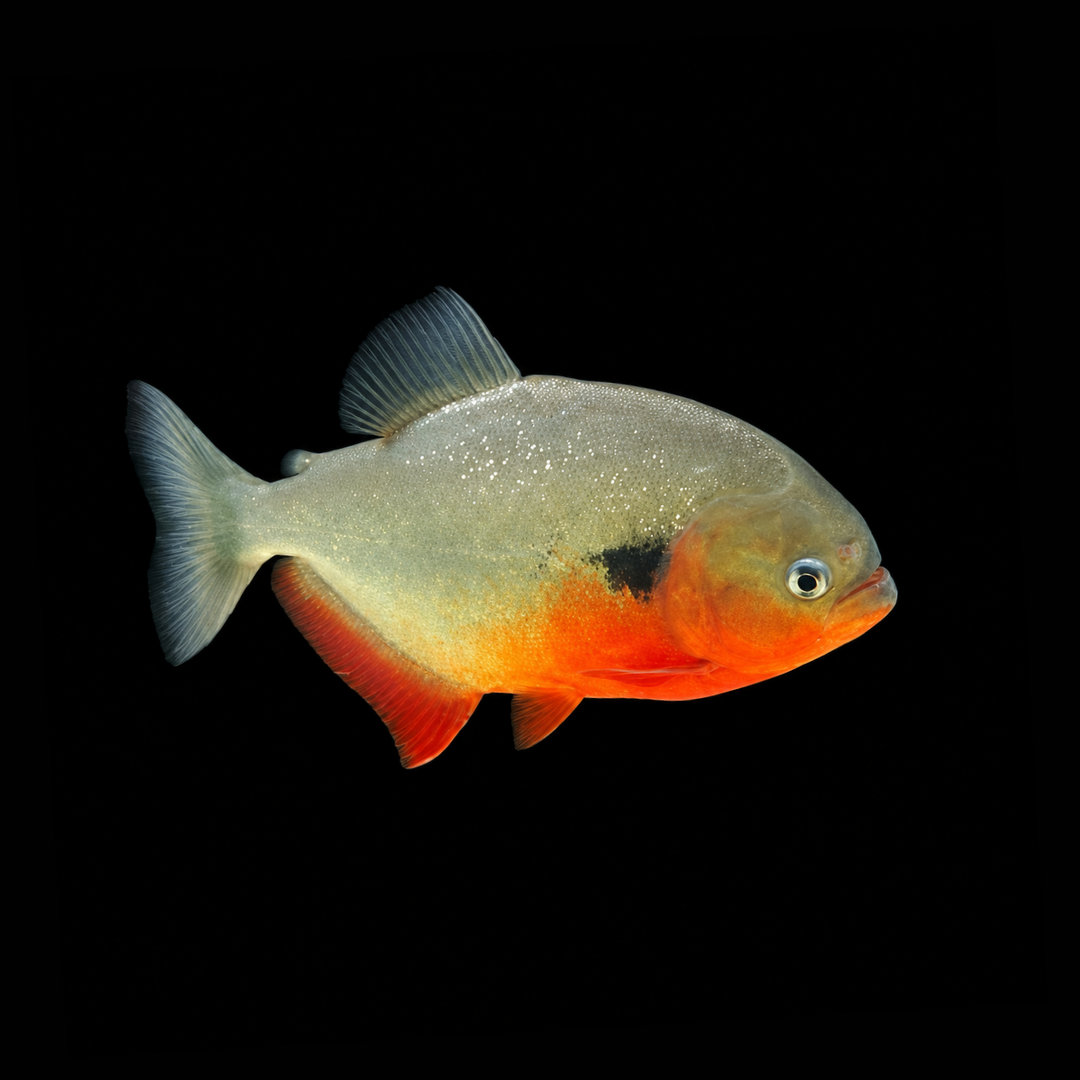
解説 / Description
ピラニア・ノタータスは、南米北部のオリノコ川水系に分布するピゴケントルス属のピラニアです。日本の観賞魚流通では、古い学名に由来する「ノタータス」や、現地名に近い「カリバ」の名で扱われることがありますが、現在の有効な学名はPygocentrus caribaです。エラぶたの後方に入る黒い肩斑、成長とともに目立つ赤み、体高のある精悍な体つきが大きな魅力です。 The Orinoco piranha is a species of Pygocentrus native to the Orinoco River system in northern South America. In the Japanese aquarium trade it may still be sold as “Notatus,” a name derived from an older scientific synonym, or as “Cariba.” Its currently accepted scientific name is Pygocentrus cariba. The species is admired for its dark humeral spot behind the gill cover, the red coloration that develops with age, and its deep, powerful body shape.
強い歯と肉食魚らしい迫力をもつ一方で、飼育下では非常に神経質で、驚くと水槽面へ突進することがあります。安定した水質、十分な遊泳スペース、過度に複雑すぎないレイアウト、そして終生飼育を前提にした設備計画が欠かせません。 Although it has powerful teeth and the imposing presence expected of a predatory fish, it is also a very nervous aquarium species. When startled, it may dash into the glass or decorations. Stable water quality, enough swimming space, a simple and safe layout, and equipment planned for lifelong care are essential.
基本情報 / Basic Information
| 学名 / Scientific Name | Pygocentrus cariba |
|---|---|
| 通称 / Common Name | ピラニア・ノタータス、カリバ、ブラックスポット・ピラニア、オリノコ・ピラニアOrinoco piranha, black spot piranha, caribe piranha |
| 分類 / Family | カラシン目 セルラサルムス科 セルラサルムス亜科 ピゴケントルス属Order Characiformes, family Serrasalmidae, subfamily Serrasalminae, genus Pygocentrus |
| 英名 / English Name | Orinoco piranha / Black spot piranha / Caribe piranha |
| 分布 / Distribution | ベネズエラとコロンビアにまたがるオリノコ川水系の低地部と支流域に分布します。リャノと呼ばれる季節的な氾濫原とも関わりが深く、雨季と乾季によって利用する環境や餌の条件が大きく変化します。It occurs in the lowlands and tributaries of the Orinoco River basin across Venezuela and Colombia. The species is closely associated with the seasonally flooded Llanos, where habitat and food availability change strongly between the wet and dry seasons. |
| 最大体長 / Max Size | 公表記録では全長約27.9cmが目安です。飼育下では20cm台後半を見据え、体高と突進時の距離も考慮して水槽を選びます。The published maximum is about 27.9 cm total length. In captivity, plan for a fish in the high-20 cm range and choose a tank that also accounts for its body depth and sudden dashing behavior. |
| 寿命 / Lifespan | おおむね10年前後。良好な水質、広い水槽、適切な餌を維持できれば、より長く飼育できることもあります。Generally around 10 years. With excellent water quality, adequate space, and suitable feeding, some individuals may live longer. |
飼育環境 / Aquarium Environment
| 水槽サイズ / Tank Size | 単独飼育でも最低90cm規格水槽を目安にします。終生飼育や複数飼育を考える場合は、120cmワイド水槽以上を推奨します。魚そのものの体長だけでなく、驚いたときに直線的に走る距離を確保することが重要です。A standard 90 cm aquarium should be considered the minimum even for a single individual. For lifelong care or a group, a 120 cm wide aquarium or larger is recommended. The tank must provide not only room for body size but also enough straight-line distance for sudden dashes. |
|---|---|
| 水温 / Temperature | 24〜28℃を目安に安定させます。急な水温変化はストレスや体調不良につながるため、ヒーターと水温計で日常的に確認します。Keep the temperature stable at about 24–28°C. Sudden temperature changes can cause stress and health problems, so use a reliable heater and check the temperature regularly. |
| 水質 / Water Quality | 弱酸性から中性付近が扱いやすく、目安はpH6.0〜7.2、軟水から中硬水程度です。肉食魚で排泄量が多いため、アンモニアと亜硝酸を検出させない管理を基本とし、硝酸塩も溜めすぎないよう定期的に換水します。Slightly acidic to near-neutral water is practical, with a guideline of pH 6.0–7.2 and soft to moderately hard water. Because this predatory fish produces a heavy bioload, ammonia and nitrite should remain undetectable, and nitrate should be controlled through regular water changes. |
| レイアウト / Layout | 管理しやすいベアタンク、または薄く底砂を敷いたシンプルな構成が向いています。鋭利な石や複雑に組んだ流木は、突進時の外傷につながるため避けます。落ち着ける陰は用意しつつ、遊泳スペースを広く残します。A bare-bottom setup or a simple layout with a thin layer of substrate is suitable. Avoid sharp rocks and complicated driftwood arrangements because they can cause injuries when the fish panics. Provide shaded areas, but leave open swimming space. |
| 注意点 / Precautions | ろ過は強めに組み、上部式フィルターや外部式フィルターなどを水量と餌の量に合わせて選びます。ヒーターや配線は噛まれないようカバーで保護します。メンテナンス時の不用意な素手作業は避け、咬傷事故と魚のパニックを防ぐ手順を整えます。飼いきれなくなった個体を野外に放すことは、外来種問題につながるため厳禁です。Filtration should be robust, using equipment such as overhead or canister filters according to water volume and feeding load. Protect heaters and cables with guards so they cannot be bitten. Avoid careless bare-handed maintenance and prepare a safe routine that prevents both bite injuries and panic in the fish. Releasing unwanted fish outdoors is strictly unacceptable because it can contribute to invasive-species problems. |
餌と給餌 / Feeding
| 餌の種類 / Diet | 主食は大型肉食魚用の人工飼料、冷凍または生の魚介類、エビなどの甲殻類、昆虫系の餌を中心にします。小赤やメダカなどの生き餌を使う場合は、病原体の持ち込みに注意します。牛ハツ、鶏肉、豚肉など哺乳類・鳥類の肉は、脂質の面から常用しない方が安全です。Base the diet on high-quality carnivorous fish pellets, frozen or fresh aquatic foods, shrimp and other crustaceans, and insect-based foods. If live feeder fish are used, quarantine and disease risk must be considered. Mammal and bird meats such as beef heart, chicken, and pork are best avoided as staple foods because of their fat profile. |
|---|---|
| 給餌のポイント / Feeding Tips | 幼魚は少量を複数回、成魚は体格と水質を見ながら量を調整します。空腹が強すぎると同種間の小競り合いやヒレかじりが起こりやすくなりますが、与えすぎは水質悪化を招きます。食べ残しは早めに取り除き、複数の餌をローテーションして栄養の偏りを防ぎます。Feed juveniles small portions several times a day, and adjust adult feeding according to body condition and water quality. Excessive hunger can increase chasing and fin-nipping, while overfeeding quickly degrades water quality. Remove leftovers promptly and rotate several food types to avoid nutritional imbalance. |
性格と混泳 / Temperament and Tank Mates
| 性格 / Temperament | 強い捕食能力をもつ一方で、普段は臆病で警戒心が強い魚です。人の動き、急な照明変化、水槽への衝撃に敏感に反応します。落ち着いた環境では、群れの距離感や順位関係など、ピゴケントルス属らしい社会的な行動を観察できます。Although it is a capable predator, it is usually cautious and easily frightened. It reacts strongly to human movement, sudden lighting changes, and impacts on the aquarium. In a calm environment, it may show social behaviors typical of Pygocentrus, including spacing within the group and hierarchy formation. |
|---|---|
| 混泳の相性 / Compatibility | 異種との混泳は基本的に避けます。ほかの魚のヒレや体表をかじる事故が起こりやすく、相手が大型魚でも安全とはいえません。同種複数飼育は可能性がありますが、水槽サイズ、導入サイズ、匹数、給餌量、隠れ場所の配置で結果が大きく変わります。2〜3匹の少数では弱い個体に攻撃が集中しやすいため、経験者向けの管理になります。Tank mates from other species are generally not recommended. This fish may nip fins or body surfaces, and even large fish are not necessarily safe. Groups of the same species can be kept in some cases, but success depends heavily on tank size, introduction size, group number, feeding, and cover placement. Groups of only two or three often lead to focused aggression against the weakest fish, so group keeping is for experienced aquarists. |
病気と対策 / Diseases and Prevention
| かかりやすい病気 / Common Diseases | 白点病、外傷、ヒレ裂け、スレ傷、水質悪化によるエラの不調や肌荒れに注意します。輸入直後の個体は痩せ、擦れ、寄生虫、拒食が見られることもあります。Watch for ich, injuries, torn fins, abrasions, gill problems, and skin irritation caused by poor water quality. Newly imported specimens may also show weight loss, abrasions, parasites, or refusal to feed. |
|---|---|
| 対策と予防 / Prevention | 最も重要なのは、安定した水質と安全な環境を維持することです。導入時は水合わせを丁寧に行い、できれば隔離水槽で状態を確認します。治療が必要な場合は、薬剤への反応と水質変化を観察しながら慎重に進めます。大型で歯が鋭いため、捕獲や移動は無理に行わず、魚にも飼育者にも負担の少ない手順を選びます。The most important prevention is stable water quality and a safe environment. Acclimate new fish carefully and, ideally, observe them in a quarantine tank. When treatment is required, proceed carefully while monitoring both medication response and water quality. Because the fish is large and has sharp teeth, capture and transfer should be planned to minimize stress and injury to both fish and keeper. |
増やし方(繁殖) / Breeding
| 雌雄の判別 / Sexing | 外見だけで雌雄を確実に判別するのは難しい魚です。成熟した個体では、繁殖期の体型、腹部の張り、行動の変化から推測できる場合がありますが、断定は避けます。Reliable sexing by appearance alone is difficult. In mature fish, body shape, abdominal fullness, and behavioral changes during breeding condition may provide clues, but they should not be treated as definitive. |
|---|---|
| 繁殖形態 / Reproduction | 基質産卵型で、底面や植物の根元などを利用して粘着性の卵を産みつけるとされます。親魚が卵や稚魚を守る行動を見せることがあります。This species is considered a substrate spawner, depositing adhesive eggs on the bottom or around plant roots. Parental guarding of eggs and fry may occur. |
| 繁殖のポイント / Breeding Tips | 飼育下繁殖は難易度が高く、広い専用水槽、成熟したペア、十分な栄養状態、安定した水質が必要です。雨季と乾季を思わせる水位や水温の変化がきっかけになることがありますが、急激な操作は魚に負担をかけます。一般的な観賞用水槽では、卵や稚魚がほかの個体に食べられる可能性が高いため、成功例は限られます。Captive breeding is difficult and requires a large dedicated aquarium, a mature pair, excellent conditioning, and stable water quality. Changes in water level and temperature that resemble seasonal shifts may help trigger spawning, but abrupt manipulation can stress the fish. In a typical display aquarium, eggs and fry are likely to be eaten by other individuals, so successful breeding is uncommon. |
雑学と豆知識 / Trivia and Fun Facts
| 1. 「ノタータス」と「カリバ」の関係 / 1. The names “Notatus” and “Cariba” | 日本で親しまれてきた「ノタータス」という名前は、かつて使われたPygocentrus notatusに由来します。現在はPygocentrus caribaが有効名として扱われ、notatusは同物異名とされます。つまり、流通名としてのノタータスは古い呼び名の名残であり、学術名としてはカリバに整理されていると考えると分かりやすいです。The Japanese trade name “Notatus” comes from the formerly used name Pygocentrus notatus. Today, Pygocentrus cariba is treated as the valid name, while notatus is regarded as a synonym. In practical terms, “Notatus” remains as a trade name, whereas “cariba” reflects the current scientific treatment. |
|---|---|
| 2. 黒い肩斑は成長とともに目立つ / 2. The black humeral spot develops with growth | 本種の見分けやすい特徴は、エラぶたの後方に入る黒い肩斑です。ただし、ごく小さな幼魚ではこの斑紋がはっきりしないことがあります。成長して体高が出てくると、銀灰色の体、赤みを帯びる腹部、黒い肩斑の対比が強まり、ノタータスらしい存在感が増していきます。One of the easiest features to recognize is the dark humeral spot behind the gill cover. Very small juveniles may not show it clearly. As the fish grows deeper-bodied, the contrast between the silvery-gray body, reddish belly, and black shoulder spot becomes stronger, giving the species its distinctive presence. |
| 3. ピラニアは音で情報を伝える / 3. Piranhas communicate with sound | ピラニアは、ただ噛みつく魚ではありません。研究では、発音筋と鰾を使って音を出すことが知られており、威嚇や争い、接近時の反応など、社会的な場面で音が関わると考えられています。ピゴケントルス属の仲間では音の特徴が種の識別にも役立つ可能性が示されており、見た目だけでは分からない高度なコミュニケーション能力を備えています。Piranhas are not simply biting machines. Studies show that they can produce sounds using sonic muscles and the swim bladder, and these sounds are associated with social contexts such as threats, disputes, and close-range interactions. In Pygocentrus, acoustic features may even help distinguish species, revealing a level of communication that cannot be understood from appearance alone. |
| 4. 現地名に残るオリノコの魚らしさ / 4. Local names reflect its Orinoco identity | 原産地では「caribe」や「capaburro」などの名で語られることがあります。こうした呼び名には、乾季に水域が狭まり、魚や動物が水場に集まるリャノの環境が重なっています。水槽の中では安全管理が最優先ですが、背景を知ると、この魚が季節変化の激しい大河の氾濫原で進化してきたことがより立体的に見えてきます。In its native region, names such as “caribe” and “capaburro” are associated with the species. These names evoke the Llanos environment, where dry-season waters shrink and animals gather around remaining pools. In the aquarium, safety comes first, but knowing this background makes it easier to appreciate the species as a fish shaped by a dynamic floodplain ecosystem. |
| 5. ワールドカップを占ったピラニア / 5. A piranha that predicted World Cup matches | 2014年には、イギリスの観賞魚店で飼育されていたカリバ・ピラニアの「ペレ」が、サッカーの試合結果を占う魚として話題になりました。もちろん科学的な予測能力を示すものではありませんが、強面の魚がメディア上で親しみやすい話題になった、少しユーモラスなエピソードです。In 2014, a caribe piranha named Pele kept at a UK aquarium store drew media attention as a fish that “predicted” football match results. It was not evidence of any scientific prediction ability, of course, but it remains a humorous episode in which a fierce-looking fish became a surprisingly approachable media character. |
まとめ / Conclusion
ピラニア・ノタータスは、黒い肩斑と赤みを帯びる体色、そして厚みのある体型で、水槽内に強い存在感をもたらす大型熱帯魚です。迫力だけでなく、臆病さ、群れの距離感、音によるコミュニケーションなど、観察するほど奥行きのある一面も見えてきます。 The Orinoco piranha is a large tropical fish that brings a striking presence to the aquarium through its black shoulder spot, reddish coloration, and deep-bodied form. Beyond its impressive appearance, careful observation reveals a more complex fish: cautious behavior, social spacing, and even acoustic communication.
その魅力を長く楽しむには、十分な水量、強いろ過、安全なレイアウト、適切な餌、そして終生飼育への責任が必要です。扱いやすい魚ではありませんが、環境を整えて丁寧に向き合える飼育者にとって、オリノコの力強い自然を感じさせてくれる特別な一種になります。 To enjoy this species for many years, the keeper must provide sufficient water volume, strong filtration, a safe layout, suitable food, and a commitment to lifelong care. It is not an easy fish, but for aquarists who can meet its needs with care and responsibility, it becomes a remarkable species that evokes the power of the Orinoco.

気になる道具や飼い方を見つけてみませんか?
 アイのアクアグッズ案内金魚を長く楽しむ飼育用品|水槽・フィルター・エアレーション・水換え道具の特徴や使い方、選ぶときのポイントをアイが紹介します。記事はコチラ →
 アイのアクアグッズ案内水合わせの道具とやり方|魚を迎える前にそろえたい容器・点滴キット・ネット買ってきた魚はすぐ水槽に入れていい? 水温合わせと水合わせの違いから、透明ケース・点滴キット・ネットの選び方、時間をかけすぎない注意点まで、アイとコタロウが紹介します。記事はコチラ →
 アイのアクアグッズ案内海水魚の底砂の選び方|サンゴ砂・ライブサンドとおすすめ商品道具の特徴や使い方、選ぶときのポイントをアイが紹介します。記事はコチラ →
 アイのアクアグッズ案内お魚を撮ったのに、ボクが写ってる! スマホで楽しむ水槽撮影と便利な道具道具の特徴や使い方、選ぶときのポイントをアイが紹介します。記事はコチラ →
さまざまな飼育テーマをご紹介。リンク先の記事には広告・商品紹介が含まれます。
案内・紹介記事一覧へ →分布マップ
ピラニア・ノタータスは、ベネズエラとコロンビアにまたがるオリノコ川水系の低地部や支流域、リャノの季節的な氾濫原に関わる水域に分布するとされます。
この地図は分布欄の内容をもとにした概略プロットです。実際の採集地点や厳密な生息範囲を示すものではありません。
参考文献・参照資料
分類、分布、生息環境、飼育条件、繁殖、病気予防、取り扱い上の注意を確認するための資料です。店舗、通販、個人ブログ、まとめサイトは除外し、学術論文、公的機関、研究機関、獣医学・魚病学系の資料、国際的な生物データベースを中心に選定しています。
-
Fricke, R., Eschmeyer, W. N. & Van der Laan, R. (eds.). Eschmeyer’s Catalog of Fishes: Species by Family/Subfamily. California Academy of Sciences.
Eschmeyer’s Catalog of Fishes: Pygocentrus cariba
用途:有効学名、同物異名、分類上の扱いの確認。記事内の「Pygocentrus caribaを有効名、Pygocentrus notatusを同物異名として扱う」記述を支える資料。 -
Fink, W. L. (1993). Revision of the piranha genus Pygocentrus (Teleostei, Characiformes). Copeia, 1993(3), 665–687.
DOI: 10.2307/1447228
用途:Pygocentrus属の分類再検討、同属内の識別、形態形質の確認。分類史や属レベルの説明の基礎資料。 -
Froese, R. & Pauly, D. (eds.). FishBase: Pygocentrus cariba, Black spot piranha.
FishBase species summary
用途:分類、英名、淡水性・熱帯性の生息環境、オリノコ川水系低地と支流域の分布、最大体長、咬傷リスクの確認。 -
GBIF Secretariat. Pygocentrus cariba (Humboldt, 1821). GBIF Backbone Taxonomy.
GBIF taxon page
用途:国際的な生物多様性データベース上での受容名、シノニム、分類階層の補助確認。 -
Nico, L. G. (1990). Feeding chronology of juvenile piranhas, Pygocentrus notatus, in the Venezuelan llanos. Environmental Biology of Fishes, 29, 51–57.
USGS publication record
DOI: 10.1007/BF00000568
用途:ベネズエラ・リャノにおける若魚の摂餌行動、日中の摂餌傾向、魚食性の確認。論文中のPygocentrus notatusは現在のPygocentrus caribaに対応する名称として扱う。 -
Winemiller, K. O. (1989). Ontogenetic diet shifts and resource partitioning among piscivorous fishes in the Venezuelan llanos. Environmental Biology of Fishes, 26, 177–199.
DOI: 10.1007/BF00004815
用途:ベネズエラ・リャノの魚食性魚類における成長段階に伴う食性変化、資源分割、生息環境と食性の関係を補強する資料。 -
Raick, X., Huby, A., Kurchevski, G., Godinho, A. L. & Parmentier, É. (2020). Use of bioacoustics in species identification: Piranhas from genus Pygocentrus as a case study. PLOS ONE, 15(10), e0241316.
DOI: 10.1371/journal.pone.0241316
用途:Pygocentrus属3種の音響的特徴、Pygocentrus caribaの発音記録、音響による種識別の可能性に関する記述の確認。 -
Banse, M., et al. (2021). Sound production in piranhas is associated with modifications of the spinal locomotor network. Journal of Experimental Biology.
PubMed Central full text
用途:ピラニア類の発音筋、鰾、音を出す仕組みに関する生理学的背景の確認。 -
Uetanabaro, M., Wang, T. & Abe, A. S. (1993). Breeding behaviour of the red-bellied piranha, Pygocentrus nattereri, in nature. Environmental Biology of Fishes, 38, 369–371.
DOI: 10.1007/BF00007529
用途:同属近縁種における産卵床、求愛・防衛行動、卵保護の参考資料。Pygocentrus cariba単独の繁殖情報が限られるため、同属種の行動として慎重に補助参照。 -
Queiroz, H. L., Sobanski, M. B. & Magurran, A. E. (2010). Reproductive strategies of red-bellied piranha, Pygocentrus nattereri, in the white waters of the Mamirauá flooded forest, central Brazilian Amazon. Environmental Biology of Fishes, 89, 11–19.
DOI: 10.1007/s10641-010-9658-1
用途:ピラニア類の繁殖期と水位変動・洪水パルスの関係、成熟、繁殖期の体色変化など、繁殖セクションの補助資料。 -
Yanong, R. P. E. Fish Health Management Considerations in Recirculating Aquaculture Systems, Part 1: Introduction and General Principles. University of Florida IFAS Extension.
UF/IFAS Extension publication
用途:新規導入魚の検疫、輸送・環境変化によるストレス、水質・飼育管理・病原体管理の基本原則の確認。 -
Francis-Floyd, R. & Petty, B. D. Disorders and Diseases of Fish. MSD Veterinary Manual.
MSD Veterinary Manual
用途:魚病の主因としてのストレス、悪い水質、過密、検疫不足、アンモニア蓄積などの確認。病気と予防、注意点の根拠資料。 -
環境省 自然環境局. 特定外来生物等一覧|日本の外来種対策|外来生物法.
環境省:特定外来生物等一覧
用途:日本国内における外来生物法上の指定状況を確認するための公的資料。飼育可否の確認、野外放出禁止、終生飼育の注意喚起に関連。
最終確認日:2026年7月4日。学名・法規制・保全状況・データベース情報は更新される場合があるため、公開前後に各参照先の最新版を確認してください。




コメント