

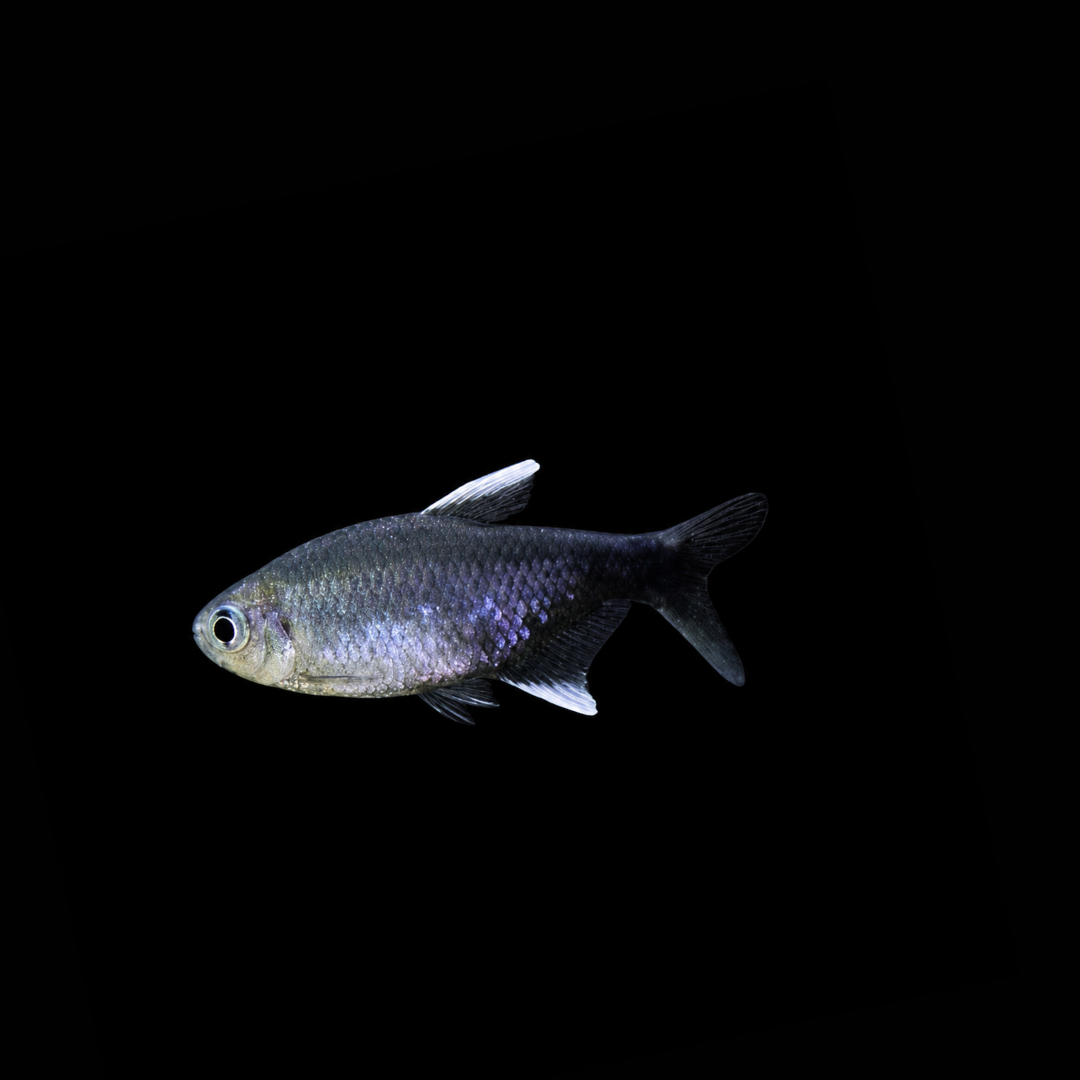
解説 / Description
ハイフェソブリコンsp.バイアブラックは、ブラジル東部バイーア州の上流域に分布する小型カラシンです。日本の観賞魚流通では「ハイフェソブリコンsp.バイアブラック」や「バイアブラック」の名で扱われることがありますが、現在の分類では Hasemania negodagua とする扱いが有力です。成熟した雄は、落ち着いた環境で求愛や威嚇を行う時に体の後半が深く黒ずみ、背ビレや尻ビレの白い縁取りがくっきり浮かびます。強い原色で目立つ魚ではなく、暗色の底床や水草の緑の中で、漆黒と白のコントラストを静かに楽しめる上品なテトラです。 Hyphessobrycon sp. Bahia Black is a small characin from the upper river systems of Bahia, eastern Brazil. In the Japanese aquarium trade it may still be sold as “Hyphessobrycon sp. Bahia Black” or “Bahia Black,” but current taxonomy most strongly treats it as Hasemania negodagua. Mature males can darken over the rear half of the body during courtship and display, with the white edges of the dorsal and anal fins standing out clearly. Rather than relying on vivid reds or blues, this refined tetra is best appreciated for its quiet black-and-white contrast among aquatic plants and dark substrates.
基本情報 / Basic Information
| 学名 / Scientific Name | Hasemania negodagua(旧学名・流通上の表記:Hyphessobrycon negodagua) |
|---|---|
| 通称 / Common Name | ハイフェソブリコンsp.バイアブラック、バイアブラック、バイヤブラック、ネゴダーグアテトラBahia Black Tetra, Nego D’água Tetra |
| 分類 / Family | カラシン目・Acestrorhamphidae・Stichonodontinae亜科・ハセマニア属。旧来はカラシン科ハイフェソブリコン属として扱われていました。Order Characiformes, family Acestrorhamphidae, subfamily Stichonodontinae, genus Hasemania. It was formerly treated as a species of Hyphessobrycon in Characidae. |
| 英名 / English Name | Bahia Black Tetra, Nego D’água Tetra, Butterfly Dwarf Tetra |
| 分布 / Distribution | ブラジル北東部バイーア州、パラグアス川上流域。タイプ産地はプラチーニャ川周辺で、サント・アントニオ川を経てパラグアス川水系へつながる地域として知られています。Upper rio Paraguaçu basin in Bahia, northeastern Brazil. The type locality is around the Rio Pratinha, a locality connected through the Rio Santo Antônio system to the Rio Paraguaçu basin. |
| 最大体長 / Max Size | 標準体長で約2.8cm前後、観賞魚として見る全長では約3〜3.5cm程度を目安にします。小型水草水槽でも扱いやすいサイズです。About 2.8 cm standard length, or roughly 3–3.5 cm total length in the aquarium. Its small size makes it well suited to planted community tanks. |
| 寿命 / Lifespan | 飼育下ではおおむね3〜5年ほどを目安に考えられます。小型魚のため急な水質変化には注意し、安定した環境で長く状態を保つことを意識します。Generally around 3–5 years in captivity. As a small fish, it should be protected from sudden water-quality changes and kept in a stable environment for long-term condition. |
飼育環境 / Aquarium Environment
| 水槽サイズ / Tank Size | 最低でも45cm規格水槽、群泳の見ごたえと長期安定を重視するなら60cm規格水槽以上がおすすめです。6〜8匹以上、できれば10匹以上で飼育すると、雄同士のフィンスプレッディングや自然な群れの動きが見られやすくなります。A standard 45 cm aquarium is a practical minimum, while a standard 60 cm aquarium or larger is recommended for stable long-term care and a more attractive group display. Keep at least 6–8 individuals, and ideally 10 or more, to encourage natural schooling and male display behavior. |
|---|---|
| 水温 / Temperature | 23〜27℃前後が目安です。日本では冬季のヒーター管理に加え、夏場は高水温を避けるために冷却ファンや水槽用クーラーを検討すると安心です。 Approximately 23–27°C. In Japan, a heater is useful in winter, while a cooling fan or aquarium chiller may be needed during hot summers. |
| 水質 / Water Quality | 弱酸性〜中性付近、pH6.0〜7.5程度を目安に、急変の少ない安定した水質を保ちます。原産地は透明度の高い湧水環境として知られますが、水槽では極端な再現よりも、アンモニアや亜硝酸を出さない成熟したろ過と定期的な換水が重要です。Slightly acidic to neutral water around pH 6.0–7.5 is a practical target, with stability being more important than chasing exact numbers. Although the species is associated with clear spring-fed habitats, mature filtration, regular water changes, and the absence of ammonia and nitrite are the key aquarium priorities. |
| レイアウト / Layout | 暗色のソイルや細かい砂を使い、水草、流木、浮き草で陰影を作ると落ち着きます。原産地は典型的な濃いブラックウォーターではないため、マジックリーフなどは薄く色づく程度に使うとよいでしょう。明るすぎる底床や強すぎる照明だけの環境では体色が薄く見えやすいため、隠れ場所と遊泳スペースの両方を確保します。Use dark aquasoil or fine sand, with aquatic plants, driftwood, and floating plants to create shade. Since the natural habitat is not a typical dark blackwater environment, leaf litter is best used lightly rather than heavily. Bright substrates and intense lighting can make the fish appear pale, so provide both cover and open swimming space. |
| 注意点 / Precautions | 導入直後は輸送ストレスで銀灰色に見えることがあり、雄でもすぐに黒くならない場合があります。少数飼育では落ち着かず、発色が鈍ったり小競り合いが目立ったりするため、匹数を確保して数日〜数週間かけて状態を見ます。New arrivals may look silvery gray from transport stress, and even males may not darken immediately. Small groups can become nervous and show dull coloration or excessive chasing, so keep a proper group and allow several days to a few weeks for the fish to settle. |
餌と給餌 / Feeding
| 餌の種類 / Diet | 細粒の人工飼料、細かく砕いたフレーク、顆粒フードを主食にできます。コンディションを上げたい時は、冷凍ブラインシュリンプ、ミジンコ、イトメ、孵化直後のブラインシュリンプなど、小さな口に合う生餌・冷凍餌を組み合わせます。Fine granules, crushed flakes, and micro pellets can be used as staple foods. For conditioning, supplement with small live or frozen foods that fit its mouth, such as frozen brine shrimp, daphnia, tubifex, and newly hatched brine shrimp. |
|---|---|
| 給餌のポイント / Feeding Tips | 口が小さいため、粒の大きさはかなり細かめにします。1回で大量に与えるより、少量を1日1〜2回、数分で食べ切る量に抑えると水質を維持しやすくなります。繁殖を狙う場合は、1〜2週間ほど栄養価の高い餌を増やして親魚を仕上げます。Because the mouth is small, offer very fine food particles. Small portions once or twice daily are better than heavy feedings, and all food should be eaten within a few minutes. For breeding, condition the adults for one to two weeks with richer foods. |
性格と混泳 / Temperament and Tank Mates
| 性格 / Temperament | 基本的には温和で、群れで泳ぐ社会性のある小型テトラです。雄同士はヒレを広げて互いに見せ合うような小競り合いをしますが、十分な匹数とスペースがあれば大きなトラブルにはなりにくいです。It is generally peaceful and social, best kept in groups. Males may flare their fins and spar visually with one another, but serious problems are unlikely when the group is large enough and space is adequate. |
|---|---|
| 混泳の相性 / Compatibility | 同程度の大きさの小型テトラ、ラスボラ、ペンシルフィッシュ、小型コリドラス、オトシンクルス、アピストグラマなどのドワーフシクリッドと相性が良好です。ベタやショーグッピーのように泳ぎが遅くヒレが長い魚とは、まれにヒレをつつく可能性があるため様子を見ながら組み合わせます。Good tank mates include similarly sized small tetras, rasboras, pencilfish, small Corydoras, Otocinclus, and dwarf cichlids such as Apistogramma. Avoid or monitor combinations with slow-moving, long-finned fish such as bettas and fancy guppies, as occasional fin-nipping may occur. |
病気と対策 / Diseases and Prevention
| かかりやすい病気 / Common Diseases | 特定の病気に極端に弱い魚ではありませんが、導入直後や水質悪化時には白点病、尾ぐされ病、ヒレの損傷や細菌感染が目立つことがあります。白いヒレ縁は傷みが見えやすいため、スレや欠けを早めに確認します。It is not known as an especially disease-prone fish, but newly introduced fish or fish kept in deteriorating water may develop ich, fin rot, fin damage, or bacterial issues. The pale fin edges make damage easier to notice, so check for fraying or abrasions early. |
|---|---|
| 対策と予防 / Prevention | 導入時は点滴法などでゆっくり水合わせを行い、可能であれば別水槽でトリートメントしてから本水槽へ入れます。水温を安定させ、週1回を目安に少量〜中量の換水を行い、底床の汚れをためすぎないことが大切です。発病時は症状に応じて隔離し、薬浴を行う場合も小型カラシン向けに慎重に濃度を調整します。Acclimate slowly, ideally using a drip method, and quarantine new arrivals before adding them to the main aquarium when possible. Keep temperature stable, perform modest weekly water changes, and avoid allowing waste to accumulate in the substrate. If disease appears, isolate the affected fish and adjust medication carefully for small characins. |
増やし方(繁殖) / Breeding
| 雌雄の判別 / Sexing | 雄は体がややスリムで、状態が上がると体後半の黒みが強くなり、背ビレや尻ビレの白い縁取りが鮮明になります。雌は全体に淡い灰色〜オリーブ色で、腹部がふっくらしやすく、ヒレの白い縁取りは雄ほど強く出ません。Males tend to be slimmer, with stronger black coloration on the rear body and sharper white edging on the dorsal and anal fins when in good condition. Females are usually paler gray to olive, fuller in the belly, and less strongly edged in white. |
|---|---|
| 繁殖形態 / Reproduction | 親が卵や稚魚を保護しない、ばらまき型の産卵です。親魚は卵を食べることがあるため、産卵後は親を速やかに隔離する必要があります。This species is an egg-scattering characin with no parental care. Adults may eat the eggs, so remove the parents promptly after spawning. |
| 繁殖のポイント / Breeding Tips | 20〜30L程度の繁殖用水槽を用意し、pH6.0〜6.5前後のやや軟水、25〜27℃、薄暗い環境にします。底にはウィローモス、産卵モップ、ガラス玉、産卵ネットなどを多めに入れ、卵が親の口に届きにくい状態を作ります。多くは早朝の光をきっかけに産卵し、卵はおよそ24〜36時間で孵化します。自由遊泳後の稚魚は非常に小さいため、初期飼料としてインフゾリアやゾウリムシを用意し、成長に合わせて孵化直後のブラインシュリンプへ切り替えます。Use a separate 20–30 L breeding tank with soft, slightly acidic water around pH 6.0–6.5, a temperature of 25–27°C, and subdued light. Add plenty of Java moss, spawning mops, glass marbles, or a spawning mesh so eggs fall out of reach of the adults. Spawning often occurs with early morning light, and eggs typically hatch in about 24–36 hours. The fry are very small at first, so prepare infusoria or paramecia before gradually moving on to newly hatched brine shrimp. |
雑学と豆知識 / Trivia and Fun Facts
| 1. 学名が見直されたテトラ / 1. A tetra with a revised scientific name | 本種は2001年に Hyphessobrycon negodagua として記載されました。ところが、脂ビレを欠く個体が多いことや分子系統学的な再検討により、現在は Hasemania negodagua として扱われています。日本の店頭や通販では流通名が残りやすいため、「ハイフェソブリコンsp.バイアブラック」と「ハセマニア・ネゴダーグア」の両方を知っておくと、探す時に迷いにくくなります。This species was described in 2001 as Hyphessobrycon negodagua. Because many individuals lack an adipose fin and because of recent molecular phylogenetic reassessment, it is now treated as Hasemania negodagua. In Japanese aquarium shops and online listings, older trade names often remain in use, so knowing both “Hyphessobrycon sp. Bahia Black” and “Hasemania negodagua” is useful. |
|---|---|
| 2. 湧水と石灰岩が作る特別な故郷 / 2. A special homeland shaped by springs and limestone | 原産地として知られるプラチーニャ川周辺は、バイーア州の内陸部にある透明度の高い水域です。アマゾンの濃いブラックウォーターに暮らすテトラとは印象が異なり、本種は清澄な水、白っぽい砂、水草、湧水の影響を受けた環境と結びついています。水槽では完全な再現を目指すよりも、よく立ち上がったろ過、清潔な水、適度な陰、群れでの安心感をそろえることが大切です。The Rio Pratinha area is a clear-water locality in inland Bahia. Unlike many tetras associated with dark Amazonian blackwater, this species is linked to clear water, pale sand, aquatic plants, and spring-influenced habitats. In the aquarium, a perfect biotope recreation is less important than mature filtration, clean water, moderate shade, and the security of a proper group. |
| 3. 雄が黒く染まる瞬間 / 3. The moment males turn black | 入荷直後や環境に慣れていない個体は銀灰色に見えることが多く、写真で見るような黒さが出ないこともあります。本種の魅力は、落ち着いた雄が求愛や威嚇の際にヒレを広げ、体の後半を黒く染める瞬間にあります。暗い底床、穏やかな照明、十分な群れ、安心できる水草の茂みがそろうと、単に「黒い魚」ではなく、状態や気分で表情を変える魚として楽しめます。New arrivals or unsettled fish often appear silvery gray and may not show the dark coloration seen in photographs. The real charm appears when a settled male flares its fins during courtship or display and darkens the rear half of the body. With a dark substrate, gentle lighting, a proper group, and secure plant cover, it becomes a fish that changes expression with mood and condition rather than simply a permanently black tetra. |
| 4. ネゴ・ダーグアという水辺の伝説 / 4. The riverside legend of Nego d’água | 種小名の negodagua は、ブラジルの川や湖に伝わる水辺の存在「Nego d’água」に由来するとされます。伝承では、夜の川底に潜み、漁師を驚かせる黒い人型の怪物のように語られます。小さく平和的なこのテトラにその名が与えられた理由は明確には説明されていませんが、雄が突然黒く染まり、白いヒレをひらめかせて舞う姿には、薄暗い水底から現れる黒い影を思わせる不思議な雰囲気があります。The species name negodagua is associated with “Nego d’água,” a legendary waterside being from Brazilian folklore. In stories, it is described as a dark, man-like creature that lurks on river bottoms and surprises fishermen at night. The reason such a name was given to a tiny, peaceful tetra is not clearly explained, but the sudden darkening of displaying males and the flash of their white-edged fins do give the fish a mysterious, shadow-like quality. |
| 5. 保全状況とアクアリウムでの向き合い方 / 5. Conservation status and aquarium responsibility | 本種はIUCNでは準絶滅危惧に評価されています。分布域が限られる小型魚は、現地の環境変化の影響を受けやすいため、観賞魚として楽しむ時も状態の良い個体を無理なく飼い切る意識が大切です。入荷状況や価格は時期、店舗、ワイルド個体かブリード個体かで大きく変わるため、固定的な相場よりも、餌付き、痩せ、ヒレの欠け、群れ全体の落ち着きで選ぶと失敗が少なくなります。The species is assessed as Near Threatened by the IUCN. Small fishes with restricted ranges can be vulnerable to habitat changes, so aquarists should aim to keep healthy individuals responsibly and avoid impulse purchases. Availability and price vary widely by season, shop, and whether fish are wild-caught or captive-bred, so selection should focus less on a fixed market price and more on feeding response, body condition, fin condition, and the overall calmness of the group. |
まとめ / Conclusion
ハイフェソブリコンsp.バイアブラックは、明るい赤や青で強く主張する魚ではありません。落ち着いた水草の陰で、雄がふっと黒みを増し、白いヒレ縁を広げる瞬間にこそ、この魚らしい美しさが表れます。十分な匹数、清潔で安定した水、暗色の底床、やわらかな照明がそろうほど、水槽の中で静かな存在感を深めていきます。 Hyphessobrycon sp. Bahia Black is not a fish that announces itself with bright red or blue. Its true beauty appears in the shade of aquatic plants, when a male suddenly darkens and spreads its white-edged fins. With a proper group, clean and stable water, a dark substrate, and gentle lighting, it develops a quiet but memorable presence in the aquarium.
分類の見直し、バイーア州の限られた水系、そしてネゴ・ダーグアの名にまつわる物語性まで含めると、本種は小さな体の中に多くの魅力を持つカラシンです。水草水槽で群れの動きと雄のディスプレイをじっくり眺めていると、派手さだけでは測れない、渋く奥行きのある熱帯魚の楽しさを教えてくれます。 With its revised taxonomy, restricted Bahian distribution, and the folklore behind the name Nego d’água, this small characin carries a surprising amount of depth. Watching the group move through a planted aquarium and seeing males display to one another reveals a more understated kind of tropical fish beauty, one that grows more rewarding the longer it is observed.

気になる道具や飼い方を見つけてみませんか?
 アイのアクアグッズ案内水槽の底砂の選び方|砂・砂利の違いとおすすめ商品道具の特徴や使い方、選ぶときのポイントをアイが紹介します。記事はコチラ →
 アイのアクアグッズ案内水草水槽のCO₂添加|3つの方式の選び方とおすすめ用品道具の特徴や使い方、選ぶときのポイントをアイが紹介します。記事はコチラ →
 アイのアクアグッズ案内プレコ飼育に必要なもの|餌・流木・ろ過・隠れ家・掃除用品道具の特徴や使い方、選ぶときのポイントをアイが紹介します。記事はコチラ →
 アイのアクアグッズ案内エーハイム、安いのと高いのは何が違う? コタロウと見比べる外部フィルター道具の特徴や使い方、選ぶときのポイントをアイが紹介します。記事はコチラ →
さまざまな飼育テーマをご紹介。リンク先の記事には広告・商品紹介が含まれます。
案内・紹介記事一覧へ →分布マップ
ブラジル北東部バイーア州、パラグアス川上流域に分布するとされる情報をもとに、プラチーニャ川周辺を概略代表地点として表示しています。
この地図は分布イメージを示すための概略プロットです。実際の採集地点や厳密な生息範囲を示すものではありません。
参考文献・根拠資料
本種の記事内容から、分類、分布、生息環境、飼育条件、繁殖、病気や導入時の注意点を支える資料を逆算して選定しました。店舗・通販サイト、個人ブログ、一般的なまとめサイトは除外し、本種固有の情報は原記載、魚類分類目録、生息地調査、保全データベースを優先しています。飼育・繁殖・病気については、本種単独の査読済み飼育研究が限られるため、近縁カラシン類の繁殖研究と、大学・獣医学系機関による一般魚類管理資料を補助根拠として用います。
-
分類・原記載・形態・タイプ産地・自然史
Lima, F. C. T. & Gerhard, P. 2001. A new Hyphessobrycon (Characiformes: Characidae) from Chapada Diamantina, Bahia, Brazil, with notes on its natural history. Ichthyological Exploration of Freshwaters, 12(2): 105–114.
学名 Hyphessobrycon negodagua としての原記載、Rio Pratinha周辺のタイプ産地、脂ビレ欠如、背ビレ・尻ビレ条数、雄の黒色パターンなど、本種固有の基礎情報を確認する中心資料です。 -
現行学名・分類階級・分布の確認
Fricke, R., Eschmeyer, W. N. & Van der Laan, R. eds. 2026. Eschmeyer’s Catalog of Fishes: Species by Family/Subfamily. California Academy of Sciences. Online version updated 10 Jun 2026.
Eschmeyer’s Catalog of Fishes: Hasemania negodagua
現在の有効名 Hasemania negodagua、Acestrorhamphidae、Stichonodontinae、上部Rio Paraguaçu水系・バイーア州という分布を確認するための分類目録です。 -
分子系統に基づく分類再編
Melo, B. F., Ota, R. P., Benine, R. C., Carvalho, F. R., Lima, F. C. T., Mattox, G. M. T., Souza, C. S., Faria, T. C., Reia, L., Roxo, F. F., Valdez-Moreno, M., Near, T. J. & Oliveira, C. 2024. Phylogenomics of Characidae, a hyper-diverse Neotropical freshwater fish lineage, with a phylogenetic classification including four families (Teleostei: Characiformes). Zoological Journal of the Linnean Society, 202(1): zlae101.
https://doi.org/10.1093/zoolinnean/zlae101
従来の広義Characidaeを4科へ再整理し、AcestrorhamphidaeやHasemaniaの扱いを理解するための主要な系統分類資料です。 -
体長・診断形質・分布・保全評価のデータベース確認
Froese, R. & Pauly, D. eds. 2025. FishBase: Hasemania negodagua. Version 2025-2.
FishBase: Hasemania negodagua
最大標準体長、淡水性・中底層性、上部Rio Paraguaçu水系の分布、診断形質、IUCN評価の概要を照合するために使用します。 -
保全状況・IUCN評価
IUCN. 2025. The IUCN Red List of Threatened Species. Version 2025-2. Assessment for Hyphessobrycon negodagua.
FishBase reference record citing IUCN Red List version 2025-2
準絶滅危惧に関する記述の確認用です。記事内では、狭い分布域を持つ淡水魚として環境変化に注意すべきという文脈で扱います。 -
Rio Pratinhaの生息環境・魚類相・人為的影響
Vita, G., Camelier, P. & Zanata, A. M. 2021. Ichthyofauna of the remarkably crystalline rio Pratinha, upper rio Paraguaçu basin, Chapada Diamantina, Brazil: inventory and conservation status. Studies on Neotropical Fauna and Environment, 56(2): 124–134.
https://doi.org/10.1080/01650521.2020.1758601
透明度の高いRio Pratinha、洞窟由来の湧水、白っぽい底質、固有・希少魚類、観光開発などによる環境変化を支える生息地側の重要文献です。 -
繁殖様式・小型カラシン類の繁殖特性
Azevedo, M. A. 2010. Reproductive characteristics of characid fish species (Teleostei, Characiformes) and their relationship with body size and phylogeny. Iheringia, Série Zoologia, 100(4): 469–482.
https://doi.org/10.1590/S0073-47212010000400020
カラシン類の繁殖戦略、体サイズと繁殖特性の関係、親魚が保護しない産卵様式を理解するための補助文献です。 -
卵発生・稚魚初期育成の補助根拠
Park, J. M., Kim, N. R., Han, K. H., Han, J. H., Son, M. H. & Cho, J. K. 2014. Spawning behavior, egg development, larvae and juvenile morphology of Hyphessobrycon eques (Pisces: Characidae) characidae fishes. Development & Reproduction, 18(4): 241–249.
https://doi.org/10.12717/DR.2014.18.4.241
本種そのものではありませんが、観賞魚として扱われる近縁カラシンの産卵行動、卵発生、孵化後の形態発達を補助的に参照する資料です。 -
水質管理・アンモニアと亜硝酸への注意
Francis-Floyd, R., Watson, C., Petty, D. & Pouder, D. B. Ammonia in Aquatic Systems. University of Florida IFAS Extension, FA16/FA031.
University of Florida IFAS Extension: Ammonia in Aquatic Systems
アンモニアが魚に与えるストレス、鰓への障害、pH・水温と毒性の関係、水質検査の重要性を支える公的な水質管理資料です。 -
病気予防・導入時の検疫・水質悪化時のリスク
Merck Veterinary Manual. 2024. Management of Aquarium Fish. Reviewed/Revised May 2022, Modified Sept 2024; and MSD Veterinary Manual. 2026. Routine Health Care of Fish. Modified Apr 2026.
Merck Veterinary Manual: Management of Aquarium Fish
MSD Veterinary Manual: Routine Health Care of Fish
病気の多くがストレス、水質悪化、過密、検疫不足と結びつくこと、予防には水質、栄養、衛生、検疫を重視することを支える獣医学系資料です。





コメント