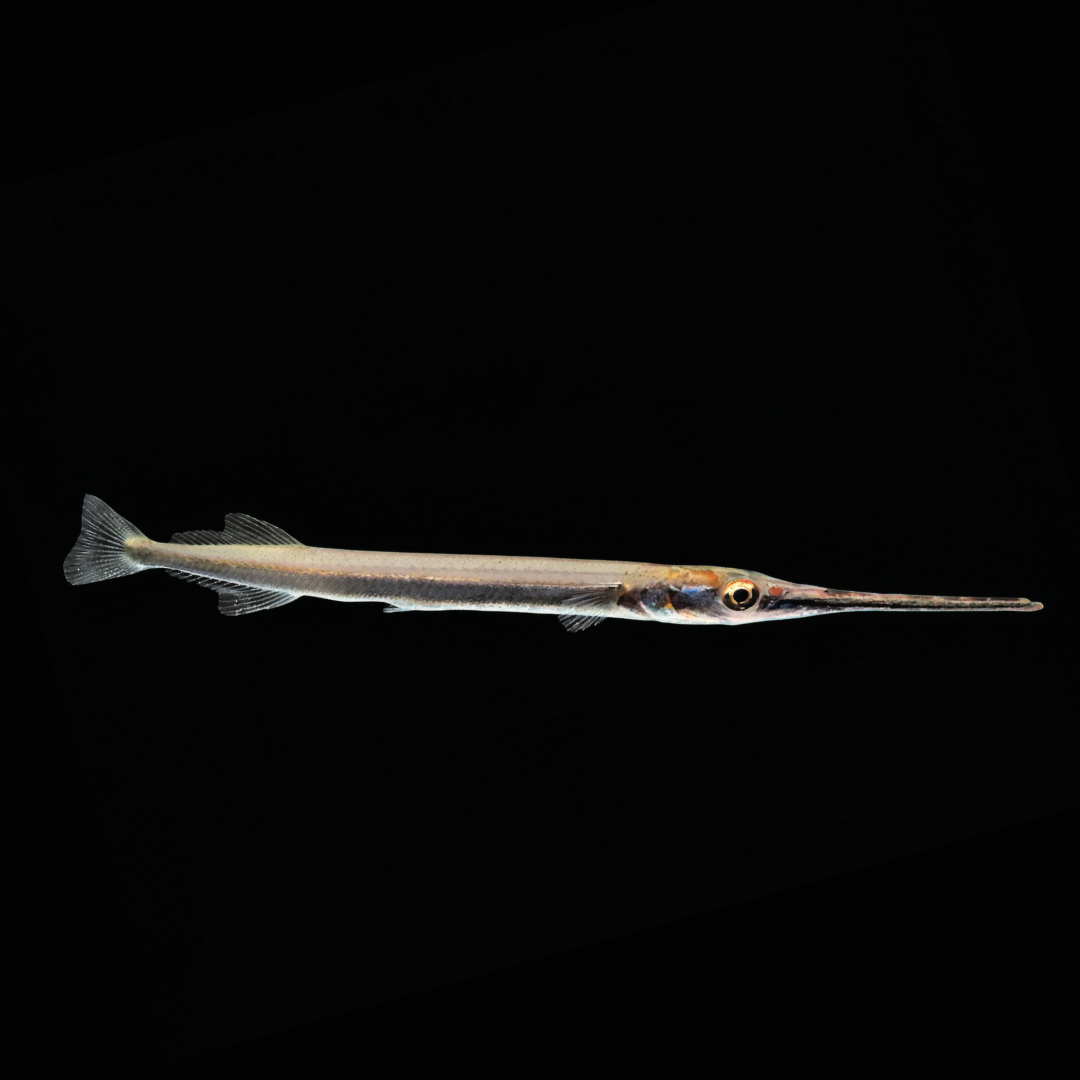
ニードルガーは、南アジアから東南アジアにかけての淡水域に広く生息するダツ目の一種です。名前に「ガー」を冠していますが、アリゲーターガーなどの古代魚とは異なり、メダカやトビウオに近いグループに属しています。その最大の特徴は、針のように細長く伸びた嘴(くちばし)と、銀色に輝くスレンダーな体躯です。水面直下を矢のように進む姿は非常に優雅で、古くから観賞魚として親しまれてきました。The Needle Gar is a species of the order Beloniformes widely distributed in freshwater regions from South to Southeast Asia. Despite its name including “Gar,” it is not related to ancient fish like Alligator Gars but belongs to the group containing medaka and flying fish. Its most striking features are the needle-like elongated beak and the slender, silver-shining body. Moving like an arrow just below the water surface, its appearance is very elegant, making it a long-time favorite in the aquarium hobby.
基本情報 / Basic Information
学名 / Scientific Name
Xenentodon cancila
通称 / Common Name
ニードルガー、フレッシュウォーター・ガーNeedle Gar, Freshwater Gar
分類 / Family
ダツ目ダツ科ゼネントドン属Order Beloniformes, Family Belonidae, Genus Xenentodon
英名 / English Name
Needle Gar, Freshwater Needlefish
分布 / Distribution
インド、スリランカ、バングラデシュ、ミャンマー、タイなどの南アジア・東南アジア広域Widespread across South and Southeast Asia, including India, Sri Lanka, Bangladesh, Myanmar, and Thailand.
最大体長 / Max Size
約40cmApproximately 40 cm
寿命 / Lifespan
約3年About 3 years
飼育環境 / Aquarium Environment
水槽サイズ / Tank Size
120cm規格水槽(120×45×45cm)以上を強く推奨。終生飼育には120cmワイド水槽や150cm以上の大型水槽が理想的です。A 120 cm standard tank (120x45x45 cm) or larger is strongly recommended. For lifelong care, a 120 cm wide tank or a large tank over 150 cm is ideal.
水温 / Temperature
22℃〜28℃。熱帯産の魚であるため、日本の冬季は高性能なヒーターによる徹底した温度管理が必要です。22°C to 28°C. Being a tropical fish, thorough temperature control with high-performance heaters is essential during Japanese winters.
水質 / Water Quality
pH 7.0〜7.5(中性から弱アルカリ性)。完全な純淡水で問題なく飼育可能です。pH 7.0 to 7.5 (neutral to slightly alkaline). They can be successfully kept in pure freshwater.
レイアウト / Layout
水面付近の遊泳スペースを広く確保します。河川の流れが緩い場所でも見られる魚なので、強い水流を一律に求める必要はありません。ろ過と水面の適度な動きで水質・酸素供給を保ち、魚が流れに逆らい続けなくてよい場所も作ります。Provide open swimming space near the surface. This species also inhabits slow-flowing river pools, so a strong current is not a universal requirement. Maintain filtration and gentle surface movement, with areas where the fish can rest without constantly swimming against the flow.
注意点 / Precautions
極めて臆病で驚きやすく、水槽外への飛び出し事故が多発します。重くて隙間のない頑丈な蓋を設置し、激突による嘴の骨折にも注意してください。They are extremely timid and easily startled, leading to frequent jumping accidents. Install a heavy, gapless lid and be cautious of beak fractures from collisions.
餌と給餌 / Feeding
餌の種類 / Diet
甲殻類、小魚、昆虫などを食べる肉食魚です。飼育下では、購入時に何を食べているかを必ず確認してください。人工飼料にすぐ慣れるとは限らないため、食べ慣れた餌を確保し、摂餌を確認しながら餌の種類を広げます。This carnivore eats crustaceans, small fish and insects. Before purchase, confirm which foods the individual is accepting. Do not assume that it will readily take pellets; first provide familiar food and check feeding before gradually offering alternatives.
給餌のポイント / Feeding Tips
視覚で獲物を追うため、水面に浮かぶ餌に反応させることが重要です。食べ残しは水質悪化を招くため、速やかに取り除いてください。As they hunt by sight, it is crucial to make them react to food floating on the surface. Quickly remove any uneaten food to prevent water quality deterioration.
性格と混泳 / Temperament and Tank Mates
性格 / Temperament
温和ですが非常に神経質です。他種を積極的に襲うことはありませんが、パニックを起こしやすい側面があります。Generally peaceful but very nervous. They do not actively attack other species but are prone to panicking.
混泳の相性 / Compatibility
口に入るサイズの小型魚は捕食されます。ポリプテルスや中型のナマズなど、水槽の低層を泳ぐ温和な中・大型魚との相性が良いです。Small fish that fit in their mouths will be eaten. They pair well with peaceful mid-to-large-sized fish that inhabit the lower levels, such as polypterids or medium-sized catfish.
病気と対策 / Diseases and Prevention
かかりやすい病気 / Common Diseases
白点病、水カビ病、および衝突による嘴の外傷。Ichthyophthiriasis (Ich), water mold, and traumatic injuries to the beak due to collisions.
対策と予防 / Prevention
水温の急変を避け、清潔な水質を維持します。衝突による外傷を防ぐため、水槽の周囲で急な動きをしないよう配慮が必要です。Avoid sudden temperature changes and maintain clean water quality. To prevent collision injuries, avoid sudden movements around the tank.
増やし方(繁殖) / Breeding
雌雄の判別 / Sexing
成熟した雄は背鰭と尻鰭の縁が黒く染まる傾向があります。Mature males tend to have black edges on their dorsal and anal fins.
繁殖形態 / Reproduction
卵生。卵には長い粘着糸があり、水草に絡みつく構造をしています。Oviparous. The eggs have long adhesive tendrils that allow them to entwine with aquatic plants.
繁殖のポイント / Breeding Tips
モンスーン期に合わせて繁殖行動が見られます。産卵後は親魚による食害を防ぐため、卵を隔離して育てる必要があります。Breeding behavior is observed coinciding with the monsoon season. To prevent predation by parents, eggs should be isolated and raised separately.
雑学と豆知識 / Trivia and Fun Facts
1. 「ガー」であって「ガー」ではない:数奇な命名の歴史 / 1. A “Gar” but not a “Gar”: A Curious History of Naming
英名の「ガー(Gar)」は元々、古代英語で「槍」を意味する言葉で、大西洋のダツを指していました。その後、北米で嘴の長い古代魚が発見され「ガーパイク」と名付けられた結果、ガー=古代魚というイメージが定着しました。本種が紹介された際、その姿が北米のガーに似ていたため再び「ガー」と呼ばれ、名称が逆転して戻ってきたという面白い歴史があります。The English name “Gar” originally meant “spear” in Old English and referred to Atlantic needlefish. Later, when long-beaked ancient fish were discovered in North America and named “Gar pike,” the image of “Gar = Ancient Fish” became established. When this species was introduced, its resemblance to North American gars led to it being called “Gar” again, completing a curious linguistic reversal.
2. 仲間のダツで調べられた「緑色の骨」 / 2. Green Bones Studied in a Related Needlefish
同じダツ科のBelone beloneでは、骨の青緑色に胆汁色素のビリベルジンが関わることが研究されています。2013年の分析対象はこの海産のダツとゲンゲの仲間で、ニードルガー(Xenentodon cancila)ではありません。「ダツの研究」と紹介されていても、どの種を調べた結果なのかを区別する必要があります。Biliverdin, a bile pigment, has been studied as the source of blue-green bone coloration in the marine needlefish Belone belone. A 2013 analysis examined that species and the eelpout Zoarces viviparus, not Xenentodon cancila. Findings about one fish called a garfish should not automatically be attributed to another species.
3. 誤解されやすい生態:塩分は必要か? / 3. Misunderstood Ecology: Is Salt Required?
本種は淡水で飼育できる魚ですが、FishBaseには淡水域と汽水域の両方の記録が掲載されています。「汽水でも見られること」と「飼育に塩分が必須であること」は別です。流通個体の飼育水と入手元の管理条件を確認し、理由なく塩分を加えたり急に変えたりしないようにしましょう。This fish can be maintained in freshwater, while FishBase records both freshwater and brackish habitats. Occurrence in brackish water does not mean salt is mandatory in captivity. Check the supplier’s water conditions and avoid adding salt or changing salinity without a specific reason.
4. ハワイでの外来種問題:矢のような捕食者の定着 / 4. Invasive Species Issue in Hawaii: Establishment of an Arrow-like Predator
ハワイのオアフ島には本種の定着記録があります。USGSは、1989年に移入されたオオクチバスを捕食していたとの報告を紹介しています。一方、米国魚類野生生物局は導入後の影響に関する情報が限られると評価しています。「爆発的に増えて生態系全体に大きな被害を与えた」とまでは言い切れませんが、飼育魚を野外に放してよい理由にはなりません。This species is established on Oahu, Hawaii. USGS cites a 1989 report of predation on introduced largemouth bass. The U.S. Fish and Wildlife Service also notes that information about impacts is limited. This does not establish explosive population growth or broad ecosystem damage, but aquarium fish must not be released into the wild.
まとめ / Conclusion
ニードルガーは、その特異な外観と生理学的特徴から、アクアリウムにおける「生きた工芸品」のような存在です。臆病で飛び出しやすいという難点はありますが、適度な水の循環と広々とした水槽、そして正しい知識に基づいた管理を行えば、その美しい銀色の遊泳を長期間楽しむことができます。The Needle Gar, with its unique appearance and physiological traits, is like a “living work of art” in the aquarium. While their timid nature and tendency to jump are challenges, with suitable water circulation, a spacious tank, and management based on correct knowledge, you can enjoy their beautiful silver swimming for a long time.
「汽水が必要」という古い常識を捨て、純淡水の大型水槽でゆったりと泳がせることこそ、彼らの真の魅力を引き出す鍵となります。このミステリアスな「銀色の槍」との出会いが、あなたのアクアリウムライフをより深いものにしてくれることを願っています。Discarding the old notion that “salt is required” and letting them swim gracefully in a large freshwater tank is the key to unlocking their true charm. I hope your encounter with this mysterious “silver spear” enriches your aquarium life.



 アイのアクアグッズ案内マジックリーフ物語|一枚の葉がアクアリウム用品になるまで道具の特徴や使い方、選ぶときのポイントをアイが紹介します。記事はコチラ →
 アイのアクアグッズ案内コケを食べるコイの仲間に合わせる飼育用品|フライングフォックス・アルジイーター・ガラ道具の特徴や使い方、選ぶときのポイントをアイが紹介します。記事はコチラ →
 アイのアクアグッズ案内エンゼルフィッシュの飼育用品|高さのある水槽・ろ過・水草・餌の選び方道具の特徴や使い方、選ぶときのポイントをアイが紹介します。記事はコチラ →
 アイのアクアグッズ案内テトラミンって、こんなにあるの? アイとコタロウのごはん探究旅道具の特徴や使い方、選ぶときのポイントをアイが紹介します。記事はコチラ →




コメント