

▶ 記事の生体をAMAZONで買う ▶ 記事の生体をYahooで買う
解説 / Description
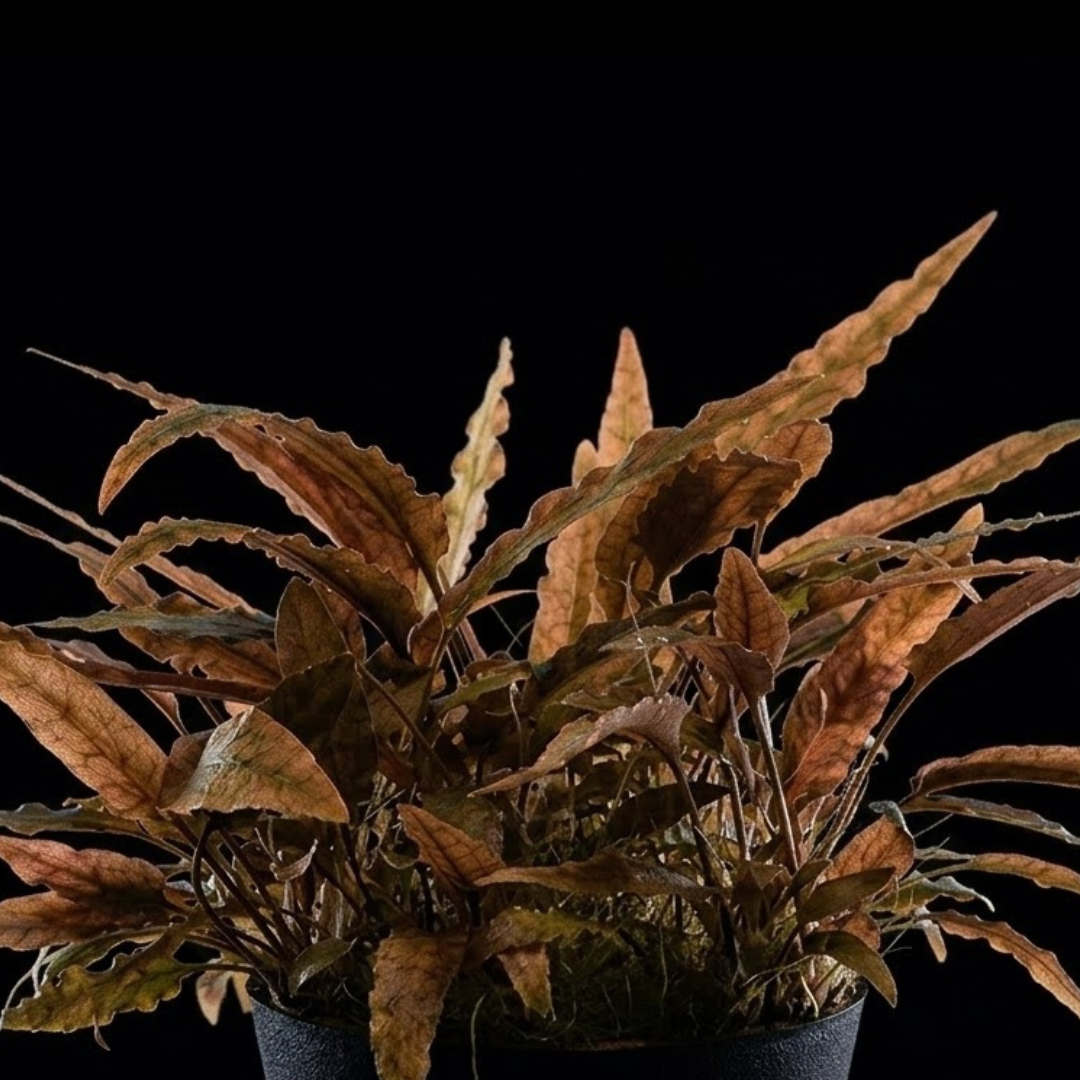
クリプトコリネ・ウンデュラータは、スリランカを原産とするサトイモ科の水生植物です。アクアリウムの世界では長年「アクセルロディ」という名称で親しまれてきました。非常に強健で環境適応能力が高く、初心者からプロのアクアスケーパーまで幅広く愛用されています。最大の特徴は、環境によって劇的に変化する葉の色彩と形態です。低光量下では鮮やかな緑色の直立した姿を見せますが、強い光と豊富な肥料を与えると、底床を這うようにロゼットを展開し、葉面は深い赤褐色やブロンズ色へと美しく変貌します。葉の縁に現れる繊細な波打ち(ウェーブ)が、水景に自然なリズムと重厚感を与えてくれます。 Cryptocoryne undulata is an aquatic plant in the Araceae family, native to Sri Lanka. Long known in the aquarium hobby as “Axelrodii,” it is remarkably hardy and adaptable, making it a favorite for beginners and professional aquascapers alike. Its most striking feature is its dramatic polymorphism; under low light, it grows upright with bright green leaves, but with high light and rich nutrients, it forms a low-growing rosette with deep reddish-brown or bronze coloration. The delicate undulation along the leaf margins adds a natural rhythm and profound texture to any aquascape.
基本情報 / Basic Information
| 学名 / Scientific Name | Cryptocoryne undulata |
|---|---|
| 通称 / Common Name | クリプトコリネ・アクセルロディ、クリプトコリネ・ウンデュラータCryptocoryne axelrodii, Cryptocoryne undulata |
| 分類 / Family | サトイモ科クリプトコリネ属Araceae, Cryptocoryne |
| 分布 / Distribution | スリランカ(固有種)Sri Lanka (Endemic) |
| 育成難易度 / Difficulty | 容易Easy |
育成環境 / Cultivation Environment
| 光量 / Light | 低光量から中光量(LED照明で十分育成可能。強すぎる光はコケの付着を招くため注意が必要です。)Low to Moderate (Grows well under standard LEDs. Avoid excessively strong light to prevent algae growth.) |
|---|---|
| CO2添加 / CO2 Injection | 不要(添加することで、より緻密なロゼットと鮮やかな赤褐色の発色が期待できます。)Not required (However, CO2 injection encourages denser rosettes and more vibrant reddish-brown colors.) |
| 水質 / Water Quality | 水温:22〜28℃、pH:6.0〜7.5(弱酸性から中性を好みますが、適応範囲は非常に広いです。)Temp: 22–28°C, pH: 6.0–7.5 (Prefers slightly acidic to neutral water but is highly adaptable.) |
| 底床 / Substrate | ソイル(栄養豊富なソイルが最適です。大磯砂などの砂利を使用する場合は、底床用固形肥料の併用が不可欠です。)Soil (Rich aquatic soil is ideal. If using gravel like Oiso sand, the use of root tabs is essential.) |
レイアウト / Layout
| 配置 / Positioning | 中景から後景(45cm規格水槽などの小型水槽では後景、60cm規格水槽以上のサイズでは中景として、流木や石の根元に配置するのが効果的です。)Midground to Background (Best placed at the base of driftwood or rocks as a background in 45cm tanks or a midground in 60cm or larger tanks.) |
|---|---|
| 注意点 / Precautions | 一度定着すると根を深く張るため、頻繁な植え替えは避けてください。環境変化によるストレスで葉が溶ける「クリプトの溶け」に注意が必要です。Avoid frequent transplanting as it develops a deep root system. Be cautious of “Crypt melt,” where leaves dissolve due to environmental stress. |
増やし方(トリミング) / Propagation & Trimming
| 増やし方 / Propagation | ランナー(地下茎)による増殖。親株の周囲に子株が展開するため、十分なサイズになったらランナーを切り離して株分けします。Propagation via runners (rhizomes). When daughter plants around the mother plant reach a sufficient size, cut the runner and transplant them. |
|---|---|
| トリミング / Trimming | 古くなった葉やコケが付着した葉を、根元からハサミで切り取ります。有茎草のような差し戻しはできません。Trim old or algae-covered leaves by cutting them at the base with scissors. It cannot be propagated by stem cuttings. |
病気と対策(コケなど) / Pests & Algae
| かかりやすい病気 / Common Issues | クリプトの溶け(葉が半透明になり崩壊する現象)、および成長の遅い古い葉への黒髭苔や緑藻の付着。Crypt melt (leaves becoming translucent and decaying) and algae like Black Brush Algae (BBA) or green algae on older, slow-growing leaves. |
|---|---|
| 対策と予防 / Prevention | 溶けが発生した際は、溶けた葉を速やかに除去し、水質を安定させて新芽を待ちます。コケ対策にはヤマトヌマエビなどのお掃除役を導入し、古い葉を定期的に間引くことが有効です。If melting occurs, promptly remove decayed leaves and stabilize water parameters to await new growth. For algae, introduce “cleaner” species like Amano shrimp and regularly thin out old leaves. |
雑学と豆知識 / Trivia and Fun Facts
| 1. 「アクセルロディ」という名称に隠された光と影1. The Light and Shadow Behind the Name “Axelrodii” | 流通名である「アクセルロディ」は、アクアリウム界の巨人ハーバート・R・アクセルロッド博士に捧げられたものです。彼は世界最大のペット書籍出版社を築き、カージナルテトラの命名にも関わった功労者ですが、その人生は波乱に満ちていました。稀少なバイオリンの来歴偽造疑惑や大規模な脱税による国外逃亡、そして逮捕という劇的な歴史を背負っています。静かな水槽で揺れるこの水草の背景には、アクアリウム文化を創り上げた人間の、強烈な野心と複雑な業が刻まれているのです。The common name “Axelrodii” was dedicated to Dr. Herbert R. Axelrod, a giant in the aquarium world who founded the world’s largest pet book publisher. While he contributed greatly to the hobby, his life was filled with controversy, including allegations of forging the provenance of rare violins and a dramatic international flight from tax evasion charges. Behind the tranquil appearance of this plant lies the intense ambition and complex legacy of a man who helped build aquarium culture. |
|---|---|
| 2. 「ボルネオ産」という誤解のメカニズム2. The Mechanism of the “Borneo Origin” Misconception | 本種はスリランカの固有種ですが、しばしば「ボルネオ島原産」と誤記されることがあります。これは、ボルネオのブラックウォーターに生息する美しい熱帯魚「スンダダニオ・アクセルロディ」と、名称が混同されたことに起因すると推測されます。魚の生息環境データが、同じ名前を持つ水草のデータとして商業ベースで誤って紐付けられ、架空の生態情報が広まってしまったのです。正しい原産地を知ることは、最適な育成環境を整えるための第一歩となります。While this species is endemic to Sri Lanka, it is often mislabeled as being from Borneo. This likely stems from a confusion with the beautiful tropical fish “Sundadanio axelrodi,” which inhabits the blackwaters of Borneo. Environmental data for the fish was erroneously linked to the plant of the same name in commercial databases, spreading false ecological information. Knowing the true origin is the first step toward providing the optimal environment. |
| 3. 「溶け」は枯死ではなく、未来への投資3. “Melting” is Not Death, but an Investment in the Future | アクアリストを驚かせる「クリプトの溶け」は、実は植物による高度な生存戦略です。環境が急変した際、古い葉の組織を自ら分解し、蓄えたエネルギーを根茎へと急速に回収する「プログラムされた細胞死」の一種なのです。回収された資源は、新しい環境に完璧に適応した「水中葉」を展開するための軍資金となります。葉がなくなっても根茎が生きていれば、数週間後にはより美しい姿で復活します。The alarming “Crypt melt” is actually a sophisticated survival strategy. When the environment changes abruptly, the plant undergoes “programmed cell death,” breaking down old leaf tissues to rapidly reclaim stored energy into the rhizome. These recovered resources fund the growth of new “submersed leaves” perfectly adapted to the new conditions. As long as the rhizome remains alive, the plant will rebound even more beautifully within a few weeks. |
| 4. クリプトの宿命「全溶解」を防ぐ救世主4. The Savior Against the Fate of Total Dissolution | 本種を含むクリプトコリネにとって、輸入時の最大の脅威は日本の検疫で行われるガスによる「くん蒸」です。薬剤に極めて敏感な彼らにとって、この処理は細胞を破壊し、水槽導入後の致命的な「全溶解」を引き起こす原因となってきました。しかし、無菌状態で育てられる「組織培養カップ」の登場がこの歴史を変えました。検疫でのくん蒸を回避しつつ、本種が苦手とする農薬や害虫のリスクを完全に排除できるこの技術は、まさに繊細なクリプトコリネのために進化してきたと言っても過言ではありません。For Cryptocoryne species, the greatest threat during import is the chemical fumigation conducted during Japanese quarantine. Being extremely sensitive to chemicals, this process often destroys their cells, leading to fatal “total dissolution” after being introduced to an aquarium. However, the advent of “tissue culture cups” has changed this history. By avoiding fumigation while completely eliminating risks from pesticides and pests, this technology can truly be said to have evolved specifically for the sake of delicate Cryptocoryne. |
まとめ / Conclusion
クリプトコリネ・ウンデュラータ(アクセルロディ)は、その深みのある色彩と、波打つ葉が織りなす独特の質感が魅力の水草です。一度環境に馴染めば、低光量やCO2なしでも美しく育つ強健さを持ち、長く水景を支えてくれる信頼の置ける存在となります。 Cryptocoryne undulata (Axelrodii) is a captivating plant known for its deep colors and unique textures created by its wavy leaves. Once acclimated, its hardiness allows it to thrive even in low light without CO2, making it a reliable staple that supports your aquascape for a long time.
「溶け」という現象に戸惑うこともあるかもしれませんが、それは植物が新しい環境に一歩踏み出すための再生の儀式です。科学的な裏付けに基づいた適切な管理と、その歴史的背景への理解をもって向き合えば、この水草はきっとあなたの水槽に、深淵なる自然の息吹をもたらしてくれるでしょう。 While the “melting” phenomenon may be startling, it is simply a ritual of rebirth for the plant to step into its new environment. With proper management based on scientific understanding and an appreciation of its historical context, this plant will surely bring the profound breath of nature into your aquarium.

気になる道具や飼い方を見つけてみませんか?
 アイのアクアグッズ案内アカヒレの仲間に合わせる飼育用品|無加温・混泳・繁殖の水槽とろ過道具の特徴や使い方、選ぶときのポイントをアイが紹介します。記事はコチラ →
 アイのアクアグッズ案内水槽のコケ掃除|道具の選び方とお掃除生体の得意・不得意道具の特徴や使い方、選ぶときのポイントをアイが紹介します。記事はコチラ →
 アイのアクアグッズ案内エーハイム、安いのと高いのは何が違う? コタロウと見比べる外部フィルター道具の特徴や使い方、選ぶときのポイントをアイが紹介します。記事はコチラ →
 アイのアクアグッズ案内ダニオの仲間に合わせる飼育用品|ゼブラダニオから超小型種まで水槽・ろ過・餌を選ぶ道具の特徴や使い方、選ぶときのポイントをアイが紹介します。記事はコチラ →
さまざまな飼育テーマをご紹介。リンク先の記事には広告・商品紹介が含まれます。
案内・紹介記事一覧へ →参考文献および引用資料
- Plants of the World Online (POWO), Royal Botanic Gardens, Kew. (Cryptocoryne undulata Wendt)
- International Plant Names Index (IPNI). (Registration and Nomenclature of C. undulata and C. axelrodii)
- Wendt, A. (1955) “Die Gattung Cryptocoryne Fischer” – 学術的記載および種同定の根拠
- Rataj, K. (1975) “Revision of the Genus Cryptocoryne Fischer” – シノニム(C. axelrodii)の検討資料
- de Wit, H. C. D. (1990) “Aquarium Plants” – クリプトコリネ属の分類整理および栽培記録
- 農林水産省 植物防疫所 “植物防疫法に基づく輸入規制および検疫手続きについて”
- Federal Bureau of Investigation (FBI) / U.S. Department of Justice (Historical Records on Herbert R. Axelrod Case)
- Biochemistry and Molecular Biology of Plants (Buchanan et al.) – 植物のプログラムされた細胞死(PCD)に関する生理学的背景





コメント