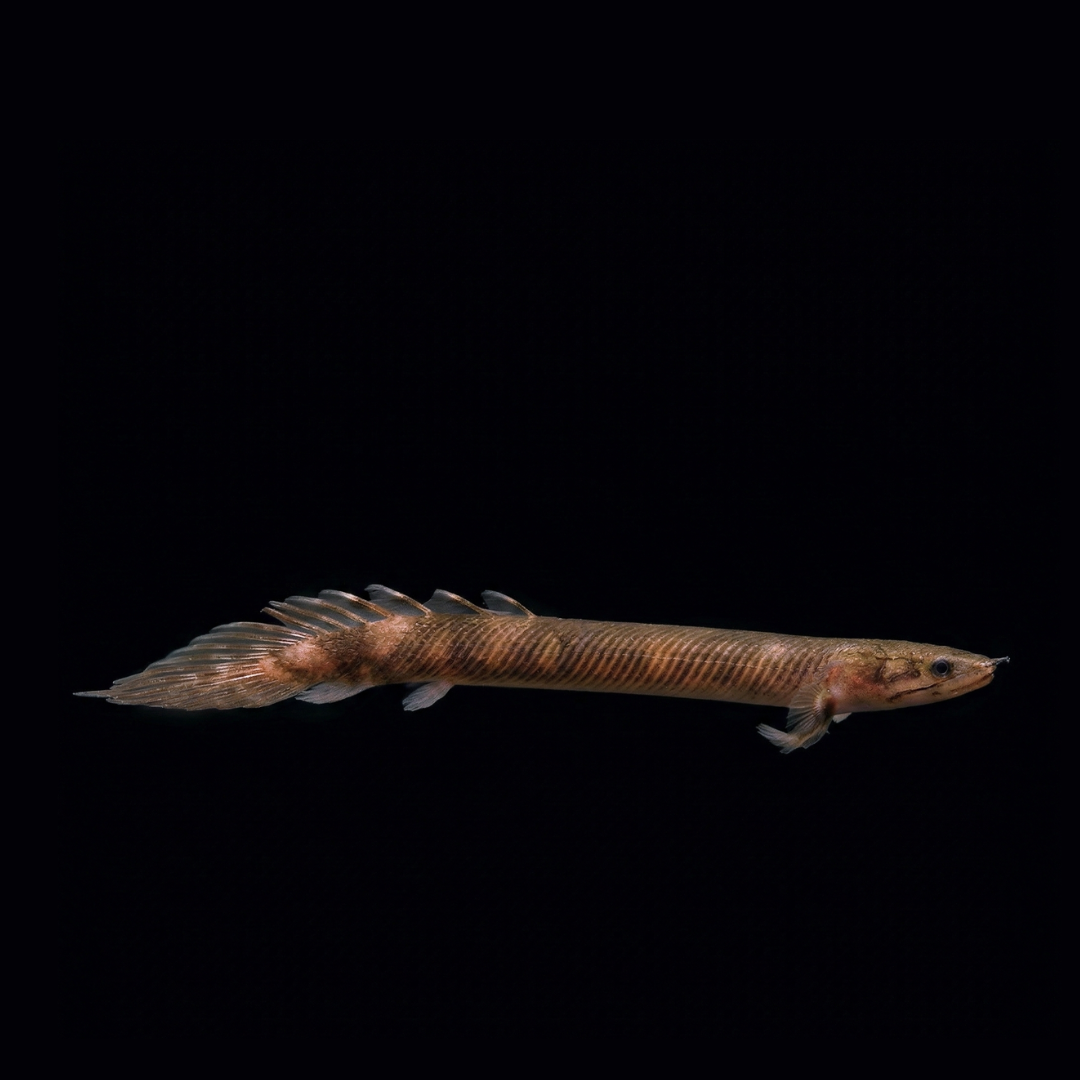
ポリプテルス・モケーレムベンベは、コンゴ川流域のブラックウォーターに生息する、ポリプテルス属の中でも最小かつ最も神秘的な種の一つです。その名はコンゴの伝説に登場する未確認動物「モケーレムベンベ」に由来しており、まさに太古の姿を現代に残す「生きた化石」にふさわしい命名と言えるでしょう。2006年に独立種として記載されるまではポリプテルス・レトロピンニスと混同されていた歴史があり、現在でも「旧レトロピンニス」や「ザイールグリーン」という呼称で親しまれています。上顎が突出するタイプのポリプテルスで、細身の体と黄色がかった地色に濃い褐色の網目模様が入る非常に美しい魚です。Polypterus mokelembembe is one of the smallest and most mysterious species within the Polypterus genus, inhabiting the blackwaters of the Congo River basin. Its name is derived from the legendary cryptid “Mokele-mbembe,” fitting for a “living fossil” that retains its prehistoric form. Before being officially described as a distinct species in 2006, it was long confused with Polypterus retropinnis and is still commonly referred to in the hobby as the “Old Retropinnis” or “Zaire Green.” As an upper-jaw protruding type, it features a slender body and a beautiful mottled pattern of dark brown over a yellowish base.
基本情報 / Basic Information
学名 / Scientific Name
Polypterus mokelembembe
通称 / Common Name
モケーレムベンベ、旧レトロピンニス、ザイールグリーンMokelembembe, Old Retropinnis, Zaire Green
底砂には角のない細かい砂(ボトムサンド等)を用い、流木や陰性水草(アヌビアスなど)で隠れ家を多く作ります。強い照明は避けてください。Use fine, smooth sand and provide plenty of hideouts using driftwood and plants like Anubias. Avoid bright lighting.
注意点 / Precautions
飛び出し事故が非常に多いため、隙間のない蓋の設置が必須です。また、肺呼吸を行うための水面スペースを確保してください。Tight-fitting lids are essential to prevent jumping. Ensure some air space at the surface for lung breathing.
餌と給餌 / Feeding
餌の種類 / Diet
肉食性。沈下性の人工飼料(ペレット)、冷凍赤虫、冷凍エビ、キビナゴ、メダカなどの生き餌。Carnivorous. Sinking pellets, frozen bloodworms, frozen shrimp, small baitfish like medaka.
給餌のポイント / Feeding Tips
野生採集個体が多いため、導入当初は人工飼料を食べないことがあります。生き餌や冷凍餌から徐々に慣らすのがコツです。夜行性が強いため消灯前の給餌も効果的です。Mostly wild-caught, so they may reject pellets at first. Transition slowly from live or frozen food. Feeding before lights-out is effective due to their nocturnal nature.
性格と混泳 / Temperament and Tank Mates
性格 / Temperament
穏やかで臆病。自分より大きな魚には攻撃しませんが、口に入るサイズの小魚やエビは食べてしまいます。Peaceful and shy. They do not attack larger fish, but will eat small fish or shrimp that fit in their mouths.
混泳の相性 / Compatibility
同種や他のポリプテルス(同サイズ)、中型のコンゴテトラ、中型シクリッドなど。上層を泳ぐ魚との相性が良いです。Compatible with same-sized Bichirs, Congo tetras, and medium-sized cichlids. Best with fish that inhabit upper layers.
病気と対策 / Diseases and Prevention
かかりやすい病気 / Common Diseases
皮膚の擦れによる水カビ病、ポリプテルス特有の寄生虫(マクロギロダクティルス)など。Saprolegnia (fungus) from skin abrasions, and Polypterus-specific parasites (Macrogyrodactylus).
対策と予防 / Prevention
導入時のトリートメントを徹底し、寄生虫の有無を確認します。角のあるレイアウト素材を避け、水質を清潔に保つことが予防に繋がります。Thorough quarantine upon introduction is vital. Avoid sharp layout materials and maintain clean water to prevent issues.
増やし方(繁殖) / Breeding
繁殖形態 / Reproduction
卵生。オスが臀鰭(しりびれ)をカップ状に広げ、メスの産んだ卵をキャッチして受精させる独特の行動をとります。Oviparous. Males use their modified anal fin like a cup to catch and fertilize eggs released by the female.
繁殖のポイント / Breeding Tips
飼育下での繁殖例は極めて稀です。ブラックウォーターでの環境再現や、低気圧の接近に合わせた換水がトリガーになると言われています。稚魚には外鰓(がいさい)が見られます。Breeding in captivity is extremely rare. Mimicking blackwater and water changes during low-pressure systems are said to be triggers. Larvae possess external gills.
雑学と豆知識 / Trivia and Fun Facts
1. 「旧レトロピンニス」と呼ばれる理由:分類の逆転劇 / 1. Why it’s called “Old Retropinnis”: A Taxonomic Twist
かつてアクアリウム界で「ポリプテルス・レトロピンニス」として長年親しまれてきた魚こそが、現在のモケーレムベンベです。2006年の学術的な再定義により、本来のレトロピンニスは別の細身な種であることが判明しました。この混乱により、以前から親しまれていた本種は「旧レトロ」という名で呼ばれ続けることになったのです。The fish long loved as “Polypterus retropinnis” in the hobby is actually what we now call Mokelembembe. A 2006 taxonomic redefinition revealed that the true P. retropinnis was a different, slender species. Due to this history, Mokelembembe is still affectionately called “Old Retropinnis.”
2. モケーレムベンベとレトロピンニスの詳細な識別点 / 2. Detailed Identification: Mokelembembe vs. Retropinnis
最も確実な識別点は「胸鰭の軟条数」です。モケーレムベンベは23から29本、本物のレトロピンニスは30から34本です。一方、「背びれの数(小離鰭)」も指標となりますが、モケーレムベンベが6から8枚、レトロピンニスが7から9枚と数値が重なるため、これ単独での判別は困難です。また、虹彩(目)に黒と白の斑点が交互に並ぶのは本物のレトロピンニス特有の模様です。The most reliable trait is the pectoral fin ray count: 23-29 for Mokelembembe vs. 30-34 for P. retropinnis. Dorsal finlet counts also differ (6-8 vs. 7-9) but overlap, making them less definitive. Additionally, P. retropinnis features distinct alternating black and white spots in its iris, which Mokelembembe lacks.
3. 伝説の未確認動物から授かった名 / 3. A Name Gifted from a Legend
種小名の「mokelembembe」は、コンゴ共和国のテレ湖周辺に潜むとされる伝説の恐竜型未確認動物、モケーレムベンベに由来します。ポリプテルスという魚自体が恐竜時代から姿を変えていない古代魚であること、そしてコンゴの奥地に生息することから、このロマンあふれる名が選ばれました。The specific epithet “mokelembembe” comes from the legendary dinosaur-like cryptid said to inhabit Lake Tele in the Congo. The name was chosen because Polypterids are ancient fish that have remained unchanged since the age of dinosaurs and live deep in the Congo.
4. 変化する体色とザイールグリーンの由来 / 4. Color Changes and the Origin of “Zaire Green”
流通名の一つ「ザイールグリーン」は、かつて本種の地色が緑がかって見えたことに由来します。実際には、水質や底砂の色、光の加減によって、黄色、褐色、そして深みのある緑色へと体色が微妙に変化します。特に入荷直後のワイルド個体が放つ独特の色彩は、多くの愛好家を魅了してやみません。One of its common names, “Zaire Green,” comes from the greenish hue the body can sometimes take on. Depending on water quality, substrate color, and lighting, its skin can shift between yellow, brown, and a deep mossy green. Wild-caught individuals just after arrival often display particularly stunning coloration.
まとめ / Conclusion
ポリプテルス・モケーレムベンベは、その名に込められた伝説のとおり、私たちの水槽の中に太古のアフリカの記憶を運んできてくれる特別な存在です。上顎突出型特有の愛らしい顔つきと、小型ながらも力強い古代魚の風格を併せ持つ本種は、90cm以下の水槽でも十分にその魅力を堪能できる素晴らしい魚と言えます。Polypterus mokelembembe, true to the legend within its name, is a special presence that brings memories of ancient Africa into our aquariums. With its charming upper-jaw face and powerful prehistoric presence, it is a magnificent fish that allows enthusiasts to enjoy the allure of ancient fish even in tanks smaller than 90cm.
「旧レトロ」という呼称に隠された分類学的なドラマを知ることで、目の前で泳ぐ一匹の魚への愛着はより深まることでしょう。正しい環境と愛情を持って接すれば、彼らは十数年という長い時間を共にしてくれる最高のパートナーになってくれるはずです。Knowing the taxonomic drama hidden behind the name “Old Retropinnis” adds depth to the affection we feel for this fish. With the right environment and care, they will become wonderful long-term partners, sharing their lives with us for over a decade.
Schliewen, U. K. and Schäfer, F. (2006). Polypterus mokelembembe, a new species of bichir from the central Congo basin (Actinopterygii: Polypteridae). Zootaxa 1129: 23-36.
Boulenger, G. A. (1909). Catalogue of the fresh-water fishes of Africa in the British Museum (Natural History). Vol. I. (Historical context for Polypteridae taxonomy)
Poll, M. (1941). Contribution à l’étude de la systématique des Polypteridae. Revue de Zoologie et de Botanique Africaines.


 ポチップ
ポチップ



コメント