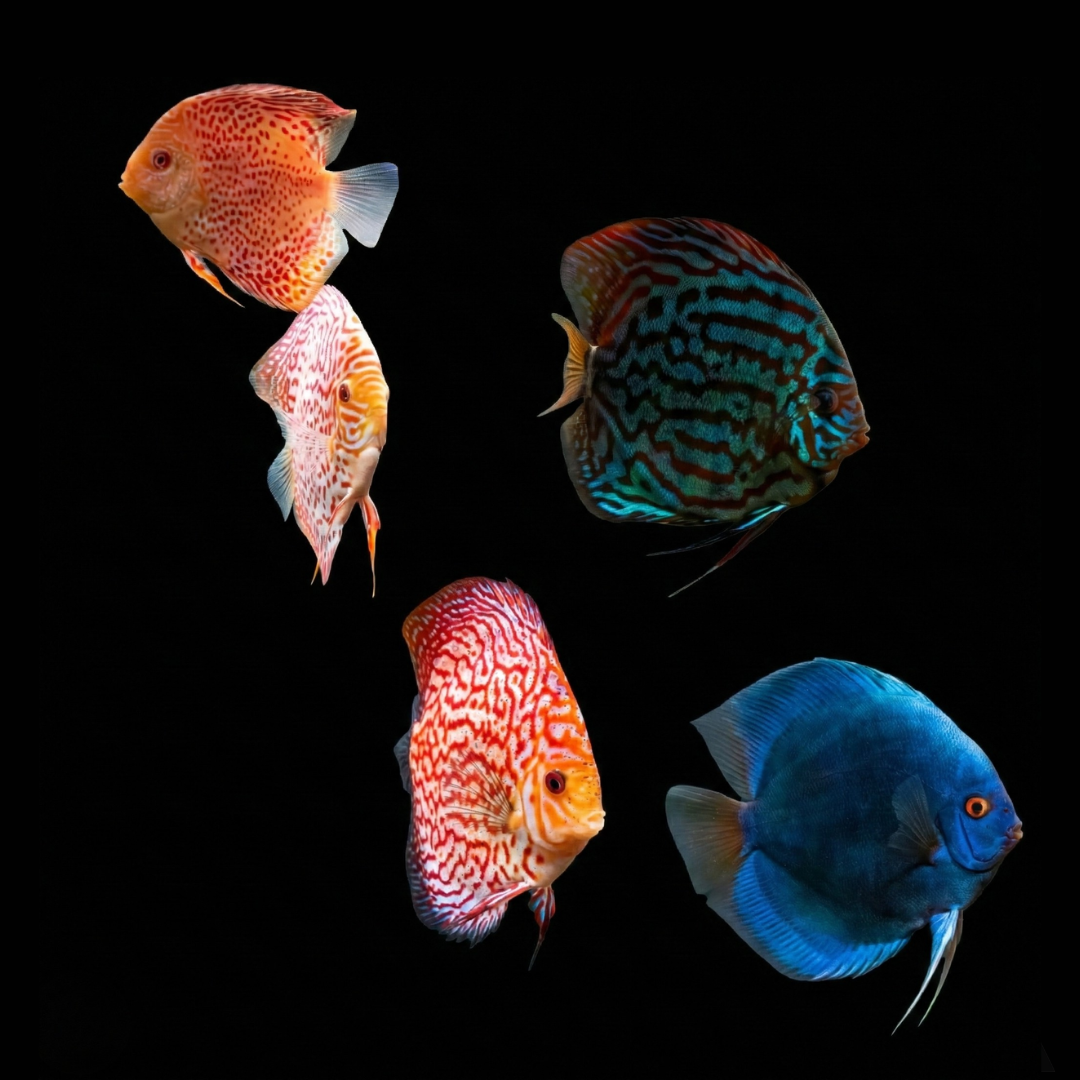
アマゾン川の宝石、あるいは「熱帯魚の王様」と称えられるディスカスは、その名の通り円盤(ディスカス)のような扁平な体型が最大の特徴です。このユニークな姿は、生息地であるアマゾン川の密集した木の根や水没林の間を、水の抵抗を受けずにすり抜けるための進化的適応の結果です。単に美しいだけでなく、親魚が体表から分泌する特殊な粘液「ディスカスミルク」で稚魚を育てるという、魚類の中でも極めて稀で献身的な子育てを行うことでも知られています。その高貴な美しさと、飼育者の技術に応えてくれる奥深さは、世界中のアクアリストを魅了して止みません。Hailed as the “Jewel of the Amazon” and the “King of the Aquarium,” the Discus is renowned for its distinctive disc-shaped, compressed body. This unique morphology is an evolutionary adaptation for navigating through dense tangles of roots and submerged forests in its native Amazonian habitats. Beyond its striking appearance, the Discus is famous for its extraordinary parental care, nurturing fry with a specialized skin secretion known as “discus milk.” Their noble elegance and the sophisticated level of care they demand continue to captivate aquarists worldwide.
基本情報Basic Information
学名Scientific Name
Symphysodon spp.
通称Common Name
ディスカス(改良品種、野生種を含む総称)Discus (A general term covering both wild species and domestic hybrids)
南米アマゾン川流域(ブラジル、コロンビア、ペルーなど)Amazon River basin, South America (Brazil, Colombia, Peru, etc.)
最大体長Maximum Size
約20cm(品種や個体による)Approx. 20 cm (varies by strain and individual)
寿命Lifespan
約10年〜15年(適切な環境下)Approx. 10 to 15 years (under optimal conditions)
飼育環境Aquarium Setup
水槽サイズTank Size
単独またはペア:60cm規格水槽(約60L)以上。群泳:90cm規格水槽(約160L)〜120cmワイド水槽以上を推奨。Single/Pair: Minimum 60 cm standard tank (60L). Schooling: 90 cm (160L) to 120 cm wide tanks recommended.
水温Temperature
26℃〜30℃(通常は28℃前後が理想)
水質Water Chemistry
pH4.2〜7.0(弱酸性〜中性)。硬度は軟水〜超軟水を好みます。pH 4.2–7.0 (Soft to ultra-soft water is preferred).
レイアウトLayout
清掃性を重視した「ベアタンク(底砂なし)」が一般的ですが、流木や水草を用いた自然観溢れるレイアウトでの飼育も可能です。Bare-bottom tanks are preferred for maintenance, though natural scapes with driftwood and plants are also popular.
注意点Key Precautions
水質の急激な変化に敏感です。特にアンモニアや亜硝酸の蓄積には細心の注意を払い、安定した生物濾過を構築することが不可欠です。Extremely sensitive to fluctuations in water quality. Established biological filtration is essential to prevent ammonia or nitrite spikes.
餌と給餌Diet and Feeding
餌の種類Diet
ディスカスハンバーグ(牛ハツベースの自家製または市販餌)、赤虫、乾燥人工飼料など。“Discus Hamburger” (beefheart-based mix), bloodworms, and specialized high-protein pellets.
給餌のポイントFeeding Strategy
高タンパクな餌を好みますが、食べ残しは急激な水質悪化を招きます。数分で食べ切れる量を1日数回に分けて与え、残った餌は速やかに取り除いてください。Requires high-protein food. Feed small portions multiple times daily and promptly remove leftovers to prevent water spoilage.
性格と混泳Temperament and Compatibility
性格Temperament
基本的には穏やかですが、シクリッド科特有の縄張り意識を持ちます。特に繁殖期にはペアで排的な行動を取ることがあります。Generally peaceful but territorial, as is typical for cichlids. Pairs may become aggressive during spawning.
混泳の相性Tank Mates
最も注意すべきは異なる産地(欧州産とアジア産など)の混泳による交差感染です。同種の混泳はサイズを揃えることが重要で、お掃除役の魚としては温和なコリドラスなどが適しています。Avoiding cross-infection between sources (e.g., European vs. Asian) is vital. Maintain similar sizes for groups. Peaceful tank mates like Corydoras are ideal.
日々の水換えによる清潔な環境維持が最大の予防です。発病時は隔離水槽で薬浴(グリーンFゴールド等)を行い、内臓疾患には薬餌の経口投与が有効です。Strict water change routines are the best defense. Use quarantine tanks for treatment; medicated food is effective for internal issues.
増やし方(繁殖)Breeding
繁殖形態Reproduction
卵生。垂直な面に卵を産み付け、孵化後は両親が体表から分泌するディスカスミルクを与えて稚魚を育てます。Egg-layers. They spawn on vertical surfaces, and both parents nurture the fry with hormone-induced “discus milk” secreted from their skin.
繁殖のポイントBreeding Tips
産卵誘発には軟水化や温度ショック(換水による一時的な水温低下)が効果的です。産卵床にはセラミック製の産卵筒を使用するのが一般的です。Softening the water and slight temperature fluctuations can trigger spawning. Ceramic breeding cones are standard spawning sites.
雑学と豆知識Trivia and Science
1. 「ディスカスミルク」に隠された内分泌の神秘1. The Biological Secret of “Discus Milk”
ディスカスが稚魚に与える粘液は、哺乳類の母乳生成と同じ「プロラクチン」というホルモンの働きによって分泌されます。かつてこの仕組みが解明される前は、親から卵を離すと稚魚が餓死してしまい、人工繁殖は不可能とされていました。The mucus secretion is regulated by the hormone prolactin, the same hormone responsible for milk production in mammals. Before this was understood, artificial rearing was nearly impossible as fry would perish without parental contact.
2. 成長阻害ホルモンと換水の美学2. Growth Inhibitors and the Art of Water Changes
ディスカスは閉鎖環境で密度が高まると、自らの成長を抑制するホルモンを水中に放出します。これは乾季の全滅を防ぐ生存戦略ですが、飼育下で大きく育てるには、このホルモンを物理的に排出するための頻繁な「水換え」が不可欠となります。In crowded environments, Discus release growth-inhibiting hormones into the water—a survival mechanism for dry seasons. For maximum growth in captivity, frequent water changes are required to physically flush out these hormones.
3. 免疫のパラドックス:パラサイトフリーの光と影3. The Immunity Paradox: Parasite-Free Stocks
ヨーロッパのトップブリーダーが育てる「パラサイトフリー」個体は、極めて美しく健康的ですが、一方で常在菌に対する免疫を持ちません。産地の異なる魚を混ぜると、免疫のない個体が致命的な感染症を引き起こす「ディスカスエイズ」のリスクが高まります。“Parasite-free” stocks are exceptionally healthy but often lack immunity to common aquarium pathogens. Mixing sources carries a high risk of “Discus Plague,” where non-immune fish suffer from fatal cross-infections.
4. 伝説のブリーダー、ジャック・ワットレーの功績4. The Legacy of Jack Wattley
「ディスカスのゴッドファーザー」と呼ばれたワットレー氏は、アマゾン遠征で得た野生種から「ターコイズ・ディスカス」を確立し、さらに極秘だった人工育成技術を公開することで、ディスカスを世界中の家庭で楽しめる存在へと押し上げました。Known as the “Godfather of Discus,” Jack Wattley developed the “Turquoise Discus” from wild strains. His decision to share secret rearing techniques revolutionized the hobby, making Discus accessible worldwide.
まとめConclusion
ディスカスの飼育は、単なる観賞魚の維持を超えた「総合科学の実践」と言えるでしょう。水質、栄養、そして生物学的な特性を深く理解し、それに応えることで、この魚は比類なき美しさを見せてくれます。特に日本で培われた換水理論やバクテリア管理の技術は、限られた空間で命のポテンシャルを最大限に引き出す知恵の結晶です。Keeping Discus is more than a hobby; it is a practical application of biological science. By understanding their needs for water chemistry and nutrition, you unlock their peerless beauty. Mastered techniques in water management allow hobbyists to maximize the potential of these majestic creatures.
初心者にはハードルが高いと思われがちな「熱帯魚の王様」ですが、正しい知識と愛情を持って接すれば、それ以上の感動を与えてくれる存在です。あなた自身の水槽で、円盤状の宝石が優雅に舞う姿を楽しんでみませんか。While often considered challenging, the “King of the Aquarium” rewards dedicated care with profound satisfaction. We hope you enjoy the experience of watching these “living jewels” glide gracefully through your own aquarium.
【分類学・原著論文】
Heckel, J. (1840). Johann Natterer’s neue Flussfische Brasilien’s nach den Beobachtungen und Mittheilungen des Entdeckers beschrieben. Ann. Mag. Nat. Hist. (学術的な原記載およびネグロ川周辺での発見記録)
【分類学・再検討】
Schultz, L. P. (1960). A review of the pompadour or discus fishes, genus Symphysodon of South America. Tropical Fish Hobbyist. (ブラウン・ブルーディスカスの亜種記載に関する基礎資料)
【飼育・繁殖理論】
Wattley, J. (1985). Discus for the Perfectionist. T.F.H. Publications. (人工育成技術およびターコイズ・ディスカスの系統確立に関する歴史的知見)



 アイのアクアグッズ案内エンゼルフィッシュの飼育用品|高さのある水槽・ろ過・水草・餌の選び方道具の特徴や使い方、選ぶときのポイントをアイが紹介します。記事はコチラ →
 アイのアクアグッズ案内おとひめ物語|養殖生まれの餌を、わが家の魚に合う一粒へ道具の特徴や使い方、選ぶときのポイントをアイが紹介します。記事はコチラ →



コメント