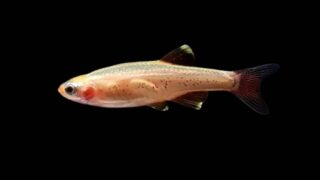
2022年春、日本のアクアリウム界に衝撃を与えた「クリムゾンレッドペンシル」は、アークレッド、ブラッドレッドに続く「第三の赤」として登場したナノストムス属の未記載種です。その最大の特徴は、既存種を凌駕する深紅の色彩にあります。特に成熟した雄個体は、興奮すると体側の黒いラインすら赤色に飲み込まれ、まるで全身が紅に染まったような姿を見せます。南米ペルーの奥地、セネパ川などが原産とされるこの小さな魚は、美しいだけでなく、その生息地の背景や生態においても多くの物語を持っています。飼育には多少のコツが必要ですが、水槽内でその燃えるような赤を発色させた時の感動は、飼育者だけが味わえる特権と言えるでしょう。The Crimson Red Pencilfish, an undescribed species of the genus Nannostomus, made a sensational debut in the Japanese aquarium scene in the spring of 2022. Known as the “Third Red” following the Arc Red and Blood Red Pencilfish, its most striking feature is its intense crimson coloration. Mature males, when excited, turn so red that even their black lateral stripes seem to disappear, giving them a solid scarlet appearance. Originating from remote areas like the Rio Cenepa in Peru, this small fish carries a rich background in both its ecology and habitat history. While they require specific care, the sight of their fiery red display in an aquarium is a privilege reserved for dedicated aquarists.
ペルー(セネパ川、アマヤ川など)Peru (Rio Cenepa, Rio Amaya, etc.)
最大体長 / Max Size
約 3.0 cmApprox. 3.0 cm
寿命 / Lifespan
約 2〜3年(推測)Approx. 2-3 years (Estimated)
飼育環境 / Aquarium Environment
水槽サイズ / Tank Size
45cm規格水槽(約30L)以上推奨。30cmキューブ(約25L)でも飼育可能ですが、水質安定と闘争回避のため水量は多い方が有利です。Recommended 45cm standard tank (approx. 30L) or larger. A 30cm cube (approx. 25L) is possible, but larger volume is better for water stability and reducing aggression.
水温 / Temperature
24 – 26℃
水質 / Water Quality
弱酸性(pH 5.0 – 6.5)。現地はpH 4.0程度の極端な軟水(ブラックウォーター)です。飼育下でもマジックリーフ等でブラックウォーター化すると状態が上がります。Weakly acidic (pH 5.0 – 6.5). Their natural habitat is extreme soft water (blackwater) with pH around 4.0. Using Catappa leaves to create blackwater conditions is recommended.
レイアウト / Layout
流木や陰性水草(ミクロソリウムなど)を複雑に組み、魚同士の視線が遮られる「隠れ家」を多数用意することが必須です。It is essential to create a complex layout with driftwood and shade-tolerant plants (like Microsorum) to provide many hiding spots and break the line of sight between fish.
注意点 / Precautions
導入時の水質変化に敏感で、日本の細菌が多い環境では病気になりやすいため、慎重な水合わせと初期のトリートメントが重要です。また、高水温(28℃以上)には弱いため、夏場の温度管理は徹底してください。They are sensitive to water quality changes and susceptible to bacterial infections upon introduction. Careful acclimation and initial quarantine are crucial. They are also intolerant of high temperatures (over 28°C).
餌と給餌 / Feeding
餌の種類 / Diet
口が小さいため、小型カラシン用の微粒人工飼料や、ブラインシュリンプの幼生、冷凍ミジンコなどが適しています。色揚げ効果のある餌を積極的に与えるのがおすすめです。Due to their small mouths, micro-pellets for small characins, brine shrimp nauplii, and frozen daphnia are suitable. Color-enhancing foods are highly recommended.
給餌のポイント / Feeding Tips
痩せやすいため、こまめに給餌を行いますが、食べ残しは水質悪化の元となるので注意が必要です。冷凍餌と人工飼料をバランスよく与えると健康的な赤色を維持できます。Feed frequently as they can lose weight easily, but be careful of leftovers affecting water quality. A balanced diet of frozen food and pellets helps maintain their healthy red coloration.
性格と混泳 / Temperament and Tank Mates
性格 / Temperament
同種間での縄張り意識が非常に強く、雄同士は激しく争います。弱い個体が追い回されて衰弱しないよう、十分な隠れ家が必要です。They are highly territorial towards their own kind, and males fight aggressively. Sufficient hiding spots are necessary to prevent weaker individuals from being harassed to death.
混泳の相性 / Compatibility
他種に対しては比較的無関心ですが、ヒレの長い魚や動きの遅い魚にはちょっかいを出すことがあります。コリドラスやオトシンクルス、小型のテトラ類との混泳は問題ありません。They are relatively indifferent to other species, but may nip at long-finned or slow-moving fish. Tank mates like Corydoras, Otocinclus, and other small tetras are generally safe.
病気と対策 / Diseases and Prevention
かかりやすい病気 / Common Diseases
導入直後のカラムナリス病(口腐れ・尾腐れ病)や、水温変化による白点病にかかりやすい傾向があります。現地の水が極めて清浄なため、細菌への抵抗力が低い場合があります。Susceptible to Columnaris (mouth/fin rot) upon introduction and Ich (white spot disease) due to temperature fluctuations. They may have low resistance to bacteria as their natural habitat is extremely clean.
対策と予防 / Prevention
導入時は時間をかけて水合わせを行い、初期は塩水浴や薄めの薬浴でトリートメントを行うと生存率が上がります。マジックリーフを入れて水を弱酸性に保つことも、抗菌作用が期待でき有効です。Slow acclimation and initial quarantine with salt or mild medication improve survival rates. Using Catappa leaves to maintain slightly acidic water is also effective due to antibacterial properties.
増やし方(繁殖) / Breeding
繁殖形態 / Reproduction
基質産卵・散布型です。水草の茂みや浮き草の根などに粘着性のある卵を少数ずつ数日にわたって産み付ける「連続産卵」の傾向があります。Egg-scatterers. They tend to spawn continuously, laying small numbers of sticky eggs on aquatic plants or floating plant roots over several days.
繁殖のポイント / Breeding Tips
親魚が卵を食べてしまうため、卵を隔離する「採卵方式」が確実です。稚魚は非常に小さく、初期飼料としてインフゾリア(ゾウリムシ)などを用意する必要があります。難易度は高めです。Since parents eat their eggs, collecting eggs separately is recommended. Fry are tiny and require Infusoria as a first food source. Breeding difficulty is relatively high.
雑学と豆知識 / Trivia and Fun Facts
1. 「第三の赤」の衝撃と識別 / 1. The Impact of the “Third Red”
アークレッド(2000年代)、ブラッドレッド(2009年)に続き登場した本種は、既存種と明確に異なります。最大の違いは発色パターンです。ブラッドレッドが「紫がかった赤」で黒いラインを明瞭に残すのに対し、本種の雄は興奮すると黒ラインが赤色に飲み込まれ、全身が「燃えるような朱色」に変化します。Following the Arc Red and Blood Red, this species is distinct. While Blood Red is purplish-red with clear black lines, the male Crimson Red turns a fiery scarlet, with its black lines often disappearing into the redness when excited.
2. 戦場から届いた宝石 / 2. A Gem from the Conflict Zone
主な産地であるセネパ川流域は、かつて国境紛争の舞台でした。長年の立ち入り制限が皮肉にも自然環境を守り、平和が訪れたことで本種のような新種が発見されるに至りました。この小さな赤い魚は、平和と生物多様性の象徴とも言えます。The Rio Cenepa region was once a conflict zone. Paradoxically, restricted access preserved nature, and peace led to the discovery of this species. This small red fish is a symbol of peace and biodiversity.
3. 究極のブラックウォーター / 3. Extreme Blackwater
生息地は、pH4.0〜5.0、硬度はほぼゼロという、極端なブラックウォーターです。紅茶のように茶色く染まった水は、有機酸が豊富で細菌が少ない環境です。飼育下でもこの環境を模倣することで、本来の免疫力を維持しやすくなります。Their habitat is extreme blackwater with pH 4.0-5.0 and near-zero hardness. This tea-colored water is rich in organic acids and low in bacteria. Mimicking this environment helps maintain their immunity in captivity.
4. 夜の顔「ナイトカラー」 / 4. Night Coloration
ナノストムス属特有の生態として、夜間は劇的に体色が変化します。鮮やかな赤色は消え去り、体側に不規則な斜めのバンド模様が現れた地味な姿になります。これは就寝中のエネルギー節約と、夜行性の敵から身を守るためのカモフラージュと考えられています。Typical of Nannostomus, they change color dramatically at night. The vivid red fades, replaced by dull, irregular oblique bands. This is thought to be for camouflage and energy conservation during sleep.
5. 産地による色彩差(アマヤ vs セネパ) / 5. Regional Color Variations (Amaya vs Cenepa)
本種には主にアマヤ川産とセネパ川産の2タイプが知られています。一般にアマヤ産は「明るい朱色」で黒ラインが消失しやすく、セネパ産は「深い紅色」で黒ラインが太く残りコントラストが強い傾向があります。日本では現状これらが混在して流通していますが、この微細な違いを楽しむのも一興です。Two main types are known: from Rio Amaya and Rio Cenepa. Generally, Amaya types are a “bright vermilion” with fading black lines, while Cenepa types are “deep crimson” with bold black lines providing strong contrast. Both are often distributed as “Crimson” in Japan, but distinguishing these variations adds to the hobby.
まとめ / Conclusion
クリムゾンレッドペンシルは、その燃えるような色彩と興味深い生態で、小型美魚の頂点とも言える存在です。飼育には少しコツがいりますが、ブラックウォーター環境で仕上げられた雄個体が、ヒレを広げてフィンスプレッディングを行う姿は、息を呑むほどの美しさです。ぜひ、あなたの水槽でこの「生きた宝石」の輝きを堪能してください。The Crimson Red Pencilfish stands at the pinnacle of small ornamental fish with its fiery coloration and fascinating ecology. While it requires some skill to keep, the sight of a male fin-spreading in a blackwater environment is breathtaking. We hope you enjoy the brilliance of this “living gem” in your aquarium.
未記載種であるため、今後の研究によって学名が決まる日も近いかもしれません。その時まで、この美しい通称とともに、大切に育てていきましょう。As an undescribed species, it may soon receive a scientific name through future research. Until then, let’s cherish and care for them under this beautiful common name.


-1.png)
-1-1024x1024.png)
-1024x1024.png)
 アイのアクアグッズ案内ベタの一匹飼いを楽しむ|水槽・ヒーター・ふた・フィルターの選び方ベタの一匹飼いに向く水槽容量、ふたと空気層、ヒーターと水温計、弱い水流のフィルターを、コタロウとアイの会話で分かりやすく解説します。記事はコチラ →
 アイのアクアグッズ案内水草の肥料の選び方|底床用・液肥・メネデールの使い分け道具の特徴や使い方、選ぶときのポイントをアイが紹介します。記事はコチラ →
 アイのアクアグッズ案内水草用ソイルの選び方|土・砂の違いとおすすめ商品道具の特徴や使い方、選ぶときのポイントをアイが紹介します。記事はコチラ →
 アイのアクアグッズ案内プレコ飼育に必要なもの|餌・流木・ろ過・隠れ家・掃除用品道具の特徴や使い方、選ぶときのポイントをアイが紹介します。記事はコチラ →



コメント