

関連記事

解説 / Description
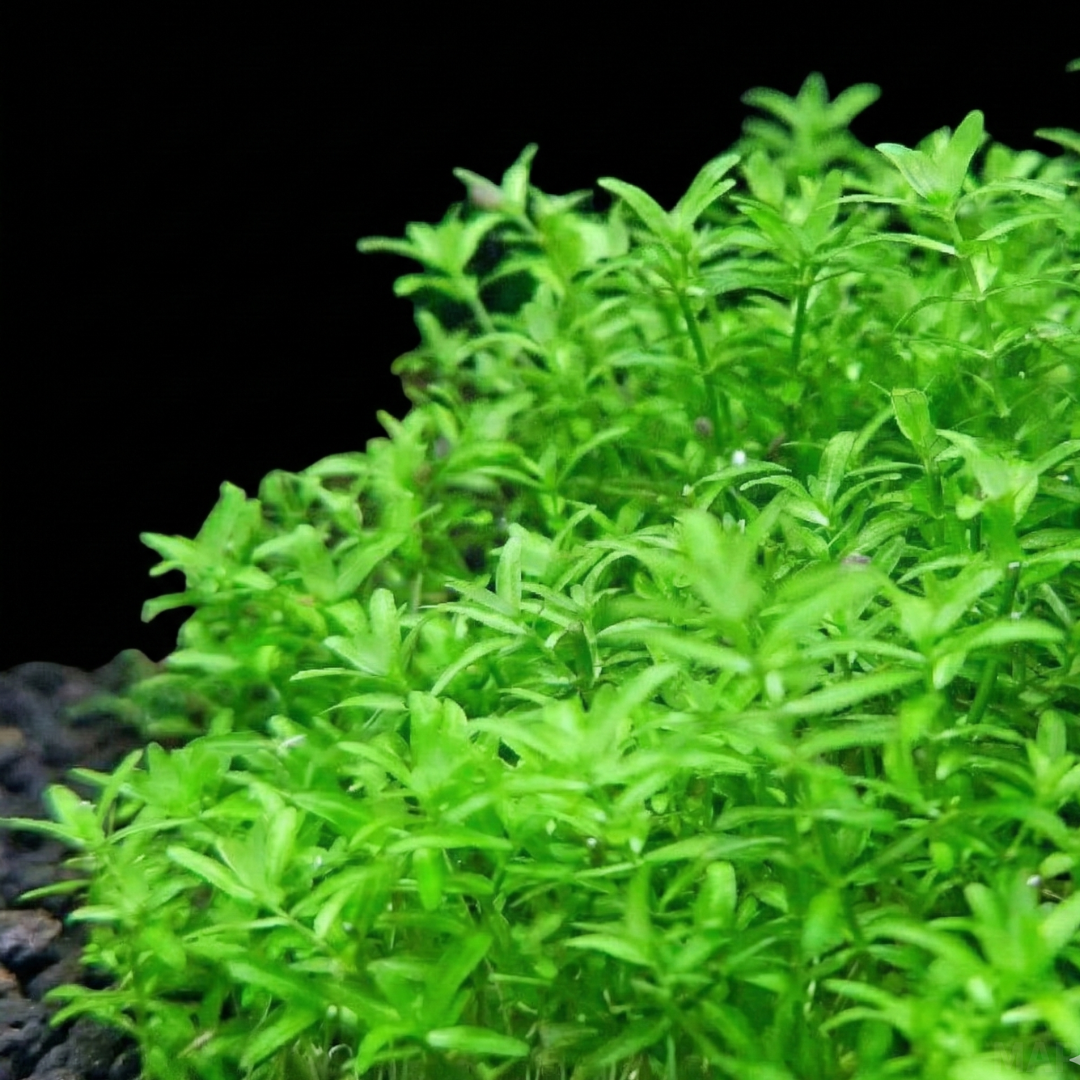
パールグラスは、その名の通り真珠のような気泡を葉につける姿が美しい、アクアリウムを代表する水草の一つです。繊細な明るい緑色の葉を持ち、群生させることで水景に爽やかさとボリューム感を与えます。ネイチャーアクアリウムにおいては、石組みや流木の隙間を埋める中景草として、あるいは背景を作る後景草として欠かせない存在です。適切に光合成を行わせた際に、葉先や葉の表面に酸素の気泡を纏う様子は、水槽内における生命活動の輝きそのものであり、多くの愛好家を魅了し続けています。日本国内ではポピュラーな水草ですが、その分類や最適な育成方法には奥深い知識が必要です。 Pearl Grass is one of the most iconic aquatic plants in the aquarium hobby, named for the pearl-like oxygen bubbles that form on its leaves. With its delicate, bright green foliage, it adds a refreshing and voluminous touch to any aquascape when grown in clusters. In Nature Aquarium styles, it is indispensable as a mid-ground plant to fill gaps between stones and driftwood, or as a background plant. The sight of oxygen bubbles clinging to the leaf tips and surfaces during photosynthesis is a visual symbol of life within the tank, captivating enthusiasts worldwide. While popular in Japan, understanding its taxonomy and optimal cultivation requires deep knowledge.
基本情報 / Basic Information
| 学名 / Scientific Name | Hemianthus glomeratus (流通名: Hemianthus micranthemoides) |
|---|---|
| 通称 / Common Name | パールグラス、ヘミアントゥスPearl Grass, Hemianthus |
| 分類 / Family | アゼナ科 ヘミアントゥス属Linderniaceae, Genus Hemianthus |
| 分布 / Distribution | 北米(主にフロリダ州の湿地帯)North America (Florida wetlands) |
| 育成難易度 / Difficulty | 普通 ~ やや難しい(環境に依存する)Medium to Slightly Difficult (Environment dependent) |
育成環境 / Cultivation Environment
| 光量 / Light | 強い光が必要です。光が弱いと茎が間延び(徒長)し、美しい茂みになりません。RGB系LED照明などで十分なPAR(光合成有効放射)を確保し、1日8~10時間照射することを推奨します。High lighting is required. Weak light causes the stems to become leggy (etiolation), preventing the formation of a dense bush. Sufficient PAR using RGB LED lights and a photoperiod of 8-10 hours is recommended. |
|---|---|
| CO2添加 / CO2 Injection | 美しく育てるためには必須です。60cm規格水槽(約60L)で1秒に1~2滴程度を目安に添加してください。十分なCO2と光があれば、美しい気泡(Pearling)を観察できます。Essential for beautiful growth. Injecting 1-2 bubbles per second in a standard 60cm tank (approx. 60L) is recommended. With sufficient CO2 and light, you can observe beautiful pearling. |
| 水質 / Water Quality | 弱酸性から中性(pH 6.0~7.0)を好みますが、極端な軟水(GH 0-1)は苦手です。原産地が湧水地であるため、カルシウムやマグネシウムを含む中硬水(GH 3~6 dH)で最も調子良く育ちます。日本の水道水は軟らかすぎる場合があるため、石組みレイアウト(龍王石など)で硬度を補うのも有効な手段です。Prefers slightly acidic to neutral water (pH 6.0-7.0) but struggles in extremely soft water (GH 0-1). Originating from spring-fed areas, it thrives in moderately hard water (GH 3-6 dH) containing calcium and magnesium. Using stones like Seiryu stone to supplement hardness can be effective in areas with very soft tap water. |
| 底床 / Substrate | ソイル(特に栄養系ソイル)が推奨されます。根からの栄養吸収能力が高いため、窒素分を含んだ底床で爆発的に成長します。細かいパウダータイプのソイルを使うと、繊細な根が張りやすくなります。Nutrient-rich soil is recommended. Since it absorbs nutrients vigorously through its roots, it grows explosively in nitrogen-rich substrates. Using powder-type soil helps the delicate roots establish more easily. |
レイアウト / Layout
| 配置 / Positioning | 中景から後景にかけての植栽が一般的です。石や流木の後ろに植えて背景を作ったり、ダッチスタイルのように区画整理された「通り」を作ったりするのに適しています。高光量下で頻繁にトリミングを行えば、厚みのある前景草として這わせることも可能です。Commonly used in the mid-ground to background. It is suitable for creating backgrounds behind hardscape or forming “streets” in Dutch-style layouts. With high light and frequent trimming, it can also be maintained as a thick foreground carpet. |
|---|---|
| 注意点 / Precautions | 成長が早いため、他の水草の光を遮らないよう注意が必要です。また、密生させすぎると根元に光が届かず、下葉が枯れたり根腐れを起こしたりします。定期的なトリミングと、時には「差し戻し」を行って更新する必要があります。Due to its fast growth, care must be taken not to shade other plants. If it becomes too dense, light will not reach the lower parts, causing lower leaves to die or roots to rot. Regular trimming and occasional replanting of tops are necessary. |
増やし方(トリミング) / Propagation & Trimming
| 増やし方 / Propagation | 主に「差し戻し」と「ピンチカット」で増やします。カットした上部を底床に植えれば発根し、カットされた残りの茎からは複数の脇芽が出てボリュームが増します。Propagated mainly by replanting cuttings and pinch cutting. Replanted tops will root, while the cut stems will produce multiple side shoots, increasing volume. |
|---|---|
| トリミング / Trimming | 茂みを作るための「ピンチカット」が基本です。水面に達する前に低い位置でカットし、脇芽を出させて枝分かれを促します。これを繰り返すことで、光を通さないほど緻密な美しい茂みが形成されます。ハサミを使って好みのライン(曲面や傾斜)に整えることができます。“Pinch cutting” is essential for creating bushes. Cut low before it reaches the surface to encourage side shoots and branching. Repeating this process creates a dense, beautiful bush. You can sculpt it into desired curves or slopes using scissors. |
病気と対策(コケなど) / Pests & Algae
| かかりやすい病気 / Common Issues | 頂芽の萎縮(カルシウム不足)、葉の白化(鉄分・窒素不足)、白い粉の付着(CO2不足による脱灰作用)が見られることがあります。また、富栄養化すると糸状のコケが絡みつきやすくなります。Issues include stunted tips (calcium deficiency), chlorosis/whitening leaves (iron/nitrogen deficiency), and white powder deposits (biogenic decalcification due to low CO2). Filamentous algae can also be a problem in nutrient-rich water. |
|---|---|
| 対策と予防 / Prevention | 頂芽の萎縮には硬度を少し上げるかミネラル添加剤を使用します。白化には鉄分肥料(ADA ECA等)が有効です。白い粉(炭酸カルシウム)が付く場合はCO2添加量を増やしてください。コケ対策にはヤマトヌマエビが非常に効果的で、茂みの中に入り込んで掃除をしてくれます。Increase hardness or add minerals for stunted tips. Iron fertilizers help with chlorosis. Increase CO2 injection if white deposits appear. Amano shrimp are very effective for algae control as they clean inside the dense bushes. |
雑学と豆知識 / Trivia and Fun Facts
| 1. 学名と絶滅種の真実 / 1. The Truth About Taxonomy | 長年、パールグラスは Hemianthus micranthemoides と呼ばれてきましたが、2011年の研究により、この種は1941年を最後に野生絶滅した幻の植物であることが判明しました。現在流通しているパールグラスの正体は、フロリダ原産の Hemianthus glomeratus(ヘミアントゥス・グロメラトゥス)です。絶滅種と現行種は、花の構造(閉鎖花か開放花か)や萼の形状で区別されますが、市場では依然として旧名が使われ続けています。For years, Pearl Grass was known as Hemianthus micranthemoides. However, 2011 research revealed this species has likely been extinct in the wild since 1941. The plant currently in the hobby is actually Hemianthus glomeratus, native to Florida. While distinguished by flower structure, the old name persists in the market. |
|---|---|
| 2. 天野パールグラスの謎 / 2. Mystery of “Amano Pearl Grass” | 「ニューパールグラス」とは別に、”Amano Pearl Grass” と呼ばれる系統が欧州を中心に認識されています。通常のパールグラスが3~4枚の葉を輪生させるのに対し、このタイプは2枚の葉を対生させる特徴があります。天野尚氏由来の株とされ、別種(Hemianthus sp.)なのか変異なのかは議論が続いていますが、日本国内では両タイプが混在して流通している可能性があります。Distinct from “New Pearl Grass,” a strain known as “Amano Pearl Grass” is recognized, especially in Europe. While normal Pearl Grass has whorls of 3-4 leaves, this type has opposite leaves (2 per node). Its exact classification remains debated, but both types likely circulate in the Japanese market. |
| 3. 水中でのカルシウム要求 / 3. Calcium Demand | パールグラスは軟水を好む多くの熱帯魚用植物とは異なり、ある程度の硬度(ミネラル)を必要とします。これは原産地が湧水地帯であるためです。CO2が不足すると、水中の重炭酸イオンから炭素を取り込もうとして、葉の表面に白い粉(炭酸カルシウム)を析出させる「生物学的脱灰作用」を起こします。これは植物からの「CO2が足りない」というサインです。Unlike many tropical plants that prefer soft water, Pearl Grass requires some hardness (minerals) due to its spring-fed origins. If CO2 is insufficient, it undergoes “biogenic decalcification,” depositing white calcium carbonate on its leaves as it extracts carbon from bicarbonates. This is a sign the plant needs more CO2. |
まとめ / Conclusion
日本のアクアリウムシーンにおいて、パールグラス(Hemianthus glomeratus)は技術と環境管理のバロメーターとなる存在です。適切な光とCO2、そして少しの硬度が揃った時、その繊細な葉は爆発的に展開し、真珠のような気泡で満たされた息をのむような光景を作り出します。 In the Japanese aquarium scene, Pearl Grass (Hemianthus glomeratus) serves as a barometer for skills and environmental management. When provided with appropriate light, CO2, and a touch of water hardness, its delicate leaves expand explosively, creating a breathtaking scene filled with pearl-like bubbles.
かつて北米で絶滅した種の名前を受け継ぎ、フロリダの湿地からやってきたこの逞しい水草は、トリミングによって自在に形を変え、私たちの水槽の中に美しい緑の物語を描き続けてくれるでしょう。 Having inherited the name of an extinct North American species, this robust plant from the Florida wetlands continues to paint beautiful green stories in our tanks, shapeshifting freely under the trimming scissors.

気になる道具や飼い方を見つけてみませんか?
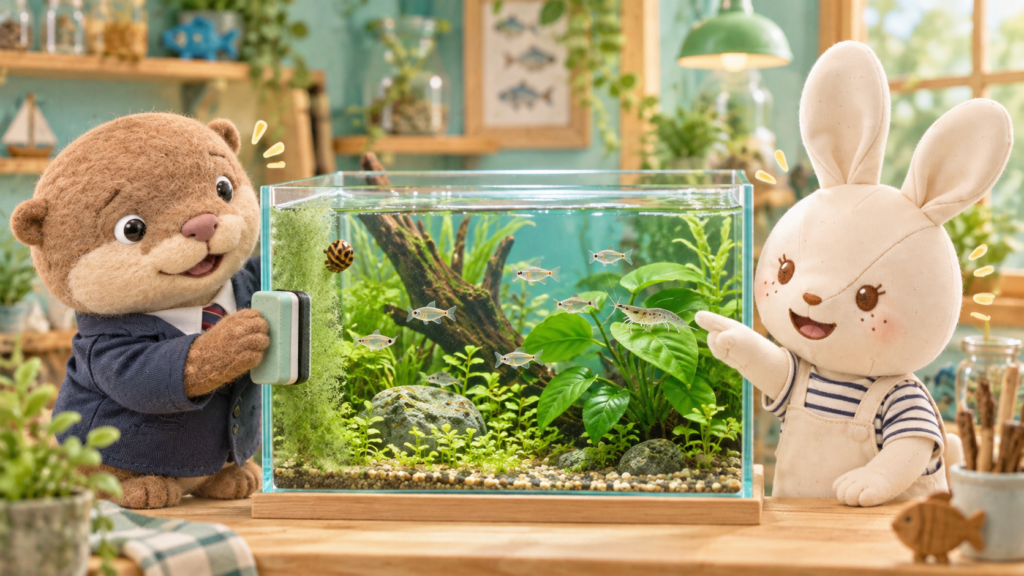 アイのアクアグッズ案内水槽のコケ掃除|道具の選び方とお掃除生体の得意・不得意道具の特徴や使い方、選ぶときのポイントをアイが紹介します。記事はコチラ →
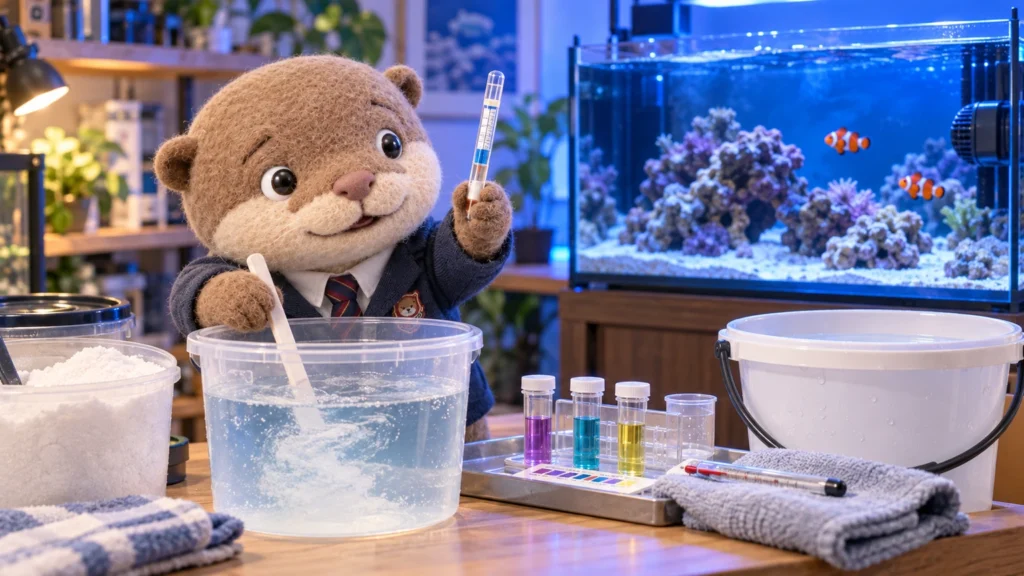 アイのアクアグッズ案内海水魚初心者の必需品|水槽・人工海水・比重計・水質検査道具の特徴や使い方、選ぶときのポイントをアイが紹介します。記事はコチラ →
さまざまな飼育テーマをご紹介。リンク先の記事には広告・商品紹介が含まれます。
案内・紹介記事一覧へ →



コメント