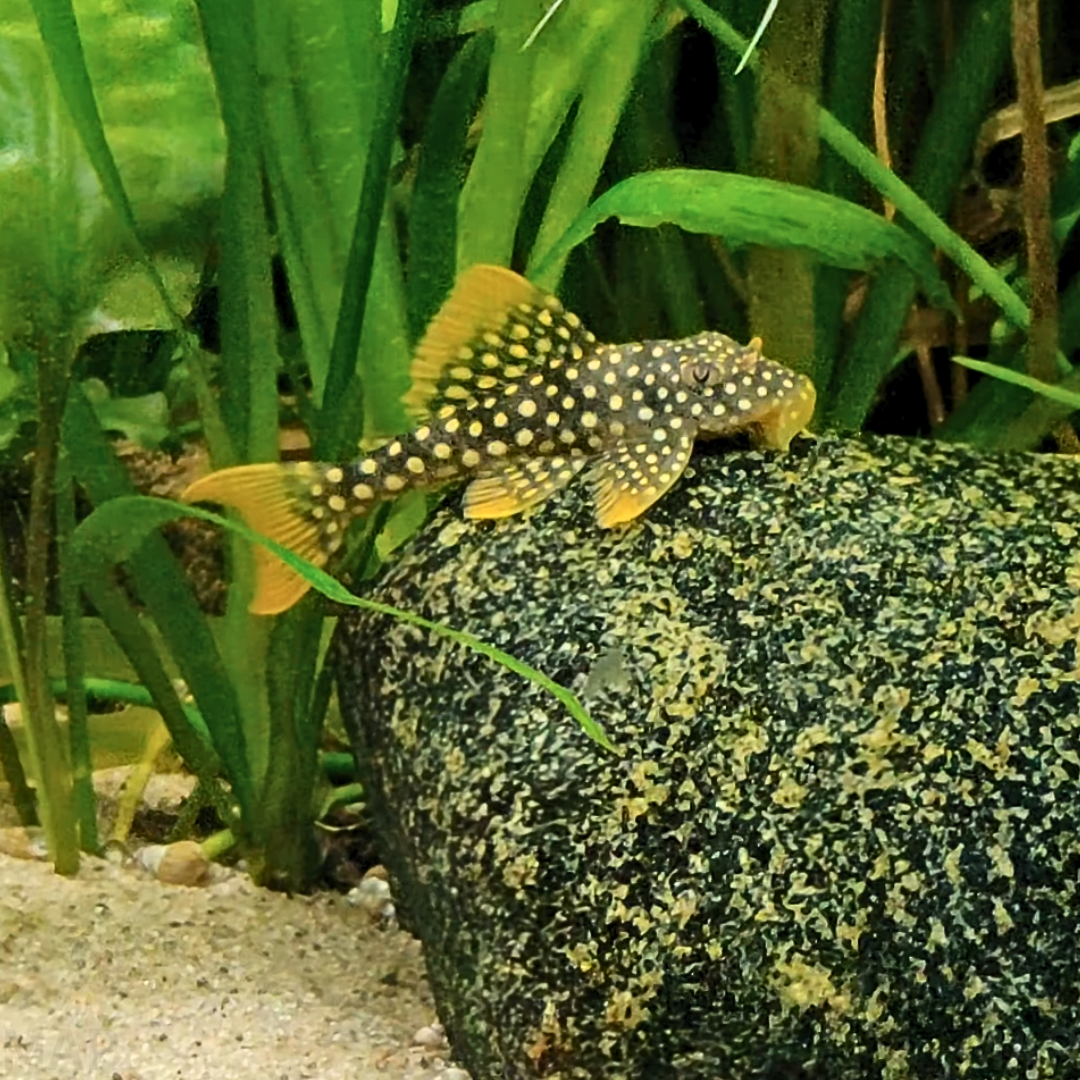
ゴールドエッジ・マグナムプレコは、ブラジルのシングー川大湾曲部にのみ生息する極めて美しい大型のプレコです。漆黒から深いオリーブ色の体色に、背鰭と尾鰭を縁取る鮮やかな黄色やオレンジ色のエッジが強烈なコントラストを描きます。1980年代後半にLナンバー(L047)として紹介されて以来、その存在感ある姿で世界中の愛好家を魅了してきました。急流の中で岩に吸着して生きるため、がっしりとした重厚な体躯を持っており、観賞魚としての魅力だけでなく、学術的にも非常に興味深い生態を持つ種です。The Gold Edge Magnum Pleco is a stunning large species of pleco endemic to the Big Bend (Volta Grande) region of the Xingu River in Brazil. Its body color, ranging from deep black to olive, creates a striking contrast with the vivid yellow or orange edges on its dorsal and caudal fins. Since its introduction as L047 in the late 1980s, its majestic presence has captivated enthusiasts worldwide. Built for life in fast-flowing rapids, it possesses a sturdy, heavy-set body and holds significant scientific interest alongside its ornamental appeal.
基本情報 / Basic Information
学名 / Scientific Name
Baryancistrus chrysolomus
通称 / Common Name
ゴールドエッジ・マグナムプレコ、L047Gold Edge Magnum Pleco, L047
分類 / Family
ロリカリア科(甲冑ナマズ)バリアンキストルス属Loricariidae, Genus Baryancistrus
英名 / English Name
Magnum Pleco, Mango Pleco
分布 / Distribution
ブラジル:シングー川大湾曲部(ヴォルタ・グランデ)、イリリ川などBrazil: Volta Grande do Rio Xingu, Rio Iriri
最大体長 / Max Size
約25cm〜35cm(自然下ではさらに大型化の記録あり)Approx. 25cm – 35cm (larger specimens recorded in the wild)
寿命 / Lifespan
約8年〜12年(飼育環境に大きく依存)Approx. 8 – 12 years (heavily dependent on care)
飼育環境 / Aquarium Environment
水槽サイズ / Tank Size
120cm規格水槽(約243L以上)を推奨。長期飼育や複数飼育には150cm以上の大型水槽が理想的です。120cm standard tank (approx. 243L+) is recommended. 150cm+ is ideal for long-term or communal housing.
水温 / Temperature
26℃ 〜 30℃。原産地が高温のため、高水温の維持が代謝維持に不可欠です。26°C – 30°C. High temperatures are essential to maintain their high metabolic rate.
水質 / Water Quality
pH 6.0 〜 7.5。軟水から中硬水を好みます。強力な濾過で清浄な状態を保つ必要があります。pH 6.0 – 7.5. Prefers soft to medium-hard water. Pristine water quality via powerful filtration is a must.
レイアウト / Layout
平らな岩石を組み合わせ、強い水流と豊富な酸素を供給します。流木で日陰を作り、十分な隠れ家を用意してください。Combine flat rocks with strong current and high oxygenation. Provide ample caves with driftwood and boulders.
注意点 / Precautions
高代謝ゆえに酸欠に非常に弱いため、強力なエアレーションが必須です。また、水質の急変には敏感です。Extremely vulnerable to oxygen depletion due to high metabolism; heavy aeration is mandatory. Sensitive to water fluctuations.
餌と給餌 / Feeding
餌の種類 / Diet
植物質を好む雑食性。プレコ用タブレットを主食に、冷凍アカムシやアウフウクス(バイオフィルム)を与えます。Omnivorous with a preference for plant matter. Sinking wafers, frozen bloodworms, and natural biofilm.
給餌のポイント / Feeding Tips
基礎代謝が高く、常に何かを食べている必要があります。消灯後も含め、痩せないようこまめに給餌することが重要です。They have high energy needs and must feed constantly. Regular feeding, including at night, is vital to prevent wasting.
性格と混泳 / Temperament and Tank Mates
性格 / Temperament
成長とともに非常に強い縄張り意識を持ちます。特に同種のオス同士では激しい争いに発展することがあります。Develops strong territoriality as it matures. Intra-species aggression between males can be severe.
混泳の相性 / Compatibility
中上層を泳ぐ魚や、干渉し合わない大人しい大型魚との混泳が適しています。底生魚との複数飼育は広いスペースが必要です。Suitable with mid-to-top water swimmers or peaceful large fish. Bottom-dwellers require significant space and caves.
病気と対策 / Diseases and Prevention
かかりやすい病気 / Common Diseases
輸入直後の「腹部陥没(サンケンベリー)」や体内寄生虫の異常増殖が最も警戒すべき問題です。Sunken belly and internal parasites are the most critical concerns, especially in newly imported specimens.
対策と予防 / Prevention
導入前の隔離検疫と、エプソムソルトや駆虫薬を用いたトリートメントが推奨されます。常に新鮮な水流を維持してください。Quarantine before introduction and treatment with Epsom salt or deworming medication is advised. Maintain high flow.
増やし方(繁殖) / Breeding
繁殖形態 / Reproduction
洞窟産卵型(ケープスポナー)。オスが卵を保護する習性があります。Cave spawner. Males guard the eggs inside a nesting site.
繁殖のポイント / Breeding Tips
飼育下での繁殖例は極めて稀です。激しい縄張り争いを避けつつ、ペアを形成させることが最大の難関となります。Extremely difficult in captivity. Managing territorial aggression while forming a pair is the ultimate challenge.
雑学と豆知識 / Trivia and Fun Facts
1. 学名の由来とLナンバーの歴史 / 1. Scientific Name and L-number History
本種の学名である「Baryancistrus chrysolomus」は、古代ギリシャ語で「頑丈な」を意味するbarysと「オレンジの縁」を意味するchrysolomusに由来します。その名が示す通り、がっしりした体と鰭のエッジが特徴です。1989年にドイツの専門誌で「L047」として紹介されてから、2011年に正式記載されるまでの20年以上もの間、このコードネームが世界中で親しまれてきました。The scientific name “Baryancistrus chrysolomus” comes from the Greek “barys” (heavy/sturdy) and “chrysolomus” (golden edge). True to its name, it features a robust body and yellow fin margins. Since its introduction as L047 in 1989, it was known by this code for over 20 years until its formal description in 2011.
2. 驚異的な代謝率と「アウフウクス」 / 2. High Metabolism and “Aufwuchs”
マグナムプレコは、30℃近い高温の急流で活動するため、非常に高い基礎代謝を持っています。彼らは岩の表面に付着する微生物や藻類の集合体「アウフウクス」を、一日の大半を費やして削り取り続けなければエネルギーを維持できません。水槽内でもこの高い代謝を理解し、絶食状態にさせないような配慮が健康維持の鍵となります。Living in high-temperature rapids, these plecos have an incredibly high metabolic rate. They must spend most of their day grazing on “Aufwuchs”—the biofilm of algae and microorganisms on rocks—to sustain themselves. Understanding this high energy demand is key to their health in aquaria.
3. シングー川の危機:ベロ・モンテ・ダム / 3. Crisis in the Xingu: Belo Monte Dam
本種の生息地であるシングー川大湾曲部は、世界第3位の規模を誇る「ベロ・モンテ・ダム」の建設により、生態系が崩壊の危機に瀕しています。水流が遮断されたことで、急流に依存していた本種のような固有種は逃げ場を失い、生息数が激減しています。現在流通している個体は、失われゆく貴重な自然の断片であることを忘れてはなりません。The Volta Grande region of the Xingu River, the home of this species, faces ecosystem collapse due to the Belo Monte Dam. The diversion of water has eliminated the rapids these endemic species rely on. Every specimen available today represents a precious, vanishing fragment of nature.
4. 輸入直後の「初期医療」の重要性 / 4. The Importance of Initial Medical Care
ブラジルから日本への長い空輸中、彼らは絶食状態に置かれます。高い代謝を持つ本種にとってこれは致命的で、到着時には腹部が凹む「腹部陥没」を起こしていることが多々あります。熟練の飼育者は、エプソムソルト浴で腸内を整えたり、体内寄生虫を駆虫したりといった、まるで病院のような手厚いトリートメントを行うことで、彼らの命を繋いでいます。During long flights from Brazil, these high-metabolism fish often arrive with “sunken belly” due to starvation. Experienced keepers perform intensive treatments, similar to medical care, using Epsom salt baths and dewormers to help them recover and thrive.
まとめ / Conclusion
ゴールドエッジ・マグナムプレコは、その圧倒的な存在感と美しさで、アクアリウムにおける「シングーの宝石」とも呼べる存在です。しかし、その飼育には高い水温の維持、強力な水流、そして常に空腹を満たすための細やかな給餌といった、専門的な管理が求められます。彼らが本来持っている漆黒と黄色の鮮烈なコントラストを引き出せた時の喜びは、何物にも代えがたいものです。The Gold Edge Magnum Pleco is truly the “Jewel of the Xingu,” offering an unparalleled presence in an aquarium. However, keeping them requires expert management, including high temperatures, strong currents, and precise feeding to meet their metabolic needs. The joy of seeing their vivid black-and-yellow contrast at its peak is a rewarding experience for any dedicated aquarist.
シングー川の環境改変が進む中、本種を水槽に迎えることは、一つの尊い命と同時に、アマゾンの歴史そのものを預かることを意味します。適切な環境を整え、彼らがリラックスして本来の色を見せてくれるよう、最高の環境を提供してあげてください。その努力に応えてくれるだけの魅力が、この魚には確かに備わっています。As the Xingu River undergoes drastic changes, keeping this species means caring for a piece of Amazonian history. By providing the best possible environment and helping them feel secure, you will be rewarded with their natural, stunning colors. They are a species that truly repays the effort invested in their care.
学術論文
Rapp Py-Daniel, L., Zuanon, J., & Ribeiro de Oliveira, R. (2011). “Baryancistrus chrysolomus, a new species of loricariid catfish from the Rio Xingu, Brazil”. Neotropical Ichthyology, 9(2), 241-252.
専門誌・初出情報
Die Aquarien- und Terrarienzeitschriften (DATZ). (1989). “Xingú und Tocantins – Plecos (L 47 – L 50)”. Eugen Ulmer KG.
生物データベース
PlanetCatfish.com. “Baryancistrus chrysolomus (L047) Species Profile”.
IUCN Red List of Threatened Species. “Baryancistrus chrysolomus”.
環境・規制レポート
Ministério Público Federal (MPF) / IBAMA. “Relatórios de monitoramento ambiental da Usina Hidrelétrica de Belo Monte no Rio Xingu”. (ブラジル連邦検察庁官およびブラジル環境・再生可能天然資源院によるベロ・モンテ・ダム環境モニタリング報告書)
オンライン・アクアリウム・リソース
The Aquarium Wiki. “L047 – Magnum Pleco Care Sheet”.



 アイのアクアグッズ案内ダニオの仲間に合わせる飼育用品|ゼブラダニオから超小型種まで水槽・ろ過・餌を選ぶ道具の特徴や使い方、選ぶときのポイントをアイが紹介します。記事はコチラ →
 アイのアクアグッズ案内エーハイムはおもちゃから始まった? 小さな噴水から水槽へ、アイとコタロウの探訪道具の特徴や使い方、選ぶときのポイントをアイが紹介します。記事はコチラ →
 アイのアクアグッズ案内カルキ抜き・水質調整剤の選び方|水換えと水槽の種類に合わせて選ぶ道具の特徴や使い方、選ぶときのポイントをアイが紹介します。記事はコチラ →
 アイのアクアグッズ案内水槽のろ材の選び方|ウール・リング・活性炭の違いとおすすめ商品フィルターの中の綿や石は何をしている? アイとコタロウが、ウール・スポンジ・セラミック・焼結ガラス・活性炭・ゼオライトを比較。機種との相性、入れ方、洗い方と交換まで商品とともに紹介します。記事はコチラ →



コメント