

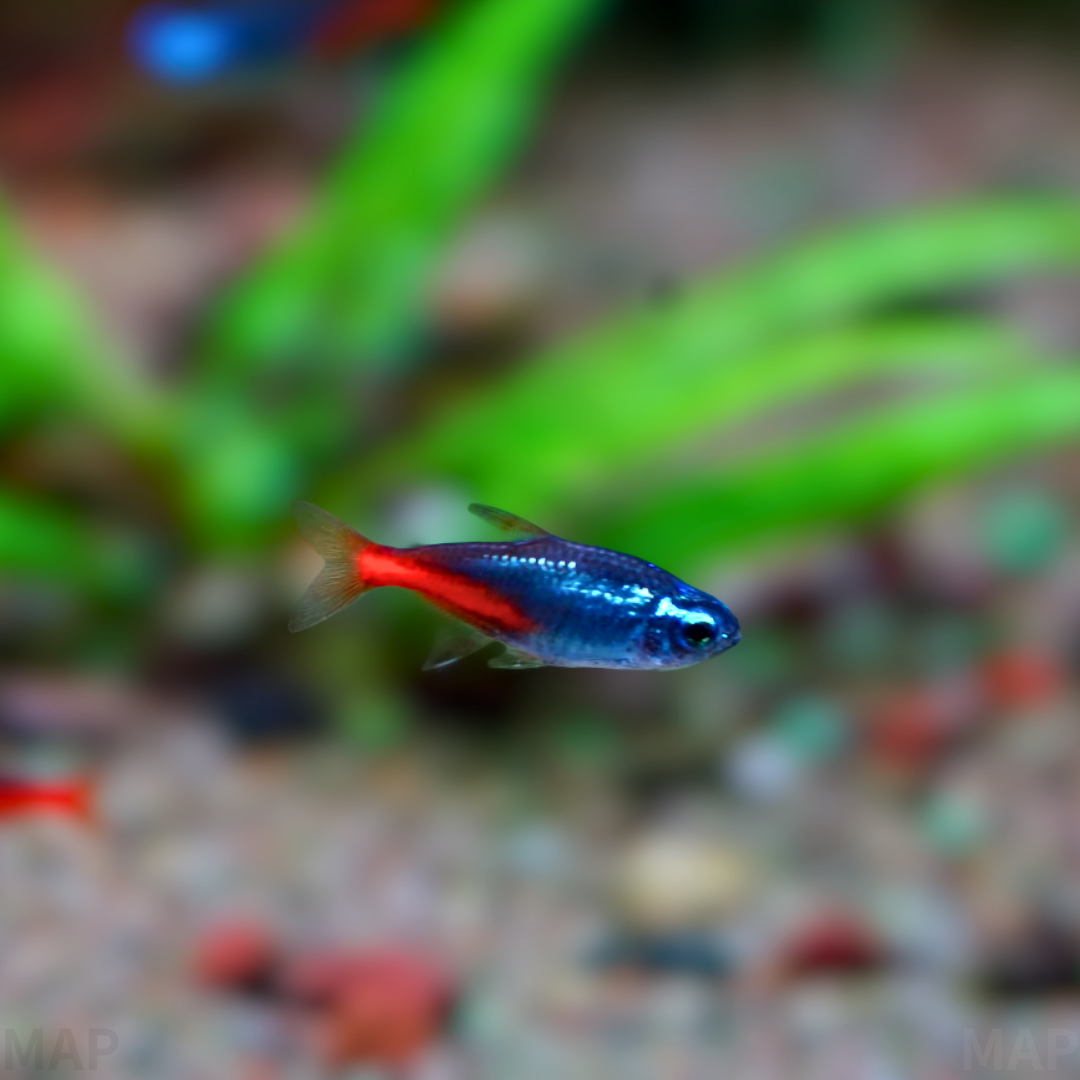
解説 / Description
ダイヤモンドヘッド・ネオンテトラは、世界中で愛される熱帯魚の代名詞「ネオンテトラ」の色彩変異を固定化した美しい改良品種(ブリードバリアント)です。最大の特徴は、両目の間から背びれ前方にかけて集中する、ダイヤモンドのように力強く輝く青白い金属光沢です。この煌めきは、皮膚内の虹色素胞に存在するグアニンプレートレットが、神経刺激や水圧の変化によってその傾きを変えることで、光を動的に干渉・反射させる「構造色」のメカニズムによって生み出されています。原種が持つ体側面のブルーラインが抑えられているため、頭部の輝きがいっそう強調され、水草の緑に非常によく映えます。温和な性格で飼育もしやすく、アクアリウム初心者から上級者まで幅広く親しまれているプレミアムなテトラです。 The Diamond Head Neon Tetra is a stunning captive-bred variant of the classic Neon Tetra (Paracheirodon innesi). Its most distinctive feature is the intense, silvery-blue metallic luster concentrated on its head. This brilliance is created by “structural color,” where guanine platelets within iridophores dynamically change their tilt in response to nerve stimulation or water pressure, reflecting light in a flashing manner. Since the original lateral blue line is suppressed, the focus is drawn to the head, making it an excellent accent in planted aquariums. With a peaceful temperament and hardy nature, it remains a favorite for all levels of aquarists.
基本情報 / Basic Information
| 学名 / Scientific Name | Paracheirodon innesi ‘Diamond Head’ |
|---|---|
| 通称 / Common Name | ダイヤモンドヘッド・ネオンテトラDiamond Head Neon Tetra |
| 分類 / Family | カラシン目カラシン科パラケイロドン属Characiformes, Characidae, Paracheirodon |
| 英名 / English Name | Diamond Head Neon Tetra |
| 分布 / Distribution | 改良品種(原種は南米アマゾン川上流域)。主に東南アジアの養殖施設で生産されています。Captive-bred variant (Original species from Upper Amazon). Primarily produced in Southeast Asian fish farms. |
| 最大体長 / Max Size | 約4cm~5cmApprox. 4cm – 5cm (1.5 – 2 inches) |
| 寿命 / Lifespan | 3年~8年(飼育環境により差があり、理想的な環境では最長8年ほど)3 – 8 years (Depending on the environment, can reach up to 8 years under ideal conditions) |
飼育環境 / Aquarium Environment
| 水槽サイズ / Tank Size | 40L以上(45cm規格水槽以上が目安。10匹以上の群泳なら60cm規格水槽が理想です)At least 40L (Approx. 45cm standard tank). For schooling of 10+, a 60cm standard tank is ideal. |
|---|---|
| 水温 / Temperature | 20℃~26℃(安定した水温の維持が健康の鍵です) 20°C – 26°C (68°F – 78°F). Stable temperature is crucial for health. |
| 水質 / Water Quality | 弱酸性~中性(pH 6.0~7.5)、軟水~中硬水Slightly acidic to neutral (pH 6.0 – 7.5), soft to medium hard water. |
| レイアウト / Layout | 水草を密植したレイアウト。暗い色のソイルやバックスクリーンを使用すると光沢が際立ちます。Densely planted layout. Using dark substrate or background enhances their metallic luster. |
| 注意点 / Precautions | 導入直後の水質変化に敏感なため、点滴法による慎重な水合わせを行ってください。Sensitive to water parameter changes during introduction. Careful drip acclimation is recommended. |
餌と給餌 / Feeding
| 餌の種類 / Diet | 人工飼料(小粒のフレークやペレット)、冷凍赤虫、ブラインシュリンプOmnivorous. High-quality flakes, micro pellets, frozen bloodworms, and brine shrimp. |
|---|---|
| 給餌のポイント / Feeding Tips | カラシン専用の微細な人工飼料を主食にし、冷凍餌は補助的に与えるのが健康維持に最適です。Use specialized micro pellets as a staple diet, with frozen foods as occasional supplements. |
性格と混泳 / Temperament and Tank Mates
| 性格 / Temperament | 非常に温和。臆病な面があるため、まとまった数(6匹以上)で飼育すると落ち着きます。Very peaceful. They can be shy, so keeping them in groups of 6 or more helps them feel secure. |
|---|---|
| 混泳の相性 / Compatibility | 他の小型テトラやコリドラス、ラスボラなどと好相性。口に入るサイズの稚エビは捕食されます。Excellent with other small tetras, Corydoras, and Rasboras. Avoid large predators or very tiny shrimp. |
病気と対策 / Diseases and Prevention
| かかりやすい病気 / Common Diseases | 白点病、ネオンテトラ病(カラムナリス症など)Ich (White Spot Disease), Neon Tetra Disease (Columnaris). |
|---|---|
| 対策と予防 / Prevention | 急激な温度変化を避け、定期的な換水を行います。マジックリーフ等での抗菌保護も有効です。Avoid sudden temperature swings. Regular water changes and using Indian almond leaves can help. |
増やし方(繁殖) / Breeding
| 繁殖形態 / Reproduction | 卵生。水草の茂みなどに粘着性の卵を産み落とします。Egg-scatterer. They lay adhesive eggs in dense vegetation like Java moss. |
|---|---|
| 繁殖のポイント / Breeding Tips | 難易度は非常に高いです。極軟水かつ強酸性の環境を整え、光を遮断した特別な繁殖水槽が必要です。Very difficult. Requires extremely soft, acidic water and a darkened tank to trigger spawning. |
雑学と豆知識 / Trivia and Fun Facts
| 1. 煌めきの秘密:虹色素胞と動的な光の干渉1. Secret of the Shine: Iridophores and Dynamic Light Interference | ダイヤモンドのような輝きは、色素ではなく「構造色」によるものです。皮膚にある虹色素胞内のグアニンプレートレットが、神経刺激や水圧の微妙な変化によってその傾きを変えることで、光を干渉させ、フラッシュのような煌めきを放ちます。暗い場所ではプレートレットの間隔が変わり、反射光が深い青色へシフトするという生理的な性質を持っています。Their brilliant shine comes from “structural color.” Guanine platelets in the iridophores tilt in response to nerve signals or water pressure, causing dynamic light interference. In low light, the spacing between these platelets shifts, causing the reflection to turn a deeper blue. |
|---|---|
| 2. 進化の戦略:貧栄養環境が生んだ「小型化」2. Evolutionary Strategy: Miniaturization in Poor Environments | 原種のネオンテトラは、栄養の乏しいアマゾン川のブラックウォーターで生き抜くために、身体を小さく保ったまま性成熟を早める「小型化(Miniaturization)」の進化を選びました。この進化のおかげで、私たちの家の小さな水槽という限られた空間でも、彼らは一生を健やかに過ごすことができる資源効率の高い体質を手に入れたのです。Neon Tetras evolved through miniaturization to survive in the nutrient-poor blackwaters of the Amazon. By maturing early while remaining small, they developed a resource-efficient biology that allows them to thrive even in smaller home aquariums. |
| 3. 温泉地でのサバイバル記録と温度の重要性3. Survival Records in Hot Springs and Temperature Importance | 1970年代から80年代にかけて、アメリカのコロラド州やワシントン州の温泉排水地域で、養殖場から逃げ出したネオンテトラが野外で確認された記録があります。熱帯魚が寒冷地で生存できたのは温泉の熱があったためですが、冬季に熱が届かない領域へ出た個体は死滅し、定着には至りませんでした。この事例は、本種にとって適切な水温(特にヒーター)の維持がいかに死活問題であるかを物語っています。In the 1970s and 80s, escaped Neon Tetras were found in hot spring drainages in Colorado and Washington. While the geothermal heat allowed them to survive temporarily in cold regions, they failed to establish permanent populations as they couldn’t survive winters in cooler waters. This highlights the critical importance of reliable heating. |
| 4. 学名「innesi」に刻まれた歴史4. History in the name “innesi” | 種小名の「innesi」は、20世紀初頭のアクアリウムの先駆者ウィリアム T. イネス氏にちなんでいます。彼が同定のために標本を専門家に提供したことがきっかけで、この美しい魚は公式に記載され、世界中に知られることになりました。現在の学名表記では、ダイヤモンドヘッド型は ‘Diamond Head’ という形式で区別されるのが一般的です。The name “innesi” honors William T. Innes, a key figure in early 20th-century aquariology. His contribution of specimens for study led to the formal description of the species. Today, the Diamond Head variant is internationally recognized using the ‘Diamond Head’ cultivar format. |
まとめ / Conclusion
ダイヤモンドヘッド・ネオンテトラは、その名の通り、アクアリウムの中に宝石を散りばめたような輝きを与えてくれる存在です。原種の丈夫さと温和な性格をそのままに、より視覚的なインパクトを追求した本品種は、ネイチャーアクアリウムの素晴らしい引き立て役となるでしょう。 The Diamond Head Neon Tetra brings a jewel-like brilliance to any aquarium. Combining the hardiness and peaceful nature of the original species with enhanced visual impact, this variant serves as a perfect accent in any nature-inspired aquascape.
水草の深い緑、そして暗い色調の底砂と組み合わせることで、彼らの頭部はより一層眩しくフラッシュします。ぜひ、10匹以上の群れで泳がせ、最新の科学的知見が解き明かした「生きる宝石」の神秘を、日々の生活の中で楽しんでみてください。 When paired with lush green plants and dark substrate, their heads flash with mesmerizing intensity. We highly recommend keeping them in a group of 10 or more to experience the mystery of these “living jewels,” explained by modern science, right in your own home.
気になる道具や飼い方を見つけてみませんか?
 アイのアクアグッズ案内アカヒレの仲間に合わせる飼育用品|無加温・混泳・繁殖の水槽とろ過道具の特徴や使い方、選ぶときのポイントをアイが紹介します。記事はコチラ →
 アイのアクアグッズ案内バルブの仲間に合わせる飼育用品|チェリーバルブ・スマトラ・中型種の水槽とろ過道具の特徴や使い方、選ぶときのポイントをアイが紹介します。記事はコチラ →
 アイのアクアグッズ案内ローチの仲間に合わせる飼育用品|クーリー・流水性・ボーシャの水槽と底砂道具の特徴や使い方、選ぶときのポイントをアイが紹介します。記事はコチラ →
 アイのアクアグッズ案内ショップで見かけるカラフルなバケツ。いったい何が入ってる?道具の特徴や使い方、選ぶときのポイントをアイが紹介します。記事はコチラ →
さまざまな飼育テーマをご紹介。リンク先の記事には広告・商品紹介が含まれます。
案内・紹介記事一覧へ →分布マップ
ダイヤモンドヘッド・ネオンテトラは改良品種で、原種のネオンテトラは南米アマゾン川上流域に分布します。本品種そのものは主に東南アジアの養殖施設で生産されています。
※この地図は記事中の「原種は南米アマゾン川上流域」という分布情報をもとにした概略表示です。表示範囲およびマーカーは分布地域を把握しやすくするための目安であり、マーカー位置は実際の採集地点を示すものではありません。
参考文献・資料
- Myers, G. S. (1936). “A new characid fish of the genus Hyphessobrycon from the Peruvian Amazon”. Proceedings of the Biological Society of Washington, 49, 97-98.(学名および原種の初記載に関する基礎資料)
- Lyon, A., et al. (2012). “Structural color in the neon tetra: light-induced spacing changes in iridophore crystal arrays”. Journal of Experimental Biology.(構造色および虹色素胞の生理学的メカニズムに関する研究)
- U.S. Geological Survey (USGS). “Nonindigenous Aquatic Species Database: Paracheirodon innesi”.(北米における温泉地への逸出および生存記録に関する公式データベース)
- Froese, R. and D. Pauly. Editors. “FishBase”. World Wide Web electronic publication.(分類、最大体長、分布などの生物学的基本データ)
- MDPI Journal of Marine Science and Engineering. “A Comparative Study on the Growth Performance and Histological Changes in the Digestive System of Neon Tetra…”.(ネオンテトラの栄養学および他種との消化能力比較に関する実験データ)
- 東京理科大学 研究グループ. “顕微分光システムを用いたカラシン科魚類の構造色解析”.(日本国内における虹色素胞の多層膜構造に関する研究報告)
- 神畑養魚株式会社(カミハタ). “観賞魚流通データベース:小型カラシン類の輸入とトリートメント”.(日本国内における流通経路と導入時のケアに関する実務資料)
※本記事は2026年3月時点の科学的知見および飼育学的知見に基づき、最新の情報を反映して作成されています。




コメント