

解説 / Description
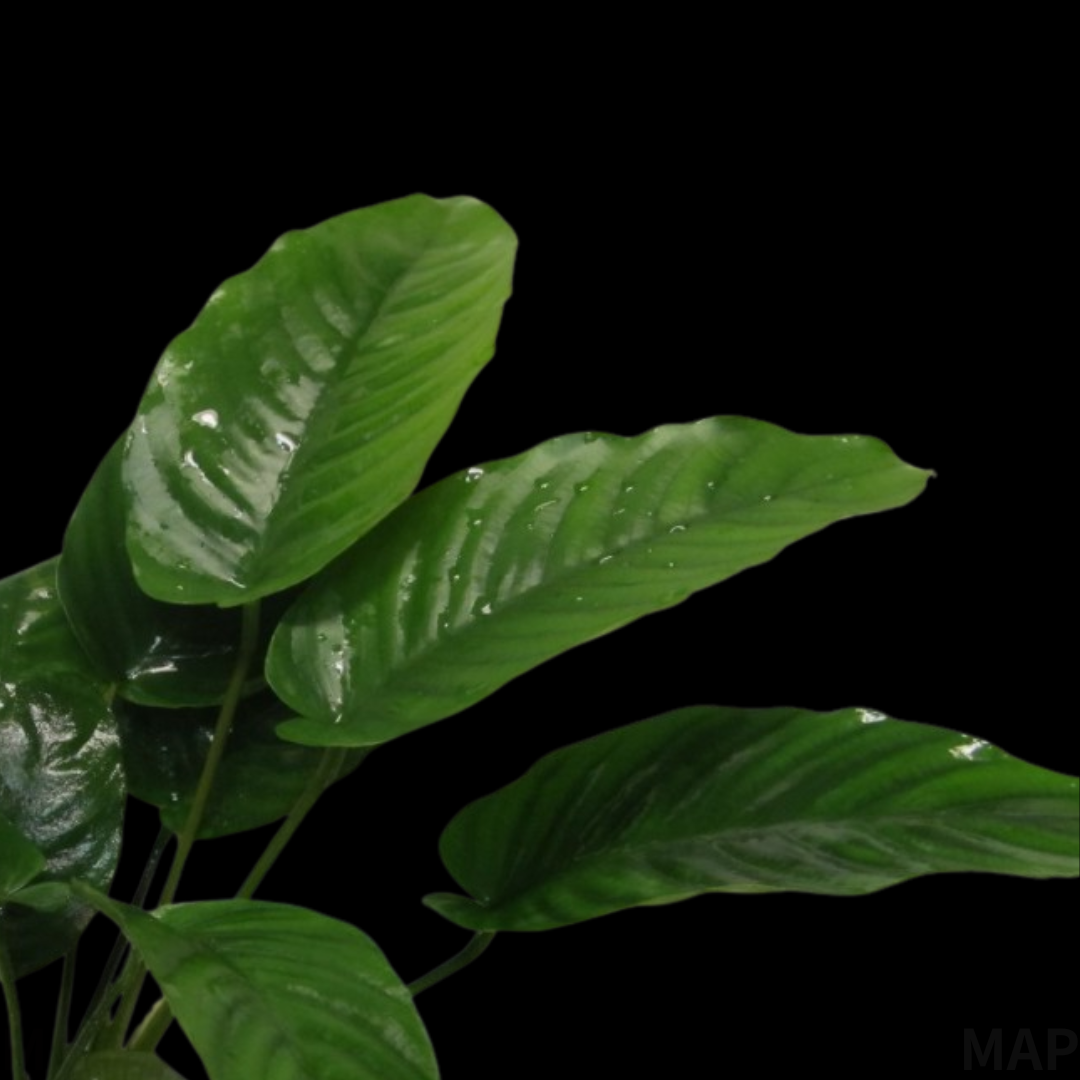
アヌビアス・バルテリー・カラディフォリア ‘1705’ は、幅広いハート形の葉が印象的なアヌビアスの栽培系統です。厚みのある緑の葉がゆったりと重なり、流木や石を中心にした水景に落ち着いた存在感を添えてくれます。小型のアヌビアス・ナナとは異なる、葉一枚の大きさを生かしたレイアウトが楽しめます。 Anubias barteri caladiifolia ‘1705’ is a cultivated form of Anubias with broad, heart-shaped leaves. Its substantial green foliage forms relaxed layers, bringing a calm presence to layouts built around driftwood and rocks. Compared with the smaller Anubias nana, it offers a different approach to aquascaping, with individual leaves providing much of its visual impact.
生長はゆっくりで、頻繁な刈り込みを必要としません。控えめな光でも育ち、CO2を添加しない水槽にも取り入れやすい一方、長く育てると横方向にも大きく広がります。購入時の小さな株姿だけで配置を決めず、葉が開く余白を用意するのがポイント。根茎を埋めずに管理し、一枚ずつ新葉が増えていく姿を見守る楽しみがあります。 Growth is slow, so frequent trimming is rarely necessary. It tolerates modest lighting and is suitable for aquariums without CO2 injection, but an established plant can gradually spread well beyond its original footprint. Leave room for the leaves to unfold rather than planning solely around the size of a newly purchased plant. With the rhizome kept exposed, each new leaf becomes a rewarding sign of progress.
基本情報 / Basic Information
| 学名 / Scientific Name | Anubias barteri 流通上は Anubias barteri var. caladiifolia ‘1705’ と表記されます。カラディフォリアは従来、バルテリーの変種として扱われてきた名称ですが、現在のKewの植物分類データベースでは Anubias barteri の異名とされています。‘1705’ は栽培系統を区別する呼称です。商品名では省略されることもあるため、系統を確認したい場合は販売店に尋ねるとよいでしょう。In the aquarium trade, it is listed as Anubias barteri var. caladiifolia ‘1705’. Caladiifolia has traditionally been treated as a botanical variety, but Kew’s current taxonomic database lists that name as a synonym of Anubias barteri. ‘1705’ identifies the cultivated line. Product names sometimes omit this designation, so ask the seller if the identity of the line matters to you. |
|---|---|
| 通称 / Common Name | アヌビアス・バルテリー・カラディフォリア ‘1705’、アヌビアス・カラディフォリア、カラディフォリア1705。Anubias barteri caladiifolia ‘1705’, Anubias caladiifolia, caladiifolia ‘1705’. |
| 分類 / Family | サトイモ科・アヌビアス属。水辺で育つ多年草で、横に伸びる太い根茎から葉と根を出します。Family Araceae, genus Anubias. A perennial wetland plant producing leaves and roots from a thick, creeping rhizome. |
| 分布 / Distribution | 原種のバルテリーは、ナイジェリアやカメルーンなど、西〜中央アフリカの熱帯域に自生します。森林に覆われた川岸などの湿った環境に生育し、水位の変化によって水に浸かることもあります。‘1705’ は栽培・増殖されて流通する系統で、数字は自生地を示すものではありません。Anubias barteri is native to tropical western and central Africa, including Nigeria and Cameroon. It inhabits moist, forested stream margins and may be submerged as water levels change. ‘1705’ is propagated as a cultivated line; its number does not identify a wild locality. |
| 育成難易度 / Difficulty | 比較的容易。強い光やCO2添加を必須とせず、初心者にも扱いやすい水草です。ただし、生長が遅いため、傷んだ葉の入れ替わりや株分け後の回復には時間がかかります。根茎を埋めないことと、葉にコケを増やさない管理が大切です。Generally easy. Strong lighting and CO2 injection are not essential, making it accessible to beginners. Slow growth means that damaged leaves take time to replace and divided plants recover gradually. Keep the rhizome uncovered and manage algae on the foliage. |
育成環境 / Cultivation Environment
| 光量 / Light | 低〜中程度が目安です。流木の陰や、ほかの植物が光を少し遮る場所にも配置できますが、ほとんど光が届かない場所は避けましょう。点灯時間はまず一日6〜8時間程度から始め、葉の状態とコケの付き方を見ながら調整します。強い光を長時間当てても、それに見合って急速に育つ水草ではありません。Low to moderate light is a useful starting point. Partial shade from driftwood or other plants is suitable, provided some light still reaches the foliage. Begin with roughly six to eight hours of lighting per day and adjust according to plant condition and algae growth. Prolonged intense lighting will not turn it into a fast-growing plant. |
|---|---|
| CO2添加 / CO2 Injection | 添加なしでも育成できます。適切なCO2添加は生長を助けますが、この株のためだけに高濃度を目指す必要はありません。添加する場合は、同居する魚やエビの様子に気を配り、水槽全体の光量と栄養に合わせて安定した管理を心がけてください。It can be grown without injected CO2. A suitable supply can support growth, but high concentrations are unnecessary for this plant alone. If CO2 is used, maintain stable conditions and balance it with lighting and nutrients while watching the fish and shrimp. |
| 水質 / Water Quality | 日常管理では水温22〜27℃、pH6.0〜7.5をひとつの目安にできます。軟水〜中程度の硬度で育てやすく、水質への適応幅も比較的広い水草です。数値を厳密に合わせることより、急変を避けることを優先しましょう。根茎の周囲に穏やかに水が巡るように配置し、夏は30℃前後の高温が続かないよう、冷却ファンなどで対処してください。For routine care, a temperature of 22–27°C and pH of 6.0–7.5 provide practical starting points. Soft to moderately hard water is suitable, and the plant tolerates a fairly broad range of conditions. Avoiding sudden changes matters more than matching an exact value. Provide gentle circulation around the rhizome and use cooling measures during summer to prevent prolonged temperatures around 30°C. |
| 底床 / Substrate | ソイルは必須ではなく、砂や砂利を使う水槽、底床のない水槽でも育てられます。流木や石に固定する方法が扱いやすく、底床に配置する場合も、葉と根が出る太い横向きの茎「根茎」は埋めずに出しておきます。根だけが底床に入ることは問題ありません。栄養が不足する環境では、水草用液体肥料を製品の用量に沿って少量から補い、新葉の色や大きさを見て調整しましょう。Aquasoil is unnecessary; sand, gravel, and bare-bottom aquariums can all be used. Attachment to wood or rock is convenient. If placed on the substrate, keep the thick horizontal stem—the rhizome—uncovered. The roots themselves may enter the substrate. Where nutrients are insufficient, begin with a small dose of aquarium plant fertilizer within the product’s directions and adjust by observing new leaf color and size. |
レイアウト / Layout
| 配置 / Positioning | 中景〜後景のアクセントに向きます。流木の根元や石組みの脇に据えると、幅広い葉が硬い素材の輪郭をやわらげてくれます。約65Lの60cm規格水槽では一株でも目を引く存在になり、約180Lの90cm規格水槽なら、周囲に余白を残しながら大きな株に育てる楽しみがあります。細葉の水草やボルビティスと組み合わせると、葉の形の違いが引き立ちます。Use it as an accent in the midground or background. Positioned at the base of driftwood or beside a rock formation, its broad leaves soften the outlines of hardscape. A single plant can become a focal point in a standard Japanese 60 cm aquarium of about 65 L, while a standard 90 cm aquarium of about 180 L offers more room for a substantial specimen. Fine-leaved plants and Bolbitis provide an attractive contrast. |
|---|---|
| 注意点 / Precautions | 購入時よりも株幅が増すことを見込み、ガラス面や隣の水草に葉が押し付けられない位置を選びます。固定にはテグスや水草用接着剤を使い、根茎を締め付けたり、接着剤で広く覆ったりしないようにしましょう。固定した直後は、まだ根が素材に付着していません。掃除や移動の際は株だけを引っ張らず、土台ごと扱うと傷めにくくなります。Allow for increasing plant width and avoid positions where leaves will be pressed against the glass or neighboring plants. Use fishing line or aquarium plant glue without constricting the rhizome or coating a large area of it. Securing a plant does not mean its roots have already attached to the hardscape. During cleaning or relocation, move the supporting object rather than pulling on the plant. |
増やし方(トリミング) / Propagation & Trimming
| 増やし方 / Propagation | 十分に育った根茎を切り分ける株分けが基本です。清潔でよく切れる刃物を使い、健康な葉が数枚付いた、十分な長さの根茎を残すように分けます。小さな株や弱った株は無理に分けず、根茎や脇芽が育つのを待つとよいでしょう。葉だけを切って挿しても、有茎草の差し戻しのようには増やせません。Propagation is usually by dividing a well-established rhizome. Use a clean, sharp blade and retain a substantial section of healthy rhizome with several healthy leaves on each division. Avoid dividing small or weakened plants; allow the rhizome or side shoots to develop first. An individual leaf cannot be replanted to propagate the plant in the same way as a stem cutting. |
|---|---|
| トリミング / Trimming | 黄ばんだ古葉や、コケがひどく付いた葉を葉柄の付け根近くで切り取ります。大きすぎる葉も葉柄ごと外して姿を整えますが、健康な葉を一度に大量に切り取るのは避けましょう。葉の途中を切って小さくしても、切った部分は元の形に戻りません。株全体が広がりすぎたら、葉を繰り返し切るより、根茎の株分けで大きさを調整します。Remove yellowing old leaves or heavily algae-covered leaves by cutting the petiole near its base. Oversized leaves can be removed in the same way, but avoid taking off many healthy leaves at once. Cutting across a leaf blade does not make it regrow into a smaller, intact leaf. If the whole plant outgrows its space, divide the rhizome rather than repeatedly removing foliage. |
病気と対策(コケなど) / Pests & Algae
| かかりやすい病気 / Common Issues | 長く残る葉には、緑色の斑点状のコケや黒ひげ状のコケが付きやすくなります。また、根茎が軟らかくなり、葉柄が外れたり株が崩れたりする場合も注意が必要です。根茎の埋没や傷みなどが株の状態を損ねることがありますが、症状だけで原因を特定することはできません。導入後に古葉が数枚傷む場合と、根茎そのものが軟らかくなる場合は区別して観察しましょう。Long-lasting leaves may develop green spot algae or black beard algae. A softening rhizome, detached petioles, or collapsing growth also requires attention. Burial or damage to the rhizome can contribute to deterioration, but symptoms alone cannot establish the cause. Distinguish the loss of a few older leaves after introduction from softening of the rhizome itself. |
|---|---|
| 対策と予防 / Prevention | コケは柔らかいスポンジなどで葉を傷めないように取り除き、落ちにくいコケが付いた葉だけを切り取ります。点灯時間、直射光、給餌量、換水の頻度を見直し、根茎の周囲に汚れがたまらないようにしてください。根茎が軟らかく崩れる株は水槽から取り出します。硬く健全な部分が残っていれば、傷んだ部分を清潔な刃物で除き、別容器で経過を見る方法がありますが、回復するとは限りません。導入時はポットやロックウールを丁寧に外し、葉裏や根元の貝・卵なども確認しましょう。エビのいる水槽では、農薬の使用状況やエビ水槽への適否を販売店に確認することが大切です。洗浄や市販の下処理剤だけで、すべての残留農薬を除去できるとは限りません。Gently clean algae with a soft sponge and remove only leaves with growth that cannot be cleaned adequately. Review lighting duration, direct sunlight, feeding, and water-change frequency, and prevent debris from collecting around the rhizome. Remove plants with soft, collapsing rhizomes. If firm, healthy tissue remains, the damaged portion can be cut away with a clean blade and the remaining section monitored separately, though recovery is not assured. Before introduction, carefully remove the pot and rock wool and inspect leaf undersides and the base for snails and eggs. For shrimp aquariums, ask the seller about pesticide use and suitability for shrimp. Washing and commercial pretreatment products do not necessarily remove all pesticide residues. |
雑学と豆知識 / Trivia and Fun Facts
| 1. 名前に隠れた、カラジウムとのつながり / 1. A Name That Points to Caladium | 「caladiifolia」は、「カラジウムのような葉」を意味します。カラジウムは色鮮やかな葉を楽しむ観葉植物として知られ、アヌビアスと同じサトイモ科に属します。カラディフォリアの幅広い葉と、葉の付け根がくぼむハート形を見ると、その名前にも納得できるでしょう。ただし、葉の形は株の成熟度や育つ環境によって変わり、若い葉ではくぼみが目立たないこともあります。小さな購入株から育ち上がるにつれて、葉の形がどう変わるかを観察するのも楽しみのひとつです。Caladiifolia means “with leaves like Caladium.” Caladiums are familiar foliage plants admired for their colorful leaves, and they belong to the same family as Anubias: Araceae. The broad blades and indented, heart-shaped bases of caladiifolia make the comparison easy to appreciate. Leaf shape changes with maturity and growing conditions, however, and the basal indentation may be less obvious in young foliage. Watching the leaves develop as a small purchased plant matures is part of its appeal. |
|---|---|
| 2. ‘1705’ は産地ではなく、栽培系統を示す数字 / 2. ‘1705’ Identifies a Cultivated Line | 水草の名前に数字が付いていると、採集地や発見年を想像したくなりますが、‘1705’ はオーストラリアの組織培養施設で使われた識別番号に由来します。組織培養は、植物の小さな組織を培地で育て、株を増やす技術です。この番号は、自生地ではなく、増殖されてきた栽培系統を区別する手がかりになります。なお、組織培養に由来する系統であることと、購入品が無菌の培養カップであることは別です。ポット苗として育てられた株は、通常の水草と同じように導入前の確認が必要になります。A number in a plant name might suggest a collecting site or discovery year, but ‘1705’ originates from an identification number used by an Australian tissue-culture laboratory. Tissue culture multiplies plants by growing small pieces of tissue on a suitable medium. The number helps distinguish the propagated line rather than its wild locality. A tissue-culture origin does not mean that every specimen is sold in a sterile cup. Plants subsequently grown in pots need the usual inspection before entering an aquarium. |
| 3. 水中の葉の間に現れる、サトイモ科らしい花 / 3. An Aroid Flower Among the Leaves | アヌビアスは葉を楽しむ水草ですが、株が充実すると花を付けることがあります。中心にある棒状の部分は、小さな花が集まった「肉穂花序」。その周りを包む部分は「仏炎苞」と呼ばれ、花びらではなく、花序を包む葉の一種です。水上栽培だけでなく、水中でこの姿を見られることもあります。ただし、開花しても、水槽内で自然に種子ができるとは限りません。花は観賞として楽しみ、株を増やすときは根茎の株分けを利用するのが実用的です。Although grown mainly for its foliage, a well-established Anubias may flower. The central stalk-like structure is a spadix, bearing many tiny flowers. The surrounding sheath is a spathe, a modified leaf rather than a petal. This structure can sometimes appear underwater as well as during emersed cultivation. Flowering does not necessarily lead to successful seed production in an aquarium. Enjoy the flowers as an ornamental feature and use rhizome division for practical propagation. |
| 4. 丈夫な葉にも、ゆっくり育つ植物ならではの弱点 / 4. Durable Leaves and the Trade-Off of Slow Growth | 厚くしっかりした葉は、やわらかな水草より食害を受けにくい傾向があります。そのため、金魚やシクリッドの水槽で候補に挙がることもありますが、魚の種類や個体によっては葉をかじったり、株を引き抜いたりするため、食害を完全に防げるわけではありません。一方、長く保たれる葉は、コケが定着しやすい場所にもなります。強い照明で生長を急がせようとするより、適度な光の下で葉を清潔に保つことが、丈夫な葉を長く楽しむためのコツです。The thick, sturdy leaves tend to resist grazing better than softer aquarium plants, which makes Anubias a possible choice for some goldfish and cichlid aquariums. Fish species and individual behavior still matter: leaves may be bitten and plants uprooted, so it is not completely fish-proof. Long-lasting leaves also give algae a persistent surface to colonize. Keeping the foliage clean under suitable lighting is a better way to enjoy its durability than trying to force rapid growth with intense light. |
まとめ / Conclusion
アヌビアス・バルテリー・カラディフォリア ‘1705’ の魅力は、大きなハート形の葉と、時間をかけて育つ落ち着いた株姿にあります。流木や石に添えれば、重なり合う緑の葉が水景に奥行きとやわらかさを生み出してくれます。頻繁な刈り込みを必要とせず、一枚の新葉をじっくり楽しめる水草です。 Anubias barteri caladiifolia ‘1705’ brings together broad, heart-shaped foliage and a composed appearance that develops over time. Alongside wood and rock, its overlapping green leaves add depth and softness to an aquascape. It needs little routine trimming while offering the quiet satisfaction of watching each new leaf unfold.
根茎を埋めず、葉が広がる空間を確保し、控えめな光と穏やかな水の流れを整えることが、長く美しい姿を楽しむための基本です。少しずつ充実していく株は水槽の景色に馴染み、やがて存在感のある緑の主役へと育っていきます。 Keep the rhizome exposed, leave room for expanding foliage, and provide modest lighting with gentle circulation. These conditions form the foundation for lasting beauty. As the plant gradually fills out, it settles into the aquascape and can become an enduring green focal point.

気になる道具や飼い方を見つけてみませんか?
 アイのアクアグッズ案内マジックリーフ物語|一枚の葉がアクアリウム用品になるまで道具の特徴や使い方、選ぶときのポイントをアイが紹介します。記事はコチラ →
 アイのアクアグッズ案内アカヒレの仲間に合わせる飼育用品|無加温・混泳・繁殖の水槽とろ過道具の特徴や使い方、選ぶときのポイントをアイが紹介します。記事はコチラ →
さまざまな飼育テーマをご紹介。リンク先の記事には広告・商品紹介が含まれます。
案内・紹介記事一覧へ →分布マップ
原種のアヌビアス・バルテリー(Anubias barteri)は、ナイジェリアやカメルーンなど、西〜中央アフリカの熱帯域に自生します。カラディフォリア ‘1705’ は栽培・増殖されて流通する系統です。
地図は分布地域を見渡すための概略表示で、表示範囲全体に自生していることを示すものではありません。マーカーは地域の目安として設定した代表地点であり、実際の採集地点や栽培系統 ‘1705’ の自生地を示していません。
参考文献
-
Royal Botanic Gardens, Kew. Anubias barteri Schott. Plants of the World Online.
分類、原種の分布、湿潤な熱帯域に生育する多年草としての基本情報。 -
Royal Botanic Gardens, Kew. Anubias barteri var. caladiifolia Engl.. Plants of the World Online.
カラディフォリアの学名と、現在の分類でバルテリーの異名として扱われること。 -
Crusio, W. (1979). A revision of Anubias Schott (Araceae). Mededelingen Landbouwhogeschool Wageningen, 79(14), 1–48.
アヌビアス属の分類学的改訂。カラディフォリアの形態、分布、生育環境を扱う原著。 -
Tropica Aquarium Plants. Anubias barteri caladiifolia.
生産者による品種情報。組織培養施設に由来する系統、ハート形の葉、遅い生長、光量とCO2要求度。 -
Tropica Aquarium Plants. Planting in the aquarium.
アヌビアスなどの根茎を埋めない植え付け、石や流木への固定、ポットとロックウールの除去。 -
Tropica Aquarium Plants. Trimming.
根茎を持つ水草の生長特性と、根茎を切り分けて株の大きさを調整する方法。 -
Wang, J., Wang, L., Wang, F., Cao, G., Rao, G. P., Cheng, C., & Zhang, M. (2016).
First Report of Bacterial Soft Rot on Anubias barteri var. nana Caused by Dickeya dadantii in China.
Plant Disease, 100(2), 519.
アヌビアス・ナナで確認された細菌性軟腐病の報告。葉の黄化や組織の軟化、株の崩壊を伴う病害の研究資料。 -
United States Environmental Protection Agency.
Aquatic Life Benchmarks and Ecological Risk Assessments for Registered Pesticides.
農薬の水生生物への毒性評価。淡水無脊椎動物への影響を考えるための公的資料。
オンライン資料の参照日:2026年10月7日
コメント