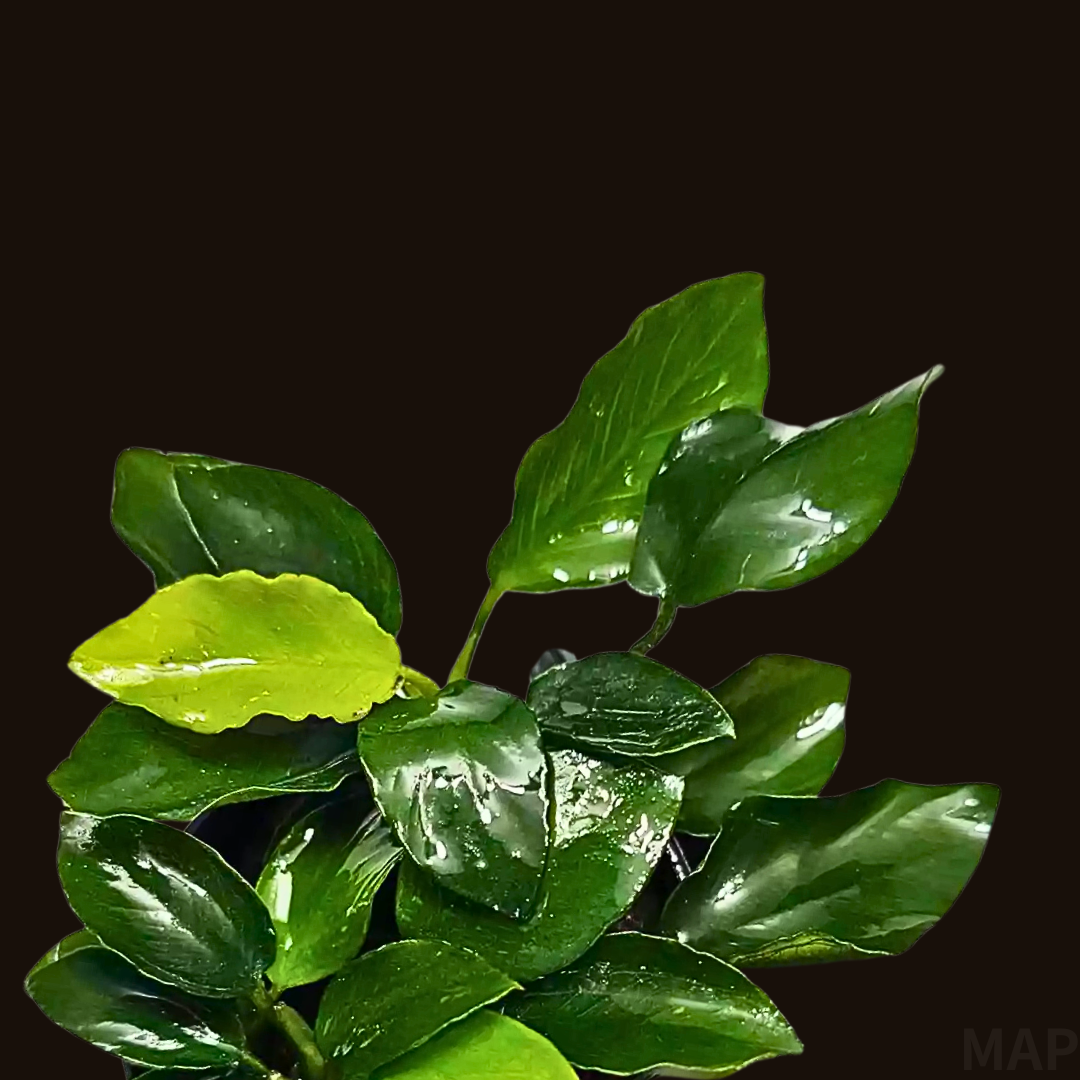
アヌビアス・ナナ ‘ボンサイ’は、アフリカ原産のアヌビアス・ナナをさらに小型化した、非常にコンパクトで美しい栽培品種です。その名の通り、流木や石に活着させた姿は、日本の伝統的な「盆栽」を彷彿とさせ、特に30cmキューブ水槽などの小型水槽(ナノアクアリウム)において、圧倒的なスケール感と精密さを演出します。深い緑色の硬い葉は非常に強健で、水質や光量の適応範囲が広く、初心者からベテランまで幅広く愛されています。成長が緩やかなため、一度完成したレイアウトを長期間維持できる点も大きな魅力です。Anubias barteri var. nana ‘Bonsai’ is a very compact and beautiful cultivar of the West African native Anubias nana. As the name suggests, when attached to driftwood or rocks, it resembles a traditional Japanese “Bonsai,” providing an incredible sense of scale and precision, especially in small tanks or nano aquariums. Its deep green, leathery leaves are extremely robust, adapting well to various water conditions and light levels, making it a favorite for both beginners and experts. Its slow growth rate allows for long-term maintenance of an established aquascape.
基本情報 / Basic Information
学名 / Scientific Name
Anubias barteri var. nana ‘Bonsai’
通称 / Common Name
アヌビアス・ナナ ‘ボンサイ’Anubias nana ‘Bonsai’
分類 / Family
サトイモ科(Araceae)Araceae
分布 / Distribution
栽培品種(原種は西アフリカ:カメルーンなど)Cultivar (Original species from West Africa: Cameroon, etc.)
育成難易度 / Difficulty
極めて容易Very Easy
育成環境 / Cultivation Environment
光量 / Light
低光量〜中光量(一般的なLED照明で十分です)Low to Medium light (Standard LED lighting is sufficient)
CO2添加 / CO2 Injection
不要(添加すると成長が促進され、より健康的に育ちます)Not required (Addition promotes faster and healthier growth)
水質 / Water Quality
弱酸性〜弱アルカリ性(pH 5.0〜8.0)、軟水〜硬水まで幅広く対応Slightly acidic to slightly alkaline (pH 5.0-8.0), adapts to soft to hard water
底床 / Substrate
石や流木への活着が基本(ソイル、砂利、砂も可だが根茎を埋めないこと)Ideally attached to rocks or driftwood (Soil, gravel, or sand is fine, but do not bury the rhizome)
レイアウト / Layout
配置 / Positioning
前景〜中景、流木や石のアクセントForeground to Mid-ground, accents on driftwood or rocks
注意点 / Precautions
根茎(リゾーム)を底床に深く埋めると腐敗する原因となります。活着させる際は専用の接着剤や糸を使用してください。Burying the rhizome deep in the substrate can cause rot. Use specific aquarium glue or thread to attach it to surfaces.
増やし方(トリミング) / Propagation & Trimming
増やし方 / Propagation
株分け(根茎を清潔なハサミでカットし、それぞれの片に葉が4〜5枚残るようにします)Division (Cut the rhizome with clean scissors, ensuring each piece has 4-5 leaves)
トリミング / Trimming
古くなった葉やコケが付着した葉を根元からカットします。成長が遅いため、切りすぎには注意が必要です。Cut old or algae-covered leaves from the base. Be careful not to over-trim due to its slow growth.
病気と対策(コケなど) / Pests & Algae
かかりやすい病気 / Common Issues
黒髭ゴケ、緑色の斑点状藻類、根茎の腐敗(リゾーム腐敗病)Black beard algae, green spot algae, rhizome rot
対策と予防 / Prevention
成長が遅いためコケが付きやすいです。ヤマトヌマエビなどの掃除役を導入し、直射日光を避けた配置を心がけてください。Due to slow growth, it is prone to algae. Introduce algae eaters like Amano shrimp and avoid placing in direct light.
雑学と豆知識 / Trivia and Fun Facts
1. 冥界の守護者の名を冠する理由 / 1. Origin of the Name “Anubias”
属名の「アヌビアス」は、古代エジプトの冥界の神アヌビスに由来しています。これは、この植物が熱帯雨林の奥深く、陽の光がほとんど届かない薄暗い水辺でひっそりと生きる姿にちなんでいます。しかし、一度水槽に入れば「ほぼ枯らすことが不可能」と言われるほどの生命力を持ち、海外では「生長するプラスチック植物」という愛称で呼ばれることもあります。The genus name “Anubias” comes from the ancient Egyptian god of the underworld, Anubis. This is because these plants live in the dim, shaded banks of tropical rainforests where little sunlight reaches. Ironically, they are so hardy that they are often nicknamed “growing plastic plants” in the hobby.
2. なぜ「盆栽」と呼ばれるのか? / 2. Why is it called “Bonsai”?
この栽培品種は、ヨーロッパのファームなどで選抜された極小の変異株を固定化したものです。特に流木の枝先に活着させた際、その小さな葉が密集して茂る様子が、日本の伝統芸術である盆栽の樹形に見えることからこの名がつきました。アフリカの植物がヨーロッパで改良され、日本の名前を冠して世界に広まっているのは、アクアリウム文化のグローバルな歴史を象徴しています。This cultivar was developed from tiny mutations selected in European farms. When attached to the tips of driftwood branches, the dense, small leaves resemble the silhouette of a Japanese Bonsai tree. It is a symbol of global aquarium culture that an African plant, improved in Europe, carries a Japanese name worldwide.
3. シクリッドや金魚に食べられない強さ / 3. Resistant to Herbivorous Fish
アヌビアスの葉は非常に厚く硬いため、多くの草食性の強い魚(金魚やアフリカンシクリッドなど)にとって「不味くて噛み切りにくい」という特徴があります。そのため、通常なら水草を食べてしまう魚たちの水槽でも、緑の景観を維持できる貴重な存在として重宝されています。Anubias leaves are so thick and tough that many herbivorous fish, such as Goldfish or African Cichlids, find them unpalatable and difficult to tear. This makes them a precious choice for maintaining greenery in tanks with fish that would normally eat plants.
4. 水中での開花という神秘 / 4. The Mystery of Underwater Flowering
アヌビアスは、完全な水中環境であっても仏炎苞(ぶつえんほう)と呼ばれる白い花を咲かせることがあります。これはサトイモ科の植物に共通する特徴ですが、水中で花が見られるのはアクアリウムならではの神秘的な光景です。特にリン酸塩の濃度が適切に保たれていると、開花が促されると言われています。Anubias can produce white flowers called “spathes” even in fully submerged conditions. While common to Araceae, seeing a flower underwater is a mystical sight unique to aquariums. It is said that maintaining proper phosphate levels can trigger this blooming.
まとめ / Conclusion
アヌビアス・ナナ ‘ボンサイ’は、その驚異的な強健さと、ナノ水槽に最適な極小の美しさを兼ね備えた、まさにアクアリウムの至宝とも呼べる水草です。活着というスタイルを活かし、流木や石に固定するだけで、初心者の方でも即座に完成度の高い水景を楽しむことができます。Anubias nana ‘Bonsai’ is a true treasure of the aquarium world, combining incredible hardiness with a tiny beauty perfect for nano tanks. By utilizing its epiphytic nature and simply attaching it to wood or rocks, even beginners can instantly enjoy a high-quality aquascape.
成長はゆっくりですが、その分、一葉一葉が刻む時間はあなたの水槽に深い趣をもたらしてくれるでしょう。日本で一般的な60cm規格水槽から、デスクサイドの小さなボトルアクアリウムまで、あらゆるシーンで「水中の盆栽」を育ててみてはいかがでしょうか。Its growth is slow, but the time marked by each leaf will bring a deep sense of character to your tank. From the standard 60cm tank to a small bottle aquarium on your desk, why not try cultivating your own “underwater bonsai” in any setting?
Crusio, W. E. (1979). A revision of Anubias Schott (Araceae). Mededelingen Landbouwhogeschool Wageningen.Crusio, W. E. (1979). A revision of Anubias Schott (Araceae). Mededelingen Landbouwhogeschool Wageningen.
Engler, A. (1899). Beiträge zur Kenntnis der Araceae. Botanische Jahrbücher für Systematik, Pflanzengeschichte und Pflanzengeographie.Engler, A. (1899). Beiträge zur Kenntnis der Araceae. Botanische Jahrbücher für Systematik, Pflanzengeschichte und Pflanzengeographie.
Kasselmann, C. (2010). Aquarium Plants. DATZ-Atlas.(水草の生理・生態に関する基本的参照)Kasselmann, C. (2010). Aquarium Plants. DATZ-Atlas. (Basic reference for aquatic plant physiology and ecology)



 アイのアクアグッズ案内水槽用浄水器の選び方|水換えを楽にするタイプとROの違い道具の特徴や使い方、選ぶときのポイントをアイが紹介します。記事はコチラ →
 アイのアクアグッズ案内あい先生のアクアグッズ深堀り!|泡で汚れを取り出す? プロテインスキマーの歴史と仕組み道具の特徴や使い方、選ぶときのポイントをアイが紹介します。記事はコチラ →



コメント