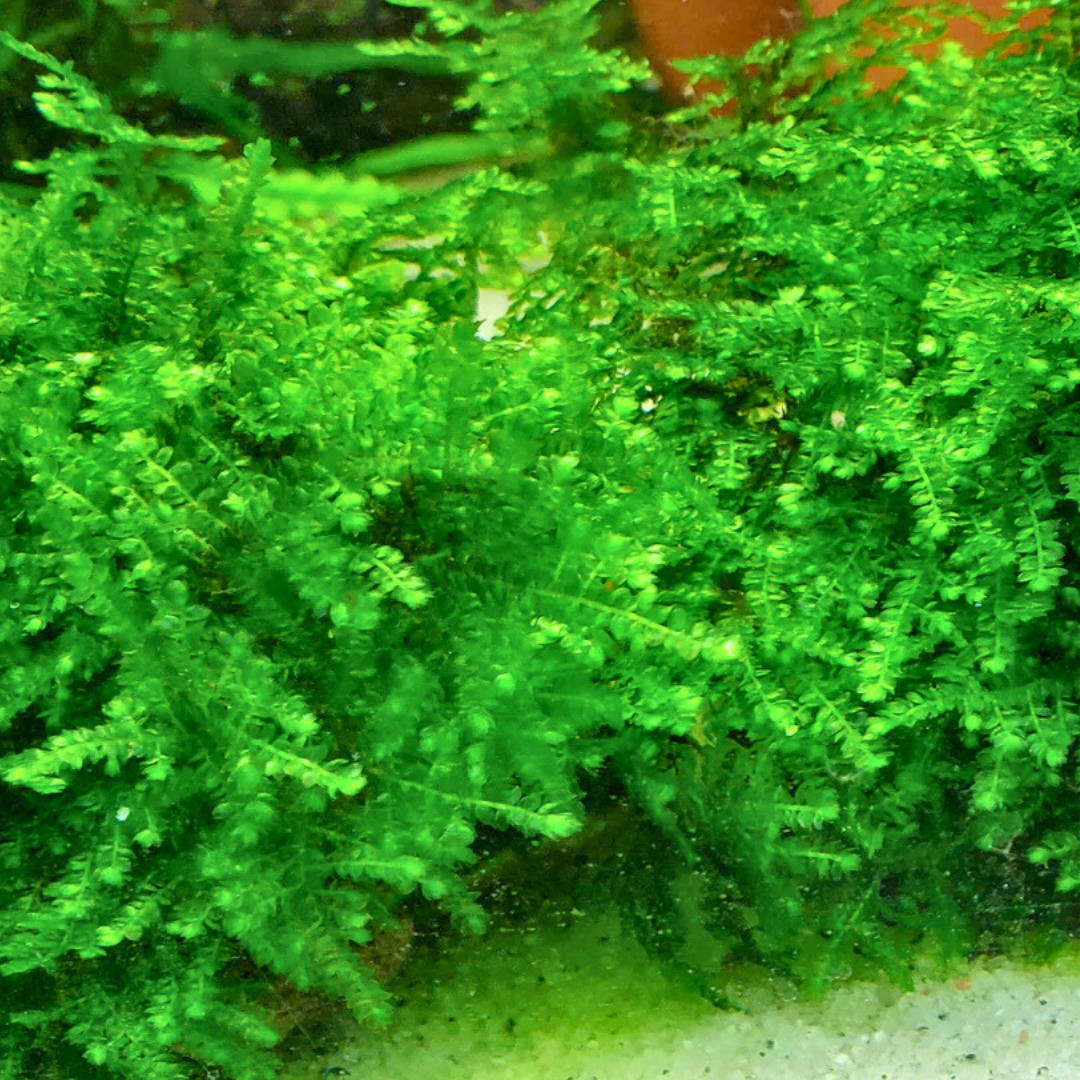
ウィーピングモスは、その名の通り「枝垂れる(Weeping)」成長形態が特徴的なコケの仲間です。多くのモスが上方や横方向に伸びる中、本種は弓なりに下へと垂れ下がるような姿を見せ、シダレヤナギを思わせる情緒豊かな水景を作り出します。落ち着いたダークグリーンの葉は、レイアウトに立体感と自然な奥行きをもたらし、特に流木の先端や石の隙間に配置することで、森の深淵のような静寂な美しさを演出するのに適しています。Weeping Moss is a type of moss characterized by its “weeping” growth habit. While many mosses grow upwards or horizontally, this species curves downwards, creating an emotional aquascape reminiscent of a weeping willow. Its calm, dark green leaves bring three-dimensionality and natural depth to layouts, making it suitable for evoking the serene beauty of a deep forest, especially when placed on the tips of driftwood or in gaps between rocks.
中国、東南アジア、日本など(諸説あり)China, Southeast Asia, Japan, etc. (Subject to discussion)
育成難易度 / Difficulty
比較的容易。環境に馴染めば丈夫ですが、美しい姿を保つには適度な管理が推奨されます。Relatively easy. Hardy once established, though moderate management is recommended to maintain its beauty.
育成環境 / Cultivation Environment
光量 / Light
低光量から中光量。60cm規格水槽(約60リットル)でLEDライト1から2灯程度が目安です。光が極端に弱いと、本来の垂れ下がる性質が弱まることがあります。Low to medium light. For a standard 60cm tank (approx. 60L), one to two LED lights are recommended. Extremely low light may weaken its natural weeping habit.
CO2添加 / CO2 Injection
あると望ましい。無添加でも育成可能ですが、添加することで成長が安定し、葉の厚みや発色が向上しやすくなります。Desirable. It can grow without injection, but adding CO2 stabilizes growth and helps improve leaf thickness and coloration.
水質 / Water Quality
弱酸性から中性(pH 5.0から7.5)。軟水を好みますが、適応範囲は広いです。水温は20度から27度程度が目安です。Slightly acidic to neutral (pH 5.0 to 7.5). Prefers soft water but has a wide range of adaptation. Target temperature is around 20 to 27 degrees Celsius.
底床 / Substrate
ソイル、砂、砂利など。底床に植え込む必要がないため、水質に影響の少ないものなら種類を選びません。Soil, sand, gravel, etc. Since it does not need to be planted, any substrate that does not negatively affect water quality is suitable.
レイアウト / Layout
配置 / Positioning
中景から後景。流木や石に活着させて、高い位置から垂れ下がるように配置することで、その魅力を活かせます。Midground to background. Its charm is best utilized by attaching it to driftwood or rocks, allowing it to hang down from higher points.
注意点 / Precautions
自力での活着力はそれほど強くありません。木綿糸や水草専用接着剤を使用して、物理的に固定することが一般的です。Its natural attachment strength is not very strong. It is commonly fixed physically using cotton thread or specialized aquatic plant glue.
増やし方(トリミング) / Propagation & Trimming
増やし方 / Propagation
株分け。伸びすぎた部分をカットし、再度新しい基質に巻き付けることで増やすことができます。Division. It can be propagated by cutting overgrown parts and re-wrapping them onto new substrates.
トリミング / Trimming
表面をハサミでカットするほか、密集しすぎた内部を「間引き」することで、通水性と採光性を確保し、下位葉の傷みを防ぎます。Besides surface trimming with scissors, “thinning out” the dense interior is important to ensure water flow and light reach the lower parts, preventing damage.
病気と対策(コケなど) / Pests & Algae
かかりやすい病気 / Common Issues
内部の枯死。茂みが分厚くなりすぎると、光や水流が届かない部分が茶色く枯れ、浮き上がりや剥がれの原因になります。また、糸状の藻類も絡まりやすいです。Interior die-off. If the thicket becomes too dense, parts lacking light or water flow may turn brown and die, causing the clump to detach. Filamentous algae can also easily get tangled.
対策と予防 / Prevention
定期的な間引きと、ヤマトヌマエビなどのお掃除役の生体を導入するのが効果的です。換水時に汚れを吸い出すメンテナンスも有効です。Regular thinning and the introduction of algae-eaters like Yamato Numanebi (Amano Shrimp) are effective. Siphoning out detritus during water changes is also helpful.
雑学と豆知識 / Trivia and Fun Facts
1. 「ウィーピング」に込められた情景1. The Scene in the Name “Weeping”
ウィーピング(Weeping)という言葉は、英語で「枝垂れる」という意味を持ち、陸上のシダレヤナギ(Weeping Willow)に例えられています。この詩的な名前は、水槽の中に時間の経過や哀愁、あるいは静かな森の景色を再現したいアクアスケーパーたちの感性に強く響き、世界中で愛される理由の一つとなっています。The word “Weeping” refers to a drooping or hanging growth habit, often compared to the terrestrial Weeping Willow. This poetic name resonates with aquascapers who wish to recreate scenes of aging, nostalgia, or quiet forest landscapes, which is one of the reasons it is loved worldwide.
2. 成長と光の不思議な関係2. The Curious Relationship Between Growth and Light
ウィーピングモスの美しい下垂性は、環境によってその姿を変えることがあります。一般的に、十分な光量がある環境では重力に従うように美しく枝垂れますが、極端に光が不足すると、光を求めて水平方向や上方へ間延びするように育つ場合があると考えられています。本来の姿を楽しむためには、光量のバランスを見極めることが育成の醍醐味と言えます。The beautiful weeping habit of this moss can change depending on the environment. Generally, with sufficient light, it hangs beautifully following gravity. However, in extremely low light, it is thought to stretch horizontally or upwards in search of light. Finding the right light balance is one of the joys of cultivating this moss.
3. 日本の野生環境と希少性3. Wild Environment in Japan and Scarcity
Vesicularia ferrieiは、日本ではフクロハイゴケとして野外の記録があります。兵庫県版レッドデータブック2020では県内の保全区分Cランクに掲載されています。これは地域の評価であり、全国で同じ危険度という意味ではありません。また、野外のコケを見た目だけで市販のウィーピングモスと同定することはできません。水槽用には由来の明らかな育成株を選び、野生の生育地を守りましょう。Vesicularia ferriei is recorded in Japan as Fukuro-haigoke. Hyogo Prefecture’s 2020 Red Data Book lists it in the prefectural C category; this is a regional assessment, not a nationwide status. Wild moss should not be identified as the commercial Weeping Moss form from appearance alone. Choose cultivated stock of known origin and protect natural habitats.
4. 組織培養株という賢い選択4. The Smart Choice of Tissue Culture Specimens
現在では、無菌状態で育てられた「組織培養(TC)」のカップ入り製品も広く流通しています。これらは農薬やスネール、厄介な藻類といった不要なものの混入リスクを大幅に下げることができるため、特にエビなどのデリケートな生体を飼育している水槽への導入には、非常に有力で安心できる選択肢のひとつとなっています。Today, “Tissue Culture” (TC) products grown in sterile conditions are widely available. These significantly reduce the risk of introducing unwanted elements like pesticides, snails, or troublesome algae. Especially for tanks with sensitive inhabitants like shrimp, TC specimens are a powerful and reliable option.
まとめ / Conclusion
ウィーピングモスは、その独特な下垂成長によって、水景に情緒と奥行きを与えてくれる素晴らしいコケの仲間です。育成は比較的容易ですが、美しい姿を長く維持するためには、日々の観察と適度なトリミングを通じて「コケの状態」を確認してあげることが大切です。Weeping Moss is a wonderful moss that adds emotion and depth to aquascapes with its unique drooping growth. While cultivation is relatively easy, maintaining its beauty long-term requires monitoring its condition through daily observation and moderate trimming.
組織培養株のような安心できる選択肢を活用しながら、シダレヤナギのように優雅な緑の茂みを水槽の中に作り上げてみてください。深緑が織りなす癒やしの空間は、日々の生活にきっと潤いを与えてくれるはずです。By utilizing reliable options like tissue-cultured specimens, try creating an elegant green thicket in your tank. The healing space woven by deep green will surely enrich your daily life.


 アイのアクアグッズ案内カルキ抜き・水質調整剤の選び方|水換えと水槽の種類に合わせて選ぶ道具の特徴や使い方、選ぶときのポイントをアイが紹介します。記事はコチラ →
 アイのアクアグッズ案内エンゼルフィッシュの飼育用品|高さのある水槽・ろ過・水草・餌の選び方道具の特徴や使い方、選ぶときのポイントをアイが紹介します。記事はコチラ →
 アイのアクアグッズ案内ベタの一匹飼いを楽しむ|水槽・ヒーター・ふた・フィルターの選び方ベタの一匹飼いに向く水槽容量、ふたと空気層、ヒーターと水温計、弱い水流のフィルターを、コタロウとアイの会話で分かりやすく解説します。記事はコチラ →
 アイのアクアグッズ案内水槽のコケ掃除|道具の選び方とお掃除生体の得意・不得意道具の特徴や使い方、選ぶときのポイントをアイが紹介します。記事はコチラ →



コメント