

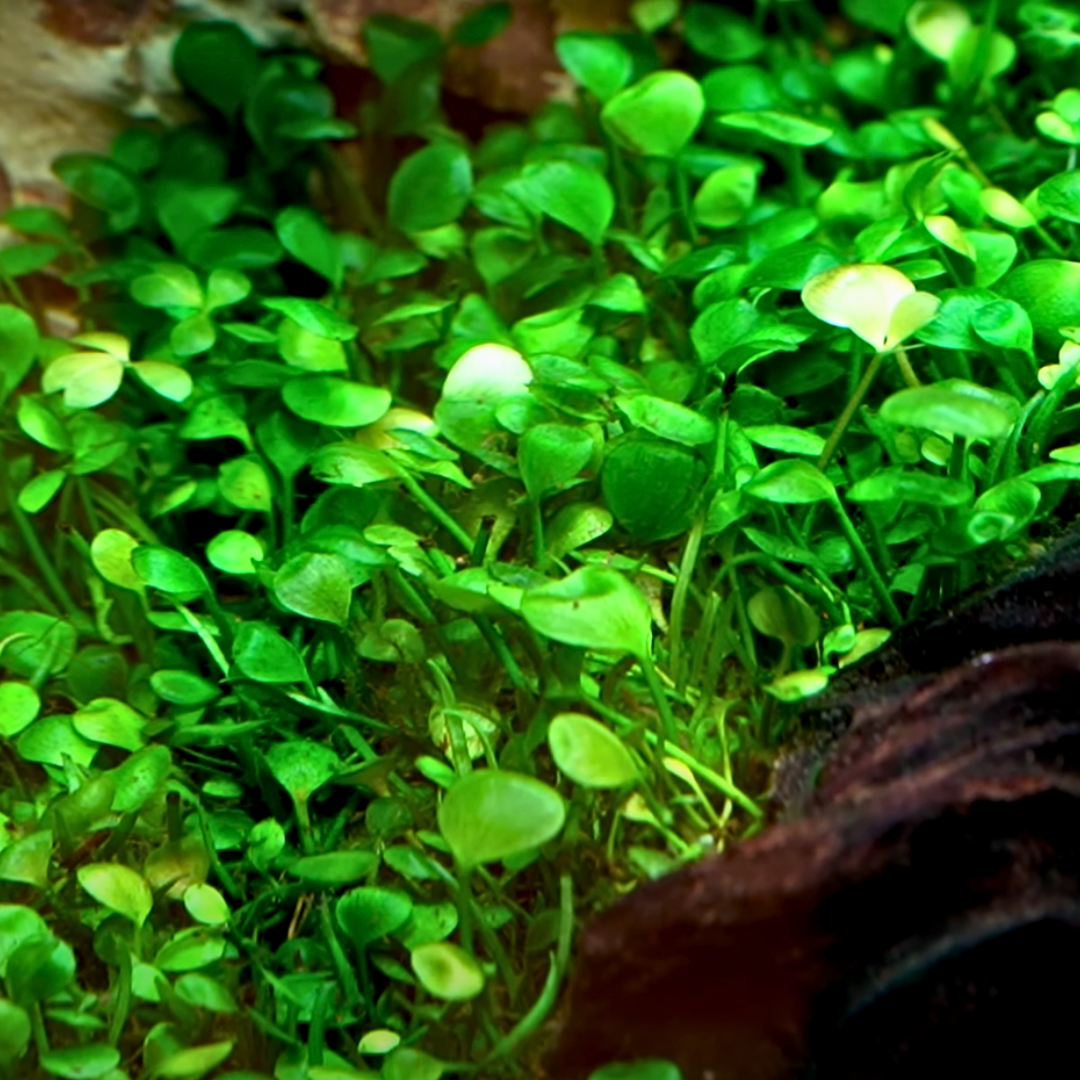
解説 / Description
マルシレア・ミヌタは、アクアリウムにおいて「ヨーロピアンクローバー」という流通名で古くから親しまれているシダ植物の一種です。水上では四つ葉のクローバーに似た愛らしい姿を見せますが、水中では環境に応じて1枚から4枚まで小葉の数を変化させるという非常にユニークな生態を持っています。前景草としてランナーを伸ばして広がる性質があり、条件が整えば緑のカーペット状に仕立てることができます。他の定番の前景草に比べて成長が比較的緩やかであるため、長期的な景観の維持がしやすい点もアクアリストにとって大きなメリットです。 Marsilea minuta is a species of aquatic fern long known in the aquarium hobby under the trade name European Clover. While it displays lovely four-leaf clover-like foliage when grown emersed, it has a unique ecology where the number of leaflets varies from one to four submersed, depending on the environment. It spreads through runners and can be developed into a green carpet under the right conditions. Its relatively slow growth rate compared to other common foreground plants makes it a preferred choice for easier long-term maintenance.
基本情報 / Basic Information
| 学名 / Scientific Name | Marsilea minuta L. |
|---|---|
| 通称 / Common Name | ヨーロピアンクローバー、マルシレア・ミヌタEuropean Clover, Marsilea minuta |
| 分類 / Family | デンジソウ科 (Marsileaceae) デンジソウ属Marsileaceae, Marsilea genus |
| 分布 / Distribution | 熱帯から亜熱帯のアジア、アフリカに広く分布Widely distributed across tropical and subtropical Asia and Africa |
| 育成難易度 / Difficulty | 容易から中程度(水中化への適応期間を考慮)Easy to Moderate (Considering the submersed adaptation period) |
育成環境 / Cultivation Environment
| 光量 / Light | 中光量から高光量(0.5 W/L以上を推奨)。30cm規格水槽であれば高出力のLED、60cm規格水槽であればLEDを2灯以上設置すると、低く這うような密度の高い群落を作りやすくなります。Moderate to high (0.5 W/L or more recommended). Using high-output LEDs for a 30cm tank or two or more LEDs for a 60cm standard tank encourages compact, low-growing colonies. |
|---|---|
| CO2添加 / CO2 Injection | 必須ではないが、添加することで成長スピードが向上し、より美しい葉を展開します。Not essential, but injection increases growth speed and leads to more beautiful foliage. |
| 水質 / Water Quality | 弱酸性から中性付近の幅広い水質に適応します。極端な高硬水でなければ育成は可能です。Adapts to a wide range of water qualities from slightly acidic to neutral. Growth is possible as long as the water is not extremely hard. |
| 底床 / Substrate | ソイル(特に栄養を含んだもの)や砂など。ランナーを伸ばしやすいため、細かめの底床材が適しています。Soil (especially nutrient-rich ones) or sand. Fine substrate materials are suitable as they allow runners to spread easily. |
レイアウト / Layout
| 配置 / Positioning | 前景から中景。水槽の前面に植栽してカーペット状にしたり、石や流木の足元に配置して自然な雰囲気を演出したりするのに適しています。Foreground to midground. Suitable for creating carpets in the front of the tank or placing at the base of rocks and driftwood for a natural feel. |
|---|---|
| 注意点 / Precautions | 光量や肥料が不足したり、周囲の水草に光を遮られたりすると、葉柄を上方へ伸ばして徒長してしまうことがあります。Insufficient light or nutrients, or shading by surrounding plants, can cause the petioles to stretch vertically (etiolation). |
増やし方(トリミング) / Propagation & Trimming
| 増やし方 / Propagation | 地下茎(ランナー)を伸ばして次々と新しい葉を出して増えます。株分けをする際は、ランナーを適度な箇所でカットして底床に差し戻します。Spreads by extending rhizomes (runners) and producing new leaves. When dividing, cut the runners at appropriate points and replant them into the substrate. |
|---|---|
| トリミング / Trimming | 葉が重なり合って厚みが出てきた場合や、徒長した葉が目立つようになった場合は、古い葉や高い葉を根元からカットして整理します。If the leaves overlap and become too thick, or if leggy leaves become noticeable, prune old or tall leaves from the base. |
病気と対策(コケなど) / Pests & Algae
| かかりやすい病気 / Common Issues | 水上葉から水中環境へ移行する際、環境に適応するために古い葉を枯らす現象(適応反応)が見られることがあります。また、成長が比較的緩やかなため、葉面にコケが付着しやすい傾向があります。When transitioning from emersed to submersed environments, old leaves may wither as an adaptive response. Due to its relatively slow growth, algae can easily attach to the leaf surfaces. |
|---|---|
| 対策と予防 / Prevention | 導入時は「ミスト式」などの手法を用いることで、水中化のダメージを軽減できる場合があります。コケ対策にはヤマトヌマエビなどの掃除役の生体を活用し、水質管理を徹底することが重要です。Using techniques like the Dry Start Method during introduction can sometimes mitigate transition damage. For algae, use cleaning organisms like Amano shrimp and maintain strict water quality control. |
雑学と豆知識 / Trivia and Fun Facts
| 1. 「ヨーロピアン」という名称の背景 / 1. Context of the name “European” | 流通名の「ヨーロピアンクローバー」という呼び名は、かつてヨーロッパの水草ファームを通じて世界に広まったという商業的な歴史に基づいていると考えられています。実際の自生地は熱帯や亜熱帯のアジア、アフリカに広く分布しており、名前に反して温暖な地域の植物です。The trade name “European Clover” is thought to be based on the commercial history of being distributed worldwide through European aquatic plant farms. Its actual natural habitat is widely distributed across tropical and subtropical Asia and Africa, making it a plant of warm regions despite its name. |
|---|---|
| 2. 環境に応じた葉の変身 / 2. Leaf transformation according to the environment | マルシレアの仲間は、周囲の水分量や光の条件によって、1つの葉柄の先に付く小葉の数が1枚から4枚まで変化することがあります。アクアリウムの水中環境では、条件によって一葉(単葉)になったり、四つ葉に近い姿になったりと、さまざまな表情を見せてくれるのが大きな魅力です。Members of the Marsilea genus can change the number of leaflets at the tip of a single petiole from one to four depending on moisture and light conditions. In an aquarium’s submersed environment, it shows various expressions, appearing as single-lobed or nearly four-lobed leaves depending on the conditions. |
| 3. 植物の「眠り」と概日リズム / 3. Plant “Sleep” and Circadian Rhythms | この植物は夜間に葉を閉じる「就眠運動」を行います。これは単なる光への反応だけでなく、植物体内の概日時計と環境刺激の相互作用によって制御されていると考えられています。水槽のライトが消えた後、静かに葉をたたんで休む姿は、まるで生き物のような愛らしさを感じさせてくれます。This plant performs “nyctinasty,” folding its leaves at night. This is thought to be controlled not just by light response but by the interaction between the plant’s internal circadian clock and environmental stimuli. Watching it quietly fold its leaves after the aquarium lights go off gives it a pet-like charm. |
| 4. 日本の在来種との関係と管理上の倫理 / 4. Relationship with native Japanese species and management ethics | 日本には在来種としてデンジソウ(Marsilea quadrifolia)などが自生していますが、農薬や環境開発により多くの地域で絶滅危惧種となっています。流通しているマルシレア・ミヌタは海外由来の系統が多いため、野外へ放流することは在来種との交雑による遺伝子汚染のリスクを伴います。アクアリストとして、最後まで水槽内で大切に管理することが求められます。In Japan, species like Marsilea quadrifolia are native but have become endangered in many areas due to pesticides and development. Since most Marsilea minuta in the hobby are of foreign origin, releasing them into the wild carries a risk of genetic pollution through crossbreeding with native species. As hobbyists, it is our duty to manage them responsibly within our tanks to the end. |
まとめ / Conclusion
マルシレア・ミヌタ(ヨーロピアンクローバー)は、その可愛らしい見た目と、環境に適応しようとする力強い生態が魅力の水草です。前景草として絨毯を作る楽しみはもちろん、日々の葉の開閉や姿の変化を観察することで、水槽の中に息づく命をより身近に感じることができます。 Marsilea minuta (European Clover) is an attractive aquatic plant known for its charming appearance and strong ecological adaptability. Beyond the joy of creating a foreground carpet, observing the daily opening and closing of its leaves and its changing forms allows you to feel the life breathing within your aquarium more closely.
育成にあたっては、組織培養株などの清潔な個体を選び、適度な光量と安定した環境を提供することが美しく育てる秘訣です。日本の豊かな自然環境を守るという意識を持ちながら、このユニークな「幸運のクローバー」をぜひあなたの水槽で楽しんでみてください。 For successful cultivation, choosing clean tissue-cultured specimens and providing adequate light and a stable environment are the secrets to beautiful growth. While remaining conscious of protecting Japan’s rich natural environment, please enjoy this unique “lucky clover” in your own aquarium.

気になる道具や飼い方を見つけてみませんか?
 アイのアクアグッズ案内ベタの一匹飼いを楽しむ|水槽・ヒーター・ふた・フィルターの選び方ベタの一匹飼いに向く水槽容量、ふたと空気層、ヒーターと水温計、弱い水流のフィルターを、コタロウとアイの会話で分かりやすく解説します。記事はコチラ →
 アイのアクアグッズ案内マジックリーフ物語|一枚の葉がアクアリウム用品になるまで道具の特徴や使い方、選ぶときのポイントをアイが紹介します。記事はコチラ →
 アイのアクアグッズ案内水草の肥料の選び方|底床用・液肥・メネデールの使い分け道具の特徴や使い方、選ぶときのポイントをアイが紹介します。記事はコチラ →
 アイのアクアグッズ案内旅行中、お魚のごはんはどうする? 自動給餌器・使える餌・スマート水槽の選び方旅行中の魚の餌やりを助ける自動給餌器を、アイとコタロウが紹介。時間指定、おかわり給餌、対応するフレークや顆粒、設置台、スマホ管理、一体型水槽、留守番フードまで、使いどころと選び方を案内します。記事はコチラ →
さまざまな飼育テーマをご紹介。リンク先の記事には広告・商品紹介が含まれます。
案内・紹介記事一覧へ →参考文献および出典資料
- 環境省 絶滅危惧種検索(レッドデータブック・レッドリスト) – デンジソウ属の保全状況および国内分布の確認
- 米倉浩司・梶田忠 (2003-) 「BG Plants 和名-学名インデックス」(YList) – 日本産生体の標準和名および学名の照合
- Plants of the World Online (Kew Science) – Marsilea minuta L. の世界的な分布および分類学的シノニムの確認
- Journal of Plant Research (The Botanical Society of Japan) – 水生シダ植物の異形葉性および環境応答に関する生理学的研究論文
- Annals of Botany – デンジソウ属における就眠運動と概日リズム、アブシジン酸の相互作用に関する学術資料
- Nature Aquarium 関連図書(水草の育成特性およびレイアウトへの応用)
- World Flora Online (WFO) – 1771年にリンネにより記載された Marsilea minuta の分類史データ
※本記事のデータは、上記の学術的知見および公共データベースの情報を基に、観賞魚飼育の観点から再構成したものです。




コメント