

解説 / Description
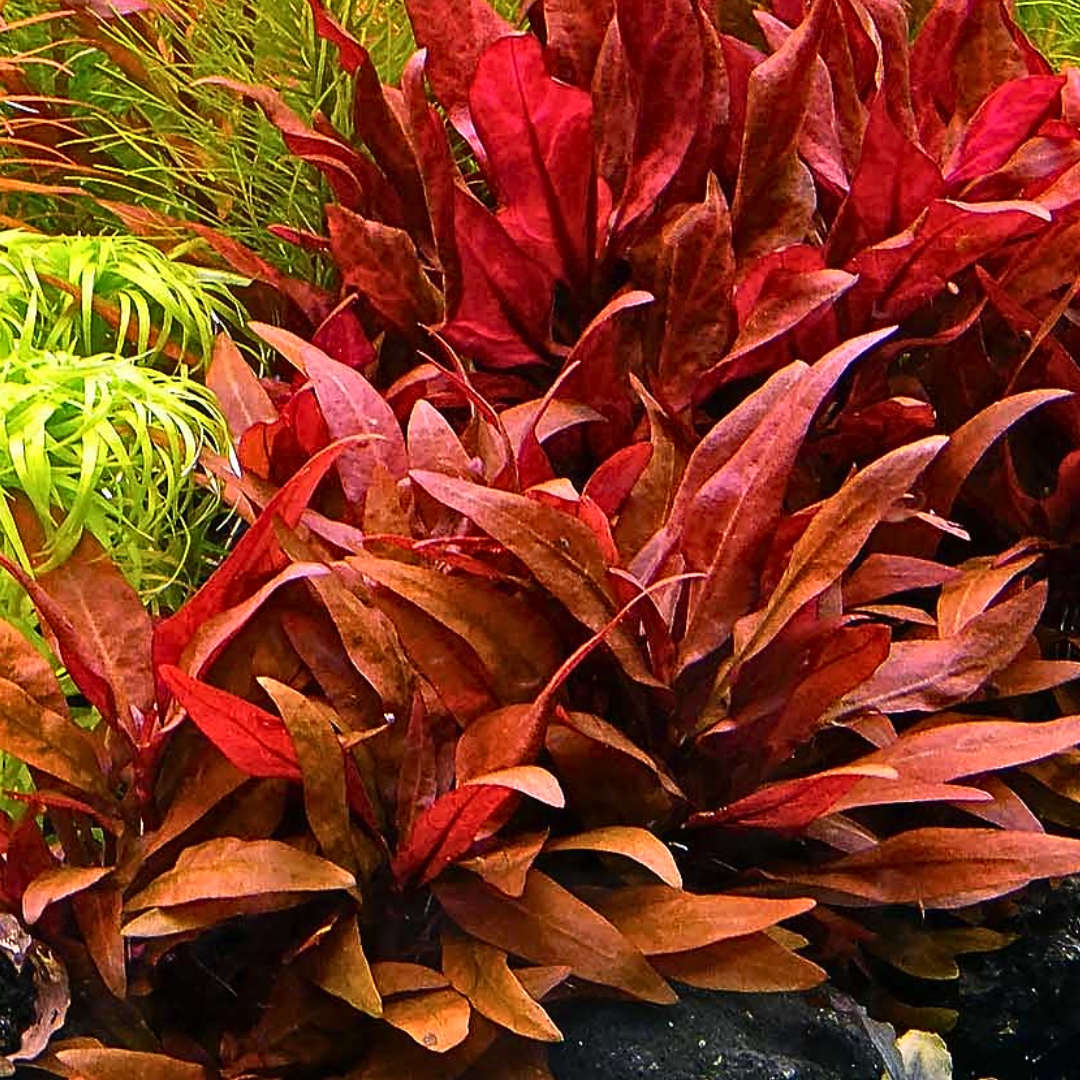
アルテルナンテラ・レインキー ‘ミニ’は、赤から赤紫に色づく葉を、低い茂みとして楽しめる有茎草です。通常のレインキーよりコンパクトに育ち、緑の下草や流木の足元に添えると、水景に温かみのある彩りが生まれます。葉は茎の節ごとに向かい合ってつき、紫がかった葉裏も魅力のひとつ。成長は比較的穏やかで、少しずつ枝を増やしながら群落を整えていく楽しみがあります。 Alternanthera reineckii ‘Mini’ is a compact stem plant valued for its red to reddish-purple foliage. A low group beside green groundcover or the base of driftwood adds a warm accent to an aquascape. Its leaves grow in opposite pairs, and their purplish undersides add another layer of color. Growth is relatively slow, allowing aquarists to enjoy gradually shaping a branching group.
低く仕立てれば前景に、少し高さを持たせれば中景に使えます。ただし、「ミニ」という名前でも、必ず一定の高さで成長が止まるわけではありません。光の届き方や植え込みの密度によって草姿が変わるため、十分に光が届く場所で育て、トリミングで輪郭を整えるのが基本です。赤みの強さだけを追い求めるよりも、健康な新葉が続けて展開する環境をつくると、この品種らしい美しさを長く楽しめます。 Keep it low for the foreground, or allow a little more height for the midground. Despite its name, ‘Mini’ does not necessarily stop growing at a fixed height. Light availability and planting density affect its shape, so a well-lit position and regular trimming are important. Consistent production of healthy new leaves provides a better foundation for lasting beauty than pursuing the deepest possible red alone.
基本情報 / Basic Information
| 学名 / Scientific Name | Alternanthera reineckii ‘Mini’ ‘Mini’は栽培品種名で、独立した種を示すものではありません。原種の学名は Alternanthera reineckii Briq. です。栽培品種名は属名・種小名と区別し、通常は斜体にしません。‘Mini’ is a cultivar name rather than a separate species. The species name is Alternanthera reineckii Briq. Cultivar names are distinguished from the genus and species names and are normally written in upright type. |
|---|---|
| 通称 / Common Name | アルテルナンテラ・レインキー・ミニ、アルテルナンテラ・レインキーミニ。「レイネキー」などの表記で販売されることもあります。Alternanthera reineckii ‘Mini’, AR Mini, or Mini Alternanthera. Japanese trade names use several transliterations of reineckii. |
| 分類 / Family | ナデシコ目・ヒユ科・ツルノゲイトウ属(アルテルナンテラ属)。根を底床に張り、茎を伸ばして育つ有茎草です。Order Caryophyllales, family Amaranthaceae, genus Alternanthera. A rooted stem plant that grows from the substrate. |
| 分布 / Distribution | 原種は南アメリカ原産で、湿地や水辺に生育する水陸両生の植物です。‘ミニ’は栽培品種として流通しており、原種の自生地がそのまま本品種の自生地に当たるわけではありません。The species originates from South America and is an amphibious plant associated with wetlands and waterside habitats. ‘Mini’ is a cultivated form; the native range of the species does not establish a wild distribution for this cultivar. |
| 育成難易度 / Difficulty | 中程度。赤い葉と低く密な草姿を両立させるには、育成環境とトリミングに工夫が必要です。CO2添加、十分な光、バランスのよい栄養供給をそろえると育てやすくなります。導入直後の小さな株は、植栽時の傷みや環境変化に注意しましょう。Moderate. Maintaining red foliage and a dense, low shape requires suitable growing conditions and careful trimming. CO2 supplementation, adequate light, and balanced nutrition make cultivation easier. Small newly introduced plants need gentle handling and time to adjust. |
育成環境 / Cultivation Environment
| 光量 / Light | 中光量〜高光量が目安です。照明器具の出力だけでなく、植えた場所まで光が届いているかを確認しましょう。流木やほかの水草の陰では、節間が伸びたり、下葉が落ちたりしやすくなります。点灯時間はまず1日6〜8時間程度から始め、成長とコケの出方に合わせて調整します。赤みを強めようとして、光量と点灯時間を一度に大きく増やすのは避けてください。Aim for moderate to high light, making sure it reaches the actual planting position. Shade from wood or neighboring plants can encourage longer internodes and loss of lower leaves. Start with roughly six to eight hours of light daily, then adjust according to growth and algae. Avoid sharply increasing both intensity and duration in an attempt to deepen the color. |
|---|---|
| CO2添加 / CO2 Injection | 添加を推奨します。無添加で維持できる場合もありますが、密な茂みと安定した成長を目指すうえで役立ちます。気泡数だけで判断せず、水槽の大きさ、溶解効率、水流、生体の様子を見ながら調整してください。点灯中は安定した供給を心がけ、株元にもCO2を含む水が穏やかに行き渡るようにします。魚やエビに呼吸の異常が見られた場合は、添加を止めて十分に曝気します。CO2 supplementation is recommended for reliable growth and dense groups, although maintenance without injection is sometimes possible. Adjust supply according to aquarium size, dissolution efficiency, circulation, and livestock behavior rather than bubble count alone. Keep delivery consistent during the lighting period and provide gentle circulation around the plant bases. If fish or shrimp show signs of respiratory distress, stop injection and aerate thoroughly. |
| 水質 / Water Quality | 淡水で育成します。水温22〜28℃、pH6.0〜7.5程度の弱酸性〜中性付近、軟水〜中程度の硬度を管理の目安にできます。これらは厳密な生育限界ではなく、数値を一点に合わせるよりも急な変化を避けることが大切です。非常に軟らかい水やRO水を使う場合は、カルシウム・マグネシウムなどの不足にも気を配ります。高水温が続く夏場は、水温と酸素供給を確認してください。Grow in freshwater. Practical management guidelines are 22–28°C, approximately pH 6.0–7.5, and soft to moderately hard water. These are not strict limits of survival; stability matters more than matching a single target value. When using very soft water or reverse-osmosis water, ensure an adequate supply of calcium and magnesium. During prolonged summer heat, monitor temperature and oxygen availability. |
| 底床 / Substrate | 栄養を含む水草用ソイルが使いやすく、砂や砂利でも底床肥料と液肥を組み合わせれば育成できます。窒素・リン・カリウムと微量元素を、株の状態に合わせて補いましょう。鉄だけを多く与えても、ほかの栄養不足は解消できず、赤みが強くなるとも限りません。新葉の白化や縮れは鉄不足だけで起こる症状ではないため、CO2、水質、根の状態も含めて確認します。窒素やリンを意図的に不足させる管理は、基本の育成法としては勧められません。Nutrient-rich aquarium soil is convenient, but sand or gravel can also work with suitable root fertilization and water-column dosing. Supply nitrogen, phosphorus, potassium, and trace elements according to plant condition. Extra iron alone cannot correct other deficiencies and does not necessarily deepen the red color. Pale or distorted new leaves have several possible causes, so check CO2, water chemistry, and root condition as well. Deliberately creating nitrogen or phosphorus deficiency is not recommended as a routine growing method. |
レイアウト / Layout
| 配置 / Positioning | 前景〜中景のアクセントに向きます。低く刈り込んだ小さな群落を、緑の絨毯や石・流木の足元に添えると、赤紫の葉がよく引き立ちます。高さ5〜10cmほどに仕立てることもできますが、維持にはトリミングが必要です。水槽全体に均等に散らすよりも、視線を集めたい場所にまとまりをつくると、色の効果を活かしやすくなります。Use as a foreground or midground accent. A low group beside green carpeting plants or at the base of rocks and wood highlights its reddish-purple foliage. Groups can be maintained at around 5–10 cm with trimming. Concentrating the plant where you want a focal point often makes better use of its color than scattering it evenly throughout the aquarium. |
|---|---|
| 注意点 / Precautions | 組織培養株は培地をやさしく洗い落とし、根と茎を傷めないように小さな束に分けます。株同士に少し間隔を空け、根と茎の下部を底床に固定してください。葉や頂芽まで埋めないようにすることも大切です。細い茎をピンセットで強く挟むと傷みやすいため、根元を軽く支えて植えます。最初から詰め込みすぎると内部が暗くなり、下葉の傷みや汚れの蓄積につながります。Gently rinse the medium from tissue-cultured plants and divide them into small portions without damaging roots or stems. Leave some space between portions, anchoring the roots and lower stems while keeping leaves and growing tips above the substrate. Use tweezers lightly around the base. Dense initial planting can shade the interior and trap debris, leading to deterioration of lower leaves. |
増やし方(トリミング) / Propagation & Trimming
| 増やし方 / Propagation | 茎の挿し木、いわゆる「差し戻し」で増やします。健康な頂芽を数節つけて切り取り、底床に埋まる部分の葉を外して植え直します。短すぎる切れ端よりも、葉と節が十分に残る茎のほうが扱いやすいでしょう。元株に健康な葉と節を残しておくと、側芽が伸びて再び茂ります。ランナーで広がる下草とは異なり、枝分かれした茎を増やして群落をつくるタイプです。Propagate by stem cuttings. Remove a healthy growing tip with several nodes, strip the leaves from the section that will be buried, and replant it. Cuttings with sufficient leaves and nodes are easier to establish than very short fragments. Leave healthy leaves and nodes on the parent stem so it can produce side shoots. This plant forms groups through branching stems rather than spreading by runners like many carpeting plants. |
|---|---|
| トリミング / Trimming | 活着して新葉が展開し始めてから、伸びた頂芽を切って高さを整えます。節の少し上で切り、下側に健康な葉を残すと、切ったあとの成長を支えやすくなります。一度に極端に短く刈り込むより、数回に分けて形を整える方法がおすすめです。茂みが厚くなったら古い茎を間引き、内側にも光と水が届くようにしましょう。株元の葉がなくなった茎は、元気な頂芽を差し戻して更新すると見た目が整います。Begin shaping after the plant has rooted and started producing new leaves. Cut elongated tips just above a node, leaving healthy foliage below to support regrowth. Build the desired shape over several sessions instead of cutting the entire group extremely short at once. As the group thickens, remove selected old stems to admit light and circulation. Replace stems with bare bases by replanting healthy tops. |
病気と対策(コケなど) / Pests & Algae
| かかりやすい病気 / Common Issues | 主なトラブルは、導入時の葉の傷みや溶け、日陰になった部分の下葉落ち、新葉の白化・縮れ、古い葉へのコケの付着です。いずれも病気とは限らず、環境への適応や育成条件の不均衡によっても起こります。葉が長く残るため、糸状のコケや硬い緑色の斑点状のコケが目立つことがあります。導入直後に古い葉が傷んでも、新芽と茎の基部が健全なら回復を待てます。一方、茎まで軟らかく崩れていく場合は、通常の葉の入れ替わりとは分けて対処しましょう。Common problems include damaged or melting leaves after introduction, loss of shaded lower foliage, pale or distorted new growth, and algae on older leaves. These are not necessarily diseases; adaptation and imbalanced growing conditions can also cause them. Filamentous algae and hard green spots can become conspicuous on long-lasting foliage. If old leaves deteriorate but new shoots and stem bases remain healthy, recovery may follow. Soft, collapsing stems require attention beyond that given to normal leaf replacement. |
|---|---|
| 対策と予防 / Prevention | 傷んだ葉や腐敗した部分を取り除き、光・CO2・肥料のバランスと、株元まで水が行き渡っているかを確認します。茎の一部が腐った場合は、健全な部分を切り取って差し戻す方法もあります。換水は週1回、全体の3分の1〜2分の1程度を目安に、水槽の状態に合わせて調整してください。ヤマトヌマエビは一部のコケ対策に役立ちますが、柔らかい葉をかじる場合もあるため、食藻生物だけに頼らない管理が大切です。組織培養株は開封後も清潔に扱い、培地を洗い落としてから植えましょう。Remove damaged leaves and decaying tissue, then review the balance of light, CO2, nutrition, and circulation around the bases. Healthy sections of a partly rotted stem may be rescued as cuttings. A weekly water change of roughly one-third to one-half is a useful guideline, adjusted to aquarium conditions. Amano shrimp help with some algae but may also nibble tender leaves, so they should not be the sole means of control. Handle tissue-cultured plants cleanly after opening and rinse away the growing medium before planting. |
雑学と豆知識 / Trivia and Fun Facts
| 1. 赤い葉にも、色素の違いがある / 1. Different Pigments Behind Red Leaves | 赤い水草は見た目が似ていても、色を生み出す仕組みが同じとは限りません。アルテルナンテラ属の赤紫色に関わるのは、ベタレインという色素群のうち、赤紫色を呈するベタシアニンです。ビーツの赤も同じ色素群によるもので、多くの植物の紅葉に関わるアントシアニンとは別の経路でつくられます。ベタレインはアミノ酸のチロシンを出発点として合成され、植物細胞の液胞に蓄えられます。液胞は、細胞の中で水分やさまざまな物質を蓄える場所です。葉には緑色の葉緑素もあるため、見える色は赤い色素の量だけでなく、葉の状態や照明によっても変わります。同じ株が赤褐色から紫がかった赤まで表情を変えるのも、観察の面白いところです。Red aquatic plants can look similar while relying on different pigment pathways. Reddish-purple coloration in the genus Alternanthera involves betacyanins, the red-violet members of the betalain pigment group. Beetroot owes its red color to the same group, which is produced through a different pathway from anthocyanins found in many autumn leaves. Betalains are synthesized from the amino acid tyrosine and accumulate in vacuoles, compartments within plant cells that store water and various substances. Leaves also contain green chlorophyll, so their appearance depends on leaf condition and lighting as well as red pigment levels. Watching a plant shift between reddish brown and purplish red is part of its appeal. |
|---|---|
| 2. 「ミニ」の茂みは、枝分かれでできている / 2. A Miniature Group Built by Branching | 低く密に整えた群落は赤い絨毯のように見えますが、その中身は小さな有茎草の集まりです。頂芽を切ると、残した節から側芽が伸び、枝数が増えていきます。低い草姿は品種の性質だけで保たれるものではなく、十分な光と、枝分かれを促す手入れによって整えられます。また、水上で育った姿と水中で育った姿が異なるのも、水陸両生の植物らしい特徴です。購入時の葉だけで完成形を判断せず、水槽に適応してからの新葉や節間にも目を向けてみてください。A carefully maintained group may resemble a red carpet, but it consists of many small branching stems. Removing the growing tip allows side shoots to develop from remaining nodes. Its low shape reflects both the cultivar’s characteristics and cultivation, especially adequate light and trimming that encourages branching. Emerged and submerged growth can also look different, as expected in an amphibious plant. Observe the new leaves and internodes produced after adaptation rather than judging its final form solely from the foliage present at purchase. |
| 3. 小さな培養カップから、水中の暮らしへ / 3. From a Culture Cup to Underwater Life | 国内では、組織培養カップ入りの株を選ぶことができます。組織培養は、植物の小さな組織を無菌的な環境で増やす方法です。培地には無機栄養や糖、必要に応じて植物の成長を調節する成分が含まれます。カップの中では、根も葉も水槽とは異なる条件で育つため、植栽後には水中生活に合った新葉を展開する時間が必要です。組織培養株はスネールやコケなどを持ち込みにくい利点がありますが、開封後も無菌状態が続くわけではありません。培地が液体でもゲル状でも、製品の案内に従って洗い落とし、購入後はなるべく早く植えましょう。Tissue-cultured plants in sealed cups are available in Japan. Tissue culture multiplies small pieces of plant tissue under aseptic conditions. The growing medium contains mineral nutrients, sugars, and sometimes substances that regulate growth. Roots and leaves develop under conditions different from those in an aquarium, so the plant needs time to produce foliage suited to submerged life after planting. Tissue-cultured plants help reduce the introduction of snails and algae, but they do not remain sterile after opening. Whether the medium is liquid or gelled, rinse it away as directed and plant promptly after purchase. |
| 4. 色素研究と、水槽での育て方の距離 / 4. Pigment Research and Aquarium Practice | アルテルナンテラ属の近縁種では、光の色やリンの供給量によって、ベタレインの蓄積量が変わることが研究されています。ただし、別の種を陸上で育てた実験や、培養組織を使った実験の結果を、そのまま水中の‘ミニ’に当てはめることはできません。青色光を増やせば必ず赤くなる、リンを減らせば美しく育つ、といった育成法が確立しているわけではないのです。栄養不足によって色が濃くなっても、成長が鈍ったり葉が傷んだりすれば、群落全体の美しさは保てません。水槽では幅広い波長を含む照明とバランスのよい栄養供給を基本に、健康な成長を確かめながら調整することが大切です。Research on related Alternanthera species shows that light quality and phosphorus supply can affect betalain accumulation. Results from other species grown on land or from cultured tissues, however, cannot be directly applied to submerged ‘Mini’. They do not establish that increasing blue light or reducing phosphorus will reliably improve this cultivar’s appearance. Stronger coloration caused by nutrient deficiency may accompany slower growth or damaged leaves, reducing the beauty of the group. In an aquarium, broad-spectrum lighting and balanced nutrition provide a sound foundation, with adjustments guided by healthy growth. |
まとめ / Conclusion
アルテルナンテラ・レインキー ‘ミニ’の魅力は、赤紫の彩りを水景の低い位置に添えられることです。緑の下草に寄り添う小さな茂みは、石や流木の表情を引き立て、水槽に印象的なアクセントをつくります。差し戻しとトリミングを重ねながら、水景に合う形へ育てていけるのも、この有茎草ならではの楽しみでしょう。 The appeal of Alternanthera reineckii ‘Mini’ lies in bringing reddish-purple color to the lower levels of an aquascape. A small group beside green groundcover enhances the character of rocks and driftwood and creates a distinctive accent. Replanting cuttings and trimming branches allow its shape to develop gradually with the aquascape.
十分な光、安定したCO2供給、バランスのよい栄養をそろえ、新葉の成長に合わせて手入れすることが、美しい茂みを保つ基本です。健康な葉が重なり、枝分かれが進むにつれて、コンパクトな草姿と豊かな色合いが水槽の中で存在感を増していきます。 Adequate light, consistent CO2 supply, balanced nutrition, and care guided by new growth are the foundations of an attractive group. As healthy leaves accumulate and stems branch, its compact form and rich colors become an increasingly distinctive part of the aquarium.

気になる道具や飼い方を見つけてみませんか?
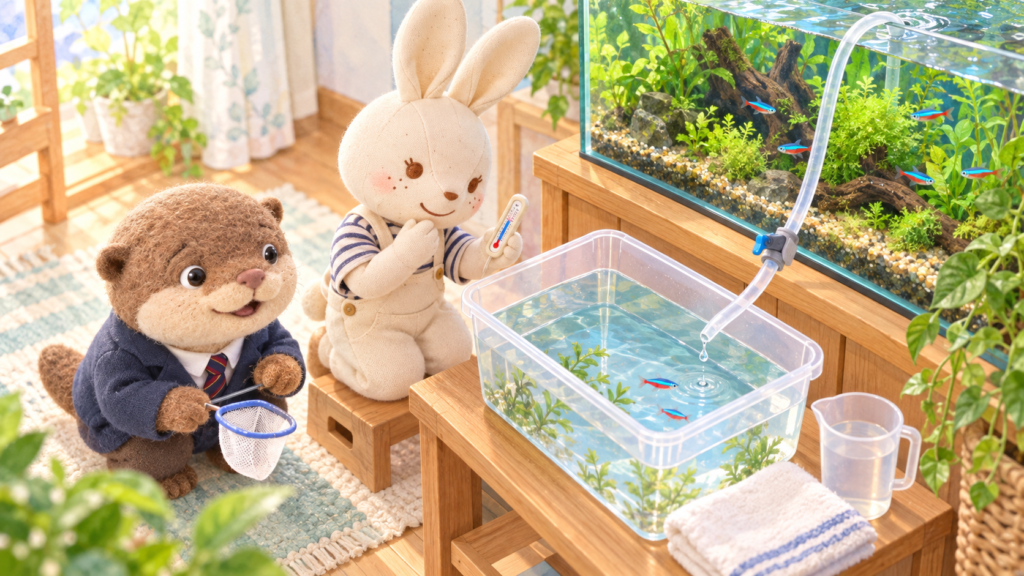 アイのアクアグッズ案内水合わせの道具とやり方|魚を迎える前にそろえたい容器・点滴キット・ネット買ってきた魚はすぐ水槽に入れていい? 水温合わせと水合わせの違いから、透明ケース・点滴キット・ネットの選び方、時間をかけすぎない注意点まで、アイとコタロウが紹介します。記事はコチラ →
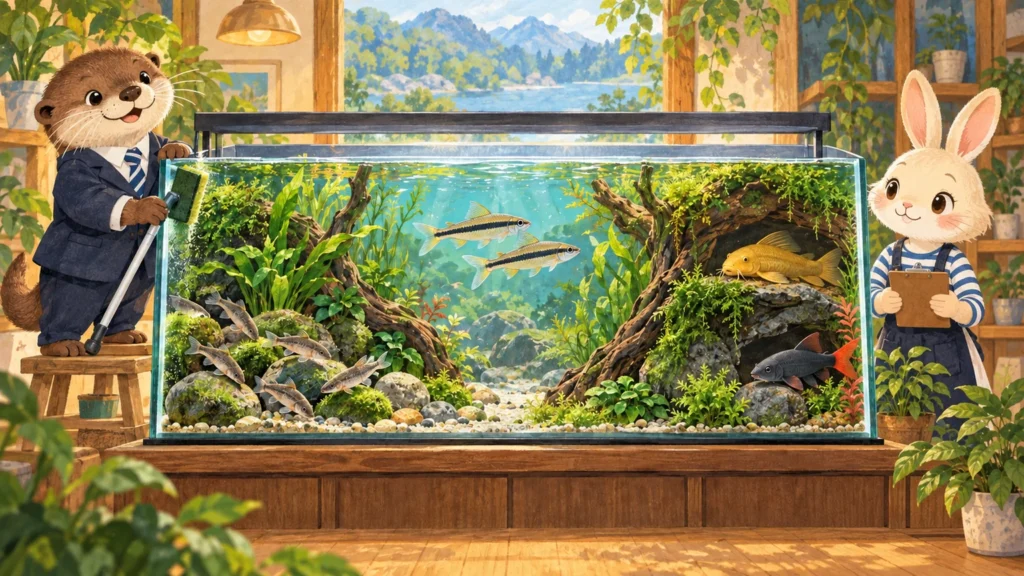 アイのアクアグッズ案内コケを食べるコイの仲間に合わせる飼育用品|フライングフォックス・アルジイーター・ガラ道具の特徴や使い方、選ぶときのポイントをアイが紹介します。記事はコチラ →
さまざまな飼育テーマをご紹介。リンク先の記事には広告・商品紹介が含まれます。
案内・紹介記事一覧へ →分布マップ
アルテルナンテラ・レインキーの原種は、南アメリカの湿地や水辺に生育します。‘ミニ’は栽培品種のため、この地図は原種の原産地域である南アメリカを示しています。
地図は分布欄の「南アメリカ」を概略表示したもので、正確な分布域や、その全域での自生を示すものではありません。マーカーは地域を示すための代表地点(南緯15度・西経60度)であり、実際の採集地点ではありません。栽培品種‘ミニ’の自生地を示すものでもありません。
参考文献
-
Royal Botanic Gardens, Kew. Alternanthera reineckii Briq. — Plants of the World Online
学名、分類、原種の自然分布。 -
Dennerle Plants. Alternanthera reineckii ‘Mini’
栽培品種としての位置づけ、水上・水中での草姿、光量、水温、水質、CO2、挿し木と側芽による増殖。 -
Tropica Aquarium Plants. Alternanthera reineckii ‘Mini’
コンパクトな成長、前景での利用、トリミングによる高さの維持、光とCO2の育成効果。 -
Tropica Aquarium Plants. 1-2-Grow!
組織培養株の特徴、培地の洗浄、小分けと植栽の方法。 -
Dennerle Plants. Algae — Prevention
水草水槽全般のコケ予防、光・CO2・栄養の管理、定期的な換水、ヤマトヌマエビによる食藻。 -
Miguel, M. G. (2018). Betalains in Some Species of the Amaranthaceae Family: A Review. Antioxidants, 7(4), 53.
ヒユ科のベタレイン、ベタシアニンの色、生合成と細胞内での蓄積に関する総説。 -
Reis, A., et al. (2018). Light quality and plant growth regulators influence pigment production in Alternanthera brasiliana calli. African Journal of Biotechnology, 17(20), 638–648.
近縁種 A. brasiliana のカルス(培養した細胞の塊)を用いた、光の色と色素生成の研究。 -
Henry, J. B., Perkins-Veazie, P., McCall, I., & Whipker, B. E. (2019). Restricted Phosphorus Fertilization Increases the Betacyanin Concentration and Red Foliage Coloration of Alternanthera. Journal of the American Society for Horticultural Science, 144(4), 264–273.
近縁種 A. brasiliana の園芸品種を用いた、リン供給量と葉色・ベタシアニン蓄積・成長の研究。




コメント