

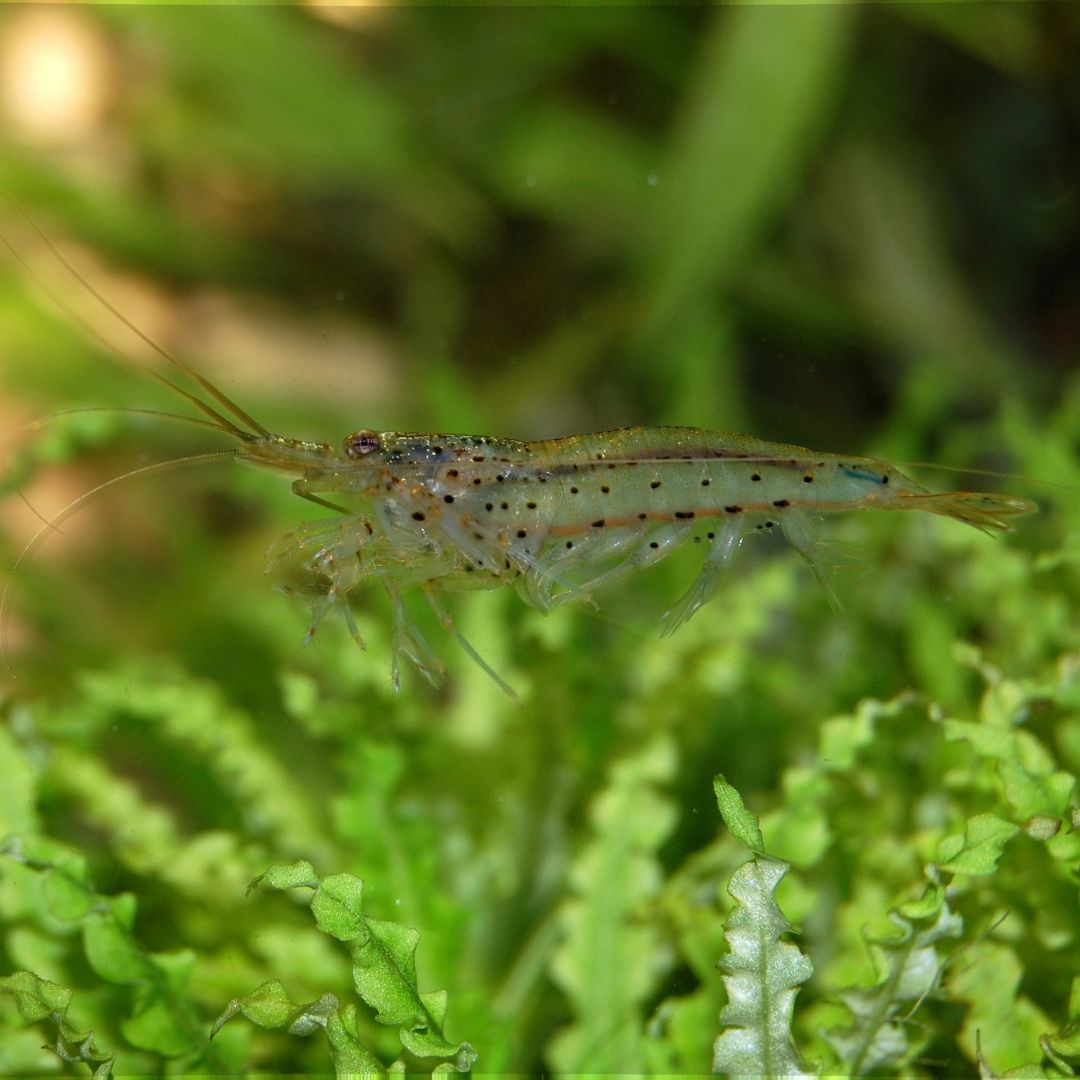
▶ 記事の生体をAMAZONで買う ▶ 記事の生体をYahooで買う
解説 / Description
ミナミヌマエビは、日本の淡水域にゆかりの深い小型のヌマエビで、アクアリウムでは水槽内の付着藻類や食べ残しをついばむ「お掃除役」として親しまれています。体長は小さく、性格もおとなしいため、メダカや小型熱帯魚、水草水槽との相性がよい生き物です。水槽内で繁殖しやすく、親と同じ姿をした稚エビが生まれるため、世代交代を観察できる点も大きな魅力です。 The Minami numaebi is a small freshwater shrimp closely associated with Japanese freshwater habitats. In aquariums, it is widely appreciated as a clean-up shrimp that grazes on biofilm, soft algae, and leftover food. Its small size and peaceful temperament make it well suited to planted tanks, medaka aquariums, and communities with very small, gentle fish. It also breeds readily in freshwater, producing miniature shrimp rather than planktonic larvae, which allows aquarists to observe natural generation changes in the aquarium.
一方で、現在国内で「ミナミヌマエビ」として流通する個体には、国外由来の近縁種や交雑個体が含まれることがあります。特にシナヌマエビ類やチェリーシュリンプ系統とは非常に近縁で交雑しやすいため、在来個体群の保全という観点では注意が必要です。飼育自体は難しくありませんが、野外への放流や排水時の流出を避ける姿勢が、飼育者にとってとても大切になります。 However, shrimp sold in Japan under the name “Minami numaebi” may include non-native relatives or hybrids. Because they are closely related to Chinese or East Asian Neocaridina lineages and many cherry shrimp strains, they can hybridize easily. For this reason, keeping them responsibly is important not only for aquarium success, but also for the conservation of native freshwater ecosystems. They are not difficult to keep, but they must never be released into outdoor waterways, and care should be taken to prevent accidental escape during water changes.
基本情報 / Basic Information
| 学名 / Scientific Name | Neocaridina denticulata denticulata |
|---|---|
| 通称 / Common Name | ミナミヌマエビ、ブツエビ、コケ取りエビMinami numaebi, freshwater dwarf shrimp, algae-grazing shrimp |
| 分類 / Family | 節足動物門 甲殻綱 十脚目 ヌマエビ科 カワリヌマエビ属Phylum Arthropoda, Class Malacostraca, Order Decapoda, Family Atyidae, Genus Neocaridina |
| 英名 / English Name | Minami numaebi, Japanese freshwater dwarf shrimp |
| 分布 / Distribution | 本来は西日本を中心に分布するとされ、静岡県以西の太平洋側、福井県以西の日本海側、四国、九州などの流れの緩やかな河川、湖沼、ため池、水草の多い水域に生息します。ただし、現在流通・野外確認されるカワリヌマエビ属には、国外由来の近縁種や交雑個体が多く含まれる場合があります。Its original native range is considered to be mainly western Japan, including the Pacific side west of Shizuoka Prefecture, the Sea of Japan side west of Fukui Prefecture, Shikoku, and Kyushu. It inhabits slow-flowing rivers, ponds, lakes, irrigation reservoirs, and waters rich in aquatic plants. Many Neocaridina shrimp currently traded or found in the wild may include non-native relatives or hybrids. |
| 最大体長 / Max Size | およそ2〜3cm。雌の方がやや大きく、体つきもふっくらします。About 2 to 3 cm. Females are usually slightly larger and more robust than males. |
| 寿命 / Lifespan | 一般的には1〜2年程度。水温変化が少なく安定した屋内水槽では、2〜3年ほど生きる個体もいます。Usually around 1 to 2 years. In stable indoor aquariums with limited temperature fluctuation, some individuals may live for about 2 to 3 years. |
飼育環境 / Aquarium Environment
| 水槽サイズ / Tank Size | 小型水槽でも飼育できますが、水質を安定させるなら30cm規格水槽程度、または20L前後以上が扱いやすい目安です。繁殖を楽しむ場合は、45cm規格水槽以上にすると稚エビの隠れ場所や餌場を確保しやすくなります。They can be kept in small aquariums, but a 30 cm standard tank or around 20 liters or more is easier for maintaining stable water quality. For breeding colonies, a 45 cm standard tank or larger provides more hiding places and grazing areas for young shrimp. |
|---|---|
| 水温 / Temperature | 活動と繁殖に適した水温は20〜28℃前後です。耐性は比較的広く、屋外ビオトープでも越冬できることがありますが、30℃を超える高温が続くと負担が大きくなります。夏場は日陰管理、すだれ、冷却ファンなどで水温上昇を抑えると安心です。 The ideal temperature for activity and breeding is around 20 to 28°C. They tolerate a fairly wide range and may overwinter in outdoor biotopes if conditions are suitable, but prolonged temperatures above 30°C place heavy stress on them. In summer, shade, reed screens, or cooling fans help reduce heat stress. |
| 水質 / Water Quality | 弱酸性から中性のpH6.5〜7.0前後が目安です。急激な水質変化に弱いため、新規導入時や水換え時は水合わせを丁寧に行います。アンモニアや亜硝酸が検出される不安定な水槽には入れないようにします。Slightly acidic to neutral water, around pH 6.5 to 7.0, is a good target. They are sensitive to sudden changes, so acclimation during introduction and water changes should be done carefully. Avoid adding them to immature aquariums where ammonia or nitrite may be present. |
| レイアウト / Layout | ウィローモス、マツモ、アナカリス、浮草、流木、石などを入れ、表面に微生物やバイオフィルムが育つ環境を作ると安定します。水草が茂ったレイアウトは稚エビの隠れ家にもなり、混泳魚からの捕食を減らす助けになります。A layout with moss, hornwort, Egeria, floating plants, driftwood, and stones provides surfaces for biofilm and microorganisms. Dense aquatic plants also serve as shelters for young shrimp and help reduce predation by tank mates. |
| 注意点 / Precautions | 銅を含む薬品や農薬が残った水草には注意が必要です。フィルターは稚エビが吸い込まれにくいスポンジフィルターや、吸水口にスポンジを付けた外掛け・外部式が向いています。飼育水や稚エビを野外へ流さないよう、水換え時は排水をネットなどで受けるとより安全です。Avoid medications containing copper and plants that may carry pesticide residues. Sponge filters, or filters with sponge pre-filters on the intake, are suitable because they reduce the risk of sucking in juvenile shrimp. During water changes, filtering wastewater through a fine net helps prevent accidental release of shrimp or eggs into the environment. |
餌と給餌 / Feeding
| 餌の種類 / Diet | 雑食性で、付着藻類、バイオフィルム、デトリタス、魚の食べ残し、エビ用人工飼料、沈下性タブレット、茹でたホウレンソウやコマツナなどを食べます。色揚げを意識する場合は、スピルリナやヘマトコッカス藻由来の成分を含む餌が補助になります。They are omnivorous and graze on soft algae, biofilm, detritus, leftover fish food, shrimp pellets, sinking tablets, and blanched leafy vegetables such as spinach or komatsuna. Foods containing spirulina or Haematococcus-derived ingredients can support coloration in ornamental lines. |
|---|---|
| 給餌のポイント / Feeding Tips | 水槽内の微生物や藻類も食べるため、餌の与えすぎは禁物です。数時間で食べ切れる量を目安にし、残った餌は取り除きます。稚エビがいる水槽では、粉状の稚エビ用フードや自然に育ったバイオフィルムが重要な初期餌になります。Because they also feed on microorganisms and biofilm in the aquarium, overfeeding should be avoided. Offer only what they can finish within a few hours and remove leftovers. In breeding tanks, powdered juvenile shrimp food and naturally developed biofilm are important early food sources. |
性格と混泳 / Temperament and Tank Mates
| 性格 / Temperament | 非常に温和で、他の生体を積極的に攻撃することはほとんどありません。水草や流木の表面を歩きながら、細かく餌を探す姿がよく見られます。They are very peaceful and rarely attack other aquarium animals. They are often seen walking over plants and driftwood while grazing with their small claws. |
|---|---|
| 混泳の相性 / Compatibility | メダカ、小型カラシン、ラスボラ、オトシンクルス、穏やかな貝類などと相性がよいです。ただし、エビを口に入れられるサイズの魚、肉食性の強い魚、大型シクリッド、金魚などとの混泳では捕食されやすくなります。稚エビを残したい場合は、単独飼育または水草を多く入れた環境が向いています。They are compatible with medaka, small tetras, rasboras, Otocinclus, and peaceful snails. Fish large enough to swallow them, strongly predatory fish, large cichlids, and goldfish may prey on them. If you want juveniles to survive, species-only tanks or heavily planted aquariums are recommended. |
病気と対策 / Diseases and Prevention
| かかりやすい病気 / Common Diseases | 魚のような白点病よりも、水質悪化、脱皮不全、アンモニア中毒、細菌性の不調、寄生生物の持ち込みに注意が必要です。腹部に緑色の房状のものが見える場合はエビヤドリモ、頭部や額角、エラ周辺に白い糸状のものが見える場合はヒルミミズやエビヤドリツノムシ類の可能性があります。Rather than typical fish diseases such as ich, the main concerns are poor water quality, molting problems, ammonia poisoning, bacterial stress, and introduced parasites. Green tuft-like growths around the abdomen may indicate parasitic green algae such as Cladogonium, while white thread-like organisms around the head, rostrum, or gills may be Holtodrilus or Scutariella-like ectosymbionts or parasites. |
|---|---|
| 対策と予防 / Prevention | 導入前の水合わせと観察、購入個体の一時隔離、水草の洗浄、安定したろ過、過密飼育と餌の与えすぎの回避が基本です。エビヤドリモが疑われる個体は早めに隔離し、拡散を防ぎます。ヒルミミズやエビヤドリツノムシ類は、状態を見ながら専用の駆除剤や短時間処置を検討しますが、エビは薬品に敏感なため、用量と観察を慎重に行います。Careful acclimation, observation before introduction, temporary quarantine, rinsing plants, stable filtration, avoiding overcrowding, and preventing overfeeding are the basics. Shrimp suspected of carrying Cladogonium should be isolated early to prevent spread. For Holtodrilus or Scutariella-like organisms, appropriate treatments may be considered, but shrimp are sensitive to medications, so dosage and observation must be handled carefully. |
増やし方(繁殖) / Breeding
| 雌雄の判別 / Sexing | 雌は雄よりやや大きく、腹部が丸みを帯び、成熟すると背中側に卵巣が透けて見えることがあります。雄は比較的細身で透明感が強く、抱卵前後の雌がいると水槽内を活発に泳ぎ回ることがあります。Females are usually slightly larger, with a rounder abdomen, and mature females may show a saddle-shaped ovary through the body. Males are slimmer and often more transparent, and may swim actively when females are ready to breed. |
|---|---|
| 繁殖形態 / Reproduction | 完全淡水で繁殖できます。雌は交尾後、腹部の遊泳脚に卵を抱え、約4週間ほど水を送りながら保護します。孵化した稚エビは親とほぼ同じ姿で、汽水や海水を必要とする浮遊幼生期はありません。They reproduce entirely in freshwater. After mating, the female carries eggs under her abdomen on the swimmerets and fans them for about four weeks. The young hatch as miniature shrimp and do not require a brackish or marine planktonic larval stage. |
| 繁殖のポイント / Breeding Tips | 水温が20℃以上で安定し、水質が良好で、雄雌がそろっていれば自然に繁殖しやすいです。稚エビの生存率を上げるには、ウィローモスなどの細かい水草を多めに入れ、スポンジフィルターを使い、捕食する魚を入れないか最小限にします。水換えは少量ずつ行い、急変を避けます。They breed readily when the temperature is stable above 20°C, water quality is good, and both sexes are present. To improve juvenile survival, provide plenty of fine-leaved plants or moss, use a sponge filter, and avoid or minimize predatory tank mates. Water changes should be gradual to prevent sudden environmental shifts. |
雑学と豆知識 / Trivia and Fun Facts
| 雑学・豆知識 / Trivia & Fun Facts | ミナミヌマエビの小さな体には、アクアリウムの楽しさと淡水生態系の難しさが同時に詰まっています。水槽では、流木や水草の表面を丁寧についばみながら、目に見えにくいバイオフィルムや柔らかい藻類を食べて暮らします。その姿は「掃除屋」と呼ばれますが、実際には水槽内の微小な有機物循環に関わる小さな分解者のような存在です。The Minami numaebi carries both the charm of aquarium keeping and the complexity of freshwater conservation in its small body. In the aquarium, it grazes carefully over driftwood and aquatic plants, feeding on biofilm and soft algae that are not always visible to the eye. Although often called a clean-up shrimp, it is more accurately a tiny participant in the aquarium’s organic matter cycle. |
|---|---|
| 1. 体色変化のしくみ / 1. How Their Color Changes | ミナミヌマエビや近縁のカワリヌマエビ属は、体内の色素胞によって体色の見え方を変えます。明るい環境では透明感が強くなり、暗い底床や水草の多い環境では褐色や黒っぽさが増すことがあります。これは単なる気分ではなく、周囲に溶け込んで捕食者から見つかりにくくなるための適応と考えられています。雌の方が色や模様が出やすいのは、抱卵中に腹部を守る必要があることとも関係していると考えられます。Minami numaebi and related Neocaridina shrimp change their apparent body color through pigment cells called chromatophores. They may appear more transparent in bright surroundings, while darker substrate and dense vegetation can encourage brownish or darker tones. This is not simply a matter of mood; it is considered an adaptive form of camouflage that helps reduce predation. Females often show stronger coloration, which may be related to the need to conceal the abdomen while carrying eggs. |
| 2. ヤマトヌマエビとの違い / 2. Difference from Amano Shrimp | 同じ「コケ取りエビ」として扱われるヤマトヌマエビは、ミナミヌマエビより大きく、コケ取り能力も強い一方で、水槽内で自然に増やすのは難しいエビです。ヤマトヌマエビの幼生は汽水から海水に近い環境を必要としますが、ミナミヌマエビは完全淡水で稚エビが育ちます。水草水槽で自然な群れと世代交代を楽しみたい場合、ミナミヌマエビの小ささと繁殖力は大きな魅力になります。Amano shrimp are also used as algae-grazing shrimp, but they are larger and generally stronger algae eaters than Minami numaebi. However, they are much harder to breed naturally in a standard freshwater aquarium because their larvae require brackish to marine-like conditions. Minami numaebi hatch as freshwater juveniles, making them especially appealing for aquarists who want to maintain a natural breeding colony in a planted tank. |
| 3. 「ミナミヌマエビ」という名前の難しさ / 3. Why the Name Can Be Complicated | アクアリウムショップで見かける「ミナミヌマエビ」は、必ずしも日本在来の純粋なミナミヌマエビとは限りません。国外由来のシナヌマエビ類、チェリーシュリンプ系統、またはそれらの交雑個体が含まれることがあります。外見で完全に見分けるのは難しい場合も多く、在来個体群の近くで放流されると交雑による遺伝子汚染が起こり得ます。小さなエビであっても、生き物を野外へ放さないことがとても大切です。Shrimp sold as “Minami numaebi” in aquarium shops are not always pure native Japanese Minami numaebi. They may include non-native Chinese or East Asian Neocaridina relatives, cherry shrimp lineages, or hybrids. It is often difficult to identify them perfectly by appearance alone, and if released near native populations, they may cause genetic introgression through hybridization. Even very small shrimp should never be released into the wild. |
| 4. 額角で見る識別のヒント / 4. The Rostrum as an Identification Hint | 在来ミナミヌマエビは、頭部から前方へ伸びる額角が比較的長く、第一触角の柄の先端に届く、またはそれを越えるとされます。一方、シナヌマエビ類では額角が短めになる傾向があります。ただし、交雑が進んだ個体では中間的な特徴が現れるため、額角だけで断定するのは危険です。観察の手がかりとしては有用ですが、保全や学術的な判断には慎重さが求められます。Native Minami numaebi are described as having a relatively long rostrum that reaches or extends beyond the end of the first antennular peduncle. Chinese or East Asian Neocaridina relatives often tend to have a shorter rostrum. However, hybrids may show intermediate traits, so the rostrum alone should not be used as absolute proof. It is a useful observation point, but conservation or scientific identification requires caution. |
まとめ / Conclusion
ミナミヌマエビは、小さな体で水槽の中を歩き回り、藻類や微生物をついばみながら静かに存在感を見せてくれる淡水エビです。丈夫で繁殖しやすく、メダカや水草と組み合わせやすいことから、初めてエビを飼う人にも親しみやすい生き物です。 The Minami numaebi is a small freshwater shrimp that quietly adds life to the aquarium as it grazes on algae and microorganisms. It is hardy, breeds readily, and pairs well with medaka and aquatic plants, making it an approachable choice for aquarists keeping shrimp for the first time.
その一方で、近縁種や交雑個体の流通、野外放流による生態系への影響も忘れてはいけません。水槽の中では頼もしい小さな仲間として、自然の中では守るべき淡水生態系の一員として、最後まで責任を持って付き合うことが大切です。 At the same time, aquarists should remember the ecological concerns surrounding non-native relatives, hybrids, and releases into the wild. In the aquarium, this shrimp is a dependable little companion; in nature, related native populations are part of freshwater ecosystems that deserve careful protection. Responsible keeping is part of enjoying them well.

気になる道具や飼い方を見つけてみませんか?
 アイのアクアグッズ案内金魚を長く楽しむ飼育用品|水槽・フィルター・エアレーション・水換え道具の特徴や使い方、選ぶときのポイントをアイが紹介します。記事はコチラ →
 アイのアクアグッズ案内水換え・底砂掃除の道具の選び方|砂利・砂・ソイルに合うクリーナーとポンプ道具の特徴や使い方、選ぶときのポイントをアイが紹介します。記事はコチラ →
さまざまな飼育テーマをご紹介。リンク先の記事には広告・商品紹介が含まれます。
案内・紹介記事一覧へ →分布マップ
ミナミヌマエビは、本来は西日本を中心に、静岡県以西の太平洋側、福井県以西の日本海側、四国、九州などの流れの緩やかな河川、湖沼、ため池、水草の多い水域に分布するとされます。
Google Earthで開くこの地図は分布イメージを示すため、西日本周辺を概略代表地点としてプロットしたものです。実際の採集地点や厳密な生息範囲を示すものではありません。現在流通・野外確認されるカワリヌマエビ属には、国外由来の近縁種や交雑個体が含まれる場合があります。
参考文献・参照資料
分類や分布、飼育・繁殖、寄生生物、野外への放流に関する注意点を詳しく知りたい方は、以下の学術文献や公的機関の資料をご覧ください。
-
分類・分布・生息環境・繁殖・外来種注意
国立環境研究所 侵入生物データベース「カワリヌマエビ属」
カワリヌマエビ属の分類、ミナミヌマエビの在来分布、体長、生息環境、繁殖生態、輸入・放逐の可能性、滋賀県での法的扱いを確認するための基礎資料。 -
法的注意・放逐防止
滋賀県「ふるさと滋賀の野生動植物との共生に関する条例第27条第1項の規定による指定外来種の指定」
滋賀県告示第143号。カワリヌマエビ属のうち、ミナミヌマエビの滋賀県個体群を除くものが指定外来種として扱われる点を確認するための一次資料。 -
国内分布・地域個体群・分類上の注意
福家悠介・岩崎貴也・笹塚諒平・山本幸資(2021)「五島列島福江島におけるミナミヌマエビの初記録」Cancer, 30: 63-71
ミナミヌマエビの西日本での分布、地域個体群の重要性、分類・同定上の混乱について確認するための学術資料。 -
分類・近縁種との関係
Yang, M. et al. (2024) “Integrative Taxonomy Reveals New Insights into the Species Validity of the Neocaridina davidi-N. denticulata-N. heteropoda Complex and Mitogenomic Phylogeny of Caridean Shrimps.” Current Issues in Molecular Biology, 46(11): 12279-12298
カワリヌマエビ属の分類が現在も整理途上であること、Neocaridina denticulata、N. davidi、N. d. sinensis 周辺の扱いに注意が必要であることを補足するための資料。 -
成長・繁殖・発生
Mizue, K. (1961) “On the Development and Growth of Neocaridina denticulata De Haan.” Bulletin of the Faculty of Fisheries, Nagasaki University, 10: 15-24
ミナミヌマエビの発生、成長、繁殖に関する古典的な研究として、繁殖・生活史の記述を支える補助資料。 -
飼育条件・繁殖・生活史
Nur, F. A. H. & Christianus, A. (2013) “Breeding and Life Cycle of Neocaridina denticulata sinensis (Kemp, 1918).” Asian Journal of Animal and Veterinary Advances, 8(1): 108-115
近縁のシナヌマエビを用いた飼育下での繁殖、抱卵、稚エビの発生、水温・pHなどの飼育条件、Holtodrilus属の付着に関する記述の補助資料。 -
寄生・共生生物
Niwa, N., Ohtomi, J., Ohtaka, A. & Gelder, S. R. (2005) “The first record of the ectosymbiotic branchiobdellidan Holtodrilus truncatus (Annelida, Clitellata) and on the freshwater shrimp Neocaridina denticulata denticulata (Caridea, Atyidae) in Japan.” Fisheries Science, 71: 685-687
ヒルミミズ類として扱われる Holtodrilus truncatus の国内記録と宿主関係を確認するための学術資料。 -
エビヤドリモ・病気の注意
Hirose, H. & Akiyama, M. (1971) “A Colorless, Filamentous Chlorophyceous Alga, Cladogonium ogishimae Gen. et Sp. Nov., Parasitic on Fresh-water Shrimps.” Shokubutsugaku Zasshi, 84(993): 137-140
淡水エビに付着・寄生する緑藻 Cladogonium ogishimae の分類学的根拠として使用。 -
観賞用カワリヌマエビ類の飼育条件・疾病・侵入リスク
U.S. Fish and Wildlife Service (2025) “Cherry Shrimp (Neocaridina davidi): Ecological Risk Screening Summary.”
チェリーシュリンプを含む観賞用 Neocaridina 類の環境耐性、飼育下での繁殖条件、寄生・疾病情報、野外定着リスクを確認するための公的評価資料。ミナミヌマエビそのものではなく近縁の観賞用品種を扱う補助資料として参照。
注記:カワリヌマエビ属、とくに Neocaridina denticulata、N. davidi、N. d. sinensis 周辺は分類上の整理が続いており、資料によって学名の扱いが異なる場合があります。また、病気や寄生生物への処置は、水槽の条件や個体の状態によって結果が変わります。まずは日々の観察による早期発見と、新しく迎える個体の隔離・観察による持ち込み防止を心がけましょう。




コメント