

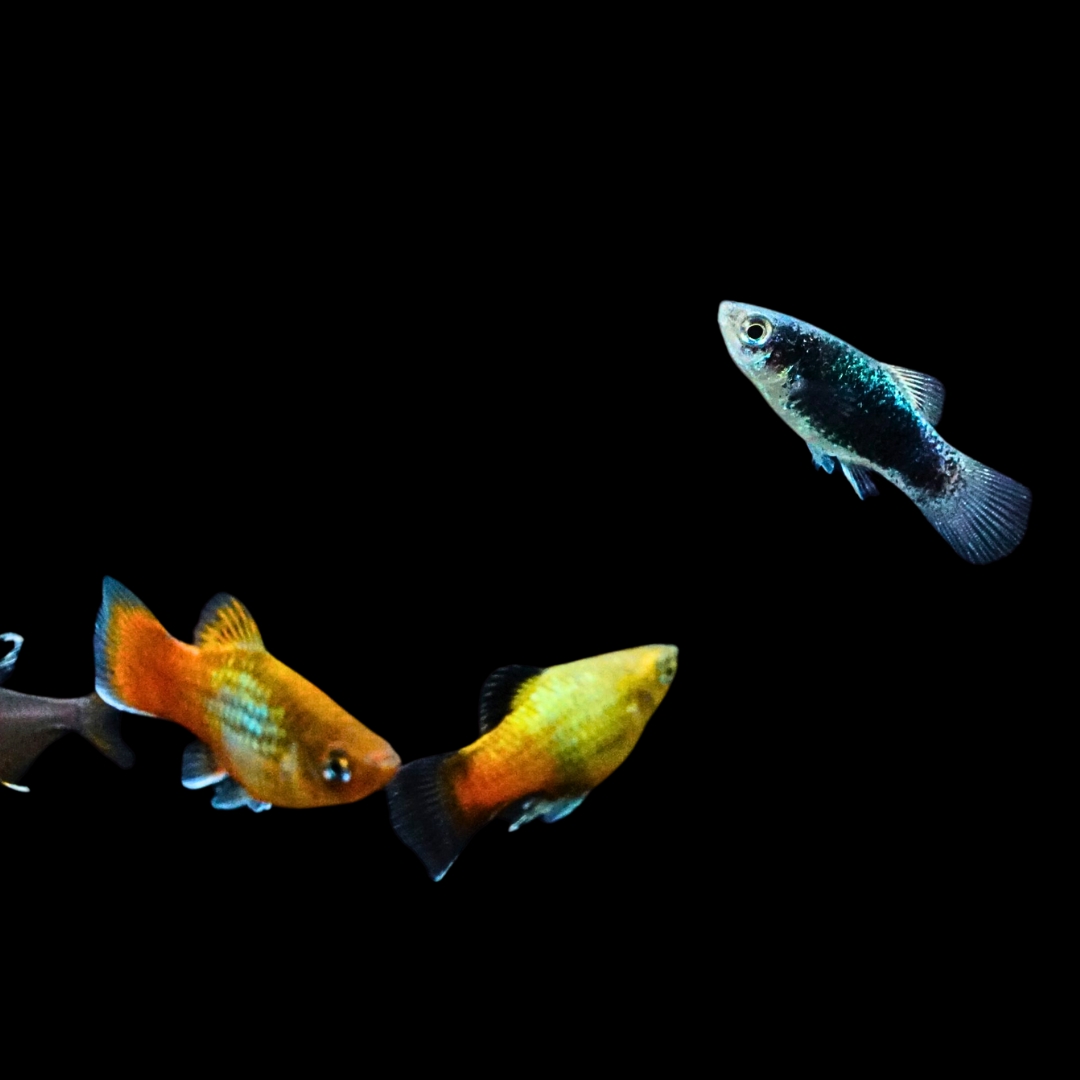
解説 / Description
プラティは、明るい体色と丸みのある親しみやすい姿で知られる、カダヤシ科キフォフォルス属の小型熱帯魚です。卵を水中に産み落とすのではなく、雌の体内で発生した稚魚を産む卵胎生の魚で、グッピーやモーリーと並んで、繁殖を観察しやすい観賞魚として長く親しまれてきました。日本の熱帯魚店では、レッド、サンセット、ワグテール、ミッキーマウス、昭和系など、さまざまな改良品種が流通しています。 The platy is a small livebearing tropical fish in the family Poeciliidae, known for its bright colors and friendly, rounded appearance. Instead of laying eggs in the water, females give birth to developed, free-swimming fry, making this species one of the easiest ornamental fish for hobbyists to observe breeding behavior. In Japan, many ornamental strains are available, including red, sunset, wagtail, Mickey Mouse, and Showa-style varieties.
丈夫で飼いやすい魚として紹介されることが多い一方で、本来は中性から弱アルカリ性で、ある程度ミネラル分を含む水に向いた魚です。そのため、日本の軟水環境では極端に酸性へ傾けず、必要に応じて硬度とアルカリ度を少し補うと状態を保ちやすくなります。初心者向けでありながら、改良品種の背景、近縁種との交雑、生命科学における研究利用など、掘り下げるほど奥行きのある魚です。 Although platies are often described as hardy and easy to keep, they are best suited to neutral to slightly alkaline water with some dissolved minerals. In many soft-water areas of Japan, it is best not to keep them in overly acidic conditions, and a modest increase in hardness and alkalinity can help maintain their condition. They are beginner-friendly fish, yet their history of selective breeding, hybridization with related species, and scientific use gives them surprising depth.
基本情報 / Basic Information
| 学名 / Scientific Name | Xiphophorus maculatus |
|---|---|
| 通称 / Common Name | プラティ、サザンプラティフィッシュ、ムーンフィッシュ、各種改良品種名Platy, southern platyfish, moonfish, ornamental platy strains |
| 分類 / Family | カダヤシ目 カダヤシ科 キフォフォルス属Order Cyprinodontiformes, family Poeciliidae, genus Xiphophorus |
| 英名 / English Name | Southern platyfish, Platy |
| 分布 / Distribution | 原産地は、メキシコのベラクルス周辺からベリーズ北部にかけての低地水域とされます。自然下では流れの緩やかな河川、小川、湿地、水草や岸辺の植生が多い水域に生息します。観賞魚として世界各地で流通しており、一部地域では逸出個体の定着も報告されています。The native range is generally considered to extend through lowland waters from around Veracruz, Mexico, to northern Belize. In the wild, it inhabits slow-moving rivers, streams, marshes, and vegetated waters. As an ornamental fish, it is widely distributed worldwide, and feral populations have been reported in some regions. |
| 最大体長 / Max Size | 雄は約4cm、雌は約6cmほど。観賞魚として流通する個体では、品種や飼育環境により体型や体格に差が出ます。Males usually reach about 4 cm, while females may reach about 6 cm. Body shape and size can vary depending on strain and rearing conditions. |
| 寿命 / Lifespan | おおむね2〜3年ほど。安定した水質、適切な水温、過密を避けた飼育により、より長く状態を保ちやすくなります。Typically around 2 to 3 years. Stable water quality, suitable temperature, and avoiding overcrowding help maintain good condition for longer. |
飼育環境 / Aquarium Environment
| 水槽サイズ / Tank Size | 少数飼育なら30cm水槽でも可能ですが、安定性と繁殖後の増加を考えると45cm規格水槽以上が扱いやすいです。複数匹でゆったり飼育する場合は60cm規格水槽が安心で、混泳や繁殖を楽しむ場合にも管理しやすくなります。A 30 cm aquarium can work for a small group, but a 45 cm standard tank or larger is easier to manage when considering stability and future fry. A 60 cm standard tank is recommended for a more relaxed group setup, community keeping, or breeding. |
|---|---|
| 水温 / Temperature | 22〜26℃前後が目安です。資料上は18〜25℃程度の範囲も示されますが、家庭水槽で状態維持と繁殖を考える場合は24〜25℃前後が扱いやすく、急な水温変化を避けることが大切です。 A practical aquarium range is about 22 to 26°C. Although reference ranges may include around 18 to 25°C, for stable condition and breeding in home aquariums, around 24 to 25°C is especially manageable, and sudden temperature changes should be avoided. |
| 水質 / Water Quality | 中性〜弱アルカリ性、やや硬度のある水を意識すると安定しやすい魚です。目安としてはpH7.0〜8.0前後、総硬度は中硬水寄りが扱いやすい範囲です。日本の水道水は軟水の地域が多いため、状態が上がりにくい場合はサンゴ砂、貝殻由来の素材、ミネラル添加剤などで急変させない範囲で硬度を補うとよいでしょう。Platies are generally most stable in neutral to slightly alkaline water with moderate hardness. As a guide, pH around 7.0 to 8.0 and moderately hard water are suitable. Since tap water in many areas of Japan is soft, coral sand, shell-based media, or mineral supplements may help when used gradually and carefully. |
| レイアウト / Layout | 遊泳スペースを確保しつつ、マツモ、アナカリス、ウィローモス類、浮草などを入れると、雌や稚魚の隠れ場所になります。強い水流は好みにくいため、濾過は効かせつつも泳ぎ疲れない程度に調整すると扱いやすいです。Provide open swimming space along with plants such as hornwort, anacharis, mosses, or floating plants to create hiding places for females and fry. Strong current is not ideal, so filtration should be effective but gentle enough to avoid tiring the fish. |
| 注意点 / Precautions | 丈夫な印象がある魚ですが、輸入個体では輸送疲れや水質差による不調が出ることがあります。導入時は水合わせを丁寧に行い、白点病、尾腐れ、痩せ、体表の荒れがないか観察してください。また、繁殖力が高いため、増えた個体を屋外の河川や水路に放流してはいけません。Although hardy, imported individuals may be stressed by transport or affected by water-quality differences. Acclimate them carefully and watch for white spot disease, fin rot, emaciation, or skin damage. Because they reproduce readily, unwanted individuals must never be released into rivers, canals, or outdoor waterways. |
餌と給餌 / Feeding
| 餌の種類 / Diet | 雑食性で、人工飼料を中心に飼育しやすい魚です。フレークフード、顆粒フード、沈下性の小粒餌に加え、冷凍アカムシ、ブラインシュリンプ、植物質を含む餌などを組み合わせると栄養の偏りを抑えやすくなります。Platies are omnivorous and easy to maintain on prepared foods. Flake food, small granules, and sinking micro-pellets can be combined with frozen bloodworms, brine shrimp, and plant-based foods to reduce nutritional imbalance. |
|---|---|
| 給餌のポイント / Feeding Tips | 1日1〜2回、数分で食べきれる量を与えます。食欲が強く、水槽内で増えやすい魚でもあるため、過剰な給餌は水質悪化と肥満の原因になります。稚魚には細かく砕いた人工飼料やブラインシュリンプを少量ずつ与えると成長を促しやすいです。Feed once or twice a day, only as much as they can consume within a few minutes. Their strong appetite and high reproductive potential make overfeeding a common cause of poor water quality and obesity. Fry can be fed finely crushed prepared food or brine shrimp in small amounts. |
性格と混泳 / Temperament and Tank Mates
| 性格 / Temperament | 基本的には温和で、人の動きにも慣れやすい魚です。雄は雌を追いかけることがあるため、雄ばかりにせず、雌を多めにするか、隠れ場所を十分に用意すると落ち着きやすくなります。Platies are generally peaceful and often become accustomed to human activity. Males may chase females, so keeping more females than males and providing hiding places helps reduce stress. |
|---|---|
| 混泳の相性 / Compatibility | 小型カラシン、コリドラス、穏やかなラスボラ類、同程度のサイズの卵胎生メダカ類などと混泳しやすい魚です。ただし、長いヒレをかじる魚、攻撃的なシクリッド、大型魚との混泳は避けます。稚魚を残したい場合は、親魚や混泳魚による捕食を前提に、隔離ケースや水草の茂みを用意することが必要です。They are suitable for community aquariums with small tetras, Corydoras, peaceful rasboras, and similarly sized livebearers. Avoid fin-nipping species, aggressive cichlids, and large predatory fish. If fry survival is desired, assume that adults and tank mates may eat them, and provide a breeding box or dense plant cover. |
病気と対策 / Diseases and Prevention
| かかりやすい病気 / Common Diseases | 白点病、尾腐れ病、水カビ、痩せ、体表のただれ、輸送後の体調不良などに注意します。特に新着の輸入個体は、輸送ストレスや水質差の影響で体調を崩しやすいことがあります。Watch for white spot disease, fin rot, fungal infections, emaciation, skin erosion, and post-transport stress. Newly imported fish may be more vulnerable due to shipping stress and differences in water chemistry. |
|---|---|
| 対策と予防 / Prevention | 予防の基本は、導入時の観察、急な水質変化を避けること、過密にしないこと、底に餌を残さないことです。新しい個体は可能であれば別水槽で様子を見てから合流させると安心です。水温を安定させ、定期的な換水を行い、中性〜弱アルカリ性寄りの清潔な水を維持することが重要です。Prevention begins with careful observation during introduction, avoiding sudden water changes, preventing overcrowding, and removing uneaten food. New fish are best observed in a separate tank before being added to a community aquarium. Stable temperature, regular water changes, and clean water leaning toward neutral to slightly alkaline conditions are important. |
増やし方(繁殖) / Breeding
| 雌雄の判別 / Sexing | 雄は雌より小型で、臀鰭が棒状の交接器であるゴノポディウムに変化します。雌は体が大きく丸みを帯び、成熟すると腹部がふくらみやすくなります。出産前の雌は腹部が張り、品種や体色によっては腹部後方が暗く見えることがあります。Males are usually smaller and have a gonopodium, a modified anal fin used for internal fertilization. Females are larger and rounder, and mature females often develop a fuller abdomen. Before giving birth, the abdomen becomes swollen, and in some strains a darker area may be visible near the rear of the belly. |
|---|---|
| 繁殖形態 / Reproduction | 卵胎生です。雌の体内で受精卵が発生し、ある程度成長した稚魚として産み落とされます。一度交尾した雌は体内に精子を保持し、その後も複数回出産することがあります。They are livebearers. Fertilized eggs develop inside the female, and she gives birth to developed, free-swimming fry. A female that has mated once may store sperm and give birth multiple times afterward. |
| 繁殖のポイント / Breeding Tips | 水温を24〜25℃前後で安定させ、栄養状態を整えると繁殖しやすくなります。親魚は稚魚を食べることがあるため、確実に残したい場合は出産前の雌を隔離ケースに移すか、マツモやウィローモスなどを密生させて稚魚の避難場所を作ります。増えすぎや近親交配を避けるため、成長後の飼育スペースと譲渡先まで考えて繁殖させることが大切です。Breeding is encouraged by stable temperatures around 24 to 25°C and good nutrition. Adults may eat fry, so if survival is desired, move a gravid female to a breeding box or provide dense plants such as hornwort or moss. Because they reproduce readily, plan for space, rehoming, and avoidance of excessive inbreeding before intentionally breeding them. |
雑学と豆知識 / Trivia and Fun Facts
| 1. 「プラティ」として流通する魚の背景 / 1. The background behind ornamental platies | 店頭で「プラティ」と呼ばれる魚の多くは、野生型のXiphophorus maculatusそのものというより、長い改良の歴史の中で選抜されてきた観賞用系統です。体色、尾柄の模様、鰭の黒化、体型、背鰭の伸長などが組み合わされ、レッド、サンセット、ワグテール、コメット、ミッキーマウスなどの名前で流通します。近縁のヴァリアタスプラティやソードテールとの交雑が関わった系統もあるとされ、現在のプラティは、純粋な野生魚というより観賞魚文化の中で作られてきた品種群として見ると理解しやすい魚です。Many fish sold as platies are not simply wild-type Xiphophorus maculatus, but ornamental strains selected through a long history of breeding. Body color, caudal markings, black fins, body shape, and enlarged dorsal fins have been combined into names such as red, sunset, wagtail, comet, and Mickey Mouse platy. Some strains are considered to involve genetic influence from related species such as variatus platies and swordtails, so modern ornamental platies are best understood as a group shaped by aquarium breeding culture. |
|---|---|
| 2. ミッキーマウス模様が人気になった理由 / 2. Why the Mickey Mouse pattern became so popular | ミッキーマウスプラティの尾柄には、大きな黒斑と上下の小さな黒斑が並び、横から見ると有名なキャラクターのシルエットを思わせる模様になります。この模様は魚自身にとって特別な意味を持つというより、人間が見立てやすい形で現れたことにより、観賞魚として強い印象を残した例です。固定の過程には選抜育種が関わりますが、店頭名としての分かりやすさが人気を後押ししたと考えると、観賞魚の品種名が生物学だけでなく文化や商業感覚にも支えられていることが見えてきます。The Mickey Mouse platy has one large dark spot on the caudal peduncle accompanied by two smaller spots, creating a silhouette that resembles the famous cartoon character. This pattern is not necessarily biologically meaningful to the fish, but it became memorable because humans can easily recognize the shape. Selective breeding helped stabilize the trait, while the instantly understandable trade name helped make it widely popular. |
| 3. 生命科学でも重要なキフォフォルス属 / 3. Xiphophorus in life science | プラティを含むキフォフォルス属は、観賞魚としてだけでなく、メラノーマ研究のモデルとしても長く研究されてきました。特にプラティとソードテールなどの近縁種を用いた交雑研究では、色素細胞の増殖に関わる遺伝子と、それを抑える遺伝的仕組みの関係が注目されてきました。観賞魚としては美しい模様として楽しまれる黒色素のパターンが、研究の世界では細胞増殖や癌化の仕組みを考える手がかりにもなってきた点は、この魚の非常に興味深い一面です。The genus Xiphophorus, including platies, has been studied not only as ornamental fish but also as a model for melanoma research. Hybridization studies using platies and related species such as swordtails have drawn attention to the relationship between genes that promote pigment-cell growth and genetic mechanisms that suppress it. The dark pigment patterns enjoyed in aquariums have also helped scientists investigate cell growth and cancer formation. |
| 4. 外来化させないための責任 / 4. Responsible care and preventing release | プラティの丈夫さと繁殖力は、家庭の水槽では魅力になりますが、自然環境ではリスクにもなります。海外では逸出個体の定着が報告されており、温暖な地域や温排水が流れる環境では、放流された個体が生き残る可能性があります。増えすぎた場合でも、屋外へ逃がすことは避け、飼育を引き継げる人を探す、販売店に相談するなど、最後まで人の管理下に置く姿勢が必要です。The hardiness and reproductive ability that make platies attractive in aquariums can become risks in natural environments. Feral populations have been reported overseas, and in warm regions or thermally influenced waterways, released fish may survive. Even if they become too numerous, they should never be released outdoors; instead, seek rehoming options or consult a shop so they remain under human care. |
まとめ / Conclusion
プラティは、明るい色彩、穏やかな性格、繁殖のしやすさを兼ね備えた、熱帯魚入門にも向いた人気種です。丈夫な魚ではありますが、日本の軟水環境では水質が極端に酸性へ傾かないようにし、必要に応じて硬度を少し補うことで、より安定した飼育につながります。 The platy is a popular tropical fish suitable for beginners, combining bright coloration, a peaceful nature, and easy breeding. Although hardy, it does best when water does not become overly acidic, and in soft-water areas of Japan, modest mineral support can lead to more stable long-term care.
一方で、プラティは繁殖力が高く、自然環境に放流されると外来魚として問題を起こす可能性があります。飼いやすさに甘えず、増えた個体まで責任を持って管理することが、プラティという魅力的な魚と長く付き合ううえで大切です。 At the same time, platies reproduce readily and may become problematic non-native fish if released into the environment. Responsible management, including care for any offspring, is essential for maintaining a healthy and sustainable relationship with this attractive species.

気になる道具や飼い方を見つけてみませんか?
 アイのアクアグッズ案内プレコ飼育に必要なもの|餌・流木・ろ過・隠れ家・掃除用品道具の特徴や使い方、選ぶときのポイントをアイが紹介します。記事はコチラ →
 アイのアクアグッズ案内海水魚の底砂の選び方|サンゴ砂・ライブサンドとおすすめ商品道具の特徴や使い方、選ぶときのポイントをアイが紹介します。記事はコチラ →
さまざまな飼育テーマをご紹介。リンク先の記事には広告・商品紹介が含まれます。
案内・紹介記事一覧へ →参考文献
本記事では、プラティの分類、分布、飼育環境、繁殖、外来化リスク、およびキフォフォルス属の研究利用に関する記述を確認するため、以下の資料を参照しました。
-
Froese, R. and Pauly, D. Editors. FishBase. Xiphophorus maculatus, Southern platyfish. World Wide Web electronic publication.
https://www.fishbase.se/summary/Xiphophorus-maculatus.html
分類、英名、原産域、水温、pH、硬度、最大サイズなどの基本情報の確認に使用。 -
CABI Digital Library. Xiphophorus maculatus (southern platyfish). CABI Compendium.
https://www.cabidigitallibrary.org/doi/full/10.1079/cabicompendium.59752
本種の概要、導入地域、外来化リスク、生態的特徴の確認に使用。 -
U.S. Fish & Wildlife Service. Ecological Risk Screening Summary: Southern Platyfish, Xiphophorus maculatus.
https://www.fws.gov/sites/default/files/documents/Ecological-Risk-Screening-Summary-Southern-Platyfish.pdf
原産域、導入事例、外来魚としてのリスク評価に関する補助資料として使用。 -
NSW Department of Primary Industries. Platyfish.
https://www.dpi.nsw.gov.au/dpi/biosecurity/aquatic-biosecurity/aquatic-pests-and-diseases/freshwater-pests/freshwater-finfish/platyfish
水温、pH、食性、卵胎生、定着リスクなどの実用的な生態情報の確認に使用。 -
Schartl, M. and Lu, Y. 2024. Validity of Xiphophorus fish as models for human disease. Disease Models & Mechanisms, 17(1), dmm050382. DOI: 10.1242/dmm.050382.
https://journals.biologists.com/dmm/article/17/1/dmm050382/342684/Validity-of-Xiphophorus-fish-as-models-for-human
キフォフォルス属がメラノーマを含むヒト疾患モデルとして利用されてきた背景の確認に使用。 -
Walter, R. B. and Kazianis, S. Xiphophorus Interspecies Hybrids as Genetic Models of Induced Neoplasia. ILAR Journal, 2001.
https://academic.oup.com/ilarjournal/article/42/4/299/658685
プラティとソードテールを含むキフォフォルス属の交雑研究、腫瘍形成モデル、遺伝学的背景の確認に使用。




コメント