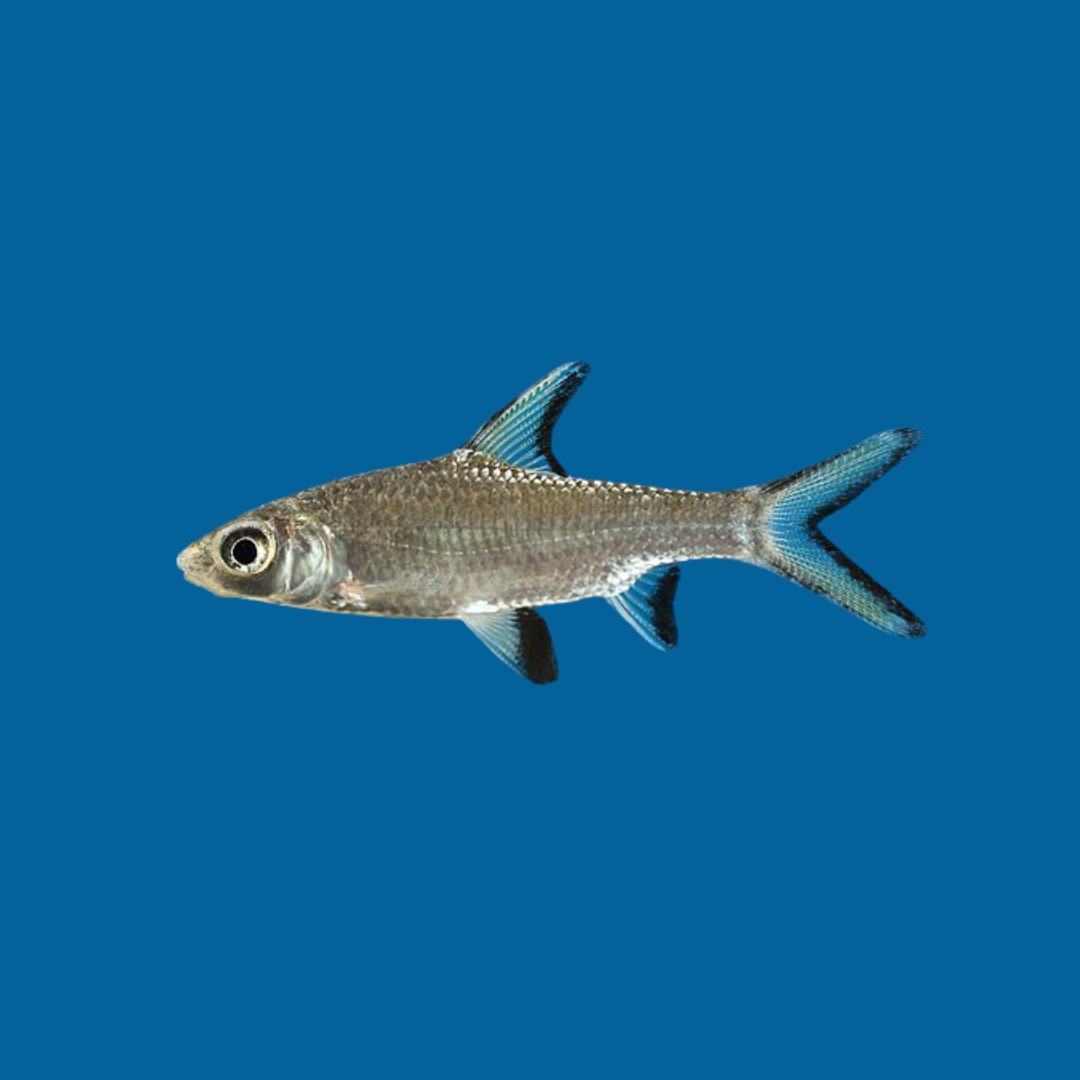
シルバーシャークは、銀色に輝く流線型の体と、黒く縁取られた大きな鰭が印象的な東南アジア原産のコイ科魚類です。名前に「シャーク」と付きますが、サメの仲間ではなく、姿や泳ぎ方がサメを思わせることから観賞魚名として定着しました。幼魚は小さく安価に流通するため手に取りやすい魚ですが、本来は大型化し、広い遊泳空間と群れでの飼育を必要とする魚です。The silver shark is a Southeast Asian cyprinid fish known for its shimmering silver body, streamlined shape, and large fins edged in black. Despite the word “shark” in its common name, it is not a true shark; the name comes from its shark-like silhouette and active swimming style. Juveniles are often sold small and affordably, but the species has the potential to grow large and requires generous swimming space and group keeping.
マレー半島、スマトラ島、ボルネオ島を中心とする東南アジアの河川や湖沼に分布するとされます。古い資料ではメコン川流域やチャオプラヤ川流域も含めて扱われることがありますが、インドシナ半島の記録には近縁種との混同が含まれていた可能性があり、分布情報は資料によって幅があります。It is generally associated with rivers and lakes of Southeast Asia, especially the Malay Peninsula, Sumatra, and Borneo. Older sources may include the Mekong and Chao Phraya basins, but some Indochinese records may involve confusion with a related species, so distribution details vary among references.
最大体長 / Max Size
最大約35cm。販売時は小さな幼魚であることが多いものの、本来は大型化する魚です。水槽内で成長がゆるやかになる場合もありますが、それを前提に小型水槽で終生飼育するのではなく、成魚サイズと遊泳力を見越して飼育計画を立てる必要があります。Up to about 35 cm. Although it is often sold as a small juvenile, it is naturally a large-growing fish. Growth may slow in aquaria, but care should not rely on keeping it undersized; planning should account for adult size and swimming ability.
寿命 / Lifespan
一般的には5〜10年程度。十分な広さと安定した水質が保たれた環境では、より長く生きることもあります。Usually around 5–10 years. In spacious, stable conditions, individuals may live longer.
飼育環境 / Aquarium Environment
水槽サイズ / Tank Size
幼魚の一時飼育であれば60cm規格水槽でも管理できますが、終生飼育を考えるなら最低でも120cm規格水槽以上、できれば150cm水槽や500L前後以上の大型水槽が望ましい魚です。国際的な飼育情報では150cm級の水槽が目安として示されることもあり、群泳性と遊泳力を考えると、体長だけでなく直線的に泳げる距離を確保することが重要です。Juveniles can be kept temporarily in a standard 60 cm tank, but long-term care should use at least a 120 cm tank, preferably a 150 cm tank or around 500 L or more. Some international care references use a 150 cm-class aquarium as a benchmark, and because this species is social and very active, straight-line swimming distance matters as much as body size.
水温 / Temperature
22〜28℃。白点病や体調不良を防ぐため、家庭飼育では24〜26℃前後で安定させると管理しやすいです。22–28°C. For home aquaria, keeping the temperature stable around 24–26°C is practical and helps reduce stress and disease risk.
水質 / Water Quality
弱酸性から弱アルカリ性まで比較的幅広く適応します。目安はpH6.5〜7.5前後、軟水から中程度の硬度です。丈夫な魚として扱われますが、大食漢で水を汚しやすいため、ろ過能力と定期的な換水が重要です。It adapts to a fairly wide range from slightly acidic to slightly alkaline water. A practical target is around pH 6.5–7.5 with soft to moderately hard water. Although hardy, it eats heavily and can pollute the water, so strong filtration and regular water changes are important.
レイアウト / Layout
中央に広い遊泳スペースを残し、流木や水草は水槽の奥や左右に寄せる配置が向いています。強く驚いた際にガラス面へ突進することがあるため、四隅に背の高い水草や流木を置いて視覚的な緩衝帯を作ると、衝突リスクを軽減しやすくなります。Leave an open swimming area in the center and place driftwood or plants toward the back and sides. Because startled fish may dash into the glass, tall plants or driftwood near the corners can create visual buffers and help reduce collision risk.
注意点 / Precautions
非常に驚きやすく、パニック時には激しく泳いだり飛び出したりすることがあります。頑丈なフタを隙間なく設置し、水槽前での急な動きや強い振動を避けてください。小さく販売されていても将来的には大型化するため、購入時点から大型水槽への移行を計画しておくことが重要です。This species is easily startled and may dash violently or jump when panicked. A secure, gap-free lid is essential, and sudden movements or strong vibrations near the tank should be avoided. Even when sold small, it can grow large, so an upgrade plan should be considered from the beginning.
餌と給餌 / Feeding
餌の種類 / Diet
雑食性です。熱帯魚用の人工飼料を主食に、冷凍アカムシ、ブラインシュリンプ、ミジンコなどの動物性餌料を補助的に与えるとよいでしょう。植物質も利用するため、餌の偏りを避けることが大切です。It is omnivorous. Use quality tropical fish pellets or flakes as the staple diet, supplemented with frozen bloodworms, brine shrimp, daphnia, and similar animal-based foods. Some plant matter is also useful, so avoid an overly one-sided diet.
給餌のポイント / Feeding Tips
食欲が強く、勢いよく餌を食べるため、与えすぎに注意します。1日1〜2回、数分で食べ切れる量を目安にし、食べ残しは水質悪化の原因になるため取り除きます。群れで飼育している場合は、弱い個体にも餌が行き渡っているか観察してください。It has a strong appetite and feeds vigorously, so overfeeding should be avoided. Feed once or twice daily, only as much as can be eaten within a few minutes, and remove leftovers. In groups, check that less dominant individuals are also getting food.
性格と混泳 / Temperament and Tank Mates
性格 / Temperament
基本的には温和で、同種や他種に対して積極的に攻撃するタイプではありません。一方で、非常に活発で神経質な面があり、単独飼育では怯えやすくなることがあります。できれば3匹以上、理想的には5匹前後以上の群れで飼育すると落ち着きやすいです。It is generally peaceful and not usually aggressive toward its own kind or other fish. However, it is very active and can be nervous, especially when kept alone. A group of at least three, ideally around five or more, helps the fish behave more naturally and calmly.
混泳の相性 / Compatibility
同程度の大きさで、遊泳力のある中型魚との混泳に向きます。中型バルブ類、大きめのカラシン、温和な底ものなどが候補になります。ネオンテトラのような口に入る小魚や稚魚は捕食される可能性があり、動きの遅い魚や臆病な魚には本種の高速遊泳がストレスになることがあります。It is best kept with similarly sized, active fish. Medium barbs, larger characins, and peaceful bottom dwellers can be suitable choices. Very small fish such as neon tetras or fry may be swallowed, and slow or timid fish may be stressed by its constant fast swimming.
病気と対策 / Diseases and Prevention
かかりやすい病気 / Common Diseases
水温変化や輸送直後のストレスにより、白点病や体表のスレ、細菌性のトラブルが出ることがあります。また、驚いて水槽面にぶつかった場合は、外傷や頭部へのダメージにも注意が必要です。Stress from transport or temperature swings can lead to ich, skin abrasions, and bacterial problems. Injuries from striking the tank glass, especially head trauma, are also an important risk for this species.
対策と予防 / Prevention
導入時は急な水質変化を避け、時間をかけて水合わせを行います。水温を安定させ、ろ過を強め、食べ残しを出さない管理を心がけてください。フタの設置、静かな設置場所、驚いたときの逃げ場や視覚的な遮蔽物を用意することも、病気だけでなく事故の予防につながります。Acclimate new fish carefully and avoid sudden water changes. Keep temperature stable, maintain strong filtration, and prevent leftover food. A secure lid, a calm tank location, and visual cover also help prevent not only disease but also accidents.
増やし方(繁殖) / Breeding
雌雄の判別 / Sexing
幼魚や若魚での判別は困難です。成熟した個体では、雌のほうが腹部に丸みを帯びる傾向があるとされますが、外見だけで確実に見分けるのは難しい魚です。Sexing juveniles and young fish is difficult. Mature females may appear fuller in the belly, but reliable sexing by appearance alone is not easy.
繁殖形態 / Reproduction
卵をばらまく散乱産卵型です。野生下では雨季の水位変化や河川回遊など、大きな環境変化と結びついた繁殖を行うと考えられています。親が卵や稚魚を守る習性はありません。It is an egg-scattering species. In the wild, spawning is thought to be linked with major seasonal changes such as rising water levels and river migration. The parents do not guard eggs or fry.
繁殖のポイント / Breeding Tips
一般家庭の水槽で自然繁殖を狙うのは非常に困難です。広大な水量、強い水流、季節変化を再現する環境が必要とされ、通常の飼育設備ではほとんど現実的ではありません。現在流通する個体の多くは、東南アジアの養殖施設で人工繁殖されたものです。Natural breeding in the home aquarium is extremely difficult. It requires very large water volume, strong current, and seasonal environmental cues that are not practical in ordinary setups. Most fish in the trade are commercially bred in Southeast Asian farms.
雑学と豆知識 / Trivia and Fun Facts
1. 「シャーク」でもサメではない魚 / 1. A “shark” that is not a shark
シルバーシャークという名前は、鋭い歯を持つサメの仲間であることを示しているわけではありません。本種はコイ科の淡水魚で、サメとはまったく別の系統に属します。それでもこの名前が定着したのは、銀色の体、流線型の輪郭、大きく伸びた背鰭と尾鰭が、水槽の中を走る小さなサメのように見えるためです。観賞魚の名前には、このように分類学上の近縁性よりも、見た目の印象や流通上の呼びやすさが反映されることがあります。The name silver shark does not mean that this fish is related to true sharks with sharp teeth. It is a freshwater cyprinid, entirely separate from sharks. The name became established because its silver body, streamlined outline, and large dorsal and caudal fins make it look like a small shark cruising through the aquarium. In the aquarium trade, common names often reflect appearance and market familiarity rather than scientific relationship.
2. 学名に隠れた「唇」と「黒い鰭」 / 2. The “lip” and “black fins” hidden in the name
属名のBalantiocheilosは、古代ギリシャ語で「袋」や「ポーチ」を意味する語と、「唇」を意味する語に由来するとされ、本種の下唇まわりに見られる独特な形を表しています。種小名のmelanopterusは「黒い鰭」を意味する言葉に由来し、背鰭、尾鰭、尻鰭、腹鰭に入る黒い縁取りを指しています。つまり学名の中には、この魚を見分けるための形態的なヒントがそのまま折り込まれているのです。The genus name Balantiocheilos is generally interpreted as deriving from Greek words related to a pouch and a lip, referring to the distinctive structure around the lower lip. The species name melanopterus means “black-finned,” pointing to the dark margins on the dorsal, caudal, anal, and pelvic fins. In other words, the scientific name itself preserves visible clues for identifying the fish.
3. 小さく売られていても、本質は大型遊泳魚 / 3. Sold small, but biologically a large active swimmer
日本のショップでは4〜5cmほどのかわいらしい幼魚で見かけることが多く、価格も手頃なため、つい小型魚の延長で考えてしまいがちです。しかし本種は、本来は大きな河川や湖沼の中層を群れで泳ぐ魚です。限られた環境で成長がゆるやかに見える場合があっても、それは適した終生飼育環境であることを意味しません。シルバーシャークを迎えるときは、今のサイズではなく、成魚としての体格、遊泳力、寿命から逆算して考えることが大切です。In Japanese shops it is often seen as a cute 4–5 cm juvenile, and its affordable price can make it feel like a simple community fish. Biologically, however, it is a schooling fish from larger rivers and lakes. Even if growth appears slower in a limited environment, that does not mean the setup is suitable for lifelong care. When keeping this species, it is better to plan from its adult size, swimming ability, and lifespan, not the size at which it is sold.
4. 野生個体群と人工繁殖の複雑な関係 / 4. A complicated relationship between wild decline and captive breeding
シルバーシャークは、観賞魚として世界的に人気を得た一方で、野生下では個体数の減少が問題視されてきた魚です。IUCNレッドリストでは危急種として扱われており、地域によっては希少化や局所的な消失が報告されています。現在の流通個体は、東南アジアの養殖施設で人工繁殖されたものが中心とされます。過去の採集圧や環境変化を軽く見ることはできませんが、人工繁殖技術が確立されたことで、野生採集への依存を下げながら流通を維持できるようになりました。アクアリウムの歴史の中でも、利用と保全の関係を考えさせてくれる魚です。The silver shark became popular worldwide as an aquarium fish, but declines in wild populations have long been a conservation concern. It is treated as Vulnerable on the IUCN Red List, and rarity or local disappearance has been reported in parts of its range. Most fish in the modern trade are considered to be captive-bred in Southeast Asian farms. Historical collection pressure and habitat change should not be minimized, but established captive breeding has helped reduce reliance on wild harvest while maintaining availability. This species is a meaningful example of the complicated relationship between use and conservation in the aquarium hobby.
5. 餌のときに聞こえるクリック音 / 5. The clicking sound during feeding
シルバーシャークを飼育していると、餌を食べるときに「カチッ」「パチッ」といったクリック音が聞こえると報告されることがあります。原因については、咽頭歯や顎の動き、勢いよく水ごと餌を吸い込む動作などが関係している可能性がありますが、一般向けの飼育情報としては確定的に説明しすぎないほうが安全です。水槽の中では見た目の美しさに目が行きがちですが、こうした音や摂食行動を観察すると、本種がただの飾りではなく、力強い動きを持つ活発な魚であることがよく分かります。Keepers sometimes report clicking or popping sounds when silver sharks feed. The cause may involve the pharyngeal teeth, jaw movement, or the rapid suction of food and water, but it is safer not to present a single mechanism as certain in a general care guide. In the aquarium, its beauty often draws attention first, but sounds and feeding behavior reveal that it is an energetic fish with powerful movement.
まとめ / Conclusion
シルバーシャークは、銀色の体と黒い鰭のコントラストが美しく、群れで泳ぐ姿にも迫力がある魅力的な熱帯魚です。性格は温和で混泳にも向きますが、よく泳ぎ、驚きやすく、飛び出しや衝突のリスクもあるため、見た目以上に広い水槽と落ち着いた環境が必要になります。The silver shark is an attractive tropical fish with a beautiful contrast between its silver body and black-edged fins, and its schooling movement can be impressive. It is peaceful and often suitable for community tanks, but it is also highly active, easily startled, and prone to jumping or collision, so it needs more space and calmer surroundings than its appearance as a juvenile may suggest.
幼魚の入手しやすさだけで判断せず、将来的な大型水槽、複数匹での飼育、強いろ過、しっかりしたフタを前提に迎えることが大切です。長期的な飼育計画を立てられる環境であれば、シルバーシャークは水槽に大きな存在感と動きを与えてくれる、非常に見応えのある魚になります。It should not be chosen only because juveniles are easy to obtain. A future large tank, group keeping, strong filtration, and a secure lid should all be part of the plan. In a setup designed for long-term care, the silver shark can become a striking and dynamic centerpiece in the aquarium.
Ng, H. H. and Kottelat, M. 2007. Balantiocheilos ambusticauda, a new and possibly extinct species of cyprinid fish from Indochina (Cypriniformes: Cyprinidae). Zootaxa 1463: 13-20.
https://www.mapress.com/zt/article/view/3212 インドシナ半島産の近縁種とされるBalantiocheilos ambusticaudaの記載、およびメコン川・チャオプラヤ川流域の記録に関する分類学的整理の確認に使用。


 アイのアクアグッズ案内水槽用ヒーターの選び方|固定式・温度調節式と、水量に合うW数の考え方水槽の魚は冬に寒くない? アイとコタロウが水温計から固定式・温度調節式・分離式ヒーターまで比較。水量と室温に合うW数、設置場所、水換えや交換の注意点を、国内メーカーの商品とともに紹介します。記事はコチラ →
 アイのアクアグッズ案内旅行中、お魚のごはんはどうする? 自動給餌器・使える餌・スマート水槽の選び方旅行中の魚の餌やりを助ける自動給餌器を、アイとコタロウが紹介。時間指定、おかわり給餌、対応するフレークや顆粒、設置台、スマホ管理、一体型水槽、留守番フードまで、使いどころと選び方を案内します。記事はコチラ →
 アイのアクアグッズ案内水草用ライトの選び方|緑の絨毯と赤い水草を楽しむ照明・植栽用品道具の特徴や使い方、選ぶときのポイントをアイが紹介します。記事はコチラ →
 アイのアクアグッズ案内アカヒレの仲間に合わせる飼育用品|無加温・混泳・繁殖の水槽とろ過道具の特徴や使い方、選ぶときのポイントをアイが紹介します。記事はコチラ →



コメント