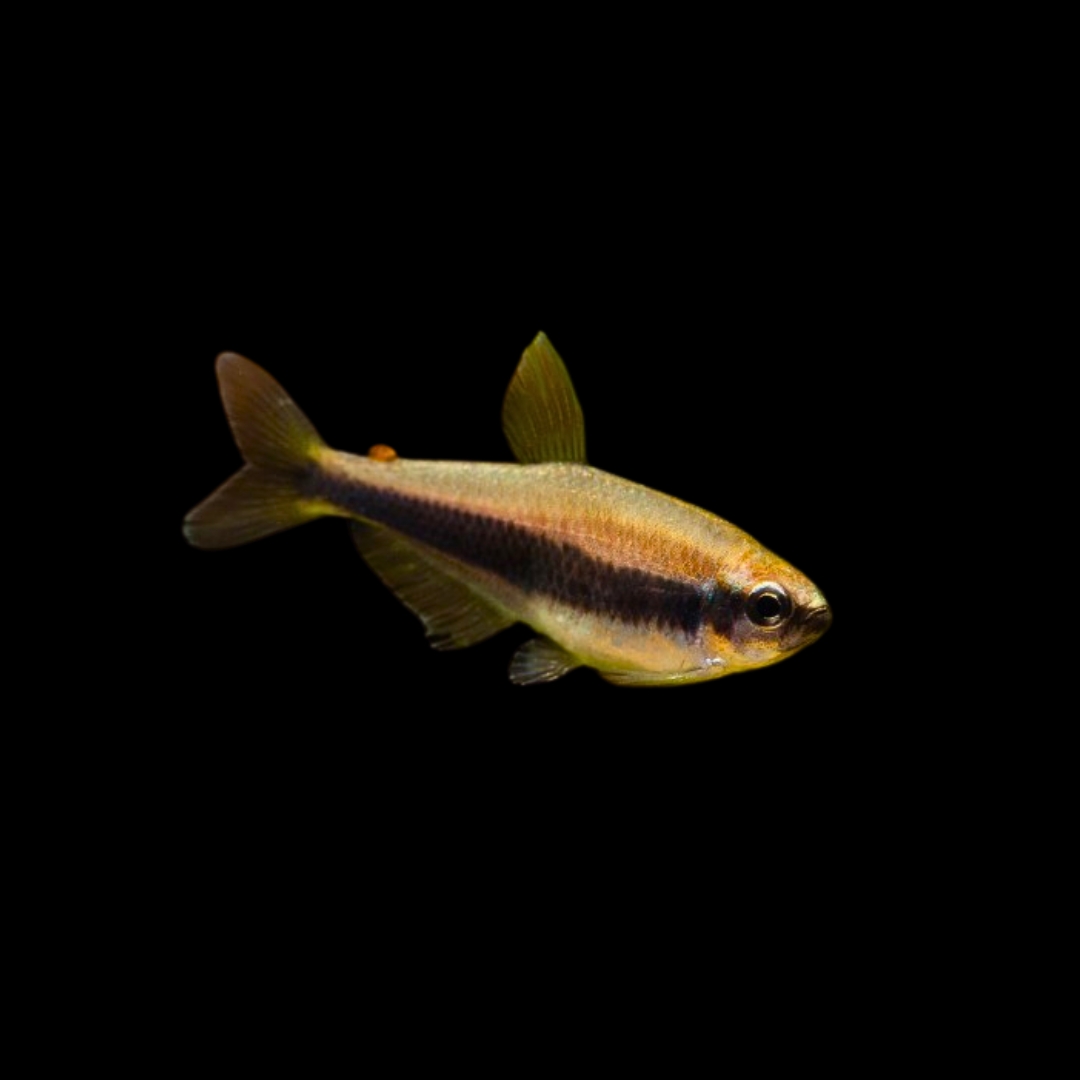
インパイクティス・ケリーは、ブラジル・マットグロッソ州のアリプアナ川上流域に分布する小型カラシンの一種です。体側を走る濃い縦帯と、光の角度によって青から藤色、紫紺へと表情を変える背部の輝きがたいへん美しく、日本ではロイヤルテトラの名でも親しまれています。一般的な飼育は難しくありませんが、やや軟らかい水、落ち着いた照明、まとまった匹数での飼育を意識すると、本種らしい発色とオス同士のフィンスプレッディングを楽しみやすくなります。Inpaichthys kerri is a small characin distributed in the upper Aripuanã River basin of Mato Grosso, Brazil. It is admired for its dark longitudinal stripe and the elegant dorsal sheen that shifts from blue to violet or deep purplish blue depending on the angle of light. In Japan it is also known as the Royal Tetra. It is not a difficult aquarium fish, but soft water, subdued lighting, and keeping it in a proper group help bring out its coloration and male fin-spreading displays.
基本情報 / Basic Information
学名 / Scientific Name
Inpaichthys kerri
通称 / Common Name
インパイクティス・ケリー、ロイヤルテトラ、ブルーエンペラーテトラ、パープルエンペラーテトラInpaichthys kerri, Royal Tetra, Blue Emperor Tetra, Purple Emperor Tetra
分類 / Family
カラシン目 アケストロランファス科 サイエリア亜科 インパイクティス属。旧来の資料や流通名では、広義のカラシン科として扱われることもあります。Order Characiformes, family Acestrorhamphidae, subfamily Thayeriinae, genus Inpaichthys. Older references and aquarium-trade sources may still treat it under a broad concept of Characidae.
英名 / English Name
Royal Tetra, Blue Emperor Tetra, Purple Emperor Tetra
分布 / Distribution
南米ブラジル、マットグロッソ州のマデイラ川上流域、特にアリプアナ川水系に分布します。流れの緩やかな支流や森林に囲まれた小川で見られる魚です。South America: the upper Madeira River basin in Mato Grosso, Brazil, especially the Aripuanã River system. It is associated with slow-moving tributaries and forest streams.
最大体長 / Max Size
標準体長では約2.8cmの記録があり、観賞魚としては全長3〜4cm前後の小型テトラとして扱うと分かりやすいです。Recorded maximum standard length is about 2.8 cm. In aquarium terms, it is best understood as a small tetra of roughly 3–4 cm total length.
寿命 / Lifespan
一般的な飼育下では2〜5年程度を目安にできます。ただし公的な寿命データは限られるため、安定した水温、清浄な水質、ストレスの少ない群れ作りが長期飼育の鍵になります。In aquarium care, about 2–5 years is a reasonable guideline, although formal lifespan data are limited. Stable temperature, clean water, and a low-stress group are key to long-term maintenance.
飼育環境 / Aquarium Environment
水槽サイズ / Tank Size
最低でも45cm水槽、推奨は60cm規格水槽以上です。5〜6匹以上、できれば10匹前後の群れで飼うと小競り合いが分散し、遊泳や発色も安定しやすくなります。A 45 cm tank is a practical minimum, while a standard 60 cm tank or larger is recommended. Keep at least five or six individuals, ideally around ten, to disperse minor chasing and stabilize swimming behavior and coloration.
水温 / Temperature
24〜27℃を基本の目安にします。通常飼育では24〜26℃で安定させると扱いやすく、20℃前後の低温を常用する魚としては扱わない方が安全です。日本の夏場は28℃を大きく超える状態が続かないよう、冷却ファンや水槽用クーラーを検討してください。Use 24–27°C as the basic guideline. For routine care, 24–26°C is easy to manage, and the species should not be treated as a fish for constant temperatures around 20°C. In hot Japanese summers, consider a cooling fan or aquarium chiller to prevent prolonged temperatures well above 28°C.
水質 / Water Quality
弱酸性〜中性寄りの軟水を好みます。一般飼育ではpH 6.0〜7.5前後、硬度は低めから中程度を目安にし、繁殖や色揚げを狙う場合はpH 5.5〜6.5程度の弱酸性軟水に寄せるとよいでしょう。急激なpH変動や換水時の水温差は避けてください。It prefers soft, slightly acidic to near-neutral water. For general care, aim around pH 6.0–7.5 with low to moderate hardness. For breeding or stronger coloration, softer water around pH 5.5–6.5 can be useful. Avoid sudden pH swings and temperature differences during water changes.
レイアウト / Layout
暗めの底床、流木、落ち葉、マジックリーフなどを使ったブラックウォーター風のレイアウトと相性が良い魚です。自然下では水草が密生する環境というより、樹木の影、枝、落ち葉がつくる薄暗い水域に近いと考えると組み立てやすいです。水草水槽でも問題なく、浮き草や茂った有茎草で光を和らげると落ち着きやすくなります。It suits a blackwater-style layout with dark substrate, driftwood, leaf litter, and Indian almond leaves. Its natural habitat is better imagined as shaded water with branches and fallen leaves rather than a densely planted aquatic meadow. It also does well in planted aquariums, especially when floating plants or dense stem plants soften the light.
注意点 / Precautions
高水温の長期化、硝酸塩の蓄積、導入時の水合わせ不足に注意します。週1回を目安に20〜30%程度の換水を行い、濾過は強い水流よりも安定した生物濾過を重視します。小型魚なので、吸い込みの強いフィルターにはスポンジを付けると安心です。Watch for prolonged high temperatures, nitrate buildup, and poor acclimation. Change about 20–30% of the water weekly, prioritizing stable biological filtration over strong current. Because it is a small fish, a sponge guard on powerful filter intakes is helpful.
餌と給餌 / Feeding
餌の種類 / Diet
雑食性で、フレークフード、小型顆粒フード、細かく刻んだ冷凍アカムシ、ブラインシュリンプ、ミジンコ、ボウフラなどをよく食べます。自然下では水面付近の小型無脊椎動物や落下昆虫を利用すると考えられるため、浮上性またはゆっくり沈む餌が扱いやすいです。Omnivorous and readily accepts flakes, small granules, finely chopped frozen bloodworms, brine shrimp, daphnia, and mosquito larvae. In nature it likely feeds on small invertebrates and fallen insects near the surface, so floating or slowly sinking foods are easy to use.
給餌のポイント / Feeding Tips
1日1〜2回、数分で食べ切れる量を与えます。発色や繁殖を狙う場合は、人工飼料を主食にしながら冷凍餌や生き餌を週に数回加えると効果的です。食べ残しは水質悪化につながるため、底に残った餌は早めに取り除いてください。Feed once or twice daily, only as much as they finish within a few minutes. For better coloration or breeding condition, use quality prepared foods as the staple and add frozen or live foods several times a week. Remove leftovers promptly to prevent water quality problems.
性格と混泳 / Temperament and Tank Mates
性格 / Temperament
基本的には温和ですが、小型カラシンの中ではやや活発で、オス同士がヒレを広げて牽制し合うことがあります。これは本種の見どころでもありますが、少数飼育では弱い個体に追いが集中しやすいため、群れで飼うことが大切です。Generally peaceful, but relatively active for a small tetra. Males may spread their fins and spar with one another. This is part of the species’ appeal, but in very small groups chasing may focus on weaker individuals, so keeping a proper group is important.
混泳の相性 / Compatibility
同程度の大きさで温和な小型テトラ、ラスボラ、コリドラス、オトシンクルス、小型ロリカリア、アピストグラマなどと相性が良いです。長いヒレを持つベタやグッピー、動きが極端に遅い魚、過度に攻撃的な魚とは避けた方が無難です。エビの幼体は食べられる可能性があります。Compatible with similarly sized peaceful tetras, rasboras, Corydoras, Otocinclus, small loricariids, and Apistogramma. Avoid long-finned fish such as bettas and guppies, very slow-moving species, and overly aggressive tank mates. Very small shrimp juveniles may be eaten.
病気と対策 / Diseases and Prevention
かかりやすい病気 / Common Diseases
白点病、尾ぐされ、カラムナリス症、輸送後のスレや細菌感染に注意します。特定の病気だけに極端に弱い魚ではありませんが、導入直後、高水温が続いた後、急な換水の後には体調を崩しやすくなります。Watch for ich, fin rot, columnaris, abrasions after shipping, and secondary bacterial infections. It is not unusually fragile toward one specific disease, but problems are more likely just after introduction, after prolonged high temperatures, or after abrupt water changes.
対策と予防 / Prevention
導入時は点滴法などで水合わせを丁寧に行い、可能であればトリートメント水槽で状態を確認します。日常管理では、過密を避け、餌を与えすぎず、週1回程度の換水で水質を安定させることが予防の中心です。発病時は早期に隔離し、症状に合った観賞魚用薬を規定量で使用してください。Acclimate carefully, ideally by drip acclimation, and observe new fish in a quarantine tank when possible. For daily prevention, avoid overcrowding, do not overfeed, and keep water quality stable with weekly maintenance. If disease appears, isolate affected fish early and use an appropriate aquarium medication at the recommended dosage.
増やし方(繁殖) / Breeding
雌雄の判別 / Sexing
オスは背部から体側上部に青〜紫の発色が強く出やすく、体型はやや細身です。メスは体型がふっくらしやすく、脂ビレがオレンジ色から赤色を帯びる点が分かりやすい目印になります。オスの脂ビレは青く見えることが多いです。Males usually show stronger blue to violet coloration on the upper body and tend to be slimmer. Females are fuller-bodied, and their orange to reddish adipose fin is a useful indicator. The male adipose fin is often blue.
繁殖形態 / Reproduction
水草や産卵モップの中に卵をばら撒く、ばら撒き型の産卵を行います。親魚は卵や稚魚を保護せず、産卵後に卵を食べることがあるため、繁殖を狙う場合は産卵後に親魚を取り出します。An egg-scattering species that deposits eggs among fine plants or spawning mops. Parents do not guard eggs or fry and may eat eggs after spawning, so adults should be removed when breeding intentionally.
繁殖のポイント / Breeding Tips
30〜40cm水槽、または10〜20L程度の繁殖水槽を用意し、pH 5.5〜6.5の弱酸性軟水、弱めの照明、ジャバモスや産卵モップを整えます。親魚は事前に高栄養の餌で仕上げ、夕方に導入すると翌朝に産卵することがあります。卵は水温にもよりますが24〜48時間ほどで孵化し、遊泳開始直後の稚魚にはインフゾリアやワムシなど微細な餌を与え、成長に合わせてブラインシュリンプ幼生へ移行します。Prepare a 30–40 cm tank or a 10–20 L breeding tank with soft, slightly acidic water around pH 5.5–6.5, dim lighting, and Java moss or spawning mops. Condition adults with nutritious foods and introduce them in the evening; spawning may occur the next morning. Eggs usually hatch in about 24–48 hours depending on temperature. Newly free-swimming fry need very fine foods such as infusoria or rotifers before they can take newly hatched brine shrimp.
雑学と豆知識 / Trivia and Fun Facts
1. 学名に残るアマゾン研究所の記憶 / 1. The Amazonian institute preserved in the name
インパイクティス・ケリーは1977年にGéryとJunkによって記載されました。属名のInpaichthysは、ブラジルの国立アマゾン研究所として知られるINPAと、ギリシャ語で魚を意味するichthysを組み合わせた名です。種小名kerriは、遺伝学や昆虫学の分野でも知られ、当時INPAに関わったWarwick Estevam Kerr博士に献名されたものです。小さなテトラの学名の中に、アマゾンの調査研究とそれを支えた人物の足跡が閉じ込められています。Inpaichthys kerri was described by Géry and Junk in 1977. The genus name combines INPA, the acronym of Brazil’s National Institute for Amazonian Research, with ichthys, the Greek word for fish. The species name kerri honors Warwick Estevam Kerr, a scientist known for his work in genetics and entomology and associated with INPA. In the name of this small tetra, the memory of Amazonian research and the people behind it is preserved.
2. かつて単型属、しかし現在は仲間が増えた / 2. Once monotypic, now with newly recognized relatives
インパイクティス属は長い間、インパイクティス・ケリーだけを含む単型属として紹介されてきました。しかし分類研究は止まっておらず、2024年にはインパイクティス・パラウアピランガの記載と、旧ハセマニア属のナンビクアラの移動によって属の扱いが見直されました。さらに2025年にはジュルエナ川流域から新種インパイクティス・ルイザエが記載されています。つまり、古い図鑑で「本属唯一の種」と書かれていても、それは当時の正しい情報であり、現在の分類では更新が必要な部分です。For many years, Inpaichthys was introduced as a monotypic genus containing only Inpaichthys kerri. Taxonomy has continued to move forward, however. In 2024, Inpaichthys parauapiranga was described and the former Hasemania nambiquara was transferred to Inpaichthys, redefining the genus. In 2025, a further species, Inpaichthys luizae, was described from the Juruena basin. Therefore, older statements calling I. kerri the only species of the genus were correct in their time but need updating today.
3. 光で変わる紫紺の正体 / 3. The secret behind the shifting violet-blue sheen
本種の青や藤色の輝きは、単に青い色素だけで生まれるものではありません。体表の微細な構造が光を反射し、角度によって見え方が変わる構造色の要素が強いと考えられます。そのため、照明の位置、水面の揺らぎ、観察する方向によって、同じ個体でも明るい青、落ち着いた藤色、深い紫紺へと雰囲気が変わります。暗色の底床や控えめな照明を合わせると、その繊細な光の変化がより印象的に見えるでしょう。The blue to violet sheen of this species is not simply a matter of blue pigment. It is strongly associated with structural coloration, in which microscopic structures on the body reflect light differently depending on the viewing angle. As a result, the same fish may appear bright blue, subdued violet, or deep purplish blue as lighting, surface movement, and viewing direction change. Dark substrate and gentle lighting make these subtle optical effects stand out beautifully.
4. エンペラーテトラとの分かりやすい違い / 4. A clear difference from Emperor Tetras
インパイクティス・ケリーは英名にエンペラーの名を含むことがあり、エンペラーテトラと混同されることがあります。しかし、代表的なエンペラーテトラであるネマトブリコン属の魚とは別属です。見分けるときに特に役立つのが脂ビレで、インパイクティス・ケリーには背ビレと尾ビレの間に小さな脂ビレがあり、オスでは青、メスでは赤からオレンジ色を帯びます。一方、ネマトブリコン属のエンペラーテトラ類は脂ビレを欠くため、慣れるとかなり確実な識別点になります。Inpaichthys kerri is sometimes confused with Emperor Tetras because some English names include the word emperor. It is, however, in a different genus from the typical Emperor Tetras of the genus Nematobrycon. The adipose fin is especially useful for identification: Inpaichthys kerri has a small adipose fin between the dorsal and caudal fins, blue in males and reddish to orange in females. Nematobrycon Emperor Tetras lack this fin, making it a reliable distinction once you know where to look.
5. 日本で語られるロイヤルテトラの来歴 / 5. The Royal Tetra story told in Japan
日本で本種がロイヤルテトラとして特別に語られる背景には、1978年のブラジル日本人移民70周年にまつわる来歴があります。当時、ブラジルを訪問された皇太子同妃両殿下に、本種が友好の証として贈られたと国内アクアリウム界では紹介されてきました。その後の国内維持と繁殖には、熱帯魚繁殖研究家として知られる東博司氏が関わったと伝えられています。公式史料で確認できるのは両殿下のブラジル訪問と70周年行事へのご臨席ですが、観賞魚としての伝承も含めて、本種は日本とブラジルの交流史に重ねて親しまれてきた魚です。In Japan, this fish is often discussed under the special name Royal Tetra because of a story connected with the 70th anniversary of Japanese immigration to Brazil in 1978. Japanese aquarium sources have long stated that the species was presented to the then Crown Prince and Crown Princess during their visit to Brazil as a symbol of friendship. Its early maintenance and breeding in Japan are also associated with Hiroshi Azuma, a renowned tropical-fish breeder. Official records support the royal visit and the anniversary events, while the aquarium-trade story adds a layer of cultural affection to the species in Japan.
6. 改良品種と原種タイプの楽しみ方 / 6. Enjoying selected strains and the wild type
インパイクティス・ケリーには、原種タイプのほか、スーパーブルー、ディープブルー、ゴールドピンクなどの名で流通する改良品種があります。スーパーブルーは早い段階から青みが出やすく、メスにも青い背部が現れやすい点で水槽全体を明るく見せます。ディープブルーはより重厚な青紫の印象を楽しめる系統で、ゴールドピンクは暗色の縦帯が薄れ、淡いピンクから白っぽい体色を見せるタイプです。ただし品種名は販売者によって表現差があるため、名前だけでなく実際の発色や体型を見て選ぶと安心です。Alongside the wild-type form, selected strains are sold under names such as Super Blue, Deep Blue, and Gold Pink. Super Blue tends to show blue coloration early and often gives females a blue dorsal area, brightening the appearance of the whole group. Deep Blue emphasizes a heavier blue-violet tone, while Gold Pink reduces the dark stripe and shows a pale pink to whitish body. Strain names can vary between sellers, so it is best to choose by the actual coloration and body condition rather than by name alone.
7. ワイルド個体とブリード個体が支える流通 / 7. Wild and captive-bred fish in the trade
現在の日本市場では、東南アジアなどで増やされたブリード個体が安定して流通し、初心者にも手に取りやすい魚になっています。一方で、ブラジル産のワイルド個体は、原種らしい体型や発色、繁殖用の新しい血統として重視されます。ブラジルの観賞魚輸出制度は時期によって改正があるため、細かな制度名や掲載リストを固定的に断定するより、正規ルートで輸入された個体かどうかを確認する姿勢が大切です。飼育者にとっては、安定供給を担うブリード個体と、遺伝的多様性を支えるワイルド個体の両方が、この魚の未来を支えていると考えると理解しやすいでしょう。In today’s Japanese market, captive-bred fish from Southeast Asia and other regions provide stable availability and make the species accessible to beginners. Wild Brazilian individuals remain valued for natural body shape, original coloration, and genetic importance as breeding stock. Because Brazil’s ornamental-fish export rules can change over time, it is better to confirm that fish came through legal channels rather than make fixed assumptions about a particular list or rule name. For aquarists, both captive-bred fish for stable supply and wild fish for genetic diversity help support the future of this species in the hobby.
まとめ / Conclusion
インパイクティス・ケリーは、小型で飼いやすい一方、光によって変化する紫紺の体色、雌雄で異なる脂ビレの色、オス同士のディスプレイなど、観察するほど奥深い魅力を持つテトラです。60cm規格水槽以上で群れを作り、弱酸性寄りの清浄な水、落ち着いた照明、24〜26℃前後の安定した水温を意識すると、本種らしい美しさを引き出しやすくなります。Inpaichthys kerri is small and relatively easy to keep, yet it rewards close observation with violet-blue coloration, sex-specific adipose fin colors, and male display behavior. A standard 60 cm tank or larger, clean slightly acidic water, subdued lighting, and a stable temperature around 24–26°C help bring out its full beauty.
さらに本種は、アマゾン研究史に刻まれた学名、日本で語られてきたロイヤルテトラとしての来歴、そして近年進むインパイクティス属の分類更新まで、多くの物語を背負った魚でもあります。丈夫さと上品な美しさ、そして背景にある歴史性を兼ね備えた、長く付き合うほど愛着の増す一種です。This species also carries many stories: a name rooted in Amazonian research, the Royal Tetra history told in Japan, and recent taxonomic updates within the genus Inpaichthys. With its hardiness, refined beauty, and rich background, it is a fish that becomes more rewarding the longer it is kept.



 アイのアクアグッズ案内水草トリミングの道具とやり方|ハサミ・ピンセットを水草に合わせて選ぼう伸びすぎた水草は切っていい? 有茎草の差し戻し、前景草の絨毯、流木のモスを整える場面から、水草用ハサミ・ピンセット・ゴミ取りネットの選び方と片付けを紹介します。記事はコチラ →
 アイのアクアグッズ案内水草水槽のCO₂添加|3つの方式の選び方とおすすめ用品道具の特徴や使い方、選ぶときのポイントをアイが紹介します。記事はコチラ →



コメント