

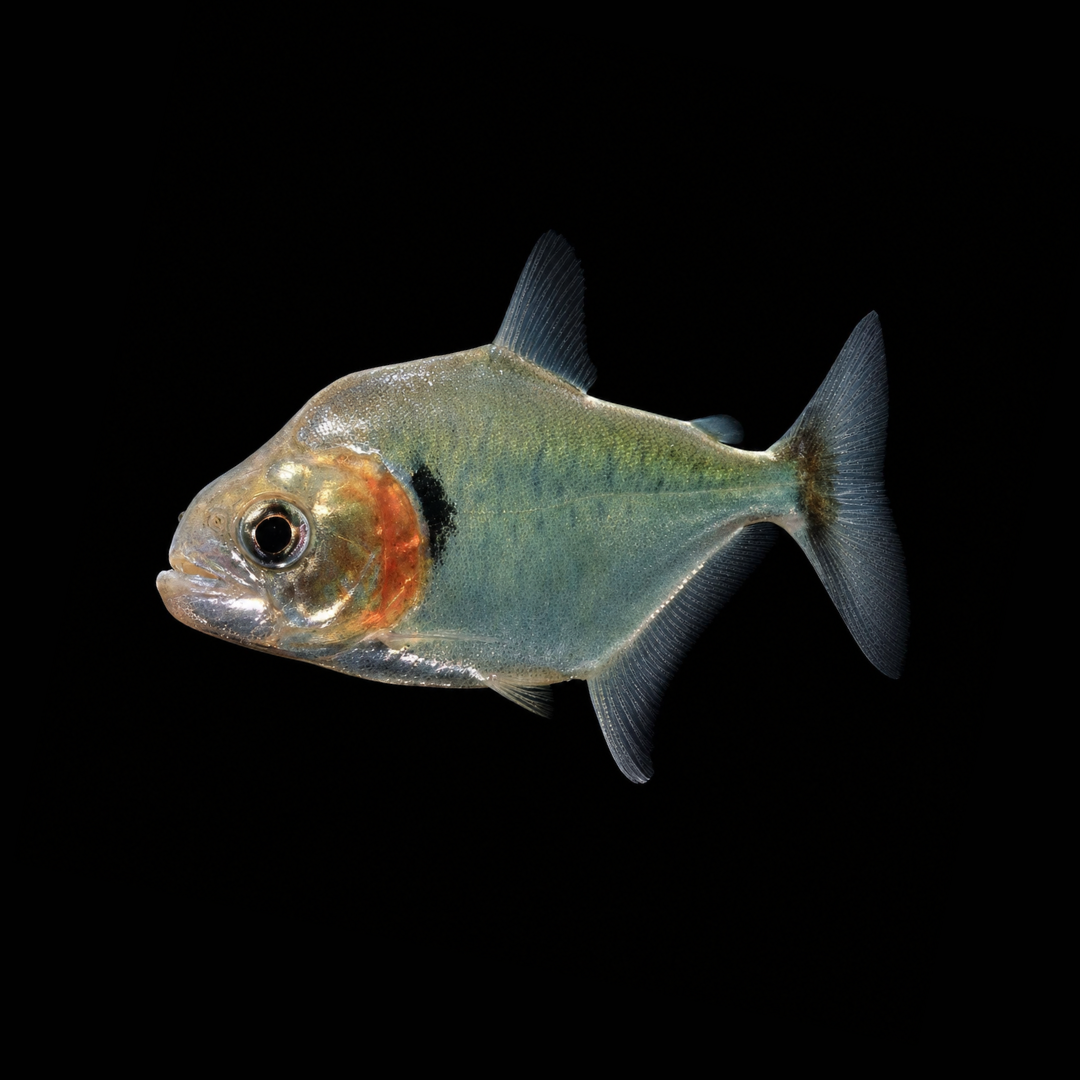
解説 / Description
ピラニア・スーパーノタータスは、日本の観賞魚市場で長く使われてきた流通名で、現在は主にセラサルムス・マヌエリ、Serrasalmus manueliとして扱われる大型のピラニアです。成長とともに体高が増し、頭部からエラ蓋周辺に赤みを帯びた発色が現れ、大きな肩紋が目立つようになります。幼魚期の鋭い印象と成魚の重厚な迫力が大きく変わるため、長期飼育で変化を楽しめる魚でもあります。 The Super Notatus Piranha is a trade name long used in the Japanese aquarium market for a large piranha now generally treated as Serrasalmus manueli. As it grows, the body becomes deeper, reddish coloration develops around the head and gill cover, and the large humeral spot becomes more prominent. Because juveniles have a sharp, agile appearance while adults gain a heavy and imposing presence, this species offers dramatic changes over long-term care.
ただし、本種は気軽に導入できる魚ではありません。大型化するだけでなく、単独性が強く、混泳による事故が起こりやすく、水質の乱れや輸送後の不安定な状態にも注意が必要です。導入前には、最終的な水槽サイズ、強力なろ過、安定した水質管理、長期維持の費用と手間を現実的に見積もることが大切です。 This is not a fish to acquire casually. It becomes large, is strongly solitary, can cause serious accidents when kept with other fish, and requires care after transport or when water conditions become unstable. Before purchase, the keeper should realistically assess the final tank size, filtration capacity, water management, and the cost and effort needed for long-term care.
基本情報 / Basic Information
| 学名 / Scientific Name | Serrasalmus manueli |
|---|---|
| 通称 / Common Name | ピラニア・スーパーノタータス、スーパーノタートゥス、セラサルムス・マヌエリ、マニュエリSuper Notatus Piranha, Manuel’s Piranha, Green Tiger Piranha, Serrasalmus manueli |
| 分類 / Family | 真骨類、カラシン目、セラサルムス科、セラサルムス亜科、セラサルムス属Teleostei, order Characiformes, family Serrasalmidae, subfamily Serrasalminae, genus Serrasalmus |
| 英名 / English Name | Manuel’s Piranha, Green Tiger Piranha |
| 分布 / Distribution | 南米のアマゾン川流域およびオリノコ川流域に分布し、ブラジル、コロンビア、ベネズエラから記録されています。流通個体では、ベネズエラ産のほか、ブラジルのネグロ川やシングー川に由来する個体群が語られることがあります。Distributed in South America in the Amazon and Orinoco river basins, with records from Brazil, Colombia, and Venezuela. In the aquarium trade, specimens are discussed from Venezuela as well as Brazilian populations such as the Rio Negro and Rio Xingu. |
| 最大体長 / Max Size | FishBaseでは最大36cm SLが示され、観賞魚流通では35cmを超える大型ピラニアとして扱われます。全長表記では見かけ上さらに大きく感じられる場合がありますが、信頼できる記録としては36cm SL前後を基準に考えるのが安全です。FishBase lists a maximum size of 36 cm standard length, and the aquarium trade treats it as a large piranha exceeding 35 cm. Total length can appear larger than standard length, but for reliable reference it is safest to plan around the documented 36 cm SL range. |
| 寿命 / Lifespan | 飼育下での統一的な寿命データは限られますが、大型セラサルムス類として10年以上の長期飼育を前提に考えるべき魚です。導入時には、成長後も維持できる水槽と管理体制を用意しておく必要があります。Standardized captive lifespan data are limited, but as a large Serrasalmus species it should be treated as a fish that may require more than 10 years of care. A suitable long-term aquarium and maintenance plan should be prepared before acquisition. |
飼育環境 / Aquarium Environment
| 水槽サイズ / Tank Size | 幼魚から若魚では最低でも90cm規格水槽以上を用意し、20cmを超える頃には120cm以上、できれば150cm×60cm以上の大型水槽へ移行したい魚です。成魚を余裕を持って飼う場合は、150cm×90cm×60cmクラス、またはそれ以上の奥行きを持つ水槽が現実的です。単に水量を確保するだけでなく、前面への突進や反転を考え、奥行きにも余裕を持たせます。Juveniles and subadults should be started in at least a standard 90 cm aquarium, and by the time the fish exceeds 20 cm, a 120 cm or preferably 150 × 60 cm or larger tank should be considered. For comfortable adult care, a 150 × 90 × 60 cm class tank, or a setup with even greater depth, is more realistic. It is important not only to provide water volume but also enough depth for turning and to reduce impact injuries from sudden dashes. |
|---|---|
| 水温 / Temperature | 24〜28℃を目安に安定させます。急な水温変化はストレスや体調不良につながるため、ヒーターとサーモスタットは信頼性の高いものを使い、可能であれば予備機も用意します。 Maintain a stable temperature of about 24–28°C. Sudden changes can lead to stress or health problems, so use a reliable heater and thermostat, with backup equipment whenever possible. |
| 水質 / Water Quality | 飼育では弱酸性から中性付近、目安としてpH6.0〜7.5を安定させます。野生下では産地により水質が異なりますが、水槽内では「数値を極端に寄せること」よりも「急変させないこと」が重要です。肉食魚として排泄量が多いため、アンモニアと亜硝酸は常に検出されない状態を維持し、硝酸塩も蓄積させすぎないようにします。In captivity, keep the water stable from slightly acidic to near neutral, roughly pH 6.0–7.5. Wild habitats vary by locality, but in an aquarium, avoiding sudden changes is more important than forcing extreme values. Because this carnivorous fish produces a heavy bioload, ammonia and nitrite should remain undetectable, and nitrate should not be allowed to accumulate excessively. |
| レイアウト / Layout | 幼魚期は流木や丈夫な水草で隠れ場所を作ると落ち着きやすくなります。成長後は遊泳空間と清掃性を優先し、ベアタンクに近いシンプルな構成が扱いやすいです。ネグロ川やシングー川などの産地名で流通する個体では、強めの水流と十分な溶存酸素を意識し、水流ポンプやディフューザーを併用すると状態を維持しやすくなります。Juveniles often settle better with driftwood and hardy plants as cover. As the fish grows, open swimming space and easy cleaning become more important, and a simple bare-bottom style is often the most manageable. For specimens traded with locality names such as the Rio Negro or Rio Xingu, stronger current and high dissolved oxygen should be considered, using powerheads and diffusers when appropriate. |
| 注意点 / Precautions | 水質悪化、急なpH変動、導入直後のショックに注意します。上部式フィルターと外部式フィルターの併用、またはオーバーフロー水槽など、余裕のあるろ過を組むと管理しやすくなります。ヒーターコード、エアチューブ、センサー類をかじる事故もあるため、機材はカバーで保護するか、可能なものは濾過槽側へ逃がします。換水は一度に大きく変えすぎず、温度と水質を合わせて行います。Watch for deteriorating water quality, sudden pH shifts, and stress immediately after introduction. Oversized filtration, such as a combination of overhead and canister filters or an overflow system, makes maintenance easier. Heater cords, air tubes, and sensors may be bitten, so protect equipment with covers or move it to the filtration chamber whenever possible. Water changes should be carried out with matched temperature and water chemistry rather than abrupt large shifts. |
餌と給餌 / Feeding
| 餌の種類 / Diet | 魚食性が強い雑食寄りの肉食魚として管理します。冷凍の白身魚、エビ、貝類、昆虫系フード、大型肉食魚用ペレットなどを組み合わせ、栄養の偏りを避けます。導入直後や幼魚期は餌付きにくい場合があるため、冷凍アカムシ、メダカ、小赤などを使うこともありますが、生餌は病原体や栄養バランスの問題があるため、長期的には冷凍餌や人工飼料へ慣らしていきます。Manage it as a strongly piscivorous but somewhat omnivorous predator. Use a varied diet such as frozen white fish, shrimp, shellfish, insect-based foods, and pellets for large predatory fish to avoid nutritional imbalance. Newly imported specimens and juveniles may be difficult to start, so frozen bloodworms, live medaka, or small feeder goldfish may be used, but live foods carry disease and nutritional risks. Over the long term, the fish should be transitioned to frozen and prepared foods. |
|---|---|
| 給餌のポイント / Feeding Tips | 幼魚期は痩せさせないことが重要で、少量をこまめに与えます。成長後は食べ残しが水質を急速に悪化させるため、食べ切れる量を観察しながら与え、残餌はすぐに取り除きます。人工飼料へ移行する際は、好む餌に混ぜる、ピンセットで動きをつける、同じ時間に与えるなど、警戒心を下げる工夫が有効です。Juveniles should not be allowed to become thin, so feed small amounts more frequently. As the fish grows, leftovers can quickly degrade water quality, so offer only what it will eat and remove uneaten food promptly. When transitioning to prepared foods, mix them with favored foods, use feeding tongs to create movement, and offer food at consistent times to reduce hesitation. |
性格と混泳 / Temperament and Tank Mates
| 性格 / Temperament | 攻撃性が強い一方で、非常に神経質な面もあります。導入直後や環境が合わない時期には、人影や物音に驚いて突進したり、吻端や下顎をガラス面に擦ったりすることがあります。照明を強くしすぎず、隠れ場所と遊泳空間のバランスを取り、日常的な管理の動きを一定にすると落ち着きやすくなります。It can be aggressive, but it is also very nervous. Shortly after introduction or when conditions are unsuitable, it may dash into the glass when startled by movement or sound, or rub the snout and lower jaw against the front panel. Moderate lighting, a balance of cover and swimming space, and consistent maintenance routines can help it settle. |
|---|---|
| 混泳の相性 / Compatibility | 同種・他種を問わず混泳は推奨できません。短期間は問題なく見えても、成長、空腹、夜間行動、縄張り意識をきっかけに大きな事故が起こりやすいです。基本は終生単独飼育とし、水槽1本に1匹で管理します。Tank mates are not recommended, whether the same species or other species. Even if compatibility appears acceptable for a short time, growth, hunger, nocturnal behavior, or territoriality can lead to serious injury. It should be kept alone for life, with one specimen per aquarium. |
病気と対策 / Diseases and Prevention
| かかりやすい病気 / Common Diseases | 水質悪化によるエラ障害、肌荒れ、白点病、細菌感染、吻端や下顎の擦れ傷からの化膿に注意します。特に前面ガラスに下顎を擦る行動が続くと、腫れや二次感染につながることがあります。Watch for gill problems, skin irritation, white spot disease, bacterial infections, and suppuration from abrasions on the snout or lower jaw. Persistent lower-jaw rubbing against the front glass can lead to swelling and secondary infection. |
|---|---|
| 対策と予防 / Prevention | 最も重要なのは、清潔で安定した水を維持することです。強力なろ過、十分な水流と酸素、定期換水、食べ残しの即時除去を徹底します。新規導入時は照明を落として観察し、外傷がある場合は水質を特に高く保ちます。UV殺菌灯は透明度の維持や病原体リスクの低減に役立つ場合がありますが、基本は日々の水質管理です。The most important prevention is clean, stable water. Maintain strong filtration, sufficient current and oxygen, regular water changes, and immediate removal of leftovers. During introduction, keep lighting subdued and observe carefully. If injuries are present, water quality should be kept especially high. UV sterilizers may help maintain clarity and reduce pathogen pressure, but daily water management remains the foundation. |
増やし方(繁殖) / Breeding
| 雌雄の判別 / Sexing | 外見だけでの雌雄判別は非常に困難です。成熟期の腹部の張りや体格差が手がかりになる可能性はありますが、通常の観賞魚飼育で確実に判別するのは難しいと考えておくのが現実的です。Sexing by appearance alone is very difficult. Abdominal fullness during maturity or differences in build may provide clues, but reliable sexing in ordinary aquarium care should be considered difficult. |
|---|---|
| 繁殖形態 / Reproduction | 卵生です。野生下では水位上昇や季節的な環境変化が繁殖サイクルに関与すると考えられますが、飼育下で安定して繁殖させるための情報は限られます。This is an oviparous species. In the wild, rising water levels and seasonal environmental changes are thought to be involved in the breeding cycle, but information for reliable captive breeding is limited. |
| 繁殖のポイント / Breeding Tips | 一般家庭での繁殖は非常に難しいです。大型で単独性が強く、ペアリングの段階で致命的な争いが起こる可能性があります。繁殖を狙う場合でも、超大型水槽、隔離設備、成熟個体の正確な管理、季節変化を再現する高度な環境制御が必要になると考えられます。Breeding in a typical home aquarium is extremely difficult. The species is large and strongly solitary, and attempts at pairing may lead to fatal aggression. Even serious breeding attempts would likely require an extremely large system, separation equipment, accurate management of mature adults, and advanced environmental control to simulate seasonal changes. |
雑学と豆知識 / Trivia and Fun Facts
| 1. 「スーパーノタータス」という流通名 / 1. The trade name “Super Notatus” | 日本では長く「スーパーノタータス」という流通名が使われてきました。学術名としてはSerrasalmus manueliが有効名として扱われますが、流通名には当時の紹介のされ方や分類情報の揺れが残っています。古くからの愛好家にとっては、スーパーノタータスという名前そのものが、迫力ある大型ピラニアへの憧れを呼び起こす言葉になっています。In Japan, the trade name “Super Notatus” has been used for many years. Scientifically, the valid name is Serrasalmus manueli, but the trade name preserves the history of how the fish was introduced and the uncertainty in older identification. For long-time hobbyists, the name Super Notatus itself still evokes the appeal of a powerful large piranha. |
|---|---|
| 2. ヒュメラリスとの混同 / 2. Confusion with Serrasalmus humeralis | 本種は過去にSerrasalmus humeralisとして扱われたことがあり、現在でも古い資料や流通名にその痕跡が残る場合があります。ただし、S. humeralisはFishBaseで最大20cm SLとされ、他魚のヒレを食べる性質が記録される別種です。購入時には、流通名だけで判断せず、体型、肩紋、産地情報、学名表記をあわせて確認することが大切です。This species has previously been treated in the trade as Serrasalmus humeralis, and traces of that older usage may still appear in older references or sales names. However, FishBase lists S. humeralis as a separate species reaching 20 cm SL and records it as a fin-feeder. When purchasing, it is important not to rely only on the trade name, but to check body shape, humeral spot, locality information, and the scientific name together. |
| 3. 学名manueliに込められた由来 / 3. The meaning behind the name manueli | 属名Serrasalmusは、ノコギリを意味する語とサケを意味する語に由来し、腹部の鋸状の稜鱗と脂鰭を持つ姿を表しています。種小名manueliは、記載に関わった研究者にゆかりのあるManuelへ献名されたものです。鋭い歯を持つ魚でありながら、その名前には人の記憶を残す静かな背景があります。The genus name Serrasalmus refers to a saw and a salmon-like fish, describing the serrated ventral keel and the adipose fin. The species name manueli honors Manuel, a person connected to the researchers involved in the description. Although this is a fish with sharp teeth and a fierce image, its name carries a quiet human background. |
| 4. 幼魚と成魚で印象が変わる魚 / 4. A fish that changes character as it grows | 幼魚は銀色の体に緑がかった光沢や細長い暗色模様を見せることがあり、敏捷な捕食魚らしい印象があります。成長すると体高が増し、頭部の赤みと肩紋が強調され、より重厚な姿に変わっていきます。小さな頃の繊細な美しさと、成魚の迫力が大きく異なるため、長く飼うほど一匹の中に複数の表情を見つけられます。Juveniles may show a silvery body with a greenish sheen and elongated dark markings, giving them the impression of an agile predator. As they mature, the body deepens, reddish coloration on the head and the humeral spot become more pronounced, and the fish takes on a heavier appearance. Because the delicate beauty of juveniles differs greatly from the presence of adults, long-term care reveals several different expressions within the same fish. |
| 5. 強い魚ほど、環境の安定が重要 / 5. A powerful fish that depends on a stable environment | ピラニアという名前から、丈夫で荒々しい魚を想像しがちですが、本種は環境の乱れに対して繊細な面があります。突進、下顎の擦れ、拒食、体表の荒れは、水質、空間、光、落ち着ける場所の不足と関係することがあります。力強い捕食者として見るだけでなく、変化に敏感な大型魚として丁寧に扱うことが、長期飼育では欠かせません。The name piranha may suggest a tough and rough fish, but this species can be sensitive to environmental disturbance. Sudden dashing, lower-jaw rubbing, refusal to feed, and skin irritation may be connected to water quality, limited space, lighting, or insufficient cover. Long-term success depends on treating it not only as a powerful predator but also as a large fish that reacts strongly to instability. |
まとめ / Conclusion
ピラニア・スーパーノタータスは、赤みを帯びる頭部、大きな肩紋、厚みのある体型によって、南米産大型ピラニアらしい存在感を強く示す魚です。幼魚期の鋭い姿から成魚の重厚な姿へ変わっていく過程には、長期飼育でしか味わえない魅力があります。 The Super Notatus Piranha has a powerful presence among large South American piranhas, with its reddish head, large humeral spot, and deep body. The transition from a sharp-looking juvenile to an imposing adult is a special appeal that can only be appreciated through long-term care.
一方で、その魅力は大きな水槽、強力なろ過、安定した水質、単独飼育を徹底できる環境があって初めて引き出されます。十分な準備のもとで向き合えば、水槽の中に一匹だけで景色を成立させる、記憶に残る大型魚となってくれるでしょう。 At the same time, its appeal can only be brought out with a large aquarium, strong filtration, stable water quality, and strict solitary keeping. With sufficient preparation, this fish can become a memorable centerpiece that gives an aquarium presence even as a single specimen.

気になる道具や飼い方を見つけてみませんか?
 アイのアクアグッズ案内お魚を撮ったのに、ボクが写ってる! スマホで楽しむ水槽撮影と便利な道具道具の特徴や使い方、選ぶときのポイントをアイが紹介します。記事はコチラ →
 アイのアクアグッズ案内水草の肥料の選び方|底床用・液肥・メネデールの使い分け道具の特徴や使い方、選ぶときのポイントをアイが紹介します。記事はコチラ →
 アイのアクアグッズ案内エーハイム、安いのと高いのは何が違う? コタロウと見比べる外部フィルター道具の特徴や使い方、選ぶときのポイントをアイが紹介します。記事はコチラ →
 アイのアクアグッズ案内水槽ライトの選び方|魚の見え方・水草・海水で選ぶおすすめ照明道具の特徴や使い方、選ぶときのポイントをアイが紹介します。記事はコチラ →
さまざまな飼育テーマをご紹介。リンク先の記事には広告・商品紹介が含まれます。
案内・紹介記事一覧へ →分布マップ
ピラニア・スーパーノタータスは、南米のアマゾン川流域およびオリノコ川流域に分布し、ブラジル、コロンビア、ベネズエラから記録されています。この地図では、分布イメージを示すため南米北部の流域周辺を概略代表地点として表示しています。
この地図上の表示は、分布欄の内容から作成した分布イメージ用の概略プロットです。実際の採集地点や厳密な生息範囲を示すものではありません。
参考文献・参照資料
ピラニア・スーパーノタータス(Serrasalmus manueli)の記事作成に用いた主要資料
本記事では、分類、分布、生息環境、飼育条件、繁殖、水質管理と疾病予防に関わる記述を確認するため、魚類分類データベース、国際的な生物多様性データベース、獣医学資料、魚類繁殖に関する学術的資料を中心に参照しました。店舗販売ページ、通販ページ、個人ブログ、内容の出典が追いにくいまとめサイトは参考文献から除外しています。
-
使用箇所:学名、原記載、シノニム、現在の有効名、科・亜科、分布、水域環境。分類と命名史を確認するための中核資料。
-
Froese, R. & Pauly, D. eds. FishBase: Serrasalmus manueli.
使用箇所:最大体長、最大公表体重、淡水・ベントペラジックという環境情報、Amazon・Orinoco水系の分布、IUCN評価の確認。
-
GBIF Secretariat. GBIF Backbone Taxonomy: Serrasalmus manueli (Fernández-Yépez & Ramírez, 1967).
使用箇所:受容名、分類階層、Pygocentrus manueli との関係、英語圏・各国語圏での通称確認。
-
Scharpf, C. & Lazara, K. J. The ETYFish Project: Family Serrasalmidae.
使用箇所:属名 Serrasalmus と種小名 manueli の語源・献名に関する記述。
-
使用箇所:セラサルムス亜科全体の分類背景、南米淡水魚相における位置づけ、近縁群の理解。
-
使用箇所:Amazon流域における魚類分布の整理、シングー川などの地域分布を扱う際の背景資料。
-
Seriously Fish. Serrasalmus manueli species profile.
使用箇所:水温、pH、硬度、水槽規模、単独飼育を前提とする管理など、飼育条件の補助確認。学術資料では不足しやすいアクアリウム実務情報の参照先。
-
MSD Veterinary Manual. Environmental Diseases of Aquatic Animals in Aquatic Systems.
使用箇所:低溶存酸素、高アンモニア、亜硝酸などの水質悪化が魚の健康に与える影響、疾病予防としての水質管理。
-
MSD Veterinary Manual. Management of Aquarium Fish.
使用箇所:観賞魚の健康管理、水質検査、ろ過、導入初期の管理、疾病を出さないための基本的な飼育管理。
-
FAO. Reproductive Cycles and Environmental Cues in Teleost Fishes.
使用箇所:魚類の繁殖周期が雨季・乾季、水位、温度、日長などの環境変化と関係するという一般的背景。家庭水槽での繁殖難易度を説明する際の補助資料。
補足:水槽サイズや単独飼育のような飼育実務は、種の学術データベースだけでは十分に確認できないため、専門飼育データベースと獣医学的な水質管理資料を組み合わせて判断しています。




コメント