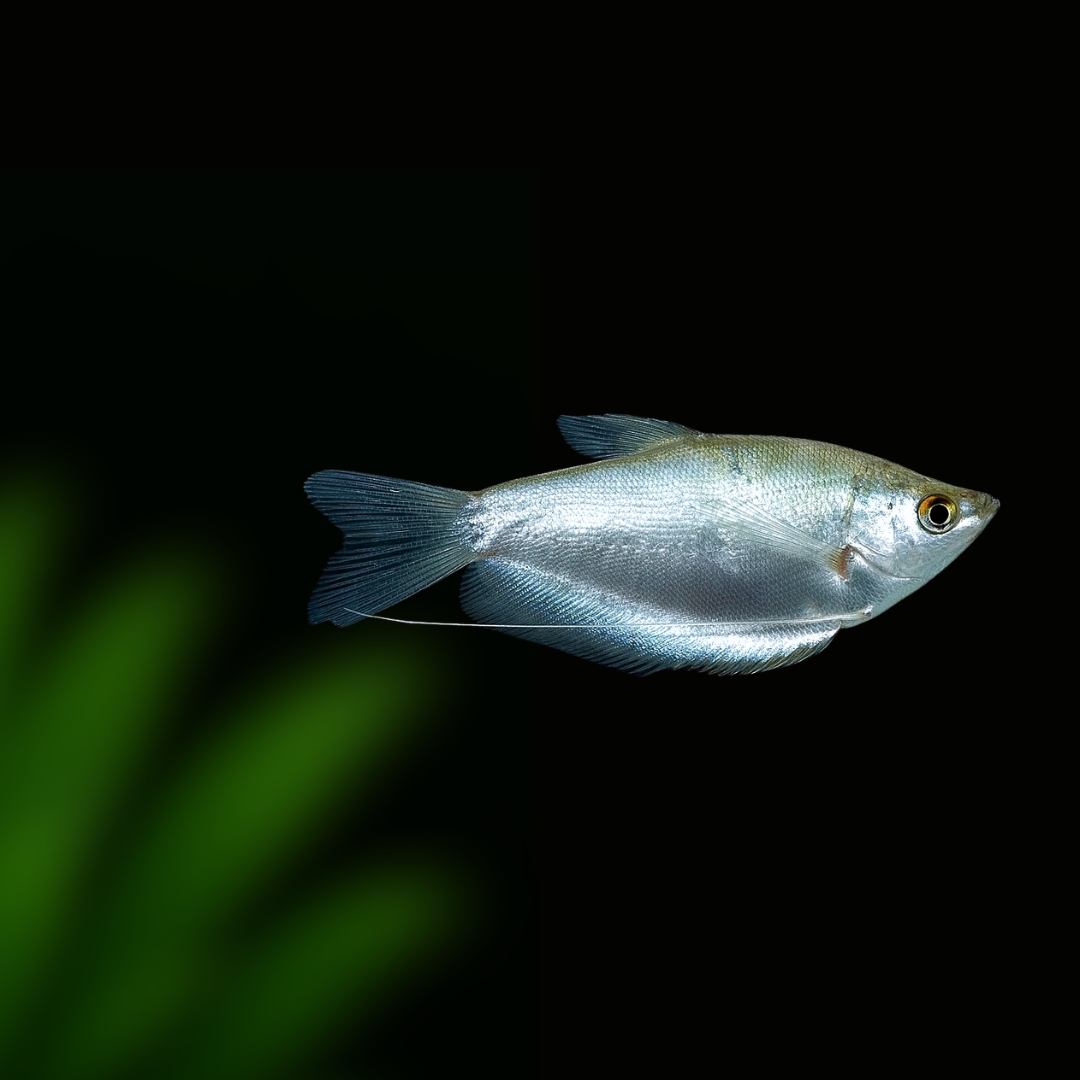
シルバーグラミーは、東南アジアのメコン川下流域やチャオプラヤ川流域を原産とする中型のグラミーです。英名のMoonlight gouramiが示す通り、全身は月光を思わせる淡い銀色に輝き、光の角度によってはほのかな緑色を帯びて見えることがあります。派手な模様で目を引く魚ではありませんが、ゆったりと水面近くを泳ぐ姿、長く伸びた糸状の腹鰭、そして静かな存在感が魅力です。The Moonlight gourami is a medium-sized gourami native to the lower Mekong and Chao Phraya river basins of Southeast Asia. As its English name suggests, its body glows with a soft silvery sheen reminiscent of moonlight, sometimes reflecting a faint green tone depending on the angle of the light. Rather than relying on bold markings, it charms aquarists with its calm movement near the surface, long thread-like pelvic fins, and quiet elegance.
キノボリウオ目 オスフロネムス科 トリコポドゥス属Order Anabantiformes, family Osphronemidae, genus Trichopodus
英名 / English Name
Moonlight gourami
分布 / Distribution
メコン川下流域のカンボジア・ベトナム、およびタイのチャオプラヤ川流域が主な自然分布域です。タイのメコン水系では移入個体群が知られ、観賞魚養殖施設からの逸出に由来すると考えられる海外の定着例も報告されています。Its native range is mainly the lower Mekong basin in Cambodia and Vietnam, and the Chao Phraya basin in Thailand. Introduced populations are known from the Thai Mekong basin, and some overseas records are thought to derive from escapes from aquarium-rearing facilities.
最大体長 / Max Size
一般的には全長14cm前後を目安にします。飼育情報では15cm前後と紹介されることもありますが、18cm級の記録は一般的な基準としては扱わず、十分な遊泳空間を確保するため中型魚として考えます。Usually around 14 cm total length. Some aquarium references describe it as about 15 cm, but 18 cm-class sizes should not be treated as the normal benchmark; it is best regarded as a medium-sized gourami requiring adequate swimming space.
寿命 / Lifespan
おおむね4〜6年程度。安定した水質、十分な水量、落ち着いた混泳環境を整えることで長期飼育が期待できます。Typically about 4–6 years. Stable water quality, sufficient volume, and a calm community setting can support long-term care.
飼育環境 / Aquarium Environment
水槽サイズ / Tank Size
単独または少数飼育でも75L以上を目安とし、長期飼育では90cm規格水槽以上が安心です。複数匹でゆったり泳がせる場合や混泳水槽の主役にする場合は、90cm規格水槽から120cm水槽を推奨します。At least 75 L is recommended even for a single fish or a small group, while a standard 90 cm tank is safer for long-term care. For groups or community displays, a standard 90 cm to 120 cm aquarium is recommended.
水温 / Temperature
26〜30℃が資料上の目安です。日常管理では26〜28℃前後が扱いやすく、繁殖を狙う場合はやや高めの28〜29℃前後が目安になります。26–30°C is the documented general range. For routine care, around 26–28°C is easy to manage, while breeding attempts often use a slightly warmer range of about 28–29°C.
水質 / Water Quality
弱酸性から中性、pH6.0〜7.0前後を基本に考えます。硬度は2〜25dGH程度まで幅広く記録されていますが、急変には注意します。マジックリーフやヤシャブシの実を用いた穏やかなブラックウォーター環境も相性が良いです。Use slightly acidic to neutral water, around pH 6.0–7.0, as the basic target. Hardness has been recorded across a broad range of about 2–25 dGH, but sudden changes should be avoided. A mild blackwater setup using botanicals such as Indian almond leaves or alder cones also suits the species well.
レイアウト / Layout
流木、浮草、背の高い水草で落ち着ける空間を作ります。ただし柔らかい水草は食害されることがあるため、アヌビアス、ミクロソリウム、ジャワファーンなど硬めの陰性水草を中心にすると安全です。水面で空気を吸うため、水面へのアクセスは必ず確保します。Use driftwood, floating plants, and tall plants to create calm shelter. However, soft plants may be eaten, so tougher shade plants such as Anubias, Microsorum, and Java fern are safer choices. Because this fish breathes air at the surface, clear access to the water surface must always be maintained.
注意点 / Precautions
止水域を好むため強すぎる水流は避けます。外部式フィルターを使う場合は排水を弱める、スポンジフィルターを併用するなどして穏やかな流れに整えます。またジャンプ力があるため、隙間の少ないフタを必ず設置してください。Avoid strong current, as the species favors still or slow-moving waters. If using a canister filter, diffuse the outlet flow or combine it with gentle sponge filtration. A tight-fitting lid is essential because this fish can jump.
餌と給餌 / Feeding
餌の種類 / Diet
雑食性で、フレーク、顆粒、浮上性の人工飼料を主食にできます。補助的に冷凍アカムシ、イトミミズ、ミジンコ、ブラインシュリンプなどを与えると、コンディション維持に役立ちます。個体によっては植物質にもよく関心を示すため、必要に応じて植物質を含む人工飼料を取り入れます。This omnivorous species accepts flakes, granules, and floating prepared foods as staples. Frozen bloodworms, tubifex worms, daphnia, and brine shrimp can be offered as supplements to support condition. Because some individuals also show interest in plant matter, prepared foods containing vegetable ingredients can be useful.
給餌のポイント / Feeding Tips
一度に多く与えるより、食べ切れる量を1日1〜2回与える管理が適しています。水面付近で餌を探すことが多いため、沈下が早すぎる餌だけに偏らないようにします。太りすぎや水質悪化を防ぐため、冷凍餌や生餌は与えすぎないことが大切です。Feed small portions once or twice daily rather than offering large meals. Since it often feeds near the surface, avoid relying only on foods that sink too quickly. Frozen or live foods should be used in moderation to prevent obesity and water quality problems.
性格と混泳 / Temperament and Tank Mates
性格 / Temperament
基本的には温和で、ゆったりと泳ぐコミュニティ向きの魚です。ただし成長したオスは同種や近縁のグラミーに対して小競り合いを起こすことがあり、繁殖期には縄張り意識が強くなります。It is generally peaceful and slow-moving, making it suitable for community aquariums. However, mature males may quarrel with their own kind or related gouramis, and territorial behavior can increase during breeding.
混泳の相性 / Compatibility
コリドラス、ロリカリア科のナマズ、中型の温和なコイ科魚、落ち着いたサイズの近い魚と相性が良いです。口に入るほど小さなテトラ類や稚魚は捕食される可能性があります。スマトラのようにヒレをかじる魚、過度に活発な魚、攻撃的な魚との混泳は、糸状の腹鰭を傷めるため避けます。Good tank mates include Corydoras, loricariid catfish, peaceful medium-sized cyprinids, and similarly sized calm fish. Very small tetras or fry may be eaten if they fit into its mouth. Avoid fin-nippers such as tiger barbs, overly active fish, and aggressive species, as they can damage the thread-like pelvic fins.
病気と対策 / Diseases and Prevention
かかりやすい病気 / Common Diseases
白点病、水カビ病、尾ぐされ病など一般的な熱帯魚の病気に注意します。輸送直後や水温低下、強い水流による慢性的なストレス、混泳魚による腹鰭の損傷がきっかけになることがあります。Watch for common tropical fish diseases such as ich, fungal infections, and fin rot. Problems may be triggered by shipping stress, low temperatures, chronic stress from strong current, or damage to the pelvic fins by tank mates.
対策と予防 / Prevention
導入時は水合わせを丁寧に行い、可能であればトリートメント期間を設けます。水温を安定させ、過密飼育を避け、週1回を目安に部分換水を行います。発病時は症状を確認し、隔離水槽で塩浴や観賞魚用薬品を適切に使用します。Acclimate new fish carefully and, when possible, quarantine them before introduction. Keep temperature stable, avoid overcrowding, and perform regular partial water changes, typically once a week. If disease appears, identify the symptoms and treat in a separate hospital tank with salt baths or appropriate aquarium medications.
増やし方(繁殖) / Breeding
雌雄の判別 / Sexing
成熟したオスは背鰭が長く伸び、先端が鋭く尖ります。また糸状の腹鰭はオレンジ色から赤色を帯び、繁殖期には腹部も赤みを増します。メスは背鰭が短く丸みを帯び、腹鰭の色は淡い黄色から無色に近い傾向があります。Mature males have an elongated, pointed dorsal fin, and their thread-like pelvic fins become orange to reddish, with the belly often intensifying in color during breeding. Females have a shorter, rounder dorsal fin, and their pelvic fins are usually pale yellow to nearly colorless.
繁殖形態 / Reproduction
泡巣を作るバブルネストビルダーです。オスが水面に泡巣を作り、その下でメスと産卵抱擁を行います。産卵後、浮上した卵をオスが泡巣へ集めて保護します。産卵数は資料上500〜1,000個程度が目安です。It is a bubble nest builder. The male constructs a bubble nest at the surface and performs a spawning embrace beneath it with the female. After spawning, the male gathers the floating eggs into the nest and guards them. Documented fecundity is roughly 500–1,000 eggs.
繁殖のポイント / Breeding Tips
繁殖水槽では水深を15〜20cmほどに下げ、水流を極力弱め、浮草を入れると泡巣が安定しやすくなります。水温は28〜29℃前後に上げ、親魚には冷凍餌や生餌を与えてコンディションを整えます。産卵後はメスを速やかに隔離し、稚魚が自由遊泳を始めたらオスも取り出します。初期飼料はインフゾリアやビネガーイールなど極小の餌が必要で、ブラインシュリンプを食べられる大きさになるまで水質変化を避けます。In a breeding tank, lower the water depth to about 15–20 cm, keep the current extremely gentle, and add floating plants to help stabilize the nest. Raise the temperature to around 28–29°C and condition the adults with frozen or live foods. Remove the female soon after spawning, and remove the male once the fry become free-swimming. The fry require very tiny first foods such as infusoria or vinegar eels, and water chemistry should be kept very stable until they are large enough to take brine shrimp nauplii.
雑学と豆知識 / Trivia and Fun Facts
1. 学名に刻まれた小さな鱗 / 1. The tiny scales recorded in its name
シルバーグラミーの種小名microlepisは、ギリシャ語で「小さい」を意味するmikrosと「鱗」を意味するlepisに由来します。その名の通り、本種は同属のグラミー類と比べても細かな鱗を持ち、滑らかな銀色の体表を作り出しています。かつてはTrichogaster microlepisという学名で長く親しまれていましたが、分類の再検討によって現在はTrichopodus microlepisが正式な学名として扱われます。古い書籍やショップ情報で旧学名が残っていることがあるのは、この分類学的な歴史の名残です。The specific name microlepis comes from the Greek words mikros, meaning small, and lepis, meaning scale. True to that name, this species has notably fine scales compared with related gouramis, contributing to its smooth silvery appearance. It was long known as Trichogaster microlepis, but taxonomic revision now places it as Trichopodus microlepis. When older books or shop labels still use the former name, they are reflecting this historical transition.
2. 水面の空気を吸う魚 / 2. A fish that breathes air at the surface
原産地の沼地や氾濫原では、水温の上昇や水の停滞によって水中の酸素が少なくなることがあります。そこでシルバーグラミーは、ラビリンス器官と呼ばれる上鰓器官を使い、水面から直接空気を取り込むことができます。水槽内で水面に上がって空気を飲む姿は、必ずしも苦しんでいる合図ではなく、この仲間にとって欠かせない正常な呼吸行動です。そのため、水面を完全にふさぐほど浮草を繁茂させたり、フタとの隙間を極端に狭くしすぎたりしないことが大切です。In the swamps and floodplains of its native range, warm and stagnant water can become low in dissolved oxygen. The Moonlight gourami survives such conditions with a labyrinth organ, a specialized structure above the gills that allows it to take in atmospheric air. When it rises to the surface and gulps air in the aquarium, it is not necessarily a sign of distress; it is normal and essential behavior. For that reason, floating plants should not completely block the surface, and the space beneath the lid should not be overly restricted.
3. テッポウウオだけではない水鉄砲行動 / 3. Water shooting is not only for archerfish
水面上の昆虫を水で撃ち落とす行動といえばテッポウウオが有名ですが、行動研究ではドワーフグラミーなど一部のグラミー類にも短距離の水鉄砲行動が見られることが示されています。また、文献上はTrichopodus属を含む複数のグラミー類で水を吹く行動が知られています。ただし、これは近縁グループで知られる行動であり、シルバーグラミーでも同じことができるかは、十分に実験で確かめられていません。静かに泳ぐ見た目とは裏腹に、グラミー類には水面と空中の境界を利用する、意外に複雑な採餌行動が備わっている可能性があります。Archerfish are famous for shooting down insects with jets of water, but behavioral studies have shown that some gouramis, such as the dwarf gourami, can also perform short-range water-spitting behavior. Published accounts also mention water shooting in several gouramis, including members of the genus Trichopodus. However, this behavior is known from related gourami groups; equivalent experimental evidence for the Moonlight gourami itself is still limited. Despite their calm appearance, gouramis may possess surprisingly complex feeding behaviors that exploit the boundary between water and air.
4. 美しい水草水槽で起こりやすい落とし穴 / 4. A common pitfall in planted aquariums
シルバーグラミーは温和な印象から水草レイアウト水槽に迎えられることがありますが、個体によっては柔らかい植物質をよくかじります。ウォーターウィステリアや柔らかい浮草のような葉は、好みの餌としてかじられてしまうことがあり、整えたレイアウトが短期間で崩れる場合もあります。一方で、アヌビアスやミクロソリウムのような硬い葉を持つ陰性水草は比較的被害を受けにくく、本種の落ち着いた雰囲気ともよく合います。美しさを保つには、魚の性格だけでなく食性まで見越した植栽選びが重要です。Because of its peaceful appearance, the Moonlight gourami is sometimes added to planted aquariums, but some individuals can be surprisingly interested in tender plant matter. Soft leaves, such as those of water wisteria or tender floating plants, may be grazed heavily, and a carefully arranged layout can change quickly. Tougher shade plants such as Anubias and Microsorum are less likely to be damaged and suit the fish’s calm presence well. Maintaining a beautiful aquascape requires plant choices that account not only for temperament, but also for diet.
5. 観賞魚であり、食文化を支える魚でもある / 5. Both an aquarium fish and a food fish
日本では一匹ずつ選ばれ、銀色の美しさを楽しむ観賞魚として流通するシルバーグラミーですが、原産地周辺では食用魚としても重要な存在です。タイやラオスなどでは、グラミー類が伝統的な発酵食品や調味料であるプラーラーの材料として利用されることがあります。水槽の中では静かに泳ぐ小さな主役であり、現地の暮らしの中では食卓を支える魚でもある。この二面性を知ると、シルバーグラミーは単なる飼いやすい熱帯魚ではなく、東南アジアの水辺と人々の生活を映し出す存在として見えてきます。In Japan, the Moonlight gourami is sold as an ornamental fish admired one individual at a time for its silvery beauty. Around its native region, however, gouramis can also be important food fishes. In Thailand and Laos, related gouramis may be used in pla ra, a traditional fermented fish product and seasoning. In the aquarium it is a quiet centerpiece, while in local communities it can be part of everyday food culture. Understanding this dual role makes the species more than an easy tropical fish; it becomes a small window into Southeast Asian wetlands and human life around them.
6. 保全状況は安定していても、故郷の環境は変化している / 6. A stable conservation status does not mean an unchanged homeland
シルバーグラミーはIUCNレッドリストでは軽度懸念とされ、観賞魚としても養殖個体が広く流通しています。ただし、その生息地であるメコン川下流域や周辺の湿地は、開発、水利用、気候変動などの影響を受け続けています。種そのものがすぐに危機的という意味ではありませんが、水槽で一匹の魚を眺めることは、東南アジアの氾濫原や湿地という大きな水辺の営みへ目を向けるきっかけにもなります。The Moonlight gourami is listed as Least Concern by the IUCN Red List, and captive-bred individuals are widely traded in the aquarium hobby. Even so, the lower Mekong floodplains and surrounding wetlands that shape its natural history continue to face pressures from development, water use, and climate change. This does not mean the species itself is immediately endangered, but keeping one in an aquarium can still invite us to think about the wider wetlands and floodplains of Southeast Asia.
まとめ / Conclusion
シルバーグラミーは、月光のような銀色の体色と温和な雰囲気を持つ、魅力的な中型グラミーです。丈夫で人工飼料にも慣れやすいため飼育しやすい魚ですが、最大15cm前後に成長すること、強い水流を嫌うこと、柔らかい水草を食べることがある点は必ず理解しておきたいポイントです。The Moonlight gourami is an attractive medium-sized gourami with a moonlit silver body and a gentle presence. It is hardy and readily accepts prepared foods, making it relatively easy to keep, but aquarists should remember that it grows to around 15 cm, dislikes strong current, and may eat soft aquatic plants.
長期飼育では90cm規格水槽以上を基本に、穏やかな水流、落ち着ける隠れ家、硬めの水草を組み合わせると、本種らしい優雅な姿を楽しみやすくなります。単に「安価で丈夫なグラミー」としてではなく、ラビリンス器官、水鉄砲行動、原産地の食文化まで含めて知ることで、シルバーグラミーの魅力はより深く味わえるでしょう。For long-term care, a standard 90 cm tank or larger, gentle water movement, secure shelter, and tougher plants will help bring out the species’ graceful character. By looking beyond the idea of a cheap and hardy gourami and appreciating its labyrinth organ, water-spitting behavior, and cultural role in its native range, aquarists can enjoy the Moonlight gourami with much deeper understanding.
Fricke, R., Eschmeyer, W. N. & van der Laan, R. (eds). 2026. Eschmeyer’s Catalog of Fishes. California Academy of Sciences.
魚類の学名、命名者、シノニム、分類学的な扱いを確認するための権威的データベースとして使用しました。
閲覧日:2026年6月2日
Vidthayanon, C. 2012. Trichopodus microlepis. The IUCN Red List of Threatened Species 2012: e.T187925A1835632.
保全状況を「軽度懸念」とする根拠、および野生個体群を扱う際の保全上の基礎情報として使用しました。
閲覧日:2026年6月2日
Jones, N. A. R., Klump, B. C., Abaurrea, T. M., Harrower, S., Marr, C., Scott, L., Rendell, L. & Webster, M. M. 2021. Short-range hunters: exploring the function and constraints of water shooting in dwarf gouramis. Journal of Experimental Biology, 224(24): jeb243477.
グラミー類における水を吹き付ける行動、水面上の獲物に対する短距離採餌行動、雌雄差に関する記述の参考にしました。シルバーグラミー単独の実証ではないため、記事中では近縁グラミー類の知見として慎重に扱っています。
閲覧日:2026年6月2日



 アイのアクアグッズ案内旅行中、お魚のごはんはどうする? 自動給餌器・使える餌・スマート水槽の選び方旅行中の魚の餌やりを助ける自動給餌器を、アイとコタロウが紹介。時間指定、おかわり給餌、対応するフレークや顆粒、設置台、スマホ管理、一体型水槽、留守番フードまで、使いどころと選び方を案内します。記事はコチラ →
 アイのアクアグッズ案内水換え・底砂掃除の道具の選び方|砂利・砂・ソイルに合うクリーナーとポンプ道具の特徴や使い方、選ぶときのポイントをアイが紹介します。記事はコチラ →
 アイのアクアグッズ案内ラスボラ・ボララスの群泳を楽しむ飼育用品|水槽・ろ過・ヒーター・餌・水草道具の特徴や使い方、選ぶときのポイントをアイが紹介します。記事はコチラ →
 アイのアクアグッズ案内エーハイム、安いのと高いのは何が違う? コタロウと見比べる外部フィルター道具の特徴や使い方、選ぶときのポイントをアイが紹介します。記事はコチラ →



コメント