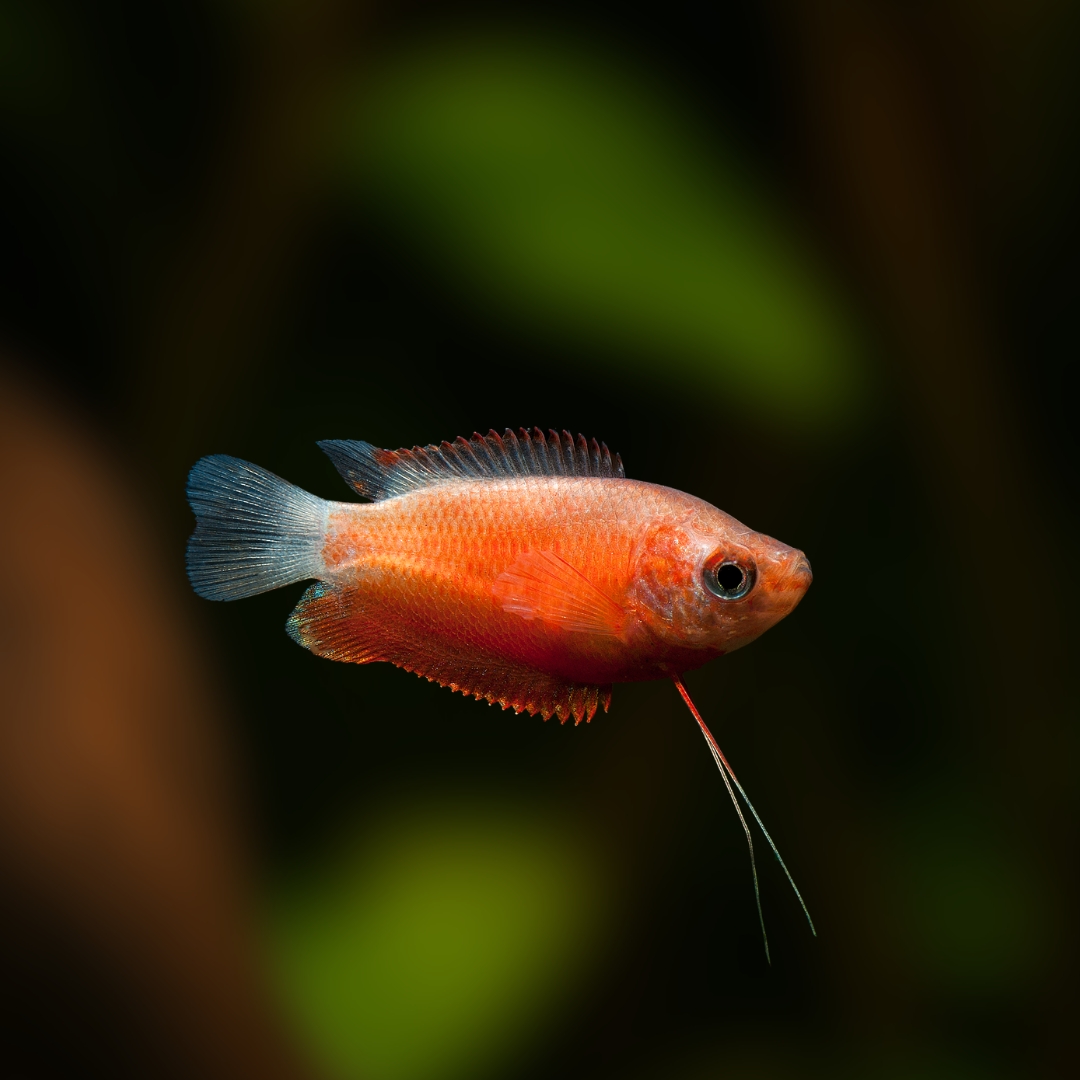
レッドグラミーは、日本の観賞魚店では主にハニーグラミーをもとに赤橙色を強めた小型改良品種として流通する、温和で飼いやすいグラミーです。水草の緑によく映える赤み、ゆったりとした泳ぎ、糸のように伸びた腹鰭で周囲を探る愛らしい仕草が魅力です。学術的にはハニーグラミーの現在有効な学名として Trichogaster chuna が広く用いられ、古い資料や流通現場では Colisa chuna の表記が残ることもあります。The Red Gourami covered here is treated as a red-orange ornamental strain derived mainly from the Honey Gourami, a small, peaceful gourami widely enjoyed in Japanese aquaria. Its warm coloration contrasts beautifully with green aquatic plants, and its gentle swimming and thread-like pelvic fins give it a charming, inquisitive appearance. Scientifically, the Honey Gourami is widely accepted as Trichogaster chuna, although the older name Colisa chuna is still sometimes seen in older literature and in the aquarium trade.
レッドグラミー、レッドハニーグラミー、レッドハニードワーフグラミー、サンセットグラミー系の流通名Red Gourami, Red Honey Gourami, Red Honey Dwarf Gourami, Sunset Gourami-type trade names
分類 / Family
スズキ目キノボリウオ亜目オスフロネムス科トリコガステル属Family Osphronemidae, genus Trichogaster, suborder Anabantoidei
英名 / English Name
Red Honey Gourami, Honey Gourami, Sunset Honey Gourami
分布 / Distribution
原種のハニーグラミーはインド、バングラデシュ周辺の池、沼、用水路、氾濫原、水草の多い緩やかな淡水域に分布します。レッドグラミーとして流通する個体は、主に観賞魚用に繁殖された改良品種です。The wild Honey Gourami occurs around India and Bangladesh, inhabiting slow freshwater habitats such as ponds, ditches, floodplains, and vegetated waters. The Red Gourami sold in the aquarium trade is mainly a captive-bred ornamental strain.
最大体長 / Max Size
一般的なハニー系レッドグラミーでは約4〜5cm前後。個体差や系統差によりやや大きくなる場合がありますが、ここでは小型のハニー系として扱います。Usually around 4-5 cm for the honey-type Red Gourami. Some variation may occur among captive strains, but this article treats it as the smaller honey-type form.
寿命 / Lifespan
目安は3〜5年ほど。安定した水温、穏やかな水流、適切な餌、導入時の隔離観察を行うことで、より長く健康を保ちやすくなります。Typically around 3-5 years. Stable temperature, gentle water flow, suitable diet, and quarantine after purchase help maintain long-term health.
飼育環境 / Aquarium Environment
水槽サイズ / Tank Size
ペアまたは少数飼育なら45cm規格水槽以上、混泳水槽では60cm規格水槽以上が扱いやすいです。落ち着いた性格のため小型水槽でも飼育できますが、水質の安定と逃げ場を考えると45〜60cm規格水槽が安心です。For a pair or small group, a standard 45 cm tank or larger is recommended, while a standard 60 cm tank or larger is easier for community setups. Although peaceful and small, the species benefits from stable water quality and ample cover.
水温 / Temperature
22〜28℃が目安です。日本の冬はヒーターで保温し、夏は30℃を超える状態が続かないよう冷却ファンや室温管理を行うと安心です。A range of 22-28°C is suitable. In Japan, use a heater in winter and manage summer heat with cooling fans or room temperature control to avoid prolonged overheating above 30°C.
水質 / Water Quality
弱酸性〜中性付近、pH 6.0〜7.5前後を目安にします。原種は比較的幅広い水質に適応しますが、急変には弱いため、水換えは少量ずつ定期的に行うと安定します。Slightly acidic to neutral water, roughly pH 6.0-7.5, is suitable. The species adapts to a fairly broad range of conditions, but sudden changes should be avoided through regular, moderate water changes.
レイアウト / Layout
水草を多めに植え、流木や浮草で陰影を作ると落ち着きます。特に浮草や水面近くの葉は、泡巣作りの足場や隠れ場所になります。フィルターの排水は弱め、強い水流が直接当たらないよう調整してください。Dense aquatic plants, driftwood, and floating plants create a calm environment. Floating plants and leaves near the surface can provide cover and a base for bubble-nest building. Keep filtration gentle and avoid strong direct currents.
注意点 / Precautions
ラビリンス器官で空気呼吸を行うため、水面へ上がれる空間を必ず確保します。飛び出し防止のフタは有効ですが、完全密閉は避け、冬は水面付近の空気が冷えすぎないようにします。導入直後は色が薄くなることがありますが、多くは輸送や環境変化による一時的なストレス反応です。Because it breathes atmospheric air with its labyrinth organ, always leave access to the surface. A lid helps prevent jumping, but avoid sealing the tank completely. In winter, keep the air above the water from becoming too cold. Newly arrived fish may look pale due to transport and acclimation stress.
餌と給餌 / Feeding
餌の種類 / Diet
小粒の人工飼料、フレークフード、顆粒フードを主食にできます。補助的に冷凍赤虫、ブラインシュリンプ、イトミミズ、ミジンコ類などを与えるとコンディションが上がりやすくなります。日本国内では「イサザアミ」などの小型甲殻類系フードも、嗜好性を高める補助餌として使えます。Small pellets, flakes, and granules can be used as staple foods. Frozen bloodworms, brine shrimp, tubifex, and daphnia-type foods can be offered as supplements. Small crustacean-based foods commonly sold in Japan may also improve appetite and condition.
給餌のポイント / Feeding Tips
一度に多く与えず、1〜2分で食べきれる量を1日1〜2回に分けます。赤橙色を保つには、カロテノイドを含む色揚げ用飼料を補助的に使うと効果が期待できます。ただし、色揚げだけに偏らず、植物質と動物質をバランスよくローテーションすることが大切です。Feed small amounts once or twice daily, only what the fish can consume within 1-2 minutes. Color-enhancing foods containing carotenoids may help maintain red-orange coloration, but they should be rotated with a balanced mix of plant and animal-based foods.
性格と混泳 / Temperament and Tank Mates
性格 / Temperament
非常に温和で、同程度の大きさの魚に対して攻撃的になることは少ないです。ただし、オス同士は繁殖期や狭い水槽内で軽い小競り合いをすることがあります。臆病な面もあるため、隠れ場所を多く用意すると本来の発色と落ち着いた行動を引き出しやすくなります。It is very peaceful and rarely aggressive toward similarly sized fish. Males may show mild territorial behavior during breeding or in cramped tanks. Because it can be shy, plenty of cover helps bring out natural coloration and calm behavior.
混泳の相性 / Compatibility
ネオンテトラ、ラスボラ、小型コリドラス、オトシンクルス、穏やかな小型カラシンなどと相性が良いです。ヒレをかじる魚、活発すぎる魚、大型魚との混泳は避けます。ミナミヌマエビや稚エビは捕食される可能性があるため、繁殖目的のエビ水槽では注意が必要です。Good tank mates include neon tetras, rasboras, small Corydoras, Otocinclus, and peaceful small characins. Avoid fin-nippers, overly boisterous fish, and larger predatory species. Small shrimp and shrimplets may be eaten, so caution is needed in shrimp breeding tanks.
病気と対策 / Diseases and Prevention
かかりやすい病気 / Common Diseases
白点病、尾ぐされ病、水カビ、輸送後の衰弱、消化不良などに注意します。ハニー系グラミーは一般に丈夫な魚として扱われますが、導入直後や水温変化が大きい時期には体調を崩しやすくなります。ドワーフグラミーで問題になるイリドウイルスについては、ハニーグラミー系で同じような高頻度の流行が一般的に確認されているわけではありませんが、完全に無関係と断定せず、新規導入魚は隔離観察するのが安全です。Watch for ich, fin rot, fungal infections, post-shipping weakness, and digestive problems. Honey-type gouramis are generally considered hardy, but new arrivals and fish exposed to temperature swings can become vulnerable. Dwarf Gourami Iridovirus is primarily associated with dwarf gouramis; it is not generally reported as a common outbreak problem in honey gouramis, but new fish should still be quarantined rather than assumed completely risk-free.
対策と予防 / Prevention
購入後は可能であれば2〜4週間ほど別水槽で様子を見ます。水温を安定させ、急なpH変化や過密飼育を避け、餌の食べ残しをこまめに取り除くことが基本です。治療が必要な場合は、症状を見極めて隔離し、白点病や細菌性疾患など原因に合った市販薬を使用します。If possible, observe new fish in a separate quarantine tank for 2-4 weeks. Keep temperature stable, avoid sudden pH shifts and overcrowding, and remove uneaten food. When treatment is needed, isolate the fish and choose medication appropriate for the suspected cause, such as ich or bacterial infection.
増やし方(繁殖) / Breeding
雌雄の判別 / Sexing
オスは背鰭や尻鰭がやや伸び、繁殖期には体色が濃くなり、喉元から腹部に黒っぽい婚姻色が出ることがあります。メスは体型がふっくらし、背鰭の先端が丸みを帯びる傾向があります。ただし、赤色改良品種では雌雄差が見えにくい個体も多く、複数匹から自然にペアを作らせる方法が現実的です。Males often have slightly more extended dorsal and anal fins and may darken around the throat and belly during breeding. Females tend to be fuller-bodied with a more rounded dorsal fin. In red ornamental strains, sexing can be difficult, so allowing a small group to form natural pairs is often practical.
繁殖形態 / Reproduction
泡巣を作るバブルネストビルダーです。オスが水面付近に泡巣を作り、メスとの産卵後に卵を泡巣へ集めて保護します。孵化までの間、オスは泡巣を守り、落ちた卵や仔魚を拾い戻す行動を見せます。It is a bubble-nest builder. The male constructs a nest at the surface, gathers eggs into it after spawning, and guards them. Until hatching and early development, the male may retrieve fallen eggs or larvae and return them to the nest.
繁殖のポイント / Breeding Tips
繁殖を狙う場合は、水温26〜28℃、弱い水流、浮草のある落ち着いた環境を用意します。産卵後はメスが追われるため、必要に応じて隔離します。稚魚が泳ぎ出したらオスも隔離し、初期飼料としてインフゾリアやゾウリムシを与えます。稚魚が成長したら、沸かしたてのブラインシュリンプへ徐々に切り替えると育成しやすくなります。For breeding, provide 26-28°C water, very gentle flow, and floating plants. After spawning, remove the female if the male chases her excessively. Once fry become free-swimming, remove the male and feed infusoria or paramecium-type microfoods first. As the fry grow, gradually transition to newly hatched brine shrimp.
雑学と豆知識 / Trivia and Fun Facts
1. 流通名「レッドグラミー」と大型になる赤いグラミー / 1. The trade name “Red Gourami” and larger red gourami types
日本のアクアリウム店で「レッドグラミー」といえば、一般的には小型で温和なハニードワーフグラミー系、つまりハニーグラミーをもとに赤橙色を強めた改良品種を指すことが多いです。成魚でも4〜5cm前後に収まりやすく、60cm規格水槽の水草レイアウトに赤いアクセントを添える魚として親しまれています。一方で、流通名としての「レッドグラミー」は少し幅があり、まれにシックリップグラミー系など、成長すると8〜10cmほどになる大型寄りの赤いグラミーが同じような名前で販売されることもあります。どちらも魅力的な魚ですが、必要な水槽サイズや存在感は変わってきます。購入時は、販売名だけで判断せず、「ハニー系か」「成魚サイズは何cm程度か」を確認すると、後から水槽計画がずれにくくなります。In Japanese aquarium shops, “Red Gourami” usually refers to a small, peaceful honey-dwarf type: a red-orange ornamental strain derived mainly from the Honey Gourami. It generally stays around 4-5 cm and is loved as a warm red accent fish for planted 60 cm aquaria. However, the trade name can be somewhat broad, and larger red gourami types, such as thick-lipped gourami strains that may reach about 8-10 cm, are sometimes sold under similar names. Both are attractive fish, but their required tank size and visual presence are different. When purchasing, it is best to check not only the trade name but also whether it is a honey-type fish and what adult size the seller expects.
2. 学名に残る「糸のような腹」 / 2. The “thread-like belly” hidden in the scientific name
Trichogaster という属名は、古代ギリシャ語の「毛」を意味する言葉と「腹」を意味する言葉に由来すると説明されます。これは、腹部から伸びる細長い腹鰭をよく表した名前です。この腹鰭はただの飾りではなく、濁った水や水草の間で周囲を確かめるための感覚器官として働きます。水槽内で仲間や水草をそっと触るような仕草は、かわいらしさだけでなく、彼らが原産地の複雑な水辺で生き抜くために発達させた探索行動の名残でもあります。The genus name Trichogaster is often explained as deriving from Greek roots meaning “hair” and “belly,” referring to the long, thread-like pelvic fins. These fins are not mere decoration; they function as sensory organs that help the fish investigate objects, plants, and tank mates in cluttered or turbid habitats. The gentle “touching” behavior seen in aquaria is both charming and a reminder of the species’ adaptation to complex vegetated waters.
3. ラビリンス器官が教えてくれる、止水域への適応 / 3. The labyrinth organ reveals adaptation to still waters
ハニーグラミーの原産地には、池、用水路、冠水した草地のように、水草が多く流れの弱い水域が含まれます。こうした場所では、季節や時間帯によって水中の酸素が少なくなることがあります。そこで役立つのが、ラビリンス器官と呼ばれる補助呼吸器官です。水面で空気を取り込めるため、酸素の少ない環境でも生き延びやすくなります。ただし、水槽ではこの能力に頼りすぎず、ろ過と換水で水質を保つことが大切です。The wild Honey Gourami inhabits vegetated, slow-moving waters such as ponds, ditches, and flooded fields. Such habitats can become low in dissolved oxygen depending on season and time of day. The labyrinth organ helps the fish breathe atmospheric air at the surface, giving it an advantage in oxygen-poor waters. In aquaria, however, this ability should not be used as an excuse for poor water quality; good filtration and regular water changes remain essential.
4. 泡巣作りは、静かな水面で始まる小さなドラマ / 4. Bubble nesting is a quiet drama at the water surface
状態の良いオスは、水面に泡を集めて小さな巣を作ります。浮草の根や水面に触れる葉は、その泡を支える足場になります。産卵後、オスは卵を泡巣へ集め、落ちた卵を拾い戻しながら守ります。繁殖を狙わない水槽でも、泡巣のような泡の集まりが見られたら、それは環境が落ち着き、オスが繁殖行動に入れるほどコンディションを上げているサインかもしれません。A well-conditioned male gathers bubbles at the surface to build a small nest. Floating plant roots and leaves touching the surface help support the bubbles. After spawning, the male gathers eggs into the nest and guards them, retrieving any that fall. Even in a tank not intended for breeding, a cluster of bubbles may indicate that the male is comfortable and in good condition.
5. 赤い体色は「環境」と「餌」で支える / 5. Red coloration is supported by both environment and diet
レッドグラミーの赤橙色は、輸送直後や導入直後には薄く見えることがあります。これは個体の質が悪いとすぐに判断するより、ストレスで一時的に色が抜けている可能性を考えるのが自然です。水草のある落ち着いた環境で数日から数週間飼い込み、カロテノイドを含む餌を適度に取り入れると、少しずつ本来の色が戻りやすくなります。派手さを急がず、魚が安心できる水槽を整えることが、いちばん自然な色揚げになります。The red-orange color may look pale immediately after shipping or introduction. Rather than assuming poor quality, it is often more reasonable to consider temporary stress-related fading. In a calm planted aquarium, with appropriate carotenoid-containing foods used in moderation, the fish often regains its color gradually. The most natural form of color enhancement is a tank where the fish feels secure.
まとめ / Conclusion
ハニー系のレッドグラミーは、小型で温和、丈夫で水草水槽にもよく合う、とても魅力的な熱帯魚です。赤橙色の体色ばかりに目が向きがちですが、ラビリンス器官による空気呼吸、糸状の腹鰭を使った探索、泡巣を作る繁殖行動など、観察するほど面白さが深まる魚でもあります。The honey-type Red Gourami is a small, peaceful, hardy fish that fits beautifully into planted aquaria. While its red-orange coloration is the first thing many aquarists notice, its air-breathing labyrinth organ, sensory pelvic fins, and bubble-nesting behavior make it increasingly fascinating the longer it is observed.
飼育のポイントは、強い水流を避けること、水草や浮草で落ち着ける環境を作ること、導入時にゆっくり水合わせと隔離観察を行うことです。販売名が似た大型系統と混同されることがあるため、購入時には「ハニー系で成魚4〜5cm前後か」を確認すると、後悔の少ない水槽作りにつながります。The key points are to avoid strong current, provide plants and floating cover, and acclimate and quarantine new fish carefully. Because similar trade names may sometimes be used for larger gourami strains, confirming that the fish is a honey-type form reaching around 4-5 cm will help prevent mismatches in aquarium planning.
Rimmer, A. E. et al. 2015. “Detection of dwarf gourami iridovirus (Infectious spleen and kidney necrosis virus) in populations of ornamental fish prior to and after importation into Australia, with the first evidence of infection in domestically farmed Platy (Xiphophorus maculatus).” Preventive Veterinary Medicine 122(1–2):181–194. 観賞魚流通におけるメガロサイトウイルス検出事例の確認に参照。ハニー系レッドグラミーの安全性を断定するためではなく、新規導入魚の隔離観察を推奨する補助根拠として使用。 https://doi.org/10.1016/j.prevetmed.2015.09.008



 アイのアクアグッズ案内海水魚の底砂の選び方|サンゴ砂・ライブサンドとおすすめ商品道具の特徴や使い方、選ぶときのポイントをアイが紹介します。記事はコチラ →
 アイのアクアグッズ案内コケを食べるコイの仲間に合わせる飼育用品|フライングフォックス・アルジイーター・ガラ道具の特徴や使い方、選ぶときのポイントをアイが紹介します。記事はコチラ →



コメント