

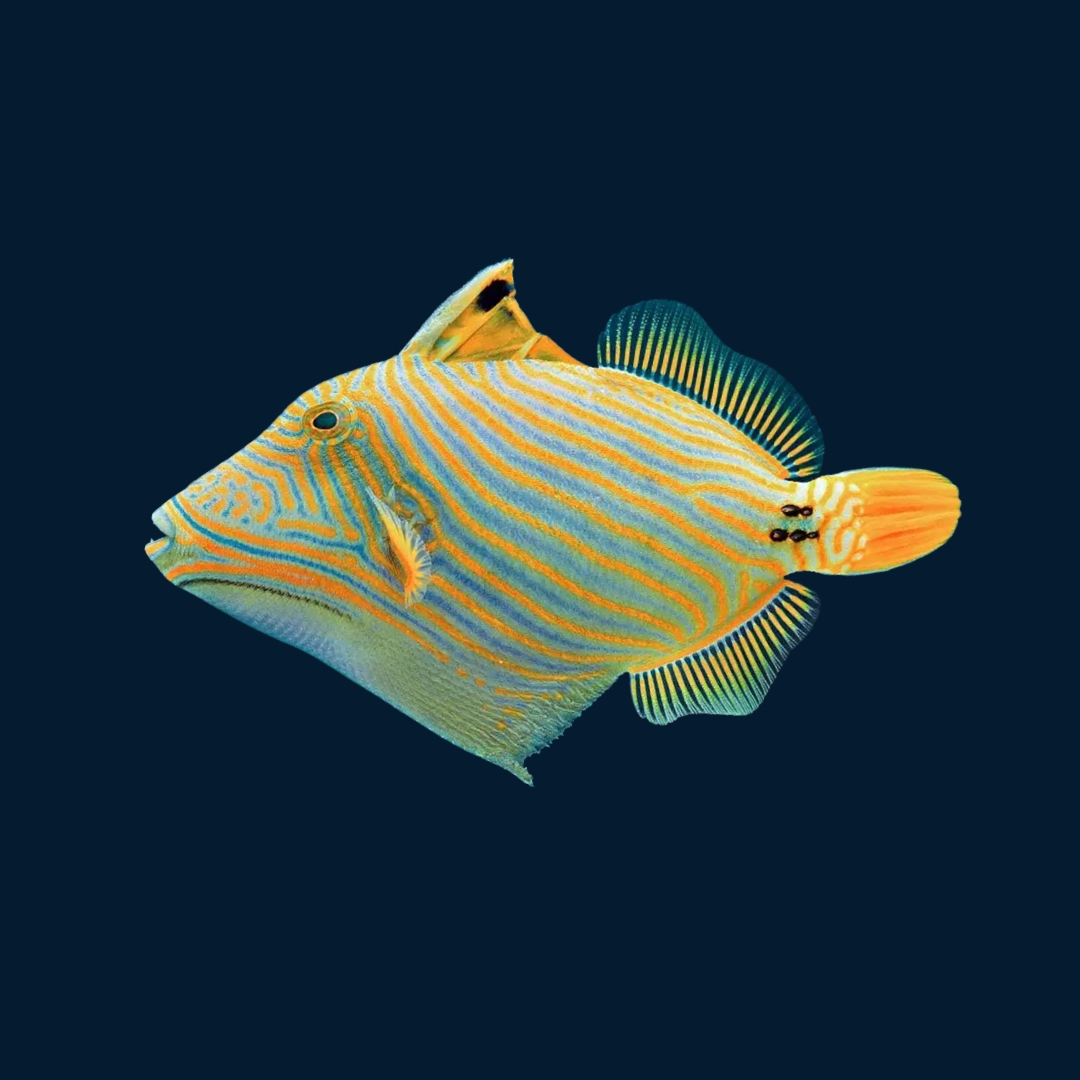
解説 / Description
クマドリは、暗緑色から暗褐色の体に橙色の波状ラインが走る、モンガラカワハギ科の大型海水魚です。日本名の「クマドリ」は、顔や体に入る力強い模様が歌舞伎の隈取を思わせることに由来するとされます。丈夫で餌付きもよい一方、成長すると縄張り意識と噛む力が非常に強くなるため、一般的な混泳水槽やサンゴ水槽には向きません。観賞魚としては、十分な水量、堅牢な設備、そして単独飼育を前提にじっくり飼い込む上級者向けの魚です。 The orange-lined triggerfish is a large marine triggerfish with bright orange, wavy lines over a dark green to dark brown body. Its Japanese name, Kumadori, is thought to come from the bold markings that evoke the kumadori makeup used in kabuki theater. It is hardy and usually accepts food well, but mature individuals can be highly territorial and powerful biters. For that reason, it is not suitable for ordinary community aquariums or reef tanks. In the aquarium hobby, it is best treated as an advanced species to be kept singly in a spacious, robustly equipped marine tank.
基本情報 / Basic Information
| 学名 / Scientific Name | Balistapus undulatus |
|---|---|
| 通称 / Common Name | クマドリ、オレンジラインド・トリガーフィッシュ、オレンジストライプ・トリガーフィッシュOrange-lined triggerfish, orangestripe triggerfish, striped triggerfish |
| 分類 / Family | フグ目 モンガラカワハギ科 クマドリ属Order Tetraodontiformes, family Balistidae, genus Balistapus |
| 英名 / English Name | Orange-lined Triggerfish |
| 分布 / Distribution | 紅海・東アフリカ沿岸からインド洋、西部・中部太平洋にかけて広く分布します。北限側では南日本の暖かい海域でも記録され、主にサンゴ礁、礁湖、礁斜面などの複雑な岩礁環境に生息します。Widely distributed from the Red Sea and East Africa across the Indian Ocean to the western and central Pacific. It is also recorded from warm waters of southern Japan and is mainly associated with coral reefs, lagoons, reef slopes, and structurally complex rocky habitats. |
| 最大体長 / Max Size | 約30cm。飼育下でも大きく育つため、幼魚のサイズだけで水槽を選ばないことが大切です。About 30 cm. Because it can grow large in captivity, tank planning should not be based only on juvenile size. |
| 寿命 / Lifespan | 正確な飼育下寿命は条件により幅がありますが、適切な環境では長期飼育が期待できる強健な海水魚です。大型化と攻撃性の変化を見越した長期計画が必要です。Exact captive lifespan varies with conditions, but it is a hardy marine fish that can be maintained long term when properly housed. Long-term planning is needed because of its growth and increasing territoriality. |
飼育環境 / Aquarium Environment
| 水槽サイズ / Tank Size | 最低でも120cm規格水槽、できれば150cm以上の大型海水水槽を推奨します。成魚は体格だけでなく行動範囲と縄張りも大きくなるため、水量に余裕を持たせるほど管理が安定します。At least a standard 120 cm tank is recommended, with 150 cm or larger being preferable. Adults need space not only because of body size but also because of their activity and territorial behavior. |
|---|---|
| 水温 / Temperature | 24〜27℃を目安に安定させます。急激な水温変化はストレスや白点病の誘因になりやすいため、季節を問わずヒーターとクーラーで管理します。 Maintain a stable temperature of about 24–27°C. Sudden temperature changes can cause stress and increase disease risk, so heaters and chillers should be used as needed throughout the year. |
| 水質 / Water Quality | 一般的な海水魚飼育の範囲、比重1.020〜1.025前後、pH8.0〜8.4前後を安定させます。よく食べよく排泄するため、強力な濾過、プロテインスキマー、定期的な換水が重要です。Keep standard marine aquarium parameters stable, with specific gravity around 1.020–1.025 and pH around 8.0–8.4. Because this fish eats heavily and produces a large waste load, strong filtration, a protein skimmer, and regular water changes are important. |
| レイアウト / Layout | ライブロックや人工岩で隠れ家を作りますが、岩組みは崩されないようにしっかり固定します。夜間や驚いたときに岩の隙間へ体を差し込み、第1背鰭の棘を立てて体を固定する習性があるため、安心して入れる穴や陰を用意すると落ち着きやすくなります。Provide caves and shelters with live rock or artificial rock, but secure the structure firmly. When resting or alarmed, triggerfish can wedge themselves into crevices and lock the first dorsal spine upright, so stable hiding places help them settle. |
| 注意点 / Precautions | ヒーター、温度計、コード、ポンプ周辺部品などを噛むことがあるため、機材はサンプ内に逃がす、保護カバーを付ける、露出コードを減らすなどの対策が必要です。アクリル面に傷を付ける可能性もあるため、設備は「噛まれる前提」で組むと安全です。It may bite heaters, thermometers, cords, pump parts, and other equipment. Place equipment in a sump when possible, use protective covers, and minimize exposed cords. It may also scratch acrylic panels, so equipment should be planned with its biting behavior in mind. |
餌と給餌 / Feeding
| 餌の種類 / Diet | 海水魚用の大型粒人工飼料を主食に、アサリ、エビ、イカ、小魚、クリルなどを補助的に与えます。野生では甲殻類、貝類、ウニ類、海綿、ホヤ、藻類など幅広い底生生物を食べる雑食性で、飼育下では動物質の餌をよく好みます。Use large marine pellets as a staple and supplement with clam, shrimp, squid, small fish, and krill. In the wild it is an omnivore that feeds on a wide variety of benthic organisms, including crustaceans, mollusks, sea urchins, sponges, tunicates, and algae, while captive individuals often favor meaty foods. |
|---|---|
| 給餌のポイント / Feeding Tips | 食欲が強いため与えすぎに注意し、食べ残しは早めに取り除きます。モンガラカワハギ類は硬い餌を噛み砕くことに適応しているため、柔らかい餌だけに偏らせず、殻付きのアサリやエビなどを定期的に使い、歯の摩耗を促します。手から直接与えると噛まれる危険があるため、長めのピンセットを使うと安全です。Avoid overfeeding and remove leftovers promptly. Triggerfish are adapted to crush hard food, so do not rely only on soft foods. Periodically offer hard-shelled items such as clams or shrimp to encourage natural tooth wear. Use long feeding tongs rather than fingers, as bites can be serious. |
性格と混泳 / Temperament and Tank Mates
| 性格 / Temperament | 単独性が強く、成長とともに縄張り意識が目立ちやすい魚です。人に慣れやすく賢い面もありますが、同時にレイアウトや機材を動かしたり、侵入者を強く攻撃したりすることがあります。A strongly solitary and territorial fish, especially as it matures. It can become responsive and intelligent toward its keeper, but may also move decor, bite equipment, and aggressively confront intruders. |
|---|---|
| 混泳の相性 / Compatibility | 基本は単独飼育です。小型魚、同種、体の弱い魚、動きの遅い魚、エビ・カニ・貝類は混泳相手に向きません。サンゴや無脊椎動物も噛まれる可能性が高く、リーフタンクには不向きです。超大型水槽で大型ヤッコ類、ハタ類、ウツボ類などとの混泳例はありますが、個体差と事故のリスクが常に残ります。Single-specimen keeping is the safest approach. Small fish, conspecifics, delicate fish, slow-moving fish, shrimp, crabs, and snails are unsuitable tank mates. Corals and invertebrates are also likely to be bitten, making this species unsuitable for reef tanks. Some aquarists attempt it with large angelfish, groupers, or morays in very large systems, but individual variation and risk remain high. |
病気と対策 / Diseases and Prevention
| かかりやすい病気 / Common Diseases | 丈夫な部類ですが、輸入直後、急な水質変化、過密、隠れ家不足などでストレスがかかると、海産白点病や外傷由来の細菌感染が問題になることがあります。It is generally hardy, but newly imported individuals or fish exposed to sudden water-quality changes, crowding, or insufficient shelter may develop marine white spot disease or secondary bacterial infections from injuries. |
|---|---|
| 対策と予防 / Prevention | 導入前の隔離観察、安定した比重と水温、強い濾過、十分な酸素供給、早めの残餌除去が基本です。外傷を防ぐため、岩組みは鋭すぎる角を避け、崩れないように固定します。薬浴が必要な場合は、海水魚用薬剤の説明に従い、無脊椎動物や濾過バクテリアへの影響にも注意します。Quarantine and observation before introduction, stable salinity and temperature, strong filtration, adequate aeration, and prompt removal of leftovers are the basics. To reduce injuries, avoid excessively sharp rock edges and secure all rockwork. If medication is needed, follow marine-fish medication instructions carefully and consider effects on invertebrates and biological filtration. |
増やし方(繁殖) / Breeding
| 雌雄の判別 / Sexing | 成熟したオスは大型化しやすく、吻部の縞模様が薄れたり消失したりする傾向が知られています。メスや幼魚では吻部の縞が残り、吻部の形もやや凹む傾向があります。ただし、個体差や成長段階の影響があるため、販売個体の雌雄判別は慎重に見る必要があります。Mature males tend to become larger and may lose the stripes on the snout, while females and juveniles usually retain snout stripes and may show a more concave snout profile. However, individual variation and age make sexing retail specimens difficult. |
|---|---|
| 繁殖形態 / Reproduction | 卵生です。野生下では基質上に産卵し、卵を保護する行動が知られています。Oviparous. In the wild, eggs are laid on a substrate and guarded. |
| 繁殖のポイント / Breeding Tips | 家庭水槽での繁殖は現実的ではありません。広い縄張り、産卵基質、親魚の攻撃性、仔魚期の餌と水質管理など課題が多く、観賞魚として流通する個体は基本的に野生採集個体と考えられます。Breeding in home aquariums is not considered practical. Large territories, suitable spawning substrate, parental aggression, larval feeding, and larval water-quality management present major challenges. Specimens in the aquarium trade are generally considered wild-caught. |
雑学と豆知識 / Trivia and Fun Facts
| 1. 「クマドリ」という名が映す日本的な見立て / 1. A Japanese way of seeing pattern | クマドリという和名は、単なる色名ではなく、日本の文化的な見立てがそのまま生物名になった好例です。歌舞伎の隈取は、顔の筋肉や感情の力強さを線で誇張する化粧法です。本種の頭部から体へ流れる橙色の線は、まさにその「線が表情をつくる」感覚と重なります。水槽の中で見ると派手な模様に目を奪われますが、その背景には、日本語の生物名がしばしば形や印象を詩的にすくい取ってきた歴史があります。The Japanese name Kumadori is not merely a color description; it is a cultural comparison turned into a fish name. Kumadori makeup in kabuki exaggerates expression and muscular tension through bold lines. The orange lines flowing from the head across the body of this fish echo that visual language. In the aquarium, the pattern is striking, but the name also reflects the poetic way Japanese common names often capture form and impression. |
|---|---|
| 2. 「トリガーフィッシュ」の引き金 / 2. The trigger in triggerfish | モンガラカワハギ類の英名「トリガーフィッシュ」は、第1背鰭の棘を立て、別の棘でロックする仕組みに由来します。岩の隙間に入り込んでこの棘を立てると、外敵は簡単に引きずり出せません。水槽でも、夜間に岩陰へ体を差し込み、まるで自分専用の寝室に鍵をかけるように休むことがあります。この仕組みを理解すると、レイアウトに安全な隠れ家が必要な理由も自然に見えてきます。The English name triggerfish comes from the locking mechanism of the first dorsal spine. When the fish wedges itself into a crevice and raises this spine, predators cannot easily pull it out. In aquariums, it may rest at night by inserting itself into rockwork, almost as if locking the door to its own bedroom. Understanding this behavior makes the need for safe shelters much clearer. |
| 3. サンゴ礁での役割は「ただの乱暴者」ではない / 3. More than a rough character on the reef | 飼育下では攻撃性ばかりが目立ちますが、自然界のクマドリはサンゴ礁のバランスに関わる重要な捕食者として研究されています。強い歯でウニなどの硬い底生動物を食べることで、特定の生物が増えすぎることを抑える働きが示されています。つまり、水槽では扱いに注意が必要な性格も、野生のサンゴ礁では生態系を動かす力の一部です。観賞魚として迎えるときは、その美しさだけでなく、本来の生態的な強さにも敬意を払いたい魚です。In captivity, its aggression is often the first thing noticed, but in nature the orange-lined triggerfish has been studied as an important predator in coral reef balance. By crushing hard benthic animals such as sea urchins, it can help prevent certain organisms from becoming overly dominant. The same strength that requires caution in aquariums is part of what gives the species ecological influence on reefs. |
| 4. 学名の読み解き / 4. Reading the scientific name | 本種の現在の学名はBalistapus undulatusです。種小名undulatusは「波打った」という意味を持ち、体を走る波状の橙色ラインをよく表しています。属名Balistapusについては、古い分類史を背景に持つ名前で、モンガラカワハギ類の特徴的な腹鰭の退化とも関係して説明されます。見た目の模様と体の構造、その両方が名前の中に残っている点が、本種の面白いところです。The current scientific name is Balistapus undulatus. The specific name undulatus means wavy and neatly describes the orange wavy lines across the body. The genus name Balistapus has a taxonomic history connected with triggerfish morphology, including the reduction of the pelvic fins. In this way, both pattern and body structure are reflected in the name. |
| 5. クマドリカエルアンコウとの混同に注意 / 5. Do not confuse it with the warty frogfish | 同じ「クマドリ」を冠する生き物に、クマドリカエルアンコウがいます。こちらはアンコウ目の魚で、擬餌状体を振って獲物を誘う待ち伏せ型の捕食者です。以前は別の標準和名で呼ばれていましたが、社会的配慮を背景に現在の名称へ改められました。クマドリとクマドリカエルアンコウは、名前の印象こそ似ていますが、分類も飼育方法もまったく異なります。図鑑では、このような「名前の近さ」と「生き物としての遠さ」を分けて理解することが大切です。Another animal with Kumadori in its Japanese name is the warty frogfish, Kumadori-kaeru-ankō. It belongs to a very different group and is an ambush predator that uses a lure-like appendage to attract prey. Its current Japanese name also reflects a historical change made for social sensitivity. Although the names sound related, the orange-lined triggerfish and the warty frogfish differ greatly in taxonomy and husbandry. |
まとめ / Conclusion
クマドリは、橙色の波状模様と堂々とした体つきが魅力の大型モンガラカワハギです。丈夫で餌付きやすい反面、強い歯、機材を噛む力、成長に伴う縄張り意識を持つため、気軽な混泳魚としては扱えません。 The orange-lined triggerfish is a large and impressive triggerfish admired for its orange wavy pattern and powerful body. It is hardy and usually easy to feed, but its strong teeth, ability to damage equipment, and increasing territoriality mean it should not be treated as an easy community fish.
飼育するなら、120cm規格水槽以上を目安に、強い濾過、保護された機材、安定した岩組み、硬い餌を取り入れた給餌管理を整え、基本的には単独でじっくり飼い込みます。美しさだけでなく、本来の生態や力強さを理解して向き合うことで、この魚の存在感を安全に楽しむことができます。 To keep this species well, prepare at least a standard 120 cm marine aquarium, strong filtration, protected equipment, secure rockwork, and a diet that includes hard foods for tooth wear. It is best kept singly and patiently. By understanding not only its beauty but also its natural strength and ecology, aquarists can enjoy this remarkable fish more safely.

気になる道具や飼い方を見つけてみませんか?
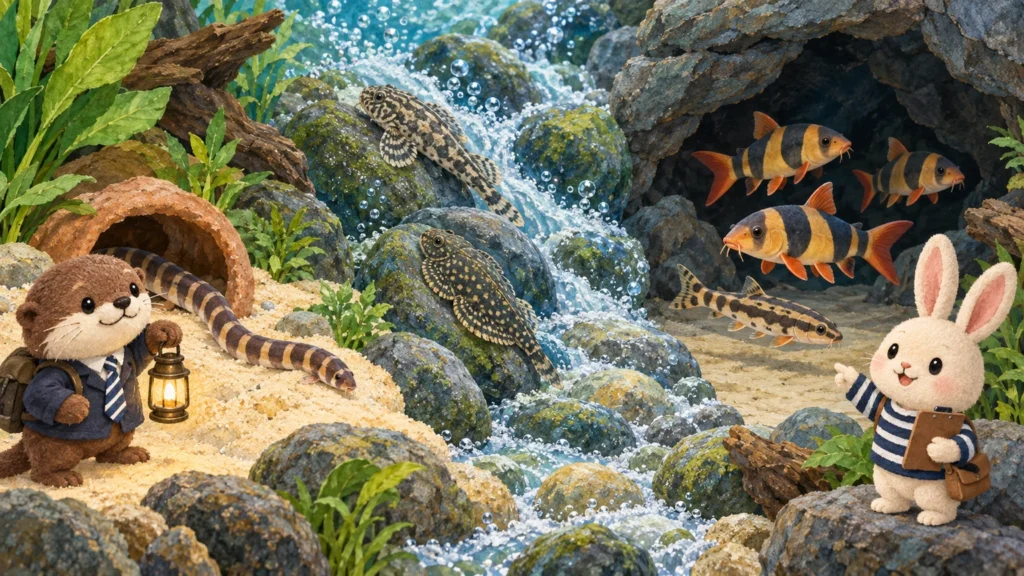 アイのアクアグッズ案内ローチの仲間に合わせる飼育用品|クーリー・流水性・ボーシャの水槽と底砂道具の特徴や使い方、選ぶときのポイントをアイが紹介します。記事はコチラ →
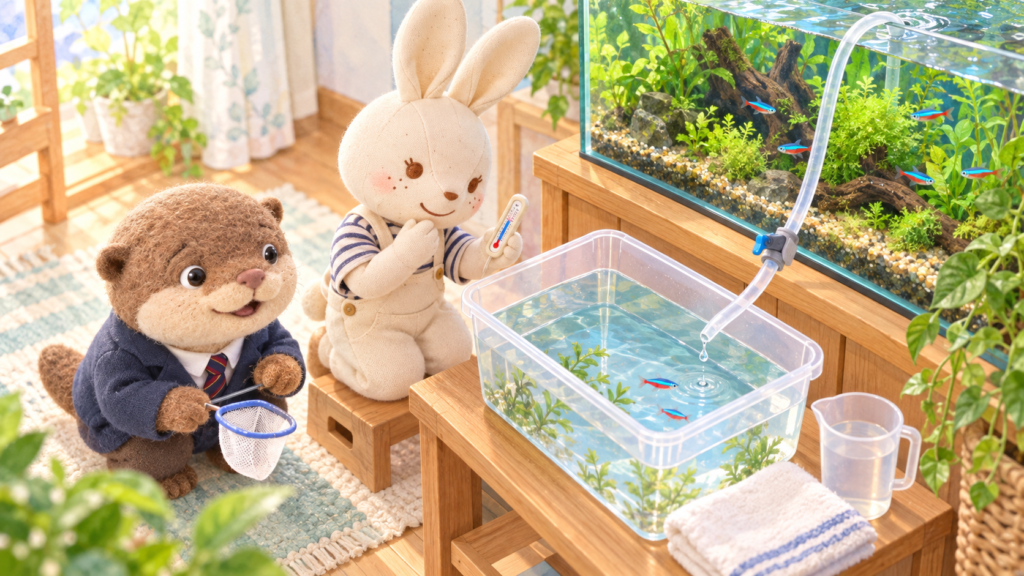 アイのアクアグッズ案内水合わせの道具とやり方|魚を迎える前にそろえたい容器・点滴キット・ネット買ってきた魚はすぐ水槽に入れていい? 水温合わせと水合わせの違いから、透明ケース・点滴キット・ネットの選び方、時間をかけすぎない注意点まで、アイとコタロウが紹介します。記事はコチラ →
さまざまな飼育テーマをご紹介。リンク先の記事には広告・商品紹介が含まれます。
案内・紹介記事一覧へ →参考文献・参照資料
本記事では、店舗・通販サイト、個人ブログ、一般的なまとめサイトを参考文献から除外し、分類、分布、生息環境、飼育条件、繁殖、病気や注意点の確認に使いやすい学術データベース、公的・準公的データベース、査読論文、専門書を中心に選定しています。
-
Fricke, R., Eschmeyer, W. N. & Van der Laan, R. eds. Eschmeyer’s Catalog of Fishes. California Academy of Sciences.
学名、原記載、シノニム、分類上の位置づけを確認するための基礎資料。クマドリを Balistapus undulatus として扱う際の分類・命名情報の裏取りに使用。
Eschmeyer’s Catalog of Fishes -
Froese, R. & Pauly, D. eds. FishBase: Balistapus undulatus.
最大体長、分布、水深、生息環境、食性、水温帯など、図鑑記事の基本情報と飼育環境の目安を確認するための主要データベース。
FishBase species summary -
World Register of Marine Species. Balistapus undulatus (M. Park, 1797).
海産生物としての受容名、分類階層、シノニム確認に使用。分類表記の揺れを避けるための補助資料。
WoRMS taxon details -
Matsuura, K. 2022. Balistapus undulatus. The IUCN Red List of Threatened Species.
保全状況、自然分布、野外での生息環境を確認する資料。記事内で分布や野生下の位置づけを説明する際の裏取りに使用。
IUCN Red List assessment -
Carpenter, K. E. & Niem, V. H. eds. 2001. FAO Species Identification Guide for Fishery Purposes: The Living Marine Resources of the Western Central Pacific, Vol. 6. FAO.
モンガラカワハギ科魚類の形態、分布、識別、海域情報を確認するための公的な同定資料。分類・分布・形態の記述を支える参考文献。
FAO species identification guide -
Matsuura, K. 1976. Sexual dimorphism in a triggerfish, Balistapus undulatus. Japanese Journal of Ichthyology.
成熟個体の雌雄差、吻部や斑紋の違いに関する記述を支える文献。記事内の雌雄判別に関する根拠として選定。 -
Bean, K., Jones, G. P. & Caley, M. J. 2002. Relationships among distribution, abundance and microhabitat specialisation in a guild of coral reef triggerfish (family Balistidae). Marine Ecology Progress Series.
サンゴ礁内でのモンガラカワハギ類の分布、個体数、微小生息環境の関係を扱う論文。レイアウトや隠れ家の重要性、生息環境の説明を支える資料。
Marine Ecology Progress Series abstract -
Hiatt, R. W. & Strasburg, D. W. 1960. Ecological relationships of the fish fauna on coral reefs of the Marshall Islands. Ecological Monographs.
サンゴ礁魚類の食性と生態的関係を扱う古典的研究。底生無脊椎動物や藻類を含む食性の幅を説明する際の参考資料。
DOI: 10.2307/1942181 -
McClanahan, T. R. 2000. Recovery of a coral reef keystone predator, Balistapus undulatus, in East African marine parks. Biological Conservation.
本種がサンゴ礁でナガウニ類を捕食し、サンゴ礁生態系のバランスに関わることを説明するための中心的な査読論文。
DOI: 10.1016/S0006-3207(99)00176-2 -
Lobel, P. S. & Johannes, R. E. 1980. Nesting, eggs and larvae of triggerfishes (Balistidae). Environmental Biology of Fishes.
モンガラカワハギ科における産卵、卵、仔魚、親による保護行動を確認するための繁殖関連文献。クマドリ単独ではなく科レベルの補強資料として使用。
DOI: 10.1007/BF00005186 -
Colorni, A. 1987. Biology of Cryptocaryon irritans and strategies for its control. Aquaculture.
海産白点病の原因生物である Cryptocaryon irritans の生活環と対策を確認するための基礎論文。病気と予防の記述を支える資料。
DOI: 10.1016/0044-8486(87)90136-X -
Noga, E. J. 2010. Fish Disease: Diagnosis and Treatment, 2nd ed. Wiley-Blackwell.
海水魚を含む観賞魚・水産魚の疾病診断と治療に関する専門書。白点病、ストレス、水質悪化と疾病発生の関連を説明するための補助資料。
Publisher page
注記:飼育水槽サイズや混泳可否は、野外での最大体長、縄張り性、食性、顎歯の発達、サンゴ礁での行動に関する資料を組み合わせ、家庭水槽で安全側に倒して整理しています。販売ページ由来の数値は採用していません。




コメント