

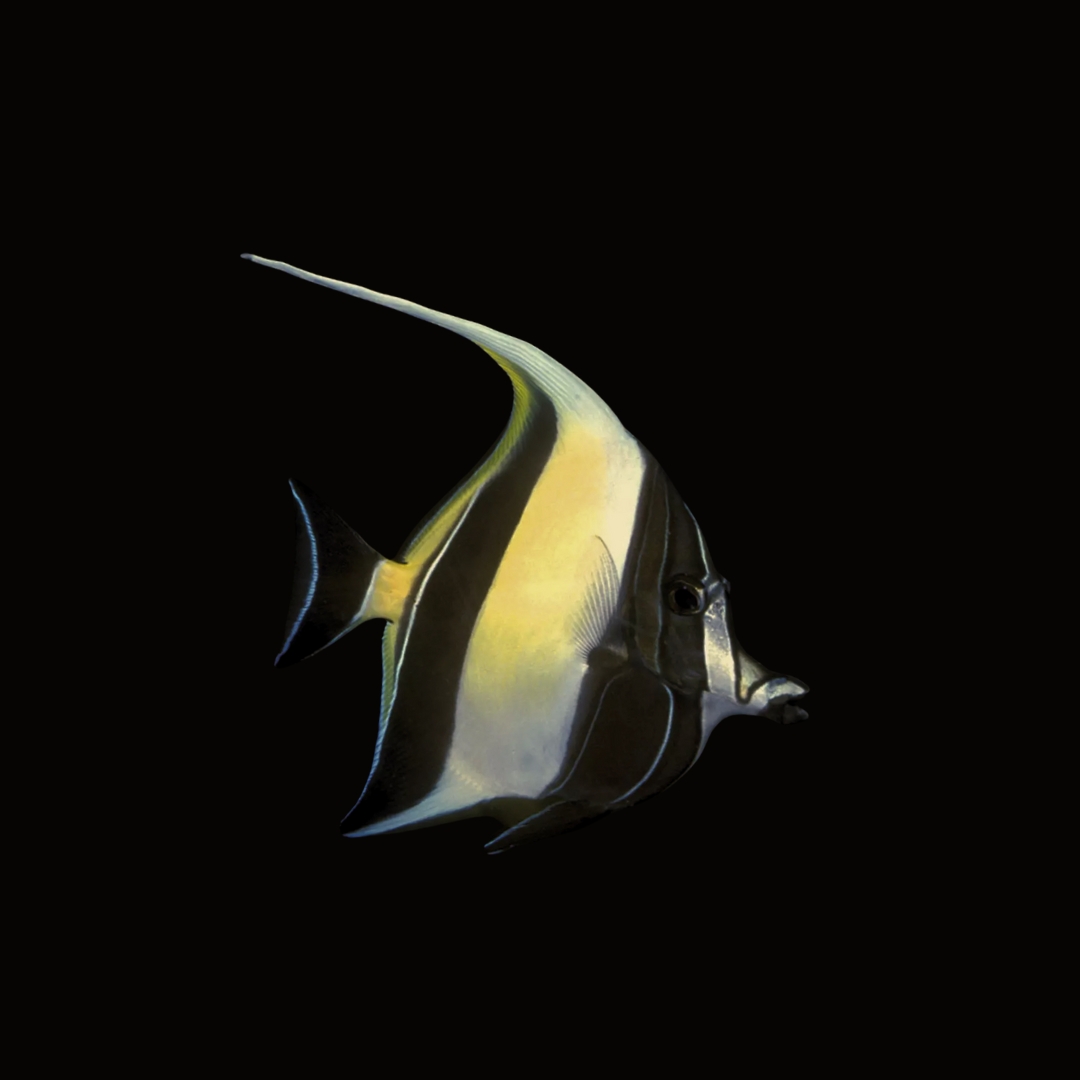
解説 / Description
ツノダシは、白・黒・黄色の帯模様と、旗のように長く伸びる背びれが印象的な海水魚です。サンゴ礁を優雅に泳ぐ姿から観賞魚として高い人気がありますが、人工飼料への餌付き、水質変化への弱さ、広い遊泳スペースの要求などから、長期飼育は上級者向けです。映画などで知名度が高い魚でもありますが、見た目の親しみやすさとは反対に、安定した大型海水水槽と頻回給餌、慎重な導入管理が求められます。 The Moorish idol is a striking marine fish known for its black, white, and yellow bands and its banner-like elongated dorsal fin. It is highly admired in the aquarium hobby, but long-term care is considered advanced because the species can be difficult to acclimate to prepared foods, is sensitive to unstable water quality, and requires generous swimming space. Although familiar from popular culture, it should be kept only in a mature, stable marine aquarium with careful feeding and introduction procedures.
基本情報 / Basic Information
| 学名 / Scientific Name | Zanclus cornutus |
|---|---|
| 通称 / Common Name | ツノダシ、ハタムチ(沖縄での呼称として知られる)Moorish idol |
| 分類 / Family | 条鰭綱・ニザダイ目またはスズキ目として扱われることがあるグループ・ツノダシ科・ツノダシ属。現生のツノダシ科を代表する単型的な魚として扱われます。Actinopterygii; often placed in Acanthuriformes or, in older treatments, Perciformes; family Zanclidae; genus Zanclus. It is generally treated as the sole living representative of Zanclidae. |
| 英名 / English Name | Moorish idol |
| 分布 / Distribution | インド太平洋を中心に広く分布し、東太平洋の一部にも知られます。日本では南日本、琉球列島、小笠原諸島などの暖かい海域で見られ、本州沿岸では黒潮に乗って来遊する個体が確認されることがあります。Widely distributed across the Indo-Pacific and also known from parts of the eastern Pacific. In Japan it is associated with warm waters such as southern Japan, the Ryukyu Islands, and the Ogasawara Islands, with occasional records along temperate coasts influenced by the Kuroshio Current. |
| 最大体長 / Max Size | 一般的な資料では全長約23〜24cm前後。飼育下ではこれより小さいサイズで流通することが多いです。Usually listed at around 23–24 cm total length. Aquarium specimens are often traded at smaller sizes. |
| 寿命 / Lifespan | 明確な平均寿命は資料により差があります。適切に維持された大型水槽で長期飼育例はありますが、一般には導入初期の失敗が多い魚です。A precise average lifespan is not consistently stated across sources. Long-term aquarium cases exist in well-maintained large systems, but early losses after introduction are common. |
飼育環境 / Aquarium Environment
| 水槽サイズ / Tank Size | 最低でも90cm規格水槽以上が目安ですが、長期飼育を考えるなら120cm規格水槽、120cmワイド水槽、またはそれ以上の水量を持つオーバーフロー水槽が望ましいです。よく泳ぎ、採餌行動の範囲も広いため、単に水量だけでなく横方向の遊泳距離を確保してください。A 90 cm standard tank should be considered the bare minimum, while a 120 cm standard tank, a 120 cm wide tank, or a larger overflow system is strongly preferred for long-term care. This species swims actively and browses over a wide area, so horizontal swimming space is as important as water volume. |
|---|---|
| 水温 / Temperature | 24〜27℃前後を安定して維持します。急な温度変化はストレスや病気の引き金になるため、ヒーターとクーラーを併用して季節変動を抑えると安心です。 Maintain a stable temperature of about 24–27°C. Sudden changes can trigger stress and disease, so using both a heater and a chiller is recommended where seasonal fluctuations are significant. |
| 水質 / Water Quality | 比重1.023〜1.026、pH8.1〜8.4前後を目安に、アンモニアと亜硝酸は常に0を維持します。硝酸塩は低いほど望ましく、急激な変動を避けることが重要です。強力なろ過、プロテインスキマー、十分なライブロック、定期的な換水で安定した環境を作ります。Aim for a specific gravity of 1.023–1.026 and a pH around 8.1–8.4, with ammonia and nitrite consistently at zero. Nitrate should be kept as low as practical, and sudden parameter swings should be avoided. Strong filtration, a protein skimmer, sufficient live rock, and regular water changes help maintain stability. |
| レイアウト / Layout | ライブロックで隠れ家とついばむ場所を作りつつ、前面や中央には広い遊泳スペースを残します。吻を使って岩肌を探るため、鋭すぎる飾りや不安定な岩組みは避け、夜間に落ち着ける陰も用意します。Use live rock to provide shelter and grazing surfaces, while leaving open swimming space at the front and center. Because the fish probes rock surfaces with its snout, avoid unstable rockwork and overly sharp decorations, and provide shaded resting areas for nighttime. |
| 注意点 / Precautions | 入荷直後の個体は痩せ、擦れ、寄生虫、拒食が見られることがあります。購入時は、入荷から数日以上経過し、冷凍餌や人工飼料を実際に食べている個体を選ぶのが安全です。初心者向けの海水魚ではなく、成熟した水槽と観察時間を確保できる方向けです。Recently imported specimens may be thin, abraded, parasitized, or reluctant to feed. It is safer to choose an individual that has been held for several days or longer and is demonstrably eating frozen or prepared foods. This is not a beginner marine fish; it is best suited to aquarists with a mature system and time for close observation. |
餌と給餌 / Feeding
| 餌の種類 / Diet | 野生下では岩肌の小型付着動物などをついばむため、飼育下では海綿成分を含むヤッコ向け人工飼料、冷凍イサザアミ、ブラインシュリンプ、刻んだアサリやムール貝、海苔、植物質を含むフードなどを組み合わせます。単一の餌だけに頼らず、動物質と植物質を混ぜた多様なメニューにします。In the wild it browses on small encrusting organisms on reef surfaces. In aquaria, offer a varied diet that may include sponge-based angelfish foods, frozen mysids, brine shrimp, chopped clam or mussel, nori, and foods containing vegetable matter. Do not rely on a single food item; provide a balanced mixture of animal and plant-based foods. |
|---|---|
| 給餌のポイント / Feeding Tips | 少量を1日3〜5回に分け、痩せを防ぎます。導入初期は競争に弱いことがあるため、餌を独占するハギ類や大型ヤッコ類がいる水槽では特に注意してください。食べ始めた後も、腹部のへこみ、背肉の落ち、糞の状態を観察し、必要に応じて餌の粒サイズや種類を調整します。Feed small portions three to five times per day to prevent weight loss. Newly introduced individuals may be poor competitors, so take special care in tanks with tangs, large angelfish, or other aggressive feeders. Even after the fish begins eating, monitor the belly, body condition, and feces, and adjust food size and type as needed. |
性格と混泳 / Temperament and Tank Mates
| 性格 / Temperament | 基本的には極端に攻撃的な魚ではありませんが、神経質でストレスに弱い面があります。環境に慣れるまでは隠れがちになったり、餌を食べなかったりすることがあります。同種間ではサイズ差や水槽の狭さによって争いが起きる可能性があります。It is not usually considered highly aggressive, but it can be nervous and stress-sensitive. Newly introduced individuals may hide or refuse food until settled. Aggression between conspecifics can occur, especially when there is a size difference or insufficient space. |
|---|---|
| 混泳の相性 / Compatibility | 温和で餌を奪いすぎない魚との混泳が向いています。背びれをかじる魚、気の強いスズメダイ類、攻撃的なハギ類、大型ヤッコ類、フグ類などは避けるか慎重に検討します。サンゴ水槽では、水質維持の面では相性が良い一方、LPSや一部のポリプをつつく可能性があるため、完全なリーフセーフとは言い切れません。Best tank mates are peaceful species that do not outcompete it at feeding time. Avoid or carefully evaluate fin-nipping fish, aggressive damselfish, assertive tangs, large angelfish, and puffers. Reef tanks can provide excellent water quality, but the species may nip some LPS corals or polyps, so it should not be regarded as fully reef-safe. |
病気と対策 / Diseases and Prevention
| かかりやすい病気 / Common Diseases | 白点病、ウーディニウム病、吸虫、外傷からの二次感染、輸送ストレスに伴う拒食や衰弱に注意します。体表やヒレの変化が分かりやすい一方、痩せは進行してから気づくこともあるため、毎日の観察が大切です。Watch for marine ich, marine velvet, flukes, secondary infections from abrasions, and refusal to feed due to shipping stress. Changes on the body and fins may be visible, but weight loss can be missed until it progresses, so daily observation is important. |
|---|---|
| 対策と予防 / Prevention | 本水槽へ入れる前に隔離水槽で観察し、食欲、呼吸、体表、糞を確認します。薬浴や淡水浴は有効な場合がありますが、濃度や時間を誤ると負担が大きいため、経験者や専門店の指示に従って慎重に行います。予防の基本は、安定した水質、過密を避けた飼育、十分な栄養、輸送直後の無理な混泳を避けることです。Quarantine before introduction and monitor appetite, respiration, body surface, and feces. Medicated baths or freshwater dips may be useful in some situations, but incorrect dosage or duration can be harmful, so they should be performed carefully with guidance from experienced keepers or specialists. The foundation of prevention is stable water quality, low stocking stress, good nutrition, and avoiding difficult tank-mate introductions immediately after shipping. |
増やし方(繁殖) / Breeding
| 雌雄の判別 / Sexing | 外見だけでの確実な雌雄判別は難しいとされます。成魚では目の前方に小さな骨質突起が見られますが、これだけで雌雄を断定することはできません。Reliable sexing by appearance is considered difficult. Adults may show small bony projections in front of the eyes, but these alone do not provide a dependable sexing method. |
|---|---|
| 繁殖形態 / Reproduction | 水中に卵と精子を放出する浮性卵タイプの産卵を行う海水魚です。幼生は長い浮遊期間を持つとされ、この性質が広い分布と関係していると考えられています。It is a pelagic spawner that releases eggs and sperm into the water column. The larvae are associated with a long pelagic stage, which is thought to contribute to the species’ broad distribution. |
| 繁殖のポイント / Breeding Tips | 家庭水槽での安定した繁殖・育成は非常に難しい魚です。仮に産卵が見られても、微小な浮遊仔魚に適した餌、水流、捕食回避、変態までの管理が大きな課題になります。現時点では、一般的なアクアリストが繁殖を目標にする魚というより、長期健康維持を第一目標にすべき種類です。Consistent breeding and rearing in home aquaria is extremely difficult. Even if spawning occurs, feeding tiny pelagic larvae, managing water movement, preventing predation, and raising them through metamorphosis are major challenges. For most aquarists, long-term health and stability should be the primary goal rather than breeding. |
雑学と豆知識 / Trivia and Fun Facts
| 1. ハタタテダイに似ているが別グループ / 1. Similar to bannerfish, but not the same | ツノダシは、白黒の帯模様と長い背びれのため、ハタタテダイの仲間と混同されることがあります。しかし、ツノダシはツノダシ科、ハタタテダイはチョウチョウウオ科で、分類上は別の魚です。見分ける時は、ツノダシの長く突き出た吻、黒っぽい尾びれ、目の前方の骨質突起、そしてニザダイ類に似ながら尾柄部にメス状の棘を持たない点に注目すると理解しやすくなります。Because of its black-and-white bands and long dorsal filament, the Moorish idol is often confused with bannerfish of the genus Heniochus. However, Moorish idols belong to Zanclidae, while bannerfish belong to Chaetodontidae. Useful identification points include the idol’s long projecting snout, darker tail, small bony projections in front of the eyes, and its resemblance to surgeonfishes while lacking the scalpel-like caudal peduncle spine. |
|---|---|
| 2. 学名と英名に残る歴史 / 2. History behind the scientific and English names | 学名の種小名 cornutus は「角のある」という意味を持ち、成魚で見られる目の前方の小さな突起に由来するとされます。英名 Moorish idol は、かつてこの魚が幸運や畏敬の対象として扱われたという伝承と結びつけて説明されることがあります。ただし、この英名の背景には古いヨーロッパ側の呼称や文化的な解釈も含まれるため、現代の記事ではロマンのある由来として紹介しつつ、断定しすぎない表現が適しています。The species name cornutus means “horned,” referring to the small projections seen in front of the eyes of adults. The English name “Moorish idol” is often explained through stories that the fish was treated with respect or associated with good fortune in parts of its range. Because the name also reflects older European terminology and cultural interpretation, it is best presented as an interesting historical explanation rather than an absolute fact. |
| 3. 長い浮遊幼生期と広い分布 / 3. Long pelagic stage and wide distribution | ツノダシは、サンゴ礁魚の中でも長い浮遊幼生期を持つ魚として知られています。変態して稚魚になる段階のサイズが比較的大きいことも報告されており、この性質がインド太平洋から東太平洋まで広がる分布の説明に使われます。つまり、成魚はサンゴ礁に強く結びついていても、幼い時期には海流とともに長距離を移動できる可能性があるのです。The Moorish idol is known for a long pelagic larval stage among reef fishes. It has also been reported to settle or metamorphose at a relatively large size. This helps explain how a reef-associated adult fish can have such a broad range across the Indo-Pacific and into the eastern Pacific: during its early life, it may be transported over long distances by ocean currents. |
| 4. 人気魚だからこそ慎重に選びたい / 4. A popular fish that requires careful selection | ツノダシは映画や水族館展示の影響もあり、海水魚に詳しくない人にも知られる存在です。しかし、観賞魚としての人気と飼育しやすさは別問題です。購入前には「餌を食べているか」「痩せていないか」「白点や擦れがないか」「水槽サイズは足りるか」を確認し、衝動買いを避けることが、この魚を長く美しく飼うための第一歩になります。Thanks to films and public aquarium displays, the Moorish idol is familiar even to people who are not marine-fish specialists. Popularity, however, does not mean ease of care. Before purchase, confirm that the fish is feeding, not thin, free of visible spots or abrasions, and that the aquarium is large enough. Avoiding impulse purchases is the first step toward keeping this species healthy and beautiful. |
まとめ / Conclusion
ツノダシは、サンゴ礁魚らしい華やかさと、単型的な分類群としての独自性をあわせ持つ魅力的な海水魚です。一方で、餌付けの難しさ、痩せやすさ、病気への注意、広い水槽の必要性から、初心者が最初に選ぶ魚としてはおすすめしにくい種類です。 The Moorish idol is a fascinating marine fish that combines the visual brilliance of a reef fish with the uniqueness of a nearly solitary living lineage. At the same time, its feeding difficulty, tendency to lose weight, disease sensitivity, and need for a large aquarium make it unsuitable as a first marine fish for beginners.
飼育を目指す場合は、成熟した大型水槽、安定した水質、複数回の給餌、慎重な個体選び、隔離観察を前提にしましょう。状態の良い個体を選び、無理な混泳を避け、毎日よく観察できる環境を整えられれば、その優雅な姿は海水水槽の主役として大きな存在感を放ってくれます。 If you plan to keep one, start with a mature large aquarium, stable water quality, multiple daily feedings, careful specimen selection, and quarantine observation. With a healthy individual, suitable tank mates, and attentive daily care, the Moorish idol can become a truly graceful centerpiece in a marine aquarium.

気になる道具や飼い方を見つけてみませんか?
 アイのアクアグッズ案内カルキ抜き・水質調整剤の選び方|水換えと水槽の種類に合わせて選ぶ道具の特徴や使い方、選ぶときのポイントをアイが紹介します。記事はコチラ →
 アイのアクアグッズ案内水槽のろ材の選び方|ウール・リング・活性炭の違いとおすすめ商品フィルターの中の綿や石は何をしている? アイとコタロウが、ウール・スポンジ・セラミック・焼結ガラス・活性炭・ゼオライトを比較。機種との相性、入れ方、洗い方と交換まで商品とともに紹介します。記事はコチラ →
 アイのアクアグッズ案内エンゼルフィッシュの飼育用品|高さのある水槽・ろ過・水草・餌の選び方道具の特徴や使い方、選ぶときのポイントをアイが紹介します。記事はコチラ →
 アイのアクアグッズ案内海水魚初心者の必需品|水槽・人工海水・比重計・水質検査道具の特徴や使い方、選ぶときのポイントをアイが紹介します。記事はコチラ →
さまざまな飼育テーマをご紹介。リンク先の記事には広告・商品紹介が含まれます。
案内・紹介記事一覧へ →参考文献・参照資料
この記事では、分類、分布、生息環境、飼育条件、繁殖、病気や注意点を支える資料として、博物館・国際的データベース・公的研究機関・獣医学系資料を中心に選定しました。店舗、通販サイト、個人ブログ、まとめサイトは除外しています。
1. 分類・学名・基本形態
- WoRMS Editorial Board. Zanclus cornutus (Linnaeus, 1758). World Register of Marine Species. https://www.marinespecies.org/aphia.php?p=taxdetails&id=220083
学名、分類上の位置づけ、シノニム確認に使用。 - Bray, D.J. 2018. Zanclus cornutus in Fishes of Australia. Museums Victoria. https://fishesofaustralia.net.au/home/species/1891
ツノダシ科唯一の種であること、形態、生息環境、食性、飼育困難性の確認に使用。 - Australian Museum. Moorish Idol, Zanclus cornutus (Linnaeus, 1758). https://australian.museum/learn/animals/fishes/moorish-idol-zanclus-cornutus-linnaeus-1758/
背びれ、体色、吻部、成魚の眼上突起、学名の由来、最大体長の確認に使用。
2. 分布・生息環境・食性
- Froese, R. and Pauly, D. Editors. FishBase. Zanclus cornutus, Moorish idol. https://www.fishbase.se/summary/Zanclus-cornutus.html
分布、水深、最大体長、観賞魚としての流通、長い浮遊幼生期、飼育下での生残難易度の確認に使用。 - Randall, J.E. FAO Species Identification Guide for Fishery Purposes, Western Central Pacific, Zanclidae: Zanclus cornutus. Food and Agriculture Organization of the United Nations. https://www.fao.org/4/y0870e/y0870e29.pdf
インド太平洋での分布、サンゴ礁・岩礁環境、海綿を中心とする食性、近縁・類似科との識別、水槽では大型環境が望ましい点の確認に使用。 - Lizard Island Field Guide. Moorish Idol, Zanclus cornutus. Australian Museum. https://lifg.australian.museum/Group.html?groupId=5W64cXWZ&hierarchyId=PVWrQCLG
長い浮遊幼生期、広域分散、約7.5cmでの着底・変態、単独・ペア・小群で見られる行動の確認に使用。
3. 保全状況・国際取引上の補足
- Carpenter, K.E. et al. 2016. Zanclus cornutus. The IUCN Red List of Threatened Species 2016: e.T69741115A69742744. https://www.iucnredlist.org/species/69741115/69742744
IUCNレッドリスト評価、低懸念種としての扱い、分布域が広い種であることの確認に使用。
4. 繁殖・幼生期
- Johnson, G.D. and Washington, B.B. 1987. Larvae of the Moorish Idol, Zanclus cornutus, including a comparison with other larval acanthuroids. Smithsonian Contributions to Zoology. https://repository.si.edu/bitstreams/0f59e802-0b45-4bb5-91a6-7d13067d050e/download
ツノダシの幼生形態、ニザダイ類との比較、長い浮遊幼生期に関する記述の補強に使用。
5. 病気・検疫・注意点
- Yanong, R.P.E. Cryptocaryon irritans Infections (Marine White Spot Disease) in Fish. University of Florida IFAS Extension. https://ask.ifas.ufl.edu/publication/FA164
海水魚の白点病の原因、症状、生活環、予防・管理上の注意点の確認に使用。 - Petty, B.D., Francis-Floyd, R. and Yanong, R.P.E. Parasitic Diseases of Fish. Merck Veterinary Manual. https://www.merckvetmanual.com/exotic-and-laboratory-animals/aquarium-fish/parasitic-diseases-of-fish
Cryptocaryon、Brooklynella、Uronema、吸虫類など、海水魚で問題になり得る外部寄生虫・診断・管理の確認に使用。 - Francis-Floyd, R. and Floyd, M.R. 2011. Amyloodinium ocellatum, an Important Parasite of Cultured Marine Fish. Southern Regional Aquaculture Center Publication No. 4705. https://agrilife.org/fisheries/files/2013/09/SRAC-Publication-No.-4705-Amyloodinium-ocellatum-an-Important-Parasite-of-Cultured-Marine-Fish.pdf
ウーディニウム病、閉鎖水槽での急速な蔓延、早期認識と隔離管理の重要性の確認に使用。 - Francis-Floyd, R. and Petty, B.D. Disorders and Diseases of Fish. Merck Veterinary Manual. https://www.merckvetmanual.com/all-other-pets/fish/disorders-and-diseases-of-fish
水質、栄養、ストレス、隔離・観察など、観賞魚の一般的な健康管理上の注意点の確認に使用。
注記:薬浴濃度や治療手順は魚種、個体状態、水槽条件により安全域が変わります。症状だけで原因を決めつけず、水質と魚の状態を記録し、治療が必要な場合は魚類診療に対応する獣医師へ相談してください。




コメント