

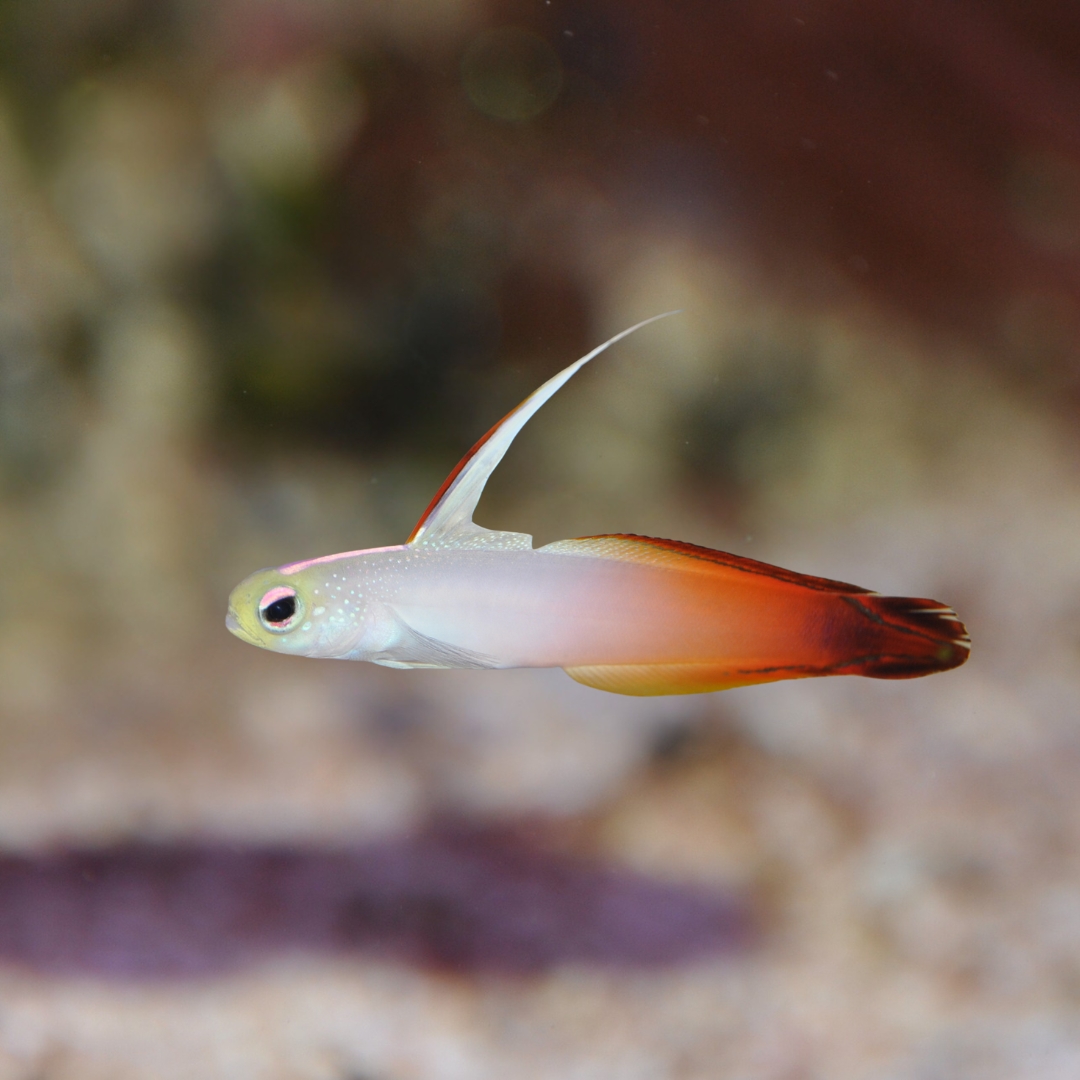
解説 / Description
ハタタテハゼは、白から赤橙色へ移り変わる美しい体色と、旗のように長く伸びた第1背鰭で知られる小型の海水魚です。サンゴ礁外縁の砂礫底やガレ場の上で水流に向かってホバリングし、動物プランクトンを食べながら、危険を感じると近くの穴や岩陰へすばやく逃げ込みます。性格は温和で混泳水槽にも向きますが、驚いたときに水面から飛び出しやすいため、すき間のないフタが長期飼育の最重要ポイントです。 The firefish goby is a small marine fish known for its graceful white-to-red-orange body and long, flag-like first dorsal fin. It hovers over sandy rubble areas on outer reef slopes, faces the current to feed on zooplankton, and quickly retreats into nearby holes or crevices when threatened. It is peaceful and well suited to calm community aquariums, but because it can jump when startled, a tight-fitting lid is one of the most important requirements for long-term care.
基本情報 / Basic Information
| 学名 / Scientific Name | Nemateleotris magnifica |
|---|---|
| 通称 / Common Name | ハタタテハゼ、ファイヤーゴビー、ファイヤーフィッシュFirefish goby, fire dartfish, magnificent firefish |
| 分類 / Family | ハゼ目またはスズキ目相当の系統として扱われる海水魚で、近年の文献ではハゼ科クロユリハゼ亜科ハタタテハゼ属として扱われます。なお、データベースや古い資料ではオオメワラスボ科またはMicrodesmidaeとして掲載される場合があります。A marine dartfish commonly treated in recent literature as genus Nemateleotris in the goby family Gobiidae, subfamily Ptereleotrinae. Some databases and older references still list it under Microdesmidae, so the family-level placement may appear differently depending on the source. |
| 英名 / English Name | Firefish Goby |
| 分布 / Distribution | インド太平洋に広く分布し、東アフリカ方面からハワイ、マルケサス諸島、ピトケアン諸島方面まで、北は琉球列島、南はニューカレドニアやオーストラル諸島方面まで記録されています。日本の本州沿岸で見られる個体は、黒潮に乗って来遊した季節的な個体と考えられる場合があります。Widely distributed in the Indo-Pacific, from the East African region to Hawaii, the Marquesas and Pitcairn Islands, north to the Ryukyu Islands, and south to New Caledonia and the Austral Islands. Individuals seen along temperate mainland Japan may be seasonal visitors transported by the Kuroshio Current. |
| 最大体長 / Max Size | 最大で約9cm。水槽内では7〜8cm前後の個体として扱われることが多いです。Up to about 9 cm total length. In aquariums, it is often encountered at around 7 to 8 cm. |
| 寿命 / Lifespan | 飼育環境が安定していれば数年単位の飼育が可能です。一般的には3〜5年ほどを目安に語られることが多いですが、個体差や導入時の状態、水質管理に大きく左右されます。With stable conditions, it can be maintained for several years. A general aquarium estimate is around 3 to 5 years, although longevity depends strongly on individual condition, acclimation, and water quality. |
飼育環境 / Aquarium Environment
| 水槽サイズ / Tank Size | 単独飼育なら45cm水槽以上でも飼育できますが、水質安定と自然なホバリング行動を考えると60cm規格水槽、約60L以上が扱いやすいです。ペア飼育や混泳を考える場合は、より広い水槽を選ぶと安心です。A single specimen can be kept in a tank of about 45 cm or larger, but a standard 60 cm aquarium of roughly 60 liters or more is easier for stable water quality and natural hovering behavior. For pairs or community setups, a larger aquarium is recommended. |
|---|---|
| 水温 / Temperature | 24〜27℃前後が目安です。急な水温変化はストレスや病気のきっかけになるため、ヒーターやクーラーで年間を通じて安定させます。 A range of about 24 to 27°C is a practical target. Sudden temperature changes can trigger stress and disease, so heaters and chillers should be used as needed to keep the temperature stable year-round. |
| 水質 / Water Quality | 比重は1.020〜1.026、pHは8.0〜8.4前後を目安に、アンモニアと亜硝酸は0を維持します。小型魚ですが水質悪化には強くないため、過密飼育を避け、定期的な換水とろ過の安定を重視します。Aim for a specific gravity of about 1.020 to 1.026 and a pH around 8.0 to 8.4, with ammonia and nitrite kept at zero. Although small, it does not tolerate deteriorating water well, so avoid overcrowding and prioritize stable filtration and regular water changes. |
| レイアウト / Layout | 細かめから中目のサンゴ砂を敷き、ライブロックや枝状の飾りで隠れ家を複数作ります。開けた遊泳スペースと、すぐ逃げ込める穴や岩陰を両方用意すると、本来のホバリング行動を観察しやすくなります。Use fine to medium coral sand and provide multiple hiding places with live rock or branching structures. A combination of open swimming space and nearby holes or crevices helps the fish display its natural hovering behavior. |
| 注意点 / Precautions | 最大の注意点は飛び出しです。ガラスフタ、アクリルフタ、メッシュスクリーンなどを使い、給餌口や配管まわりの小さなすき間も塞ぎます。また、導入直後は強い照明や急な動きで驚かせず、隠れ家の多い静かな環境で落ち着かせます。The biggest precaution is jumping. Use a glass lid, acrylic cover, or mesh screen, and close even small gaps around feeding ports and plumbing. After introduction, avoid sudden movements and intense lighting, and allow the fish to settle in a quiet tank with plenty of shelters. |
餌と給餌 / Feeding
| 餌の種類 / Diet | 自然下では動物プランクトン、カイアシ類、小型甲殻類の幼生などを食べます。水槽では細かい海水魚用人工飼料、冷凍ブラインシュリンプ、冷凍コペポーダ、細かくしたイサザアミなどが向いています。In the wild, it feeds on zooplankton, copepods, and small crustacean larvae. In aquariums, suitable foods include small marine fish pellets, frozen brine shrimp, frozen copepods, and finely chopped mysid shrimp. |
|---|---|
| 給餌のポイント / Feeding Tips | 導入直後の野生採集個体は人工飼料に反応しにくいことがあります。最初は冷凍餌を水流に乗せて少量ずつ与え、食べる様子を確認しながら小粒の人工飼料へ慣らします。退色を防ぐため、古い餌を避け、ビタミンやカロテノイドを含む品質の良い餌を1日2〜3回、食べ切れる量だけ与えるとよいでしょう。Wild-caught individuals may not respond to prepared foods immediately. Begin with small amounts of frozen food carried by the current, then gradually transition to fine pellets once the fish is feeding confidently. To help maintain coloration, avoid stale food and offer high-quality feeds containing vitamins and carotenoids two to three times a day in amounts that are fully eaten. |
性格と混泳 / Temperament and Tank Mates
| 性格 / Temperament | とても温和で、普段は水槽の中層から底層寄りで静かにホバリングします。臆病な面があるため、威圧的な魚がいると隠れたままになり、餌を十分に取れなくなることがあります。Very peaceful, usually hovering quietly in the lower to mid-water area. It can be shy, and if housed with intimidating fish it may remain hidden and fail to feed adequately. |
|---|---|
| 混泳の相性 / Compatibility | カクレクマノミ、テンジクダイ、小型ハナダイ、温和な共生ハゼ、小型ギンポ、クリーナーシュリンプなど、穏やかな生体と相性が良いです。気の強いスズメダイ、大型ヤッコ、ニセスズメ類、捕食性の魚とは避けます。同種は幼魚期に群れることがありますが、成長後はペア以外で争うことがあるため、確実なペアでない限り単独飼育が安全です。Good tank mates include peaceful clownfish, cardinalfish, small anthias, gentle shrimp gobies, small blennies, and cleaner shrimp. Avoid aggressive damselfish, large angelfish, dottybacks, and predatory fish. Juveniles may occur in groups, but adults can fight unless they are a compatible pair, so keeping a single fish is the safest choice unless a proven pair is available. |
病気と対策 / Diseases and Prevention
| かかりやすい病気 / Common Diseases | 輸送直後や水温変化、混泳ストレスが重なると、海水魚の白点病などの外部寄生虫症、体表の白濁、ヒレの傷み、細菌性の二次感染が問題になることがあります。体をこすりつける、呼吸が速い、ヒレを閉じる、餌を食べないといった変化は早期発見のサインです。After shipping, temperature swings, or social stress, problems may include marine ich and other external parasites, cloudy body surface, fin damage, and secondary bacterial infections. Rubbing against objects, rapid breathing, clamped fins, and loss of appetite are important early warning signs. |
|---|---|
| 対策と予防 / Prevention | 予防の基本は、導入時の慎重な水合わせ、数週間の隔離観察、安定した水温、水質悪化の防止です。病気が疑われる場合は本水槽に薬を入れる前に隔離水槽へ移し、薬剤は必ず製品の説明に従って使います。銅系薬剤はサンゴや甲殻類などの無脊椎動物に使えず、魚種によって感受性も異なるため慎重な管理が必要です。淡水浴は外部寄生虫対策として使われることがありますが、魚への負担も大きいため、温度とpHを合わせ、経験者が短時間で状態を見ながら行う処置と考えてください。Prevention starts with careful acclimation, several weeks of quarantine observation, stable temperature, and good water quality. If disease is suspected, move the fish to a quarantine tank before using medication, and always follow the product instructions. Copper-based treatments cannot be used with corals or crustaceans and require careful monitoring because fish sensitivity varies. Freshwater dips are sometimes used against external parasites, but they are stressful and should only be performed briefly by experienced keepers with matched temperature and pH while closely watching the fish. |
増やし方(繁殖) / Breeding
| 雌雄の判別 / Sexing | 外見だけで雌雄を確実に判別するのは難しい魚です。体格差や行動から推測されることはありますが、販売時や一般飼育では明確な判別は困難と考えた方が安全です。Reliable sexing by appearance is difficult. Body size and behavior may offer clues, but clear identification is usually not practical in ordinary aquarium settings. |
|---|---|
| 繁殖形態 / Reproduction | 成魚はペアを形成し、巣穴や岩陰を生活拠点にするとされています。水槽内での産卵報告はありますが、孵化後の仔魚は非常に小さく、初期餌料と水質管理が難しいため、一般家庭での繁殖は難易度が高いです。Adults form pairs and use holes or crevices as their base. Spawning has been reported in aquariums, but the larvae are very small and require demanding live foods and water quality management, making home breeding difficult. |
| 繁殖のポイント / Breeding Tips | 繁殖を狙う場合は、安定したペア、落ち着いた環境、隠れ家、豊富な栄養、清潔な水質が前提になります。仔魚育成にはワムシ、カイアシ類、アルテミア幼生などを成長段階に合わせて用意する必要があり、商業養殖施設でも高度な管理が求められる分野です。Breeding requires a stable pair, a quiet environment, shelters, excellent nutrition, and very clean water. Larval rearing requires live foods such as rotifers, copepods, and Artemia nauplii in sequence as the larvae grow, and it remains a technically demanding area even for professional breeders. |
雑学と豆知識 / Trivia and Fun Facts
| 1. 学名に込められた「糸」と「華麗さ」 / 1. The thread and magnificence in its name | 属名のNemateleotrisは、糸を意味する語とEleotrisに由来する名を組み合わせたものとされ、長く伸びる第1背鰭を思わせます。種小名のmagnificaは「壮麗な」「見事な」という意味を持ち、保存標本から記載された魚でありながら、生きた姿の華やかさまで予感させるような名前です。The genus name Nemateleotris is generally explained as a combination referring to a thread and Eleotris, evoking the long first dorsal fin. The species name magnifica means magnificent or splendid, a fitting name for a fish whose living colors are even more striking than preserved specimens suggest. |
|---|---|
| 2. 背びれは飾りだけではない / 2. The dorsal fin is more than decoration | ハタタテハゼは、水流の中で長い第1背鰭を小刻みに動かします。この動きは同種への合図として説明されることが多く、遠目にも分かりやすい「旗」のような役割を持つと考えられています。見た目の美しさが、そのまま行動や生態の面白さにもつながっている魚です。Firefish often flick their long first dorsal fin while hovering in the current. This motion is commonly described as a signal to other individuals, giving the fin a flag-like role that is visible from a distance. Its beauty is closely linked to its behavior and ecology. |
| 3. 日本沿岸で見られる季節の旅人 / 3. A seasonal traveler along Japan | 温帯域の本州沿岸でハタタテハゼが見つかることがありますが、これは南方で生まれた仔稚魚が黒潮に運ばれて来遊したものと考えられる場合があります。冬の低水温を越えられないことも多く、観察できる美しい姿の背景には、海流と季節が作る厳しい物語があります。Firefish may occasionally be seen along temperate mainland Japan, where young fish are thought to arrive from southern waters via the Kuroshio Current. Many cannot survive colder winter temperatures, so these sightings reflect both the wonder and harshness of ocean currents and seasonal change. |
| 4. 近縁種の分類は今も動いている / 4. The taxonomy of relatives is still changing | ハタタテハゼ属では、アケボノハゼやシコンハタタテハゼなど人気の近縁種も知られています。2023年には、これまでシコンハタタテハゼに近いものとして扱われていた太平洋側の個体群からNemateleotris lavandulaが新種として記載されました。小さな観賞魚の世界にも、まだ新しい発見が残されていることを感じさせる出来事です。The genus also includes popular relatives such as the elegant firefish and Helfrich’s dartfish. In 2023, Nemateleotris lavandula was described from western and central Pacific populations previously confused with Helfrich’s dartfish. It is a reminder that even familiar aquarium fishes can still hold scientific surprises. |
まとめ / Conclusion
ハタタテハゼは、美しい体色、長く伸びた背びれ、穏やかな性格をあわせ持つ、海水魚入門にも人気の高い種類です。大きな水槽を必要としない一方で、飛び出し対策、静かな混泳相手、安定した水質、丁寧な餌付けがそろってはじめて本来の魅力を見せてくれます。 The firefish goby combines beautiful coloration, a long dorsal fin, and a gentle temperament, making it a popular choice even for marine aquarium beginners. It does not require a very large tank, but it shows its best qualities only when jumping is prevented, tank mates are peaceful, water quality is stable, and feeding is handled carefully.
飼育で最も大切なのは、臆病な魚であることを理解し、安心して隠れられる場所と、驚いても外へ飛び出せない環境を用意することです。その条件を満たせば、ハタタテハゼは水流に向かって静かに漂う姿で、サンゴ礁の雰囲気を水槽に運んでくれる魅力的な一匹になります。 The key to success is understanding that this is a shy fish and providing both secure hiding places and a tank it cannot jump out of when startled. When those conditions are met, the firefish goby becomes a charming inhabitant that brings the atmosphere of a coral reef into the aquarium as it quietly hovers in the current.

気になる道具や飼い方を見つけてみませんか?
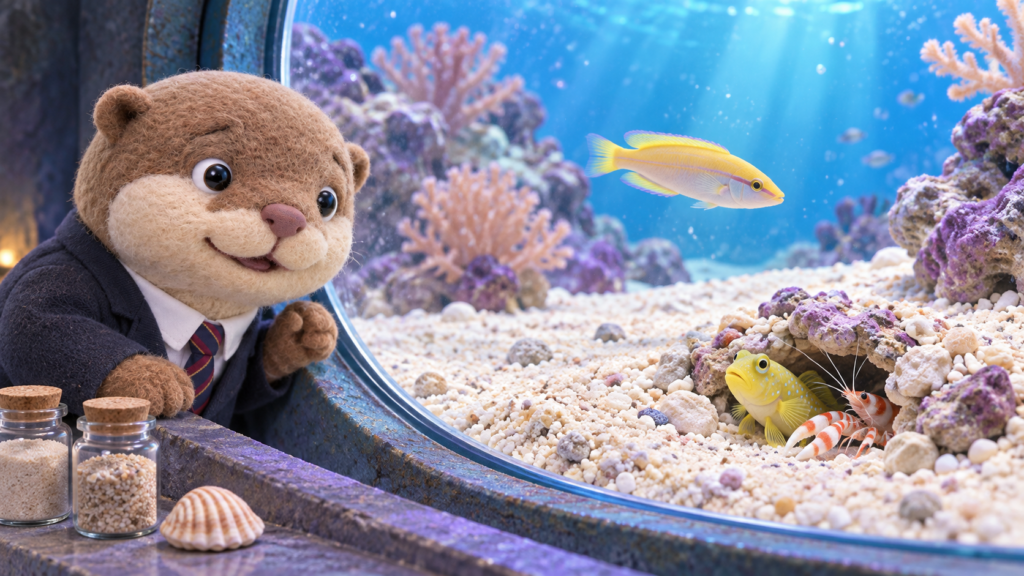 アイのアクアグッズ案内海水魚の底砂の選び方|サンゴ砂・ライブサンドとおすすめ商品道具の特徴や使い方、選ぶときのポイントをアイが紹介します。記事はコチラ →
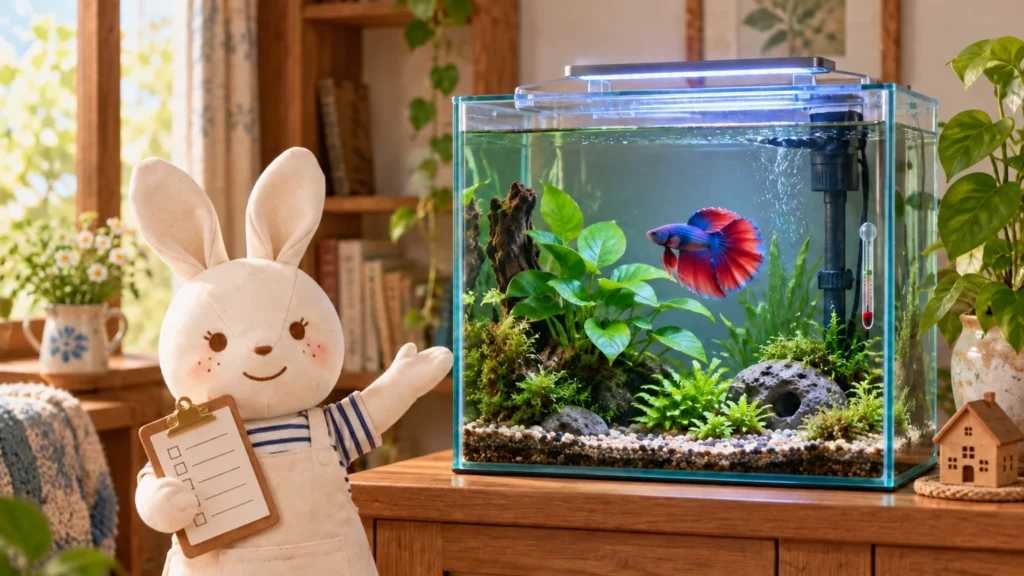 アイのアクアグッズ案内ベタの一匹飼いを楽しむ|水槽・ヒーター・ふた・フィルターの選び方ベタの一匹飼いに向く水槽容量、ふたと空気層、ヒーターと水温計、弱い水流のフィルターを、コタロウとアイの会話で分かりやすく解説します。記事はコチラ →
さまざまな飼育テーマをご紹介。リンク先の記事には広告・商品紹介が含まれます。
案内・紹介記事一覧へ →本記事では、ハタタテハゼの分類、分布、生息環境、飼育条件、繁殖、病気・注意点を確認するため、店舗・通販サイト、個人ブログ、まとめサイトを除外し、学術論文、公的・研究機関系データベース、博物館・大学・獣医学系資料を中心に参照しました。
-
Tea, Y.-K. & Larson, H.K. 2023. Synopsis of the ptereleotrine goby genus Nemateleotris, with description of a new species from the Western and Central Pacific Ocean (Teleostei: Gobiidae). Raffles Bulletin of Zoology 71: 248-266.
根拠にした内容:ハタタテハゼ属の分類史、Gobiidae内での扱い、属名の由来、N. lavandulaの記載、同属種との識別に関する補足。
https://doi.org/10.26107/RBZ-2023-0019 -
Froese, R. & Pauly, D. (eds.). FishBase. Nemateleotris magnifica Fowler, 1938.
根拠にした内容:学名、英名、最大体長、インド太平洋における広域分布、リーフ関連性、深度帯、動物プランクトン食、ペア形成・一夫一妻性に関する基礎情報。
https://www.fishbase.se/summary/Nemateleotris-magnifica.html -
Bray, D.J. 2023. Red Firegoby, Nemateleotris magnifica Fowler, 1938. Fishes of Australia.
根拠にした内容:体色、鰭条などの形態、オーストラリア周辺での分布、外洋礁斜面上部の巣穴利用、底層付近でのホバリング、動物プランクトン食、一夫一妻性、IUCN Least Concern表記。
https://fishesofaustralia.net.au/home/species/2943 -
World Register of Marine Species. Nemateleotris magnifica Fowler, 1938.
根拠にした内容:海産生物名としての受容状況、学名表記、同物異名・誤綴り確認など、記事内の学名表記の確認。
https://www.marinespecies.org/aphia.php?p=taxdetails&id=219611 -
Reef Life Survey. Nemateleotris magnifica – Red Firegoby.
根拠にした内容:最大サイズ、観察深度、水温レンジ、巣穴入口付近で単独またはペアで見られる行動など、生息環境と飼育水温設定を補強する情報。
https://reeflifesurvey.com/species/nemateleotris-magnifica/ -
Australian Museum. Red Firegoby, Nemateleotris magnifica Fowler, 1938.
根拠にした内容:底層近くでホバリングし、水流に向かって動物プランクトン、特にカイアシ類や甲殻類幼生を捕食する生態、第1背鰭を動かす行動の説明。
https://australian.museum/learn/animals/fishes/nemateleotris-magnifica-fowler-1938/ -
Yanong, R.P.E. 2021. Cryptocaryon irritans Infections (Marine White Spot Disease) in Fish. University of Florida IFAS Extension, FA164.
根拠にした内容:海水白点病の原因、生活環、症状、隔離・検鏡確認、銅・低比重・クロロキン等の治療選択肢、遊走子期を主な治療対象とする考え方、長期隔離・検疫の重要性。
https://ask.ifas.ufl.edu/publication/FA164 -
Merck Veterinary Manual. Parasitic Diseases of Fish.
根拠にした内容:Cryptocaryonを含む寄生虫病、トリコディナ類の診断・症状、過密や衛生状態との関係、治療は水質改善や隔離管理と組み合わせる必要があるという注意点。
https://www.merckvetmanual.com/exotic-and-laboratory-animals/aquarium-fish/parasitic-diseases-of-fish -
Madhu, K., Madhu, R., Retheesh, T., Krishnan, L. & Sasidharan, C.S. 2014. Captive spawning and embryonic development of marine ornamental purple firefish Nemateleotris decora Randall & Allen, 1973. Indian Journal of Fisheries 61(1): 1-9.
根拠にした内容:ハタタテハゼ本種ではなく同属近縁種アケボノハゼの飼育下繁殖・胚発生・仔魚育成に関する補助資料。記事内で繁殖難度を慎重に説明するための参考に限定。
https://eprints.cmfri.org.in/10771/
注:分類体系は文献・データベースによりMicrodesmidae表記とGobiidae内のPtereleotrinaeとして扱う表記が併存するため、資料を比較する際は、どの分類体系に基づく表記かを確認してください。




コメント