
解説 / Description
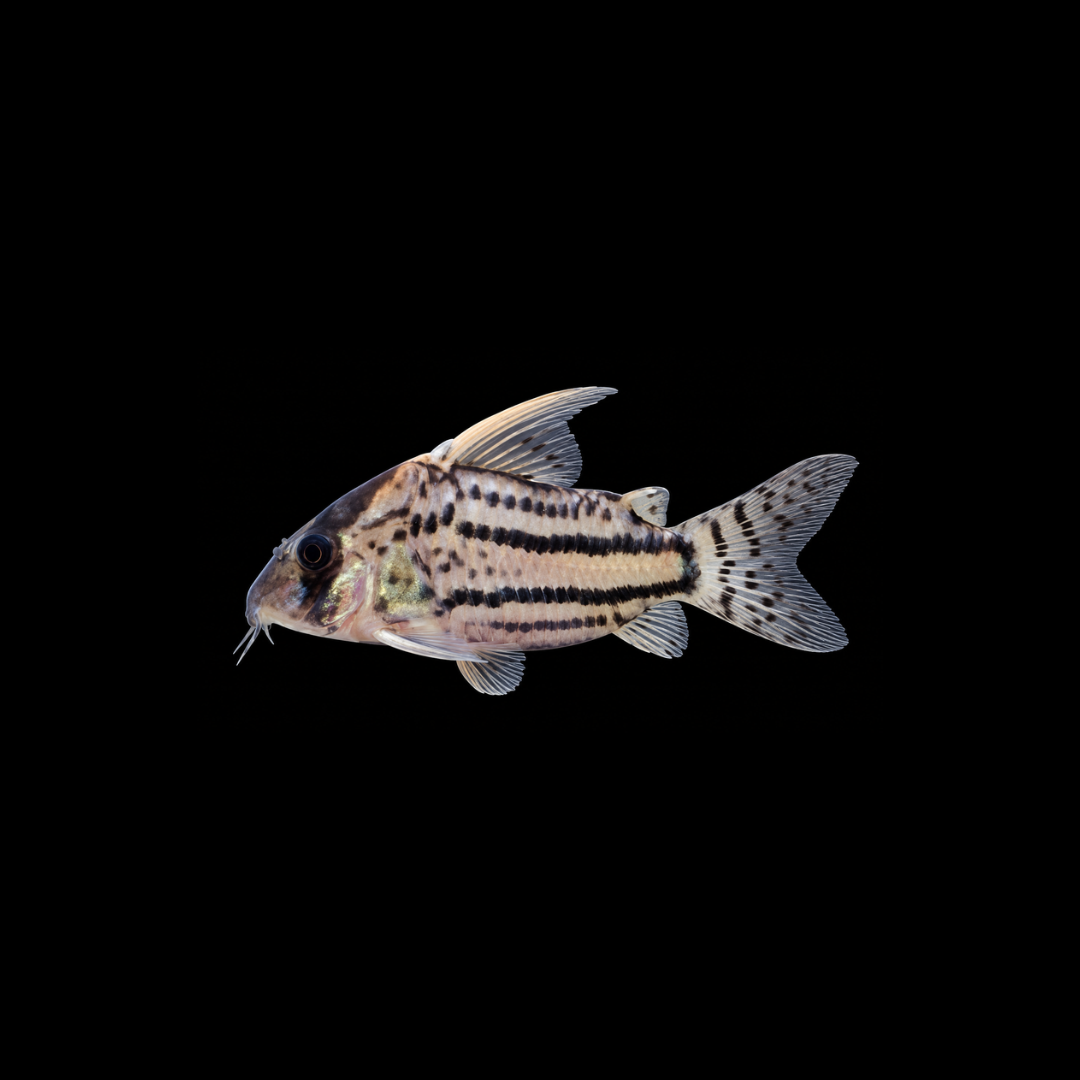
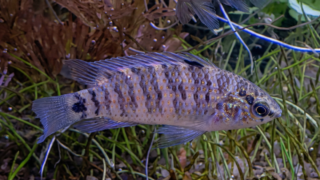
スーパーシュワルツィ(CW028)は、南米ブラジルのプルス川水系に由来する、コリドラスの仲間として親しまれてきた底生魚です。淡い灰色からクリーム色の体に走る太く明瞭な黒色のラインと、白色からクリーム色を帯びた背びれの前縁が特徴です。通常のシュワルツィよりも大きく成長する傾向があり、成熟した個体では背びれが高く伸びることもあります。落ち着いた体色の中に際立つ黒い模様と美しい鰭の組み合わせが、本種ならではの魅力です。 Super Schwartzi (CW028) is a bottom-dwelling armored catfish associated with the Rio Purus drainage in Brazil and long familiar to aquarists as a member of the Corydoras group. Its pale gray to cream-colored body is marked with bold, distinct dark longitudinal stripes, while the leading edge of the dorsal fin often appears white to cream. It generally grows larger than the ordinary Schwartz’s cory, and mature individuals may develop a tall dorsal fin. The contrast between its subdued body coloration, striking dark markings, and elegant fins gives it a distinctive appearance.
日本の観賞魚市場では「コリドラス・スーパーシュワルツィ」の名前で広く知られていますが、2024年に発表されたコリドラス亜科の分類再編を踏まえると、ホプリソマ属の未記載種として暫定的に扱われています。ただし、スーパーシュワルツィという流通名は、外見が似た複数のタイプに使われることがあり、体側のラインや背びれの特徴には違いも見られます。飼育では、清潔な底砂と十分な酸素、安定した水質を維持し、同じタイプの仲間と落ち着いて過ごせる環境を整えることが大切です。 In Japan, this fish is widely sold as Corydoras Super Schwartzi. Following the taxonomic revision of the Corydoradinae published in 2024, it is provisionally treated as an undescribed member of Hoplisoma. However, the trade name Super Schwartzi has been applied to several similar forms, which may differ in their stripe patterns and dorsal-fin characteristics. Successful care depends on clean substrate, good oxygenation, stable water conditions, and suitable companionship from the same form.
基本情報 / Basic Information
| 学名 / Scientific Name | Hoplisoma sp. CW028(暫定的な識別表記provisional identification) |
|---|---|
| 通称 / Common Name | スーパーシュワルツィ、コリドラス・スーパーシュワルツィ、CW028Super Schwartzi, Super Schwartz’s Cory, CW028 |
| 分類 / Family | ナマズ目カリクティス科コリドラス亜科ホプリソマ属Order Siluriformes, family Callichthyidae, subfamily Corydoradinae, genus Hoplisoma |
| 英名 / English Name | Super Schwartzi Cory, Super Schwartz’s Cory |
| 分布 / Distribution | 南米ブラジルのプルス川水系。アマゾン川流域に属する河川環境に由来します。流通個体にはラブレア周辺の産地名が付されることもありますが、CW028として識別される個体群の詳細な自然分布は、十分に解明されていません。The Rio Purus drainage in Brazil, part of the Amazon basin. Some traded specimens are associated with the Lábrea area, although the precise natural distribution of fish identified as CW028 has not been fully established. |
| 最大体長 / Max Size | 全長7cm前後が飼育上の目安です。CW028として扱われる個体群には、尾びれを除く標準体長で約6〜6.5cmに達するという記録もあります。体の大きさは個体や流通タイプによって異なります。Approximately 7 cm in total length is a practical guideline. Fish identified as CW028 have also been reported to reach around 6–6.5 cm in standard length, excluding the caudal fin. Size varies among individuals and traded forms. |
| 寿命 / Lifespan | 本種に限定した信頼できる平均寿命は明らかになっていません。ほかのコリドラス類と同様に、数年単位の長期飼育を想定し、導入時の健康状態や日常の水質管理に注意することが大切です。A reliable average lifespan specific to this fish has not been established. As with other corydoradine catfish, keepers should plan for care over several years, paying particular attention to initial health and long-term water quality. |
飼育環境 / Aquarium Environment
| 水槽サイズ / Tank Size | 少数の飼育では60cm規格水槽(約60L)が一つの目安ですが、成魚を5〜6匹以上で飼育する場合は、90cm規格水槽(約180L)など、底面積に余裕のある水槽がおすすめです。底層を中心に活動するため、水量だけでなく、魚が自由に移動できる底面の広さを重視してください。混泳魚や飼育数が増える場合は、さらに余裕を持たせます。A standard 60 cm aquarium (approximately 60 L) can serve as a starting point for a small number of fish. For a group of five to six or more adults, a standard 90 cm aquarium (approximately 180 L) is preferable. Floor space is particularly important because these fish spend much of their time exploring the bottom. Larger groups and community setups require additional room. |
|---|---|
| 水温 / Temperature | 22〜27℃程度が飼育の目安です。通常は24〜26℃前後で安定させると管理しやすいでしょう。高水温では水中の酸素が不足しやすくなるため、夏場は水温と酸素供給に注意し、必要に応じて冷却ファンや水槽用クーラーを使用します。急激な温度変化は避けてください。 Approximately 22–27°C is a practical husbandry range, with stable temperatures around 24–26°C often being convenient for routine care. Warm water holds less dissolved oxygen, so monitor temperature and oxygenation during summer. Aquarium cooling equipment may be necessary. Avoid sudden temperature changes. |
| 水質 / Water Quality | 弱酸性〜中性付近(pH約6.0〜7.5)を目安とし、軟水から中程度の硬度の水で飼育します。プルス川水系の水質は場所や季節によって異なるため、特定のpHに無理に調整する必要はありません。アンモニアと亜硝酸が検出されないよう、十分にろ過の働いた清潔な水を維持することが重要です。週1回、全水量の4分の1〜3分の1程度の換水を基本に、水質や飼育密度に応じて調整します。Slightly acidic to approximately neutral water, around pH 6.0–7.5, with soft to moderately hard conditions is a reasonable guideline. Water chemistry varies within the Rio Purus basin, so forcing the aquarium to a narrowly defined pH is unnecessary. Maintain mature biological filtration and keep ammonia and nitrite undetectable. A weekly water change of roughly 25–33% is a useful starting routine, adjusted according to stocking density and water quality. |
| レイアウト / Layout | 底床には田砂や角のない細かな砂を使い、口先を砂に入れて餌を探す自然な行動を妨げないようにします。砂を薄く敷くと汚れの管理がしやすくなりますが、厚さにかかわらず底床を清潔に保つことが大切です。流木、丸みのある石、アヌビアスなどを配置して隠れ場所を作り、前面には広い砂地を残します。適度な水流とエアレーションを確保し、水面へ泳ぎ上がる経路も塞がないようにします。Use fine, smooth sand so the fish can sift naturally through the substrate while feeding. A relatively thin layer is easier to maintain, although cleanliness matters regardless of depth. Driftwood, rounded stones, and hardy plants such as Anubias provide shelter, while open sandy areas allow foraging. Provide moderate circulation and aeration, and leave an unobstructed route to the surface. |
| 注意点 / Precautions | 導入直後の野生採集個体は、長距離輸送による消耗や水質変化の影響を受けていることがあります。コリドラス類では、強いストレスを受けた際に防御に関わる分泌物を放出する例が知られており、輸送袋内で魚が弱る原因の一つになると考えられています。ただし、輸送中の衰弱には水質悪化や酸素不足なども関係するため、原因を分泌物だけに限定することはできません。購入時は魚の状態と袋内の水を確認し、水温や水質の差に配慮して慎重に水合わせを行います。輸送水は飼育水槽に持ち込まないようにしてください。また、背びれや胸びれには鋭い棘があるため、網での捕獲や素手での取り扱いには注意が必要です。Recently imported wild-caught specimens may be weakened by prolonged transport and changing water conditions. Some corydoradine catfish release defensive secretions under stress, which may contribute to transport-related losses. However, deteriorating water quality and oxygen depletion can also cause distress during transport, so not every problem can be attributed to these secretions. Examine the fish and transport water carefully, acclimate them gradually while considering differences in temperature and water chemistry, and avoid introducing shipping water into the aquarium. Handle them cautiously because the dorsal and pectoral spines are sharp. |
餌と給餌 / Feeding
| 餌の種類 / Diet | 雑食性で、コリドラス用の沈下性タブレットや顆粒状の人工飼料を中心に与えます。冷凍アカムシ、ブラインシュリンプ、イトミミズなどの動物性の餌もよく食べます。人工飼料を基本に、衛生状態の良い生餌や冷凍餌を適度に組み合わせることで、栄養の偏りを防ぎます。An omnivore that readily accepts sinking Corydoras tablets and granular prepared foods. Frozen bloodworms, brine shrimp, and tubifex worms are also suitable supplementary foods. Use a balanced prepared diet as the staple and provide clean live or frozen foods in moderation for variety. |
|---|---|
| 給餌のポイント / Feeding Tips | 1日1〜2回を基本に、食べ具合や体格を見ながら量を調整します。輸入直後に痩せている場合は、少量ずつ回数を分けて与える方法も有効です。繁殖に向けて栄養状態を整える際には、イトミミズや冷凍アカムシが利用されますが、過剰な給餌は水質悪化を招くため注意してください。混泳水槽では、ほかの魚に餌を取られないよう、底まで確実に沈む餌を使います。必要に応じて消灯前後の給餌も活用し、食べ残しは早めに取り除きます。Feed once or twice daily as a starting routine, adjusting portions to appetite and body condition. Underweight newcomers may benefit from smaller, more frequent meals. Tubifex worms and frozen bloodworms can help condition adults for breeding, but excessive feeding quickly compromises water quality. In community tanks, make sure sinking foods actually reach the bottom. Feeding around lights-out can sometimes help, and leftovers should be removed promptly. |
性格と混泳 / Temperament and Tank Mates
| 性格 / Temperament | 基本的に温和で、ほかの魚に積極的に攻撃を仕掛けることは少ない魚です。仲間と一緒に底砂を探ったり、近くで休んだりする姿が見られます。単独では警戒心が強くなることがあるため、可能であれば同じタイプの個体を5〜6匹以上で飼育するとよいでしょう。導入直後は隠れがちでも、環境に慣れるにつれて活動範囲が広がることがあります。Generally peaceful and unlikely to attack other fish. Individuals often forage together or rest close to their companions. Solitary specimens may remain timid, so a group of at least five or six of the same form is preferable when space allows. Newly introduced fish may hide at first and become more active as they settle in. |
|---|---|
| 混泳の相性 / Compatibility | ネオンテトラ、カージナルテトラ、小型ラスボラなど、温和で水温条件の合う小型魚と混泳しやすい種類です。オトシンクルスやほかの温和なコリドラス類とも飼育できますが、底層の過密や餌の取り合いには注意します。一方、大型肉食魚や攻撃性の強いシクリッド、底層で強い縄張りを持つ魚、ザリガニなどとの混泳は避けた方が安全です。捕食されそうになった際には、鋭い鰭の棘が相手の口や喉に引っかかる危険もあります。Compatible with peaceful small fish such as neon tetras, cardinal tetras, and small rasboras when their temperature requirements overlap. Otocinclus and other peaceful corydoradine catfish may also be suitable, provided there is enough bottom space and food. Avoid large predators, aggressive cichlids, strongly territorial bottom dwellers, and crayfish. The sharp fin spines can also become lodged in the mouth or throat of a fish attempting to swallow them. |
病気と対策 / Diseases and Prevention
| かかりやすい病気 / Common Diseases | 飼育環境の悪化や輸送によるストレスが重なると、エロモナス属細菌による感染症、カラムナリス病、白点病、水カビ病などが問題になることがあります。口ヒゲの短縮や損傷、ひれの白濁、体表の異常、食欲低下などは注意したい症状です。ただし、これらの症状だけで病気の原因を特定することはできません。特に口ヒゲの傷みは、底床にたまった汚れや不適切な飼育環境が関係している場合もあります。Poor water quality and transport stress may increase susceptibility to bacterial infections involving Aeromonas or columnaris-causing bacteria, as well as ich and fungal infections. Damaged or shortened barbels, cloudy fins, skin changes, and loss of appetite are warning signs. These symptoms alone do not establish a diagnosis. Barbel damage may also be associated with dirty substrate or unsuitable environmental conditions. |
|---|---|
| 対策と予防 / Prevention | 底床の汚れをためず、適切な換水とろ過、十分な酸素供給を続けることが予防の基本です。異常が見られた場合は、まず水温やアンモニア、亜硝酸などを確認し、必要に応じて隔離して状態を観察します。ホプリソマ属は一般的な魚の鱗とは異なる骨板で体を覆っており、薬剤の種類によっては使用に注意が必要です。ただし、鱗の構造だけを理由に、すべての魚病薬を一律に半量へ減らすことが適切とは限りません。薬剤の安全性は成分や製品によって異なるため、対象魚種と用法を確認し、不明な場合は魚病に詳しい専門家へ相談してください。自己判断で薬剤の濃度を変えたり、塩を予防目的で常用したりすることは避けましょう。Prevention begins with clean substrate, regular water changes, effective filtration, and adequate oxygenation. If abnormalities appear, first check temperature, ammonia, and nitrite, and isolate affected fish when appropriate. Hoplisoma have protective bony plates rather than ordinary fish scales, and certain medications require additional caution. However, this anatomical difference does not mean that every medication should automatically be used at half strength. Treatment safety depends on the active ingredient and formulation. Follow product guidance for the relevant fish and consult an experienced aquatic-health professional when uncertain. Avoid arbitrary dose changes and routine preventive salting. |
増やし方(繁殖) / Breeding
| 雌雄の判別 / Sexing | 十分に成熟した個体では、メスがオスよりもやや大きく、上から見ると腹部が幅広く丸みを帯びる傾向があります。オスは比較的細身で、背びれが高く伸びる個体も見られます。ただし、鰭の長さには個体差があり、それだけで雌雄を断定することはできません。若い個体の判別は特に難しいため、体格や成熟状態を総合的に観察します。Mature females tend to be somewhat larger and broader through the abdomen when viewed from above. Males are generally slimmer, and some develop especially tall dorsal fins. Fin length varies among individuals and is not a reliable sexing feature on its own. Juveniles are particularly difficult to distinguish, so evaluate overall body shape and maturity. |
|---|---|
| 繁殖形態 / Reproduction | 卵生で、飼育下での繁殖成功例も報告されていますが、一般的な普及種のコリドラス類と比べると繁殖は容易ではありません。コリドラス亜科に広く見られる繁殖行動では、雌雄がT字型に組み合う「Tポジション」をとり、メスが腹びれの間に卵を保持した後、ガラス面や水草などに産み付けます。CW028でも同様の繁殖行動が見られると考えられますが、本タイプに限定した産卵数や孵化率などの定量的な情報は十分に確立されていません。An egg-laying fish with reported aquarium breeding successes, although reproduction is generally more challenging than in commonly bred Corydoras forms. Corydoradinae typically perform a T-position mating embrace, after which the female holds eggs between her pelvic fins and attaches them to glass, plants, or other surfaces. Similar behavior is expected in CW028, but reliable form-specific data on clutch size and hatch rates remain limited. |
| 繁殖のポイント / Breeding Tips | 繁殖を狙う場合は、成熟した健康な個体を複数飼育し、人工飼料に加えて冷凍アカムシや衛生状態の良いイトミミズなどを与え、十分な栄養状態を維持します。産卵のきっかけとして、雨季の到来を模した換水や水流の変化が利用されることもありますが、極端な水温低下や大規模な換水、急激なpH変化を与える必要はありません。魚の状態を優先し、通常の飼育範囲を外れない穏やかな環境変化にとどめます。産み付けられた卵は親魚に食べられることがあるため、必要に応じて別容器で管理し、十分な酸素供給と清潔な水を保ちます。孵化後は卵黄の栄養を吸収し終えてから、孵化させたブラインシュリンプの幼生などを与えます。Begin with healthy, mature fish in good condition. Offer a varied diet that includes prepared foods and supplementary frozen bloodworms or clean tubifex worms. Changes in water level, circulation, and temperature associated with the onset of the rainy season are sometimes used to encourage spawning, but drastic cooling, extreme water changes, and sudden pH shifts are unnecessary and potentially harmful. Make only modest changes within suitable husbandry conditions. Adults may eat the eggs, so separate them when needed and maintain clean, well-oxygenated incubation water. Once newly hatched fry have absorbed their yolk reserves, offer freshly hatched brine shrimp nauplii or similarly suitable small foods. |
雑学と豆知識 / Trivia and Fun Facts
| 1. コリドラスからホプリソマへ――分類が変わった理由 / 1. From Corydoras to Hoplisoma: Why the Classification Changed |
スーパーシュワルツィは、長い間「コリドラス」の仲間として知られてきました。しかし、外見がよく似た魚たちが、必ずしも進化の歴史の中で一つのまとまったグループに属しているとは限りません。コリドラス亜科についても、DNAや骨格の特徴を調べる研究が進むにつれて、従来の属の区分を見直す必要があることが分かってきました。
Super Schwartzi was long known as a Corydoras, but fishes that resemble one another do not necessarily belong to a single close evolutionary group. Genetic and anatomical studies of the Corydoradinae gradually showed that the traditional genus Corydoras required substantial revision.
2011年に発表された研究では、従来のコリドラス類の中に複数の主要な進化系統があることが示されました。そして2024年、DNAの詳細な解析結果と形態学的な特徴を組み合わせた研究によって、コリドラス亜科を複数の属に整理する新しい分類体系が提案されました。その際、1838年に提唱されていたホプリソマ属の名前が再び採用され、従来のコリドラス属に含まれていた多くの種が移されました。 A 2011 study identified several major evolutionary lineages within the traditional Corydoras assemblage. In 2024, a broader analysis combining genomic evidence with anatomical characteristics proposed a revised classification of the subfamily. The name Hoplisoma, originally established in 1838, was reinstated for a major group that had previously been included in Corydoras. ホプリソマ属の多くは比較的短い吻を持ち、頭部の骨格や鰭の棘の構造にも共通した特徴があります。こうした特徴と進化系統を合わせて検討することで、魚同士の関係をより自然な形で整理できるようになりました。ただし、この分類再編によってスーパーシュワルツィの正式な種名まで確定したわけではありません。CW028は、現在も種の区別を明確にするための暫定的な識別番号として使われています。 Many members of Hoplisoma possess relatively short snouts and share diagnostic features of the skull and fin spines. Considering these characteristics together with evolutionary relationships allows scientists to organize the group more naturally. However, the revision did not establish a formal species name for Super Schwartzi. CW028 continues to serve as a provisional identification number. |
|---|---|
| 2. CW028という番号が示すもの / 2. What the CW028 Number Means |
観賞魚の名前に付いている「CW028」は、正式な学名の一部ではありません。コリドラス類には、外見が似ていても分類学的な位置づけが十分に解明されていない魚が数多く存在します。こうした魚を区別して情報を共有するため、コリドラスの研究家・愛好家として知られるイアン・フラーらの活動を通じて、CW番号の仕組みが広まりました。
The designation CW028 is not part of a formal scientific species name. Many corydoradine catfish are very similar in appearance, and some have not been fully resolved taxonomically. The CW-number system, associated with the work of Corydoras specialist Ian Fuller, provides a practical means of distinguishing and discussing such fishes.
CW028として識別されるタイプの特徴は、丸みを帯びた短い吻と、体側を平行に走る2本の太い黒色ライン、そしてクリーム色を帯びた背びれの棘条です。一方、流通上は「スーパーシュワルツィ・ハイフィン」と呼ばれる近似タイプも知られており、こちらでは細いラインや点列状の模様が複数見られることがあります。ただし、模様には個体差があり、両者を外見だけで確実に区別しにくい場合もあります。 Fish identified as CW028 typically have a rounded, short snout, two broad parallel dark longitudinal stripes, and a cream-colored dorsal-fin spine. A similar aquarium form is traded as Super Schwartzi Hifin, often showing several narrower or partially spotted longitudinal stripes. However, individual variation can make the two forms difficult to distinguish reliably by appearance alone. そのため、「太いラインがある」「背びれが長い」といった特徴だけで、すべての個体を同じ分類群と断定することはできません。購入時に産地情報や流通名を確認し、体型や模様も記録しておくことは、飼育個体への理解を深めるだけでなく、将来の分類研究にもつながる大切な手がかりになります。 Consequently, bold stripes or an elongated dorsal fin alone cannot establish that every specimen belongs to the same taxonomic group. Recording locality information, trade names, body shape, and markings can improve identification and may provide useful clues for future taxonomic work. |
| 3. シュワルツィという名前に残された観賞魚の歴史 / 3. The Aquarium Trade History Behind the Name Schwartzi |
「シュワルツィ」という呼び名の由来をたどると、南米産観賞魚が世界へ紹介されていった時代に行き着きます。通常のシュワルツィは、1963年に魚類学者レッセルによってCorydoras schwartziとして記載されました。その種小名は、ブラジルの観賞魚輸出に関わったヴィリー・シュワルツ氏に献名されたものです。
The name Schwartzi reaches back to an important period in the international aquarium trade. The ordinary Schwartz’s cory was described by ichthyologist Rössel in 1963 as Corydoras schwartzi. Its species name honors Willy Schwartz, who was involved in the export of Brazilian ornamental fishes.
興味深いことに、シュワルツィの原記載には、現在CW028として扱われるタイプに似た太いラインを持つ個体も図示されていました。当時は通常のシュワルツィの変異と考えられていましたが、その後、吻の形や体側の模様などが改めて比較され、別のタイプとして扱われるようになりました。 Interestingly, the original description of Schwartz’s cory included an illustration of a broad-striped specimen resembling the fish now identified as CW028. Such fish were initially considered possible variants of the ordinary species. Later comparisons of snout shape and body markings led to their recognition as a distinct aquarium form. スーパーシュワルツィの「スーパー」は、正式な分類学上の階級ではなく、通常のシュワルツィに似ながら、より大型で印象的な姿を持つ魚に付けられた流通上の表現です。名前の中には、魚そのものの特徴だけでなく、観賞魚の発見、輸出、そして愛好家による識別の歴史も刻まれています。 The word Super is a trade designation, not a taxonomic rank. It reflects the larger and more striking appearance of these fish compared with the ordinary Schwartz’s cory. The name therefore preserves not only a visual comparison but also part of the history of aquarium collecting, export, and identification. |
| 4. 水面へ駆け上がる不思議な行動――腸呼吸の仕組み / 4. The Dash to the Surface: Understanding Intestinal Air Breathing |
水槽の底で静かに過ごしていたスーパーシュワルツィが、突然水面へ泳ぎ上がり、すぐに底へ戻ることがあります。初めて見たときには驚くかもしれませんが、これはコリドラスの仲間に見られる特徴的な行動の一つです。
A Super Schwartzi resting quietly on the bottom may suddenly rush to the surface and then return just as quickly. Although this can surprise new keepers, it is a characteristic behavior of corydoradine catfish.
ホプリソマ属を含むカリクティス科の魚には、水面から空気を取り込み、腸の一部を利用して酸素を吸収する能力があります。これを腸呼吸と呼びます。通常のえら呼吸に加えて空気中の酸素も利用できるため、自然界では水中の酸素が少なくなったときの助けになります。 Members of the family Callichthyidae, including Hoplisoma, can swallow atmospheric air and absorb oxygen through a specialized region of the intestine. This process is known as intestinal air breathing. It supplements normal gill respiration and can help fish cope with periods of reduced dissolved oxygen in their natural habitats. ただし、水面へ上がる行動が見られるからといって、必ず酸素不足が起きているわけではありません。正常な状態でも空気を取り込むことがあります。一方、何度も慌ただしく水面へ向かう、呼吸が速い、ほかの魚も苦しそうにしているといった変化が重なれば、水質や酸素不足を確認する必要があります。腸呼吸ができることと、酸素の少ない水槽で健康に飼育できることは別なのです。 A trip to the surface does not automatically indicate oxygen deficiency; healthy fish may swallow air under normal conditions. However, unusually frequent surface dashes, rapid breathing, or signs of distress in other fish should prompt checks of oxygenation and water quality. The ability to breathe atmospheric air does not make poorly oxygenated aquarium conditions acceptable. |
| 5. 鋭い棘と分泌物――小さなナマズが備える防御の仕組み / 5. Sharp Spines and Secretions: Defense in a Small Catfish |
スーパーシュワルツィの背びれと胸びれには、硬く鋭い棘があります。これは鰭を支えるだけの構造ではなく、捕食者に対する防御にも役立ちます。危険を感じたときに棘を立てることで、捕食者に飲み込まれにくくなるのです。
Super Schwartzi possesses strong, sharp spines in its dorsal and pectoral fins. These structures do more than support the fins; they also serve as defensive equipment. By erecting its spines when threatened, the fish can make itself more difficult for a predator to swallow.
さらに、コリドラス亜科の一部には、胸びれの基部付近にある腺などから防御に関わる分泌物を放出するものが知られています。輸送袋の中で魚が弱る現象は、愛好家の間で「自家中毒」と呼ばれることがあります。スーパーシュワルツィでも同様の輸送トラブルが報告されていますが、袋の中では排せつ物による水質悪化、酸素不足、温度変化なども同時に起こり得ます。そのため、衰弱の原因を分泌物だけに限定することはできません。 Some corydoradine catfish also release defensive secretions from glands near the pectoral-fin region. Aquarists sometimes refer to transport-related losses associated with these substances as self-poisoning. Similar problems have been reported in Super Schwartzi, but ammonia accumulation, oxygen depletion, and temperature changes can also affect fish inside shipping bags. Transport losses therefore cannot automatically be attributed to defensive secretions alone. この特徴を知っておくことは、魚を安全に扱ううえでも役立ちます。持ち運びでは強い振動を避け、棘による袋の破損にも注意します。また、網に棘が引っかかることもあるため、移動には適切な容器を使う方法も有効です。もし棘が皮膚に刺さった場合は、傷口を清潔にし、強い痛みや腫れなどが見られるときは医療機関へ相談してください。 Understanding these defenses also improves handling safety. Avoid excessive disturbance during transport and be mindful that sharp spines may puncture bags or become caught in nets. A suitable transfer container can sometimes be safer than a net. If a spine punctures the skin, clean the wound and seek medical advice if significant pain, swelling, or other concerning symptoms develop. |
| 6. 「モフモフ」と砂の関係――口ヒゲは単なる飾りではない / 6. Sand Sifting and Barbels: More Than a Charming Habit |
コリドラスの仲間が砂に口先を入れ、細かな砂をえらの付近から吐き出すようにして餌を探す姿は、日本の愛好家の間で「モフモフ」と呼ばれています。スーパーシュワルツィもこの行動を見せますが、単に砂を掘って遊んでいるわけではありません。砂の中にある小さな餌を探し、取り込んだ砂と食べ物を選り分ける、自然な採餌行動なのです。
Japanese aquarists affectionately call the sand-sifting behavior of Corydoras and their relatives mofumofu. Super Schwartzi also pushes its snout into fine substrate and expels unwanted particles near the gills. This is not simply playful digging; it is a natural feeding method used to find and separate small food items from sand.
口の周囲にある口ヒゲは、底床を探る際に重要な感覚器官として働きます。また、比較的短く丸みを帯びた吻は、ホプリソマ属の多くに見られる特徴の一つです。ただし、丈夫そうな頭部を持つからといって、どのような底床でも問題ないわけではありません。大きな砂利では自然な砂の選別行動が難しくなり、粒の間に入り込んだ餌が腐敗することもあります。 The barbels around the mouth are important sensory structures for locating food. A relatively short, rounded snout is also characteristic of many Hoplisoma species. However, a robust-looking head does not mean that every substrate is suitable. Coarse gravel interferes with natural sand-sifting behavior, and trapped food can decompose between larger particles. 細かな砂を使い、清潔な状態を保つことは、口ヒゲを守るだけでなく、魚が本来持っている行動を十分に発揮できる環境づくりにもつながります。何気なく繰り返す「モフモフ」には、底で暮らす魚ならではの体の仕組みと生活の知恵が表れています。 Providing clean fine sand supports both barbel health and natural feeding behavior. The familiar sand-sifting motion reveals how closely the anatomy and daily habits of these bottom-dwelling catfish are connected. |
| 7. 飼い込むほどに変わる姿――背びれと体型の魅力 / 7. Maturing in the Aquarium: The Appeal of Fins and Body Shape |
スーパーシュワルツィの楽しみの一つは、飼育を続ける中で体つきや鰭の印象が変化していくことです。輸入直後は痩せていた個体でも、適切な餌と安定した環境によって体格が回復すると、本来の姿を観察しやすくなります。成熟した個体では背びれが高く伸びることがあり、黒いラインとの対比が一層印象的になります。
One of the pleasures of keeping Super Schwartzi is watching its appearance develop over time. Newly imported fish may initially be underweight, but appropriate feeding and stable conditions can restore healthy body condition. Mature individuals may develop taller dorsal fins, making the contrast with their dark body stripes especially striking.
日本の愛好家の間では、こうした変化を楽しみながら魚を健康的な姿に育てることを「仕上げる」と表現することがあります。ただし、背びれがどれほど伸びるか、ラインがどの程度はっきり見えるかには、個体差や成長段階が関係します。特定の餌やpHによって必ず背びれが長くなる、あるいは黒いラインが太くなるというわけではありません。 Japanese aquarists sometimes describe the process of bringing a fish into its best healthy condition as finishing. However, dorsal-fin height and stripe appearance depend on individual variation and maturity. No particular food or pH value can be expected to guarantee longer fins or thicker black stripes. 大切なのは、見た目の変化だけを追い求めず、十分な食欲、自然な採餌行動、傷のない口ヒゲ、落ち着いた呼吸など、健康状態を丁寧に観察することです。その積み重ねによって、スーパーシュワルツィが持つ美しさを長く楽しむことができます。 The priority is not appearance alone, but steady appetite, natural foraging, healthy barbels, and comfortable respiration. Consistent care allows the fish’s characteristic beauty to be appreciated over the long term. |
まとめ / Conclusion
スーパーシュワルツィ(CW028)は、淡い体色に映える太い黒色のラインと、白く伸びる背びれが魅力の底生魚です。通常のシュワルツィに似た姿を持ちながら、より大きく成長する傾向があり、成熟とともに変化する体型や鰭の姿も飼育する楽しみの一つです。温和な性格で混泳にも向いていますが、健康に育てるには十分な底面積、清潔な細かな砂、安定した水質、適切な給餌が欠かせません。 Super Schwartzi (CW028) is an attractive bottom-dwelling catfish distinguished by bold dark stripes against a pale body and a striking light-colored dorsal fin. Although reminiscent of the ordinary Schwartz’s cory, it tends to grow larger, and its changing body proportions and fins add to the pleasure of long-term care. It is peaceful and well suited to carefully planned community aquariums, provided it has ample floor space, clean fine sand, stable water conditions, and appropriate feeding.
野生採集個体の導入時には輸送による負担に配慮し、飼育が始まってからも口ヒゲや体格、食欲を観察しながら、無理のない管理を続けることが大切です。仲間と並んで砂を探り、ときには水面へ素早く泳ぎ上がる姿には、南米の川で暮らす魚ならではの生態が表れています。落ち着いた環境でじっくり育てるほど、一匹ごとの模様や背びれの個性が際立ち、水槽の底に豊かな表情をもたらしてくれるでしょう。 Careful acclimation is especially important for wild-caught specimens, and ongoing observation of barbel condition, body shape, and appetite helps maintain their health. Whether foraging alongside companions or making a sudden dash to the surface, these fish display behaviors shaped by life in South American rivers. In a calm, well-maintained aquarium, their individual markings and fin shapes become increasingly rewarding to observe, bringing quiet beauty and character to the bottom of the tank.
気になる道具や飼い方を見つけてみませんか?
 アイのアクアグッズ案内水槽の中に陸地がある!? コタロウと探るアクアテラリウムのメカニズム滝の水はどこから来るの? 白い霧の正体は? アイとコタロウが、水の循環、隠れたポンプ、霧の装置、陸上の植物と水草の葉の変化から、アクアテラリウムのメカニズムを探ります。記事はコチラ →
 アイのアクアグッズ案内エビのおうち、食べちゃっていいの!? コタロウと探る、不思議なエビのごはん道具の特徴や使い方、選ぶときのポイントをアイが紹介します。記事はコチラ →
さまざまな飼育テーマをご紹介。リンク先の記事には広告・商品紹介が含まれます。
案内・紹介記事一覧へ →分布マップ
スーパーシュワルツィ(Hoplisoma sp. CW028)は、南米ブラジルのアマゾン川流域に属するプルス川水系に由来する底生魚です。流通個体にはラブレア周辺の産地名が付されることもありますが、詳しい自然分布は十分に解明されていません。地図ではプルス川水系とその周辺地域を概略表示しています。
※この地図はプルス川水系の位置関係を示す概略マップです。表示範囲の全域に本種が分布することを意味するものではありません。マーカーはラブレア周辺を示す地理的な代表地点であり、実際の採集地点や生息確認地点を示すものではありません。
参考文献
- 分類・系統 Dias, A. C. et al. (2025; 2024年オンライン公開). “Phylogenomic analyses in the complex Neotropical subfamily Corydoradinae (Siluriformes: Callichthyidae) with a new classification based on morphological and molecular data.” Zoological Journal of the Linnean Society, 203(3), zlae053. https://doi.org/10.1093/zoolinnean/zlae053
- 分類の研究史 Alexandrou, M. A. et al. (2011). “Competition and phylogeny determine community structure in Müllerian co-mimics.” Nature, 469, 84–88. https://doi.org/10.1038/nature09660
- 近縁種の分類・基準産地 California Academy of Sciences. Eschmeyer’s Catalog of Fishes(Hoplisoma schwartzi の分類、原記載およびプルス川水系の記録). 学名データベース
- 分布地域・河川環境 Morales, B. F. et al. (2019). “Ichthyofauna from floodplain lakes of Reserva de Desenvolvimento Sustentável Piagaçu-Purus (RDS-PP), lower rio Purus.” Biota Neotropica, 19(4). 学術誌掲載ページ
- 飼育環境・底砂・給餌・繁殖管理 Chiang, A. et al. (2024). “Comprehensive Husbandry Protocol for Corydoras Catfish and Many Other Amazonian Species.” Journal of the American Association for Laboratory Animal Science, 63(5), 472–479. https://doi.org/10.30802/AALAS-JAALAS-24-039
- 繁殖行動・Tポジション Kohda, M. et al. (1995). “Sperm drinking by female catfishes: a novel mode of insemination.” Environmental Biology of Fishes, 42, 1–6. https://doi.org/10.1007/BF00002344
- 腸呼吸の仕組み Podkowa, D. & Goniakowska-Witalińska, L. (2002). “Adaptations to the air breathing in the posterior intestine of the catfish (Corydoras aeneus, Callichthyidae). A histological and ultrastructural study.” Folia Biologica, 50(1–2), 69–82. PubMed掲載情報
- 鰭の棘・毒腺・防御機構 Wright, J. J. (2009). “Diversity, phylogenetic distribution, and origins of venomous catfishes.” BMC Evolutionary Biology, 9, 282. https://doi.org/10.1186/1471-2148-9-282
- 病気・輸送ストレス・薬剤使用上の注意 Larcombe, E. et al. (2025; 2024年オンライン公開). “Current disease treatments for the ornamental pet fish trade and their associated problems.” Reviews in Aquaculture, 17(1), e12948. https://doi.org/10.1111/raq.12948




コメント