

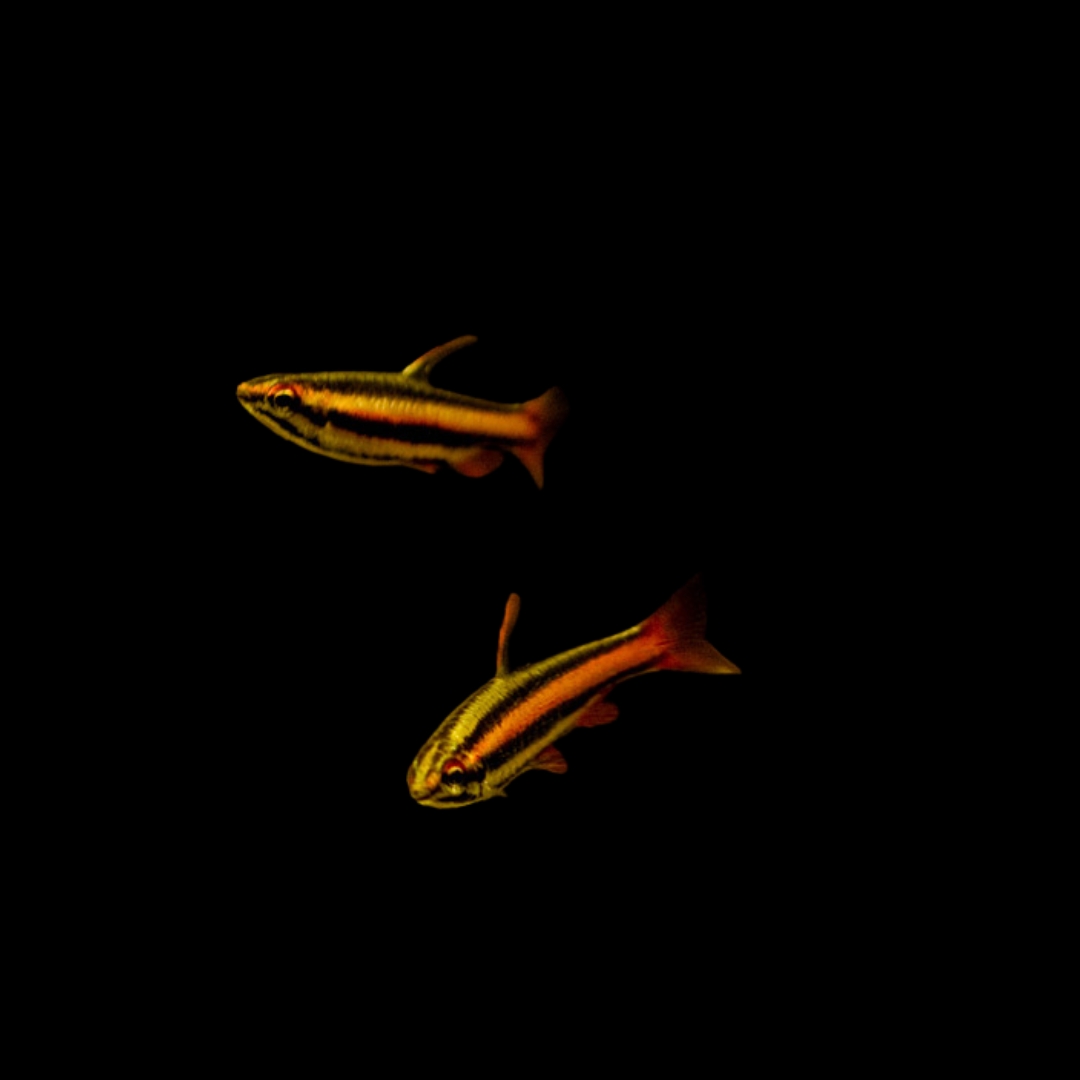
解説 / Description
アークレッド・ペンシルフィッシュは、ペルーのアマゾン水系に分布する非常に美しい小型カラシンです。黒い縦帯の間に燃えるような赤が入る姿から、ペンシルフィッシュの仲間の中でも特に印象的な種として知られています。流通名では「アークレッドペンシル」「コーラルレッド・ペンシルフィッシュ」などと呼ばれ、学名は Nannostomus mortenthaleri です。 The coral red pencilfish is a striking small characiform fish from the Peruvian Amazon drainage. Its vivid red coloration between bold black lateral bands makes it one of the most impressive pencilfish in the aquarium hobby. It is known in Japan as the Ark Red Pencilfish and internationally as the Coral Red Pencilfish, with the scientific name Nannostomus mortenthaleri.
本種は体長3cm前後の小型魚ですが、飼育はやや上級者向けです。理由は、水質そのものよりも、オス同士の強い張り合い、飛び出しやすさ、高水温への弱さ、そしてワイルド個体に多い導入初期の不安定さにあります。落ち着いた弱酸性の軟水、十分な水草や流木、逃げ場のある広めの水槽を用意できると、本種らしい深い赤色と独特の社会行動を楽しむことができます。 Although this species is only around 3 cm long, it is best suited to aquarists with some experience. The main challenges are not only water chemistry, but also strong male rivalry, a tendency to jump, sensitivity to prolonged high temperatures, and the fragility often seen in newly imported wild fish. In a stable, soft, weakly acidic aquarium with plants, wood, and enough space for retreats, its deep red color and fascinating social behavior can be appreciated at their best.
基本情報 / Basic Information
| 学名 / Scientific Name | Nannostomus mortenthaleri |
|---|---|
| 通称 / Common Name | アークレッド・ペンシルフィッシュ、アークレッドペンシル、コーラルレッド・ペンシルフィッシュ、レッドペンシルフィッシュCoral Red Pencilfish, Peruvian Red Pencilfish, Red Pencilfish |
| 分類 / Family | カラシン目 レビアシナ科 ナノストムス属Order Characiformes, family Lebiasinidae, genus Nannostomus |
| 英名 / English Name | Coral Red Pencilfish |
| 分布 / Distribution | ペルー共和国ロレート県のナナイ川流域を中心とするアマゾン水系。ティグレ川水系からの記録も知られています。分布は広いアマゾン全域ではなく、比較的限られた地域に偏ると考えられています。Known mainly from the Nanay River drainage in Loreto, Peru, within the Amazon basin, with records also associated with the Tigre drainage. Its distribution is considered localized rather than widespread throughout the Amazon. |
| 最大体長 / Max Size | 約3cm。流通上は3.5cm前後と表記されることもあります。About 3 cm, though aquarium trade descriptions may list it at around 3.5 cm. |
| 寿命 / Lifespan | おおむね2〜4年程度が目安です。導入初期の状態、夏場の水温管理、同種間のストレス管理によって大きく左右されます。Typically around 2 to 4 years, depending greatly on acclimation condition, summer temperature control, and management of intraspecific stress. |
飼育環境 / Aquarium Environment
| 水槽サイズ / Tank Size | 小型魚ですが、オス同士の張り合いが強いため、単純な体長だけで水槽を選ばないことが大切です。少数飼育でも45cm規格水槽以上、複数匹で本種らしい行動を楽しむなら60cm規格水槽以上を推奨します。10匹以上の群れで管理する場合は、60cm規格水槽から90cm規格水槽が扱いやすく、弱い個体が視線を切れる余裕を作りやすくなります。Although small, tank size should not be chosen by body length alone because males can be strongly competitive. A 45 cm standard tank is a practical minimum for a small group, while a 60 cm standard tank or larger is recommended for observing natural social behavior. For groups of 10 or more, a 60 to 90 cm standard aquarium provides better space for weaker individuals to avoid constant visual contact. |
|---|---|
| 水温 / Temperature | 24〜27℃前後を中心に管理します。短期的には22〜28℃程度まで対応できますが、28℃を超える状態が長く続くと体力を消耗しやすいため、日本の夏は冷却ファンや水槽用クーラーの使用を検討してください。 Maintain around 24 to 27°C. It may tolerate roughly 22 to 28°C for limited periods, but prolonged temperatures above 28°C can be stressful. In Japanese summers, cooling fans or aquarium chillers should be considered. |
| 水質 / Water Quality | 弱酸性から中性寄りの軟水が適しています。理想を狙うならpH5.0〜6.8前後、硬度は低めが目安です。原産地は腐植物質を含むブラックウォーター環境に近いため、ソイル、流木、落ち葉、ピートなどを活用すると落ち着きやすくなります。ただし、極端な低pHを急に作るより、安定した水質を維持することを優先してください。Soft, weakly acidic to near-neutral water is suitable. For ideal conditions, aim for about pH 5.0 to 6.8 with low hardness. Its native habitat is associated with humic blackwater, so aquasoil, driftwood, leaf litter, and peat can help create a calmer environment. However, stable water quality is more important than forcing an abrupt, extremely low pH. |
| レイアウト / Layout | 暗めの底床、流木、後景や側面の水草、浮草を組み合わせ、明るすぎない環境を作ると発色と行動が安定しやすくなります。オス同士の小競り合いを和らげるには、単に隠れ家を置くのではなく、流木や水草で視線が切れる場所を複数作ることが重要です。遊泳層は中層から上層寄りになるため、水面付近にも安心できる余白と浮草があるとよいでしょう。A darker substrate, driftwood, background and side plants, and floating plants help create a subdued environment that supports stable coloration and behavior. To reduce male rivalry, it is important to create multiple visual barriers with wood and plants rather than simply adding caves. This species often occupies the middle to upper levels, so sheltered open space and floating cover near the surface are useful. |
| 注意点 / Precautions | 飛び出し事故が非常に起こりやすいため、フタは必須です。給餌時や換水時のわずかな隙間からも飛び出すことがあります。また、導入直後のワイルド個体は輸送疲れやスレ傷を抱えていることがあるため、いきなり本水槽へ入れず、可能であれば観察しやすい隔離水槽で状態を整えてから合流させると安心です。A tight-fitting lid is essential because jumping accidents are common, even through small gaps during feeding or maintenance. Newly imported wild fish may be weakened by transport stress or minor abrasions, so observation and conditioning in a separate quarantine tank are recommended before introduction to the main aquarium. |
餌と給餌 / Feeding
| 餌の種類 / Diet | 小さな口に合わせ、細かく砕いたフレーク、微細な顆粒フード、ブラインシュリンプ幼生、ミジンコ、冷凍赤虫を刻んだものなどを与えます。赤い発色を維持したい場合は、人工飼料だけに偏らせず、動物質の小型餌を定期的に組み合わせるとよいでしょう。Offer finely crushed flakes, micro granules, Artemia nauplii, daphnia, and chopped frozen bloodworms. To maintain strong red coloration, combine quality prepared foods with small animal-based foods on a regular basis. |
|---|---|
| 給餌のポイント / Feeding Tips | 一度に大量に与えるより、少量をよく観察しながら与える方が安全です。優位な個体が前面で餌を独占し、弱い個体が食べ損ねることがあるため、餌を数か所に散らす、沈下速度の異なる餌を組み合わせるなどの工夫が有効です。水を汚しやすい冷凍餌は、食べ残しが出ない量に抑えてください。Small, carefully observed feedings are safer than large portions. Dominant individuals may monopolize food near the front, so distribute food in several areas and combine foods with different sinking speeds. Frozen foods should be offered in amounts that are consumed quickly to avoid water pollution. |
性格と混泳 / Temperament and Tank Mates
| 性格 / Temperament | 他種に対しては比較的温和ですが、同種のオス同士では張り合いが強く、フィンスプレッディングや追い払いがよく見られます。小型魚らしい繊細さと、意外なほど強い縄張り意識を併せ持つ魚です。弱い個体が追い詰められないよう、匹数、水槽幅、レイアウトで圧力を分散させることが大切です。It is generally peaceful toward other species, but males can be highly competitive with one another, often displaying and chasing. This fish combines the delicacy of a tiny characiform with a surprisingly strong territorial tendency. Group size, tank width, and layout should be used to disperse pressure so weaker individuals are not trapped. |
|---|---|
| 混泳の相性 / Compatibility | 同じく小型で温和なカラシン、ラスボラ類、小型コリドラス、小型ロリカリア、アピストグラマなどのドワーフシクリッドと相性がよい傾向があります。アピストグラマ水槽では、上層を泳ぐことで警戒心を和らげる「お守り役」のように働くこともあります。中型魚、気の強い魚、泳ぎの速すぎる魚、口に入るサイズの魚との混泳は避けてください。Suitable companions include small peaceful characins, rasboras, small Corydoras, small loricariids, and dwarf cichlids such as Apistogramma. In dwarf cichlid aquariums, their upper-level activity can help make the tank feel safer for more cautious fish. Avoid medium-sized, aggressive, overly fast, or predatory tank mates. |
病気と対策 / Diseases and Prevention
| かかりやすい病気 / Common Diseases | 白点病、水カビ、スレ傷からの二次感染、尾ぐされ症状、導入直後の衰弱に注意が必要です。ワイルド個体では、輸送中の水質変化や擦れによって、購入直後は見た目以上に体力を消耗していることがあります。Watch for ich, fungal infections, secondary infections from abrasions, fin erosion, and post-import weakness. Wild fish may be more exhausted than they appear due to shipping stress and water quality changes during transport. |
|---|---|
| 対策と予防 / Prevention | 最も大切なのは、清潔で安定した弱酸性寄りの軟水を維持することです。白点病対策として水温を大きく上げる方法は、本種では負担が大きくなりやすいため、上げる場合でも28℃程度を上限に慎重に行います。薬浴は水草への影響も考え、必要に応じて隔離水槽で行うと安全です。導入時は点滴法などでゆっくり水合わせし、導入後数日は強い照明や過度な給餌を避けてください。The best prevention is clean, stable, soft water on the acidic side. Raising temperature aggressively for ich treatment can be stressful for this species, so if temperature is increased, keep it cautious and generally no higher than about 28°C. Medication is often safer in a separate hospital tank, especially when planted aquariums are involved. Slow acclimation and subdued conditions during the first few days are strongly recommended. |
増やし方(繁殖) / Breeding
| 雌雄の判別 / Sexing | オスは体がやや細く、赤い発色が強く、ヒレにも赤みが出やすい傾向があります。成熟したオスでは、背ビレ付近の白い小斑や尻ビレの形状が判断材料になることがあります。メスは体型に丸みが出やすく、赤みは控えめです。ただし、順位や環境によって発色が大きく変わるため、色だけで即断しない方が安全です。Males tend to be slimmer, more intensely red, and more colorful in the fins. Mature males may show small pale markings near the dorsal fin and differences in anal fin shape. Females are usually rounder and less red. However, coloration can change with social rank and environment, so sexing should not rely on color alone. |
|---|---|
| 繁殖形態 / Reproduction | 卵生で、水草や産卵モップなどに卵をばらまくタイプです。親は卵を保護せず、食卵しやすいため、繁殖を狙う場合は親魚と卵を分ける必要があります。An egg-scattering species that deposits eggs among fine plants or spawning mops. The parents do not guard the eggs and may eat them, so eggs and adults must be separated for breeding attempts. |
| 繁殖のポイント / Breeding Tips | 繁殖難易度は高めです。弱酸性の軟水、暗めの環境、細かい水草や産卵モップ、栄養状態のよい親魚を用意します。産卵後は親を取り出し、卵と稚魚を静かな環境で管理します。最大の難関は初期飼料で、孵化直後の稚魚は非常に小さいため、ブラインシュリンプ幼生より先にインフゾリアやワムシなどの微小な餌を必要とする場合があります。Breeding is challenging. Prepare soft acidic water, dim lighting, fine plants or spawning mops, and well-conditioned adults. After spawning, remove the adults and keep eggs and fry in a quiet environment. The greatest difficulty is first food: newly hatched fry are extremely small and may require infusoria, rotifers, or similarly tiny foods before they can take Artemia nauplii. |
雑学と豆知識 / Trivia and Fun Facts
| 1. 「小さな口」を意味する属名 / 1. A genus name that means “small mouth” | Nannostomus という属名は、小さいことを表す語と口を表す語に由来するとされ、ペンシルフィッシュの仲間に共通する小さな口をよく表しています。この特徴は見た目の可愛らしさだけでなく、飼育にも直結します。餌が大きすぎると食べにくく、よく太った個体でも実際に口へ入れられるサイズはかなり限られます。美しい赤を保つために栄養価の高い餌を与えたい魚ですが、まずは「口に入る大きさ」に整えることが基本になります。The genus name Nannostomus is understood to refer to a small mouth, a feature typical of pencilfish. This is not only a charming anatomical trait but also an important husbandry point. Even healthy adults can only take very small foods, so nutritious foods must still be offered in a size they can actually swallow. |
|---|---|
| 2. 亜種から独立種へ変わった魚 / 2. From subspecies to full species | 本種は当初、マジナータス・ペンシルの亜種として扱われましたが、その後の見直しによって独立した種として扱われるようになりました。観賞魚としては「赤いペンシル」とひとくくりにされがちですが、分類学の視点では、体側の赤の入り方、ヒレの色彩、雌雄差、分布などが重要な手がかりになります。アクアリウムでの人気が先に立つ魚ほど、流通名と学名の整理が後から追いついてくることがあり、本種はその好例といえます。This species was originally treated as a subspecies of Nannostomus marginatus, but later work led to its recognition as a full species. In the aquarium trade, red pencilfish may be grouped casually, but taxonomically the pattern of red coloration, fin colors, sexual dimorphism, and distribution are important clues. It is a good example of how aquarium popularity and scientific naming can evolve together over time. |
| 3. 赤さは気分と順位を映す / 3. Red coloration reflects mood and rank | アークレッド・ペンシルフィッシュの赤は、単なる固定された模様ではありません。優位なオスは深い赤をまとってヒレを広げ、相手に自分の存在を見せつけます。一方で、下位個体は発色を落として目立たなくなることがあります。水槽内で赤が強い個体と薄い個体がいる場合、それは性差だけでなく、社会的な立場や緊張の度合いを反映している可能性があります。つまり本種の色は、健康状態だけでなく水槽内の人間関係ならぬ「魚関係」を読む手がかりにもなります。The red coloration of this species is not merely a fixed pattern. Dominant males display deeper reds and spread their fins to signal their status, while subordinate individuals may become paler to avoid attention. Differences in redness within an aquarium may reflect not only sex, but also social rank and stress. In this sense, its color can help the aquarist read the social atmosphere of the tank. |
| 4. 昼と夜で表情を変えるペンシルフィッシュ / 4. A pencilfish that changes between day and night | ナノストムス属の多くは、日中と夜間で体色や模様の見え方が変化します。アークレッド・ペンシルフィッシュも、消灯後には赤みが弱まり、日中とは別の魚のように見えることがあります。これは驚いて色が抜けただけではなく、体内時計や神経系と関わる自然な変化と考えられています。夜に水槽をのぞいて「赤くない」と感じても、翌日落ち着いた照明下で戻っていれば、必ずしも不調とは限りません。Many Nannostomus species show different colors or patterns between day and night. The coral red pencilfish may appear much less red after lights out, almost like a different fish. This is considered a natural rhythm linked to internal biological timing rather than simply a fear response. If the fish looks pale at night but regains color the next day, it is not necessarily a sign of illness. |
| 5. 希少性と飼育者の責任 / 5. Rarity and the aquarist’s responsibility | 本種はIUCNレッドリストで深刻な保全状態に置かれる魚として扱われています。現在の観賞魚流通ではワイルド個体が見られますが、局所的な分布を持つ小型魚である以上、採集圧や生息地の変化には慎重な目を向ける必要があります。飼育者にできることは、衝動買いではなく、適切な水槽を準備して長期飼育を目指すことです。さらに繁殖例や維持方法の知見が積み上がれば、将来的に野生個体への依存を減らす一歩にもつながります。This species is treated as being in a serious conservation category on the IUCN Red List. Wild specimens still appear in the aquarium trade, but a localized small fish can be vulnerable to collection pressure and habitat change. The aquarist’s role is to avoid impulse purchases and instead prepare appropriate conditions for long-term care. Accumulating breeding and maintenance knowledge may also help reduce dependence on wild fish in the future. |
まとめ / Conclusion
アークレッド・ペンシルフィッシュは、小さな体に鮮烈な赤と複雑な社会行動を備えた、非常に魅力のある南米小型カラシンです。水草の茂る弱酸性の軟水水槽では、単なる美しい魚にとどまらず、順位争い、発色の変化、群れの距離感といった奥深い行動を観察できます。 The coral red pencilfish is a fascinating South American small characiform, combining vivid red coloration with complex social behavior. In a planted, soft, weakly acidic aquarium, it offers more than beauty: aquarists can observe hierarchy, changing coloration, and subtle group dynamics.
一方で、飛び出し対策、高水温対策、同種間のストレス管理、導入時の慎重な水合わせは欠かせません。60cm規格水槽以上を目安に、十分な水草と流木で逃げ場を作り、少量多回の給餌と安定した水質を心がけることで、本種の魅力を長く引き出せます。希少性の高い魚だからこそ、入手した一匹一匹を大切に育てたい種類です。 At the same time, jumping prevention, high-temperature control, management of intraspecific stress, and careful acclimation are essential. A 60 cm standard aquarium or larger, with plenty of plants and driftwood, small frequent feedings, and stable water quality will bring out its charm over the long term. Because it is a rare and sensitive species, each individual should be kept with particular care.

気になる道具や飼い方を見つけてみませんか?
 アイのアクアグッズ案内金魚を長く楽しむ飼育用品|水槽・フィルター・エアレーション・水換え道具の特徴や使い方、選ぶときのポイントをアイが紹介します。記事はコチラ →
 アイのアクアグッズ案内ラスボラ・ボララスの群泳を楽しむ飼育用品|水槽・ろ過・ヒーター・餌・水草道具の特徴や使い方、選ぶときのポイントをアイが紹介します。記事はコチラ →
 アイのアクアグッズ案内水槽のエアーポンプの選び方|水深・音・泡で選ぶおすすめ用品道具の特徴や使い方、選ぶときのポイントをアイが紹介します。記事はコチラ →
 アイのアクアグッズ案内コケを食べるコイの仲間に合わせる飼育用品|フライングフォックス・アルジイーター・ガラ道具の特徴や使い方、選ぶときのポイントをアイが紹介します。記事はコチラ →
さまざまな飼育テーマをご紹介。リンク先の記事には広告・商品紹介が含まれます。
案内・紹介記事一覧へ →参考文献・参照資料
本記事では、アークレッド・ペンシルフィッシュ(Nannostomus mortenthaleri)の分類、分布、保全状況、飼育環境に関する記述を確認するため、以下の資料を参照しました。販売店・通販サイトなどの店舗系情報は除外しています。
-
Paepke, H.-J. & Arendt, K. (2001). Nannostomus marginatus mortenthaleri new subspec. from Peru (Teleostei: Lebiasinidae). Verhandlungen der Gesellschaft für Ichthyologie 2001: 143-154.
原記載にあたる文献です。本種が当初 Nannostomus marginatus の亜種として記載された経緯、タイプ産地、形態的特徴を確認するための基礎資料として参照しました。 -
Fricke, R., Eschmeyer, W. N. & van der Laan, R. (eds.). Eschmeyer’s Catalog of Fishes: Nannostomus mortenthaleri. California Academy of Sciences.
https://researcharchive.calacademy.org/research/ichthyology/catalog/fishcatget.asp?spid=66774
現在有効な学名、原記載名、タイプ産地、所蔵標本、レビアシナ科内での分類を確認するために参照しました。 -
Reis, R. E., Kullander, S. O. & Ferraris, C. J. Jr. (eds.) (2003). Checklist of the Freshwater Fishes of South and Central America. EDIPUCRS, Porto Alegre.
南米・中米淡水魚の分類整理に関する重要文献です。本種が独立種として扱われる分類学的背景を確認する補助資料として参照しました。 -
FishBase. Nannostomus mortenthaleri Paepke & Arendt, 2001.
https://fishbase.se/summary/Nannostomus-mortenthaleri
最大体長、分布、分類、保全情報へのリンクなど、種の基礎データを照合するために参照しました。 -
Ortega Torres, H. & Cortijo Villaverde, A. M. Nannostomus mortenthaleri. The IUCN Red List of Threatened Species.
https://www.iucnredlist.org/species/49830676/53818718
本種の保全状況、分布域の狭さ、個体群動向、野生個体への採集圧に関する記述を確認するために参照しました。 -
Seriously Fish. Nannostomus mortenthaleri — Coral Red Pencilfish.
https://www.seriouslyfish.com/species/nannostomus-mortenthaleri/
水温、水質、レイアウト、餌、混泳、繁殖難易度など、アクアリウムでの飼育条件を確認するために参照しました。 -
SHOAL. (2025). Tiny Fishes. SHOAL Conservation.
https://shoalconservation.org/wp-content/uploads/2025/12/TINY-FISHES-SHOAL-2025.pdf
小型淡水魚の保全上の重要性、本種の限定的な分布、ブラックウォーター環境、飼育下繁殖と野生個体群への負荷軽減に関する情報を確認するために参照しました。 -
Encyclopedia of Life. Nannostomus mortenthaleri Paepke & Arendt, 2001.
https://eol.org/pages/219883
分類、淡水魚としての基本情報、最大体長などを補助的に確認するために参照しました。




コメント