
解説 / Description
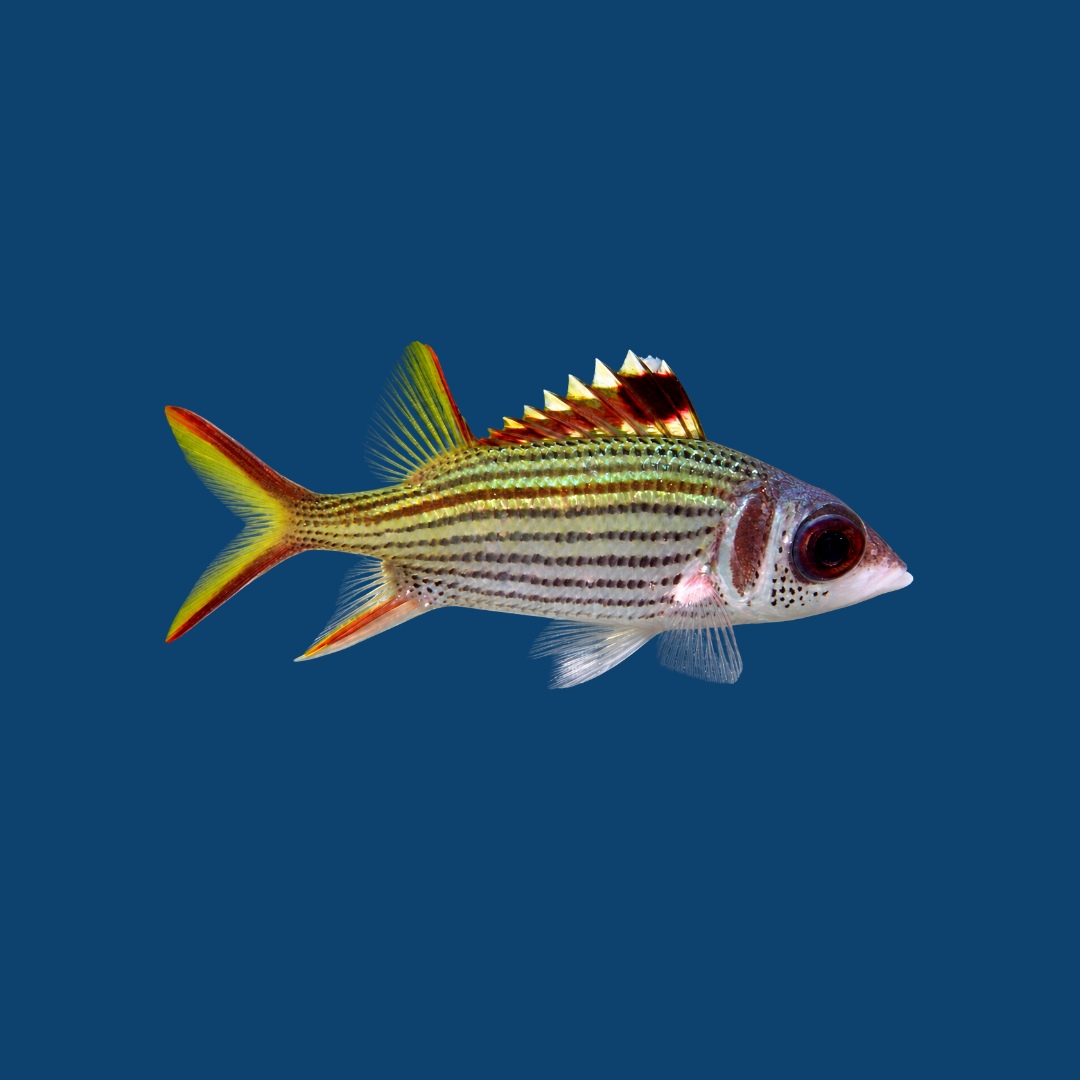
ウケグチイットウダイは、銀白色の体に頭から尾へ続く赤褐色の細い線が入り、大きな目と突き出した下顎が印象的な海水魚です。背びれの前部には目立つ黒斑があり、よく似た仲間を見分ける手掛かりになります。日本では琉球列島や小笠原諸島などに生息し、日中はサンゴや岩の陰で過ごしながら、暗くなると小さな甲殻類や魚を探して泳ぎ出します。最大で全長約32cmになるため、迎える際には成長後を見据えた広い水槽が必要です。落ち着いて休める隠れ場所と夜間の遊泳空間を整えると、静かに身を潜める姿と、餌を見つけて機敏に動く姿の両方を楽しめます。 The sammara squirrelfish is a marine fish with a silvery body, fine reddish-brown stripes running from head to tail, large eyes, and a distinctly projecting lower jaw. A conspicuous dark blotch at the front of the dorsal fin helps distinguish it from similar species. In Japan, it occurs around the Ryukyu and Ogasawara islands, among other locations. It shelters among corals and rocks during the day, then emerges after dark to search for small crustaceans and fishes. With a maximum total length of about 32 cm, it needs a spacious aquarium planned around its adult size. Providing sheltered resting places and open space for nighttime swimming allows you to appreciate both its quiet daytime presence and its quick movements when feeding.
基本情報 / Basic Information
| 学名 / Scientific Name | Neoniphon sammara |
|---|---|
| 通称 / Common Name | ウケグチイットウダイ。標準和名と同じ名称で国内流通します。Sammara squirrelfish. In Japan, it is traded under its standard Japanese name, Ukeguchi-ittoudai. |
| 分類 / Family | イットウダイ科・イットウダイ亜科・ウケグチイットウダイ属。上位分類ではイットウダイ目(Holocentriformes)に置く体系があり、従来のキンメダイ目(Beryciformes)に含める体系も用いられています。Family Holocentridae, subfamily Holocentrinae, genus Neoniphon. Some classifications place the family in the order Holocentriformes, while the traditional placement within Beryciformes also remains in use. |
| 英名 / English Name | Sammara squirrelfish, Spotfin squirrelfish, Slender squirrelfish |
| 分布 / Distribution | 紅海・東アフリカからハワイ諸島、マルケサス諸島、デュシー島などに至るインド太平洋に広く分布します。南はオーストラリア北部やロードハウ島まで知られます。日本では琉球列島、小笠原諸島、種子島、和歌山県沿岸などに記録があり、2020年には高知県柏島で四国初記録となる個体が採集されました。浅いサンゴ礁や岩礁、礁湖、海草藻場などに生息します。Widely distributed across the Indo-Pacific, from the Red Sea and East Africa to Hawaii, the Marquesas Islands, and Ducie Island, extending south to northern Australia and Lord Howe Island. Japanese records include the Ryukyu Islands, Ogasawara Islands, Tanegashima, and the coast of Wakayama Prefecture. A specimen collected at Kashiwa Island in Kochi Prefecture in 2020 provided the first record from Shikoku. Habitats include shallow coral reefs, rocky reefs, lagoons, and seagrass beds. |
| 最大体長 / Max Size | 最大で全長約32cm。一般的な大きさとして全長約23cmが知られます。全長は吻の先端から尾びれの先端までの長さで、飼育設備は30cm級への成長を想定して用意します。Up to approximately 32 cm in total length, with a commonly reported length of about 23 cm. Total length is measured from the tip of the snout to the tip of the tail. Plan the aquarium to accommodate a fish around 30 cm long. |
| 寿命 / Lifespan | 飼育下の平均寿命は明らかではありません。紅海の漁獲個体を調べた研究では、耳石の成長輪から2〜5歳と推定された個体が確認されています。ただし、これは調査された個体の年齢範囲であり、本種の寿命の上限や、水槽で飼える年数を示すものではありません。Average lifespan in captivity is not well established. A study of fish caught in the Red Sea estimated ages of 2–5 years from growth rings in their otoliths. This describes the ages of the sampled fish, rather than establishing the species’ maximum lifespan or expected longevity in an aquarium. |
飼育環境 / Aquarium Environment
| 水槽サイズ / Tank Size | 単独の長期飼育では、120cmワイド水槽(幅120×奥行60×高さ60cm、総容量約432L)を下限の目安とし、成魚には150cmワイド水槽(150×60×60cm、総容量約540L)以上を推奨します。複数飼育を検討する場合は、180cm級水槽(180×60×60cm、総容量約648L)以上を出発点に、個体数や相性に応じてさらに広さを確保してください。これらは最大体長と夜間の活動を考慮した、余裕を持たせるための飼育目安です。容量は寸法から求めた概算で、実際の水量は水位や岩、底砂によって少なくなります。For long-term care of one fish, use a Japanese 120 cm wide-format aquarium measuring 120 × 60 × 60 cm, approximately 432 L in gross volume, as a practical lower starting point. An adult is better accommodated in a 150 cm wide-format aquarium measuring 150 × 60 × 60 cm, approximately 540 L, or larger. For multiple fish, consider at least a 180 cm aquarium measuring 180 × 60 × 60 cm, approximately 648 L, with additional space according to stocking and compatibility. These are conservative husbandry guidelines based on adult size and nighttime activity. Volumes are calculated from dimensions; actual water volume is lower after allowing for the water level, rocks, and substrate. |
|---|---|
| 水温 / Temperature | 24〜27℃を飼育の目安とし、急な変化を避けて安定させます。夏季の高水温と酸素不足に注意し、必要に応じて冷却設備を用意してください。この範囲は熱帯性海水魚として管理するための目安で、本種だけを対象に実験で求められた最適水温ではありません。 Aim for a stable 24–27°C, avoiding abrupt changes. Watch for excessive summer temperatures and reduced oxygen availability, and provide cooling when needed. This is a practical management range for a tropical marine fish, rather than an experimentally determined optimum specific to this species. |
| 水質 / Water Quality | 海水で飼育し、管理の目安はpH8.1〜8.4、比重1.023〜1.026程度です。比重は水温25℃を基準に考え、測定器の基準温度や校正方法を確認してください。十分に生物ろ過が働いた水槽を用い、アンモニアと亜硝酸は検出されない状態を保ちます。肉食魚の給餌による汚れに対応できるろ過設備を備え、残餌の除去と定期的な換水で硝酸塩の蓄積を抑えましょう。pHや比重の数値も一般的な海水飼育の目安であり、急いで数値を合わせるより、適切な範囲で安定させることが大切です。Keep in seawater, using a pH of approximately 8.1–8.4 and a specific gravity of about 1.023–1.026 as practical targets. Interpret specific gravity with reference to 25°C, and check the instrument’s calibration temperature and instructions. Use a fully cycled aquarium and maintain undetectable ammonia and nitrite. Provide filtration capable of handling the waste from meaty foods, remove leftovers, and perform regular water changes to limit nitrate accumulation. These pH and specific-gravity values are general marine husbandry targets; maintaining suitable, stable conditions is more important than making rapid adjustments to reach an exact number. |
| レイアウト / Layout | 成長後も体全体を隠せる洞窟や、岩がひさし状に張り出す場所を設けます。ライブロックなどは崩れないように固定し、出入りの際に体やひれをこすらない広い開口部を確保してください。岩組みの周囲には夜間に泳ぐための空間を残します。サンゴ用の明るい照明を使う場合も、光が直接届かない暗い場所を用意しましょう。水流は隠れ場所に強く当たり続けないように調整し、水面の動きやろ過によって十分な酸素を供給します。Provide caves and overhangs large enough to conceal the entire fish even when fully grown. Secure live rock or other structures against collapse, and make entrances wide enough to prevent the body and fins from scraping during entry or exit. Leave open space around the rockwork for nighttime swimming. If using bright coral lighting, retain shaded retreats that are protected from direct illumination. Avoid directing a strong, continuous current into every shelter, while maintaining adequate oxygenation through surface movement and filtration. |
| 注意点 / Precautions | えらぶた付近にある前鰓蓋骨の棘には毒性が報告されています。背びれや尻びれの棘も鋭いため、素手で魚体を握らず、移動時は水中で硬い容器へ誘導すると網への絡まりを避けやすくなります。刺された場合は医療機関に相談してください。導入時には照明を落とし、移す前に水温と比重の差を確認します。驚いた際の飛び出しに備えてふたを設け、配管周辺の隙間にも注意しましょう。昼間に隠れているときは、観察のために岩を動かして追い出さず、安心して休める状態を保ちます。The spine at the corner of the preopercle, near the gill cover, has been reported as venomous. The dorsal and anal spines are also sharp. Avoid holding the fish with bare hands; guiding it into a rigid container underwater can reduce the risk of net entanglement. Seek medical advice if a spine punctures the skin. Dim the lighting during introduction and check differences in temperature and specific gravity before transfer. Use a secure lid, including protection around plumbing openings, as a precaution against escape when startled. Allow the fish to rest undisturbed in its daytime shelter instead of moving rocks to force it into view. |
餌と給餌 / Feeding
| 餌の種類 / Diet | 小型のカニやエビ、小魚などを食べる肉食性です。飼育下では、冷凍イサザアミ、オキアミ、エビ、貝のむき身、海産魚の切り身などを、魚の大きさに合わせて与えます。慣れてくれば海水性肉食魚用の人工飼料を食べる個体もいますが、餌付きには個体差があります。エビの身だけなど一種類に偏らず、栄養バランスを考えた人工飼料と複数の動物性の餌を組み合わせると管理しやすくなります。A carnivore that naturally eats small crabs, shrimp, and fishes. Suitable aquarium foods include frozen mysid shrimp, krill, shrimp, shelled mollusk meat, and pieces of marine fish, offered in sizes appropriate to the individual. Some fish accept prepared foods formulated for marine carnivores after acclimation, although acceptance varies. Avoid relying on a single ingredient such as shrimp meat alone; a combination of nutritionally balanced prepared food and varied meaty foods supports more consistent feeding management. |
|---|---|
| 給餌のポイント / Feeding Tips | 導入直後は、照明を落とした直後などの薄暗い時間帯に、隠れ場所の近くへ少量ずつ餌を届けます。給餌回数は1日1回を出発点とし、若魚には少量を1日2回に分けるなど、成長や体形、食欲に合わせて調整してください。数分で食べきる量を目安にし、残った餌は取り除きます。混泳水槽ではほかの魚に餌を取られていないか、実際に飲み込んでいるかを確かめましょう。食べない状態が続くときは、給餌量を増やす前に、明るさ、隠れ場所、同居魚からの圧迫、水質や体調を見直します。New arrivals may feed more readily in dim conditions, such as shortly after the lights are turned down. Offer small portions near the shelter. Once daily is a reasonable starting schedule, with smaller meals twice daily for younger fish when appropriate; adjust according to growth, body condition, and appetite. Offer amounts consumed within a few minutes and remove leftovers. In a community aquarium, confirm that the fish actually swallows food and is not being outcompeted. If refusal persists, review lighting, shelter, pressure from tank mates, water quality, and health before increasing the amount of food offered. |
性格と混泳 / Temperament and Tank Mates
| 性格 / Temperament | 日中は物陰を好み、導入直後は警戒して姿を見せにくいことがあります。夜間には餌を探して活動し、小さな生体に対しては捕食者として振る舞います。自然下では単独から小群まで見られますが、水槽で常に群泳する魚とは限りません。同種間でも隠れ場所や餌をめぐる競争が起こり得るため、複数飼育では個体ごとの行動と摂餌をよく観察します。It favors cover during the day and may remain hidden while settling into a new aquarium. At night it becomes an active forager and behaves as a predator toward small animals. Wild individuals occur alone or in small groups, but they do not necessarily form a persistent school in captivity. Competition over shelter or food can occur between conspecifics, so monitor each fish’s behavior and feeding when keeping more than one. |
|---|---|
| 混泳の相性 / Compatibility | 口に入らない十分な大きさがあり、本種の隠れ場所を奪わない海水魚を選びます。小型魚や観賞用の小型エビ、カニは捕食されるおそれが高く、混泳相手に適しません。サンゴを主な餌とする魚ではありませんが、小型甲殻類を含めた水槽内のすべての生体に安全という意味ではありません。攻撃的な魚や給餌時に激しく餌を奪う魚との組み合わせは慎重に判断し、追い回しや食べ負けが続く場合は隔離できるようにしておきましょう。Choose marine tank mates that are clearly too large to swallow and that will not displace it from its shelters. Small fishes, ornamental shrimp, and small crabs are at substantial risk of predation and are unsuitable companions. Corals are not its principal food, but this does not make it safe with all inhabitants of a reef aquarium, particularly small crustaceans. Assess aggressive species and vigorous food competitors carefully, and be prepared to separate fish if chasing or feeding competition persists. |
病気と対策 / Diseases and Prevention
| かかりやすい病気 / Common Diseases | 本種に特有の病気の起こりやすさや、薬剤への感受性は十分に明らかになっていません。一般的な海水魚の病気として、海水白点病やウーディニウム病などの寄生虫病、外傷に続く細菌感染に注意します。体をこすりつける、呼吸が速い、体表に白点や粘液の増加が見られる、食欲が落ちるといった変化が観察の手掛かりです。えらへの寄生では目立つ白点がない場合もあり、外見だけで原因を決めつけないことが大切です。Species-specific disease susceptibility and sensitivity to medications are not well established. General marine fish concerns include marine white spot disease, marine velvet, and bacterial infections following injury. Watch for rubbing against objects, rapid breathing, white spots, excess mucus, and reduced appetite. Gill infections may occur without obvious spots on the body, so appearance alone should not be used to determine the cause. |
|---|---|
| 対策と予防 / Prevention | 新しく迎える個体は別水槽で隔離・観察し、呼吸、体表、摂餌状態を確認します。隔離水槽にも生物ろ過と十分な酸素供給、安心できる隠れ場所を用意し、器具の共用を避けて病原体の持ち込みを減らしましょう。異常が見られたら、まず水温、比重、アンモニアなどの水質と酸素供給を確認し、必要に応じて魚を診療できる獣医師に相談します。薬剤を使う場合は病気に合う製品を選び、用法と必要な濃度測定を守って隔離水槽で管理してください。銅を含む治療薬はサンゴやエビ、貝などに有害です。白点が消えても寄生虫の生活環が続くことがあるため、見た目の改善だけで治療終了を判断しないようにします。Quarantine new arrivals in a separate aquarium and observe breathing, skin condition, and feeding. Provide biological filtration, adequate oxygenation, and suitable shelter in quarantine, and avoid sharing equipment between systems. If abnormalities appear, first check temperature, specific gravity, ammonia, and oxygen supply, then consult a veterinarian experienced with fish when needed. Select medication appropriate to the diagnosed problem and follow the product’s instructions, including any required concentration testing, in a separate treatment aquarium. Copper-based medications are harmful to corals, shrimp, snails, and other invertebrates. The disappearance of visible white spots does not necessarily mean the parasite’s life cycle has ended, so do not stop treatment solely because the fish looks better. |
増やし方(繁殖) / Breeding
| 雌雄の判別 / Sexing | 外見だけで雌雄を確実に見分けることは難しく、体色、ひれの形、体の大きさによる信頼できる判別方法は明らかではありません。繁殖に関する研究では生殖腺の観察によって性別が調べられており、体格差だけでペアと判断することはできません。Reliable sexing by external appearance is difficult. No dependable method based on coloration, fin shape, or body size is established. Reproductive studies have determined sex by examining the gonads, so differences in size alone cannot confirm that two fish form a male–female pair. |
|---|---|
| 繁殖形態 / Reproduction | 卵生で、卵を水中へ放出する浮遊産卵型と考えられています。インドで行われた調査では11〜5月が産卵期として報告され、雌1尾の卵巣内にある成熟卵の数は7,973〜15,323個と推定されました。この数値は1回に産む卵の数や年間の産卵数を示すものではありません。日本の個体群の詳しい産卵期や産卵行動は明らかではなく、海外の季節性をそのまま当てはめることはできません。An egg-laying species thought to release eggs into the water as a pelagic spawner. A study in India reported a spawning season from November to May and estimated 7,973–15,323 mature eggs in the ovaries of an individual female. These figures do not represent the number released in a single spawning event or total annual egg production. Detailed spawning seasons and behavior in Japanese populations remain unclear, and the seasonal pattern observed elsewhere should not be directly transferred to Japan. |
| 繁殖のポイント / Breeding Tips | 家庭水槽で再現できる繁殖・仔魚育成の方法は、十分に確立されていません。繁殖に取り組むには、親魚を落ち着いて維持できる大型水槽に加え、卵や仔魚を保護する独立した育成設備、初期の仔魚が食べられる微小な生き餌の確保が課題になります。親魚が食べる餌を細かくするだけでは、仔魚の餌として適するとは限りません。まずは安定した環境と十分な栄養で親魚の状態を整え、同種間の相性や行動を継続して観察することが基本です。A reproducible home-aquarium method for breeding and larval rearing is not well established. An attempt would require a spacious, stable environment for the adults, separate facilities to protect eggs and larvae, and an appropriate supply of tiny live prey for the earliest feeding stages. Finely chopping adult food does not necessarily make it suitable for larvae. The starting point is to maintain healthy adults under stable conditions with adequate nutrition, while carefully observing compatibility and behavior. |
雑学と豆知識 / Trivia and Fun Facts
| 1. 「受け口」と背びれの黒斑に注目 / 1. A Projecting Jaw and a Distinctive Dorsal Blotch | ウケグチイットウダイの顔を横から見ると、口を閉じていても下顎の先端が上顎より前へ出ていることが分かります。和名の「ウケグチ」は、その顔立ちを思い浮かべやすい言葉です。さらに背びれを広げた瞬間には、前方の硬い棘の間にある大きな黒斑が現れます。この二つを合わせて観察すると、似た体形の仲間を見分ける手掛かりになります。体側の模様にも目を向けてみましょう。鱗ごとの赤褐色から暗色の斑点が列を作り、頭から尾へ走る細い線として見えています。遠目には銀色と赤のすっきりした模様でも、近くで見ると一枚一枚の鱗がその模様を形作っていることに気付かされます。Seen from the side, the lower jaw projects beyond the upper jaw even when the mouth is closed. The Japanese word “ukeguchi” evokes this distinctive facial profile. When the dorsal fin opens, a large dark blotch becomes visible between the spines toward its front. Observing the jaw and blotch together provides useful clues for distinguishing the fish from similar relatives. Its body pattern rewards a closer look, too: reddish-brown to dark markings on individual scales align into fine stripes running from head to tail. What appears at a distance to be a simple silver-and-red pattern is built from the repeated details of many separate scales. |
|---|---|
| 2. 1775年から受け継がれる学名 / 2. A Scientific Name with Roots in 1775 | この魚は1775年にSciaena sammaraという学名で記載されました。その後、HolocentrusやFlammeoなどの属に置かれた時代を経て、現在はNeoniphon sammaraとして扱われています。属名が変わっても、種小名のsammaraは受け継がれてきました。学名の変遷には、よく似た魚たちの体形やひれ、鱗などを調べながら、仲間同士の関係を整理してきた分類学の歩みが残っています。上位分類でも、従来のキンメダイ目に含める考え方と、イットウダイ目として独立させる考え方があります。名前の背後にある長い歴史を知ると、水槽で出会う一尾が、何世代もの研究者によって観察されてきた魚であることを実感できます。This fish was described in 1775 under the name Sciaena sammara. It was later placed in genera including Holocentrus and Flammeo, before being recognized under its present name, Neoniphon sammara. Although the genus name changed, the species epithet sammara was retained. These changes reflect the history of taxonomy: researchers examining body shape, fins, scales, and other features to clarify relationships among similar fishes. Higher classification has also changed, with some systems retaining the family in Beryciformes and others recognizing the separate order Holocentriformes. Behind the fish in an aquarium lies a long history of observations passed from one generation of researchers to the next. |
| 3. 大きな目が見つめるサンゴ礁の夜 / 3. Large Eyes in the Reef After Dark | ウケグチイットウダイの大きな目は、薄暗い隠れ場所と夜間の採餌という暮らしによく結びついています。生息場所は浅い礁原や礁湖から水深40m台に及び、枝状のミドリイシ類の周囲でも見られます。日中は複雑な枝や岩の陰を利用し、暗くなるとそこから離れて、小さなカニやエビ、魚を探します。同じサンゴ礁でも、昼と夜では活動する生き物の顔ぶれが変わり、本種はその夜の時間を担う魚の一つです。水槽でも、昼間に奥へ隠れているだけで不調と決めつけず、照明が弱まった時間の動きや食欲を観察してみてください。安心できる陰を残すことで、この魚の自然な生活リズムを受け止めやすくなります。The sammara squirrelfish’s large eyes fit a life spent in shaded retreats and feeding after dark. It inhabits reef flats and lagoons as well as depths exceeding 40 m, and is often associated with branching Acropora corals. During daylight it uses the shelter offered by branches and rocks; after dark it ventures out to search for small crabs, shrimp, and fishes. The active inhabitants of a coral reef change between day and night, and this species is part of that nighttime community. In an aquarium, daytime hiding alone should not be taken as evidence of illness. Observe its movements and appetite when the light is reduced, and provide secure shade to accommodate its natural daily rhythm. |
| 4. 小さな仔魚の旅と、四国で見つかった一尾 / 4. A Larval Journey and a Fish Found off Shikoku | サンゴ礁で暮らすウケグチイットウダイにも、定着する前に海中を漂う仔魚の時期があります。フランス領ポリネシアのモーレア島の個体を対象とした研究では、その浮遊仔魚期が約38〜59日と推定されています。成長の記録を残す内耳の小さな構造、耳石が、幼い時期の暮らしを探る手掛かりになります。こうした生活史は、離れた島々に広がる分布と海流の関係を考えるうえでも興味深いものです。日本では2020年、高知県柏島の水深2mの岩礁で、夜間に単独で泳ぐ一尾が採集され、四国初記録となりました。ただし、その個体がどの成長段階で到達したのか、現地で繁殖が行われているのかは分かっていません。小さな仔魚の浮遊生活と、北の海で見つかった一尾を結ぶ道筋には、まだ解き明かされていない部分が残されています。Before settling into reef life, the sammara squirrelfish passes through a pelagic larval stage. Research on fish from Moorea in French Polynesia estimated this stage at approximately 38–59 days. Otoliths, small structures in the inner ear that preserve growth records, provide clues to this early history. This life cycle offers a useful perspective on how ocean currents may connect populations across distant islands. In Japan, a fish collected at a depth of 2 m off Kashiwa Island, Kochi Prefecture, in 2020 became the first record from Shikoku. It had been swimming alone over a rocky reef at night. The stage at which it arrived, and whether the species reproduces locally, remain unknown. The route linking the drifting life of a tiny larva with a fish found farther north is still only partly understood. |
| 5. 岩陰の魚が発する、水中の短い音 / 5. Short Underwater Sounds from a Sheltering Fish | 静かに岩陰で過ごす姿からは想像しにくいかもしれませんが、ウケグチイットウダイは水中で音を出す魚です。専用の筋肉と骨、浮き袋が連動する仕組みがあり、短い音を続けて発します。マダガスカルとフランス領ポリネシアの個体を比較した研究では、音の間隔だけでなく、連続音の前に独立した短い音を入れるかどうかにも違いが見つかりました。この比較は条件をそろえて魚を保持した状態で行われたもので、自然の海での使い分けや、音を学習する能力まで示したわけではありません。それでも、同じ種の中に音の出し方の違いがあることは、広い海に分布する魚のコミュニケーションを考える魅力的な手掛かりです。大きな目や鮮やかなひれだけでなく、目には見えない音の世界にも、この魚らしさが隠れています。Despite its quiet appearance beneath a ledge, the sammara squirrelfish can produce underwater sounds. Specialized muscles work with bones and the swimbladder to generate short sequences of pulses. A comparison of fish from Madagascar and French Polynesia found differences not only in pulse timing, but also in whether a separate pulse preceded the rest of the sequence. The fish were held under standardized conditions during recording, so these findings do not establish how the patterns are used naturally or whether the sounds are learned. Even so, differences within a single species offer an intriguing clue to communication in a fish distributed across vast stretches of ocean. Its distinctive character extends beyond large eyes and colorful fins into a world of sound that cannot be seen. |
まとめ / Conclusion
ウケグチイットウダイは、銀色と赤褐色の繊細な模様、受け口の顔立ち、背びれの黒斑が魅力の夜行性海水魚です。30cm級への成長を見据えた水槽と、体を隠して休める岩陰、食性に合う餌を用意することが、落ち着いた暮らしにつながります。小魚やエビを捕食する性質と鋭い棘を理解し、同居魚の選択や移動時の扱いにも気を配りましょう。 The sammara squirrelfish brings together delicate silver and reddish-brown markings, a projecting jaw, and a striking dorsal blotch in a distinctive nocturnal marine fish. An aquarium planned for an adult around 30 cm long, secure resting places, and suitable food provide the foundation for settled behavior. Understanding its predation on small fishes and shrimp, along with its sharp spines, helps guide thoughtful choices about tank mates and handling.
岩陰からそっと顔をのぞかせる昼間の姿と、薄暗くなると泳ぎ出す夜の姿。その両方をこの魚の自然な暮らしとして見守ると、水槽を眺める時間にも新しい楽しみが生まれます。ウケグチイットウダイの生活リズムに寄り添いながら、サンゴ礁の夜を思わせる存在感を、ゆっくり味わってみてください。 There is pleasure in both its daytime habit of peering from a sheltered corner and its emergence into the open as the light fades. Appreciating these as parts of the same natural rhythm adds another dimension to watching an aquarium. By giving the sammara squirrelfish room to follow its own schedule, you can enjoy a small glimpse of reef life after dark.
気になる道具や飼い方を見つけてみませんか?
 アイのアクアグッズ案内アカヒレの仲間に合わせる飼育用品|無加温・混泳・繁殖の水槽とろ過道具の特徴や使い方、選ぶときのポイントをアイが紹介します。記事はコチラ →
 アイのアクアグッズ案内コードもホースもないのに酸素が出る? アイとコタロウのオキシデーター探訪道具の特徴や使い方、選ぶときのポイントをアイが紹介します。記事はコチラ →
さまざまな飼育テーマをご紹介。リンク先の記事には広告・商品紹介が含まれます。
案内・紹介記事一覧へ →分布マップ
ウケグチイットウダイ(Neoniphon sammara)は、紅海・東アフリカからハワイ諸島、マルケサス諸島、デュシー島に至るインド太平洋に広く分布します。日本では琉球列島や小笠原諸島、和歌山県・高知県沿岸などに記録があり、南はオーストラリア北部やロードハウ島まで知られます。
この地図は分布地域の位置関係を示す概略表示です。表示範囲全体に生息することを意味するものではなく、正確な分布境界も示していません。マーカーは琉球列島付近に設定した説明用の代表地点で、実際の採集地点ではありません。Google Earthのリンクも同じ代表地点を開きます。
参考文献
分類・分布・生息環境
-
Froese, R. & Pauly, D.(編).
Neoniphon sammara (Forsskål, 1775).
World Register of Marine Species(WoRMS). AphiaID: 159393.(2026年10月19日閲覧) -
Froese, R. & Pauly, D.(編).
Neoniphon sammara, Sammara squirrelfish.
FishBase.(2026年10月19日閲覧) -
Satapoomin, U.
Neoniphon sammara.
Fishes of Andaman Sea. 国立科学博物館.(2026年10月19日閲覧) -
太田啓佑(2020).
高知県沿岸から得られた四国初記録のウケグチイットウダイ Neoniphon sammara.
Ichthy, Natural History of Fishes of Japan, 2: 10–12.
繁殖・生活史・発音
-
Vijay Anand, P. E. & Pillai, N. G. K.(2002).
Reproductive biology of some common coral reef fishes of the Indian EEZ.
Journal of the Marine Biological Association of India, 44(1 & 2): 122–135. -
Lefèvre, A. & Lecomte-Finiger, R.(1995).
Durée de la vie larvaire pélagique de deux espèces récifales, Stegastes nigricans (Pomacentridae) et Neoniphon sammara (Holocentridae) de l’île de Moorea (Polynésie française).
Cybium, 19(4): 401–409. -
Parmentier, E., Vandewalle, P., Brié, C., Dinraths, L. & Lecchini, D.(2011).
Comparative study on sound production in different Holocentridae species.
Frontiers in Zoology, 8: Article 12.
海水魚の飼育・疾病管理
-
Yanong, R. P. E.(2003、2025年改訂).
Fish Health Management Considerations in Recirculating Aquaculture Systems—Part 1: Introduction and General Principles.
University of Florida, UF/IFAS Extension. Cir 120 / FA099. -
Petty, B. D., Francis-Floyd, R. & Yanong, R. P. E.(2026年更新).
Management of Aquarium Fish.
MSD Veterinary Manual. -
Yanong, R. P. E.(2009、2012年改訂).
Cryptocaryon irritans Infections (Marine White Spot Disease) in Fish.
University of Florida, UF/IFAS Extension. FA164. -
Francis-Floyd, R. & Floyd, M. R.(2011).
Amyloodinium ocellatum, an Important Parasite of Cultured Marine Fish.
Southern Regional Aquaculture Center. SRAC Publication No. 4705.



コメント