
解説 / Description
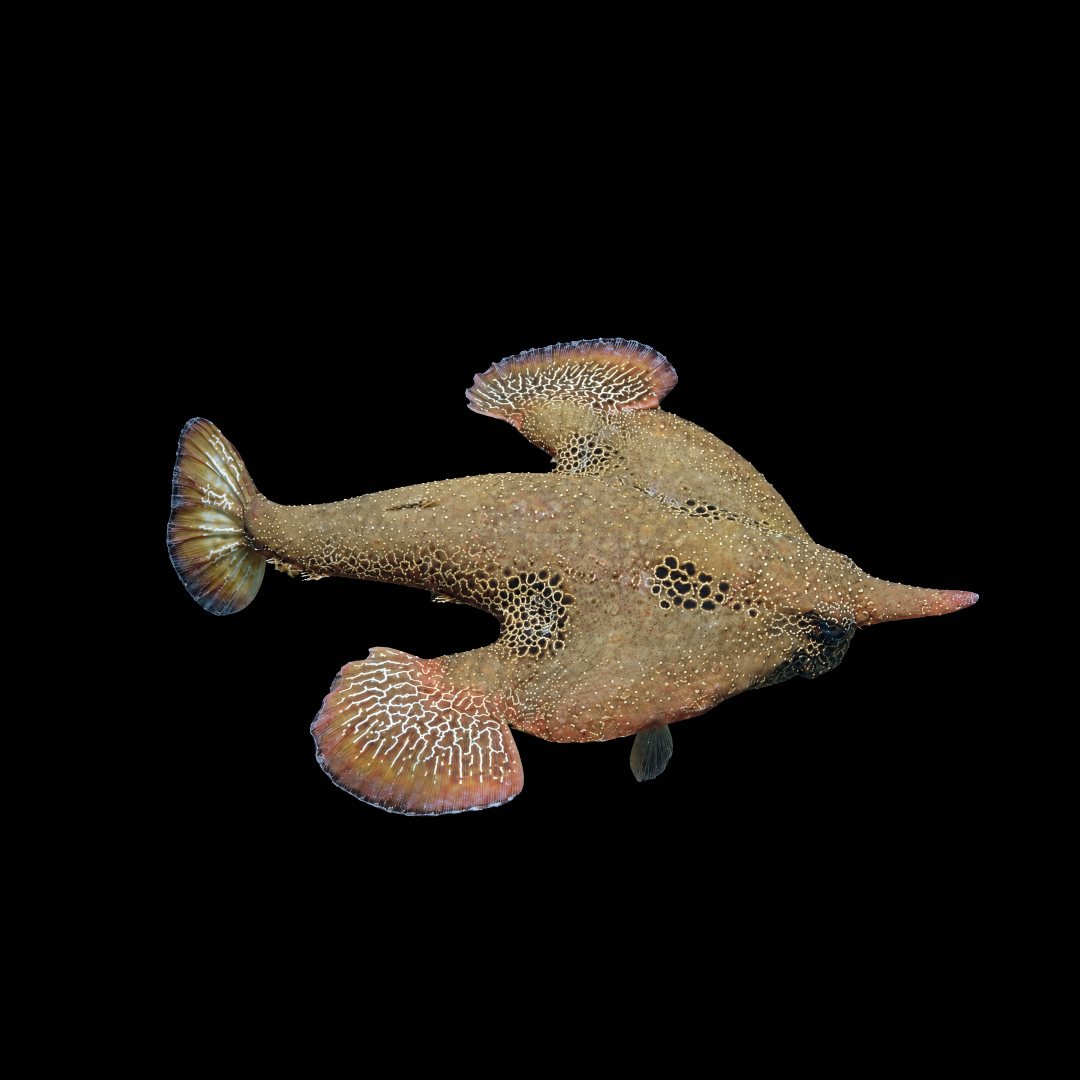
ブラジリアンバットは、南米の大西洋沿岸にすむアカグツ科の海水魚です。平たく広がった体と、前方へ長く突き出す吻(ふん)が特徴で、胸びれと腹びれを使い、海底を歩くように移動します。日中は岩陰や砂底で静かに過ごし、夜から早朝にかけて小さなエビや貝などを探す姿が見られます。全長は約30cmに達し、長い吻を傷めずに動ける広い底面と、落ち着いて餌を食べられる環境が必要です。国内では「ブラジリアンバットフィッシュ」の名前でも流通し、餌付けや導入時の健康管理に経験を要する上級者向けの魚です。砂の上で姿勢を変え、ゆっくりと歩みを進める様子には、底生魚ならではの観察の楽しさがあります。 The Brazilian batfish is a marine fish of the family Ogcocephalidae found along the Atlantic coast of South America. Its broad, flattened body and unusually long snout give it a distinctive appearance, while its pectoral and pelvic fins allow it to move across the seabed as though walking. It usually rests among rocks or on the sandy bottom during the day, becoming active at night and in the early morning to search for small shrimp, mollusks, and other prey. Reaching approximately 30 cm in total length, it needs a spacious bottom where it can move without injuring its snout, together with a quiet feeding environment. It is sold in the Japanese aquarium trade as the Brazilian batfish, but its demanding feeding and initial health-management requirements make it suitable for experienced marine aquarists. Watching it adjust its posture and slowly travel across the sand offers a distinctive glimpse into life on the seabed.
基本情報 / Basic Information
| 学名 / Scientific Name | Ogcocephalus vespertilio (Linnaeus, 1758) |
|---|---|
| 通称 / Common Name | ブラジリアンバット、ブラジリアンバットフィッシュ。いずれも国内で使われる流通名です。Brazilian batfish; sold in Japan under the trade names “Brazilian bat” and “Brazilian batfish.” |
| 分類 / Family | アンコウ目 アカグツ科 Ogcocephalus属。Order Lophiiformes; family Ogcocephalidae; genus Ogcocephalus. |
| 英名 / English Name | Brazilian batfish, Seadevil |
| 分布 / Distribution | 西部大西洋の南米沿岸。ブラジル北部のアマゾン川河口付近から、ウルグアイとアルゼンチンの間にあるラプラタ川河口付近にかけて分布します。主に浅い沿岸の砂底や岩礁周辺に生息し、水深約70mまでの記録があります。飼育は海水で行います。The Atlantic coast of South America, from the vicinity of the Amazon River mouth in northern Brazil south to the Río de la Plata estuary between Uruguay and Argentina. It mainly inhabits sandy bottoms and areas around rocky reefs in shallow coastal waters, with records extending to approximately 70 m deep. It should be maintained in seawater. |
| 最大体長 / Max Size | 全長約30.5cm。長い吻の先から尾びれの先までを含む長さです。水槽選びでは、体長に加えて、横に広がる体と向きを変えるための余裕も考慮します。Approximately 30.5 cm in total length, measured from the tip of the long snout to the end of the caudal fin. Aquarium planning must also allow for its broad body and the space required to turn comfortably. |
| 寿命 / Lifespan | 詳しい寿命は不明です。野生・飼育下ともに、寿命の目安となる年数は十分に分かっていません。Its lifespan is not well established. A reliable typical lifespan is not known for this species in either the wild or captivity. |
飼育環境 / Aquarium Environment
| 水槽サイズ / Tank Size | 成魚1匹につき、底面積約1m²を目安に広い水槽を用意します。具体的には、奥行90cmを確保した120cm特注水槽(幅120×奥行90×高さ60cm、計算上の容量約648L、底面積1.08m²)が候補になります。可能なら150×90×60cm程度(計算上の容量約810L)以上の広さを確保すると、移動経路や隠れ場所を設けやすくなります。一般的な120cmワイド水槽(120×60×60cm、計算上の容量約432L)は底面積が0.72m²で、この目安に届きません。これらの寸法は、底面積の目安に基づく例です。本種に必要な最小寸法が実験的に確定しているわけではありません。容量は寸法から算出した概算で、実際の水量は水位や底砂などによって少なくなります。Plan for approximately 1 m² of floor area per adult. One option is a custom aquarium measuring 120 × 90 × 60 cm, with a calculated volume of about 648 L and a floor area of 1.08 m². A larger footprint, such as 150 × 90 × 60 cm with a calculated volume of about 810 L, provides more room for movement and shelter. A common Japanese 120 cm wide aquarium measuring 120 × 60 × 60 cm holds approximately 432 L by dimensional calculation but offers only 0.72 m² of floor area, falling short of this guideline. These dimensions are examples based on the floor-area recommendation; an experimentally established minimum aquarium size is not available for this species. Actual water volume will be lower than the calculated figures because of water level, substrate, and furnishings. |
|---|---|
| 水温 / Temperature | 26~28℃を日常管理の目安とし、水温を安定させます。本種には26~30℃での飼育例がありますが、最適な水温が厳密に確立しているわけではありません。夏季は水槽用クーラーなどで過度な上昇を防ぎ、冬季も急な低下を避けます。停電時の酸素供給と温度変化への備えも整えておきましょう。 Use approximately 26–28°C as a practical day-to-day management target and keep the temperature stable. The species has been maintained at 26–30°C, although a precise optimum has not been established. Use suitable cooling equipment to prevent overheating in summer and avoid abrupt temperature drops in winter. Prepare for interruptions to aeration and temperature control during power failures. |
| 水質 / Water Quality | 塩分32~35‰、pH8.0~8.3を日常管理の目安とし、急変を避けます。これらは海水環境を安定して保つための管理上の目安で、本種に特有の最適値として確立されたものではありません。アンモニアと亜硝酸は検出されない状態を目指し、硝酸塩の蓄積も換水と適切な給餌で抑えます。十分に成熟した生物ろ過とプロテインスキマーを備え、水面に動きをつけるなどして酸素を供給してください。底面の水流は、静止や歩行を妨げない程度に調整します。Use a salinity of approximately 32–35‰ and a pH of 8.0–8.3 as routine management targets, avoiding abrupt changes. These are practical guidelines for maintaining stable marine conditions, rather than established optima specific to this species. Aim for undetectable ammonia and nitrite, and control nitrate accumulation through appropriate feeding and water changes. Provide mature biological filtration, a protein skimmer, and adequate oxygenation through surface movement or other suitable means. Adjust flow near the bottom so that it does not interfere with resting or walking. |
| レイアウト / Layout | 角の鋭くない細かな海水用の砂を敷き、歩ける開けた底面を広く残します。日中に落ち着けるよう、角の丸い岩や、体と吻を無理なく収められるシェルターを配置してください。鋭いサンゴ礫、突き出した岩、体が挟まる隙間は避け、ライブロックで底面を埋め尽くさないことが大切です。照明は強すぎないものとし、明るい時間帯にも陰になる場所を確保します。Provide fine marine aquarium sand without sharp edges and leave a generous expanse of open bottom for movement. Add smooth rocks or shelters spacious enough to accommodate both the body and the long snout comfortably during daytime resting. Avoid sharp coral rubble, projecting rockwork, and narrow gaps where the fish could become trapped. Do not fill the entire floor with live rock. Keep lighting moderate and provide shaded resting places throughout the day. |
| 注意点 / Precautions | 餌付けに加え、輸送後の体調変化や吻の傷にも注意が必要な、上級者向けの魚です。購入前に、実際に食べている餌、直近の摂餌状況、吻先・腹面・ひれの傷、呼吸や姿勢を確認します。餌を食べていた個体でも、輸送後に食べなくなることがあります。ガラス面へ向かって泳ぎ続ける、吻を繰り返しこするなどの動作が見られたら、水槽の広さや障害物、周囲の刺激を見直してください。移動の際も、長い吻やひれに負担をかけないよう丁寧に扱います。This species is best suited to experienced aquarists because it requires attention to feeding acclimation, changes in condition after transport, and possible snout injuries. Before purchase, check the foods being accepted, recent feeding history, the condition of the snout, underside and fins, and the fish’s breathing and posture. Even an established feeder may refuse food after transport. Repeated swimming against the glass or rubbing of the snout should prompt a review of enclosure size, obstacles, and environmental disturbance. Handle transfers carefully to avoid placing pressure on the long snout or fins. |
餌と給餌 / Feeding
| 餌の種類 / Diet | 小型の甲殻類を中心に、貝類やゴカイの仲間なども食べる肉食性です。導入直後の餌付けには、生きた小型の海産エビが候補になります。食欲が安定したら、解凍したオキアミや、小さく切ったエビ、貝の身、イカなどへ少しずつ慣らします。海産の無脊椎動物を中心に餌の種類を変え、魚肉や特定の餌だけに偏らないようにしてください。人工飼料を必ず食べるとは限らないため、生餌や冷凍餌を継続して用意できることが大切です。A carnivore that feeds mainly on small crustaceans, while also taking mollusks, polychaete worms, and other bottom-dwelling invertebrates. Small live marine shrimp are a useful option when introducing a newly acquired fish to feeding. Once appetite becomes reliable, gradually introduce thawed krill and small pieces of shrimp, mollusk flesh, and squid. Vary the diet around marine invertebrates instead of relying exclusively on fish flesh or any single food. Acceptance of prepared aquarium feeds cannot be assumed, so a dependable supply of suitable live and frozen foods is important. |
|---|---|
| 給餌のポイント / Feeding Tips | 夕方から消灯直後など、周囲が落ち着く時間帯に少量ずつ与えます。餌を見つけにくい場合は、給餌棒やピンセットで餌を底近くへそっと運び、吻に触れないように小さく動かして反応を確かめます。大きな餌の塊や一度の大量給餌は避け、飲み込みやすい大きさにしてください。給餌の回数や間隔について、本種で確立した基準はないため、食欲、体型、食後の腹部の膨らみが引く様子、残餌を見ながら量と間隔を調整します。導入時は毎日反応を観察し、食べ残しは回収します。拒食が続く場合は、水温や落ち着ける場所、寄生虫などの問題も確認し、無理に口へ餌を押し込まないようにしましょう。Offer small portions during quiet periods, such as the evening or shortly after the lights go out. If the fish has difficulty locating food, use a feeding stick or forceps to bring it close to the bottom, then move it gently without touching the snout to assess the response. Avoid large chunks and heavy meals; food should be easy to swallow. An established feeding frequency or interval is not available for this species, so adjust portions and intervals according to appetite, body condition, the reduction of abdominal fullness after feeding, and uneaten food. Check feeding responses daily during acclimation and remove leftovers. Persistent refusal to feed warrants investigation of temperature, shelter, parasites, and other possible problems. Do not force food into the mouth. |
性格と混泳 / Temperament and Tank Mates
| 性格 / Temperament | 日中は動きが少なく、周囲に溶け込むように静止することが多い魚です。夜間から早朝には底面を移動し、餌を探します。ほかの魚を追い回す性質は強くありませんが、口に入る小さな生き物は捕食対象になります。普段の動きはゆっくりでも、餌をとらえる瞬間には素早く動くことがあります。Usually quiet during the day, often remaining motionless and blending into its surroundings. It becomes more active at night and in the early morning as it moves over the bottom in search of food. It is generally not inclined to chase other fish, but small animals that fit into its mouth may be eaten. Despite its normally slow movements, it can strike quickly when capturing prey. |
|---|---|
| 混泳の相性 / Compatibility | 単独飼育では、食べた量や体の状態を把握しやすくなります。混泳させる場合は、本種をつつかず、餌を独占しない穏やかな魚を選び、各個体へ確実に給餌できるようにします。攻撃的なスズメダイ類、フグ類、体表やひれをつつくヤッコ類などは避けてください。小型魚やエビ、カニ、貝類には捕食の危険があり、クリーナーシュリンプも安全とは限りません。サンゴそのものを積極的に食べるとは分かっていませんが、無脊椎動物全般と安全に同居できる魚ではありません。同種を複数飼育する場合も、1匹あたり約1m²の底面積を目安に、十分な空間が必要です。Keeping a single specimen makes it easier to monitor food intake and body condition. If tank mates are introduced, choose peaceful fish that do not nip the batfish or monopolize food, and ensure that each animal receives its own ration. Avoid aggressive damselfishes, puffers, and angelfishes that pick at skin or fins. Small fish, shrimp, crabs, and mollusks may be eaten; cleaner shrimp are not automatically safe. The species is not known to actively feed on corals, but it cannot be considered safe with invertebrates in general. Keeping multiple batfish also requires substantial space, using approximately 1 m² of floor area per individual as a planning guideline. |
病気と対策 / Diseases and Prevention
| かかりやすい病気 / Common Diseases | 特に注意したいのは、吻や体表の擦り傷に続く二次感染、皮膚のただれ、ひれの損傷です。吻先の白濁や表皮の剥がれ、赤み、傷の拡大を見逃さないようにします。野生採集個体では内部・外部寄生虫にも注意が必要で、拒食や痩せ、呼吸の変化が手がかりになることがあります。アカグツ科では海水魚の白点病でも体表の白点が目立たない場合があり、眼の濁りや呼吸状態なども観察します。これらの症状だけで原因を確定することはできません。Particular concerns include secondary infections following abrasions to the snout or body, skin erosion, and fin damage. Watch for whitening, peeling skin, redness, or expanding wounds around the snout. Wild-caught specimens may also carry internal or external parasites, with appetite loss, weight loss, or altered breathing providing possible clues. In batfishes, marine white spot disease may occur without conspicuous white spots on the body, making eye clarity and respiration especially useful to monitor. These signs alone do not establish a diagnosis. |
|---|---|
| 対策と予防 / Prevention | 導入時は、十分な底面積のある専用水槽で隔離し、摂餌、呼吸、姿勢、体表の状態を継続して観察します。隔離期間は、個体の健康状態や感染症への対応に応じて判断します。日常的には安定した水質と温度を保ち、吻をこする原因になる狭さや突起物をなくします。吻先、腹面、胸びれ、眼、食欲を毎日確かめることが、早期発見につながります。低塩分での治療や銅系薬剤は、アカグツ科で拒食や呼吸状態の悪化などを起こす場合があるため、予防目的で安易に使用しないでください。眼の濁りや呼吸の変化、傷などの異常が見られた場合は、魚類の診療に対応する獣医師などへ早めに相談し、原因に合わせた治療を行います。Quarantine new arrivals in a separate aquarium with adequate floor space, and continue to monitor feeding, breathing, posture, and the condition of the skin. Determine the quarantine period according to the individual’s health and any infectious-disease management required. Maintain stable water quality and temperature, and eliminate restricted spaces or projections that encourage snout rubbing. Daily checks of the snout, underside, pectoral fins, eyes, and appetite help detect problems early. Low-salinity treatments and copper medications can cause problems such as appetite loss or respiratory distress in batfishes, so they should not be used casually as routine precautions. Seek early advice from a veterinarian experienced with fish if cloudy eyes, altered breathing, wounds, or other abnormalities appear, and select treatment according to the diagnosed cause. |
増やし方(繁殖) / Breeding
| 雌雄の判別 / Sexing | 本種の雌雄を外見だけで確実に判別する方法は、十分に確立されていません。体の大きさ、腹部の膨らみ、唇や腹面の色だけで断定することは避けます。ほかのアカグツ科で見られる雌雄差を、そのまま本種へ当てはめることもできません。A reliable method of determining sex from external appearance has not been adequately established for this species. Body size, abdominal fullness, and coloration of the lips or underside should not be treated as conclusive indicators. Sexual differences described in other batfishes cannot automatically be applied to this species. |
|---|---|
| 繁殖形態 / Reproduction | 卵生ですが、本種の産卵行動や、卵・孵化したばかりの仔魚の発育には未解明の点が多くあります。同属の Ogcocephalus cubifrons などでは、水面付近を漂うゼリー状の卵塊を放出することが知られています。ただし、本種でも同じように産卵するかは、十分に確認されていません。Oviparous, although many aspects of its spawning behavior and the development of its eggs and newly hatched larvae remain poorly understood. Related species, including Ogcocephalus cubifrons, are known to release gelatinous egg rafts that float near the surface. Whether the Brazilian batfish spawns in the same way has not been adequately confirmed. |
| 繁殖のポイント / Breeding Tips | 家庭の水槽で再現できる繁殖方法や、仔魚を安定して育てる技術は確立していません。まずは十分な空間と多様な餌を用意し、健康な状態で長く飼育することが基本です。繁殖を期待して急に水温・塩分を変えたり、飼育環境を大きく変えたりすることは避けてください。複数個体を維持する場合は、夜間の行動を観察し、水温、塩分、照明時間、給餌内容などを記録すると、生態を理解する手がかりになります。No reproducible home-aquarium breeding method or reliable larval-rearing technique has been established. The first priority is long-term maintenance in good health, supported by ample space and a varied diet. Avoid sudden temperature or salinity changes and major changes to the aquarium environment intended to trigger spawning. When maintaining several individuals, observing nighttime behavior and keeping records of temperature, salinity, lighting duration, and feeding may help improve understanding of their biology. |
雑学と豆知識 / Trivia and Fun Facts
| 1. コウモリの名と、学名に残る歴史 / 1. A Bat’s Name and a History Preserved in Taxonomy | 種小名の vespertilio は、ラテン語で「コウモリ」を意味します。上から見た平たい体や左右に張り出すひれを見ると、その名前がよく似合うことに気づきます。本種は1758年、リンネによって Lophius vespertilio として記載されました。その後、1813年に設けられた Ogcocephalus 属へ分類が移されています。現在の学名に添えられる「(Linnaeus, 1758)」の括弧は、最初に記載されたときとは属が異なることを示すものです。短い学名の後ろにも、この魚を理解しようとしてきた分類学の歩みが残っています。The species name vespertilio means “bat” in Latin. Viewed from above, the flattened body and outward-spreading fins make the association easy to appreciate. Linnaeus described the species in 1758 as Lophius vespertilio. It was later transferred to Ogcocephalus, a genus established in 1813. The parentheses around “(Linnaeus, 1758)” indicate that the species is now placed in a different genus from the one used in its original description. Even the short authorship following its scientific name preserves part of the history of how this unusual fish came to be understood. |
|---|---|
| 2. ゆっくり歩き、素早く餌をとらえる / 2. A Slow Walker with a Quick Feeding Strike | ブラジリアンバットの胸びれと腹びれは、体を支えながら底面を移動するために使われます。ひれを動かして進む姿は歩行を思わせますが、獲物に近づくと、ひれで勢いをつけて跳ねるように飛び出すこともあります。短い距離を泳ぐこともでき、移動方法はひとつではありません。また、餌を待つだけでなく、口や吻で底を探り、隠れている小動物を見つける行動も知られています。小型甲殻類のほか、貝、ゴカイの仲間、ウニやクモヒトデまで食物に含まれ、海底の多様な生き物を利用する捕食者であることが分かります。こうした暮らしを支えるのが、自由に動ける底面と、体を傷めにくい砂なのです。The pectoral and pelvic fins support the Brazilian batfish as it travels across the bottom. Movement supported by these fins resembles walking, but the fish can also push off in a short, almost jumping lunge when approaching prey. It is capable of swimming short distances as well, so it has more than one way to move. Feeding is equally varied: besides waiting for prey, it can probe the bottom with its mouth and snout to locate hidden animals. Its diet includes small crustaceans, mollusks, polychaete worms, and even sea urchins and brittle stars. This makes it a predator drawing on a broad range of seabed life, and helps explain why open floor space and sand that minimizes abrasion are so important in captivity. |
| 3. 長い吻の下に隠された、小さな疑似餌 / 3. A Small Lure Hidden Beneath the Long Snout | ひときわ目立つ長い吻の下には、出し入れできる小さな誘引器官が収まっています。これは背びれの最初の棘が変化したもので、先端には疑似餌のような部分があります。長い吻とは別に、その下に獲物を誘うための仕掛けを備えているわけです。野外では、この器官を伸縮させたあとに小型甲殻類をとらえる行動が見られ、水槽内でも器官を動かす様子が確認されています。一方で、目で見つけた餌へ直接近づくこともあり、いつも同じ方法で狩りをするわけではありません。動きに加えて、餌となる動物が反応する物質を水中へ放出して誘う可能性も考えられていますが、本種でそのような物質の分泌や働きが確かめられたわけではありません。Beneath the conspicuous long snout lies a small retractable feeding apparatus. It is derived from the first dorsal-fin spine and carries a lure-like structure at its tip. The fish therefore has a prey-attracting apparatus tucked beneath, and separate from, its prominent snout. In the wild, it has been observed extending and retracting this structure before capturing small crustaceans, and its movement has also been observed in aquariums. The fish can nevertheless approach visible prey directly, suggesting that it does not rely on a single hunting method. In addition to movement, it may attract prey by releasing substances into the water that those animals respond to. However, the secretion and effects of such substances have not been demonstrated in this species. |
| 4. よく似た仲間を見分ける手がかり / 4. Clues for Distinguishing Similar Species | Ogcocephalus 属には外見のよく似た魚がいて、長い吻だけで種類を決めるのは難しい場合があります。本種の胸びれには通常13~15本の鰭条(ひれを支える細い骨)があり、同じく吻が長い O. corniger や O. pumilus より多いことが、見分ける手がかりになります。また、赤い唇で知られるガラパゴス周辺の O. darwini も別種です。見た目や「バットフィッシュ」という名前が似ていても、生息海域や適した水温まで同じとは限りません。迎える際に学名、原産地、個体写真を確認することは、その魚に合った環境を整える第一歩になります。Several members of Ogcocephalus look alike, and a long snout alone may not establish their identity. This species normally has 13–15 pectoral-fin rays, the slender bony supports within the fin. This is more than in the similarly long-snouted O. corniger and O. pumilus, providing a useful identification clue. The red-lipped O. darwini associated with the Galápagos region is another distinct species. Similar appearances and shared use of the name “batfish” do not guarantee the same geographic origin or temperature requirements. Checking the scientific name, origin, and photographs of the actual fish is an important first step toward providing appropriate conditions. |
| 5. 日本では、ときどき出会える珍しい海水魚 / 5. An Occasional Visitor to the Japanese Aquarium Trade | ブラジリアンバットフィッシュは、日本の海水魚専門店にも入荷する魚です。2026年には約20cmの個体が購入希望に合わせて入荷した例もあり、取り寄せで出会う機会があります。入手の可否や価格は、その都度販売店に確認してください。購入時には、入荷からの日数、落ち着いて過ごしているか、何を継続して食べているかも確かめましょう。「冷凍餌を食べる」という説明も、餌の種類や直近の摂餌状況まで聞くと、自宅での準備に役立ちます。遠くの海から届いた一匹を迎えるうえで、販売店から飼育状況を詳しく聞いておくことが、その後の管理の支えになります。Brazilian batfish do reach specialist marine aquarium stores in Japan. An individual of approximately 20 cm was brought in to meet a customer request in 2026, illustrating how the species may be obtained through a special order. Check availability and price with the retailer at the time of purchase. Also ask how long the fish has been at the store, whether it is settled, and which foods it has consistently accepted. A statement that it eats frozen food becomes more useful when accompanied by the exact foods and recent feeding history. Obtaining detailed husbandry information from the retailer helps prepare for the continued care of a fish that has traveled a long way from its native coast. |
| 6. 日本で迎える際に知っておきたい制度 / 6. Regulations to Understand When Acquiring One in Japan | 2026年10月時点では、本種は日本の特定外来生物や未判定外来生物の指定対象に含まれておらず、水産資源保護法に基づく輸入防疫の対象魚種にも含まれていません。また、魚類のみの販売は、動物愛護管理法に基づく第一種動物取扱業の登録対象にはなっていません。ただし、輸入には通関手続きがあり、原産国での採捕・輸出規制やワシントン条約の掲載状況についても、取引時点の最新情報を確認する必要があります。購入者も販売店に原産地や入手経路を確かめておくと安心です。法定の輸入防疫対象に含まれない魚でも、飼育上の隔離観察と健康管理は大切です。As of October 2026, this species is not included among Japan’s designated Invasive Alien Species or Uncategorized Alien Species, and it is not among the fish subject to import disease-control requirements under the Act on the Protection of Fishery Resources. Businesses dealing exclusively in fish are also outside the registration scope of Japan’s Type I Animal Handling Business system under the animal welfare legislation. Importation nevertheless involves customs procedures, and the latest source-country collection and export rules, together with any applicable CITES listing, must be checked at the time of trade. Buyers should also ask retailers about origin and sourcing. A fish’s exclusion from statutory import disease controls does not remove the husbandry need for quarantine observation and health management. |
| 7. 野生の暮らしと、水槽での一匹を大切に / 7. Caring for Wild Populations and the Individual in the Aquarium | 本種は、2018年のIUCN(国際自然保護連合)の評価で、低懸念(LC)とされています。これは、当時の評価では種全体の絶滅リスクが高い区分に該当しなかったことを意味します。ただし、この評価だけで、採集や輸送による損失を気にしなくてよいことにはなりません。迎える個体の由来を確かめ、必要な設備と餌を先に整えることが大切です。飼育を続けられなくなった場合も海へ放さず、販売店や十分な設備を持つ飼育者などへ引き継ぐ方法を考えます。一匹を健康な状態で長く飼育する工夫は、野生の生き物を楽しむ趣味を支える身近な取り組みでもあります。The species was assessed as Least Concern, or LC, by the International Union for Conservation of Nature in 2018. This means that, at the time of that assessment, the species as a whole did not fall into a category indicating a high risk of extinction. That category does not make losses during collection and transport unimportant. Check the origin of the individual and prepare suitable equipment and food before acquiring it. If continued care becomes impossible, do not release it into the sea; arrange a suitable transfer through the retailer or another keeper with adequate facilities. Keeping one fish healthy over the long term is a practical contribution to a responsible interest in wild aquatic life. |
まとめ / Conclusion
ブラジリアンバットと長く暮らすには、広い底面、傷をつけにくいレイアウト、安定した海水環境、そして確実に食べられる餌をそろえることが大切です。長い吻や腹面を日々観察し、その個体の食べ方と行動に合わせて環境を調整していくことが、健康を保つことにつながります。 Long-term care of the Brazilian batfish depends on a spacious floor, furnishings that minimize injury, stable marine conditions, and food that the individual reliably accepts. Daily observation of its long snout and underside, together with adjustments based on its feeding and behavior, helps maintain its health.
砂の上でそっと向きを変え、ひれを使って一歩ずつ進む姿には、海底で暮らす魚ならではの特徴が表れています。落ち着いて過ごせる環境では、小さな姿勢の変化や餌を見つけた瞬間にも、観察の楽しさがあります。ブラジリアンバットは、水槽の底を眺める楽しみを、ゆっくりと広げてくれる魚です。 As it quietly changes direction on the sand and advances one fin-supported step at a time, the Brazilian batfish reveals the characteristics of a life closely tied to the seabed. In surroundings where it can remain settled, even a small change in posture or the moment it detects food becomes rewarding to observe. It is a fish that gradually deepens the pleasure of watching the aquarium floor.
気になる道具や飼い方を見つけてみませんか?
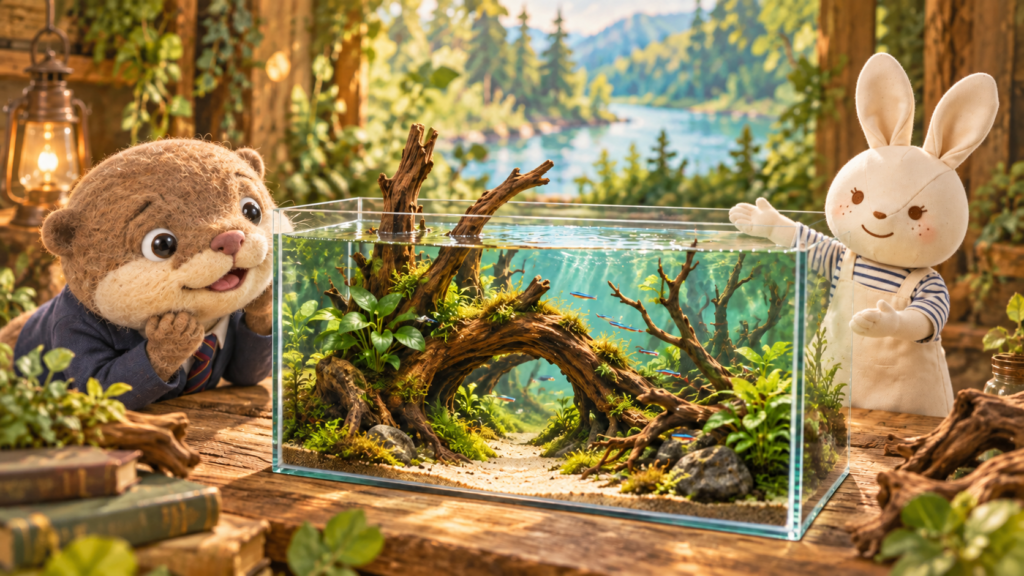 アイのアクアグッズ案内水槽の流木の選び方|枝・マングローブ・アク抜きとおすすめ商品水槽に小さな森を作る流木。枝流木やマングローブという名前の違いから、魚の隠れ家、水草の取り付け、浮く・水が茶色くなるときの準備まで、アイとコタロウが商品とともに案内します。記事はコチラ →
 アイのアクアグッズ案内水草水槽のCO₂添加|3つの方式の選び方とおすすめ用品道具の特徴や使い方、選ぶときのポイントをアイが紹介します。記事はコチラ →
さまざまな飼育テーマをご紹介。リンク先の記事には広告・商品紹介が含まれます。
案内・紹介記事一覧へ →分布マップ
ブラジリアンバット(学名:Ogcocephalus vespertilio)は、西部大西洋の南米沿岸に分布します。ブラジル北部のアマゾン川河口付近から、ウルグアイとアルゼンチンの間にあるラプラタ川河口付近までが分布地域です。
地図は分布地域を見渡すための概略表示です。表示範囲全体での生息を示すものではありません。マーカーは地域案内用の代表地点で、実際の採集地点・確認地点ではありません。
参考文献
- World Register of Marine Species(WoRMS). Ogcocephalus vespertilio (Linnaeus, 1758). (2026年10月19日閲覧)
- Bradbury, M. G. (1980). A revision of the fish genus Ogcocephalus with descriptions of new species from the western Atlantic Ocean (Ogcocephalidae; Lophiiformes). Proceedings of the California Academy of Sciences, Series 4, 42(7), 229–285.
- FishBase(編集:Froese, R.・Pauly, D.). Ogcocephalus vespertilio (Linnaeus, 1758) — Seadevil. (2026年10月19日閲覧)
- Gibran, F. Z., & Castro, R. M. C. (1999). Activity, feeding behaviour and diet of Ogcocephalus vespertilio in southern west Atlantic. Journal of Fish Biology, 55(3), 588–595.
- Alves, V. M. P., Campos-da-Paz, R., & Vianna, M. (2021). Illicium use in Brazilian batfish Ogcocephalus vespertilio (Linnaeus, 1758) feeding behavior in nature and in captivity. Ocean and Coastal Research, 69, e21014.
- Christie, B. L., Montoya, P. Z., Torres, L. A., & Foster IV, J. W. (2016). The natural history and husbandry of the walking batfishes (Lophiiformes: Ogcocephalidae). Drum and Croaker, 47, 6–40.
- Christie, B. L., Torres, L. A., & Foster IV, J. W. (2020). First estimate of the fecundity of Ogcocephalus cubifrons (Lophiiformes) with notes on spawning behaviour. Cybium, 44(1), 69–71.
- Petty, B. D., Francis-Floyd, R., & Yanong, R. P. E. Management of Aquarium Fish. Merck Veterinary Manual. 2026年6月更新. (2026年10月19日閲覧)
- 環境省. 特定外来生物等一覧. (2026年10月19日閲覧)
- 農林水産省 動物検疫所. 水産動物の検査について. (2026年10月19日閲覧)
- 環境省. 第一種動物取扱業者の規制. (2026年10月19日閲覧)



コメント