
解説 / Description
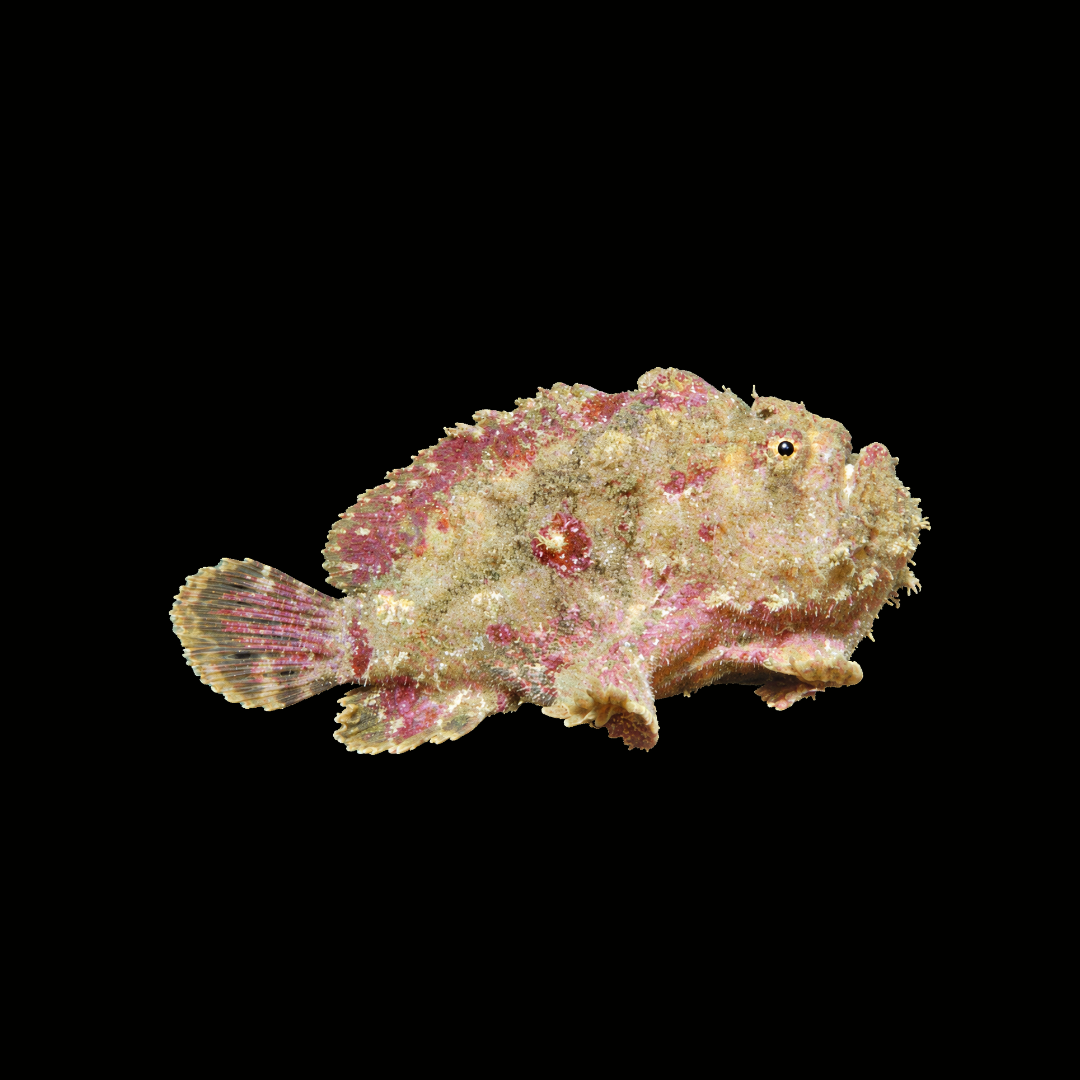
ウルマカエルアンコウは、サンゴ礁や岩礁の物陰に暮らす、小型の海水魚です。丸みのある体に大きな口をもち、腕のような胸びれで足場を支えながら、岩や海綿に紛れるようにじっと過ごします。赤や橙、黄、褐色、淡色、黒っぽい色など体色の個体差が大きく、同じ種類とは思えないほど印象の違う個体に出会えるのも特徴です。頭にある短い誘引突起の先には小さな白っぽい疑似餌があり、これを動かして獲物を誘います。おっとりした姿とは対照的に、小魚や甲殻類を捕らえる肉食魚のため、飼育は単独が基本です。泳ぎ回る姿よりも、擬態や待ち伏せ、ひれを使った移動をゆっくり観察したい方に向いています。 Abantennarius coccineus is a small marine frogfish that lives in sheltered areas of coral and rocky reefs. Its rounded body, large mouth, and arm-like pectoral fins help it remain almost motionless among rocks and sponges. Individuals vary greatly in color, including red, orange, yellow, brown, pale shades, and nearly black, so members of the same species can look remarkably different. A short fishing rod-like appendage on the head carries a small, whitish lure that attracts prey. Despite its seemingly gentle appearance, this is a predator of small fish and crustaceans, and solitary housing is the safest approach. It is particularly appealing to aquarists who enjoy quietly observing camouflage, ambush feeding, and fin-assisted movement rather than constant swimming.
基本情報 / Basic Information
| 学名 / Scientific Name | Abantennarius coccineus (Lesson, 1831) |
|---|---|
| 通称 / Common Name | ウルマカエルアンコウUruma-kaeru-ankō, the Japanese common name. |
| 分類 / Family | 条鰭綱 アンコウ目 カエルアンコウ科 Abantennarius属Class Actinopterygii; order Lophiiformes; family Antennariidae; genus Abantennarius. |
| 英名 / English Name | Scarlet frogfishScarlet frogfish |
| 分布 / Distribution | 紅海・東アフリカからインド洋、西・中部太平洋を経て東部太平洋まで、熱帯・亜熱帯の海に広く分布します。日本では八丈島や琉球列島などから知られています。潮だまりや浅いサンゴ礁、岩礁から水深約75mまで記録があり、特に水深10m以浅の隠れ場所の多い環境を利用します。ハワイの近縁種 Abantennarius drombus は、本種とは区別して扱われます。Widely distributed in tropical and subtropical seas from the Red Sea and East Africa across the Indian Ocean and the western and central Pacific to the eastern Pacific. In Japan, it is known from areas including Hachijō-jima and the Ryukyu Islands. Records range from tide pools and shallow coral or rocky reefs to approximately 75 m deep, with sheltered habitats shallower than 10 m particularly important. The Hawaiian relative Abantennarius drombus is treated as a separate species. |
| 最大体長 / Max Size | 全長約13cm。尾びれを含めた長さの目安です。Approximately 13 cm in total length, including the caudal fin. |
| 寿命 / Lifespan | 本種の寿命について、確かな目安となる年数は不明です。近縁種の飼育年数を、そのまま本種の平均寿命とみなすことはできません。A reliable species-specific lifespan estimate is not available. Longevity reported for related species should not be treated as the average lifespan of this frogfish. |
飼育環境 / Aquarium Environment
| 水槽サイズ / Tank Size | 成魚1匹には、60cmワイド水槽(幅60×奥行45×高さ45cm、寸法から計算した容量約120L)など、水量に余裕を持たせられる水槽を推奨します。岩や底砂を入れた後の実水量は少なくとも60Lを確保し、90L以上を目指すと管理に余裕を持たせやすくなります。動きが少ない魚でも、小さな水槽でよいとは限りません。肉食魚の給餌による汚れを処理できる、十分に立ち上がったろ過環境を用意してください。For one adult, choose an aquarium with a generous water volume, such as a Japanese 60 cm wide-format tank measuring 60 × 45 × 45 cm, with a calculated geometric capacity of about 120 L. Maintain at least 60 L of actual water after adding rocks and substrate, preferably around 90 L or more for a greater management margin. Limited movement does not mean that a very small aquarium is suitable. Provide fully established filtration capable of handling the waste associated with feeding a carnivorous fish. |
|---|---|
| 水温 / Temperature | 24~26℃を飼育管理の目安にします。これは厳密な生存限界を示す範囲ではなく、安定した飼育を目指すための設定です。導入時や季節の変わり目も、急激な温度変化を避けてください。 Use 24–26°C as a practical maintenance target. This is a suggested range for stable aquarium care, not a statement of the species’ precise survival limits. Avoid sudden temperature changes, including during introduction and seasonal transitions. |
| 水質 / Water Quality | 通常の海水環境で飼育し、比重1.024~1.026、pH8.1~8.3前後を目安にします。アンモニアと亜硝酸は検出されない状態を保ち、硝酸塩は20mg/L以下を一つの管理目標としてください。これらは飼育上の目安であり、特定の数値に合わせるために水質を急変させないことも大切です。肉質の餌や食べ残しで水が汚れやすいため、十分な生物ろ過と機械ろ過を備え、プロテインスキマーの併用も検討します。Maintain normal marine conditions, using a specific gravity of approximately 1.024–1.026 and a pH of around 8.1–8.3 as practical targets. Ammonia and nitrite should remain undetectable, with nitrate at or below 20 mg/L as a useful management goal. These are husbandry guidelines, and sudden adjustments made merely to reach a particular number should be avoided. Meaty foods and uneaten portions can quickly affect water quality, so provide adequate biological and mechanical filtration and consider using a protein skimmer. |
| レイアウト / Layout | 安定した岩組みで、岩陰や小さな洞窟、張り出した岩の下など、身を隠して落ち着ける場所をつくります。胸びれや腹側を傷つけないよう、鋭い岩の縁にも注意してください。水流は弱~中程度を目安にし、休んでいる場所へポンプの強い吐出水を直接当てないようにします。岩の上だけでなく、側面や陰になった場所も利用できる立体的な足場が適しています。Arrange secure rockwork to create shaded recesses, small caves, and sheltered spaces beneath overhangs. Avoid sharp edges that could damage the pectoral fins or underside. Use gentle to moderate circulation, without directing a strong pump outlet at the fish’s resting place. Three-dimensional footholds that include sheltered sides and recesses, rather than only exposed upper surfaces, suit its natural use of habitat. |
| 注意点 / Precautions | 購入前に、現在食べている餌と直近の摂餌状況を確認してください。輸送後は拒食することがあるため、温度と塩分を合わせた隔離水槽で、呼吸、姿勢、皮膚の状態を観察してから導入します。到着当日に食べないことだけを理由に、無理な給餌を行う必要はありません。吸水口にはガードを設け、食べ残しは速やかに回収します。新設直後の水槽や、小魚・エビのいる水槽への安易な追加は避けてください。Before purchase, confirm the foods currently accepted and the fish’s recent feeding history. Transport may interrupt feeding, so begin with observation in a quarantine aquarium matched for temperature and salinity, checking respiration, posture, and skin condition. Failure to eat on the day of arrival alone is not a reason to force-feed. Fit guards to filter intakes and remove uneaten food promptly. Avoid newly established aquariums and casual introduction into tanks containing small fish or shrimp. |
餌と給餌 / Feeding
| 餌の種類 / Diet | 自然下では小型魚類を中心に、甲殻類も捕食します。飼育では、個体の大きさに合う海産の小エビや小魚、餌付いた個体には解凍した海産エビや魚肉、海水魚用の練り餌などを利用します。生き餌にしか反応しない個体もいますが、冷凍餌を食べるようになった個体もいるため、餌付け状態の確認が重要です。金魚などの淡水魚だけに継続して依存する方法は避け、海産の魚類・甲殻類を中心に餌の種類を組み合わせます。粒状の人工飼料だけで維持できることを前提にはしないでください。In the wild, it feeds mainly on small fish and also takes crustaceans. Aquarium foods include appropriately sized marine shrimp and small fish, while conditioned individuals may accept thawed marine shrimp, fish flesh, and prepared marine fish pastes. Some individuals respond only to live food, whereas others accept frozen foods, making the feeding history of each fish important. Avoid long-term dependence on freshwater feeder fish such as goldfish, and offer variety among suitable marine fish and crustacean foods. Do not assume that pellets alone will be accepted or sufficient for maintaining the fish. |
|---|---|
| 給餌のポイント / Feeding Tips | 購入時は、餌の種類だけでなく「最後にいつ食べたか」「同じ餌を繰り返し食べているか」まで確認すると安心です。冷凍餌への移行では、解凍した餌を給餌用のピンセットやスティックで軽く動かし、魚の前を通る獲物のように見せます。成魚では週2~3回程度を出発点とし、腹部の膨らみや体つきを見ながら量と間隔を調整してください。毎日大量に与えたり、大きな餌を無理に飲み込ませたりせず、食べなかった餌は回収します。食欲が落ちたときは、餌の変更だけでなく水質や呼吸の状態も確認しましょう。When purchasing, ask not only which foods are accepted but also when the fish last ate and whether it has accepted the same food repeatedly. To encourage acceptance of frozen food, gently move a thawed item with feeding tweezers or a feeding stick so that it resembles prey passing in front of the fish. For adults, two or three feedings per week can be a starting point, with portions and intervals adjusted according to abdominal fullness and overall body condition. Avoid large daily meals or oversized prey, and remove rejected food. Reduced appetite should prompt a check of water quality and respiration, rather than simply a change of food. |
性格と混泳 / Temperament and Tank Mates
| 性格 / Temperament | 普段はあまり泳ぎ回らず、岩陰などで獲物を待ち伏せします。ただし、動きが少ないことと、小さな生き物に対して安全なことは別です。目の前を通る魚や甲殻類を餌として認識する肉食魚であり、見た目の穏やかさだけで混泳向きと判断しないようにしてください。It usually remains relatively inactive, waiting for prey from a sheltered position. However, low activity does not mean that it is safe with small animals. Fish and crustaceans passing within reach may be recognized as food, so its calm appearance should not be mistaken for community-tank suitability. |
|---|---|
| 混泳の相性 / Compatibility | 原則として単独飼育を推奨します。小型魚、ハゼ類、エビ、カニなどは捕食されるおそれがあり、同種やほかのカエルアンコウ類でも、体格差があれば共食いの危険があります。反対に、大きく活発な魚は餌を奪ったり、本種の体をつついたりする可能性があります。サンゴそのものを食べる魚ではありませんが、小型甲殻類などを含めて安全な混泳相手とはいえません。Solitary housing is recommended. Small fish, gobies, shrimp, and crabs may be eaten, and cannibalism is a risk with other frogfish, including members of the same species, particularly when sizes differ. Conversely, large or active fish may steal food or nip this relatively sedentary fish. Although it does not feed on corals themselves, it should not be considered safe for all inhabitants of a reef aquarium, especially small crustaceans. |
病気と対策 / Diseases and Prevention
| かかりやすい病気 / Common Diseases | 本種に特に多い病気を断定できる情報は十分ではありません。拒食、速い呼吸、白い点や粉状の付着、皮膚の赤み、潰瘍、異常な腹部の膨張などに注意します。これらは水質異常や感染症など、異なる原因で起こり得るため、見た目だけで病名を決めつけないことが大切です。近縁のカエルアンコウ類では重い細菌感染症の報告もありますが、その発症傾向をそのまま本種に当てはめることはできません。There is insufficient information to identify diseases that are particularly common in this species. Watch for refusal to feed, rapid respiration, white spots or powder-like deposits, reddened skin, ulcers, and unusual abdominal swelling. These signs can have different causes, including water-quality problems and infections, so appearance alone is not enough for a diagnosis. Serious bacterial infections have been reported in related frogfish, but their frequency should not be assumed to be the same in this species. |
|---|---|
| 対策と予防 / Prevention | 導入前の隔離観察、安定した水温と塩分、残餌の除去、定期的な水質確認を基本にします。不調が見られたら、まず水温、比重、アンモニア、亜硝酸、pHを確認し、必要に応じて魚類の診療に詳しい獣医師などへ相談してください。本種の薬剤感受性には不明な点が多いため、銅剤を含む薬剤を自己判断で本水槽へ一律に投入することは避けます。薬浴が必要な場合は、専門家の判断のもと、薬剤濃度を管理できる隔離水槽で行います。Base prevention on quarantine observation, stable temperature and salinity, prompt removal of uneaten food, and regular water testing. If the fish becomes unwell, first check temperature, specific gravity, ammonia, nitrite, and pH, and consult a veterinarian experienced with fish when necessary. Drug sensitivity in this species is not well established, so avoid indiscriminate medication of the display aquarium, including unsupervised copper treatment. When medication is required, use a separate treatment aquarium where concentrations can be monitored under professional guidance. |
増やし方(繁殖) / Breeding
| 雌雄の判別 / Sexing | 外見から確実に雌雄を判別する方法は不明です。雌雄は別ですが、体色には大きな個体差があるため、色の違いをそのまま性別の違いと考えることはできません。繁殖を期待して、判別できていない個体を安易に同居させることは避けてください。A reliable method of determining sex from external appearance is not specified. The species has separate sexes, but its considerable individual variation in coloration should not be interpreted as a dependable indicator of sex. Avoid placing unsexed individuals together simply in the hope of obtaining a breeding pair. |
|---|---|
| 繁殖形態 / Reproduction | 卵生で、体外受精を行います。卵はゼラチン質の帯状またはシート状の卵塊に包まれ、水中を漂います。ふ化した仔魚も初期には浮遊生活を送り、その後、岩場などで暮らす底生生活へ移行します。親魚が普段見せる、底にとどまる生活とは異なる段階を経て成長する魚です。This is an egg-laying species with external fertilization. Eggs are enclosed in a floating gelatinous ribbon or sheet. Newly hatched larvae initially live in the water column before transitioning to a bottom-associated way of life. Their early development therefore includes a stage very different from the sedentary behavior of the adults. |
| 繁殖のポイント / Breeding Tips | 家庭水槽で安定して再現できる、本種の繁殖・仔魚育成方法は十分に確立されていません。孵化までの日数、着底までの期間、性成熟する年齢なども不明な点が残ります。近縁種の育成例では、浮遊する仔魚に適した微小な生き餌を継続して確保することが重要になっていますが、その給餌方法や育成日数を本種へそのまま適用することはできません。親魚同士の捕食リスクもあるため、繁殖目的の複数飼育は、通常の単独飼育より慎重な管理が必要です。A reliable, readily repeatable home-aquarium breeding and larval-rearing method is not well established for this species. Important details, including time to hatching, time to settlement, and age at maturity, remain uncertain. Rearing work with related species highlights the importance of a continuous supply of suitably small live foods for pelagic larvae, but feeding protocols and developmental schedules cannot simply be transferred to this frogfish. Because adults may also prey on one another, keeping multiple individuals for breeding requires greater caution than ordinary solitary maintenance. |
雑学と豆知識 / Trivia and Fun Facts
| 1. 「緋色」という名前に収まらない体色 / 1. More Colors Than Its Name Suggests | 種小名の coccineus は、ラテン語で「緋色」を意味します。鮮やかな赤い個体を見ると納得できる名前ですが、ウルマカエルアンコウの色彩は赤だけではありません。黄や橙、褐色、淡い色、緑がかった色、黒っぽい色まで幅があり、斑点やまだら模様の目立ち方もさまざまです。さらに、皮膚の小さな突起や皮弁が体の輪郭を紛らわせ、海綿や付着生物に囲まれた場所では、一匹の魚として見つけにくくなります。学名には一部の個体が見せる印象的な色が刻まれていますが、実際の姿はその一語よりもずっと多様です。赤い個体だから本種、赤くないから別種という見分け方はできません。 The species epithet coccineus means “scarlet” in Latin. It seems especially fitting for a bright red individual, yet this frogfish is far from exclusively red. Yellow, orange, brown, pale, greenish, and nearly black individuals also occur, with considerable variation in spotting and mottling. Small skin projections and flaps further obscure the outline, making the fish difficult to recognize among sponges and other attached organisms. Its scientific name captures the striking color of some individuals, but the living species is much more varied than that single word suggests. A red fish is not necessarily this species, and a non-red fish is not necessarily something else. |
|---|---|
| 2. 学名に残る、約二百年の研究の歩み / 2. Nearly Two Centuries of Taxonomic History | ウルマカエルアンコウは、1831年にLessonによって Chironectes coccineus として記載された魚で、タイプ産地はインド洋のモーリシャスとされています。その後、分類の見直しに伴って属の扱いが変わり、Antennarius coccineus や Antennatus coccineus という学名も使われてきました。現在の受容名は Abantennarius coccineus ですが、日本の図鑑や販売名に以前の属名が残っていることがあります。カエルアンコウ類の分類では、体の形だけでなくDNAに基づく類縁関係も検討され、2012年の分子系統研究などを通じて属の境界が見直されてきました。また、日本では2007年に「イザリウオ」を含む標準和名が「カエルアンコウ」を用いる名称へ改められています。古い呼び名に出会ったときは、別の魚と即断せず、学名の組み合わせや形態をたどることが、この魚の歴史を知る手がかりになります。 Lesson described this fish in 1831 as Chironectes coccineus, with Mauritius in the Indian Ocean recognized as its type locality. Subsequent taxonomic revisions changed its generic placement, and the combinations Antennarius coccineus and Antennatus coccineus have also been used. The accepted name is now Abantennarius coccineus, although earlier combinations remain in some Japanese references and sales listings. Frogfish classification has increasingly considered DNA-based relationships alongside external anatomy, with molecular work published in 2012 contributing to the reassessment of generic boundaries. Japanese standard names containing “izariuo” were also changed to names using “kaeruankō” in 2007. Encountering an older name does not automatically mean encountering a different fish; tracing the scientific combinations and identifying features reveals part of its research history. |
| 3. 見分ける鍵は、尾びれのすぐ手前 / 3. Identification Begins Just Before the Tail | よく似たベニカエルアンコウ Abantennarius nummifer と見比べるときは、まず尾びれの付け根に注目します。ウルマカエルアンコウは、胴と尾びれをつなぐくびれである尾柄がほとんど目立たず、背びれと尻びれの後端が尾びれの付け根近くまで達します。一方、ベニカエルアンコウでは尾柄が比較的はっきりし、背びれ後方に目立つ黒い眼状斑をもつことが多くあります。ウルマカエルアンコウの小さな白っぽい疑似餌も、組み合わせて確認したい特徴です。ただし、本種にも背びれ付近に弱い暗色斑が見られることがあるため、「黒い点があるかどうか」だけでは十分ではありません。体色に目を奪われたあと、尾の付け根とひれの形へ視線を移すと、似た魚の違いが少しずつ見えてきます。 When comparing this fish with the similar Abantennarius nummifer, start at the base of the tail. In A. coccineus, the caudal peduncle—the narrow section linking the body to the tail fin—is scarcely distinct, and the rear edges of the dorsal and anal fins extend close to the caudal-fin base. A. nummifer has a more evident caudal peduncle and often a conspicuous dark eyespot toward the rear of the dorsal fin. The small, whitish lure of A. coccineus is another useful feature to assess alongside these traits. However, this species can also show a weak dark mark near the dorsal fin, so the mere presence of a dark spot is insufficient. Looking beyond color to the tail base and fin outlines gradually makes the differences clearer. |
| 4. 白い疑似餌の正体は、背びれの一部 / 4. A Fishing Lure Made from a Dorsal Spine | 頭の上で動く小さな釣り竿は、もともと背びれの最前方の棘が変化したものです。その先端にある白っぽい疑似餌を動かし、自分から大きく泳ぎ回らずに獲物の注意を引きます。周囲に溶け込む体と、目を引く疑似餌は、一見すると反対の役割をもつようですが、どちらも獲物を近くへ誘う待ち伏せ生活につながっています。獲物が間合いに入ると、大きく広がる口の内部に生じる吸引によって、一気に取り込みます。飼育で冷凍餌を軽く動かして見せる方法も、こうした獲物の動きへの反応を利用する工夫です。ただし、反応には個体差があり、すべての個体が同じように餌付くわけではありません。 The small fishing rod above the head is a modified first dorsal-fin spine. Its whitish lure is moved to attract prey without requiring the fish to swim around actively. A camouflaged body and a conspicuous lure may seem to serve opposing purposes, yet both contribute to bringing prey within striking distance. Once prey is close enough, rapid expansion of the mouth cavity creates suction that draws it inside. Gently moving thawed food during aquarium feeding takes advantage of a response to prey-like movement. Nevertheless, individuals differ, and the technique does not guarantee that every fish will accept nonliving food. |
| 5. 岩の上だけが居場所ではない / 5. A Home Beyond the Top of a Rock | 腕のように見える胸びれは、体を支え、足場を移るときに役立ちます。ウルマカエルアンコウは、平らな海底に座っているだけの魚ではありません。岩の割れ目や張り出しの下なども利用し、沖縄では暗いオーバーハングの天井側に、逆さ向きでとどまっていた個体も観察されています。岩や海綿の周囲を立体的に使う姿を思い浮かべると、水槽にも安定した足場と陰を用意する意味が分かります。また、普段の運動量が少なくても、給餌後の有機物を処理するための水量とろ過能力は必要です。「よく泳がないから小さな容器で十分」とは考えず、隠れ場所と水の安定性を一緒に整えてあげましょう。 Its arm-like pectoral fins support the body and help it move between footholds. This is not simply a fish that sits on a flat seabed. It also uses crevices and the undersides of overhangs, and an individual in Okinawa was observed resting upside down beneath a shaded ledge. Such three-dimensional use of rocks and sponges explains the value of secure footholds and shaded shelters in an aquarium. At the same time, low activity does not remove the need for enough water and filtration to process feeding-related organic waste. Suitable care combines sheltered resting places with stable water conditions rather than relying on a small container merely because the fish seldom swims. |
| 6. 底に暮らす親と、海を漂う子 / 6. Bottom-Dwelling Parents and Drifting Young | 成魚の暮らしを見ていると、子どもも生まれたときから岩の上にいるように思えるかもしれません。しかし、卵はゼラチン質の卵塊に包まれて漂い、ふ化後の仔魚も最初は水中で浮遊生活を送ります。底で待ち伏せる姿になるまでには、成魚とは違う餌や環境を必要とする段階があるのです。近縁のイロカエルアンコウ Antennarius pictus では、野外で採取した卵から仔魚を育て、約80日の浮遊期を経て着底させた例があります。ただし、この約80日という期間はウルマカエルアンコウの成長日程ではありません。本種の孵化や着底の詳しい時期には未解明な部分があり、近縁種の成果は可能性を考える手がかりであって、そのまま使える繁殖手順ではないのです。 Watching an adult may suggest that its young begin life on a rock as miniature versions of their parents. In fact, the eggs drift within a gelatinous mass, and the newly hatched larvae initially live in the water column. Before developing the familiar bottom-dwelling ambush lifestyle, they pass through a stage with different feeding and environmental needs. In the related painted frogfish, Antennarius pictus, larvae from a wild-collected egg mass have been reared through an approximately 80-day pelagic period to settlement. That duration is not a developmental schedule for A. coccineus. The timing of hatching and settlement in this species remains insufficiently understood, so achievements with relatives are clues to what may be possible, not ready-made breeding instructions. |
| 7. 季節の出会いだけでは分からないこと / 7. Seasonal Encounters Do Not Tell the Whole Story | 日本では八丈島や琉球列島に加え、本州太平洋側などでも観察例があります。串本では春に小さな幼魚、屋久島では秋に近くにいる複数個体が見つかっていますが、それだけで「春に幼魚が現れ、秋に繁殖する魚」と決めることはできません。幼魚がその場所で生まれたのか、別の海域から運ばれてきたのかは、見つけた時期と場所だけでは分からないためです。近くに二匹いたことも、必ずしも産卵を意味しません。複数の季節に出会える魚でありながら、日本沿岸での加入、産卵、越冬の季節的なつながりには、まだ分かっていない部分があります。一度の出会いを大切にしつつ、見えた事実とそこから想像する物語を分けることも、この魚を深く知る楽しみにつながります。 In Japan, observations extend beyond Hachijō-jima and the Ryukyu Islands to locations along the Pacific coast of Honshu. Small juveniles have been observed in spring at Kushimoto, and several individuals close together have been seen in autumn at Yakushima. These encounters alone do not establish a spring recruitment season or an autumn breeding season. The date and location of a juvenile sighting cannot determine whether it was born locally or arrived from elsewhere, and two fish close together do not necessarily indicate spawning. Although the species is observed in multiple seasons, the seasonal relationships among recruitment, reproduction, and overwintering along Japan’s coasts remain incompletely understood. Appreciating each encounter while separating observation from interpretation is part of understanding this fish more deeply. |
まとめ / Conclusion
ウルマカエルアンコウの魅力は、多彩な体色だけでなく、岩陰に紛れる姿や、小さな疑似餌の動きにもあります。じっとしている時間の中にも、待ち伏せに適した体のつくりや、足場を選ぶしぐさが見えてきます。水槽をにぎやかに泳ぐ魚とは違う、静かな観察の楽しみをもたらしてくれる存在です。 The appeal of Abantennarius coccineus lies not only in its varied colors but also in the way it blends into shelter and moves its tiny lure. Even long periods of stillness reveal a body adapted for ambush feeding and subtle choices about where to rest. It offers a quiet form of aquarium enjoyment, quite different from watching fish constantly swim across the tank.
迎えるときは、落ち着いて過ごせる単独飼育の環境と、その個体が確実に食べられる餌を先に整えてください。産地や入荷後の状態にも目を向け、見た目の好みだけでなく、健康状態と餌付けを確かめて選ぶことが大切です。安定した水と無理のない給餌を保ちながら見守ることで、岩陰の小さな一匹が見せるしぐさを、日々じっくり楽しめます。 Before bringing one home, prepare a calm, solitary environment and a dependable supply of food that the individual already accepts. Consider its origin and condition after arrival at the shop, choosing for health and established feeding rather than appearance alone. Stable water and measured feeding provide the foundation for enjoying the small, distinctive behaviors of this sheltered reef predator day after day.
気になる道具や飼い方を見つけてみませんか?
 アイのアクアグッズ案内そのごはん、泳いでる! 卵から始めるブラインシュリンプの孵化と道具選び道具の特徴や使い方、選ぶときのポイントをアイが紹介します。記事はコチラ →
 アイのアクアグッズ案内マジックリーフ物語|一枚の葉がアクアリウム用品になるまで道具の特徴や使い方、選ぶときのポイントをアイが紹介します。記事はコチラ →
さまざまな飼育テーマをご紹介。リンク先の記事には広告・商品紹介が含まれます。
案内・紹介記事一覧へ →分布マップ
ウルマカエルアンコウ(Abantennarius coccineus)は、紅海・東アフリカからインド洋、西・中部太平洋を経て東部太平洋まで、熱帯・亜熱帯の海に広く分布します。日本では八丈島や琉球列島などから知られています。ハワイの近縁種 Abantennarius drombus は、本種とは区別されます。
地図は分布地域の位置関係を示す概略表示であり、正確な分布境界や、表示範囲全体での生息を示すものではありません。マーカーとGoogle Earthのリンクは、琉球列島周辺の代表地点(北緯26度・東経128度)を便宜的に示しており、実際の採集地点ではありません。
参考文献
閲覧日:
分類・分布・生息環境・繁殖
-
World Register of Marine Species(WoRMS).
Abantennarius coccineus (Lesson, 1831).海洋生物の分類データベース。AphiaID:1605256。
受容学名、命名者・命名年、原記載名、および Antennarius coccineus・Antennatus coccineus などの旧学名との対応。
-
Bray, D. J. & Thompson, V. J.(2023).
Abantennarius coccineus — Fishes of Australia.Museums Victoria・OzFishNet。
尾柄・誘引突起・疑似餌による識別、体色の変異、最大全長、分布と隠れ場所、待ち伏せ捕食、体外受精、ゼラチン質の浮遊卵塊と仔魚の生活、種小名の由来。
-
Smithsonian Tropical Research Institute.
Shorefishes of the Eastern Pacific: Abantennarius coccineus, Scarlet frogfish.スミソニアン熱帯研究所・東部太平洋沿岸魚類データベース。
東部太平洋を含む分布、岩礁に関連する生息環境、水深1~75mの記録、形態的特徴、魚類や底生甲殻類を含む食性。
-
国立科学博物館・神奈川県立生命の星・地球博物館.
魚類写真資料データベース(FishPix)「ウルマカエルアンコウ」:KPM-NR 98701・KPM-NR 98569。撮影:今川郁(2008年8月26日、沖縄島)/木村亮(2009年5月10日、駿河湾)。
撮影日・撮影場所・水深を伴う国内の出現記録。沖縄島と本州太平洋側での確認を支える写真資料。
-
Arnold, R. J. & Pietsch, T. W.(2012).
Evolutionary history of frogfishes (Teleostei: Lophiiformes: Antennariidae): a molecular approach.Molecular Phylogenetics and Evolution, 62(1), 117–129. DOI: 10.1016/j.ympev.2011.09.012
カエルアンコウ科のDNAに基づく系統関係を解析した原著論文。属分類の再検討と、系統・地理的分布・繁殖様式の関係を扱う。
-
日本魚類学会(2007).
日本産魚類の差別的標準和名の改名最終勧告。2007年1月31日、日本魚類学会評議員会承認。
「ウルマイザリウオ」から「ウルマカエルアンコウ」への標準和名変更と、カエルアンコウ科の名称の背景を確認できる学会の公式文書。
飼育環境・疾病管理(魚類一般・近縁種)
-
Francis-Floyd, R., Yanong, R. P. E. & Petty, B. D.
Environmental Diseases of Aquatic Animals in Aquatic Systems.MSD Veterinary Manual、獣医師向け。2026年6月更新。
魚類一般の水質管理に関する獣医学資料。溶存酸素、アンモニア・亜硝酸、pH、塩分、水温の評価と、水質悪化・急変による健康障害を扱う。
-
Petty, B. D., Francis-Floyd, R. & Yanong, R. P. E.
Management of Aquarium Fish.MSD Veterinary Manual、獣医師向け。2026年6月更新。
観賞魚一般の導入前の隔離、器具の使い分け、飼育履歴・症状・水質を組み合わせた診断、生物ろ過が未成熟な水槽の問題、治療時の管理。
-
Yanong, R. P. E.
Use of Copper in Marine Aquaculture and Aquarium Systems.University of Florida, UF/IFAS Extension. FA165.
海水飼育施設における銅剤の使用を扱う大学の技術資料。魚種による感受性の違い、無脊椎動物とろ過細菌への影響、治療中の水質・銅濃度測定を解説する。
-
Yanong, R. P. E., Curtis, E. W., Terrell, S. P. & Case, G.(2003).
Atypical presentation of mycobacteriosis in a collection of frogfish (Antennarius striatus).Journal of Zoo and Wildlife Medicine, 34(4), 400–407. DOI: 10.1638/02-050
カエルアンコウ科の別種を対象とした疾病の症例報告。論文中で Antennarius striatus とされた飼育個体6匹の全身性マイコバクテリア症と、拒食・皮膚病変・腹部膨張などの症状を記載する。



コメント