
解説 / Description
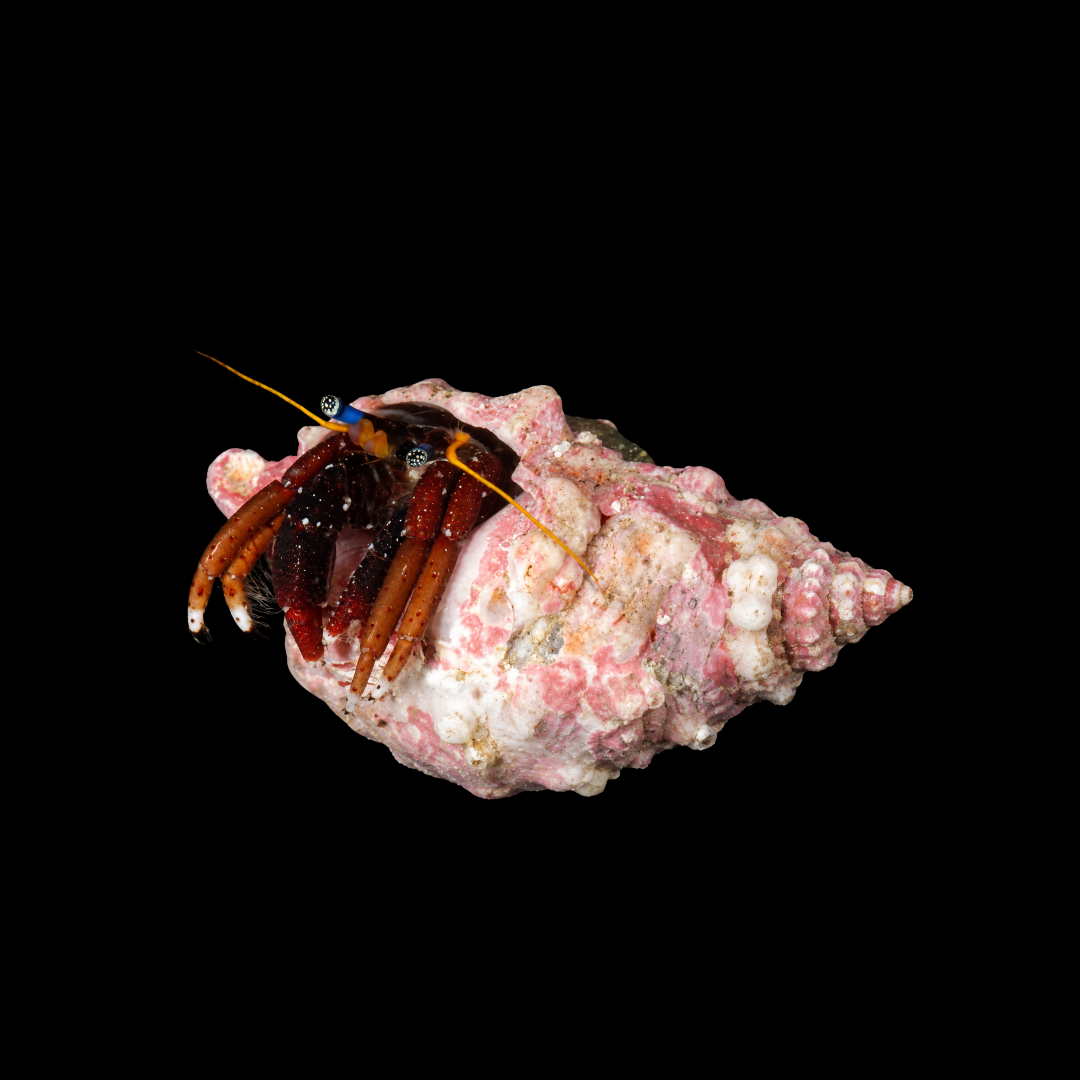
クリイロサンゴヤドカリは、日本の暖かな磯やサンゴ礁にも暮らす小型の海産ヤドカリです。栗色のハサミや歩脚に、眼柄の青色と白っぽい前甲が映えます。左のハサミが右より大きく、巻貝の空殻に柔らかな腹部を収めて生活します。水槽では岩の表面に付いた藻類や残餌をついばむため、お掃除役として親しまれています。ただし、藻類や残餌だけでは餌が足りないこともあり、成長に合わせた住み替え用の貝殻も必要です。オカヤドカリとは異なり、海水中で飼育します。 Morgan’s hermit crab is a small marine hermit crab found on warm rocky shores and coral reefs, including those of Japan. Its chestnut claws and walking legs contrast with blue eyestalk coloration and a pale shield. The left claw is larger than the right, and its soft abdomen is sheltered inside an empty gastropod shell. In aquariums it picks at algae and leftover food, making it a familiar cleanup animal. However, these food sources may be insufficient, and it also needs replacement shells as it grows. Unlike terrestrial hermit crabs, it is kept in seawater.
基本情報 / Basic Information
| 学名 / Scientific Name | Calcinus morgani Rahayu & Forest, 1999 |
|---|---|
| 通称 / Common Name | クリイロサンゴヤドカリ。古い資料や流通情報では「クリイロモドキ」の呼称も見られます。「クシモトサンゴヤドカリ」として別種扱いされていたものも、現在は本種に含まれます。Morgan’s hermit crab. Older Japanese accounts may use “Kuriiro-modoki.” Animals previously treated as a separate species under the Japanese name “Kushimoto-sango-yadokari” are now included in this species. |
| 分類 / Family | 節足動物門・甲殻亜門・軟甲綱・十脚目・異尾下目・ヤドカリ上科・ヤドカリ科・サンゴヤドカリ属。Phylum Arthropoda; subphylum Crustacea; class Malacostraca; order Decapoda; infraorder Anomura; superfamily Paguroidea; family Diogenidae; genus Calcinus. |
| 英名 / English Name | Morgan’s hermit crab |
| 分布 / Distribution | インド西太平洋の暖海域。日本では房総半島以南の太平洋岸や琉球列島などに分布し、波当たりのある岩礁やサンゴ礁の潮間帯下部から浅い潮下帯で見られます。Warm waters of the Indo-West Pacific. In Japan it occurs along the Pacific coast from the Boso Peninsula southward and in the Ryukyu Islands, inhabiting wave-exposed rocky shores and reefs from the lower intertidal into shallow subtidal waters. |
| 最大体長 / Max Size | 甲長約10mmが大きさの目安です。厳密な最大体長は不明です。甲長は腹部まで含めた全長や宿貝の長さとは異なるため、購入時はどの部分を測った大きさなのか確認しましょう。A carapace length of about 10 mm provides a useful size reference; a precise maximum body length is unknown. Carapace length differs from total body length including the abdomen and from occupied shell length, so check what a seller’s size measurement refers to. |
| 寿命 / Lifespan | 本種の寿命について確かな情報は限られており、明確な年数は不明です。天然採集個体では購入時の年齢も分からないため、安定した海水環境と適切な給餌を保ち、成長に合わせて貝殻を補充します。Reliable lifespan information for this species is limited, and a definite number of years cannot be given. Wild-collected animals also have unknown ages at purchase. Maintain stable seawater conditions, provide suitable food, and replenish shells as needed for growth. |
|---|
飼育環境 / Aquarium Environment
| 水槽サイズ / Tank Size | 少数を飼う場合は、水質を安定させやすい45cm規格水槽(45×30×30cm、総容量約40L)以上を管理上の目安とします。魚やサンゴとの混泳には60cm規格水槽(60×30×36cm、総容量約65L)以上が管理しやすくなります。これは本種の飼育に必要な最小サイズを示すものではありません。底砂や岩を入れると実際の水量は減るため、収容数は餌の量、隠れ家、空殻の数に合わせて控えめにしましょう。For a few animals, a standard Japanese 45 cm aquarium (45 × 30 × 30 cm; approximately 40 L gross capacity) or larger is a practical guide for stable water conditions. A standard 60 cm aquarium (60 × 30 × 36 cm; approximately 65 L gross capacity) or larger is easier to manage with fish or corals. These are management guidelines, not established minimum requirements for the species. Sand and rock reduce actual water volume, so keep stocking modest in relation to food, shelters, and available shells. |
|---|---|
| 水温 / Temperature | 水槽管理の目安は24~26℃です。本種の生息地の水温範囲や、耐えられる水温の限界を示す数値ではありません。ヒーターや冷却機器を使い、急な水温変化と夏場の高温を避けます。A practical aquarium target is 24–26°C. This does not represent the species’ natural temperature range or physiological limits. Use heating and cooling equipment as needed, avoiding abrupt temperature changes and summer overheating. |
| 水質 / Water Quality | 適切に調製した人工海水を使用し、塩分33~35‰、pH8.0~8.4を海水水槽の管理上の目安とします。比重は25℃付近でおおむね1.024~1.026に相当しますが、測定器の温度補正や表示方式を確認してください。アンモニア・亜硝酸は検出されない状態を維持し、硝酸塩の蓄積を抑えます。蒸発分は淡水で補い、換水には水温と塩分をそろえた海水を使います。Use correctly prepared marine saltwater, with general marine-aquarium targets of 33–35 ppt salinity and pH 8.0–8.4. This roughly corresponds to a specific gravity of 1.024–1.026 near 25°C, but check your instrument’s temperature compensation and scale. Maintain undetectable ammonia and nitrite and limit nitrate accumulation. Replace evaporated water with freshwater, and use temperature- and salinity-matched seawater for water changes. |
| レイアウト / Layout | ライブロックや海水用の岩を安定して組み、岩陰や狭い隙間を複数用意します。水流と酸素供給を確保しながら、水流の弱い休息場所も残してください。現在の宿貝と同程度から一回り大きい清潔な巻貝の空殻を、形や殻口の大きさを変えて複数置きます。サンゴの小片は歩行で落とされないよう固定し、岩の崩落にも注意します。Arrange live rock or marine-safe rock securely, providing several shaded crevices and shelters. Maintain circulation and oxygenation while leaving quieter resting places. Offer several clean gastropod shells, from similar to slightly larger than the occupied shell, with varied shapes and opening sizes. Secure coral fragments against displacement and prevent unstable rockwork from collapsing. |
| 注意点 / Precautions | 生物ろ過が安定した水槽へ導入し、水温と塩分の差を確認して丁寧に水合わせを行います。銅を含む魚病薬など、甲殻類に有害な薬剤は使用しません。脱皮前後に姿を隠しても、貝殻から引き出したり無理に触ったりしないでください。ヨウ素添加を本種の脱皮に必須とする十分な根拠は確認されていません。測定や必要性の確認を伴わない添加は避け、適切な人工海水での定期換水を基本にします。Introduce animals into an aquarium with established biological filtration, checking temperature and salinity differences and acclimating carefully. Avoid copper-based fish treatments and other products harmful to crustaceans. Do not pull an animal from its shell or disturb it when it hides around molting. Adequate evidence has not been established that iodine dosing is essential for molting in this species. Avoid supplementation without measurements and a demonstrated need; routine water changes with properly prepared marine saltwater are the foundation. |
餌と給餌 / Feeding
| 餌の種類 / Diet | 雑食性で、岩に付く微小藻類や有機物の細かなかけら、残餌などを食べます。飼育下では海水性甲殻類用の沈下性飼料を中心に、藻類を含む飼料や、細かくしたエビなどの動物性の餌を組み合わせます。水槽内のコケだけで必要な栄養を満たせるとは限りません。An omnivore that feeds on attached microalgae, fine organic debris, and leftover food. In captivity, use sinking food suitable for marine crustaceans, supplemented with algae-containing foods and small portions of animal food such as chopped shrimp. Aquarium algae alone may not supply adequate nutrition. |
|---|---|
| 給餌のポイント / Feeding Tips | 少量を与え、ハサミでつかんで口へ運ぶ様子を確認します。魚に餌を奪われる場合は、スポイトやピンセットで岩陰の近くへ届けると食べやすくなります。給餌量と頻度は、水槽内の藻類や残餌の量、個体の食べ方に合わせて調整し、食べ残した動物性の餌は回収してください。コケ取りを期待して数を増やす場合も、それぞれの個体に十分な餌が行き渡るかを確認しましょう。Offer small portions and confirm that the crab picks them up and brings them to its mouth. If fish take the food first, place it near a shelter with a pipette or feeding forceps. Adjust feeding amounts and frequency to available algae, leftovers, and observed intake, and remove uneaten animal food. If adding more crabs for algae control, first check that adequate food will be available to every individual. |
性格と混泳 / Temperament and Tank Mates
| 性格 / Temperament | 岩や底床を歩き回り、餌を探す姿がよく見られます。小型ですが、餌や貝殻をめぐって他のヤドカリと争うことがあります。脱皮直後の個体は攻撃を受けやすいため、過密を避け、隠れ家と空殻を十分に用意することが大切です。Frequently seen walking over rock and substrate while searching for food. Despite its small size, it may compete with other hermit crabs for food or shells. Newly molted animals are particularly vulnerable, so avoid crowding and provide plentiful shelters and empty shells. |
|---|---|
| 混泳の相性 / Compatibility | 甲殻類を捕食しない温和な海水魚との混泳に向きます。フグ類、モンガラカワハギ類、甲殻類を好む大型のベラ類などは避けます。巻貝は殻を得るため、あるいは餌として襲われる可能性があるため、空殻を用意していても注意が必要です。小型のエビや弱った生体との同居も慎重に判断してください。サンゴ水槽にも導入できますが、サンゴの上を歩いてポリプを閉じさせたり、小片を落としたりすることがあります。混泳後も実際の行動を観察しましょう。Suitable companions include peaceful marine fish that do not prey on crustaceans. Avoid puffers, triggerfish, and larger wrasses that favor crustacean prey. Snails may be attacked for their shells or as food, so caution remains necessary even when spare shells are provided. Small shrimp and weakened animals also require care. It can be kept with corals, but walking over them may cause temporary polyp retraction or dislodge fragments. Continue observing behavior after introduction. |
病気と対策 / Diseases and Prevention
| かかりやすい病気 / Common Diseases | 本種に特有の病気や、その発生頻度については情報が限られています。飼育上は脱皮不全のほか、塩分や水温の急変、酸素不足、薬剤の影響による不調、争いによる脚の損傷などに注意します。動かない、餌を取らないといった様子だけでは病気と断定できず、脱皮前に活動が少なくなっている可能性もあります。Information on species-specific diseases and their frequency is limited. Aquarium concerns include unsuccessful molting, stress from abrupt salinity or temperature changes, insufficient oxygen, chemical exposure, and limb injuries caused by conflict. Inactivity or loss of appetite alone does not establish disease; activity may also decrease before molting. |
|---|---|
| 対策と予防 / Prevention | 日々の観察と水温・塩分の確認を行い、異常時はアンモニアや亜硝酸、酸素供給、混泳相手の行動も点検します。換水は週に10~20%程度を管理上の目安とし、飼育数や給餌量、水質に合わせて調整してください。栄養の偏りと貝殻不足を避け、脱皮中に身を隠せる場所を確保します。抜け殻は死骸と見間違えやすいため、生体の所在を確認してから扱います。脱皮不全をヨウ素不足と決めつけて、添加剤や薬を投入しないことも大切です。Observe daily and check temperature and salinity. When problems arise, also assess ammonia, nitrite, oxygenation, and tank-mate behavior. Weekly water changes of about 10–20% are a management guideline, adjusted to stocking, feeding, and water quality. Prevent nutritional imbalance and shell shortages, and provide places to hide during molting. Shed exoskeletons can resemble dead animals, so confirm the crab’s location before handling them. Do not assume failed molting indicates iodine deficiency and respond by adding supplements or medication. |
増やし方(繁殖) / Breeding
| 雌雄の判別 / Sexing | 貝殻を背負った状態で、色やハサミの大きさだけから確実に見分けるのは困難です。ヤドカリ類では生殖孔の位置が判別に用いられ、一般に雌はハサミ脚を含めて前から3対目の脚の付け根、雄は5対目の脚の付け根にあります。ただし、小型の本種では観察が難しく、判別のために無理に貝殻から取り出してはいけません。腹部の脚に卵を抱えていれば雌と分かります。Color and claw size do not reliably identify sex in a shell-bearing animal. Gonopore position is used in hermit crabs: generally at the bases of the third pair of pereopods in females and the fifth pair in males, counting the claw-bearing pair as the first. These structures are difficult to inspect in this small species. Never force an animal from its shell for sexing. Eggs carried on the abdominal pleopods identify a female. |
|---|---|
| 繁殖形態 / Reproduction | 卵生です。雌は腹肢に卵を付けて抱卵し、孵化した幼生は海水中を漂って生活します。サンゴヤドカリ類ではゾエアと呼ばれる幼生の段階を経て、海底での生活に移るメガロパ幼生へ変態し、やがて小さな貝殻を利用する稚ヤドカリになります。本種の幼生期の正確な日数や段階数、幼生を放出する時刻の規則性については、確かな情報が限られています。Oviparous. Females carry eggs on their abdominal pleopods, and newly hatched larvae live in the water column. Calcinus hermit crabs pass through zoeal stages before becoming megalopae that transition toward life on the seabed, eventually developing into shell-bearing juveniles. Reliable species-specific details on developmental duration, stage number, and larval-release timing are limited. |
| 繁殖のポイント / Breeding Tips | 抱卵や幼生の放出が見られても、通常の混泳水槽で稚ヤドカリまで育つことは期待しにくく、家庭での繁殖は難しい部類です。挑戦する場合は、幼生を魚やろ過装置から守る専用容器、穏やかな水の循環、成長段階に合う微小な生き餌、厳密な水質管理が必要です。海底での生活に移る時期には、ごく小さな空殻も用意します。本種に適した給餌条件や育成手順は十分に確立されていません。Egg carrying and larval release do not mean juveniles will develop in a community aquarium; home breeding is difficult. Attempts require a dedicated larval vessel protected from fish and filtration, gentle circulation, appropriately sized live food for each developmental stage, and close water-quality control. Tiny empty shells are also needed as the larvae transition to life on the bottom. Species-specific feeding conditions and rearing protocols are not well established. |
雑学と豆知識 / Trivia and Fun Facts
| 1. 名前の向こうにある分類の歴史 / 1. A History Behind the Names | クリイロサンゴヤドカリが現在の学名で記載されたのは1999年です。それ以前には、よく似たセグロサンゴヤドカリと混同されていました。両者の姿を比べると、眼柄や前甲の色が見分けるための重要な手がかりになります。さらに、同じ年に別種として記載されたクシモトサンゴヤドカリも、後の再検討で本種の幼体や若い個体に当たると分かりました。白い脚に小さな赤い斑点を持つ幼い姿は、成体と大きく異なっていたのです。現在、Calcinus areolatus は本種の異名、つまり同じ種に付けられた別の学名として扱われています。小さなヤドカリの分類にも、成長による姿の変化を理解することで解けた謎があります。Morgan’s hermit crab was described under its present scientific name in 1999. Before that, it was confused with the similar C. gaimardii; eyestalk and shield coloration provide important clues for distinguishing them. Another species described that year, C. areolatus, was later recognized as representing juvenile or young C. morgani. Pale legs with tiny red spots made these young animals look markedly different from adults. Calcinus areolatus is now treated as a synonym, meaning another scientific name applied to the same species. Even a small hermit crab’s classification can hold a mystery resolved by understanding how its appearance changes with growth. |
|---|---|
| 2. 貝殻は成長する家ではない / 2. A Home That Does Not Grow | 巻貝は自分の体から殻を作りますが、ヤドカリが背負うのは、ほかの生き物が残した空殻です。そのため、ヤドカリの体が大きくなっても住まいは広がりません。新しい殻を見つけると、殻口や内側をハサミや脚で探り、使えるかどうか確かめます。外から見た大きさが同じでも、内部の広さや殻口の形が違えば、体の収まり方も異なります。少し大きい殻を一つ置くだけでなく、形の異なる候補をそろえておくことが、成長に合った住まい選びを支えます。A snail produces its own shell, but a hermit crab occupies an empty shell left by another animal. Its home therefore does not expand as its body grows. On finding a possible replacement, it examines the opening and interior with its claws and legs. Shells of similar external size can differ in internal space and opening shape, changing how well the body fits. Offering several shapes, rather than a single larger shell, supports the choice of a suitable home as the animal grows. |
| 3. 岩の表面をめぐる小さな食卓 / 3. A Small Dining Place on the Rocks | 自然の磯では、岩の表面にも目立たない藻類や細かな有機物がたまっています。クリイロサンゴヤドカリは、そうした場所を歩きながら食べ物を拾い集めます。水槽でも同じような行動が見られますが、食べた有機物が水槽から取り除かれるわけではなく、一部は排泄物として戻ります。お掃除役として役立つのは、残餌を利用し、藻類の一部を食べる働きです。換水やろ過は引き続き必要ですが、岩を少しずつ探っていく姿には、有機物が生き物に利用され、再び環境へ戻る小さな循環を見ることができます。On natural shores, inconspicuous algae and fine organic particles accumulate on rock surfaces. Morgan’s hermit crab gathers food as it moves across them, and similar behavior can be watched in an aquarium. Consumed organic material is not removed from the aquarium altogether: some returns as waste. Its useful cleanup role consists of consuming leftovers and some algae. Water changes and filtration remain necessary, while its patient exploration of rocks reveals a small cycle in which organisms use organic material and return some of it to their surroundings. |
| 4. 脱皮と宿替えは別の出来事 / 4. Molting and Shell Changes Are Different | ヤドカリには、体を覆う外骨格と、腹部を守る巻貝の殻という二つの「殻」があります。脱皮は外骨格を脱ぎ替えることで、宿替えは住まいとなる貝殻を交換することです。どちらも成長に関わりますが、必ず同時に起こるわけではありません。脱皮後の柔らかな体を守るため、貝殻と岩陰は大切な避難場所になります。水槽に脚やハサミの形をした抜け殻が現れても、すぐに死んだと判断せず、隠れている生体の姿をそっと確認しましょう。抜け殻を食べて、その成分を再利用することもあります。A hermit crab has two kinds of “shell”: its own exoskeleton and the gastropod shell protecting its abdomen. Molting replaces the exoskeleton, whereas a shell change replaces its home. Both relate to growth but do not necessarily occur together. The occupied shell and rocky shelter protect the soft body after molting. If leg- and claw-shaped remains appear in the aquarium, quietly check for the living crab before assuming it has died. Shed material may also be eaten and its components reused. |
| 5. 青い眼柄と細かな毛を観察する楽しみ / 5. Looking Closely at Blue Eyestalks and Bristles | 栗色の脚ばかりに目を向けていると、眼柄の青色や歩脚の細かな毛を見逃してしまうかもしれません。本種には、ハサミ脚を含めて前から3対目に当たる脚の先端付近に、ブラシ状に集まった毛があります。こうした小さな構造も、近縁種を比較する際の手がかりになります。ただし、その毛の詳しい働きや、青色が仲間への合図として使われるかどうかは、外見だけでは分かりません。色や形を観察する楽しみの先には、それぞれがどのような意味を持つのかという、生き物への新たな興味が広がります。Looking only at the chestnut legs can make it easy to miss the blue eyestalk coloration and fine limb bristles. This species has a brush of setae near the tips of the third pair of pereopods, counting the claw-bearing pair as the first. Such small structures also help comparisons among related species. Their precise function, or whether blue coloration signals to other individuals, cannot be established from appearance alone. Close observation of color and form can lead to further curiosity about what these features mean in the animal’s life. |
まとめ / Conclusion
クリイロサンゴヤドカリは、栗色の脚と青い眼柄、岩を探りながら餌をつまむ仕草が魅力の小さな海の住人です。安定した海水環境に十分な隠れ家と住み替え用の貝殻を用意し、餌が行き渡っているか確かめながら世話をすることが、健やかな暮らしにつながります。 Morgan’s hermit crab brings chestnut legs, blue eyestalk coloration, and engaging food-gathering movements to the marine aquarium. Stable seawater, ample shelters, replacement shells, and care guided by observed feeding support its well-being.
新しい貝殻を確かめたり、岩陰からそっと姿を見せたりする様子には、魚とは違う楽しさがあります。お掃除役としての働きとともに、その小さな暮らしにも目を向けると、水槽の岩場がいっそう表情豊かな場所になるでしょう。 Inspecting a new shell or quietly emerging from a rocky shelter, it offers pleasures different from those of fish. Appreciating its daily life alongside its cleanup role makes the aquarium’s rocky habitat an even more engaging place to watch.
気になる道具や飼い方を見つけてみませんか?
 アイのアクアグッズ案内プレコ飼育に必要なもの|餌・流木・ろ過・隠れ家・掃除用品道具の特徴や使い方、選ぶときのポイントをアイが紹介します。記事はコチラ →
 アイのアクアグッズ案内そのごはん、泳いでる! 卵から始めるブラインシュリンプの孵化と道具選び道具の特徴や使い方、選ぶときのポイントをアイが紹介します。記事はコチラ →
さまざまな飼育テーマをご紹介。リンク先の記事には広告・商品紹介が含まれます。
案内・紹介記事一覧へ →分布マップ
クリイロサンゴヤドカリ(Calcinus morgani)は、インド西太平洋の暖海域に分布します。日本では房総半島以南の太平洋岸や琉球列島などの、岩礁やサンゴ礁の浅い場所で見られます。
地図は分布地域を広く見渡すための概略表示です。表示範囲内のすべての海域に生息することを示すものではありません。マーカーは位置の目安として設定した代表地点(北緯10度・東経125度)であり、実際の採集地点ではありません。Google Earthのリンクも同じ代表地点を開きます。
参考文献
-
海洋研究開発機構(JAMSTEC).BISMaL「Calcinus morgani クリイロサンゴヤドカリ」
学名、和名、分類、異名および関連する分類学文献。
-
Rahayu, D. L. & Forest, J.(1999).Sur le statut de Calcinus gaimardii (H. Milne Edwards, 1848) (Decapoda, Anomura, Diogenidae) et description de deux espèces nouvelles apparentées.Zoosystema, 21(3), 461–472.
本種の原記載。形態、体色、近縁種との識別および分類の背景。
-
新潟市水族館 マリンピア日本海.生物図鑑「クリイロサンゴヤドカリ」
甲長の目安、国内の分布、波当たりの強い浅海域という生息環境、ハサミ脚の左右差。
-
沖縄美ら海水族館.美ら海生き物図鑑「クリイロサンゴヤドカリ」
浅い岩礁・サンゴ礁や潮だまりでの生息、前甲と眼柄の色による識別、英名。
-
Provenzano, A. J., Jr.(1962).The Larval Development of Calcinus tibicen (Herbst) (Crustacea, Anomura) in the Laboratory.The Biological Bulletin, 123(1), 179–202.
同属種の幼生発生と飼育実験。ゾエアからメガロパへ至る発生過程の参考資料。
-
Knigge, T., LeBlanc, G. A. & Ford, A. T.(2021).A Crab Is Not a Fish: Unique Aspects of the Crustacean Endocrine System and Considerations for Endocrine Toxicology.Frontiers in Endocrinology, 12, 587608.
甲殻類全般の脱皮とその生理的な調節、化学物質が内分泌系に及ぼす影響に関する総説。
-
Merck Veterinary Manual.Environmental Diseases of Aquatic Animals in Aquatic Systems
水生動物の一般的な環境管理。水温、塩分、pH、溶存酸素、アンモニア・亜硝酸の確認と、水質に起因する不調。
-
Merck Veterinary Manual.Management of Aquarium Fish
観賞魚水槽の生物ろ過と水質管理、および無脊椎動物に対する銅の毒性。



コメント