

解説 / Description
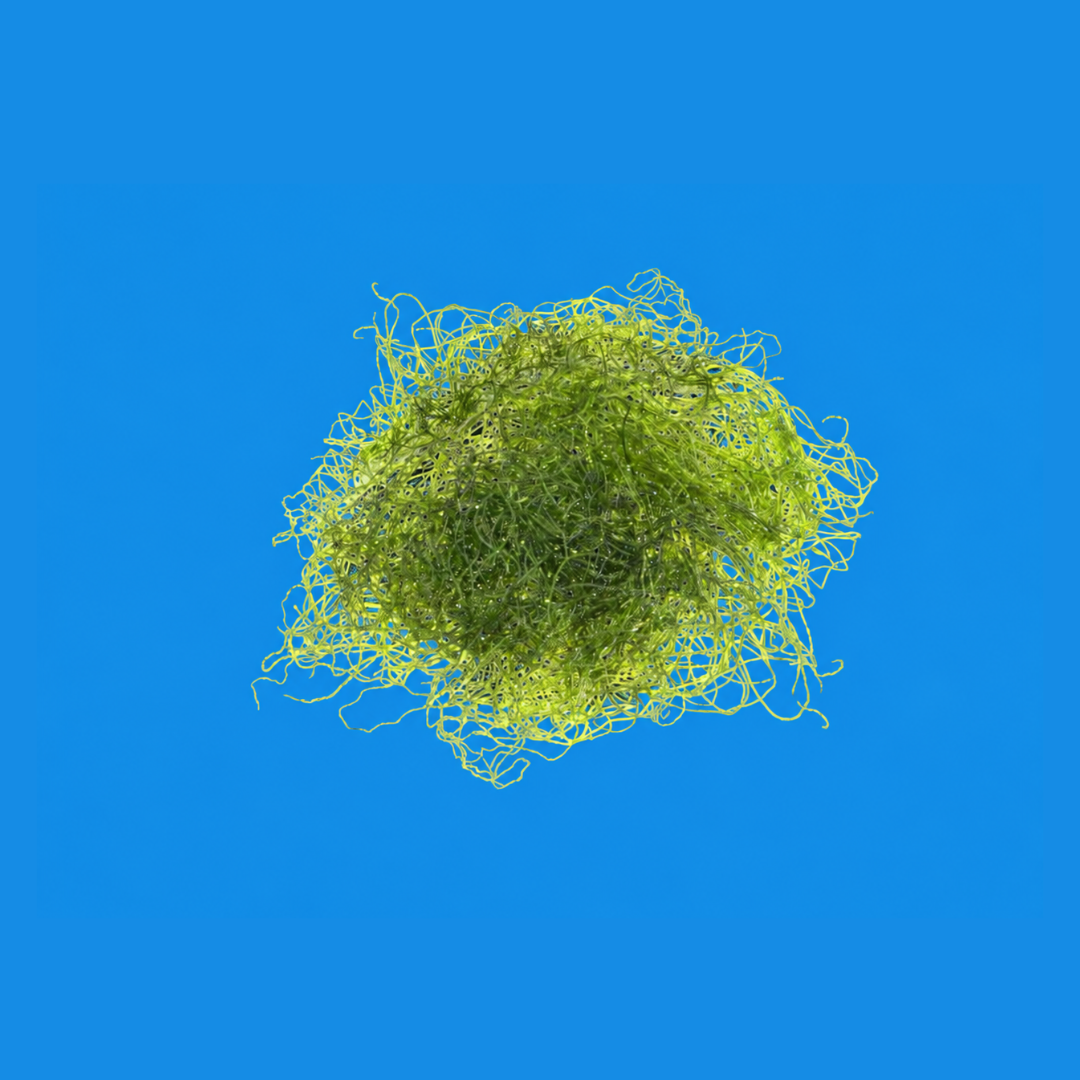
ホソジュズモは、黄緑色から鮮やかな緑色の糸が絡み合い、たわしのような塊をつくる海産の緑藻です。一本一本の糸には枝分かれがなく、手に取るとしっかりした弾力があります。葉のような形の体を広げる海藻とは趣が異なり、入り組んだ糸の重なりが独特の立体感を生み出します。国内では海水水槽向けに流通し、観賞用としてだけでなく、海藻や小さな生き物を育てる区画や補助水槽「リフュジウム」でも利用されています。 Hosojuzumo is a marine green alga whose yellow-green to bright green, unbranched filaments become tangled into firm, springy clumps resembling a scourer. Unlike seaweeds with leaf-like blades, its appeal lies in the intricate depth created by overlapping threads. In Japan, it is sold for marine aquariums and is also grown in refugiums—separate compartments or connected tanks that provide space for macroalgae and small aquatic animals.
成長する過程で水中の窒素やリンを取り込み、増えた分を水槽から取り出すことで、硝酸塩やリン酸塩などの栄養塩の管理を助けます。底床に植える必要がなく、塊を分けて扱えるのも便利なところ。ただし、よく育つためには光だけでなく、栄養塩と、塊の内部まで届く水の動きが欠かせません。藻体の色や増え方を見守ることも、水槽の状態を知る手がかりになります。 As it grows, the alga incorporates nitrogen and phosphorus from the water. Removing excess growth helps manage nutrients such as nitrate and phosphate. It needs no planting substrate, and clumps are easy to divide and handle. Healthy growth depends on nutrients and circulation through the clump as well as light. Observing its color and growth can offer useful clues about conditions in the aquarium.
基本情報 / Basic Information
| 学名 / Scientific Name | Chaetomorpha crassa 命名者表記:(C. Agardh) Kützing。原記載名は Conferva crassa。日本ではホソジュズモにこの学名が用いられてきましたが、国際的な分類データベースでは C. aerea の異名として扱われています。C. linum との区別にも議論があり、流通するジュズモ類は、販売名や外見だけでは種を確定できない場合があります。Authority: (C. Agardh) Kützing. The original name was Conferva crassa. This name has been used for Hosojuzumo in Japan, but international taxonomic databases treat it as a synonym of C. aerea. Its distinction from C. linum has also been debated. Aquarium specimens cannot always be identified to species from their trade names or appearance alone. |
|---|---|
| 通称 / Common Name | ホソジュズモ。ジュズモ、カエトモルファなどの名称でも扱われますが、これらは近縁種を含む呼称です。Hosojuzumo in Japanese. Chaetomorpha algae are also traded as chaeto or spaghetti algae; these names cover several related species. |
| 分類 / Family | 緑藻植物門・アオサ藻綱・シオグサ目・シオグサ科・ジュズモ属。根・茎・葉の区別がある水草とは異なり、糸状の体を持つ海藻です。Phylum Chlorophyta, class Ulvophyceae, order Cladophorales, family Cladophoraceae, genus Chaetomorpha. It is a filamentous seaweed rather than an aquatic plant with distinct roots, stems, and leaves. |
| 分布 / Distribution | 日本を含む各地の沿岸から記録されています。浅い海で他の海藻などに絡まったり、付着せずに塊となって生育したりします。ただし、近縁種との分類上の混同があるため、世界各地の分布記録がすべて同じ種を示すとは限りません。Recorded from coastal areas in Japan and elsewhere. It occurs in shallow water, tangled among other seaweeds or growing as unattached clumps. Because related species have been confused taxonomically, worldwide records do not necessarily all represent a single species. |
| 育成難易度 / Difficulty | 比較的育てやすい海藻です。安定した海水環境と十分な光、水流があれば維持しやすい一方、栄養塩が極端に少ない水槽では育ちにくくなります。塊が密集しすぎないよう、定期的にほぐして間引くことが大切です。Generally easy to grow in a stable marine aquarium with adequate light and circulation. Growth may stall in systems with extremely low nutrient availability. Regular loosening and harvesting help prevent clumps from becoming excessively dense. |
育成環境 / Cultivation Environment
| 光量 / Light | 中程度から強めの光を、塊全体に届くように当てます。白色の水槽用LEDでも育成できますが、設置位置や照明の強さによっては光が不足します。特に深い場所や密集した塊では、内側が日陰になりがちです。海藻育成用の照明も利用でき、導入直後は控えめな照射から徐々に慣らしましょう。点灯時間は1日12時間前後を一つの目安に、色や増え方に応じて調整します。専用機器を使う場合は、その推奨設定に従ってください。Provide moderate to strong light that reaches the whole clump. White aquarium LEDs can support growth, but the intensity and placement must be adequate. Deep placement and dense growth can leave the interior shaded. Dedicated macroalgae lights are another option. Acclimate newly introduced algae gradually, beginning with a modest intensity. About 12 hours of light per day is a useful starting point; adjust according to color and growth. Follow the recommended settings for dedicated equipment. |
|---|---|
| CO2添加 / CO2 Injection | 通常は不要です。海水中の無機炭素を利用して光合成します。淡水の水草水槽のようなCO2添加は行わず、適切なガス交換と、海水のpH・アルカリ度の安定を優先します。Normally unnecessary. The alga uses inorganic carbon available in seawater for photosynthesis. Prioritize good gas exchange and stable marine pH and alkalinity rather than adding CO2 as you would in a freshwater planted aquarium. |
| 水質 / Water Quality | 一般的な海水水槽では、水温22〜27℃程度、pH8.0〜8.4、塩分33〜35‰前後を管理の目安にできます。比重はおおむね1.024〜1.026ですが、測定器の校正や温度条件を確認してください。これらは本種固有の厳密な最適値ではなく、同居生物に合わせた海水管理の目安です。成長には硝酸塩やリン酸塩も必要なため、測定値と同居生物の状態を見ながら管理します。塊の周囲だけでなく内部にも水が通るようにし、水が停滞する場所をつくらないことも大切です。For a typical marine aquarium, practical management ranges are about 22–27°C, pH 8.0–8.4, and salinity around 33–35 ppt. Specific gravity is roughly 1.024–1.026, depending on measurement conditions and instrument calibration. These are general marine husbandry guidelines to be adjusted for other inhabitants, not narrowly defined optima for this species. Nitrate and phosphate are also needed for growth, so manage them according to test results and livestock condition. Maintain circulation around and through the clump without stagnant pockets. |
| 底床 / Substrate | 底床は不要です。砂に埋めず、海水中で付着させずに育てられます。栄養は水中から取り込むため、底床に埋める固形肥料も必要ありません。成長が止まったら、まず光・水流・硝酸塩・リン酸塩を確認しましょう。それらに問題がなく、微量元素の不足が疑われる場合は、海水用の海藻育成添加剤を製品の規定量に従って検討します。退色だけで不足する成分を特定することはできないので、鉄やヨウ素などをむやみに添加しないでください。No substrate is required. Grow it unattached in seawater rather than burying it in sand. Nutrients are absorbed from the water, so root tabs are unnecessary. If growth stops, check lighting, circulation, nitrate, and phosphate first. If these are adequate and a trace-element shortage is suspected, consider a marine macroalgae supplement at the manufacturer’s recommended dose. Fading alone cannot identify a particular deficiency, so avoid indiscriminate additions of iron, iodine, or other elements. |
レイアウト / Layout
| 配置 / Positioning | 海藻を見せる水槽では、中景の開けた場所にふんわり置くと、糸の質感を楽しめます。栄養塩管理を主な目的にするなら、ろ過槽内のリフュジウム区画や、照明付きの容器で海藻を育てる専用リアクターが扱いやすいでしょう。どちらの場合も、取り出して点検できる場所に配置し、成長する余裕を残します。In a macroalgae display, place it loosely in an open midground area to show off the filament texture. For nutrient management, a refugium compartment in the sump or a dedicated illuminated algae reactor can be convenient. In either case, leave room for growth and keep the clump accessible for inspection and removal. |
|---|---|
| 注意点 / Precautions | 岩の隙間へ強く押し込んだり、糸で締めつけたりすると、内側に光と水が届きにくくなります。水流でゆっくり転がる配置は便利ですが、常に回転している必要はありません。動かない場合も、ときどき向きを変え、塊をほぐして管理できます。ちぎれた糸がポンプの吸水口や排水口に入らないよう、仕切りやガードを設けましょう。海藻を食べる魚やウニを飼育している場合は、育成区画を分ける方が維持しやすくなります。Do not pack it tightly into rock crevices or bind it firmly, as this restricts light and water movement inside. Gentle tumbling is useful, but continuous rotation is not essential. A stationary clump can be maintained by occasionally turning and loosening it. Use suitable barriers or guards to prevent loose filaments from entering pump intakes or drains. If you keep algae-eating fish or sea urchins, a separate growing compartment makes cultivation easier. |
増やし方(トリミング) / Propagation & Trimming
| 増やし方 / Propagation | 健康な緑色の塊を手でほぐし、適度な大きさに分けます。特定の生長点を残す必要はなく、分けた糸状体は条件が合えば成長を続けます。極端に細かく刻むより、扱いやすいまとまりを残して分ける方が、流出や回収の手間を減らせます。Loosen a healthy green clump by hand and divide it into manageable portions. There is no need to preserve a particular growing tip; separated filaments can continue growing under suitable conditions. Keeping reasonably sized portions is easier than finely chopping the algae and reduces the loss of loose fragments. |
|---|---|
| トリミング / Trimming | 塊が育成区画を埋め始めたら、一部を取り出して間引きます。中心部にも光と水が届くように厚みを減らし、健康な緑色の部分を残してください。作業時には別容器の海水で軽く揺すり、たまった汚れや傷んだ糸を取り除きます。藻体に取り込まれた栄養塩を水槽外へ取り出すには、この収穫が必要です。取り出した藻体は自然の海や川へ放さず、地域のごみ分別に従って処分します。Harvest part of the clump when it begins to fill its growing compartment. Reduce its thickness so that light and water can reach the center, while retaining healthy green algae for regrowth. Gently swish it in a separate container of seawater to remove trapped debris and damaged filaments. Harvesting is necessary to export the nutrients held in its tissue. Never release removed algae into natural waters; dispose of it according to local waste rules. |
病気と対策(コケなど) / Pests & Algae
| かかりやすい病気 / Common Issues | 主なトラブルは、退色、糸がもろくなること、密集した部分が傷むことです。光不足や急な強光、栄養不足、水温・塩分の急変などが原因になり得ます。また、絡み合った糸に残餌や排泄物がたまり、表面に別の糸状藻やぬめりのある膜が付くこともあります。褐色になったときは、汚れの付着によるものか、藻体そのものが傷んでいるのかを確認しましょう。Typical problems include fading, brittle filaments, and deterioration within dense clumps. Possible causes include insufficient light, sudden exposure to intense light, nutrient shortages, and abrupt temperature or salinity changes. Uneaten food and waste can collect among the filaments, while other filamentous algae or slimy films may grow on the surface. If a clump turns brown, check whether the color comes from trapped debris or damaged tissue. |
|---|---|
| 対策と予防 / Prevention | 導入時は、飼育水に塩分と水温を合わせた別容器の海水で軽く洗い、糸の間に不要な生物や異物がいないか確認します。カーリーなどの小型イソギンチャクの混入が心配な場合は、本水槽に入れる前に別容器で観察してください。淡水への長時間浸漬や、海藻への適合が確認できない薬剤処理は避けます。退色したときは、傷んだ部分を除いて塊をほぐし、水流・光・栄養塩の状態を点検しましょう。原因を確かめずに照明を強めたり添加剤を増やしたりせず、条件を一つずつ調整すると、改善の手がかりをつかみやすくなります。Before introduction, gently rinse it in a separate container of seawater matched to the aquarium’s temperature and salinity, and inspect between the filaments for unwanted organisms and debris. If small anemones such as Aiptasia are a concern, observe the algae separately before placing it in the main system. Avoid prolonged freshwater soaking and chemical treatments that have not been shown to be safe for the alga. If it fades, remove deteriorating portions, loosen the clump, and check circulation, lighting, and nutrients. Adjusting one condition at a time is more informative than increasing light or supplement doses without identifying the cause. |
雑学と豆知識 / Trivia and Fun Facts
| 1. 緑の糸は、細胞が並んだ「数珠」 / 1. A Green Thread Made of Cellular Beads | 絡まった塊をそっとほぐすと、枝分かれしない長い糸が現れます。顕微鏡で見ると、その糸は円柱形や樽形の細胞が一列に並んだもので、「ジュズモ」という名前を思わせるつくりです。さらに、ジュズモ属の細胞には複数の核があります。一本の糸が一つの細胞なのではなく、核をいくつも持つ細胞が、仕切りを挟んで連なっているのです。成長も先端だけで起こるのではなく、糸の途中の細胞が分裂することで進みます。そのため、株分けの際には特定の先端を残す必要がなく、健康な糸状体を分けて育てられます。Gently untangling a clump reveals long threads without branches. Under a microscope, each thread consists of a single row of cylindrical or barrel-shaped cells, suggesting the beads of a prayer necklace—the image behind the Japanese name Juzumo. Cells in this genus contain multiple nuclei. Each thread is a chain of separate, multinucleate cells divided by cross walls, rather than one enormous cell. Growth also occurs through cell division along the filament, not only at its tip. This means healthy portions can be divided and grown without preserving a particular terminal tip. |
|---|---|
| 2. 「ホソ」なのに、学名は「太い」? / 2. A “Fine” Alga with a Name Meaning “Thick” | 種小名の crassa は、ラテン語で「太い」「厚い」を意味します。和名の「ホソ」と並べると、少し意外に感じられるかもしれません。この海藻は1824年に Conferva crassa として記載され、その後ジュズモ属へ移されました。さらに、近縁種との区別をめぐる分類の見直しもあり、一つの海藻に複数の学名が関わっています。糸の太さや色などは生育環境によっても変わるため、外見だけで種を見分けるのは簡単ではありません。身近な緑の塊にも、生き物をどう区別し、名前を付けるかという分類学の難しさが隠れています。The epithet crassa means “thick” or “stout” in Latin, which may seem surprising beside the Japanese prefix hoso, meaning fine or slender. The alga was described as Conferva crassa in 1824 and later transferred to Chaetomorpha. Subsequent reassessment of its distinction from related species has linked several scientific names to this seaweed. Filament thickness and color can also vary with growing conditions, making identification from appearance alone difficult. Even a familiar green clump can reveal the challenges of distinguishing and naming living organisms. |
| 3. 水質管理の仕上げは「収穫」 / 3. Harvesting Completes Nutrient Export | 海藻が栄養塩を吸収しても、窒素やリンが消えてなくなるわけではありません。水中にあったものが、海藻の体をつくる材料として取り込まれた状態です。その海藻が水槽内で枯れて分解されれば、一部は再び水中へ戻ります。だからこそ、増えた分を取り出す作業に意味があります。収穫量や間引きの間隔は、餌の投入量、光、育成スペースなどによって変わります。毎回同じ量を取り出すより、藻体の増え方と硝酸塩・リン酸塩の測定値を見比べると、水槽に合った管理のペースをつかみやすくなるでしょう。When algae absorb nutrients, nitrogen and phosphorus do not disappear. They move from the water into the material that makes up the algal tissue. If that tissue dies and decomposes inside the aquarium, some of those nutrients return to the water. Removing excess growth is therefore an essential step. The amount and frequency of harvesting depend on feeding, light, growing space, and other conditions. Comparing growth with nitrate and phosphate measurements is more useful than removing a fixed amount on an inflexible schedule. |
| 4. 糸の迷路は、小さな生き物の隠れ家 / 4. A Filament Maze for Tiny Animals | 複雑に絡んだ糸の隙間は、ヨコエビやカイアシ類などの小さな甲殻類にとって、身を隠せる場所になります。リフュジウムで海藻を育てる楽しみには、こうした目立たない生き物の暮らしを観察できることも含まれます。間引きのために塊を持ち上げると、糸の間から小さな生き物が姿を現すこともあるでしょう。残したい生き物がいる場合は、別容器の飼育海水で藻体をゆっくり揺すり、出てきたものを確認してから水槽へ戻せます。ただし、海藻に付いている生き物がすべて望ましいとは限らないため、導入時の観察は欠かせません。Spaces between the tangled filaments provide shelter for small crustaceans such as amphipods and copepods. One pleasure of a refugium is observing these easily overlooked animals alongside the macroalgae. When lifting a clump for harvesting, you may see tiny creatures emerging from the threads. To retain desired animals, gently swish the harvested portion in a separate container of aquarium seawater, then inspect the animals before returning them to the tank. Not every hitchhiker is welcome, however, so careful observation remains important when introducing new algae. |
| 5. 夜の照明で、pHの変動を和らげる / 5. Nighttime Lighting Can Soften pH Fluctuations | 水槽では、生き物の呼吸によって二酸化炭素が生じます。夜間は光合成による二酸化炭素の消費が減るため、水中に蓄積してpHが下がりやすくなります。そこで本水槽の消灯中にリフュジウムを照らすと、海藻の光合成が二酸化炭素を消費し、夜間のpH低下を和らげる助けになります。効果の大きさは海藻の量や光、ガス交換などによって異なり、一定のpHを保証するものではありません。本水槽と点灯時間をずらす方法は、海藻の光合成を水槽全体の管理に生かす工夫の一つです。Respiration releases carbon dioxide into aquarium water. At night, reduced photosynthetic consumption allows CO2 to accumulate, which can lower pH. Lighting the refugium while the main aquarium is dark allows the algae to consume CO2 and may soften the nighttime pH decline. The effect depends on algal biomass, lighting, gas exchange, and other factors; it does not guarantee a constant pH. Running the two lighting schedules at different times is one way to use algal photosynthesis in managing the aquarium as a whole. |
まとめ / Conclusion
ホソジュズモの魅力は、弾力のある緑の糸がつくる素朴な姿と、育てて収穫することで水槽の栄養塩管理を助けられるところにあります。糸の隙間は小さな生き物の隠れ家にもなり、観賞水槽でもリフュジウムでも、じっくり観察する楽しみのある海藻です。 Hosojuzumo combines the understated beauty of springy green filaments with a practical role in nutrient management through growth and harvesting. Its tangled threads can also shelter tiny animals, making it rewarding to observe in either a display aquarium or a refugium.
十分な光を確保し、塊を詰め込みすぎず、内側まで水を通すことが育成の基本です。ときどきほぐして状態を確かめ、健康な緑色の部分を残しながら間引く。その穏やかな手入れの積み重ねで、糸状の海藻ならではの姿を長く楽しめます。 Provide adequate light, avoid overcrowding, and keep water moving through the clump. Periodically loosen and inspect it, then harvest excess growth while retaining healthy green portions. With this simple, steady routine, its distinctive filamentous form can remain an enjoyable part of the aquarium.

気になる道具や飼い方を見つけてみませんか?
 アイのアクアグッズ案内水草用ライトの選び方|緑の絨毯と赤い水草を楽しむ照明・植栽用品道具の特徴や使い方、選ぶときのポイントをアイが紹介します。記事はコチラ →
 アイのアクアグッズ案内ショップで見かけるカラフルなバケツ。いったい何が入ってる?道具の特徴や使い方、選ぶときのポイントをアイが紹介します。記事はコチラ →
 アイのアクアグッズ案内ローチの仲間に合わせる飼育用品|クーリー・流水性・ボーシャの水槽と底砂道具の特徴や使い方、選ぶときのポイントをアイが紹介します。記事はコチラ →
 アイのアクアグッズ案内マジックリーフ物語|一枚の葉がアクアリウム用品になるまで道具の特徴や使い方、選ぶときのポイントをアイが紹介します。記事はコチラ →
さまざまな飼育テーマをご紹介。リンク先の記事には広告・商品紹介が含まれます。
案内・紹介記事一覧へ →分布マップ
ホソジュズモ(Chaetomorpha crassa)は、日本を含む世界各地の沿岸から記録されています。浅い海で他の海藻などに絡まり、または付着しない塊として生育します。近縁種との分類上の混同があるため、各地の記録がすべて同じ種を示すとは限りません。
この地図は、分布欄の「日本を含む各地の沿岸」を世界規模で概観するための概略表示です。表示範囲全体に生育することを示すものではなく、正確な分布域や分布の境界は描いていません。マーカーは日本付近に設定した代表地点(北緯35度・東経140度)であり、実際の採集地点や生育確認地点ではありません。
参考文献
-
WoRMS:Chaetomorpha crassa (C.Agardh) Kützing, 1845
World Register of Marine Species(フランダース海洋研究所)。学名、分類、C. aerea の異名としての扱いを確認できる分類データベース。閲覧日:2026年10月6日。 -
BISMaL:Chaetomorpha crassa ホソジュズモ
海洋研究開発機構(JAMSTEC)・海洋生物情報システム。日本で用いられる和名と学名の対応、分類階級、出現記録を確認するための資料。閲覧日:2026年10月6日。 -
Atypical development of Chaetomorpha antennina in culture (Cladophorales, Chlorophyta)
Leliaert, F., D’hondt, S., Tyberghein, L., Verbruggen, H. & De Clerck, O.(2011). Phycological Research, 59(2), 91–97. ジュズモ属の糸状構造と形態による識別の難しさを扱う論文。培養下での細胞分裂と形態変化の観察対象は、近縁種の C. antennina。 -
Seasonal changes in photosynthesis, growth, nitrogen accumulation, and salinity tolerance of Chaetomorpha crassa (Cladophorales, Chlorophyceae)
Gao, X., Endo, H. & Agatsuma, Y.(2018). Journal of Applied Phycology, 30, 1905–1912. 日本の長面浦で採集した藻体を用い、光合成、成長、硝酸態窒素の取り込み、塩分への耐性と季節・水温との関係を調べた研究。 -
大村湾の環境修復に向けた陸起源窒素の取り込みに適した海藻の選択
豊嶋香苗・梅澤有・中田英昭(2014). 『長崎大学水産学部研究報告』95, 41–51. ホソジュズモを含む海藻の硝酸塩・リン酸塩の除去能力と、栄養塩の供給条件を検討した研究。リンク先は国立国会図書館の書誌情報。 -
Production within dense mats of the filamentous macroalga Chaetomorpha linum in relation to light and nutrient availability
Krause-Jensen, D., McGlathery, K., Rysgaard, S. & Christensen, P. B.(1996). Marine Ecology Progress Series, 134, 207–216. 近縁種 C. linum の密集した藻体内で、光の減衰や酸素・栄養塩の分布を調べた研究。塊の内部の光不足と、密集しすぎることによる問題を理解するための資料。 -
Chemical eradication methods for aquarium strains of Chaetomorpha
Odom, R. L. & Walters, L. J.(2015). Journal of Aquatic Plant Management, 53, 22–27. C. crassa を含む水槽由来のジュズモ類の断片について、薬剤処理後の生存と成長を調べた研究。断片からの成長、薬剤による影響、自然環境への放出を避ける必要性に関する資料。 -
Macro Algae Reactor MAR 3181 / MAR 3182 — Instructions for Use(PDF)
TUNZE Aquarientechnik GmbH(2021年10月版). ジュズモ類を育成する海藻リアクターの公式技術資料。照明時間、水流と回転、収穫による栄養塩の除去、小型生物の隠れ家としての利用、逆の点灯時間によるpH管理を扱う。対象はジュズモ属の海藻と専用機器での育成。




コメント