

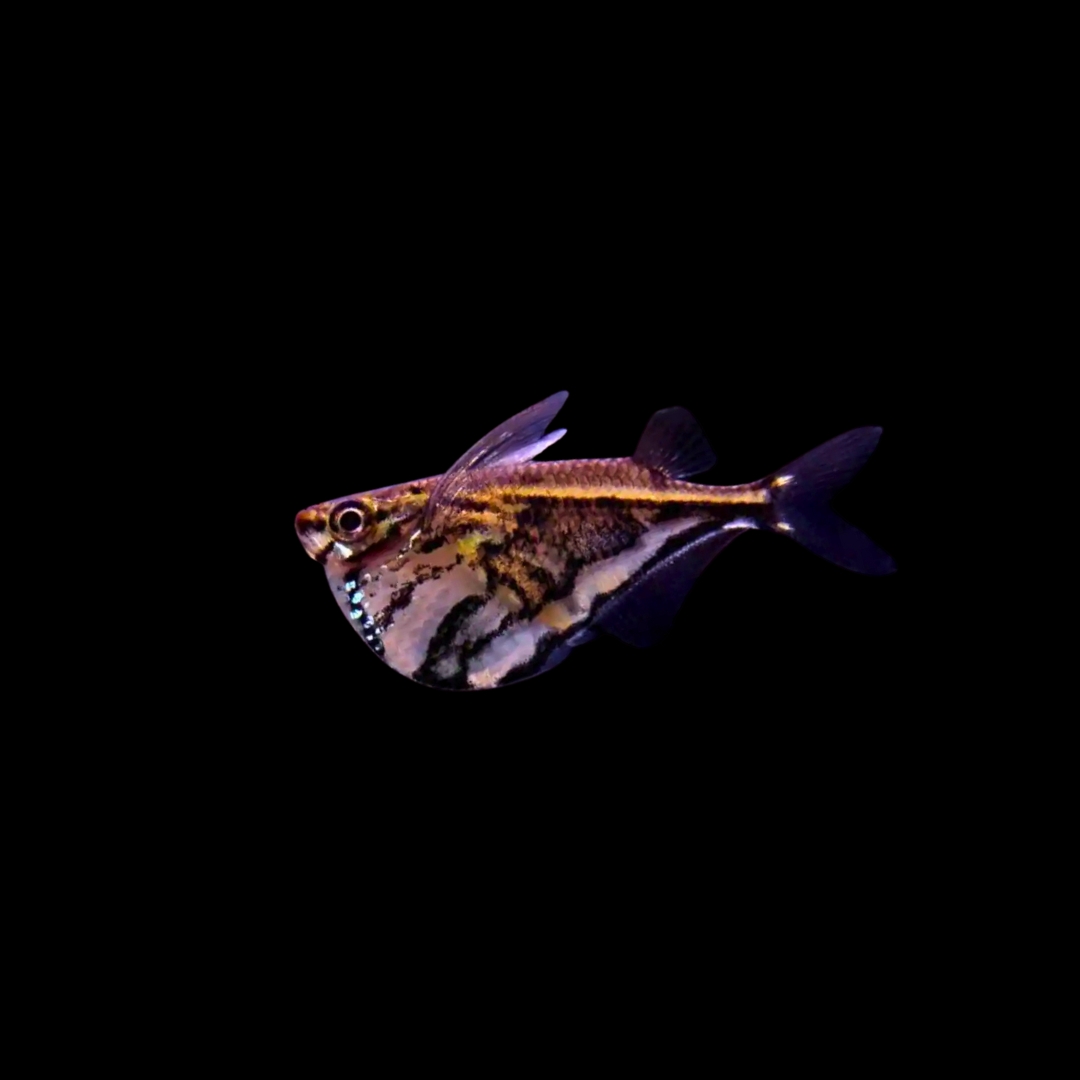
解説 / Description
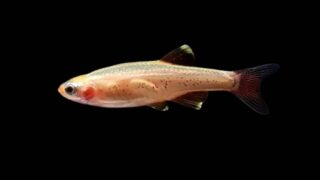
マーブルハチェットフィッシュは、南米のアマゾン川流域を中心に知られる小型の表層性カラシンです。手斧を思わせる深く張り出した胸部、上向きの口、銀色の体に入る暗褐色のマーブル模様が特徴で、水面直下を静かに漂う姿はとても個性的です。自然下では水面に落ちた昆虫や小型甲殻類などを食べ、驚くと水面から勢いよく跳ねるため、飼育では「隙間のないフタ」と「水面で食べられる餌」が成功の大きな鍵になります。 The Marbled Hatchetfish is a small surface-dwelling characin best known from the Amazon River basin of South America. It is recognized by its deep hatchet-like chest, upward-facing mouth, and dark marbled pattern over a silvery body. In nature it feeds on insects and small crustaceans at the water surface, and when startled it can leap powerfully from the water. In aquariums, a tightly covered tank and foods that remain available at the surface are essential for success.
基本情報 / Basic Information
| 学名 / Scientific Name | Carnegiella strigata |
|---|---|
| 通称 / Common Name | マーブルハチェットフィッシュ、マーブルハチェットMarbled Hatchetfish |
| 分類 / Family | カラシン目 ガステロペレクス科 Carnegiella属Order Characiformes, family Gasteropelecidae, genus Carnegiella |
| 英名 / English Name | Marbled Hatchetfish |
| 分布 / Distribution | 南アメリカ。主にアマゾン川の下流・中流・上流域、およびコロンビアのカケタ川などから知られます。観賞魚として流通する個体には、産地や地域個体群による模様の違いが見られることがあります。South America. It is mainly recorded from the lower, middle, and upper Amazon River basin, as well as the Caquetá River in Colombia. Aquarium specimens may show differences in pattern depending on locality or regional population. |
| 最大体長 / Max Size | 約3.5cm SL。飼育上の目安としては約4cm前後の小型魚として扱います。About 3.5 cm SL. In aquarium care, it is best treated as a small fish of roughly 4 cm. |
| 寿命 / Lifespan | 適切に飼育できれば約3〜5年が目安です。導入直後の状態や水合わせの丁寧さによって差が出やすい魚です。Approximately 3–5 years under suitable care. Longevity can vary greatly depending on the condition at import and the quality of acclimation. |
飼育環境 / Aquarium Environment
| 水槽サイズ / Tank Size | 少数飼育でも最低45cm規格水槽、図鑑としての推奨は60cm規格水槽以上です。群れで落ち着かせるなら、より水面の広い60cm規格水槽から75〜80cm幅以上の水槽が安心です。深さよりも水面の広さを重視します。A 45 cm standard tank is the practical minimum for a small group, while a 60 cm standard tank or larger is recommended. For a stable group, a 60 cm tank or an aquarium around 75–80 cm wide or larger provides more suitable surface area. Surface area is more important than depth. |
|---|---|
| 水温 / Temperature | 24〜28℃を目安に安定させます。急な温度低下は白点病などのきっかけになりやすいため、冬場や水換え時は特に注意します。 Keep the temperature stable at around 24–28°C. Sudden drops can trigger problems such as ich, so extra care is needed during winter and water changes. |
| 水質 / Water Quality | 飼育では弱酸性〜中性寄りの軟水を目標にすると安定しやすく、pH 5.5〜7.0前後、低〜中程度の硬度を目安にします。種としてはやや広い水質範囲にも記録がありますが、急なpH変化や硬度変化には弱い傾向があります。流木、マジックリーフ、ヤシャブシの実、ピートなどでタンニンを含むブラックウォーター寄りの環境にすると落ち着きやすくなります。For aquarium care, slightly acidic to near-neutral soft water is a good target, around pH 5.5–7.0 with low to moderate hardness. Although the species is recorded from a somewhat broader range, sudden changes in pH or hardness should be avoided. Driftwood, Indian almond leaves, alder cones, or peat can help create a tannin-rich blackwater-style environment. |
| レイアウト / Layout | 水面付近に浮き草を入れ、下からは流木や水草で暗がりを作ると安心します。強い照明や強すぎる水流は苦手なので、浮き草で光を和らげ、排水はガラス面に当てる、シャワーパイプを使うなどして穏やかな流れに調整します。Floating plants and shaded areas created by driftwood and aquatic plants help the fish feel secure. Avoid intense lighting and overly strong surface currents. Diffuse the filter outflow with a spray bar or direct it toward the glass to keep the surface flow gentle. |
| 注意点 / Precautions | 最大の注意点は飛び出しです。フィルターの配管、ヒーターコード、フタの角など、わずかな隙間からでも飛び出すことがあります。必ず隙間のないフタを用意し、水面とフタの間には5〜7cmほどの余裕を作ると、驚いて跳ねた時の口先の損傷も減らしやすくなります。Jumping is the biggest risk. Even small gaps around filter pipes, heater cords, or tank corners may allow this species to escape. Use a tight-fitting lid, and leave about 5–7 cm of space between the water surface and the cover to reduce injuries if the fish jumps. |
餌と給餌 / Feeding
| 餌の種類 / Diet | 浮上性の小粒フード、細かく砕いたフレークフード、フリーズドライのミジンコやアカムシ、ブラインシュリンプ、ショウジョウバエなどが向いています。自然下では昆虫や小型甲殻類を食べるため、動物質を含む餌を中心に、偏りすぎないようローテーションすると状態を維持しやすくなります。Suitable foods include tiny floating pellets, finely crushed flake food, freeze-dried daphnia or bloodworms, brine shrimp, and flightless fruit flies. In nature it eats insects and small crustaceans, so a varied diet with animal-based foods helps maintain good condition. |
|---|---|
| 給餌のポイント / Feeding Tips | この魚は口が上向きで、水面の餌を食べることに特化しています。沈んだ餌を追いかけることはほとんどないため、長く浮く餌を少量ずつ与えます。水流が強いと餌がすぐ沈んだり流されたりするので、給餌リングを使う、給餌時だけ水流を弱めるなどの工夫が有効です。Its upward-facing mouth is specialized for surface feeding, and it rarely follows sinking food. Offer small amounts of food that remain afloat for a while. A feeding ring or temporarily reduced surface flow can prevent food from being swept away or sinking too quickly. |
性格と混泳 / Temperament and Tank Mates
| 性格 / Temperament | 温和ですが、とても臆病です。単独や少数では落ち着きにくく、物陰に隠れたり、驚いて飛び出したりしやすくなります。最低でも5〜6匹以上、できれば10匹前後の群れにすると、表層をゆったり泳ぐ本来の姿が見やすくなります。Peaceful but very shy. When kept alone or in very small numbers, it may hide, panic, or jump more easily. Keep at least five to six, and ideally around ten, to encourage more natural surface schooling behavior. |
|---|---|
| 混泳の相性 / Compatibility | 中層を泳ぐネオンテトラ、カージナルテトラ、プリステラなどの温和な小型カラシン、下層のコリドラス、小型オトシンクルス、温和なアピストグラマ類などと相性がよいです。ゼブラダニオのように水面の餌を素早く奪う魚、スマトラなどのヒレをかじる魚、口に入るサイズを捕食する魚との混泳は避けます。Good tank mates include peaceful mid-water tetras such as Neon Tetras, Cardinal Tetras, and X-Ray Tetras, as well as Corydoras, small Otocinclus, and mild dwarf cichlids such as Apistogramma. Avoid fast surface feeders like Zebra Danios, fin-nippers such as Tiger Barbs, and any fish large enough to eat them. |
病気と対策 / Diseases and Prevention
| かかりやすい病気 / Common Diseases | 輸入される個体は野生採集個体が多く、輸送ストレスや水質変化で体力を落としていることがあります。白点病、尾ぐされ病、水カビ、内部寄生虫などに注意が必要です。特に導入直後は、急な水質変化と温度変化を避けます。Most individuals in the trade are wild-caught and may be weakened by shipping stress and sudden water changes. Watch for ich, fin rot, fungal infections, and internal parasites. Newly imported fish should be protected from abrupt changes in water chemistry or temperature. |
|---|---|
| 対策と予防 / Prevention | 導入時は時間をかけた水合わせと検疫が有効です。薬剤に敏感なことがあるため、治療は隔離水槽で行い、魚の呼吸や遊泳を観察しながら慎重に進めます。軽い不調では、低濃度から段階的に行う塩水浴が選択肢になることもありますが、急な濃度変化は避けます。薬浴を行う場合も、本水槽の水草やろ過バクテリアを守るため、トリートメントタンクでの管理が安全です。Slow acclimation and quarantine are highly recommended. This species may be sensitive to medications, so treatments should be done in a separate hospital tank while carefully observing breathing and swimming behavior. For mild stress or early symptoms, a gradually introduced low-concentration salt bath may be an option, but sudden salinity changes should be avoided. Medication is safer in a treatment tank rather than the main aquarium, especially to protect plants and filtration bacteria. |
増やし方(繁殖) / Breeding
| 雌雄の判別 / Sexing | 外見での判別は難しいです。成熟したメスは、上から見ると腹部がやや丸く、抱卵時には体幅が出ることがあります。オスは比較的スリムに見えることがありますが、確実な判別は容易ではありません。Sexing is difficult. Mature females may appear fuller and broader from above, especially when carrying eggs. Males may look slightly slimmer, but reliable visual sexing is not easy. |
|---|---|
| 繁殖形態 / Reproduction | 水面付近の植物の根や葉の周辺に小さな卵をばらまくエッグスキャッターです。卵は底や植物上に落ちることがあり、親魚は卵や稚魚を守りません。食卵を防ぐため、産卵後は親魚を移すか、卵を別管理にします。An egg-scattering species that releases tiny eggs around roots or leaves near the surface. Eggs may fall to the bottom or onto plants, and the parents do not guard eggs or fry. Adults should be removed after spawning or the eggs should be managed separately to prevent egg predation. |
| 繁殖のポイント / Breeding Tips | 水槽内繁殖はかなり難しい部類です。弱酸性で非常に柔らかい水、暗めの照明、根の長い浮き草、栄養価の高い生餌が重要です。稚魚は非常に小さく、初期飼料としてインフゾリアなどの微小な餌を用意し、その後ブラインシュリンプ幼生へ移行します。Aquarium breeding is very challenging. Very soft acidic water, dim lighting, floating plants with long roots, and rich live foods are important triggers. The fry are extremely small and require microscopic foods such as infusoria before gradually moving on to newly hatched brine shrimp. |
雑学と豆知識 / Trivia and Fun Facts
| 1. 名前に残る「縞模様」の記憶 / 1. A Name That Remembers Its Stripes | 種小名のstrigataは、ラテン語で「縞のある」「溝のある」といった意味を持つ語に由来するとされます。マーブルハチェットフィッシュの体には、銀色の地に暗色の帯やマーブル模様が走り、水面に浮かぶ落ち葉や光のゆらぎに紛れるような印象を与えます。美しい模様であると同時に、水面直下という目立ちやすい場所で輪郭をぼかす役割を持つ可能性があります。The species name strigata is derived from Latin words associated with stripes or grooves. The fish’s dark bands and marbled markings over a silvery body give the impression of floating leaves and shimmering light. The pattern is beautiful, but it may also help break up the outline of the fish just below the water surface. |
|---|---|
| 2. ハチェットフィッシュは本当に飛ぶのか / 2. Does a Hatchetfish Really Fly? | ハチェットフィッシュの仲間は、胸ビレを使って空を飛ぶ魚のように語られることがあります。しかし、少なくとも水槽飼育で問題になるのは「飛行」よりも「強い跳躍」です。発達した胸部とヒレを使って水面を突破する力が強く、驚いた瞬間に水槽外へ飛び出すことがあります。つまり、この魚の魅力を安全に楽しむための第一歩は、広い空間を与えることではなく、確実にフタをすることです。Hatchetfishes are sometimes described as fish that fly through the air with their pectoral fins. In aquarium care, however, the practical concern is not true flight but powerful jumping. Their enlarged chest and fins help them break through the water surface, and a startled fish may leap out of the tank. The first step in enjoying this species safely is not open air, but a secure lid. |
| 3. ひとつの名前の中に隠れた地域差 / 3. Regional Variety Behind One Name | 観賞魚としては「マーブルハチェットフィッシュ」というひとつの名前で流通しますが、広い分布域を持つため、地域によって模様や体型に差が見られます。研究では、従来同じC. strigataとして扱われてきた個体群の中に、遺伝的に大きく分かれる系統が含まれる可能性も示唆されています。図鑑でひとつの名前として紹介される魚にも、現地の川ごとの歴史が静かに刻まれているのです。In the aquarium trade, many populations are sold under the single name Marbled Hatchetfish. Because the species has a wide distribution, differences in pattern and body shape may appear among local populations. Research has suggested that some populations treated as C. strigata may include genetically distinct lineages. Even a fish introduced under one common name can carry the history of many rivers. |
| 4. 水面専門という長所と弱点 / 4. The Strength and Weakness of Surface Specialization | 上を向いた口は、水面に落ちた昆虫を素早く食べるためには非常に優れた形です。その一方で、沈んだ餌を拾うのは苦手です。混泳水槽では、ほかの魚が餌を先に奪うと、餌を入れているのに痩せていくことがあります。マーブルハチェットフィッシュの飼育では、何を与えるかだけでなく、餌がどこに、どれくらいの時間浮いているかを見ることが大切です。The upward-facing mouth is excellent for snatching food from the surface, but it also makes the fish poor at collecting sinking food. In a community aquarium, faster tank mates may take the food first, and the hatchetfish can lose weight even when food is being added. Successful feeding depends not only on what is offered, but also on where the food stays and how long it remains afloat. |
| 5. 小さな魚でも保全情報を意識したい / 5. Conservation Awareness, Even for a Small Aquarium Fish | 本種は国際的な保全評価では深刻な絶滅危惧としては扱われていませんが、観賞魚として流通する個体の多くは野生採集由来とされます。購入時には痩せすぎていないか、ヒレが傷んでいないか、呼吸が荒くないかを確認し、迎えた後は丁寧な水合わせと落ち着いた環境で立ち上げることが大切です。小さな一匹を長く飼うことは、採集地から水槽まで続く命の流れを大切にすることにもつながります。This species is not generally treated as globally threatened, but many aquarium specimens are believed to be wild-caught. When purchasing, check that the fish is not overly thin, has intact fins, and is breathing normally. After bringing it home, careful acclimation and a calm environment are important. Keeping even a small fish well is a way of respecting the long journey from its native river to the aquarium. |
まとめ / Conclusion
マーブルハチェットフィッシュは、水槽の上層をただ泳ぐ魚ではなく、「水面」という限られた場所に暮らすための形と行動を備えた、とても個性的な小型魚です。上向きの口、手斧のような体型、落ち葉のような模様、そして驚いた時の鋭い跳躍は、どれも水面直下の暮らしと深く結びついています。 The Marbled Hatchetfish is not simply a fish that swims near the top of the tank. It is a distinctive small species shaped by life at the water surface. Its upward-facing mouth, hatchet-like body, leaf-like pattern, and sharp jump when startled are all closely tied to that specialized way of life.
飼育では、隙間のないフタ、穏やかな表層、水面に長く残る餌、そして同種の群れが大切です。これらを整えることで、マーブルハチェットフィッシュは図鑑の最後に静かに余韻を残す一種のように、南米の水面世界を水槽の中でそっと見せてくれます。 For aquarium care, a tight lid, calm surface water, foods that remain afloat, and a proper group of its own kind are the key points. When these needs are met, the Marbled Hatchetfish becomes a memorable species that quietly brings the surface world of South American streams into the aquarium.
気になる道具や飼い方を見つけてみませんか?
 アイのアクアグッズ案内エーハイム、安いのと高いのは何が違う? コタロウと見比べる外部フィルター道具の特徴や使い方、選ぶときのポイントをアイが紹介します。記事はコチラ →
 アイのアクアグッズ案内水槽のエアーポンプの選び方|水深・音・泡で選ぶおすすめ用品道具の特徴や使い方、選ぶときのポイントをアイが紹介します。記事はコチラ →
さまざまな飼育テーマをご紹介。リンク先の記事には広告・商品紹介が含まれます。
案内・紹介記事一覧へ →参考文献・根拠資料
本記事では、店舗・通販ページ、個人ブログ、一般的なまとめサイトを参考文献から除外し、分類、分布、生息環境、飼育条件、繁殖、病気や注意点を裏付けるために、魚類分類データベース、国際的な生物データベース、査読論文、大学・獣医系の魚病資料を中心に選定しています。
分類・学名・分布を支える資料
- Fricke, R., Eschmeyer, W. N. & Van der Laan, R. (eds.). Eschmeyer’s Catalog of Fishes: Gasteropelecus strigatus / Carnegiella strigata. California Academy of Sciences.
学名の原記載、シノニム、現在の有効名、科の位置づけ、南米における分布情報の確認に使用。 - ITIS. Carnegiella strigata (Günther, 1864) — Taxonomic Serial No. 163123.
カラシン目、ガステロペレクス科、Carnegiella属という基本的な分類階層の確認に使用。 - Froese, R. & Pauly, D. (eds.). FishBase: Carnegiella strigata, Marbled hatchetfish.
最大体長、アマゾン川流域・カケタ川を含む分布、淡水・表層性、pH・硬度・水温、食性、繁殖、群れ飼育、飛び出し注意の確認に使用。
生息環境・ブラックウォーター・形態行動を支える資料
- Duncan, W. P. & Fernandes, M. N. (2010). Physicochemical characterization of the white, black, and clearwater rivers of the Amazon Basin and its implications on the distribution of freshwater stingrays. Pan-American Journal of Aquatic Sciences, 5(3), 454–464.
ネグロ川に代表されるブラックウォーターが酸性で溶存成分の少ない水質であることを説明するための基礎資料。 - Leenheer, J. A. (1980). Origin and nature of humic substances in the waters of the Amazon River Basin. Acta Amazonica, 10(3), 513–526.
落ち葉や土壌由来の腐植物質がブラックウォーターの色や化学的特徴に関わることを説明するために使用。 - FishBase. Family Gasteropelecidae — Freshwater hatchetfishes.
ハチェットフィッシュ類の大きな胸部、発達した胸帯・胸ビレ、跳躍能力、脂ビレの有無など、科レベルの特徴の確認に使用。 - Wiest, F. C. (1995). The specialized locomotory apparatus of the freshwater hatchetfish family Gasteropelecidae. Journal of Zoology, 236(4), 571–592.
ハチェットフィッシュ類の跳躍に関わる特殊化した運動器官と胸ビレ制御の理解を支える学術資料。
地域差・隠れた多様性を支える資料
- Schneider, C. H. et al. (2012). Cryptic diversity in the mtDNA of the ornamental fish Carnegiella strigata. Journal of Fish Biology, 81(4), 1210–1230.
観賞魚名として一括される本種内に、ミトコンドリアDNA上で明瞭に分かれる系統が含まれる可能性を説明するために使用。
病気・導入時ストレス・治療上の注意を支える資料
- Francis-Floyd, R. (University of Florida IFAS). Stress — Its Role in Fish Disease. FA005.
輸送、導入、水質変化などのストレスが魚の粘膜防御や浸透圧調整に影響し、疾病リスクを高めるという説明の根拠として使用。 - Francis-Floyd, R. & Floyd, M. R. (University of Florida IFAS). Ichthyophthirius multifiliis (White Spot) Infections in Fish. FA006.
白点病の原因、生活環、治療時に遊泳ステージを考慮する必要性、薬浴中のエアレーションなどの基本事項を支える資料。 - Durborow, R. M., Mitchell, A. J. & Crosby, M. D. (1998). Ich (White Spot Disease). Southern Regional Aquaculture Center, Publication No. 476.
白点病は早期診断と継続的管理が重要であること、予防と水槽管理の重要性を補強する資料。
注記:飼育条件の数値は、自然環境そのものの再現値ではなく、家庭水槽で管理する際の目安です。薬浴・塩水浴のリスクは魚種や個体の状態、水草・ろ過環境によって変わるため、実施する場合は隔離水槽で慎重に行ってください。




コメント