

解説 / Description
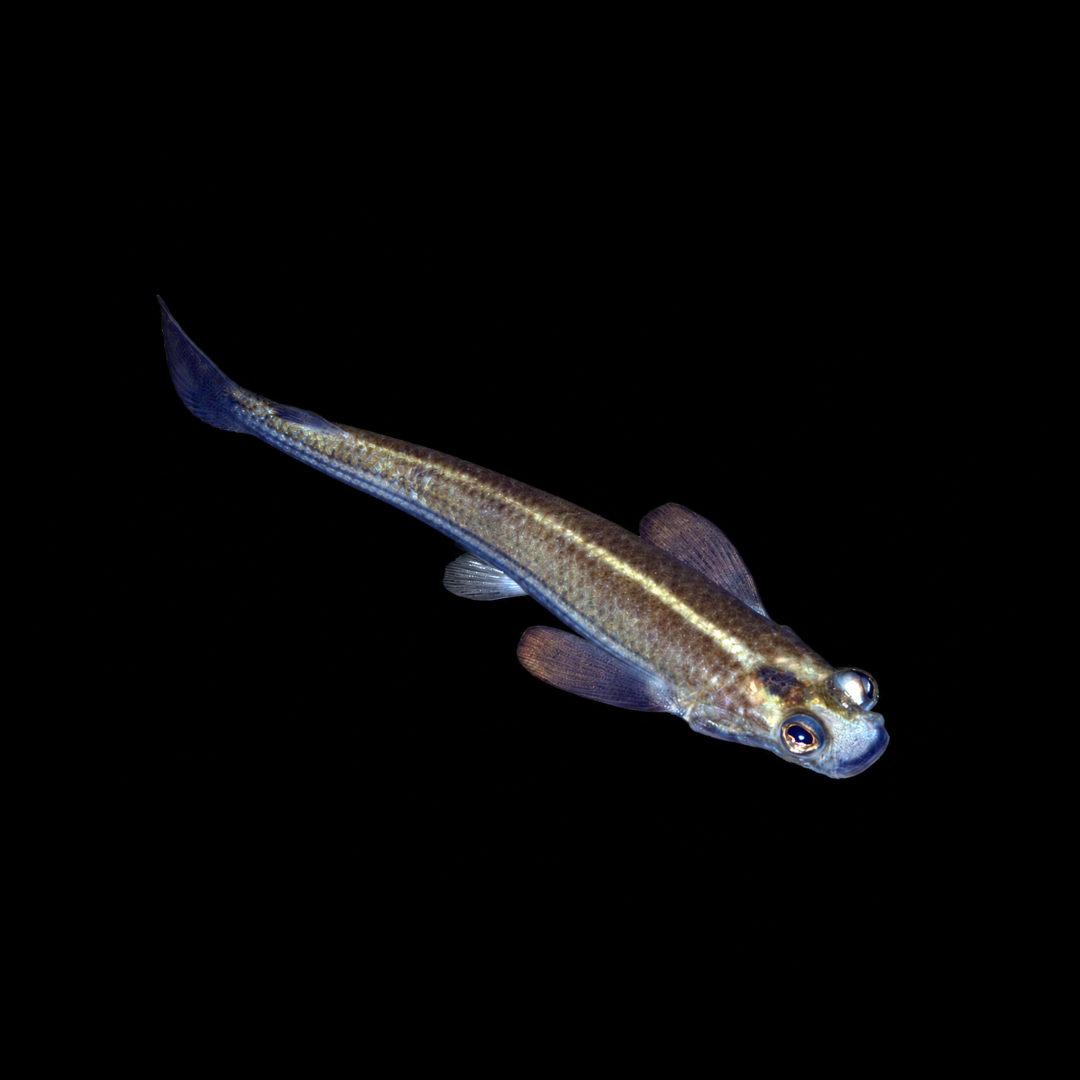
ヨツメウオは、南アメリカ北部の淡水の水路から河口・マングローブ沿岸まで、水面近くを中心に暮らすヨツメウオ科の胎生魚です。最大の特徴は、水面をまたぐように突き出した大きな眼にあります。眼球そのものが4個あるわけではなく、左右それぞれの眼が空中を見る領域と水中を見る領域に分かれ、水上と水中を同時に視認できるように特殊化しています。水面に落ちた昆虫などを素早く見つける姿は非常に印象的で、進化生物学や視覚研究の対象としても長く注目されてきました。 Anableps anableps is a livebearing member of the family Anablepidae that inhabits surface waters from freshwater channels to estuaries and mangrove margins in northern South America. Its most remarkable feature is the pair of large, protruding eyes positioned at the water surface. It does not literally have four eyeballs; instead, each eye is divided into aerial and aquatic viewing regions, allowing the fish to see above and below the water at the same time. Its ability to detect insects and other food at the surface is striking, and its unusual visual system has long attracted attention in evolutionary biology and vision research.
基本情報 / Basic Information
| 学名 / Scientific Name | Anableps anableps |
|---|---|
| 通称 / Common Name | ヨツメウオ、フォーアイフィッシュLargescale foureyes, Four-eyed fish |
| 分類 / Family | 条鰭綱・カダヤシ目・ヨツメウオ科・ヨツメウオ属Actinopterygii, Cyprinodontiformes, Anablepidae, Anableps |
| 英名 / English Name | Largescale foureyes |
| 分布 / Distribution | トリニダード島およびベネズエラから、ブラジルのアマゾン川デルタまで。主に淡水域で見られますが、ラグーンやマングローブ沿岸などの汽水域にも生息します。From Trinidad and Venezuela to the Amazon River delta in Brazil. It is found mainly in freshwater, but also occurs in brackish habitats such as lagoons and mangrove coastlines. |
| 最大体長 / Max Size | 最大全長約30cm。一般にはこれより小さい個体が多いものの、メスはオスより大きく育つ傾向があります。Up to about 30 cm total length. Many individuals remain smaller, and females generally grow larger than males. |
| 寿命 / Lifespan | 野外・飼育下ともに信頼できる体系的な寿命データは乏しく、明確な寿命は分かっていません。特定の年数を確定値として扱うのは避けたほうがよいでしょう。Reliable systematic lifespan data are limited in both the wild and captivity, and a definitive lifespan is not established. Specific age figures should therefore be treated cautiously. |
飼育環境 / Aquarium Environment
| 水槽サイズ / Tank Size | 成魚の終生飼育では、150cmクラス以上を実用的な目安とします。150×45×45cmで約300L、できれば150×60×45cm前後の約400L級、複数飼育では180cmクラス以上を検討すると管理しやすくなります。ヨツメウオは水面直下で過ごす時間が長いため、水槽高よりも水面積と泳げる長さを優先してください。幼魚を90cm規格水槽などで一時的に管理することはできますが、成長を見越した大型水槽への移行が必要です。For lifelong adult care, a 150 cm class aquarium or larger is a practical benchmark. A 150 × 45 × 45 cm tank holds roughly 300 L, while a 150 × 60 × 45 cm tank of around 400 L is preferable; for groups, an aquarium in the 180 cm class or larger is easier to manage. Because this species spends much of its time near the surface, surface area and swimming length matter more than tank height. Juveniles can be maintained temporarily in a 90 cm standard tank, but they require a substantially larger aquarium as they grow. |
|---|---|
| 水温 / Temperature | 24〜28℃を基本の目安とします。急激な温度変化を避け、冬季はヒーターで安定させます。 Maintain approximately 24–28°C. Avoid rapid temperature changes and use reliable heating during colder seasons. |
| 水質 / Water Quality | 自然下では淡水域を主に利用し、汽水域にも生息します。飼育では弱汽水から汽水で安定させる方法が広く用いられており、飼育例では25℃前後で比重1.005〜1.010程度が一つの目安になります。ただし、塩分やpHを急変させることは避け、入手時の水質を基準に時間をかけて調整してください。アンモニアと亜硝酸は検出されない状態を維持します。In nature, the species occurs mainly in freshwater but also inhabits brackish environments. In aquaria, stable low-brackish to brackish conditions are widely used, with a specific gravity of roughly 1.005–1.010 at around 25°C serving as one practical reference point. Avoid abrupt changes in salinity or pH, and adjust conditions gradually from those in which the fish was obtained. Ammonia and nitrite should remain undetectable. |
| レイアウト / Layout | 広い開放水面を最優先し、水面付近の遊泳を妨げない構成にします。底砂は口先や眼を傷つけにくい細かな砂を薄く敷き、マングローブの支柱根を思わせる滑らかな流木などを配置すると自然な雰囲気を作れます。水位は蓋との間に十分な空間を残し、水面直上が極端に乾燥する環境は避けます。飛び出しを防ぐため、蓋は隙間なく確実に固定してください。Prioritize a broad, open surface and avoid decorations that obstruct surface swimming. Use a thin layer of fine, smooth sand to reduce the risk of injury to the mouth and eyes, and add smooth driftwood reminiscent of mangrove roots for a natural appearance. Leave adequate space between the water surface and the lid, and avoid excessively dry air immediately above the water. A tightly secured, gap-free cover is essential to prevent jumping. |
| 注意点 / Precautions | 特に注意したいのは飛び出しです。給餌時や驚いた際に勢いよく跳ねるため、配管やコードの周囲まで含めて蓋の隙間をなくします。また、汽水では蒸発すると塩分だけが残るため、減った水量は原則として淡水で補い、比重の上昇を防ぎます。浅めの水位で運用する場合はヒーターの空焚きにも注意が必要です。排泄量が多いため、大容量のろ過と定期的な換水を前提にしてください。Jumping requires particular attention. These fish can leap forcefully when feeding or startled, so seal gaps around plumbing and cables as well as the lid itself. In brackish water, evaporation leaves salts behind; replace evaporated water with fresh water to prevent rising salinity. If the water level is kept low, take special care that heaters never become exposed. The species produces substantial waste, so strong filtration and regular water changes are essential. |
餌と給餌 / Feeding
| 餌の種類 / Diet | 自然下では水面に落ちた昆虫や各種無脊椎動物、小魚などの動物質を中心に摂食し、泥表面の珪藻類なども取り込みます。飼育下では高品質な浮上性ペレットやフレークを主食にし、冷凍アカムシ、ブラインシュリンプ、イサザアミなどを補助的に与えると食事に変化をつけられます。生餌だけに偏らせず、栄養バランスの取れた人工飼料へ慣らしておくと管理しやすくなります。In nature, the diet is centered on animal foods such as insects at the surface, other invertebrates, and small fishes, while diatoms and other material from muddy substrates are also consumed. In captivity, use high-quality floating pellets or flakes as the staple diet and supplement with foods such as frozen bloodworms, brine shrimp, and mysid shrimp. Avoid relying exclusively on live foods; acceptance of balanced prepared foods makes long-term care easier. |
|---|---|
| 給餌のポイント / Feeding Tips | 視線が水面に向いているため、まず浮上性の餌を水面へ広く散らす方法が適しています。食欲が非常に強く、給餌時に跳ねやすいため、蓋を大きく開けたままにしないでください。1回に大量に与えるより、短時間で食べ切れる量を1日1〜2回に分け、肥満と水質悪化を防ぎます。複数飼育では全個体に餌が行き渡っているかも確認します。Because the fish is strongly surface-oriented, distribute floating food broadly across the surface. Feeding responses can be vigorous and may trigger jumping, so avoid leaving the lid widely open. Rather than offering a large meal, feed an amount that is consumed quickly once or twice a day to limit obesity and water deterioration. In groups, confirm that subordinate individuals are also receiving food. |
性格と混泳 / Temperament and Tank Mates
| 性格 / Temperament | 自然下では群れを作る性質があり、飼育下でも同種との社会的なつながりを考慮した管理が向いています。狭い水槽では追尾などの個体間行動が問題になりやすいため、複数飼育では十分な水面積と逃げ場を確保してください。人の動きにも敏感で、驚いたときの急なダッシュや跳躍には注意が必要です。The species is naturally gregarious, and captive management should take its social behavior with conspecifics into account. In cramped aquaria, chasing and other interactions can become problematic, so groups need ample surface area and places where individuals can move away from one another. The fish is also alert to movement outside the aquarium and may dash or jump suddenly when startled. |
|---|---|
| 混泳の相性 / Compatibility | 最も管理しやすいのはヨツメウオ主体の専用水槽です。口に入る小魚は捕食される可能性が高く、グッピーや小型テトラなどとの混泳には向きません。どうしても他種と合わせる場合は、同程度の体格があり、汽水に適応し、水面で激しく競合しない温和な魚を選びます。ただし、水質要求と泳層が特殊なため、混泳相手の選択肢は広くありません。A species-focused aquarium is usually the easiest arrangement to manage. Small fish that fit into the mouth may be eaten, making guppies, small tetras, and similar fishes unsuitable companions. If mixed-species housing is attempted, choose peaceful fishes of comparable size that tolerate brackish water and do not strongly compete at the surface. Because of its specialized water and space requirements, suitable tank mates are limited. |
病気と対策 / Diseases and Prevention
| かかりやすい病気 / Common Diseases | ヨツメウオだけに特有の代表的疾病が広く確立されているわけではありません。飼育下では、水質悪化や傷をきっかけとした細菌性の皮膚・ヒレの炎症、外部寄生虫、眼の表面の擦過傷や乾燥に注意します。特に眼は水面より上に出る部分があるため、乾燥した空気や粗いレイアウト材による障害を避けることが重要です。No single characteristic disease is firmly established as uniquely common in this species. In aquaria, watch for bacterial skin or fin infections following poor water quality or injury, external parasites, and abrasion or drying of the eye surface. Because part of the eye is exposed above the water, dry air and rough decorations should be avoided. |
|---|---|
| 対策と予防 / Prevention | 予防の中心は、安定した水質と比重、十分なろ過、水面直上の湿度、そして外傷を防ぐ環境づくりです。新しい魚は可能な限り隔離観察し、本水槽へ移す際は水温と塩分をゆっくり合わせます。アンモニア・亜硝酸を検出させず、硝酸塩の蓄積を抑える換水を続けます。異常が見られた場合は原因となる水質や外傷の有無を確認し、薬剤を使用する際は汽水条件と魚種への適合性を確認してください。Prevention depends on stable water quality and salinity, adequate filtration, humid air above the surface, and an environment that minimizes injury. Quarantine new fish when possible and acclimate temperature and salinity gradually before introduction. Keep ammonia and nitrite undetectable and control nitrate accumulation through regular water changes. If illness appears, first investigate water quality and physical injury, and confirm that any medication is appropriate for both brackish conditions and the species. |
増やし方(繁殖) / Breeding
| 雌雄の判別 / Sexing | 成熟したオスは臀鰭が細長い交接器であるゴノポディウムへ変化するため、雌雄判別は比較的容易です。メスは通常オスより大型で腹部に厚みが出ます。さらにヨツメウオ属では、オスのゴノポディウムが左右どちらかへ曲がり、メスの生殖孔を覆うフォリクルムも左右どちらかに開くという、非常に珍しい左右非対称性が見られます。Mature males are relatively easy to identify because the anal fin is transformed into an elongated intromittent organ called a gonopodium. Females generally grow larger and develop a fuller abdomen. Anableps also shows a remarkable genital asymmetry: the male gonopodium bends to either the left or right, while the female gonopore is covered by a foriculum that opens to one side. |
|---|---|
| 繁殖形態 / Reproduction | 体内受精を行う胎生魚で、メスは十分に発育した稚魚を直接出産します。稚魚は出生時から全長約4.5〜5.2cmに達することが知られ、一般的な小型卵胎生魚と比べても非常に大きな状態で生まれます。飼育下では妊娠期間が約3か月に及ぶ例が知られています。This is a viviparous fish with internal fertilization, and females give birth directly to well-developed young. Newborns are known to measure about 4.5–5.2 cm in total length, exceptionally large compared with many small livebearing aquarium fishes. In captivity, gestation is often reported to last roughly three months. |
| 繁殖のポイント / Breeding Tips | 繁殖を狙う場合は、左右型の組み合わせが繁殖成功に関わるため、雌雄1ペアだけに依存せず、十分な大型水槽で複数個体を管理するほうが組み合わせの幅を確保できます。妊娠中のメスには良質な動物性餌と人工飼料を偏りなく与え、水質と比重の変動を最小限にします。飼育下では早産が報告されていますが、水質、栄養、成熟度、ストレスなどのどれが主因なのかは明確ではありません。そのため、出産前後は環境を安定させ、大きなレイアウト変更などの不要な負担を避けます。生まれた稚魚は大きく、早い段階から細かな人工飼料や小型の冷凍餌を食べられますが、別区画で管理すると給餌と水質管理を行いやすくなります。For breeding, genital sidedness can affect mating compatibility, so relying on a single pair is less reliable than maintaining several adults in a suitably large aquarium. Feed pregnant females a varied diet combining quality prepared foods with protein-rich supplements, and minimize fluctuations in water quality and salinity. Premature births have been reported in captivity, but it is not clear whether water quality, nutrition, maturity, stress, or another factor is primarily responsible. Keep conditions stable around parturition and avoid unnecessary disturbances such as major layout changes. The newborns are large and can accept fine prepared foods and small frozen foods early; a separate rearing area also makes feeding and water-quality management easier. |
雑学と豆知識 / Trivia and Fun Facts
| 1. 「四つの目」は四つの眼球ではない / 1. “Four eyes” does not mean four eyeballs | 名前だけを見ると眼球が4個ある魚のようですが、実際の眼球は左右に1個ずつです。成長に伴って眼の周囲の骨格と眼球そのものが特殊化し、それぞれの眼に二つの瞳孔と分化した角膜領域が形成されます。魚が水面ぎりぎりを泳ぐと、その境界がちょうど水面と重なり、上側では空中、下側では水中から入る光を同時に扱えます。見た目の奇抜さは偶然ではなく、水面という二つの光学環境が接する場所で暮らすために組み上げられた精密な適応なのです。The name suggests a fish with four eyeballs, but there is actually one eye on each side of the head. During development, the surrounding skull and the eyes themselves become highly specialized, producing two pupils and differentiated corneal regions in each eye. When the fish swims at the surface, the dividing line aligns with the air–water boundary, allowing the upper and lower portions to process light arriving from air and water at the same time. Its strange appearance is therefore a precise adaptation to life exactly where two optical environments meet. |
|---|---|
| 2. 網膜にも「水上を見る領域」と「水中を見る領域」がある / 2. The retina also has regions specialized for aerial and aquatic vision | ヨツメウオの眼が面白いのは、外見だけではありません。空中からの像を主に受ける腹側網膜と、水中からの像を主に受ける背側網膜では、光を受け取る視細胞やオプシン遺伝子の発現に違いがあります。つまり、一つの眼の中で空中視と水中視に適した受光の仕組みが分業しているということです。水面を境にした暮らしへの適応は、瞳孔やレンズの形だけでなく、光を感じ取る分子レベルにまで及んでいます。The extraordinary feature of the four-eyed fish goes far beyond external anatomy. The ventral retina, which mainly receives the aerial image, and the dorsal retina, which mainly receives the aquatic image, differ in photoreceptor characteristics and opsin gene expression. In other words, different regions within a single eye are specialized for aerial and aquatic light. Adaptation to life at the air–water boundary therefore extends beyond the pupils and lens to the molecular mechanisms of light detection. |
| 3. 生まれる前に決まる部分と、光環境に応答する部分がある / 3. Some opsin patterns are set before birth, while others respond to the light environment | ヨツメウオのオプシン発現は、すべてが同じ仕組みで決まるわけではありません。空中視と水中視に関わる一部の視覚オプシンは、出生前から網膜の上下で異なる発現を示し、光を受ける前から分業の基礎が作られています。一方、出生後に偏りが生じる一部の非視覚性オプシンでは、透明な水で飼育した個体に発現領域の変化が確認されています。つまり、視覚系には生まれる前から定まる部分と、出生後の光環境に応答して変化する部分の両方があると考えられます。Opsin expression in Anableps is not governed by a single mechanism. Some visual opsins associated with aerial and aquatic vision already show different dorsal and ventral expression before birth, indicating that part of the retinal specialization is established before exposure to external light. By contrast, some non-visual opsins become asymmetric after birth, and changes in their expression domains have been observed in fish maintained in clear water. In other words, the visual system appears to contain both components established before birth and components that can respond to the postnatal light environment. |
| 4. 属名は「上」と「見る・視線」に由来する / 4. The genus name comes from words for “up” and “sight” | 属名 Anableps は、ギリシャ語で「上」を表す ana と、「見る・視線」に関係する語に由来します。水面に眼を出して上方を警戒しながら泳ぐ姿を思い浮かべると、その特徴をよく表した名前です。Anableps anableps では属名と種小名が同じ形で並ぶため、学名そのものも印象に残りやすくなっています。The genus name Anableps derives from Greek roots referring to “up” and to “looking” or “sight.” The name fits a fish that swims with its eyes at the surface while monitoring the world above. In Anableps anableps, the genus and species names repeat the same form, making the scientific name especially memorable. |
| 5. 繁殖器にも「右利き」と「左利き」がある / 5. The reproductive anatomy has left- and right-sided forms | ヨツメウオの左右非対称性は、生殖器にも現れます。オスのゴノポディウムは先端が左右どちらかへ曲がり、メスの生殖孔を覆うフォリクルムも左右どちらかに開きます。このため、交尾できる組み合わせには左右の対応関係があります。一方、オスの向きについては親と子で単純に受け継がれる強い遺伝性が確認されておらず、左右どちらになるかがどのように決まるのかは、ヨツメウオ科の左右非対称性を研究する重要なテーマになっています。Genital asymmetry is another unusual feature of Anableps. The tip of the male gonopodium bends to either the left or the right, and the female gonopore is covered by a foriculum that opens to one side. As a result, mating depends on compatible left–right combinations. At the same time, male sidedness has not shown strong simple inheritance from parent to offspring, making the developmental and evolutionary origin of left–right direction an important subject in studies of anablepid asymmetry. |
| 6. 水中の魚なのに、干潮時には泥の上で空気に触れる / 6. An aquatic fish that can be exposed on mud at low tide | ヨツメウオはトビハゼのような本格的な陸上生活者ではありません。それでも河口やマングローブの潮間帯では、干潮時に泥底が露出する環境と隣り合わせで暮らし、ときには空気にさらされた泥の上に残ることがあります。満潮と干潮で景色そのものが変わる場所では、「水の中だけ」を前提にした魚の暮らし方では対応できません。水面への強い依存、空中視、跳躍力という一見ばらばらな特徴は、潮汐の世界で見ると一本の線につながります。Anableps is not an amphibious specialist like a mudskipper, yet it lives in tidal estuaries and mangroves where mudflats may become exposed at low tide, and individuals can sometimes remain on mud exposed to air. In a habitat where the landscape itself changes with every tide, a fish cannot rely solely on a conventional underwater lifestyle. Its strong surface orientation, aerial vision, and jumping ability make much more sense when viewed together as adaptations to the tidal world. |
| 7. ヨツメウオ属は1種だけではない / 7. The genus Anableps contains more than one species | 一般に「ヨツメウオ」と呼ばれる Anableps anableps のほか、ヨツメウオ属には Anableps dowii と Anableps microlepis が知られ、現在は3種が認められています。3種は分布や鱗の特徴、最大サイズなどが異なります。観賞魚流通では単に「ヨツメウオ」や「フォーアイ」として扱われることもあるため、学名が確認できる個体では種まで確かめると、成長後のサイズや適した管理を判断しやすくなります。In addition to Anableps anableps, commonly called the largescale foureyes, the genus also includes Anableps dowii and Anableps microlepis, for a total of three currently recognized species. They differ in distribution, scale characteristics, and maximum size. Aquarium specimens may sometimes be sold simply as “four-eyes,” so confirming the scientific name when possible helps predict adult size and refine husbandry. |
| 8. 現在は低懸念でも、暮らす場所そのものが重要 / 8. Least Concern does not make its habitat unimportant | Anableps anableps は現在、IUCNの評価では低懸念に位置づけられています。広い分布域を持つため、直ちに絶滅が迫る魚ではありません。ただし、その生活は河口やマングローブなど沿岸の移行環境と深く結びついています。ヨツメウオを理解することは、奇妙な眼を持つ1種の魚を眺めるだけではなく、淡水と海水、陸と水が交わる環境そのものの複雑さを知ることにもつながります。Anableps anableps is currently assessed as Least Concern by the IUCN. Its broad range means that it is not considered immediately threatened with extinction. Even so, its life is closely tied to transitional coastal habitats such as estuaries and mangroves. Understanding this fish therefore means more than admiring an unusual eye; it also reveals the ecological complexity of places where freshwater meets the sea and land meets water. |
まとめ / Conclusion
ヨツメウオは、水面という境界を生活の中心にし、その環境に合わせて眼、行動、繁殖の仕組みを独特な形へ発達させた魚です。水上と水中を同時に見渡す姿は目を引きますが、その特徴は見た目だけにとどまりません。淡水の水路から河口・マングローブ沿岸まで、水面近くで餌を探し、外敵を警戒しながら暮らす生態と、左右非対称の繁殖器を持つことが、それぞれこの魚ならではの個性を形作っています。 Anableps anableps is a fish whose life is centered on the water surface, with its eyes, behavior, and reproductive system developed in distinctive ways around that boundary. Its simultaneous aerial and aquatic vision is striking, but its biology goes far beyond appearance. From freshwater channels to estuaries and mangrove margins, its surface-oriented feeding and vigilance, together with its asymmetric reproductive anatomy, give the species its distinctive character.
飼育では大型水槽と広い水面、安定した水質、飛び出しを防ぐ強固な蓋、十分なろ過が欠かせず、設備には相応の余裕が求められます。それでも環境を丁寧に整えると、水面を滑るように泳ぎながら水上と水中の両方へ視線を向ける、ほかの観賞魚にはない存在感を見せてくれます。生態を理解するほど飼育環境を整える理由が分かり、その独特な暮らし方そのものを観察する楽しさが深まる魚です。 Its husbandry requires a large aquarium, extensive surface area, stable water conditions, a secure lid, and powerful filtration, so generous equipment capacity is important. In a carefully designed setup, however, it has a presence unlike most aquarium fishes as it glides along the surface while directing its vision both above and below the water. The more its biology is understood, the clearer the purpose of its specialized aquarium setup becomes, and the more rewarding its unusual way of life is to observe.

気になる道具や飼い方を見つけてみませんか?
 アイのアクアグッズ案内あい先生のアクアグッズ深堀り!|泡で汚れを取り出す? プロテインスキマーの歴史と仕組み道具の特徴や使い方、選ぶときのポイントをアイが紹介します。記事はコチラ →
 アイのアクアグッズ案内水合わせの道具とやり方|魚を迎える前にそろえたい容器・点滴キット・ネット買ってきた魚はすぐ水槽に入れていい? 水温合わせと水合わせの違いから、透明ケース・点滴キット・ネットの選び方、時間をかけすぎない注意点まで、アイとコタロウが紹介します。記事はコチラ →
さまざまな飼育テーマをご紹介。リンク先の記事には広告・商品紹介が含まれます。
案内・紹介記事一覧へ →分布マップ
ヨツメウオ(Anableps anableps)は、トリニダード島およびベネズエラから、ギアナ地方を経てブラジルのアマゾン川デルタ周辺まで分布します。主に淡水域に生息し、ラグーンやマングローブ沿岸などの汽水域でも見られます。
※この地図は記事中の分布記載をもとに、分布地域全体が見えるよう設定した概略表示です。マーカーは分布域を把握しやすくするための代表地点であり、実際の採集地点・観察地点・標本記録を示すものではありません。
参考文献
- Fricke, R., Eschmeyer, W. N. & Van der Laan, R. (eds.). 2026. Eschmeyer’s Catalog of Fishes: Genera, Species, References. California Academy of Sciences. Anableps 属の記録 分類・学名・有効名・分布・淡水/汽水環境
- Froese, R. & Pauly, D. (eds.). 2026. FishBase: Anableps anableps (Linnaeus, 1758). FishBase 分布・最大体長・水温・淡水/汽水環境・食性・群れ行動・出生時サイズ
- Brenner, M. & Krumme, U. 2007. Tidal migration and patterns in feeding of the four-eyed fish Anableps anableps L. in a north Brazilian mangrove. Journal of Fish Biology, 70: 406–427. DOI マングローブでの生息環境・潮汐移動・採餌行動・食性
- Torres-Dowdall, J., Rometsch, S. J., Kautt, A. F., Aguilera, G. & Meyer, A. 2020. The direction of genital asymmetry is expressed stochastically in internally fertilizing anablepid fishes. Proceedings of the Royal Society B, 287: 20200969. DOI ゴノポディウムと生殖孔の左右非対称・体内受精・群れでの飼育実験・25℃の汽水飼育例
- Knight, F. M., Lombardi, J., Wourms, J. P. & Burns, J. R. 1985. Follicular placenta and embryonic growth of the viviparous four-eyed fish (Anableps). Journal of Morphology, 185: 131–142. DOI 胎生・母体内での胚発生・繁殖形態
- Jauch, D. 1987. Breeding the Common foureyed fish Anableps anableps at the Stuttgart Zoo. International Zoo Yearbook, 26: 64–70. DOI 公共動物園での飼育・繁殖管理
- California Academy of Sciences. Four-Eyed Fish. Steinhart Aquarium. California Academy of Sciences 生息環境・水面生活・驚いた際の急な遊泳や飛び出しにつながる行動特性
- Francis-Floyd, R. & Petty, B. D. 2026. Disorders and Diseases of Fish. MSD Veterinary Manual. MSD Veterinary Manual 水質悪化・ストレス・外傷と疾病リスク、眼の外傷、細菌性疾患、外部寄生虫、隔離と衛生管理
- Petty, B. D., Francis-Floyd, R. & Yanong, R. P. E. 2024. Management of Aquarium Fish. MSD Veterinary Manual. MSD Veterinary Manual アンモニア・亜硝酸管理、生物ろ過、水質検査、換水を中心とした飼育上の予防管理




コメント