

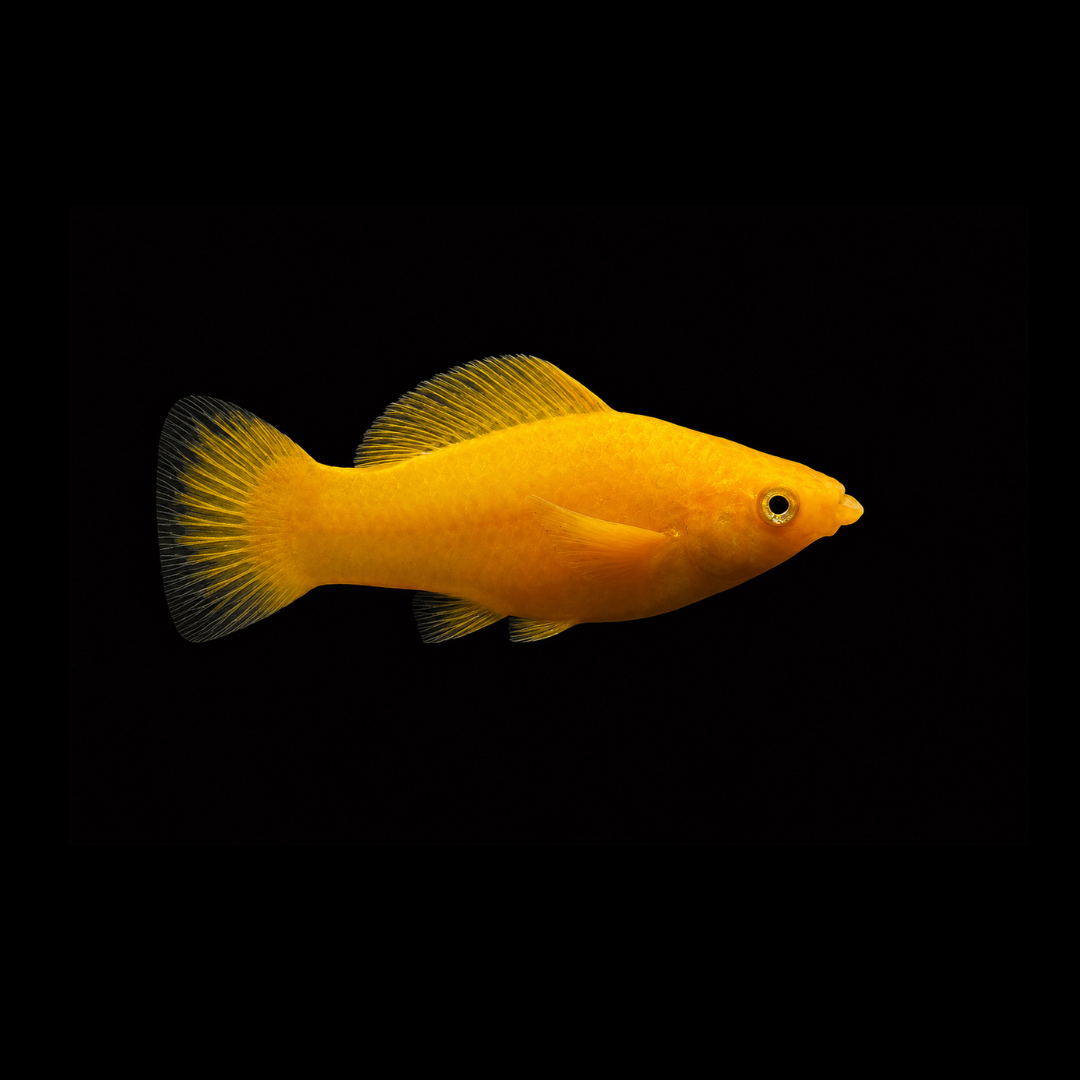
解説 / Description
オレンジモーリーは、明るいオレンジ色の体色と、水槽内を絶えず泳ぐ活発な姿が魅力の胎生魚です。流通上は Poecilia sphenops 系のショートフィンモーリーとして扱われることが多い一方、観賞用モーリーは長い改良の歴史を持ち、市販系統の正確な交配履歴が明らかでない場合もあります。そのため、「オレンジモーリー」という流通名だけで厳密な種や遺伝系統まで特定するのは困難です。飼育では、弱アルカリ性でミネラルを含む安定した水質を保つことが大切です。付着藻類や柔らかな有機物をついばむ習性があり、水草水槽ではコケ対策の補助役としても利用されます。 The Orange Molly is a livebearing aquarium fish valued for its bright orange coloration and active, continuous swimming. In the aquarium trade it is often treated as a shortfin molly strain related to Poecilia sphenops, but ornamental mollies have a long history of selective breeding and the exact breeding history of commercial lines is not always known. The trade name “Orange Molly” therefore does not by itself identify a precise species or genetic lineage. For long-term care, stable mineral-rich water on the alkaline side is important. Mollies also graze on attached algae and soft organic films, so they can serve as a supporting algae-control fish in planted aquaria.
基本情報 / Basic Information
| 学名 / Scientific Name | Poecilia sp. (流通上は P. sphenops 系として扱われることが多い)(commercially often treated as a P. sphenops-derived shortfin molly strain) |
|---|---|
| 通称 / Common Name | オレンジモーリーOrange Molly |
| 分類 / Family | カダヤシ目・カダヤシ科・ポエキリア属Order Cyprinodontiformes, Family Poeciliidae, Genus Poecilia |
| 英名 / English Name | Orange Molly |
| 分布 / Distribution | オレンジモーリーは改良品種のため、自然分布はありません。流通上の基礎種名としてよく使われる Poecilia sphenops は、近縁種との分類整理が続いてきた魚で、現在は旧来の資料より狭い範囲の種として扱われる傾向があります。主にメキシコ南部から中央アメリカ北部にかけての淡水・汽水域に分布するとされますが、資料によって分布表現に差があります。日本で流通するオレンジモーリーは養殖個体が中心です。The Orange Molly is a domesticated aquarium strain and therefore has no natural wild distribution of its own. Poecilia sphenops, a name commonly used for the ancestral shortfin-molly stock in the trade, has undergone substantial taxonomic revision and is now generally treated more narrowly than in older references. It is associated mainly with fresh and brackish waters from southern Mexico into northern Central America, although published range descriptions differ because closely related shortfin mollies have often been confused historically. Orange Mollies sold in Japan are primarily captive-bred. |
| 最大体長 / Max Size | 飼育下では8〜10cm前後がひとつの目安で、系統や雌雄によって差があります。野生の Poecilia sphenops では最大7.5cmの標準体長(尾びれを除いた長さ)が記録されています。About 8-10 cm is a practical aquarium guideline, although size varies with strain and sex. Wild Poecilia sphenops has been recorded to 7.5 cm standard length, measured without the caudal fin. |
| 寿命 / Lifespan | 飼育下では2〜4年ほどが目安とされることが多く、水質、栄養、系統、繁殖負担などによって差が出ます。In aquaria, a lifespan of roughly 2-4 years is commonly used as a practical estimate, with variation caused by water quality, nutrition, strain, and reproductive demands. |
飼育環境 / Aquarium Environment
| 水槽サイズ / Tank Size | 少数飼育でも60cm規格水槽(約55〜65L)以上を推奨します。複数の雄を含む群れや繁殖を前提に飼う場合は、90cm規格水槽(約150〜180L)クラスにすると、遊泳空間と水質の安定性を確保しやすくなります。A standard 60 cm aquarium of about 55-65 L or larger is recommended even for a small group. For larger groups, multiple males, or breeding colonies, a standard 90 cm aquarium of roughly 150-180 L makes it easier to provide adequate swimming room and stable water conditions. |
|---|---|
| 水温 / Temperature | 24〜28℃を目安にし、急激な温度変化を避けて安定させます。日常管理では26℃前後が扱いやすい範囲です。 Aim for about 24-28°C and avoid sudden temperature changes. Around 26°C is a practical target for routine aquarium care. |
| 水質 / Water Quality | 弱アルカリ性で硬度のある水が適し、目安はpH 7.5〜8.2、GH 10〜30 dGH程度です。これは主に Poecilia sphenops の生息情報を踏まえた範囲で、市販の改良系統には個体差や系統差があります。数値を追うこと以上に、水質を急変させないことが重要です。日本の軟水地域では、サンゴ砂やカキ殻をろ過槽などに少量用いて、硬度と緩衝力を補う方法があります。汽水にも適応できますが、適切な硬度と安定性が保たれていれば、淡水飼育で塩を常用する必要はありません。アンモニアと亜硝酸は検出されない状態を保ち、硝酸塩の蓄積も定期的な換水で抑えます。Mineral-rich, mildly alkaline water is appropriate, with a practical target around pH 7.5-8.2 and GH 10-30 dGH. These values are based mainly on habitat information for Poecilia sphenops, while domesticated strains can vary. Avoiding abrupt changes is more important than chasing an exact number. In soft-water regions of Japan, a small amount of coral sand or oyster shell in the filtration system can help increase hardness and buffering capacity. Mollies can tolerate brackish water, but routine salt addition is unnecessary when freshwater hardness and stability are suitable. Keep ammonia and nitrite undetectable and control nitrate accumulation with regular water changes. |
| レイアウト / Layout | 中央から前面に広い遊泳空間を残し、側面や後景に水草を配置すると落ち着きやすくなります。バリスネリア、アヌビアス類、ミクロソルムなど、比較的幅広い水質に対応する水草が合わせやすいでしょう。繁殖させる場合は、ウィローモスや浮草など、稚魚が隠れられる細かな茂みを用意すると生き残りやすくなります。Leave a broad open swimming area through the center and front, while using plants along the sides and rear for cover. Vallisneria, Anubias, Java fern, and other broadly tolerant plants are practical choices. For breeding, dense mosses or floating plants give newborn fry places to hide and improve their chances of survival. |
| 注意点 / Precautions | 排泄量が比較的多いため、十分なろ過能力と定期的な換水を確保します。購入直後は輸送ストレスに加え、販売店と自宅水槽の水温、pH、硬度などの差が負担になることがあります。導入時は水温だけでなく水質差も意識し、急変を避けて慎重に水合わせしてください。河川、池、用水路などの自然環境へ放流してはいけません。Mollies produce a relatively large amount of waste, so provide adequate filtration and regular water changes. Newly purchased fish may be stressed not only by transport but also by differences in temperature, pH, and hardness between the shop and the home aquarium. Acclimate carefully and avoid abrupt changes in water chemistry as well as temperature. Never release aquarium mollies into rivers, ponds, canals, or other natural waters. |
餌と給餌 / Feeding
| 餌の種類 / Diet | 雑食性で、付着藻類、デトリタス、植物質、小型の無脊椎動物など幅広い餌を利用します。飼育下ではスピルリナなど植物質を含むフレークや小粒ペレットを主食にし、ブラインシュリンプ、ミジンコ、イサザアミなどを補助的に与えられます。オレンジ色の維持には、カロテノイドを含むバランスのよい飼料が役立ちます。Mollies are omnivorous and make use of attached algae, detritus, plant material, and small invertebrates. In aquaria, flakes or small pellets containing plant ingredients such as spirulina make a suitable staple, supplemented with foods such as brine shrimp, daphnia, or mysids. A balanced diet containing carotenoids can help support orange coloration. |
|---|---|
| 給餌のポイント / Feeding Tips | 1日1〜2回、数分で食べ切れる量を基本にします。食欲旺盛なので、与えすぎると残餌と排泄物が増えて水質を悪化させ、肥満や消化不良にもつながります。付着藻を食べる魚ではありますが、コケだけでは栄養が偏るため、人工飼料を中心に植物質と動物質をバランスよく与えてください。Feed once or twice daily in amounts consumed within a few minutes. Their strong appetite makes overfeeding easy; excess food and waste can degrade water quality and may contribute to obesity or digestive problems. Although mollies graze on algae, algae alone is not nutritionally complete, so use a prepared staple diet with a balance of plant and animal ingredients. |
性格と混泳 / Temperament and Tank Mates
| 性格 / Temperament | 基本的には温和ですが、非常に活発に泳ぎます。特に雄は雌を頻繁に追尾し、雄同士で張り合うこともあります。雌への追尾が一匹に集中しないよう、雌雄を混ぜる場合は雄1匹に対して雌2〜3匹程度をひとつの目安にすると管理しやすくなります。Generally peaceful but very active. Males frequently pursue females and may also compete with other males. In mixed-sex groups, a practical starting point is about one male to two or three females so that courtship pressure is less concentrated on a single female. |
|---|---|
| 混泳の相性 / Compatibility | 同じ弱アルカリ性〜硬水を好むプラティ、ソードテール、グッピーなどの胎生魚とは、水質条件を合わせやすいです。温和な中小型魚とも混泳できますが、極端な軟水や酸性水を必要とする魚とは適水質が合いません。小型の稚エビや魚の稚魚は捕食されることがあります。長いヒレを執拗につつく個体が見られる場合は、隔離やレイアウト変更を検討してください。They are easy to match with other livebearers such as platies, swordtails, and guppies because these fish share a preference for harder, more alkaline water. Mollies can also live with many peaceful small to medium community fish, but species requiring very soft acidic water are a poor water-chemistry match. Tiny shrimp and fish fry may be eaten. If an individual persistently nips long fins, consider separation or a change in layout. |
病気と対策 / Diseases and Prevention
| かかりやすい病気 / Common Diseases | モーリーだけに特有の感染症があるわけではありませんが、白点病や細菌性のヒレ・体表のトラブルは、ほかの熱帯魚と同様に起こります。また、モーリー類では「シミー」「揺れ病」と呼ばれる、その場で小刻みに体を揺らすような症状がよく知られています。シミーは単一の病原体による病名ではなく、水温や水質の急変、不適切な硬度やpH、水質悪化、輸送ストレスなどが関係する体調不良のサインとして考えるのが適切です。Mollies do not have a unique infectious disease of their own, but they can develop white spot disease and bacterial fin or skin problems like other tropical fish. They are also well known for the symptom called “shimmies,” in which the fish rocks or trembles in place. Shimmies are not a single pathogen-defined disease; they are better treated as a sign of physiological distress that can be associated with abrupt temperature or water-chemistry changes, unsuitable hardness or pH, deteriorating water quality, or transport stress. |
|---|---|
| 対策と予防 / Prevention | 予防の中心は、安定した水温と水質、適切な硬度と緩衝力、過密を避けた飼育、定期換水、良質な餌です。新しい魚は可能であれば別水槽で状態を観察してから導入します。塩化ナトリウムは、淡水魚の浸透圧調節を補助する目的で0.5%前後の塩水浴に用いられることがありますが、シミーそのものを治す特効薬ではありません。原因が水質や水温にある場合は、その是正が先です。水草や無脊椎動物への影響もあるため、本水槽への安易な塩の常用は避け、必要な場合は別容器などで慎重に行います。Prevention centers on stable temperature and water chemistry, suitable hardness and buffering, sensible stocking, regular water changes, and good nutrition. Whenever possible, observe newly acquired fish in quarantine before adding them to the main aquarium. Sodium chloride baths around 0.5% are sometimes used as an osmoregulatory aid for freshwater fish, but salt is not a specific cure for shimmies. If the underlying problem is poor water quality or unsuitable temperature, correcting that cause comes first. Because salt can affect plants and invertebrates, avoid casual routine salting of the display tank and use treatment carefully, preferably in a separate container when appropriate. |
増やし方(繁殖) / Breeding
| 雌雄の判別 / Sexing | 雄は尻ビレが細長い交尾器「ゴノポディウム」に変化しているため、成熟すると判別しやすくなります。雌の尻ビレは扇形のままで、雄より体高があり、腹部がふっくらしやすい傾向があります。成魚では雌のほうが大きくなることが一般的です。Mature males are easy to identify because the anal fin is modified into a narrow intromittent organ called the gonopodium. Females retain a fan-shaped anal fin and usually develop a deeper, fuller body. Adult females are generally larger than males. |
|---|---|
| 繁殖形態 / Reproduction | 胎生のライブベアラーで、観賞魚分野では「卵胎生」と呼ばれることもあります。雄のゴノポディウムによって体内受精し、雌は発達した稚魚を直接産みます。Poecilia sphenops の資料では妊娠期間は約28日、1回の産仔数は20〜150匹ほどとされています。雌は交尾後の精子を一定期間体内に保持できるため、雄と分けた後でも複数回出産する場合があります。They are viviparous livebearers, although aquarium literature has also traditionally used the term ovoviviparous. Fertilization is internal through the male gonopodium, and the female gives birth directly to developed, free-swimming fry. References for Poecilia sphenops report a gestation of about 28 days and broods of roughly 20-150 young. Females can retain sperm after mating, so additional broods may occur even after separation from males. |
| 繁殖のポイント / Breeding Tips | 繁殖そのものは難しくありませんが、成魚は生まれた稚魚を食べることがあります。ウィローモスや浮草を密に茂らせる、出産前後の雌を広めの繁殖水槽へ移すなどして、稚魚が逃げ込める場所を確保します。稚魚には細かく砕いた人工飼料やブラインシュリンプ幼生などを少量ずつ与え、成長に合わせて十分な飼育水量を確保し、過密による水質悪化を防ぎます。Breeding itself is easy, but adults may eat newborn fry. Provide dense mosses or floating plants, or move a late-stage female to a roomy breeding aquarium so fry have immediate cover. Feed fry finely crushed prepared food or newly hatched brine shrimp in small portions, and increase available water volume as they grow to prevent overcrowding and deterioration of water quality. |
雑学と豆知識 / Trivia and Fun Facts
| 1. 「オレンジモーリー」は自然界の一種ではない / 1. Orange Molly is not a separate wild species | オレンジモーリーは、野生で独立した種として存在する魚ではなく、観賞用モーリーの中から明るい体色を選びながら固定されてきた改良系統です。流通上は Poecilia sphenops の名が使われることが多いものの、ショートフィン系モーリーは近縁種の分類が長く混同されてきたうえ、観賞魚としての交配履歴もすべて明らかになっているわけではありません。そのため、流通名だけから厳密な野生種の系譜を決めつけないことが大切です。現在の鮮やかなオレンジ色は、野生種の分布そのものよりも、長年の選択交配の歴史を映した特徴と考えると分かりやすいでしょう。The Orange Molly is not a separate wild species. It is a domesticated ornamental strain developed by selecting mollies for bright coloration. Poecilia sphenops is commonly used as the scientific name in the trade, but shortfin mollies have a long history of taxonomic confusion among closely related species, and the full breeding history of ornamental lines is not always documented. The trade name alone therefore should not be used to assign a precise wild ancestry. Its vivid orange color is best understood as the result of a long history of selective breeding. |
|---|---|
| 2. モーリーが硬水で安定しやすい理由 / 2. Why stable mineral-rich water suits mollies | モーリー類は淡水だけでなく汽水にも適応できる広い塩分耐性を持ち、エラや腎臓、ホルモン系を使って体内の水分とイオンのバランスを調整しています。魚類ではプロラクチンが淡水適応を支える重要なホルモンとして知られ、モーリー類でも古くから研究されてきました。飼育で大切なのは、この仕組みを理由に塩を常用することではありません。むしろ、硬度やpHが極端に低い状態や急激な変化を避け、ミネラルを含む水を安定して維持することが、モーリーの負担を減らす基本になります。Mollies tolerate both freshwater and brackish conditions by regulating water and ions through the gills, kidneys, and endocrine system. In teleost fishes, prolactin is a key hormone supporting freshwater acclimation, and this physiology has long been studied in mollies. This does not mean that salt must be added routinely in the aquarium. The practical point is to avoid extremely low or rapidly changing hardness and pH, and to maintain stable mineral-rich water that reduces unnecessary physiological stress. |
| 3. 「シミー」は病名ではなく、環境を見直すサイン / 3. Shimmies are a sign to review the environment | モーリーが前へ進まず、その場で細かく体を揺らすように見える「シミー」は、アクアリストの間でよく知られています。見た目が特徴的なため一つの感染症のように扱われることがありますが、特定の病原体だけで説明できる病名ではありません。水温や水質の急変、硬度やpHが合わない状態、水質悪化、輸送後のストレスなどが重なっている可能性を考えます。シミーが見られたら、薬だけに頼るのではなく、水温、pH、硬度、アンモニア、亜硝酸、直近の換水や導入状況を順に確認することが重要です。Aquarists often recognize “shimmies” as a molly rocking or trembling in place instead of swimming normally. Because the appearance is distinctive, it is sometimes treated as though it were a single infectious disease, but it is not a pathogen-specific diagnosis. Abrupt changes in temperature or water chemistry, unsuitable hardness or pH, deteriorating water quality, and transport stress can all be relevant. When shimmies appear, review temperature, pH, hardness, ammonia, nitrite, recent water changes, and acclimation history rather than relying on medication alone. |
| 4. オレンジ色は遺伝と食事の両方に支えられる / 4. Orange coloration depends on both genetics and diet | オレンジ色の発色には、色素細胞の性質と、餌から得るカロテノイドなどが関わります。遺伝的に鮮やかな系統でも、体色の維持には栄養状態が影響するため、スピルリナやアスタキサンチンなどを含む飼料が利用されます。ただし、色揚げ成分だけを多く与えればよいわけではありません。発色は系統、栄養、体調、水質など複数の要素の影響を受けるため、まずはバランスのよい食事と安定した飼育環境を整えることが基本です。Orange coloration depends on both pigment-cell characteristics and dietary compounds such as carotenoids. Even genetically colorful strains are influenced by nutritional condition, which is why feeds containing ingredients such as spirulina or astaxanthin are commonly used to support color. More color-enhancing ingredients are not automatically better, however. Strain, nutrition, overall condition, and water quality all influence appearance, so a balanced diet and stable environment remain the foundation. |
| 5. 「コケ取り魚」でも、コケだけでは暮らせない / 5. An algae grazer still needs a complete diet | モーリーはガラス面や水草の葉などをついばみ、柔らかな付着藻や糸状藻、デトリタスを口にします。そのため、水槽ではコケ対策の補助役として利用されますが、どの種類のコケでも確実に処理するわけではなく、発生原因そのものを解決する魚でもありません。照明、栄養塩、換水、ろ過を整えることがコケ対策の基本で、モーリーの採餌はその管理を補助するものです。モーリー自身の健康のためには、コケとは別に栄養バランスの取れた餌を与える必要があります。Mollies graze on glass and plant leaves and may consume soft attached algae, filamentous algae, and detritus. This makes them useful as a supporting algae-control fish, but they will not reliably remove every type of algae and they do not correct the cause of an outbreak. Lighting, nutrient control, water changes, and filtration remain the foundation of algae management; grazing by mollies is only a supplement. The fish itself still needs a nutritionally complete diet. |
| 6. 雌は一度の交尾後にも複数回出産することがある / 6. A female may produce several broods after mating | モーリーを雌だけで飼っているのに、しばらくして稚魚が生まれることがあります。カダヤシ科の胎生魚では雌が精子を体内に保持できることが知られており、モーリーでも交尾後に複数回の出産が続く場合があります。ただし、保持できる期間や産仔数には個体差があります。ショップで雌を1匹だけ迎えた場合でも、以前の交尾によって後日出産する可能性があることは覚えておくとよいでしょう。Even a female kept without males may later produce fry. Female poeciliid livebearers are known to retain sperm, and mollies may produce more than one brood after mating. The duration of sperm retention and brood size vary among individuals. This means that a female purchased alone from a shop may still give birth later as a result of an earlier mating. |
| 7. 丈夫さと繁殖力は、野外では外来種リスクに変わる / 7. Hardiness becomes an invasive-species risk outside the aquarium | モーリーの丈夫さ、雑食性、塩分への適応力、そして稚魚を直接産む高い繁殖力は、水槽内では飼いやすさにつながります。一方で、Poecilia sphenops を含むモーリー類は本来の分布域外にも導入され、各地で定着例が知られています。影響の大きさは地域や環境によって異なりますが、観賞魚を野外へ放す行為は、生態系への影響だけでなく、その魚自身を適切に管理できなくなる行為でもあります。飼育個体は河川や池へ放さず、最後まで人の管理下で扱うことが大切です。The same traits that make mollies easy to keep—hardiness, omnivory, tolerance of varying salinity, and efficient livebearing reproduction—can help them establish outside their native range. Mollies including Poecilia sphenops have been introduced and established in multiple regions. The scale of ecological effects varies by location, but releasing aquarium fish outdoors creates avoidable ecological risk and removes the fish from responsible care. Captive fish should never be released into rivers, ponds, or other natural waters. |
| 8. バルーンモーリーの丸い体型には動物福祉の議論がある / 8. Balloon mollies raise animal-welfare questions | オレンジ系にも見られるバルーンモーリーは、通常体型より短い体幹と、脊椎の発達が異なるショートボディ系統です。研究では、バルーン型に近い矮小モーリーで脊椎の短縮や形成異常が確認されていますが、すべての個体が同じ湾曲や機能障害を示すわけではありません。そのため、「丸い体型だから必ず病気」と決めつけるのではなく、泳ぎ方、摂餌、成長、姿勢を個体ごとに観察し、負担の少ない環境を整えることが重要です。品種改良と動物福祉を考えるときには、外見だけでなく、その魚が日常の行動を無理なく行えているかを見る視点が欠かせません。Balloon mollies, including orange forms, are short-bodied strains with a shorter trunk and altered spinal development compared with normal-bodied mollies. Studies of dwarf or balloon-type mollies have documented shortened and abnormal vertebral development, but not every individual shows the same curvature or degree of functional impairment. A rounded body should therefore not automatically be treated as proof of illness. Instead, assess swimming, feeding, growth, and posture in each fish and provide a low-stress environment. When considering ornamental breeding and animal welfare, day-to-day function matters as much as appearance. |
まとめ / Conclusion
オレンジモーリーは、鮮やかな体色と活発な泳ぎ、そして稚魚を直接産む胎生ならではの繁殖を楽しめる魚です。飼育では、弱アルカリ性で硬度のある安定した水、十分な遊泳空間、植物質も含むバランスのよい餌を整えることが基本です。丈夫という印象だけに頼らず、急な水温・水質変化を避けることが、長く健やかに飼うことにつながります。 The Orange Molly combines vivid coloration, active swimming, and the distinctive reproduction of a livebearing fish that gives birth directly to fry. Long-term care is built on stable, mineral-rich alkaline water, adequate swimming space, and a balanced diet that includes plant material. Rather than relying on its reputation for hardiness, avoid abrupt changes in temperature and water chemistry to support steady health.
付着藻をついばむ姿や繁殖のしやすさは身近な魅力ですが、それだけでなく、水質への適応や長い品種改良の歴史もこの魚らしさを形づくっています。水槽の中でよく泳ぎ、よく食べ、安定した状態を保てる環境を整えることで、オレンジモーリーの明るい体色と生き生きした行動を無理なく楽しめます。 Its grazing behavior and easy reproduction are familiar attractions, but its response to water chemistry and its long history of selective breeding are equally important parts of the fish. When the aquarium supports steady swimming, feeding, and overall condition, the Orange Molly can display its bright color and energetic behavior without unnecessary stress.

気になる道具や飼い方を見つけてみませんか?
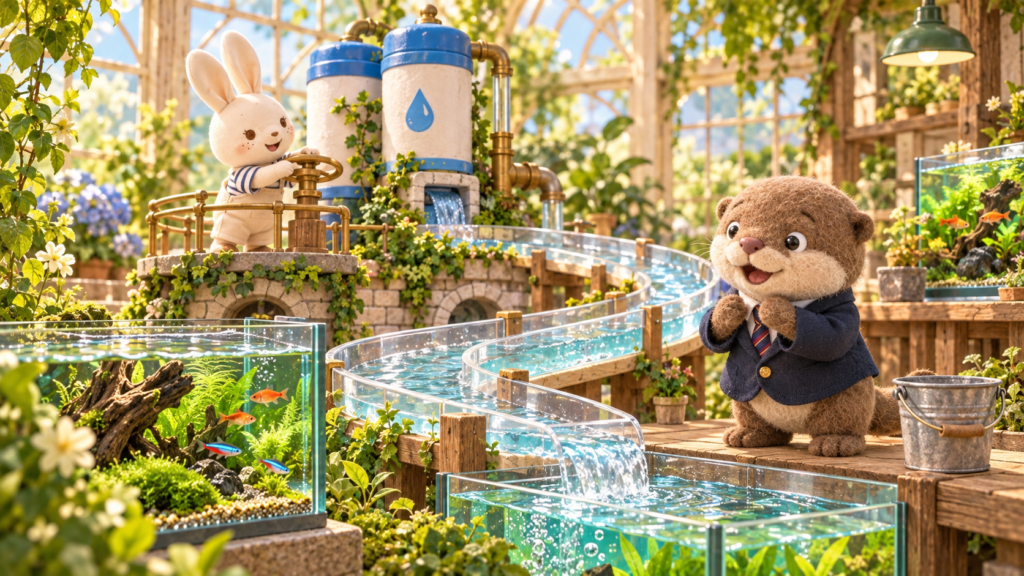 アイのアクアグッズ案内水槽用浄水器の選び方|水換えを楽にするタイプとROの違い道具の特徴や使い方、選ぶときのポイントをアイが紹介します。記事はコチラ →
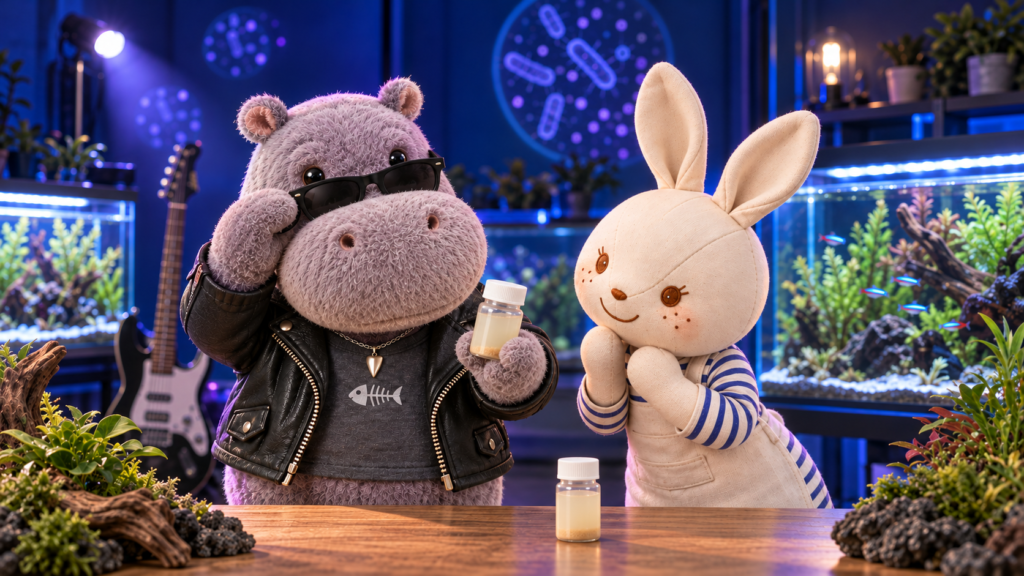 アイのアクアグッズ案内バクテリアって、結局なんなんだ? タマスとアイのボトル探究ロック好きのカバ・タマスが初登場。サイクル、ベストバイオ、バイコムのボトルから、菌の役割と保存の工夫、二本組の歴史をアイと探ります。記事はコチラ →
さまざまな飼育テーマをご紹介。リンク先の記事には広告・商品紹介が含まれます。
案内・紹介記事一覧へ →分布マップ
オレンジモーリーは観賞用に作出された改良品種であり、固有の自然分布はありません。下の地図では、流通上の基礎種名として扱われることが多い Poecilia sphenops について、記事中の分布情報に基づき、メキシコ南部から中央アメリカ北部にかけての地域を概略表示しています。
この地図は記事中の分布記述をもとにした概略表示です。分類上の扱いや資料によって分布範囲の表現には差があります。地図中央のマーカーは分布域を把握しやすくするために設定した代表地点であり、実際の採集地点や特定個体の産地を示すものではありません。
参考文献
- Fricke, R., Eschmeyer, W. N. & Van der Laan, R. (eds.). Eschmeyer’s Catalog of Fishes: Poecilia sphenops. California Academy of Sciences. 分類、学名、現在の分布、生息環境の確認に参照。 California Academy of Sciences
- Froese, R. & Pauly, D. (eds.). FishBase: Poecilia sphenops. 生息環境、水温、pH、硬度、体長、食性、水槽サイズ、妊娠期間および産仔数の確認に参照。 FishBase
- Mokhtar, D. M., Zaccone, G., Aragona, M., Guerrera, M. C., Alonizan, R. & Hussein, M. T. (2025). Unraveling Spermatogenesis in Molly Fish (Poecilia sphenops): An Integrative Study of Testicular Ultrastructure and Immunohistochemistry. Veterinary Sciences, 12(10), 930. DOI: 10.3390/vetsci12100930. 胎生魚としての繁殖生理と雄の生殖器系の確認に参照。 PubMed
- Olivera-Tlahuel, C., Villagrán-Santa Cruz, M., Moreno-Mendoza, N. A. & Zúñiga-Vega, J. J. (2017). Morphological structures for potential sperm storage in poeciliid fishes. Does superfetation matter? Journal of Morphology, 278(7), 907–918. DOI: 10.1002/jmor.20684. カダヤシ科胎生魚における雌の精子貯蔵機構の確認に参照。 PubMed
- Merck Veterinary Manual. Management of Aquarium Fish. 水温と浸透圧調節、水質管理、導入魚の隔離・検疫など、観賞魚の基本的な健康管理の確認に参照。 Merck Veterinary Manual
- Merck Veterinary Manual. Parasitic Diseases of Fish. 淡水魚の白点病(Ichthyophthirius multifiliis)と、魚種が耐えられる場合の塩分濃度5 g/Lを含む治療上の考え方の確認に参照。 Merck Veterinary Manual
- MSD Veterinary Manual. Bacterial Diseases of Fish. 水質悪化、過密、輸送、急激な水温変化などが細菌性疾患の発生要因になり得ること、および予防管理の確認に参照。 MSD Veterinary Manual
- U.S. Geological Survey. Nonindigenous Aquatic Species Database: Mexican Molly (Poecilia sphenops) Species Profile. 在来分布に関する分類上の注意、国外での移入・定着事例、観賞魚の放流に関する注意点の確認に参照。 U.S. Geological Survey
最終閲覧日:2026年9月21日




コメント