

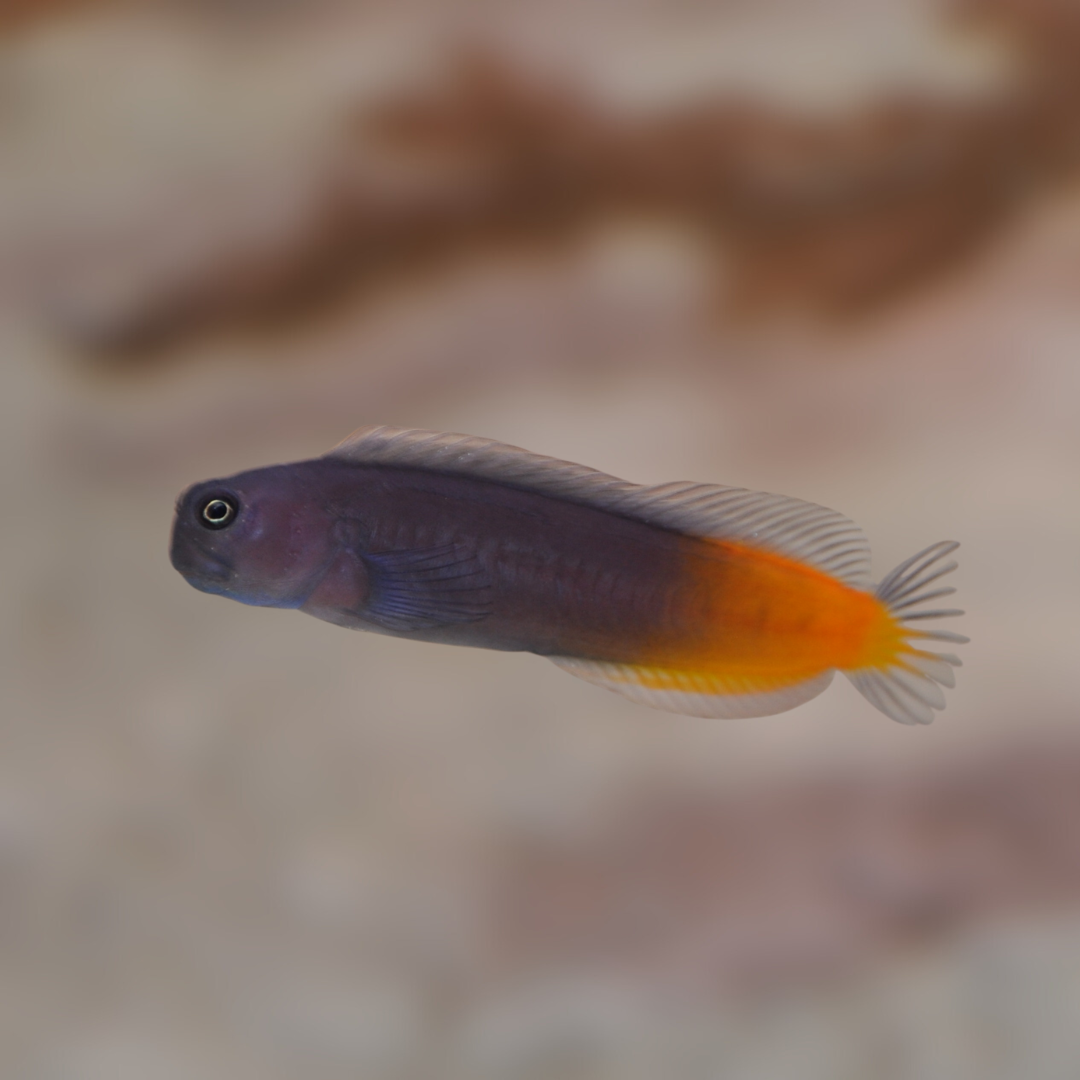
解説 / Description
フタイロカエルウオは、暗色の前半部と黄色からオレンジ色の後半部が印象的な、小型の海水性ブレニーです。ライブロックの穴から顔をのぞかせたり、岩の表面をついばみながら短い距離を跳ねるように移動したりする姿が魅力で、リーフタンクの脇役としても人気があります。自然界ではサンゴ礁の浅場にすみ、微細藻類を削り取るように食べるグレイザーとして暮らしています。ただし、水槽内では長く伸びた糸状藻類を大きく減らす魚ではなく、植物質の餌と十分な隠れ家を用意して、個体の状態を見ながら飼育することが大切です。 The Bicolor Blenny is a small marine blenny known for its dark front half and yellow to orange rear half. It is loved for its habit of peeking from live-rock holes and making short, hopping movements while grazing on rock surfaces. In nature, it inhabits shallow coral reefs and feeds by rasping microalgae from hard substrates. In aquariums, however, it should not be treated as a strong solution for long hair algae. Plant-rich foods, secure hiding places, and careful daily observation are the keys to keeping it well.
基本情報 / Basic Information
| 学名 / Scientific Name | Ecsenius bicolor (Day, 1888) |
|---|---|
| 通称 / Common Name | フタイロカエルウオ、バイカラーブレニーBicolor Blenny, Two-colored Blenny |
| 分類 / Family | ギンポ目、イソギンポ科、カエルウオ亜科、ニラミギンポ属Order Blenniiformes, family Blenniidae, subfamily Salariinae, genus Ecsenius |
| 英名 / English Name | Bicolor Blenny |
| 分布 / Distribution | インド太平洋のサンゴ礁域。モルディブからフェニックス諸島にかけて、北は琉球列島、南はグレートバリアリーフ南部、ミクロネシア周辺まで記録されています。Indo-Pacific coral reefs, recorded from the Maldives to the Phoenix Islands, north to the Ryukyu Islands, south to the southern Great Barrier Reef, and throughout Micronesia. |
| 最大体長 / Max Size | 約11cm。About 11 cm total length. |
| 寿命 / Lifespan | 飼育下では数年程度が目安です。導入状態、栄養、水質、混泳ストレスの影響が大きく、良好な環境では5年以上の長期飼育も目標になります。In aquariums, a lifespan of several years is a practical expectation. Condition on arrival, nutrition, water quality, and social stress all matter, and more than five years is a reasonable long-term goal under excellent care. |
飼育環境 / Aquarium Environment
| 水槽サイズ / Tank Size | 最低でも60cm規格水槽、約60L以上を目安にします。余裕を持たせるなら75L以上、または海外表記で30ガロン前後の水量が扱いやすいです。小型魚ですが縄張りを持つため、岩組みの面積と水量の安定性を重視します。A standard 60 cm aquarium of about 60 L or larger is a practical minimum. Around 75 L or more, or roughly 30 gallons, gives more stability. Although small, this fish is territorial, so stable water volume and usable rockwork area are important. |
|---|---|
| 水温 / Temperature | 24から27℃前後を安定して維持します。急な水温変化はストレスの原因になるため、夏冬はクーラーやヒーターで変動を抑えます。 Keep the temperature stable at about 24 to 27°C. Avoid sudden swings by using cooling or heating equipment when needed. |
| 水質 / Water Quality | 一般的なリーフタンクに近い水質に適します。比重は1.023から1.025前後、pHは8.1から8.4前後を目安にし、アンモニアと亜硝酸は検出されない状態を保ちます。硝酸塩やリン酸塩は急激に蓄積させず、安定を優先します。It does well under typical reef-aquarium conditions. Aim for a specific gravity of about 1.023 to 1.025 and pH around 8.1 to 8.4. Ammonia and nitrite should remain undetectable, while nitrate and phosphate should be kept from rising abruptly. |
| レイアウト / Layout | 多孔質のライブロックを組み、体が入れる穴や細い割れ目を複数作ります。小さなフジツボ殻、貝殻、岩の奥まった穴など、狭く守られた空間があると落ち着きやすく、岩穴から顔を出す本種らしい姿も観察しやすくなります。Build porous live rock with several body-sized holes and narrow crevices. Small barnacle shells, empty shells, and protected holes help the fish settle and make it easier to observe its characteristic peeking behavior. |
| 注意点 / Precautions | 導入直後は隠れて出てこないことがありますが、無理に追い出さず落ち着かせます。サンゴ水槽では基本的に飼育しやすい一方、個体によってはSPSやLPSのポリプ、シャコガイの外套膜をつつくことがあるため、空腹にさせすぎず観察を続けます。近縁ギンポとの混泳は争いになりやすいため慎重に判断します。Newly introduced individuals may hide for a while, so avoid forcing them out. They are often suitable for reef aquariums, but some individuals may nip SPS or LPS polyps or clam mantles. Avoid chronic hunger and observe carefully. Mixing them with similar blennies should be approached cautiously because territorial disputes are common. |
餌と給餌 / Feeding
| 餌の種類 / Diet | ライブロックやガラス面に生える薄い藻類、珪藻、微細な付着物をついばみます。飼育下では、スピルリナや海藻成分を含む植物質中心の人工飼料、海藻シート、藻類が少ない場合の補助餌を用意します。イサザアミなどの動物性餌は食べることがありますが、主食に偏らせないようにします。It grazes on thin algal films, diatoms, and small attached material on live rock and glass. In aquariums, offer plant-based prepared foods containing spirulina or marine algae, sheets of dried seaweed, and supplemental foods when natural algae are scarce. It may accept mysid shrimp, but meaty foods should not dominate the diet. |
|---|---|
| 給餌のポイント / Feeding Tips | 「コケ取り魚」として期待されますが、主に食べるのは薄いフィルム状のコケです。長く伸びた糸状藻類の対策として過信しないようにします。人工飼料に慣れるとコケをついばむ頻度が下がることがありますが、餌を切ると痩せるため、腹部の丸みを見ながら植物質中心に少量を継続して与えます。Although it is often kept as an algae grazer, it mainly eats thin algal films. Do not rely on it as the main solution for long hair algae. Once accustomed to prepared foods, it may graze less often, but withholding food can cause weight loss. Watch the body condition and feed small, regular portions with plant matter as the main component. |
性格と混泳 / Temperament and Tank Mates
| 性格 / Temperament | 慣れると物おじしにくく、飼い主の動きにも反応することがあります。普段は岩の上や穴の入口で過ごし、危険を感じるとすばやく巣穴へ戻ります。自分の住処周辺では縄張り意識が強く、似た生活場所を使う魚には攻撃的になる場合があります。Once settled, it often becomes bold and may respond to activity outside the tank. It usually rests on rockwork or at the entrance of a hole and darts back to shelter when alarmed. It can be territorial around its chosen home, especially toward fishes that use similar spaces. |
|---|---|
| 混泳の相性 / Compatibility | ハゼ、クマノミ、小型ヤッコ、小型スズメダイなどとは、水槽サイズと隠れ家が十分であれば混泳しやすい魚です。一方で、同種同士、テールスポットブレニーやミダスブレニーなどの近縁種、ヤエヤマギンポのような底生性の草食ギンポとは争いやすいため、通常は1水槽1匹を基本にします。It can often be kept with gobies, clownfish, dwarf angelfish, and small damselfish if the tank is large enough and has adequate shelter. However, it may fight with its own species, related blennies such as Tailspot or Midas Blennies, and bottom-dwelling herbivorous blennies such as the Lawnmower Blenny. In most home aquariums, keep one Bicolor Blenny per tank. |
病気と対策 / Diseases and Prevention
| かかりやすい病気 / Common Diseases | 海水性白点病、輸送後の体力低下、水合わせ不足による浸透圧ストレス、他魚からの攻撃による外傷、栄養不足による痩せに注意します。体を岩にこすりつける、呼吸が荒い、白点が見える、巣穴から出ない、腹部がへこむといった変化は早めに確認します。Watch for marine ich, weakness after shipping, osmotic stress from poor acclimation, injuries from aggression, and weight loss from nutritional deficiency. Scratching on rocks, rapid breathing, visible white spots, refusal to leave shelter, and a sunken belly should be checked promptly. |
|---|---|
| 対策と予防 / Prevention | 導入時はゆっくり水合わせを行い、可能であれば検疫水槽で食欲と呼吸を確認します。白点病が疑われる場合、銅治療は魚専用の隔離水槽で行うのが基本で、サンゴ、エビ、貝がいる水槽へ銅を入れてはいけません。日常的には水温と比重を安定させ、隠れ家を確保し、植物質の餌を切らさないことが予防の中心です。Acclimate new fish slowly and, when possible, observe appetite and breathing in a quarantine tank. If marine ich is suspected, copper treatment should be limited to a fish-only hospital tank; never add copper to a tank containing corals, shrimp, or snails. Daily prevention centers on stable temperature and salinity, secure shelter, and a steady plant-rich diet. |
増やし方(繁殖) / Breeding
| 雌雄の判別 / Sexing | 一般的な流通個体では雌雄判別は容易ではありません。成熟個体では体色や行動、縄張りの守り方に差が出ることがありますが、外見だけで確実に判断するのは難しい魚です。Sexing typical retail specimens is not easy. Mature individuals may differ in color, behavior, or territorial defense, but reliable identification by appearance alone is difficult. |
|---|---|
| 繁殖形態 / Reproduction | 岩穴や貝殻状の空洞など、狭い基質に卵を産み付けるタイプです。卵は穴の内側に付着し、ふ化に近い時期には親魚が卵をあおぐような世話をする例が知られています。It is a substrate spawner that lays eggs in narrow sites such as rock holes or shell-like cavities. The eggs attach inside the shelter, and parental fanning behavior has been reported close to hatching. |
| 繁殖のポイント / Breeding Tips | 家庭水槽での繁殖は難易度が高く、ペア形成、産卵場所、親魚の相性、ふ化後の仔魚への初期餌が課題になります。繁殖を狙う場合は、複数の細い巣穴を用意し、親魚をよく太らせ、産卵後に落ち着ける静かな環境を整えます。ただし、仔魚の育成まで成功させるには専門的な準備が必要です。Breeding in home aquariums is difficult. Pair formation, suitable nest sites, adult compatibility, and first foods for larvae are major hurdles. To attempt breeding, provide multiple narrow shelters, condition the adults well, and keep the environment calm after spawning. Raising the larvae successfully requires specialized preparation. |
雑学と豆知識 / Trivia and Fun Facts
| 1. 名前に刻まれた二色の体 / 1. A two-colored body written into its name | 種小名の bicolor は「二色の」という意味です。フタイロカエルウオのもっともよく知られた姿は、頭から体の前半が暗色、後半が黄色からオレンジ色に分かれる配色で、学名そのものが見た目の特徴を端的に表しています。1888年にデイによって記載された古くから知られる種であり、現在も観賞魚としての通称と学名の意味が結びつきやすい魚です。The species name bicolor means “two-colored.” Its best-known form has a dark head and front half with a yellow to orange rear half, so the scientific name neatly describes its appearance. Described by Day in 1888, it remains a species whose common aquarium name and scientific name are easy to connect. |
|---|---|
| 2. 体色には複数の型がある / 2. It has several color forms | フタイロカエルウオという名前から二色の姿だけを想像しがちですが、実際にはよく知られたバイカラー型のほか、暗色の背側に白い縦帯が入る型、尾だけに黄色みを残すような暗色型などが知られています。水槽内でも導入直後や強いストレス下では色が暗く見えることがあり、体色は単なる模様ではなく、状態を読み取るヒントにもなります。The name may suggest only one two-toned look, but the species is known to occur in several color forms, including the familiar bicolor phase, forms with a broad white lateral band on a dark upper body, and darker forms that may retain yellow on the tail. In aquariums, newly introduced or stressed individuals can appear darker, making color a useful clue to condition. |
| 3. 小さな魚が参加する擬態の物語 / 3. A small fish in a mimicry story | 本種は、毒を持つヒゲニジギンポ類に似ることで捕食者からの攻撃を避ける、ベイツ型擬態の例として扱われてきました。さらに周辺には、無害な魚に見せかけて他魚のヒレや鱗をかじる攻撃擬態のギンポ類も関わります。水槽ではのんびりしたコケ取り魚に見えますが、自然界では色彩、行動、捕食者の学習が絡み合う複雑なサンゴ礁の関係性の中で生きています。This species has long been treated as an example of Batesian mimicry, resembling venomous fangblennies and thereby gaining some protection from predators. The wider system also includes aggressive mimics that approach other fish and bite fins or scales. In the aquarium it may look like a relaxed little grazer, but in nature it belongs to a complex reef story involving color, behavior, and predator learning. |
| 4. 「コケ取り役」という言葉の落とし穴 / 4. The trap behind “algae eater” | フタイロカエルウオはライブロックをついばむため、コケ取り役として紹介されることがあります。しかし得意なのは表面に薄く付いた藻類で、糸状藻類をまとめて刈り取る専門家ではありません。この魚の魅力は、清掃能力だけではなく、岩穴を拠点にした小さな縄張り生活、周囲をうかがう表情、そして日々の状態変化を観察できる点にあります。Because it grazes on live rock, the Bicolor Blenny is often introduced as an algae eater. Its specialty, however, is thin surface growth, not the heavy removal of long hair algae. Its real appeal is not just cleaning ability, but its small territorial life around a rock hole, its watchful expression, and the way its daily condition can be observed. |
まとめ / Conclusion
フタイロカエルウオは、派手に泳ぎ回る魚ではありません。けれども、岩穴からこちらをのぞく表情、短く跳ねるような動き、ライブロックを丁寧についばむ姿には、小型底生魚ならではの味わいがあります。二色の体色だけでなく、環境や状態に応じて見え方が変わる点も、毎日の観察を楽しくしてくれる大きな魅力です。 The Bicolor Blenny is not a fish that constantly flashes through open water. Instead, its appeal lies in the expression of a face peeking from a rock hole, its short hopping movements, and its careful grazing on live rock. Beyond its two-toned colors, the way its appearance changes with condition and environment makes daily observation especially rewarding.
長期飼育では、薄いコケを食べる魚としての役割を過信せず、植物質の餌、安定した水質、安心できる巣穴、近縁ギンポとの距離感を整えることが大切です。小さな体の中に、サンゴ礁で培われた適応と個性を詰め込んだ一匹です。環境を丁寧に用意すれば、フタイロカエルウオは水槽の片隅から、図鑑の最後にふさわしい静かな存在感で海の奥行きを伝えてくれるでしょう。 For long-term success, do not overestimate its role as an algae-control fish. Provide plant-rich foods, stable water quality, a secure shelter, and careful spacing from similar blennies. This small fish carries the adaptations and personality of a coral-reef specialist. With thoughtful care, the Bicolor Blenny can bring a quiet sense of reef life to the corner of the aquarium and make a fitting final note for this guide.

気になる道具や飼い方を見つけてみませんか?
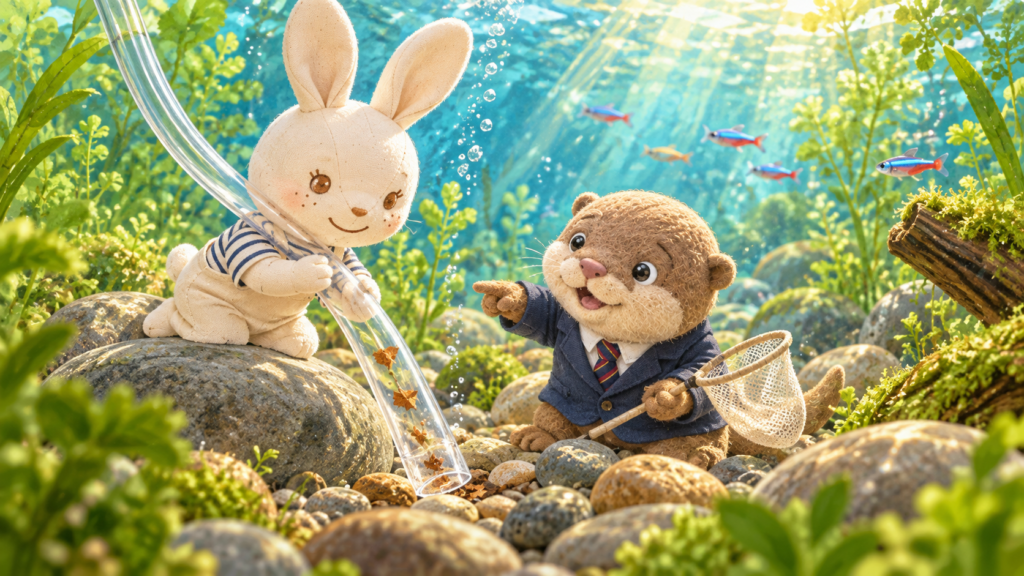 アイのアクアグッズ案内水換え・底砂掃除の道具の選び方|砂利・砂・ソイルに合うクリーナーとポンプ道具の特徴や使い方、選ぶときのポイントをアイが紹介します。記事はコチラ →
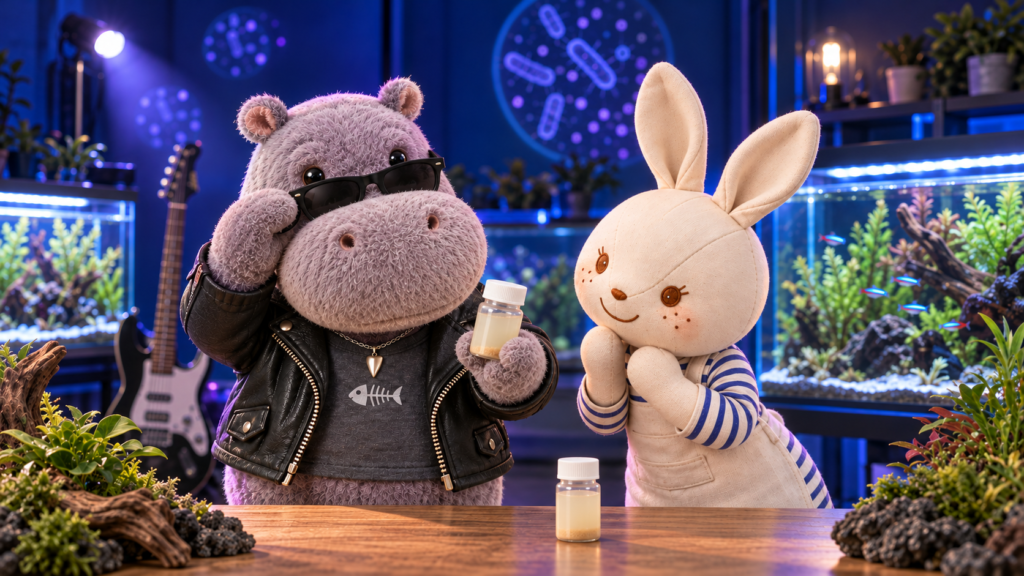 アイのアクアグッズ案内バクテリアって、結局なんなんだ? タマスとアイのボトル探究ロック好きのカバ・タマスが初登場。サイクル、ベストバイオ、バイコムのボトルから、菌の役割と保存の工夫、二本組の歴史をアイと探ります。記事はコチラ →
さまざまな飼育テーマをご紹介。リンク先の記事には広告・商品紹介が含まれます。
案内・紹介記事一覧へ →参考文献・出典
この記事では、店舗・通販サイト・個人ブログ・まとめサイトを参考文献から除外し、分類、分布、生息環境、飼育条件、繁殖、病気や注意点を支える信頼性の高い資料に絞って参照しています。飼育条件については、本種専用の実験的飼育研究が限られるため、自然下の水温・水深・生息環境と、海水魚の疾病管理・薬剤管理に関する専門資料を組み合わせて整理しています。
-
WoRMS Editorial Board. Ecsenius bicolor (Day, 1888). World Register of Marine Species.
対応項目:学名、受理名、分類階級、シノニム、原記載の確認。分類情報の基礎資料として使用。
https://www.marinespecies.org/aphia.php?p=taxdetails&id=277652 -
Froese, R. and Pauly, D. Editors. FishBase: Ecsenius bicolor, Bicolor blenny.
対応項目:最大体長、鰭条数、色彩型、分布、生息水深、生息環境、単独性、卵生・付着卵・浮遊仔魚などの繁殖情報。
https://www.fishbase.se/summary/Ecsenius-bicolor -
Springer, V. G. 1988. The Indo-Pacific blenniid fish genus Ecsenius. Smithsonian Contributions to Zoology, 465.
対応項目:ニラミギンポ属の分類学的整理、形態比較、近縁種との識別、色彩変異の背景。属レベルの専門的な裏付けとして使用。
https://doi.org/10.5479/si.00810282.465 -
Bray, D. J. 2020. Ecsenius bicolor. Fishes of Australia, Museums Victoria.
対応項目:オーストラリア周辺を含む分布、礁湖・外洋側サンゴ礁、藻類に覆われた岩場、空いた管状構造への隠れ込み、デトリタス食傾向、卵生と付着卵。
https://fishesofaustralia.net.au/home/species/1903 -
Reef Life Survey. Ecsenius bicolor – Bicolor blenny.
対応項目:野外調査ベースの最大サイズ、水深、海水温範囲、熱帯インド太平洋での分布。水温設定を考える際の補助資料として使用。
https://reeflifesurvey.com/species/ecsenius-bicolor/ -
Wilson, S. K. 2000. Trophic status and feeding selectivity of blennies (Blenniidae: Salariini). Marine Biology, 136, 431-437.
対応項目:カエルウオ類の摂餌生態、藻類マットやデトリタスへの依存、人工飼料だけに偏らせない給餌方針の背景。
https://doi.org/10.1007/s002270050702 -
Yanong, R. P. E. Cryptocaryon irritans Infections (Marine White Spot Disease) in Fish. UF/IFAS Extension, FA164.
対応項目:海水魚の白点病、症状、生活環、早期発見の重要性、治療が難しくなる理由。病気と予防の項目の主要資料として使用。
https://ask.ifas.ufl.edu/publication/FA164 -
Yanong, R. P. E. Use of Copper in Marine Aquaculture and Aquarium Systems. UF/IFAS Extension, FA165.
対応項目:銅治療の有効濃度、銅濃度管理、魚種差による毒性、無脊椎動物への強い毒性。リーフタンクでの投薬注意点の根拠として使用。
https://ask.ifas.ufl.edu/publication/FA165
補足:水槽サイズ、混泳時の注意、サンゴ水槽での観察ポイントなどは、上記資料に記載される本種の小型底生魚としての生態、単独性、隠れ家利用、摂餌傾向、海水魚疾病管理の知見をもとに、飼育記事向けに慎重な表現へ整理しています。特定店舗の価格・在庫、通販ページの説明、個人の飼育体験談は参考文献として採用していません。




コメント