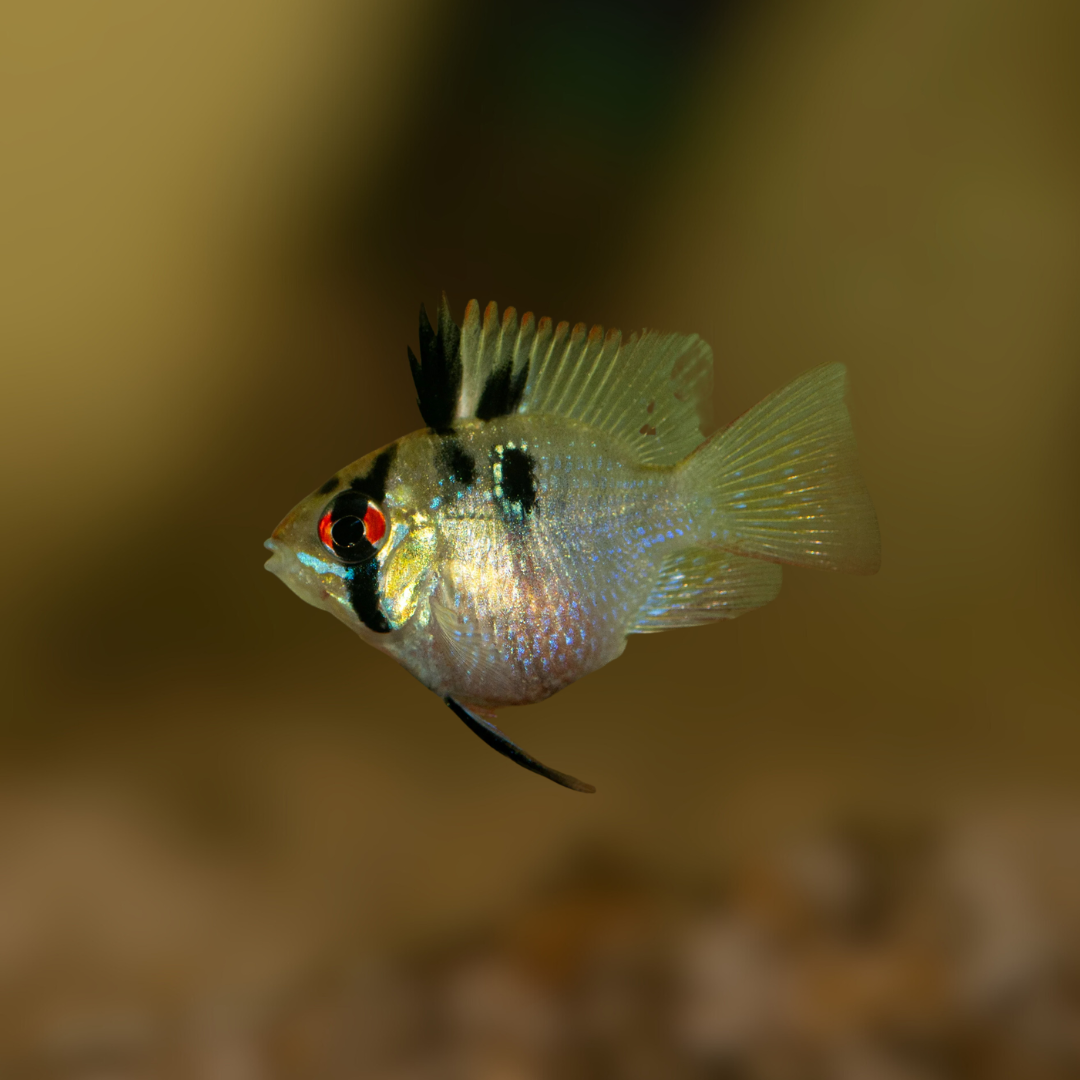
バルーン・ラミレジィは、南米原産の小型シクリッドであるラミレジィをもとに、体長が短く丸みの強い体型を固定した改良品種です。この記事では、色彩変異ごとの個別品種ではなく、丸いバルーン体型を持つラミレジィそのものを対象として解説します。通常体型のラミレジィよりも体が詰まり、背が高く、ふっくらとしたシルエットになるため、小型水槽でも強い存在感を放ちます。愛嬌のある姿と人に反応しやすい性質が魅力ですが、体型の特性上、消化不良や浮袋の不調を起こしやすく、水温・水質・給餌量の管理が重要です。The Balloon Ram Cichlid is a selectively bred form of the ram cichlid, a small South American cichlid, fixed for a shortened and rounded body shape. This article focuses on the balloon-bodied ram itself, not on separate color varieties. Compared with the standard form, it has a more compressed body, a taller profile, and a plump silhouette, giving it a strong presence even in smaller aquariums. Its charming appearance and responsive behavior are appealing, but its body shape can make it more prone to digestive issues and swim bladder problems, so temperature, water quality, and feeding control are especially important.
基本情報 / Basic Information
学名 / Scientific Name
Mikrogeophagus ramirezi(改良品種・バルーン体型)
通称 / Common Name
バルーン・ラミレジィ。日本国内では、通常体型のラミレジィと区別するための流通名として使われることが多く、丸みの強い短縮体型を示す個体を指します。Balloon Ram, Balloon Ram Cichlid. These trade names refer to ram cichlids with a distinctly shortened and rounded body shape.
分類 / Family
シクリッド科・ミクロゲオファグス属の南米産ドワーフシクリッドをもとにした改良品種A cultivated form based on a South American dwarf cichlid in the family Cichlidae and genus Mikrogeophagus
英名 / English Name
Balloon Ram Cichlid, Balloon Ram
分布 / Distribution
バルーン体型の改良品種としては自然分布はありません。原種のラミレジィは、南米ベネズエラおよびコロンビアのリャノ地域、オリノコ川流域に分布します。The balloon-bodied cultivated form has no natural distribution. The wild ram cichlid occurs in the Llanos of Venezuela and Colombia in the Orinoco River basin.
最大体長 / Max Size
約4〜5cm。通常体型より全長は短く見えますが、体高が出るため実際の存在感は大きめです。About 4 to 5 cm. It appears shorter than the standard form, but the increased body depth gives it a noticeable presence.
寿命 / Lifespan
目安は2〜3年ほどです。通常体型のラミレジィより短めになりやすく、特に水質悪化、低水温、過食が寿命を縮める要因になります。Usually around 2 to 3 years. It may be shorter-lived than standard-bodied rams, especially when exposed to poor water quality, low temperature, or overfeeding.
飼育環境 / Aquarium Environment
水槽サイズ / Tank Size
単独またはペア飼育なら45cm規格水槽以上、安定性を重視するなら60cm規格水槽以上が扱いやすいです。混泳を考える場合は、底層の縄張りと逃げ場を確保できる60cm規格水槽以上を目安にします。A 45 cm standard tank or larger can work for a single fish or a pair, while a 60 cm standard tank or larger is easier to stabilize. For community setups, a 60 cm standard tank or larger is recommended so territories and hiding places can be provided near the bottom.
水温 / Temperature
27〜30℃を目安にします。一般的な小型熱帯魚より高水温を好むため、混泳相手や水草も高めの水温に耐えられる種類を選ぶことが大切です。Aim for 27 to 30°C. This is warmer than many common small tropical fish prefer, so tank mates and plants should be chosen for their tolerance of higher temperatures.
水質 / Water Quality
弱酸性〜中性寄りの軟水を好みます。目安はpH5.5〜7.0前後ですが、急激なpH操作よりも、アンモニアと亜硝酸を検出させず、硝酸塩を溜めすぎない安定管理を優先します。Soft, slightly acidic to near-neutral water is preferred. A practical target is around pH 5.5 to 7.0, but stability is more important than forcing rapid pH changes; ammonia and nitrite should remain undetectable, and nitrate should be kept low.
レイアウト / Layout
細かく角の少ない砂やソイルを使い、流木、石、水草、落ち葉などで視線を遮る場所を作ります。底付近を探る行動を見せるため、鋭い砂利や汚れの溜まりやすい底床は避けると安心です。マジックリーフや流木を使った落ち着いた水景もよく合います。Use fine, smooth sand or soil, and create visual barriers with driftwood, stones, plants, and leaf litter. Because it often forages near the bottom, sharp gravel and dirty substrates should be avoided. A calm aquascape with driftwood and catappa leaves suits this fish well.
注意点 / Precautions
バルーン体型は遊泳力がやや低く、内臓や浮袋への負担も出やすい体型です。水温低下、過密飼育、急な水質変化、強い水流、過食は不調の引き金になりやすいため、安定した高水温と穏やかな環境を維持することが重要です。The balloon body shape can reduce swimming ability and may increase stress on the internal organs and swim bladder. Low temperature, overcrowding, sudden water changes, strong current, and overfeeding can easily trigger problems, so stable warm water and a calm environment are essential.
餌と給餌 / Feeding
餌の種類 / Diet
小型シクリッド用の沈下性またはゆっくり沈む顆粒フードを主食にし、冷凍赤虫、冷凍ミジンコ、ブラインシュリンプ、イトメなどを副食として与えます。口が大きくないため、粒が細かく消化しやすい餌を選ぶと扱いやすいです。Use small sinking or slow-sinking granules for dwarf cichlids as the staple diet, supplemented with frozen bloodworms, frozen daphnia, brine shrimp, and tubifex worms. Choose small, digestible foods because the mouth is not large.
給餌のポイント / Feeding Tips
一度に多く与えず、少量を確実に食べ切らせます。乾いた餌を大量に食べると体内で膨らみ、消化不良や浮き気味の症状につながることがあるため、必要に応じて飼育水で軽くふやかしてから与えると安心です。体型が丸いため太って見えやすく、腹部の張りが続く場合は給餌量を見直す必要があります。Feed small amounts that can be eaten completely. Large amounts of dry food may swell after being eaten and contribute to digestive or buoyancy issues, so lightly soaking food in aquarium water can be helpful. Because the body is naturally rounded, persistent abdominal swelling should prompt a review of feeding quantity.
性格と混泳 / Temperament and Tank Mates
性格 / Temperament
基本的には小型シクリッドとしては温和ですが、ペア形成時や産卵期には底層の一部を縄張りとして主張します。人の動きに反応しやすく、落ち着いた環境では前面に出てきて観察しやすい魚です。It is generally peaceful for a small cichlid, but pairs may defend part of the bottom area during pairing and spawning. It often responds to human movement and, in a calm aquarium, will come forward and become easy to observe.
混泳の相性 / Compatibility
高水温に対応できる温和な小型カラシンやペンシルフィッシュなどが候補になります。ただし、底層で生活圏が重なりすぎる魚、動きが速く餌を独占する魚、気の強いシクリッドとの混泳は避けた方が無難です。通常体型のラミレジィと一緒にすると、機動力の差からバルーン個体が押されることがあるため、同種混泳は慎重に行う必要があります。Suitable tank mates include peaceful small characins and pencilfish that can tolerate warm water. Avoid fish that strongly compete near the bottom, fast feeders that monopolize food, and aggressive cichlids. Keeping balloon-bodied individuals with standard-bodied rams should be done carefully because the balloon form may be disadvantaged by its lower mobility.
病気と対策 / Diseases and Prevention
かかりやすい病気 / Common Diseases
白点病、エロモナス感染症、ヘキサミタ症、消化不良、浮袋の不調が注意点です。特にバルーン体型では、過食や低水温による消化不良が浮き気味、沈み気味、姿勢の乱れとして現れることがあります。Watch for ich, Aeromonas infections, Hexamita-related problems, digestive trouble, and swim bladder issues. In balloon-bodied fish, overfeeding or low temperature can lead to buoyancy problems, abnormal sinking or floating, and poor posture.
対策と予防 / Prevention
予防の中心は、安定した27〜30℃の水温、清潔な底床、過密を避けた飼育、少量給餌、定期的な換水です。導入直後の個体は輸送疲れや環境差で体調を崩しやすいため、可能であれば隔離水槽で様子を見てから本水槽へ移すと安心です。症状が出た場合は、まず水質と水温を確認し、原因を切り分けたうえで薬浴や隔離を検討します。Prevention depends on stable 27 to 30°C water, a clean substrate, avoiding overcrowding, feeding small portions, and regular water changes. Newly introduced fish may be weakened by transport and environmental changes, so observation in a quarantine tank is recommended when possible. If symptoms appear, first check water quality and temperature, then consider isolation or medication based on the likely cause.
増やし方(繁殖) / Breeding
雌雄の判別 / Sexing
オスはやや大きくなり、背ビレ前方の条が伸びやすく、全体にシャープな印象になります。メスは腹部が丸みを帯び、状態が上がると腹部に赤みやピンク色が出ることがあります。ただし、バルーン体型では全体のシルエットが丸くなるため、通常体型より雌雄判別が難しい場合があります。Males are usually slightly larger, often with more extended anterior dorsal fin rays and a sharper overall impression. Females tend to have a rounder belly that may become reddish or pink when in breeding condition. However, the balloon body shape can make sexing more difficult than in standard-bodied rams.
繁殖形態 / Reproduction
平らな石、流木、水草の葉、または底床の浅いくぼみに産卵するオープンスポーナーです。ペアで卵や稚魚を守る性質がありますが、飼育下では初産やストレスによって食卵することもあります。It is an open spawner that lays eggs on flat stones, driftwood, plant leaves, or shallow depressions in the substrate. Pairs may guard eggs and fry, but egg-eating can occur in captivity, especially with inexperienced pairs or under stress.
繁殖のポイント / Breeding Tips
繁殖を狙う場合は、落ち着いたペア専用水槽を用意し、弱酸性の清潔な水と高めの水温を安定させます。産卵床になる平らな石や広い葉を入れ、周囲の魚からのプレッシャーを減らすことが大切です。稚魚にはインフゾリア、マイクロワーム、孵化直後のブラインシュリンプなど、口に合う初期飼料を段階的に与えます。For breeding, prepare a calm dedicated pair tank with clean, slightly acidic water and stable warm temperature. Provide flat stones or broad leaves as spawning sites and reduce pressure from other fish. Fry should be fed progressively with suitable small foods such as infusoria, microworms, and newly hatched brine shrimp.
雑学と豆知識 / Trivia and Fun Facts
1. バルーン体型はかわいらしさと弱点を併せ持つ / 1. The balloon body combines charm with weakness
バルーン・ラミレジィの丸い体型は、自然界で獲得された生存上の利点というより、観賞魚としての見た目を重視して固定された形質です。短く詰まった体は愛らしく、通常体型のラミレジィとは違う柔らかな印象を与えます。その一方で、体内のスペースが限られるため、消化器や浮袋に負担がかかりやすいと考えられます。飼育者に求められるのは、この姿を単なるかわいさとして見るだけでなく、弱点を補う環境を整える視点です。The rounded body of the Balloon Ram is not a survival advantage gained in the wild, but a trait fixed for ornamental appeal. Its compact body gives it a soft and charming impression that differs from the standard form. At the same time, limited internal space may put extra strain on the digestive system and swim bladder. The keeper should appreciate the charm of the fish while also providing conditions that compensate for its physical weaknesses.
2. ラミレジィという名前の背景 / 2. The background of the name ramirezi
原種の種小名 ramirezi は、採集に関わった人物の名に由来するとされています。小さな魚でありながら強い存在感を持つラミレジィは、発見後に分類上の位置づけが何度も見直され、アピストグラマ属に置かれた時期や、別属名が使われた時期もありました。現在は Mikrogeophagus ramirezi として扱われるのが一般的で、Mikrogeophagus という属名には「小さな土を食む者」という意味合いがあります。底をついばむような行動を見ると、その名前が単なる記号ではなく、魚の暮らし方を映した言葉であることが分かります。The species name ramirezi is generally understood to honor a person involved in its collection. Although small, the ram cichlid has had a complex taxonomic history, having once been placed in Apistogramma and also under other generic names. Today, it is generally treated as Mikrogeophagus ramirezi, and the genus name Mikrogeophagus carries the sense of a small earth-eater. When the fish forages along the bottom, the name feels less like a label and more like a description of its way of life.
3. 高水温を好むことが混泳と水草選びを難しくする / 3. Warm water preference affects tank mate and plant selection
バルーン・ラミレジィの飼育で見落とされやすいのが、適温が高めであるという点です。27〜30℃という水温は本種には自然でも、一般的な小型魚や一部の水草には少し負担になる場合があります。そのため、混泳相手は性格だけでなく、水温への適応力まで見て選ぶ必要があります。水草も同様で、ミクロソリウム、アヌビアス、エキノドルスなど、比較的高水温に耐えやすい丈夫な種類を中心に考えると管理しやすくなります。One easily overlooked point is that this fish prefers relatively warm water. A temperature of 27 to 30°C may suit the ram, but it can be stressful for some small fish and plants. Tank mates should therefore be selected not only for temperament but also for tolerance of warm water. Plants should be chosen in the same way; hardy species such as Java fern, Anubias, and Echinodorus are often easier to manage in such conditions.
4. 人に慣れやすい小さなシクリッド / 4. A small cichlid that often becomes responsive
ラミレジィの仲間は、単に美しいだけでなく、飼育者の動きに反応しやすい魚としても親しまれています。水槽の前に立つと、餌を期待して近づいてきたり、こちらを観察するような仕草を見せたりします。バルーン・ラミレジィもこの魅力を受け継いでおり、落ち着いた環境では小さなコンパニオンフィッシュのような存在感を見せます。強い水流や騒がしい混泳を避け、安心して前に出られる環境を作ることで、その表情豊かな行動を楽しみやすくなります。Rams are loved not only for their colors but also for their tendency to respond to the keeper. They may come to the front when someone approaches, expecting food or appearing to observe the person outside the tank. The Balloon Ram retains this appeal and can feel like a small companion fish in a calm aquarium. By avoiding strong current and chaotic tank mates, the keeper can create an environment where its expressive behavior is easier to enjoy.
まとめ / Conclusion
バルーン・ラミレジィは、丸みのある体型とラミレジィらしい鮮やかさを楽しめる、魅力の大きい改良品種です。ただし、通常体型よりも体の構造に負担を抱えやすいため、初心者向けの丈夫な魚としてではなく、丁寧な管理で魅力を引き出す魚として迎えるのが適しています。The Balloon Ram Cichlid is an appealing cultivated form that combines a rounded body with the vivid charm of the ram cichlid. However, because its body structure can make it more delicate than the standard form, it is best approached not as a rugged beginner fish but as a fish whose beauty is brought out through careful husbandry.
飼育では、高めの水温、弱酸性寄りの安定した水質、少量給餌、穏やかな混泳環境が大切です。バルーン体型の特徴を理解し、無理のない水槽設計を行えば、小さな水槽の中でも表情豊かな行動と美しい姿をじっくり楽しめる魚です。Successful care depends on warm water, stable slightly acidic conditions, modest feeding, and peaceful tank mates. By understanding the special needs of the balloon body shape and designing the aquarium accordingly, the keeper can enjoy its expressive behavior and attractive appearance in a comfortable setting.
Froese, R. and Pauly, D. eds.2026.
FishBase: Mikrogeophagus ramirezi (Ram cichlid).
原種ラミレジィの有効名、分布、最大体長、水温、pH、硬度などの基礎情報を確認するために参照。参照ページ
Fricke, R., Eschmeyer, W. N. and Van der Laan, R. eds.2026.
Catalog of Fishes: Mikrogeophagus ramirezi.
学名の有効性、旧学名、分類上の扱いを確認するために参照。参照ページ
Kullander, S. O.1980.
A redescription of the South American cichlid fish Papiliochromis ramirezi (Myers & Harry, 1948).
原種ラミレジィの再記載、リャノ地域に限定される分布、分類史の背景を確認するために参照。参照ページ
Kullander, S. O.2011.
Nomenclatural availability of putative scientific generic names applied to the South American cichlid fish Apistogramma ramirezi Myers & Harry, 1948.
Mikrogeophagus、Microgeophagus、Papiliochromis など、ラミレジィ周辺で使われてきた属名の整理を確認するために参照。参照ページ
Seriously Fish.n.d.Mikrogeophagus ramirezi — Ram Cichlid Species Profile.
原種の自然環境、飼育下での水温・水質、ペア形成、産卵基質、混泳に関する補助情報として参照。参照ページ



 アイのアクアグッズ案内水換え・底砂掃除の道具の選び方|砂利・砂・ソイルに合うクリーナーとポンプ道具の特徴や使い方、選ぶときのポイントをアイが紹介します。記事はコチラ →
 アイのアクアグッズ案内マジックリーフ物語|一枚の葉がアクアリウム用品になるまで道具の特徴や使い方、選ぶときのポイントをアイが紹介します。記事はコチラ →



コメント