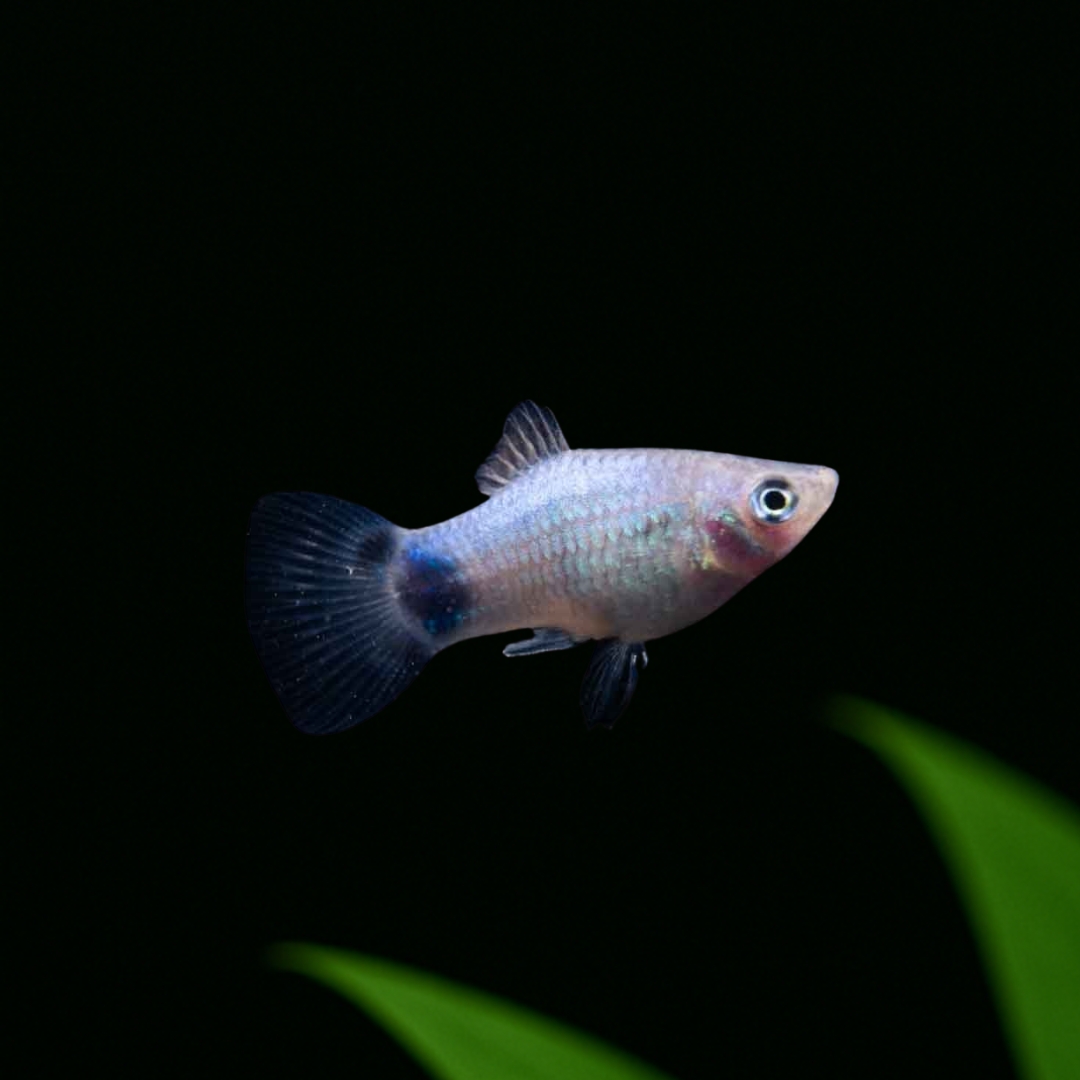
ブルーミッキーマウスプラティは、プラティの改良品種の中でも、青みを帯びた体色と尾筒に現れるミッキーマウスのような黒い斑紋が印象的な卵胎生メダカです。丈夫で繁殖しやすく、混泳水槽にも取り入れやすい一方で、輸入直後や水質が酸性に傾いた環境では体調を崩しやすいことがあります。日本の軟水環境では、中性から弱アルカリ性を意識し、適度な硬度を保つことが長期飼育の大切なポイントです。The Blue Mickey Mouse Platy is a selectively bred form of platyfish known for its bluish body color and a black caudal marking resembling the silhouette of Mickey Mouse. It is hardy, easy to breed, and generally suitable for community aquariums, but newly imported fish or individuals kept in overly acidic soft water can become vulnerable to stress and bacterial problems. In Japanese soft-water conditions, maintaining neutral to slightly alkaline water with moderate hardness is an important key to long-term success.
カダヤシ目カダヤシ科 Xiphophorus 属(プラティ・ソードテール類)Order Cyprinodontiformes, family Poeciliidae, genus Xiphophorus
英名 / English Name
Blue Mickey Mouse Platy
分布 / Distribution
原種はメキシコ大西洋岸側からベリーズ、グアテマラ、ホンジュラス周辺の淡水域に分布します。流通するブルーミッキーマウスプラティは、主に観賞魚として作出・維持されている改良品種です。The wild species occurs in freshwater habitats from the Atlantic coastal side of Mexico to areas around Belize, Guatemala, and Honduras. The Blue Mickey Mouse Platy in the aquarium trade is a selectively bred ornamental strain.
最大体長 / Max Size
最大でおよそ6cm。観賞魚としては雄がやや小さくまとまり、雌はふっくらとして大きくなりやすい傾向があります。Up to approximately 6 cm. In aquarium strains, males tend to remain somewhat smaller, while females often become fuller-bodied and larger.
寿命 / Lifespan
およそ2〜3年。水質の安定、過密の回避、導入初期のケアによって状態を保ちやすくなります。Approximately 2–3 years. Stable water quality, avoiding overcrowding, and careful acclimation help maintain good condition.
飼育環境 / Aquarium Environment
水槽サイズ / Tank Size
少数飼育なら30cmキューブ水槽から可能ですが、繁殖や混泳を考えるなら45cm規格水槽以上が扱いやすいです。成魚を複数匹で泳がせ、稚魚の隠れ場所も確保する場合は60cm規格水槽が安定します。A small group can be kept from a 30 cm cube aquarium, but a standard 45 cm tank or larger is easier for breeding and community setups. A standard 60 cm tank is more stable when keeping several adults and providing shelter for fry.
水温 / Temperature
24〜28℃を目安に管理します。低温や急激な温度変化は白点病や細菌性トラブルのきっかけになるため、ヒーターで安定させることが大切です。Maintain around 24–28°C. Low temperatures and sudden changes can trigger ich or bacterial problems, so stable heating is important.
水質 / Water Quality
中性から弱アルカリ性、pH7.0〜8.0前後を目安にします。原種は水草の多い緩やかな水域にも見られる魚で、日本の軟水環境ではpHが下がりすぎないように、サンゴ砂や硬度を補うろ材を少量使うと管理しやすくなります。Aim for neutral to slightly alkaline water, around pH 7.0–8.0. The wild species is associated with slow, vegetated waters, and in soft-water regions such as Japan, using a small amount of coral sand or hardness-supporting media can help prevent excessive acidification.
レイアウト / Layout
遊泳スペースを残しつつ、アヌビアス、ミクロソリウム、ウィローモスなど丈夫な水草を使うと管理しやすいです。柔らかい新芽や弱った葉をつつくことがあり、流木を多用すると水が酸性に寄りやすいため、全体の水質バランスを見ながら配置します。Leave open swimming space while using hardy plants such as Anubias, Java fern, and mosses. They may nibble tender new growth or weakened leaves, and excessive driftwood can encourage acidic conditions, so layout materials should be balanced with the target water chemistry.
注意点 / Precautions
導入直後は輸送ストレスや水質差で尾ぐされ病を起こしやすいため、時間をかけた水合わせと観察が必要です。飛び出し事故もあるため、フタや配線まわりの隙間をふさいでおくと安心です。Newly introduced fish may be prone to fin rot due to transport stress and differences in water chemistry, so slow acclimation and close observation are necessary. A secure lid is also recommended to prevent jumping.
餌と給餌 / Feeding
餌の種類 / Diet
人工飼料を主食に、スピルリナや植物質を含むフレーク、顆粒フード、冷凍赤虫、ブラインシュリンプ、ミジンコなどを組み合わせます。原種は小型の無脊椎動物や昆虫、植物質などを食べる雑食性とされ、飼育下でも植物質と動物質のどちらにも偏らせすぎないことが大切です。Use prepared foods as the staple, combining spirulina or plant-based flakes, granules, frozen bloodworms, brine shrimp, and daphnia. The wild species is regarded as omnivorous, feeding on small invertebrates, insects, and plant matter, so a balanced mix of plant and animal-based foods is recommended in aquariums.
給餌のポイント / Feeding Tips
1日1〜2回、数分で食べ切れる量を与えます。食べ残しはpH低下や細菌増殖につながりやすいため、繁殖を狙う場合でも多給しすぎないことが重要です。稚魚には細かく砕いた人工飼料やブラインシュリンプを少量ずつ与えると成長が安定します。Feed once or twice daily, only as much as they can consume within a few minutes. Uneaten food can lower pH and encourage bacterial growth, so avoid overfeeding even when conditioning fish for breeding. Fry grow well on finely crushed prepared foods and small portions of brine shrimp.
性格と混泳 / Temperament and Tank Mates
性格 / Temperament
基本的には活発で温和な魚です。ただし、雄同士の追いかけ合いや、雌への求愛が続くことがあるため、複数匹で飼う場合は雌を多めにする、隠れ場所を作るなどの配慮が必要です。It is generally active and peaceful. However, males may chase each other or continuously court females, so keeping more females than males and providing cover helps reduce stress.
混泳の相性 / Compatibility
小型カラシン、コリドラス、オトシンクルス、温和なグッピーなど、同程度の水質を好む小型魚と相性が良いです。ヒレをかじる魚、大型魚、強く酸性を好む魚とは水質や性格の面で合わないことがあります。Good tank mates include small tetras, Corydoras, Otocinclus, and peaceful guppies that tolerate similar water conditions. Avoid fin-nipping species, large predatory fish, and species that require strongly acidic water.
病気と対策 / Diseases and Prevention
かかりやすい病気 / Common Diseases
尾ぐされ病、カラムナリス症、白点病、肌荒れ、痩せなどに注意します。特に輸入直後、過密、水質の酸性化、急な水温変化が重なると、細菌性トラブルが出やすくなります。Watch for fin rot, columnaris-like bacterial disease, ich, skin irritation, and wasting. Bacterial issues are more likely when newly imported fish, overcrowding, acidic water, and sudden temperature changes occur together.
対策と予防 / Prevention
水温とpHを安定させ、換水で有機物をためないことが基本です。導入時や軽度の不調では、別容器で0.3〜0.5%程度の塩水浴を行う方法が使われることがありますが、急に濃度を上げず、魚の様子を見ながら段階的に調整します。症状が進行している場合は、原因を見極めたうえで観賞魚用の魚病薬を適切に使用します。Stable temperature and pH, along with regular water changes, are the foundation of prevention. For newly introduced or mildly weakened fish, a separate salt bath of around 0.3–0.5% is sometimes used, but the concentration should be raised gradually while observing the fish. If symptoms progress, identify the likely cause and use appropriate aquarium medication.
増やし方(繁殖) / Breeding
雌雄の判別 / Sexing
雄は臀鰭が棒状の交尾器であるゴノポディウムに変化します。雌は臀鰭が扇形に近く、成長すると腹部が丸みを帯びやすいです。若魚では判別が難しいこともありますが、性成熟が近づくと違いがはっきりします。Males develop a rod-like gonopodium from the anal fin. Females retain a more fan-shaped anal fin and often become fuller-bodied as they mature. Sexing juveniles can be difficult, but the differences become clearer near maturity.
繁殖形態 / Reproduction
体内受精を行う卵胎生魚で、雌は卵ではなく泳げる稚魚を産みます。一度交尾した雌が体内に精子を保持し、雄がいない状態でも複数回出産することがあります。It is a livebearing fish with internal fertilization, giving birth to free-swimming fry rather than laying eggs. Females can store sperm and may give birth multiple times even without a male present.
繁殖のポイント / Breeding Tips
繁殖自体は容易ですが、系統維持を意識するなら親魚を選別し、近親交配が続きすぎないように管理します。稚魚は親や混泳魚に食べられることがあるため、ウィローモスや産卵箱、育成水槽を用意すると歩留まりが上がります。ミッキーマウス模様や青い体色を維持したい場合は、成長後に模様が明瞭で体型の良い個体を次世代の親に選ぶことが重要です。Breeding is easy, but strain maintenance requires selecting healthy parents and avoiding excessive inbreeding. Fry may be eaten by adults or tank mates, so mosses, breeding boxes, or a separate rearing tank improve survival. To maintain the Mickey Mouse marking and blue body color, choose well-shaped adults with clear markings as future breeders.
雑学と豆知識 / Trivia and Fun Facts
1. 学名と分類の歴史 / 1. Scientific name and taxonomic history
プラティの学名は現在、Xiphophorus maculatus とされています。19世紀には別属名で扱われた時期もありましたが、ソードテールの仲間と近縁で、交雑しやすい性質を持つことなどから、現在はソードテール属である Xiphophorus に置かれています。属名はギリシャ語の「剣」と「運ぶもの」に由来し、本来はソードテール類の尾鰭や、雄の交尾器を連想させる名前です。一方、種小名の maculatus は「斑点のある」という意味を持ち、野生個体や改良品種に見られる尾部の斑紋を思わせます。The current scientific name of the platy is Xiphophorus maculatus. It was historically treated under a different genus, but it is now placed in Xiphophorus, the swordtail genus, due to its close relationship and hybrid compatibility with swordtails. The genus name derives from Greek words associated with a sword and bearing, recalling the sword-like tail of swordtails or the male reproductive organ. The species name maculatus means spotted, a fitting reference to caudal markings seen in wild and ornamental forms.
2. ミッキーマウス模様は尾筒斑の表現型 / 2. The Mickey Mouse pattern as a caudal-spot phenotype
尾筒に現れる三つ丸の模様は、人工的に描かれたものではなく、プラティが持つ尾筒斑の遺伝的多型を観賞魚として選抜したものです。研究では、ムーン、ツインスポット、クレセントなど、尾部に出る複数の斑紋型が知られています。ミッキーマウスプラティの模様は、中央の大きな黒斑と上下の小斑が組み合わさることで、偶然にもキャラクターのシルエットのように見えるところに魅力があります。ただし、商業流通個体では系統や選別の程度によって斑のにじみや欠けが出るため、繁殖で形を維持したい場合は親魚選びが大切です。The three-part marking on the caudal peduncle is not artificially painted; it is a selected ornamental expression of natural caudal-spot polymorphism in platyfish. Research has described several caudal patterns, including moon, twin spot, and crescent forms. In Mickey Mouse Platies, the central large dark spot and the smaller upper and lower spots combine into a shape that resembles the famous silhouette. In commercial fish, the clarity of the marking varies by strain and selection quality, so choosing parents carefully is important when maintaining the pattern.
3. 青い体色は構造色として見えることがある / 3. Blue coloration can appear as structural color
ブルー系プラティの体色は、単純に青い色素だけで説明できるものではなく、光を反射する細胞や黒色素胞との組み合わせによって青みが強く見えると考えられています。水槽内では照明の色温度、背景色、底砂の明るさによって見え方が変わり、明るい環境では淡く、落ち着いた背景では深い青に見えることがあります。体色を美しく見せるには、強すぎる照明で白飛びさせるよりも、魚が落ち着けるレイアウトと安定した水質を整えることが重要です。The blue appearance of blue platy strains is not explained simply by blue pigment alone; reflective cells and underlying dark pigment cells are thought to influence how strongly the blue tone is perceived. In aquariums, lighting color temperature, background color, and substrate brightness can change its appearance. The fish may look paler under very bright conditions and deeper blue against a calmer, darker background. To show the color well, stable water and a comfortable layout are more important than excessively strong lighting.
4. 繁殖しやすいからこそ、系統維持には管理が必要 / 4. Easy breeding still requires strain management
プラティは放っておいても稚魚が生まれるほど繁殖しやすい魚です。しかし、図鑑に載るような美しいブルーミッキーマウスプラティを維持するには、単に増やすだけでは不十分です。模様が崩れた個体、体型の弱い個体、成長が著しく遅い個体を無計画に親に使うと、世代を重ねるうちに印象がぼやけていきます。雄のゴノポディウムが見え始めた若魚を早めに分け、将来の親候補を選別することで、青い体色と尾筒斑のまとまりを次世代へ残しやすくなります。Platies breed so readily that fry may appear even without special preparation. However, maintaining a high-quality Blue Mickey Mouse Platy strain requires more than simply allowing them to multiply. If fish with blurred markings, weak body shape, or poor growth are used as breeders without selection, the strain can lose its distinctive appearance over generations. Separating juveniles once male gonopodia begin to appear and selecting strong future breeders helps preserve both the blue coloration and the caudal marking.
5. 研究魚としてのプラティ / 5. Platyfish as a research model
プラティは観賞魚として親しまれるだけでなく、色彩遺伝や性成熟、腫瘍研究などでも長く利用されてきた魚です。近年は心臓損傷後の修復能力を比較する研究でも Xiphophorus 属が扱われ、ゼブラフィッシュのように高い再生能力を示す魚との違いが注目されています。家庭の水槽で泳ぐ小さな魚が、実は生命科学の分野でも重要な手がかりを与えてきたという点は、プラティという魚の奥深さを感じさせます。Platyfish are not only popular aquarium fish; they have also been used for many years in studies of color genetics, sexual maturation, and tumor biology. Recent comparative research has also examined Xiphophorus species in relation to cardiac repair after injury, highlighting differences from highly regenerative fish such as zebrafish. The small fish swimming in a home aquarium has therefore contributed valuable clues to life-science research.
6. 塩水浴は便利だが、万能ではない / 6. Salt baths are useful, but not a cure-all
プラティは比較的塩分に強い魚として知られ、導入初期の立て直しや軽い肌荒れに対して、0.3〜0.5%程度の塩水浴が使われることがあります。ただし、塩は病原体をすべて取り除く魔法の薬ではありません。濃度を急に上げれば魚に負担となり、長期的に入れっぱなしにすると水草やろ過バクテリアに影響する場合もあります。塩水浴は隔離容器で濃度を正確に管理し、水換え時も同じ濃度に合わせることで、はじめて安全に使いやすい補助管理になります。Platies are relatively tolerant of salt, and salt baths around 0.3–0.5% are sometimes used for newly introduced fish or mild skin irritation. However, salt is not a magic cure that eliminates every pathogen. Raising the concentration too quickly can stress fish, and long-term use in a planted aquarium may affect plants and nitrifying bacteria. Salt baths are safest when performed in a separate container with accurately controlled concentration, including matching replacement water during water changes.
まとめ / Conclusion
ブルーミッキーマウスプラティは、青い体色と愛嬌のある尾筒斑を楽しめる、初心者にも親しみやすい卵胎生メダカです。基本的には丈夫ですが、日本の軟水環境では水質が酸性に寄りすぎないように管理し、導入直後のストレスを抑えることが健康維持の鍵になります。The Blue Mickey Mouse Platy is an approachable livebearer with charming blue coloration and a distinctive caudal marking. It is generally hardy, but in soft-water environments such as Japan, preventing excessive acidification and reducing stress after introduction are key to keeping it healthy.
繁殖は容易なため、増やす楽しみも味わえます。さらに一歩踏み込んで、模様の明瞭さ、体型、成長の良さを見ながら親魚を選べば、単なる飼育だけでなく、自分の水槽で美しい系統を育てていく楽しさも感じられる魚です。Because it breeds readily, it also offers the enjoyment of raising fry. By selecting breeders for clear markings, good body shape, and strong growth, aquarists can go beyond simple keeping and experience the satisfaction of maintaining an attractive strain in their own aquarium.
Basolo, A. L. 2006. Genetic linkage and color polymorphism in the southern platyfish (Xiphophorus maculatus): a model system for studies of color pattern evolution. Zebrafish, 3(1): 65–83.
https://pubmed.ncbi.nlm.nih.gov/18248247/尾筒斑を含む色彩多型、性決定・性成熟・色彩形質の遺伝的関連、研究モデルとしての背景確認に使用。
Hisler, V., et al. 2026. The livebearers platyfish and swordtails partially regenerate their hearts with persistent scarring. eLife reviewed preprint.
https://elifesciences.org/reviewed-preprints/109441Xiphophorus 属を用いた心臓損傷後の修復・再生能力比較に関する雑学部分の確認に使用。



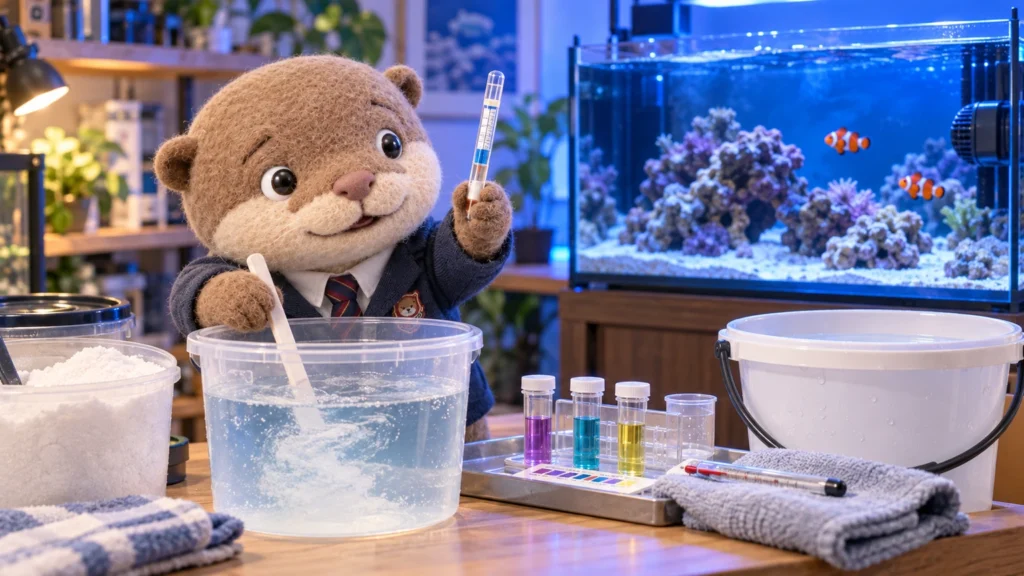 アイのアクアグッズ案内海水魚初心者の必需品|水槽・人工海水・比重計・水質検査道具の特徴や使い方、選ぶときのポイントをアイが紹介します。記事はコチラ →
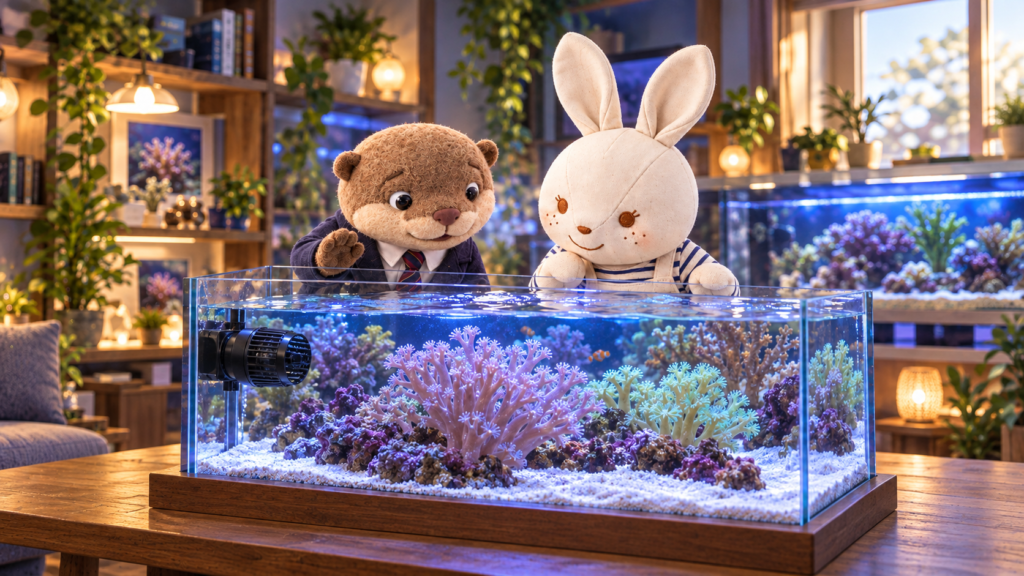 アイのアクアグッズ案内水槽の中に波がある!? コタロウと探る、サンゴがゆらゆら揺れる秘密道具の特徴や使い方、選ぶときのポイントをアイが紹介します。記事はコチラ →



コメント