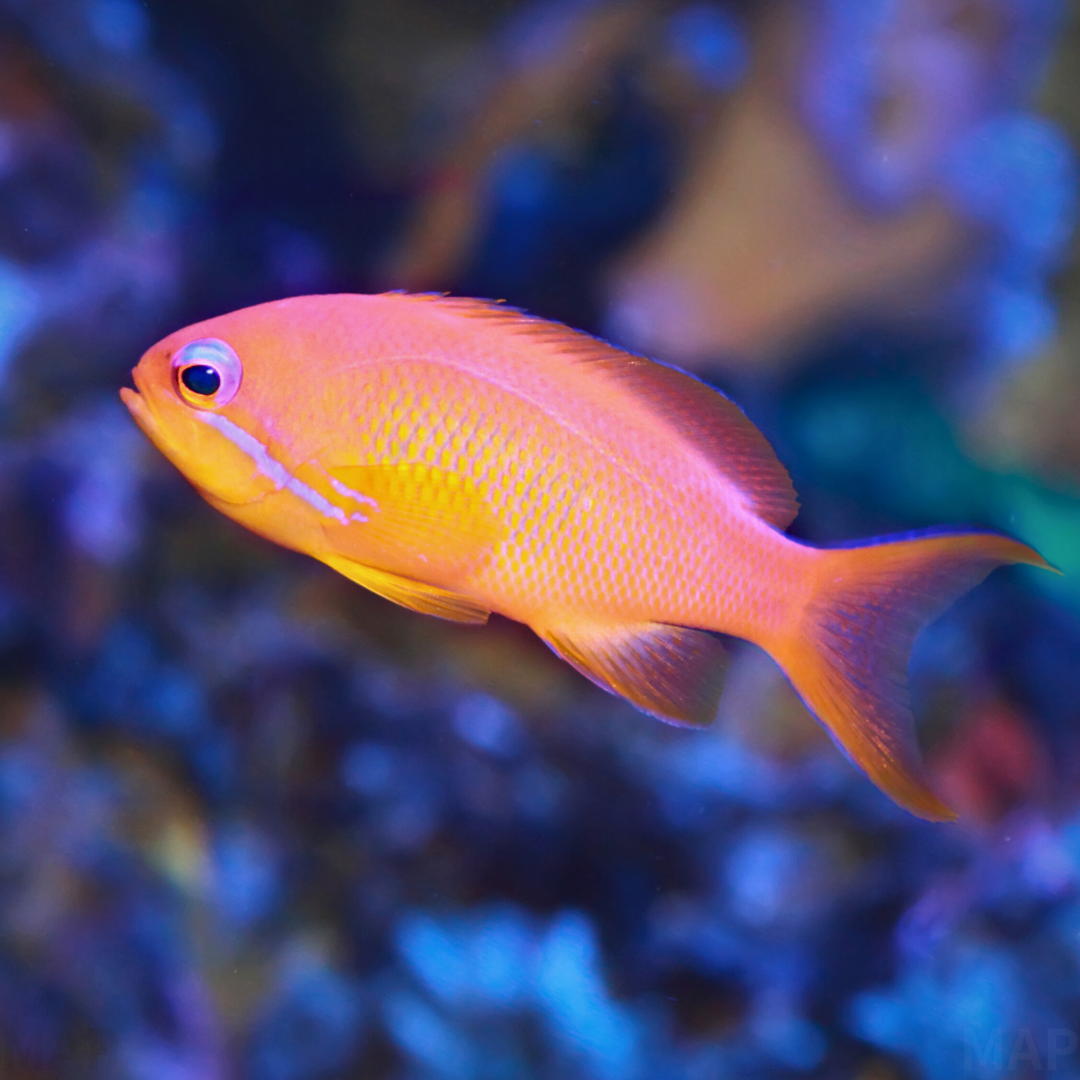
アカネハナゴイは、インド太平洋のサンゴ礁に息づく、ハタ科ハナダイ亜科の中でも特に鮮烈な美しさを持つ魚種です。その名の通り、茜色に染まった夕焼け空を彷彿とさせる繊細なグラデーションが特徴で、サンゴ礁の外縁部で数百匹もの巨大な群れを形成して泳ぐ姿は、まさに生命の躍動を感じさせます。雄は背鰭が深紅色に染まり、上唇には肉質の突起が現れるなど、性的二型が非常に明確である点も興味深い特徴です。プランクトン食性であり、常に水流に向かってホバリングしながら採餌する活発な性質を持っています。The Dispar Anthias is a strikingly beautiful fish found in the coral reefs of the Indo-Pacific, belonging to the subfamily Anthiadinae. As its Japanese name suggests, it features delicate gradations reminiscent of a sunset sky. Forming massive schools of hundreds of individuals along reef slopes, they present a dynamic display of life. Males are particularly distinctive, with deep red dorsal fins and a fleshy protuberance on the upper lip, showcasing clear sexual dimorphism. Being planktivorous, they are active swimmers that hover against currents to feed.
東部インド洋から中西部太平洋(クリスマス島からライン諸島、北は日本の八重山・小笠原諸島まで)Eastern Indian Ocean to the Central-West Pacific (Christmas Island to Line Islands, north to Yaeyama and Ogasawara Islands of Japan).
最大体長 / Max Size
約9.5センチメートルApproximately 9.5 cm
寿命 / Lifespan
約3年から5年(飼育下)Approximately 3 to 5 years (in captivity).
飼育環境 / Aquarium Environment
水槽サイズ / Tank Size
120センチメートル規格水槽(約300リットル)以上を推奨Recommended tank size: 120cm standard (approx. 300 liters) or larger.
水温 / Temperature
23.3度から26.6度23.3 to 26.6 degrees Celsius (74-80 degrees Fahrenheit).
水質 / Water Quality
pH 8.1から8.4、比重 1.020から1.025、アルカリ度 8から12 dKHの安定した海水Stable seawater with pH 8.1-8.4, Specific Gravity 1.020-1.025, and Alkalinity 8-12 dKH.
レイアウト / Layout
十分な遊泳スペースを確保しつつ、ライブロックで複雑な岩組みや隠れ家(洞窟や隙間)を豊富に設ける。強力な造波ポンプによる適度から強めの水流が必要。Provide ample open swimming space while creating complex rockwork with caves and crevices using live rock. Moderate to strong water flow using wave makers is essential.
注意点 / Precautions
飛び出し事故が非常に多いため、隙間のない頑丈なフタが必須。また、高代謝なため水質の悪化に注意。A secure, tight-fitting lid is essential as they are excellent jumpers. Also, be mindful of water quality degradation due to high metabolism.
餌と給餌 / Feeding
餌の種類 / Diet
動物プランクトン食性。冷凍イサザアミ(マイシスシュリンプ)、冷凍ブラインシュリンプ、カイアシ類、沈下性または浮遊性の人工飼料。Planktivorous. Frozen mysis shrimp, frozen brine shrimp, copepods, and high-quality sinking or floating pellet/flake food.
給餌のポイント / Feeding Tips
胃が小さく代謝が高いため、1日最低2回から3回の少量多頻度の給餌が重要。導入初期は嗜好性の高い生餌や冷凍餌で餌付けを行う。Since they have small stomachs and high metabolism, frequent small feedings (at least 2-3 times daily) are crucial. Use highly palatable live or frozen foods during the initial acclimation period.
性格と混泳 / Temperament and Tank Mates
性格 / Temperament
非常に温和で平和的。単独よりも群れで生活することを好む。Very peaceful and docile. They prefer living in groups rather than being solitary.
混泳の相性 / Compatibility
雄1匹に対し雌4匹以上のハーレム構成が理想。温和な小型スズメダイ、クマノミ類、マガキガイなどの無脊椎動物との相性が良い。攻撃的な大型魚との混泳は避ける。Ideally kept in a harem of one male to four or more females. Good tank mates include peaceful damselfish, clownfish, and invertebrates like Fighting Conchs. Avoid aggressive larger fishes.
病気と対策 / Diseases and Prevention
かかりやすい病気 / Common Diseases
白点病、ウーディニウム病、および栄養失調による衰弱死。Ich (Cryptocaryon), Velvet (Amyloodinium), and emaciation due to malnutrition.
対策と予防 / Prevention
殺菌灯の設置と、何よりも適切な給餌頻度の維持。ストレスを最小限に抑えるための隠れ家の確保と安定した水温管理。Use of UV sterilizers and, most importantly, maintaining a proper feeding schedule. Provide hiding spots to minimize stress and ensure stable temperature management.
増やし方(繁殖) / Breeding
雌雄の判別 / Sexing
雄は背鰭が鮮やかな赤色で上唇に肉質突起があり、腹鰭が糸状に長く伸びる。雌は全体的にピンクからオレンジ色で、雄のような特徴を持たない。Males have bright red dorsal fins, a fleshy protuberance on the upper lip, and long pelvic filaments. Females are overall pinkish-orange and lack these male-specific traits.
繁殖形態 / Reproduction
雌性先熟の順次性雌雄同体。全ての個体は雌として成熟し、社会的な抑制(雄の存在)がなくなると、優位な雌が雄へと性転換する。Protogynous hermaphrodites. All individuals mature as females, and when social suppression (presence of a male) is removed, the dominant female changes sex to male.
繁殖のポイント / Breeding Tips
水族館などの大型施設では浮遊性卵の産卵と育成の成功例がある。家庭水槽では、適切な性比を維持することで雄の美しい求愛ダンスを観察できる。Successful captive breeding and larval rearing have been achieved in large public aquariums. In home aquaria, maintaining a proper sex ratio allows for the observation of the male’s beautiful courtship dance.
雑学と豆知識 / Trivia and Fun Facts
1. 学名の変遷と最新の分類 / 1. Taxonomic History and Recent Changes
アカネハナゴイの学名は、長らく「ナガハナダイ属(Pseudanthias dispar)」として親しまれてきましたが、2022年のA.C. Gillによる体系的な再定義により、現在は「Nemanthias dispar」が正式な学名となっています。この変更は、骨格構造や鱗の細かな特徴に基づき、単なる色の違いではなく進化的系統をより正確に反映させた結果です。The scientific name of the Dispar Anthias was long known as Pseudanthias dispar. However, following a systematic redefinition by A.C. Gill in 2022, it is now officially Nemanthias dispar. This change was based on skeletal structures and fine scale characteristics, aiming to more accurately reflect evolutionary lineages rather than just color differences.
2. 和名「アカネ」に込められた美学 / 2. The Aesthetics of the Name “Akane”
日本の観賞魚界で「アカネハナゴイ(茜花鯉)」と呼ばれる理由は、その色彩が夕暮れの空を染める茜色に似ているからです。単一の派手な色ではなく、紫からオレンジ、黄色へと移ろう繊細なグラデーションは、日本人の美意識にも深く共鳴し、長年リーフタンクの主役として愛され続けています。The Japanese name “Akane Hanagoi” (Madder Flower-Carp) comes from its colors resembling the madder red of a sunset sky. Rather than a single bold color, its delicate transition from purple to orange and yellow resonates with Japanese aesthetics, making it a long-time favorite for reef tanks.
3. 日本独自の高度な輸送・流通技術 / 3. Japan’s Advanced Shipping and Logistics
アカネハナゴイは浅い海に生息するため、採集時の減圧ダメージが少ないのが特徴です。さらに日本では、冬期でも水温を維持する高度なパッキング技術と迅速な宅配網により、オンラインショップからでも極めて良好なコンディションで自宅に届くサプライチェーンが確立されています。これは世界的に見ても非常に稀有で高度なアクアリウム文化の一側面と言えます。Because Dispar Anthias live in shallow waters, they suffer less decompression damage during collection. Furthermore, in Japan, an advanced supply chain has been established using high-tech packing to maintain water temperature even in winter and a rapid delivery network, allowing them to arrive from online shops in excellent condition. This is a rare and highly advanced aspect of aquarium culture globally.
まとめ / Conclusion
アカネハナゴイは、その圧倒的な色彩美と群泳する躍動感により、海水水槽にサンゴ礁の息吹を吹き込んでくれる素晴らしい存在です。2022年にNemanthias属へと再分類された背景には、生命の進化の歴史を解き明かそうとする科学的な情熱が隠されています。The Dispar Anthias is a magnificent species that breathes life from the coral reefs into marine aquariums with its overwhelming beauty and dynamic schooling behavior. The 2022 reclassification into the genus Nemanthias hides a scientific passion to unravel the history of life’s evolution.
長期飼育の鍵は、高い代謝を満たすこまめな給餌と、ストレスのないハーレム構造の維持にあります。適切な環境下で飼育された彼らは、夕焼けのような茜色の色彩をより一層鮮やかに輝かせ、私たちに自然の驚異を日々伝えてくれることでしょう。The keys to long-term care are frequent feedings to satisfy their high metabolism and maintaining a stress-free harem structure. Kept in the right environment, their sunset-like madder colors will shine even brighter, reminding us daily of the wonders of nature.
Herre, A. W. (1955). Remarks on the fish genus Mirolabrichthys, with description of a new species. Copeia, 1955 (no. 3), 223-225.
Gill, A. C. (2022). Revised definitions of the anthiadine fish genera Mirolabrichthys Herre and Nemanthias Smith, with description of a new genus. Zootaxa, 5092(1), 41-66.
行動生態および生理学
Fishelson, L. (1970). Protogynous Sex Reversal in the Fish Anthias squamipinnis (Teleostei, Anthiidae) regulated by the Presence or Absence of a Male Fish. Nature, 227, 90-91.
現行分類・保全状況確認用データベース
FishBase. Nemanthias dispar (Herre, 1955).
World Register of Marine Species (WoRMS). Pseudanthias dispar (Herre, 1955).
IUCN Red List of Threatened Species. Nemanthias dispar.



 アイのアクアグッズ案内エビのおうち、食べちゃっていいの!? コタロウと探る、不思議なエビのごはん道具の特徴や使い方、選ぶときのポイントをアイが紹介します。記事はコチラ →
 アイのアクアグッズ案内バルブの仲間に合わせる飼育用品|チェリーバルブ・スマトラ・中型種の水槽とろ過道具の特徴や使い方、選ぶときのポイントをアイが紹介します。記事はコチラ →



コメント