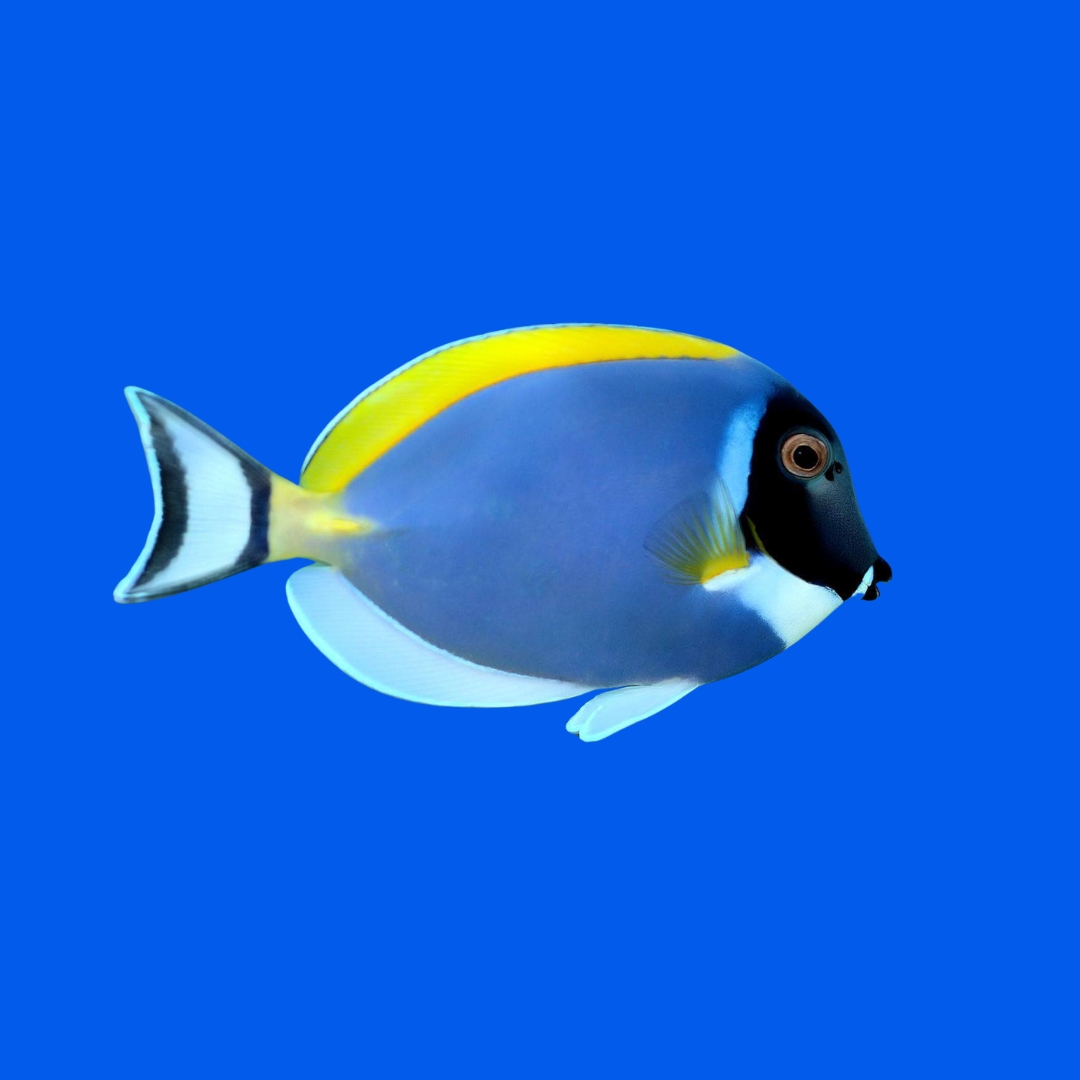
パウダーブルータンは、粉をまとったような鮮やかな青い体、黒い顔、白い胸、黄色い背びれが印象的なニザダイ科の海水魚です。自然下ではインド洋を中心とする浅いサンゴ礁で藻類をついばみ、よく泳ぐ草食魚として暮らしています。アクアリウムでは非常に人気がありますが、遊泳量が多く、環境変化や寄生虫性疾患に敏感なため、十分な水量、強い水流、安定した水質、植物質中心の食事、導入前の検疫をそろえたい上級者向けの魚です。The Powder Blue Tang is a striking marine surgeonfish with a powdery blue body, black face, white chest, and yellow dorsal fin. In the wild, it grazes on algae around shallow coral reefs mainly in the Indian Ocean. It is highly desirable in aquariums, but it is also an advanced species because it swims constantly and is sensitive to environmental instability and parasitic diseases. A large system, strong water movement, stable water quality, plant-rich feeding, and quarantine before introduction are strongly recommended.
基本情報 / Basic Information
学名 / Scientific Name
Acanthurus leucosternon
通称 / Common Name
パウダーブルータン、パウダーブルーサージョンフィッシュ、白胸刺尾魚Powder Blue Tang, Powder Blue Surgeonfish, Blue Surgeonfish
分類 / Family
条鰭綱・ニザダイ目またはスズキ目・ニザダイ科・クロハギ属。分類体系により目の扱いが異なる場合があります。Class Actinopterygii, family Acanthuridae, genus Acanthurus. Depending on the classification system, the order may be treated as Acanthuriformes or within Perciformes.
英名 / English Name
Powder Blue Tang / Powder Blue Surgeonfish
分布 / Distribution
インド洋を中心に、東アフリカ沿岸、マダガスカル、モルディブ、スリランカ、インド、アンダマン海、インドネシア周辺などの熱帯海域。浅く透明度の高いサンゴ礁のリーフフラットや外洋側斜面で見られます。Tropical waters mainly of the Indian Ocean, including East Africa, Madagascar, the Maldives, Sri Lanka, India, the Andaman Sea, and parts of Indonesia. It is associated with clear, shallow reef flats and seaward reef slopes.
最大体長 / Max Size
一般的に見かける成魚は20〜23cm前後ですが、文献上はより大きな最大記録もあります。飼育計画では少なくとも25cm級の活発な遊泳魚として扱うのが安全です。Adults commonly encountered are around 20 to 23 cm, although larger maximum records exist in the literature. For aquarium planning, it is safest to treat it as an active swimmer that may reach at least the 25 cm class.
寿命 / Lifespan
良好な環境では長期飼育を目指せますが、輸送状態や導入初期の管理に大きく左右されます。安定した大型水槽では10年前後、またはそれ以上を目標にできます。Long-term care is possible in excellent conditions, but survival is strongly affected by shipping condition and early acclimation. In a stable large aquarium, a lifespan around 10 years or more can be a reasonable goal.
飼育環境 / Aquarium Environment
水槽サイズ / Tank Size
最低でも120cmワイド水槽、目安として120×60×60cm前後、約400L以上を推奨します。可能であれば150cm以上の水槽が望ましく、標準的な90cm規格水槽では長期飼育には狭すぎます。A large aquarium is recommended, preferably at least a 120 cm wide system such as around 120 x 60 x 60 cm, roughly 400 L or more. A 150 cm or larger tank is even better. A standard 90 cm aquarium is too small for long-term care.
水温 / Temperature
24〜27℃前後を安定して維持します。許容範囲そのものよりも急変を避けることが重要で、日内変動が大きいとストレスや白点病発症のきっかけになります。Keep the temperature stable at around 24 to 27°C. Avoiding sudden swings is more important than chasing a single number, because daily fluctuations can trigger stress and disease outbreaks.
水質 / Water Quality
比重1.023〜1.025、pH8.1〜8.4を目安に、アンモニアと亜硝酸は検出されない状態を維持します。硝酸塩や有機物の蓄積にも弱いため、強力なプロテインスキマー、十分な生物ろ過、定期換水、自動給水装置による比重安定化が役立ちます。Aim for a specific gravity of 1.023 to 1.025 and pH 8.1 to 8.4, with ammonia and nitrite undetectable. Because this species is sensitive to accumulated nitrate and organics, a strong protein skimmer, mature biological filtration, regular water changes, and an auto top-off system are helpful.
レイアウト / Layout
ライブロックで隠れ家と休息場所を作りつつ、前面や中央には長く泳げる空間を残します。水流は一方向の強流だけでなく、複数のポンプで乱流を作ると自然下のリーフ環境に近づきます。Provide caves and resting places with live rock, while leaving open swimming space at the front and center. Rather than a single directional blast, turbulent flow from multiple pumps better resembles its reef habitat.
注意点 / Precautions
導入直後のストレスが失敗の大きな原因になります。購入時は痩せ、白点、呼吸の速さ、ヒレの傷、餌食いを確認し、いきなり本水槽へ入れず検疫・餌付け期間を設けます。尾柄部には鋭い棘があるため、素手で追い回したり、狭い網の中で暴れさせたりしないよう注意します。Stress immediately after introduction is a major cause of failure. Before purchase, check body condition, white spots, breathing rate, fin damage, and feeding response. Quarantine and feeding stabilization are recommended before display-tank introduction. The caudal peduncle has a sharp scalpel-like spine, so avoid handling it by hand or forcing it to thrash in a small net.
餌と給餌 / Feeding
餌の種類 / Diet
主食は植物質です。乾燥海苔、海藻シート、スピルリナ配合飼料、植物質を多く含む海水魚用人工飼料を中心にします。餌付きが悪い個体には、導入初期の補助として栄養強化したブラインシュリンプやイサザアミを少量使うこともありますが、動物質だけに偏らせないことが大切です。This species should be fed mainly plant-based foods such as dried nori, marine algae sheets, spirulina-based foods, and herbivore-focused marine pellets or flakes. Enriched brine shrimp or mysid shrimp can help newly imported or reluctant individuals start feeding, but the diet should not become dominated by animal protein.
給餌のポイント / Feeding Tips
一度に大量に与えるより、少量を1日複数回に分けて与えます。海苔や海藻シートをクリップで留め、日中いつでもついばめる時間を作ると、自然な摂食行動に近づきストレス軽減にもつながります。痩せやすい魚なので、腹部のへこみと背肉の落ち方を日々観察します。Feed small amounts several times a day rather than one large meal. Clipping nori or algae sheets in the aquarium allows natural grazing behavior and can reduce stress. Because this fish can lose condition quickly, monitor the belly and the muscle along the back daily.
性格と混泳 / Temperament and Tank Mates
性格 / Temperament
活発でよく泳ぎ、縄張り意識も強い魚です。落ち着いた環境では堂々と泳ぎますが、狭い水槽や競争相手が多い環境では攻撃性とストレスの両方が出やすくなります。It is active, constantly swimming, and often territorial. In a suitable environment it swims confidently, but in cramped or competitive aquariums it may show both aggression and stress.
混泳の相性 / Compatibility
基本は1水槽1匹で考えます。同種、アキレスタン、パウダーブラウンタン、ソハールタンなど、体形や食性が近いハギ類とは争いやすいため慎重な判断が必要です。混泳させる場合は十分に大きな水槽で、先住魚との力関係を見ながら、本種を後から入れる方法が一般的です。サンゴは基本的に食害しにくく、リーフタンク向きとされますが、摂食量と排泄量が多いため水質管理は厳しくなります。Plan on one individual per aquarium. It may fight with conspecifics and similarly shaped or similarly feeding tangs such as Achilles, Powder Brown, and Sohal tangs. If kept with other tangs, use a very large system and consider introducing the Powder Blue Tang after more peaceful species are established. It is generally considered reef-safe, but its heavy feeding and waste production require strong nutrient control.
病気と対策 / Diseases and Prevention
かかりやすい病気 / Common Diseases
もっとも注意したいのは海水魚の白点病です。パウダーブルータンは白点病に弱い魚として知られ、輸送直後、導入直後、水温や比重の急変、混泳ストレスが発症の引き金になりやすい傾向があります。水質悪化や栄養の偏りが長く続く場合は、頭部側線びらん症にも注意します。Marine ich is the most important disease to watch for. Powder Blue Tangs are widely regarded as highly susceptible to Cryptocaryon irritans, especially after shipping, introduction, temperature or salinity swings, and social stress. Long-term poor water quality or nutritional imbalance may also contribute to head and lateral line erosion.
対策と予防 / Prevention
本水槽に入れる前に別水槽で検疫し、食欲、呼吸、体表、フンの状態を確認します。UV殺菌灯は水中を遊泳する病原体の数を減らす補助として有効ですが、検疫の代わりにはなりません。治療薬、とくに銅系薬剤を使う場合は、無脊椎動物やライブロックのない治療専用水槽で、検査キットを用いて濃度を慎重に管理します。自己判断で本水槽へ薬剤を入れないことが大切です。Quarantine before display introduction and monitor appetite, breathing, body surface, and feces. UV sterilization can help reduce free-swimming pathogens in the water column, but it does not replace quarantine. If medications, especially copper-based treatments, are used, they should be administered in a dedicated hospital tank without invertebrates or live rock, with concentration monitored carefully using a test kit. Avoid adding medication to the display tank without a clear treatment plan.
増やし方(繁殖) / Breeding
雌雄の判別 / Sexing
外見だけで雌雄を安定して判別するのは困難です。販売個体で雌雄を指定して選ぶことは一般的ではありません。Reliable sexing by appearance alone is difficult. It is not common to select aquarium specimens by confirmed sex.
繁殖形態 / Reproduction
卵生で、自然下では外洋に面したリーフ周辺で放卵・放精を行うとされます。仔魚は浮遊生活を送り、ニザダイ科に特徴的なアクロヌルス期を経て稚魚へ変態します。It is an egg-laying species that releases eggs and sperm around reef edges in the wild. The larvae are pelagic and pass through the acronurus stage characteristic of surgeonfishes before becoming juveniles.
繁殖のポイント / Breeding Tips
一般家庭の水槽での繁殖は現実的ではありません。広い産卵環境、微細な初期餌料、長い浮遊仔魚期、変態期の管理が大きな壁になります。流通個体は、確認できる範囲では野生採集個体が中心と考えるのが安全です。Breeding in home aquariums is not practical. Major challenges include large spawning systems, microscopic first foods, a long pelagic larval period, and careful management through metamorphosis. Based on currently available trade information, it is safest to assume that most available specimens are wild-collected.
雑学と豆知識 / Trivia and Fun Facts
1. 学名に込められた白い胸 / 1. The white chest in its scientific name
属名のAcanthurusは、ギリシャ語系の「棘」と「尾」に由来し、ニザダイ科らしい尾柄部の棘を示す名前です。種小名のleucosternonは「白い胸」を意味し、黒い顔と青い体の間にくっきり現れる白い胸部をよく表しています。見た目の美しさだけでなく、名前そのものにも本種の特徴が刻み込まれています。The genus name Acanthurus refers to the spine on the tail base, a defining feature of surgeonfishes. The specific name leucosternon means “white chest,” perfectly describing the clean white area between the black face and blue body. Its scientific name captures one of its most recognizable features.
2. サンゴ礁の藻類を刈る草食魚 / 2. An algae grazer of coral reefs
自然下のパウダーブルータンは、岩やサンゴ礁表面に生える藻類を細かくついばみながら暮らします。これは単なる食事ではなく、サンゴを覆う藻類の増えすぎを抑える働きにもつながります。水槽でも、海苔や海藻シートをついばむ時間を作ることは、栄養補給だけでなく本来の行動を満たす意味があります。In the wild, Powder Blue Tangs graze on algae growing over rocks and reef surfaces. This is not just feeding behavior; it also helps prevent algae from overgrowing reef surfaces. In aquariums, offering nori or algae sheets supports both nutrition and natural grazing behavior.
3. 尾の付け根に隠れたメス / 3. The hidden scalpel at the tail base
ニザダイ科の英名surgeonfishは、尾柄部にある鋭い棘に由来します。普段は目立ちにくい構造ですが、争いや防御の場面では武器になり、相手の体表や人の手を傷つけることがあります。観賞魚として扱うときも、美しさに見とれて素手で追い込まないようにしたい魚です。The name “surgeonfish” comes from the sharp scalpel-like spine on the caudal peduncle. It is not always obvious at rest, but it can be used in fights or defense and may injure other fish or a handler’s hand. This is a beautiful fish, but it should be handled with care.
4. 透明な仔魚、アクロヌルス / 4. The transparent acronurus larva
ニザダイ科の仔魚は、成魚とはまるで違う透明で薄い姿をしたアクロヌルス期を経ます。この長い浮遊生活が、外洋を越えた分散を可能にする一方で、水槽内繁殖を非常に難しくしています。小さな稚魚が店頭に並ぶまでには、自然界の海流と変態という大きなドラマがあります。Surgeonfish larvae pass through a transparent, laterally compressed acronurus stage that looks very different from the adult. This pelagic stage helps them disperse across the ocean, but it also makes captive breeding extremely difficult. Behind every small juvenile is a remarkable story of ocean currents and metamorphosis.
5. 美しいが、安易に迎えない魚 / 5. Beautiful, but not an impulse purchase
パウダーブルータンは、海水魚の中でもひときわ目を引く存在です。しかし、その美しさは「丈夫で簡単」という意味ではありません。水槽の広さ、導入順、検疫、給餌、病気対策まで準備してから迎えることで、初めてこの魚の魅力を長く楽しめます。The Powder Blue Tang is one of the most eye-catching marine aquarium fish, but beauty does not mean ease. Its long-term success depends on preparation: tank size, introduction order, quarantine, feeding, and disease prevention should all be planned before purchase.
まとめ / Conclusion
パウダーブルータンは、鮮やかな体色と活発な遊泳姿が魅力のサンゴ礁性海水魚です。植物質を中心に食べ、サンゴを直接食害しにくいことからリーフタンクでも人気がありますが、白点病への弱さ、混泳時の攻撃性、広い遊泳スペースの要求を軽く見ることはできません。The Powder Blue Tang is a reef-associated marine fish admired for its vivid color and active swimming. Its plant-rich diet and generally reef-safe behavior make it popular for reef aquariums, but its susceptibility to marine ich, territorial nature, and need for extensive swimming space should not be underestimated.
長期飼育を目指すなら、120cmワイド以上の大型水槽、安定した水温と比重、強い水流、植物質中心の複数回給餌、導入前の検疫が基本になります。設備と管理に余裕を持って迎えられる飼育者にとって、本種は水槽にサンゴ礁の躍動感をもたらしてくれる特別な一匹です。For long-term care, start with a large aquarium of at least the 120 cm wide class, stable temperature and salinity, strong water movement, multiple plant-rich feedings, and quarantine before introduction. For aquarists who can provide this level of preparation and maintenance, this species can bring the energy of a coral reef into the aquarium.
Abesamis, R., Clements, K.D., Choat, J.H., McIlwain, J., Nanola, C., Myers, R., Rocha, L.A., Russell, B. and Stockwell, B. 2012. Acanthurus leucosternon. The IUCN Red List of Threatened Species. 保全状況、自然分布、個体群・利用状況を確認するための補助資料として選定。 https://www.iucnredlist.org/species/177953/1501136
Yanong, R.P.E. Use of Copper in Marine Aquaculture and Aquarium Systems. UF/IFAS Extension, FA165. 銅治療の有効濃度、測定管理、海水中での銅の挙動、魚種差による感受性、無脊椎動物や生物ろ過への毒性リスクを確認するために使用。 https://edis.ifas.ufl.edu/publication/FA165
Randall, J.E. 1956. A revision of the surgeon fish genus Acanthurus. Pacific Science 10(2):159–235. クロハギ属 Acanthurus の分類学的整理を支える古典的な基礎文献として選定。FishBaseでも本種ページの主要参考文献として扱われています。 Google Scholarで文献情報を確認
Colorni, A. and Burgess, P. 1997. Cryptocaryon irritans Brown 1951, the cause of white spot disease in marine fish: an update. Aquarium Sciences and Conservation, 1:217–238. 海水魚の白点病に関する基礎的な総説文献として選定。UF/IFAS FA164でも主要参考文献として挙げられており、生活環、治療期間、UV殺菌灯の扱いなどの背景確認に有用です。 Google Scholarで文献情報を確認



 アイのアクアグッズ案内アカヒレの仲間に合わせる飼育用品|無加温・混泳・繁殖の水槽とろ過道具の特徴や使い方、選ぶときのポイントをアイが紹介します。記事はコチラ →
 アイのアクアグッズ案内コリドラスのもふもふ時間を楽しむ|餌・底砂・お掃除用品の選び方コリドラスのもふもふする食事風景を楽しむために。沈む餌2種類の違い、口元に配慮した底砂、食べ残しを回収する道具を、アクアグッズナビゲーターのアイが紹介します。記事はコチラ →



コメント