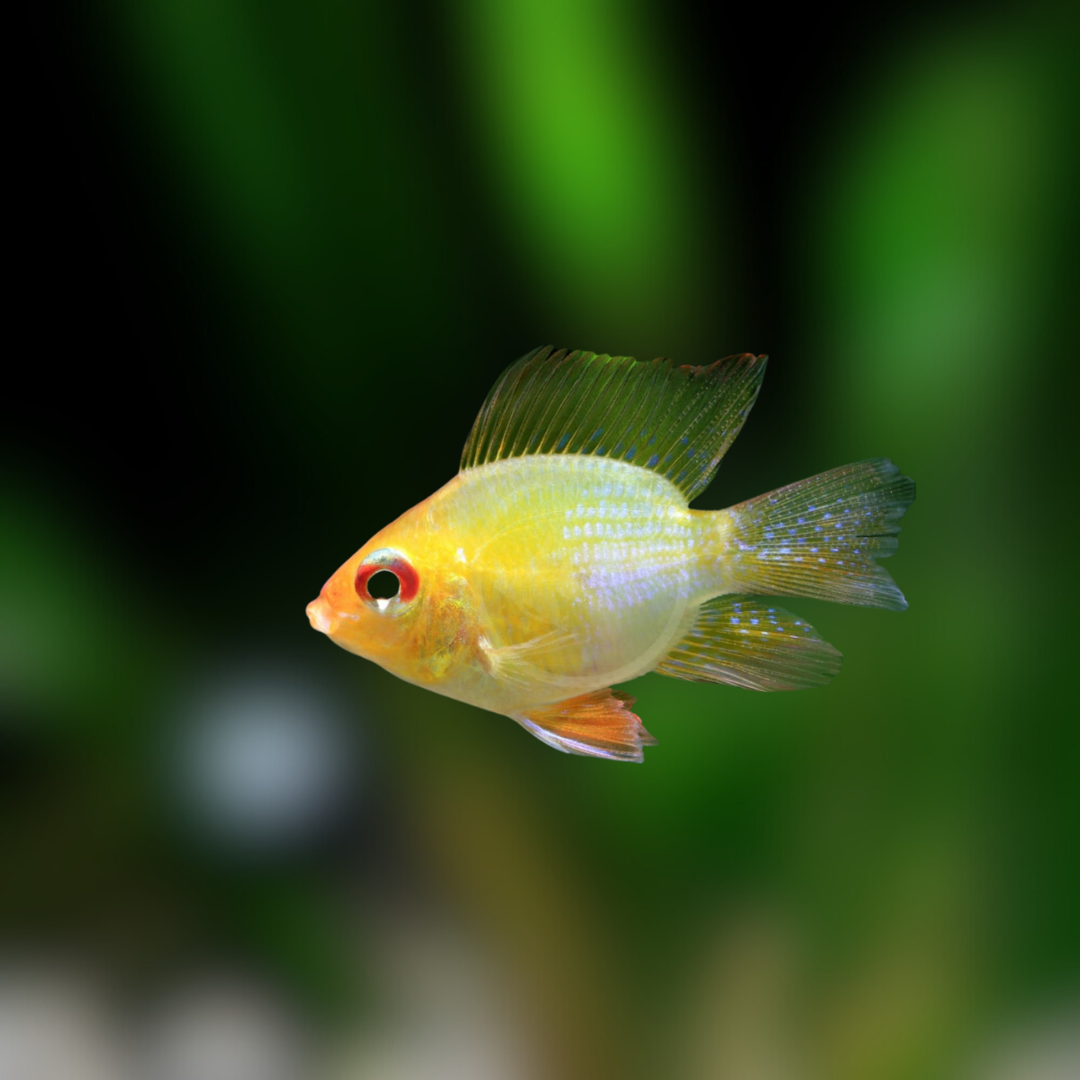
ゴールデンバルーン・ラミレジィは、南米オリノコ川水系に分布するミクロゲオファーガス・ラミレジィをもとに作出された改良品種です。黄金色からレモンイエローに見える明るい体色と、短く丸みを帯びたバルーン体型が特徴で、通常体型のラミレジィとは違った愛らしい印象を持ちます。一方で、この丸い体型は脊椎の短縮を伴うため、消化不良や浮力異常に注意が必要です。見た目のかわいらしさだけで選ぶのではなく、高温・清潔な水・少量多回数の給餌を意識して、体に負担をかけない飼育を行うことが大切です。The Golden Balloon Ram is a selectively bred form of Mikrogeophagus ramirezi, a small cichlid native to the Orinoco River system in South America. It is known for its bright golden to lemon-yellow coloration and its short, rounded balloon body shape, giving it a charming appearance quite different from the standard form. However, the rounded body is associated with a shortened spine, so digestive trouble and buoyancy problems require special attention. Rather than keeping it only for its cute appearance, it should be maintained with warm, clean water and small, frequent feedings to reduce physical stress.
基本情報 / Basic Information
学名 / Scientific Name
Mikrogeophagus ramirezi
通称 / Common Name
ゴールデンバルーン・ラミレジィ、バルーンゴールデンラミレジィ、ゴールデンバルーンラムGolden Balloon Ram, Balloon Golden Ram, Golden Balloon Ram Cichlid
分類 / Family
シクリッド目 シクリッド科 ミクロゲオファーガス属Order Cichliformes, Family Cichlidae, Genus Mikrogeophagus
英名 / English Name
Golden Balloon Ram
分布 / Distribution
原種はコロンビアおよびベネズエラにまたがるオリノコ川水系のリャノ地域に分布します。ゴールデンバルーン品種は観賞魚として作出された改良品種で、自然分布はありません。The wild form is distributed in the Llanos region of the Orinoco River system in Colombia and Venezuela. The Golden Balloon form is a selectively bred aquarium strain and has no natural distribution.
最大体長 / Max Size
約4〜5cm。通常体型のラミレジィより体長は短く見えますが、体高があり丸みの強い体型になります。Approximately 4–5 cm. It appears shorter than the standard form, but has a deeper, more rounded body.
寿命 / Lifespan
目安は2〜3年ほどです。通常体型のラミレジィではより長く飼育できることもありますが、バルーン体型では消化器や浮力のトラブルに注意が必要です。A typical lifespan is around 2–3 years. Standard Rams may live longer under excellent care, but the balloon form requires special attention to digestive and buoyancy issues.
飼育環境 / Aquarium Environment
水槽サイズ / Tank Size
単独またはペア飼育なら45cm規格水槽程度から飼育できます。混泳を考える場合は60cm規格水槽以上が扱いやすく、縄張りを作れる空間と隠れ家を確保しておくと安心です。A 45 cm standard tank is suitable for a single fish or a pair. For community setups, a 60 cm standard tank or larger is easier to manage, as it provides territory space and hiding places.
水温 / Temperature
26〜30℃を目安にします。特に本種はやや高めの水温を好むため、一般的な熱帯魚よりも低温にしすぎないことが重要です。Aim for 26–30°C. This species prefers relatively warm water, so it should not be kept too cool compared with many common tropical fish.
水質 / Water Quality
弱酸性〜中性の軟水を好みます。目安としてpH6.0〜7.0前後が扱いやすく、できれば弱酸性寄りに安定させると調子を整えやすい魚です。急激な水質変化には弱いため、数値を追い込みすぎるよりも安定を優先してください。It prefers soft water from slightly acidic to neutral. A practical range is around pH 6.0–7.0, with slightly acidic conditions often helping it settle well. Stability is more important than forcing exact numbers, as sudden water changes can be harmful.
レイアウト / Layout
細かく角のない砂を敷き、流木、石、水草で視線を遮る場所を作ります。ラミレジィは底をつつく行動を見せるため、粗い砂利よりも細かな底床が向いています。繁殖を狙う場合は、平たい石や広めの葉を産卵床として用意しておくとよいでしょう。Use fine, smooth sand and create visual barriers with driftwood, stones, and aquatic plants. Rams often pick at the substrate, so fine sand is more suitable than coarse gravel. If breeding is desired, provide flat stones or broad leaves as potential spawning sites.
注意点 / Precautions
バルーン体型は遊泳力が通常体型より劣りやすく、強い水流や気の強い魚との混泳では消耗しやすくなります。また、高温管理では水が傷みやすいため、餌の残りや底床の汚れをためない管理が必要です。The balloon form often has weaker swimming ability than the standard form, so strong currents and aggressive tank mates can exhaust it. Warm water also allows waste to accumulate more quickly, so uneaten food and substrate debris should be controlled carefully.
餌と給餌 / Feeding
餌の種類 / Diet
人工飼料、冷凍アカムシ、ブラインシュリンプ、ミジンコなどを食べます。主食は消化のよい小粒の人工飼料にし、冷凍餌は体調や色揚げの補助として適度に取り入れると扱いやすいです。It accepts prepared foods, frozen bloodworms, brine shrimp, and daphnia. Small, easily digestible prepared foods should be used as the staple, while frozen foods can be offered moderately to support condition and coloration.
給餌のポイント / Feeding Tips
一度に多く与えないことが最重要です。バルーン体型では内臓が圧迫されやすいため、少量を1日2〜3回に分け、腹部が不自然に膨れるほど食べさせないようにします。食べ残しは水質悪化の原因になるため、早めに取り除くことが大切です。The most important point is to avoid overfeeding at one time. Because the balloon body can compress the internal organs, offer small portions two to three times a day and avoid letting the belly become overly swollen. Uneaten food should be removed promptly to prevent water quality deterioration.
性格と混泳 / Temperament and Tank Mates
性格 / Temperament
小型シクリッドとしては比較的穏やかですが、ペア形成時や繁殖期には縄張り意識が強くなります。普段は底層から中層を中心に泳ぎ、環境に慣れると人前にも出てきやすい、表情豊かな魚です。It is relatively peaceful for a small cichlid, but territorial behavior becomes stronger during pair formation and breeding. It usually swims in the lower to middle areas of the tank and, once settled, often becomes expressive and visible to the keeper.
混泳の相性 / Compatibility
小型カラシン類や温和な底物など、高温に耐えられて本種を威圧しない魚が向きます。ただし、バルーン体型は泳ぎが得意ではないため、すばしこい魚や気の強い魚に餌を取られたり追われたりしないよう注意が必要です。通常体型のラミレジィとの混泳は、体力差や縄張り争いの面で不利になりやすいため慎重に判断します。Suitable tank mates include small characins and peaceful bottom dwellers that tolerate warm water and do not intimidate the Ram. Because the balloon form is not a strong swimmer, avoid fast or aggressive fish that may outcompete it for food or harass it. Mixing it with standard Rams should be considered carefully, as the balloon form may be disadvantaged in territorial disputes.
病気と対策 / Diseases and Prevention
かかりやすい病気 / Common Diseases
白点病、尾ぐされ、エロモナス症、水質悪化による体表トラブルのほか、バルーン体型では消化不良、便秘、浮力異常、いわゆる転覆症状に注意が必要です。丸い体型は見た目の特徴である一方、内臓や鰾への負担が出やすいと考えられます。Common concerns include ich, fin rot, Aeromonas-related problems, and skin issues caused by poor water quality. In the balloon form, digestive trouble, constipation, buoyancy problems, and swim-bladder-like symptoms require special attention. The rounded body is visually distinctive, but it may also increase strain on the internal organs and swim bladder.
対策と予防 / Prevention
清潔な高温環境を安定して維持し、急な水質変化を避けます。餌は少量多回数を徹底し、冷凍アカムシなどを与えすぎないようにします。異常に浮く、沈む、横になる、腹部が膨れるなどの変化が見られた場合は、給餌を見直し、水質を確認し、早めに隔離して負担を減らすことが重要です。Maintain clean, warm, and stable water while avoiding sudden changes. Feed small amounts frequently and avoid overusing rich foods such as frozen bloodworms. If the fish floats abnormally, sinks, lies sideways, or develops a swollen abdomen, review feeding, check water quality, and isolate it early to reduce stress.
増やし方(繁殖) / Breeding
雌雄の判別 / Sexing
成熟したオスは背びれ前方の棘条が伸びやすく、メスは繁殖期に腹部がピンク色から赤みを帯びることがあります。ただし、ゴールデン品種では黒斑や青い斑点を使った判別がしにくく、バルーン体型では体型差も分かりにくいため、最終的にはペア行動や産卵管の様子を合わせて判断します。Mature males often develop longer anterior dorsal fin spines, while females may show a pink to reddish belly during breeding condition. However, the golden form lacks many dark markings, and the balloon body makes body-shape differences harder to judge, so pair behavior and the appearance of the breeding tubes should also be considered.
繁殖形態 / Reproduction
平たい石、葉、または底床に掘った浅いくぼみに産卵する基質産卵型です。雌雄で卵や稚魚を守る両親保護を行い、卵に水流を送ったり、稚魚を誘導したりするシクリッドらしい行動が見られます。It is a substrate spawner that lays eggs on flat stones, leaves, or shallow pits in the substrate. Both parents may guard the eggs and fry, showing typical cichlid parental behaviors such as fanning the eggs and guiding the fry.
繁殖のポイント / Breeding Tips
繁殖を狙う場合は、弱酸性寄りの清潔な軟水と28℃前後のやや高めの水温を安定させます。ペアの相性が重要なため、単にオスとメスを入れるだけでは成功しないこともあります。産卵後は強い混泳魚を避け、親が落ち着いて卵と稚魚を守れる環境を整えることが大切です。For breeding, maintain clean, soft, slightly acidic water and a stable temperature around 28°C. Pair compatibility is important, so simply placing a male and female together may not be enough. After spawning, avoid strong tank mates and provide a calm environment where the parents can guard the eggs and fry.
雑学と豆知識 / Trivia and Fun Facts
1. 学名に残る「小さな土を食べるもの」 / 1. A Name Meaning “Little Earth Eater”
ミクロゲオファーガスという属名は、ギリシャ語由来の「小さい」「土」「食べる」という意味を組み合わせた名前とされます。これは、底砂を口に含んで細かな餌を探すラミレジィの行動をよく表したものです。ラミレジィは見た目こそ小さなドワーフシクリッドですが、行動の一部にはゲオファーガス類に通じる「底を探る魚」としての性格が残っています。水槽内で細かな砂をつつく姿は、単なるしぐさではなく、この魚が本来持つ暮らし方をのぞかせる場面といえます。The genus name Mikrogeophagus is generally understood as a combination of Greek-derived words meaning “small,” “earth,” and “to eat.” It reflects the Ram’s habit of taking substrate into its mouth while searching for tiny food items. Although it appears to be a small dwarf cichlid, part of its behavior still resembles that of earth-eating cichlids. When it picks through fine sand in the aquarium, it is not merely a cute gesture but a glimpse of its natural way of life.
2. アマゾンではなくオリノコの魚 / 2. Not an Amazon Fish, but an Orinoco Fish
ラミレジィは南米の熱帯魚として紹介されるため、アマゾン川の魚と思われることがあります。しかし原種の主な舞台は、コロンビアからベネズエラに広がるオリノコ川水系です。リャノと呼ばれる熱帯サバナの水辺には、浅く温まりやすい流れの緩やかな水域があり、そこに落ち葉や水草、細かな底質が重なります。ラミレジィが高めの水温と穏やかな環境を好む背景には、このような故郷の風景があります。Because Rams are South American tropical fish, they are sometimes assumed to be Amazon fish. However, the wild form is associated mainly with the Orinoco River system across Colombia and Venezuela. In the tropical savanna known as the Llanos, shallow, slow-moving waters warm easily and contain leaf litter, aquatic plants, and fine substrate. The Ram’s preference for warm, calm conditions reflects this native landscape.
3. ゴールデンとバルーンは別々の特徴 / 3. “Golden” and “Balloon” Are Separate Traits
ゴールデンバルーン・ラミレジィという名前には、実は二つの改良方向が重なっています。ひとつは黒い色素が抑えられ、黄色系の発色が目立つゴールデンの特徴。もうひとつは、体長が短く丸みを帯びるバルーン体型です。どちらも観賞魚としての魅力を高めるために選抜されてきた特徴ですが、特にバルーン体型は内臓や鰾への負担につながりやすい面があります。かわいらしさの裏側にある生物としての制約を理解することが、長く付き合うための第一歩です。The name Golden Balloon Ram combines two separate breeding traits. One is the golden coloration, where dark pigmentation is reduced and yellow tones become prominent. The other is the balloon body shape, in which the body is shortened and rounded. Both traits were selected for ornamental appeal, but the balloon form in particular can place extra strain on the internal organs and swim bladder. Understanding the biological limitations behind its charming appearance is the first step toward keeping it well.
4. 小型魚ながら、親としての表情が豊か / 4. A Small Fish with Remarkable Parental Behavior
ラミレジィの魅力は色だけではありません。ペアが成立すると、産卵床を掃除し、卵に新鮮な水を送り、稚魚を守るというシクリッドらしい行動を見せます。うまく繁殖が進むと、親魚が小さな稚魚の群れを導く姿を観察できることもあります。体は小さくても、縄張りを記憶し、相手を見分け、稚魚を守ろうとする行動は非常に見応えがあります。水槽の中に小さな家族の物語が生まれるところが、本種を飼う大きな楽しみです。The Ram’s appeal is not limited to color. Once a compatible pair forms, the fish may clean a spawning site, fan fresh water over the eggs, and guard the fry in classic cichlid fashion. If breeding proceeds well, the parents may be seen guiding a tiny school of fry. Despite its small size, it can remember territories, recognize partners, and defend its young. Watching a small family story unfold in the aquarium is one of the great pleasures of keeping this species.
まとめ / Conclusion
ゴールデンバルーン・ラミレジィは、黄金色の体色と丸い体型が魅力的な小型シクリッドです。弱酸性寄りの清潔な水、26〜30℃のやや高めの水温、細かな底床と落ち着ける隠れ家を用意することで、本種らしい美しさと行動を楽しみやすくなります。The Golden Balloon Ram is an attractive small cichlid with golden coloration and a rounded body shape. Clean, slightly acidic water, a warm temperature of 26–30°C, fine substrate, and secure hiding places help bring out its beauty and natural behavior.
一方で、バルーン体型は消化不良や浮力異常のリスクを抱えやすいため、通常のラミレジィ以上に丁寧な管理が必要です。餌は少量多回数を基本とし、水質を安定させ、強い混泳相手を避けることが長期飼育のポイントです。見た目のかわいらしさと体の繊細さを両方理解して接すると、より安心して飼育できる魚です。At the same time, the balloon body can make the fish more prone to digestive and buoyancy problems, so it requires more careful management than a standard Ram. Small, frequent feedings, stable water quality, and avoiding aggressive tank mates are key points for long-term care. When both its charming appearance and delicate body structure are understood, it becomes a fish that can be kept with greater confidence.
Kullander, S. O. 2011. “Nomenclatural availability of putative scientific generic names applied to the South American cichlid fish Apistogramma ramirezi Myers & Harry, 1948 (Teleostei: Cichlidae).” Zootaxa 3131: 35–51.
Mikrogeophagus、Microgeophagus、Papiliochromisなどの属名をめぐる分類史と、学名表記の整理に使用。 https://doi.org/10.11646/zootaxa.3131.1.2
Harpaz, S. and Padowicz, D. 2007. “Color Enhancement in the Ornamental Dwarf Cichlid Microgeophagus ramirezi by Addition of Plant Carotenoids to the Fish Diet.” Israeli Journal of Aquaculture – Bamidgeh 59.
ラミレジィの観賞魚としての色彩、餌と発色の関係、カロテノイドによる色揚げ研究の確認に使用。 https://doi.org/10.46989/001c.20536
Tsang, B. et al. 2023. “The ram cichlid (Mikrogeophagus ramirezi) learns an associative task: a new fish species for memory research.” Animal Cognition.
ラミレジィが行動研究の対象となる魚であること、学習・認知面の補足情報の確認に使用。 https://pmc.ncbi.nlm.nih.gov/articles/PMC10447575/
Staeck, W. and Linke, H. 1995. American Cichlids I: Dwarf Cichlids. Tetra Press.
南米産ドワーフシクリッドの生態、飼育、水質、繁殖行動を確認するための補助文献として使用。書籍文献のため、必要に応じて紙面または図書館情報で確認してください。



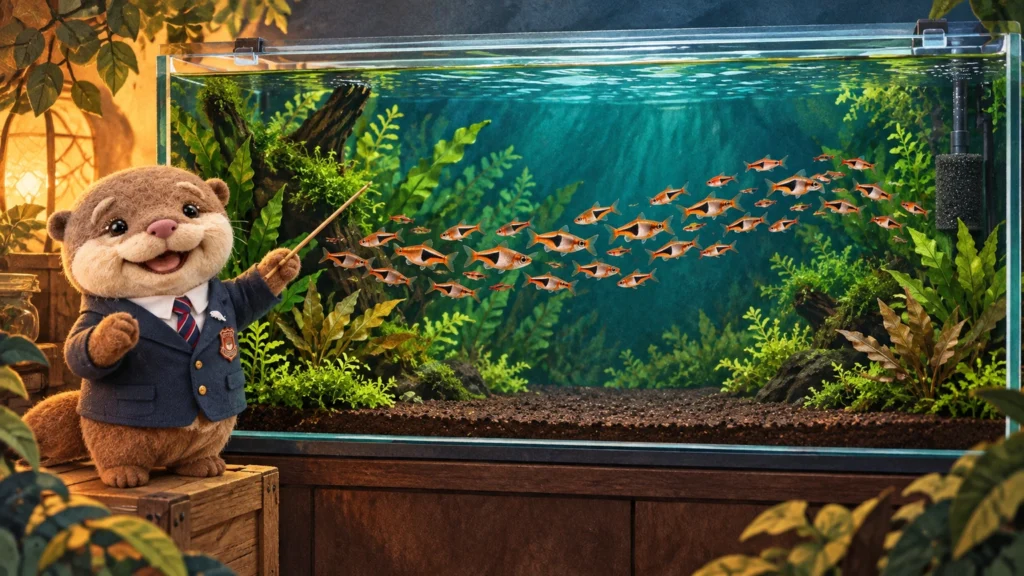 アイのアクアグッズ案内ラスボラ・ボララスの群泳を楽しむ飼育用品|水槽・ろ過・ヒーター・餌・水草道具の特徴や使い方、選ぶときのポイントをアイが紹介します。記事はコチラ →
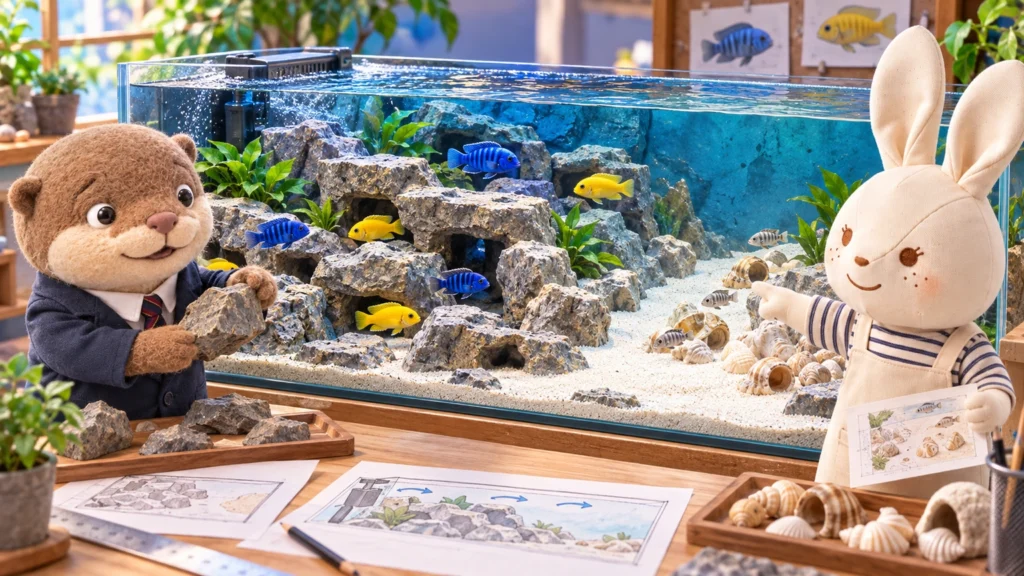 アイのアクアグッズ案内アフリカンシクリッドの飼育用品|水槽・ろ過・底砂・岩組み・餌の選び方道具の特徴や使い方、選ぶときのポイントをアイが紹介します。記事はコチラ →



コメント