

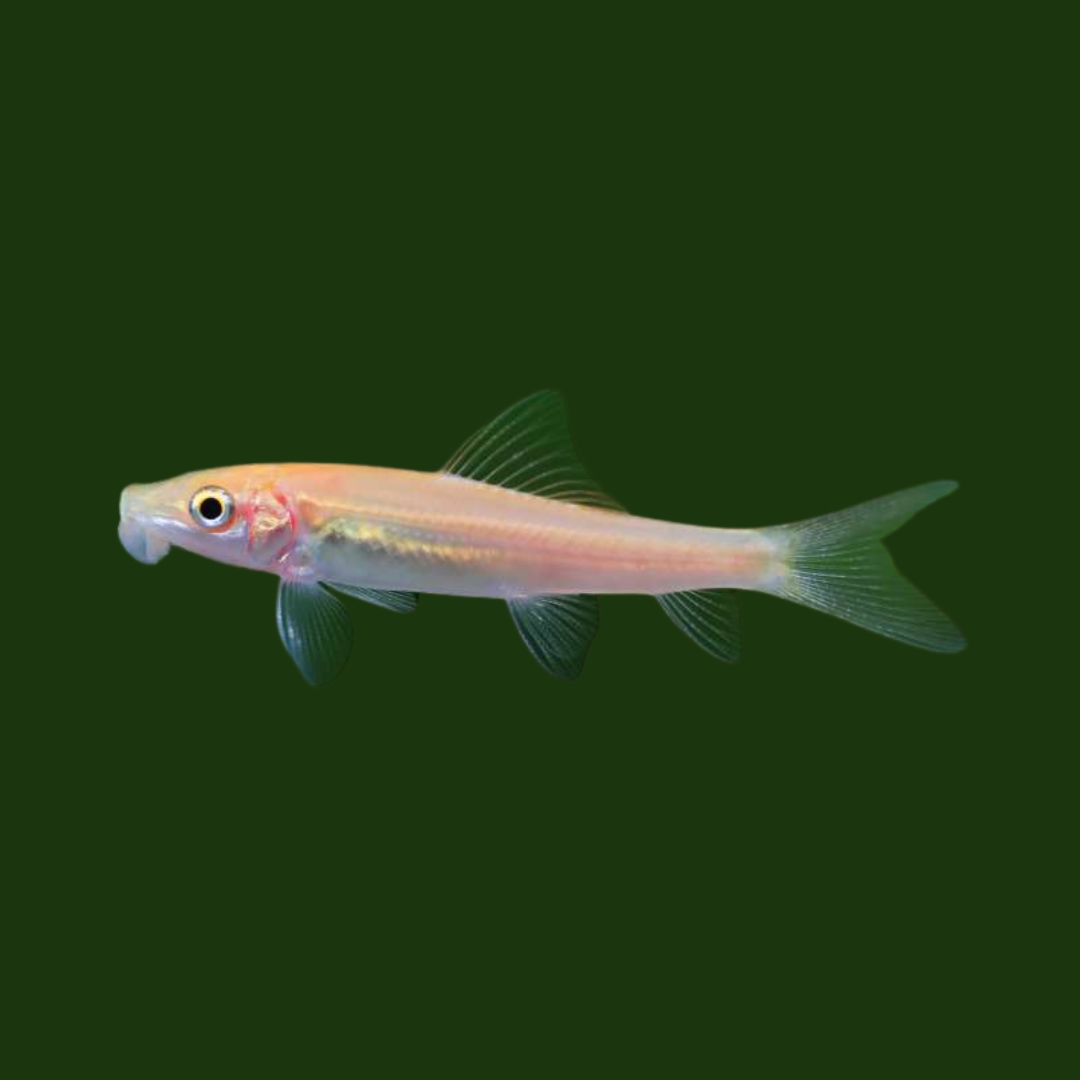
解説 / Description
ゴールデンアルジイーターは、東南アジア原産のアルジイーターであるギュリノケイルス・アイモニエリの黄変タイプとして流通する観賞魚です。幼魚のころはガラス面や流木、石の表面に付く茶ゴケやバイオフィルムをよくなめ取るため、コケ取り魚として親しまれてきました。明るい黄金色の体色は水槽内でもよく目立ち、実用性と観賞性を兼ねた魚として流通しています。 The Golden Algae Eater is a golden color form of Gyrinocheilus aymonieri, an algae-eating freshwater fish native to Southeast Asia. Juveniles are well known for grazing on diatoms, biofilm, driftwood, stones, and aquarium glass, which has made them popular as algae-control fish. Their bright golden body color also makes them highly visible and attractive in aquariums.
一方で、本種は小型のまま一生を終える魚ではありません。成長すると20cmを超えることがあり、自然下ではさらに大型化します。また、幼魚期に比べて成魚は動物質の餌を好む傾向が強まり、縄張り意識や他魚への干渉も目立つようになります。そのため、「安価なコケ取り要員」としてだけで迎えるのではなく、将来的な水槽サイズ、混泳相手、単独飼育への切り替えまで見据えて飼育することが大切です。 However, this species does not remain small throughout its life. It can exceed 20 cm in aquariums and may grow even larger in nature. As it matures, it often becomes more interested in animal-based foods and may show stronger territorial behavior or harass tank mates. It should therefore be kept not merely as an inexpensive algae cleaner, but as a potentially large, long-lived fish that may eventually require a spacious aquarium or even single-species management.
基本情報 / Basic Information
| 学名 / Scientific Name | Gyrinocheilus aymonieri |
|---|---|
| 通称 / Common Name | ゴールデンアルジイーター、アルジイーター、ゴールデンチャイニーズアルジイーターGolden Algae Eater, Golden Chinese Algae Eater, Chinese Algae Eater, Sucking Loach |
| 分類 / Family | コイ目 ギュリノケイルス科 ギュリノケイルス属Order Cypriniformes, family Gyrinocheilidae, genus Gyrinocheilus |
| 英名 / English Name | Golden Chinese Algae Eater, Chinese Algae Eater, Sucking Loach, Honey Sucker |
| 分布 / Distribution | 原種は東南アジアのメコン川、チャオプラヤ川、メクロン川流域、マレー半島北部などに分布します。観賞魚として流通するゴールデンタイプは主に養殖個体です。The wild form occurs in Southeast Asia, including the Mekong, Chao Phraya, and Meklong basins and the northern Malay Peninsula. The golden form sold in the aquarium trade is mainly farm-bred. |
| 最大体長 / Max Size | 自然下では標準体長で約28cmまで報告があります。水槽内でも20cm前後に育つことがあるため、大型化を前提にした飼育計画が必要です。Reported up to about 28 cm standard length in nature. In aquariums, it may still reach around 20 cm, so long-term planning for a large fish is important. |
| 寿命 / Lifespan | 飼育環境が安定していれば5〜10年程度を見込めます。大型化する魚であるため、短期的なコケ対策用ではなく、長く飼う生体として迎える必要があります。With stable care, a lifespan of roughly 5 to 10 years can be expected. Because it grows large, it should be treated as a long-term aquarium fish rather than a temporary algae-control animal. |
飼育環境 / Aquarium Environment
| 水槽サイズ / Tank Size | 幼魚期は60cm規格水槽でも一時的に飼育されることがありますが、成長を考えると90cm規格水槽以上が安心です。終生飼育を考える場合は120cm規格水槽以上、余裕を持たせるなら150cmクラスの水槽が望ましいです。Juveniles are sometimes kept temporarily in a standard 60 cm aquarium, but a 90 cm tank or larger is safer as they grow. For long-term adult care, a standard 120 cm aquarium or larger is recommended, and a 150 cm class tank is preferable when space allows. |
|---|---|
| 水温 / Temperature | おおむね22〜28℃が目安で、安定管理しやすいのは24〜27℃前後です。高水温そのものよりも、酸欠や水質悪化を避けることが重要です。 A general range of 22 to 28°C is suitable, with around 24 to 27°C being easy to manage in most aquariums. Avoiding oxygen deficiency and water-quality deterioration is more important than simply maintaining a warm temperature. |
| 水質 / Water Quality | 弱酸性から弱アルカリ性まで比較的幅広く適応します。目安としてpH6.0〜8.0前後、硬度は5〜19dH程度まで対応できるとされます。ただし、アンモニアや亜硝酸の蓄積には注意し、ろ過の効いた安定した水を維持してください。It adapts to a fairly wide range from slightly acidic to slightly alkaline water, roughly around pH 6.0 to 8.0, and is reported to tolerate hardness around 5 to 19 dH. However, ammonia and nitrite accumulation should be avoided through strong filtration and stable maintenance. |
| レイアウト / Layout | 流木、丸石、岩、隠れ家を組み合わせ、表面にバイオフィルムが育つ場所を作ると本種らしい行動を観察しやすくなります。原産地では流れのある河川に適応しているため、ろ過やエアレーションで酸素量を確保し、適度な水流を作るとよいでしょう。Use driftwood, rounded stones, rocks, and shelters to provide grazing surfaces where biofilm can develop. Because the species is adapted to flowing rivers, good filtration, aeration, and moderate water movement help create a suitable environment. |
| 注意点 / Precautions | 幼魚期はコケ取り魚として扱いやすい一方、成長に伴って気性が強くなり、他魚の体表に吸い付くことがあります。特にディスカス、エンゼルフィッシュ、金魚など体側が広く動きの遅い魚、底層で生活するプレコやコリドラスとの混泳は慎重に判断してください。Juveniles are relatively easy to keep as algae grazers, but adults may become more territorial and may attach to the bodies of other fish. Be especially cautious with slow-moving, broad-bodied fish such as discus, angelfish, and goldfish, as well as bottom-dwelling species such as plecos and Corydoras. |
餌と給餌 / Feeding
| 餌の種類 / Diet | 幼魚期は茶ゴケ、緑藻、バイオフィルムなどをよく食べますが、それだけでは栄養が偏ります。沈下性タブレット、プレコ用フード、植物質を含む人工飼料、ゆでたホウレンソウやズッキーニなどの補助餌を与えます。成長後も植物質は必要ですが、昆虫の幼虫や動物プランクトンに由来する餌、冷凍アカムシ、ミジンコ、ブラインシュリンプ、動物質を含む沈下性飼料なども利用できます。Juveniles graze on diatoms, green algae, and biofilm, but these alone are not a complete diet. Offer sinking tablets, pleco foods, vegetable-based prepared foods, and supplements such as blanched spinach or zucchini. Adults still need plant matter, but foods derived from insect larvae or zooplankton, frozen bloodworms, daphnia, brine shrimp, and animal-protein sinking foods can also be used. |
|---|---|
| 給餌のポイント / Feeding Tips | 「コケを食べるから餌はいらない」と考えないことが重要です。コケの量は水槽内で安定しにくく、成長後は人工飼料や動物質の餌にもよく反応します。餌不足や過密、狭い環境は他魚への干渉を強めるきっかけになることがあるため、底に届く餌を定期的に与え、痩せや行動の変化を観察してください。Do not assume that it needs no food simply because it eats algae. Algae availability is unstable in aquariums, and mature fish often respond well to prepared foods and animal-based items. Hunger, crowding, and cramped conditions may increase harassment toward tank mates, so provide sinking foods regularly and watch for weight loss or behavioral changes. |
性格と混泳 / Temperament and Tank Mates
| 性格 / Temperament | 幼魚期は比較的おとなしく、ガラス面や流木に張り付いて活動する姿がよく見られます。成長すると縄張り意識が強まり、同種や底層魚を追い払ったり、動きの遅い魚に吸い付いたりすることがあります。個体差はありますが、成魚は温和なコミュニティタンク向きとは言い切れません。Juveniles are usually relatively peaceful and are often seen attached to glass or driftwood. As they grow, they may become territorial, chase conspecifics or bottom-dwelling fish, and sometimes attach to slow-moving tank mates. Individual variation exists, but adults cannot always be considered suitable for peaceful community aquariums. |
|---|---|
| 混泳の相性 / Compatibility | 比較的相性がよいのは、中層から上層を素早く泳ぐテトラ、ラスボラ、ダニオ、バルブ類などです。ただし水槽が狭い場合や本種が大型化した場合は、これらの魚にもストレスを与える可能性があります。混泳を前提にするなら、隠れ家と遊泳スペースを十分に確保し、問題行動が出たときは隔離できる体制を整えておくことが大切です。Better candidates include active mid- to upper-level swimmers such as tetras, rasboras, danios, and some barbs. Even so, a cramped tank or a large adult algae eater may still stress other fish. If kept in a community aquarium, provide ample hiding places and swimming space, and be prepared to separate the fish if problematic behavior appears. |
病気と対策 / Diseases and Prevention
| かかりやすい病気 / Common Diseases | 導入直後のストレスや水温差によって白点病が出ることがあります。また、擦れ傷から水カビ病や細菌性のヒレ・体表トラブルにつながる場合があります。底層をよく移動する魚なので、底床の汚れや有機物の蓄積にも注意が必要です。Ich may appear after introduction stress or sudden temperature changes. Abrasions can also lead to fungal infections or bacterial problems affecting the fins and body surface. Because this species spends much time near the bottom, dirty substrate and accumulated organic matter should be avoided. |
|---|---|
| 対策と予防 / Prevention | 購入後は水合わせを丁寧に行い、可能であれば隔離水槽で様子を見てから本水槽へ合流させます。強いろ過、定期的な水換え、底床の軽い掃除、酸素量の確保が予防の基本です。薬浴を行う場合は、底棲魚やコイ目魚類が薬剤に敏感に反応することがあるため、製品の説明を守り、必要に応じて規定量より慎重に始めます。Acclimate new fish carefully and, if possible, observe them in a quarantine tank before introduction. Strong filtration, regular water changes, light substrate cleaning, and good oxygenation are the foundation of prevention. When using medications, follow the product instructions and start cautiously when appropriate, as bottom-dwelling cypriniform fishes may react sensitively to some treatments. |
増やし方(繁殖) / Breeding
| 雌雄の判別 / Sexing | 幼魚では雌雄判別が非常に困難です。成熟したオスでは吻部周辺に細かな追星のような突起が出ることがあり、メスは抱卵時に腹部がふっくらする傾向があります。ただし、一般的な観賞魚店サイズでは外見だけで正確に判別するのは難しいです。Sexing juveniles is very difficult. Mature males may develop fine breeding tubercles around the snout, while females may appear fuller-bodied when carrying eggs. However, accurate sexing by appearance is difficult at the sizes commonly sold in aquarium shops. |
|---|---|
| 繁殖形態 / Reproduction | 卵生です。家庭用水槽での自然繁殖は非常に難しく、一般的な繁殖向き熱帯魚のように簡単に増やせる種類ではありません。It is an egg-laying species. Natural breeding in home aquariums is very difficult, and it is not a species that reproduces easily like many common aquarium fish. |
| 繁殖のポイント / Breeding Tips | 市販個体の多くは東南アジアなどの養殖場で生産されたものです。商業養殖では、成熟親魚の管理や産卵誘導など専門的な技術が用いられるとされ、一般家庭で再現するのは現実的ではありません。家庭水槽では繁殖を狙うよりも、終生飼育に適した環境づくりを優先するのがよいでしょう。Most specimens in the trade are produced on commercial farms in Southeast Asia and elsewhere. Specialized techniques such as broodstock management and induced spawning may be used in commercial production, which is not practical to reproduce in a typical home aquarium. For hobbyists, long-term welfare and appropriate housing should take priority over breeding attempts. |
雑学と豆知識 / Trivia and Fun Facts
| 1. 「チャイニーズ」という名前に隠れた誤解 / 1. The misleading name “Chinese” | 英名ではChinese Algae Eaterと呼ばれることがありますが、本種の主な分布はメコン川やチャオプラヤ川など東南アジアの河川水系で、中国ではメコン川上流域にあたる雲南省など限られた地域に関係します。観賞魚の流通史では、輸出拠点や経由地の名前が魚の呼び名に影響することがあり、この魚もその一例と考えると理解しやすいでしょう。日本では、アルジイーター、ゴールデンアルジイーターという流通名で親しまれています。The English name Chinese Algae Eater can be misleading, because the species is mainly associated with Southeast Asian river systems such as the Mekong and Chao Phraya, with records relating to limited areas such as Yunnan in the upper Mekong region rather than China as a whole. In the aquarium trade, export routes and trade hubs sometimes influence common names. In Japan, the fish is familiar under the trade names Algae Eater and Golden Algae Eater. |
|---|---|
| 2. 口で食べながら、別の場所から呼吸する魚 / 2. A fish that can graze and breathe separately | 本種の大きな特徴は、吸盤状の口で石や流木に張り付きながら生活できることです。普通の魚は口から水を取り込み、エラで酸素を取り出しますが、アルジイーターは口を基質に密着させたままでも呼吸しやすい構造を備えています。流れのある河川で、体を流されないように張り付きながら表面のバイオフィルムをなめ取るための、非常に理にかなった進化といえます。One of the most remarkable features of this species is its ability to cling to stones or driftwood with its sucker-like mouth. Most fish draw water through the mouth and pass it over the gills, but algae eaters have adaptations that allow breathing even while the mouth is attached to a surface. This is a highly practical evolutionary solution for a fish that grazes on biofilm while resisting current in flowing rivers. |
| 3. 「コケ取り魚」としての評価は幼魚期に偏りやすい / 3. Its reputation as an algae eater is strongest when young | ゴールデンアルジイーターは、幼魚のころには確かにガラス面や石の表面をよくなめ、コケ取り魚らしい働きを見せます。しかし、成長するにつれて食性はより雑食的になり、動物質の餌や底に落ちた人工飼料への関心が強くなります。つまり、「一生ずっと小型水槽のコケを黙々と掃除してくれる魚」と考えると、飼育者と魚の双方にとって不幸なミスマッチが起こりやすくなります。Golden Algae Eaters do graze actively on aquarium surfaces when young, and this is when they best match the image of an algae-control fish. As they grow, however, their diet becomes more omnivorous and they often become more interested in animal-based foods and sinking prepared diets. Thinking of them as lifelong, quiet algae cleaners for small tanks can therefore create a mismatch between the fish’s needs and the keeper’s expectations. |
| 4. 黄金色は「アルビノ」とは限らない / 4. Golden does not always mean albino | ゴールデンアルジイーターの明るい黄色い体色は、一般に原種の暗色素が弱まった黄変タイプとして扱われます。白い体と赤い目を持つ典型的なアルビノとは印象が異なり、黄色味の強い体色と黒目を持つ個体が多く流通します。「ゴールデン」という名前だけでアルビノと判断せず、体色と目の色を併せて観察してみましょう。The bright yellow coloration of the Golden Algae Eater is generally treated as a golden or xanthic form with reduced dark pigmentation. It does not give the same impression as a typical albino with a pale body and red eyes; many golden individuals have a yellow body and dark eyes. Do not assume that a fish labeled “golden” is albino; look at both its body color and its eyes. |
| 5. 原産地では観賞魚だけではない存在 / 5. More than an aquarium fish in its native region | 日本では水槽の中の魚として知られる本種ですが、東南アジアでは地域によって食用魚や水産資源として扱われることもあります。アクアリウムでは数cmの幼魚として出会うため小さな魚に見えますが、自然の川で育った個体は立派な淡水魚です。観賞魚としての姿と、現地の河川生態系や食文化の中での姿を重ねて見ると、この魚の印象はぐっと立体的になります。In Japan, this species is mainly known as an aquarium fish, but in parts of Southeast Asia it may also be treated as a local food fish or fishery resource. Because hobbyists usually encounter it as a small juvenile, it is easy to underestimate its adult presence. Seeing it both as an aquarium species and as a fish of real river ecosystems gives a much richer picture of the animal. |
| 6. 放流してはいけない理由 / 6. Why release must never be considered | ゴールデンアルジイーターは丈夫で水質適応幅も広い魚ですが、その強さは飼育放棄してよい理由にはなりません。海外では本種が本来の分布域外で確認された例があり、温暖な地域では在来の底棲魚や藻類食性魚と競合する可能性があります。日本の多くの地域では冬の低水温が壁になると考えられますが、温排水や温泉水が入る特殊な環境ではリスクがゼロとは言い切れません。飼えなくなった場合でも、自然の川や池に放すことは絶対に避けるべきです。The Golden Algae Eater is hardy and adaptable, but that hardiness is not a reason to release it. The species has been recorded outside its native range, and in warm regions it may compete with native bottom-dwelling or algae-grazing fishes. In many parts of Japan, winter temperatures may limit survival, but special warm-water environments such as thermal effluent areas cannot be considered risk-free. Releasing unwanted fish into rivers or ponds must never be done. |
まとめ / Conclusion
ゴールデンアルジイーターは、幼魚期のコケ取り能力と黄金色の体色が魅力の観賞魚です。吸盤状の口で流木や石に張り付く姿は独特で、東南アジアの流れのある河川に適応した魚らしい面白さを水槽内でも感じさせてくれます。 The Golden Algae Eater is an attractive aquarium fish known for its juvenile algae-grazing ability and bright golden coloration. Its habit of clinging to driftwood and stones with a sucker-like mouth offers a fascinating glimpse into its adaptation to flowing Southeast Asian rivers.
ただし、本種は成長後に大型化し、性格や食性も変化します。小型水槽の便利なコケ取り要員としてだけ迎えるのではなく、90cm規格水槽以上、できれば120cm規格水槽級の環境、十分な餌、慎重な混泳計画を用意してこそ、本来の力強い魅力を長く楽しめる魚です。 However, this species grows large and changes in both temperament and diet as it matures. Rather than keeping it only as a convenient algae cleaner for a small tank, prepare a spacious aquarium, ideally 90 cm or larger and preferably adult-sized housing around the 120 cm class, along with proper feeding and careful tank-mate planning. With that approach, its powerful and distinctive appeal can be enjoyed for many years.

気になる道具や飼い方を見つけてみませんか?
 アイのアクアグッズ案内水草用ライトの選び方|緑の絨毯と赤い水草を楽しむ照明・植栽用品道具の特徴や使い方、選ぶときのポイントをアイが紹介します。記事はコチラ →
 アイのアクアグッズ案内旅行中、お魚のごはんはどうする? 自動給餌器・使える餌・スマート水槽の選び方旅行中の魚の餌やりを助ける自動給餌器を、アイとコタロウが紹介。時間指定、おかわり給餌、対応するフレークや顆粒、設置台、スマホ管理、一体型水槽、留守番フードまで、使いどころと選び方を案内します。記事はコチラ →
さまざまな飼育テーマをご紹介。リンク先の記事には広告・商品紹介が含まれます。
案内・紹介記事一覧へ →参考文献・参照資料
本記事では、ゴールデンアルジイーターの分類、分布、最大体長、水質適応、食性、外来生物としての記録、飼育上の注意点を確認するため、以下の資料を参照しました。販売店・通販サイトなどの店舗系情報は参考文献から除外しています。
-
Fricke, R., Eschmeyer, W. N. & Van der Laan, R. (eds.). Catalog of Fishes, California Academy of Sciences. Species record: Gyrinocheilus aymonieri.
https://researcharchive.calacademy.org/research/ichthyology/catalog/fishcatget.asp?spid=53563 -
Froese, R. & Pauly, D. (eds.). FishBase. Gyrinocheilus aymonieri, Siamese algae-eater. 分布、最大体長、水質、食性、吸盤状の口と呼吸に関する基礎情報を参照。
https://www.fishbase.se/summary/Gyrinocheilus-aymonieri -
U.S. Geological Survey. Nonindigenous Aquatic Species Database. Chinese algae-eater (Gyrinocheilus aymonieri) Species Profile. 原産地、形態識別、プエルトリコでの記録などを参照。
https://nas.er.usgs.gov/queries/FactSheet.aspx?SpeciesID=2640 -
U.S. Fish & Wildlife Service. Ecological Risk Screening Summary: Siamese Algae Eater (Gyrinocheilus aymonieri). 分布、水質、外来生物リスク評価の補助資料として参照。
https://www.fws.gov/sites/default/files/documents/Ecological-Risk-Screening-Summary-Siamese-Algae-Eater.pdf -
Seriously Fish. Gyrinocheilus aymonieri — Sucking ‘Loach’. 飼育水温、環境づくり、成長後の扱い、混泳上の注意点を確認するための補助資料として参照。
https://www.seriouslyfish.com/species/gyrinocheilus-aymonieri/
参照日:2026年5月25日。学名・分類・分布などは更新される場合があるため、必要に応じて各データベースの最新版を確認してください。




コメント