

解説 / Description
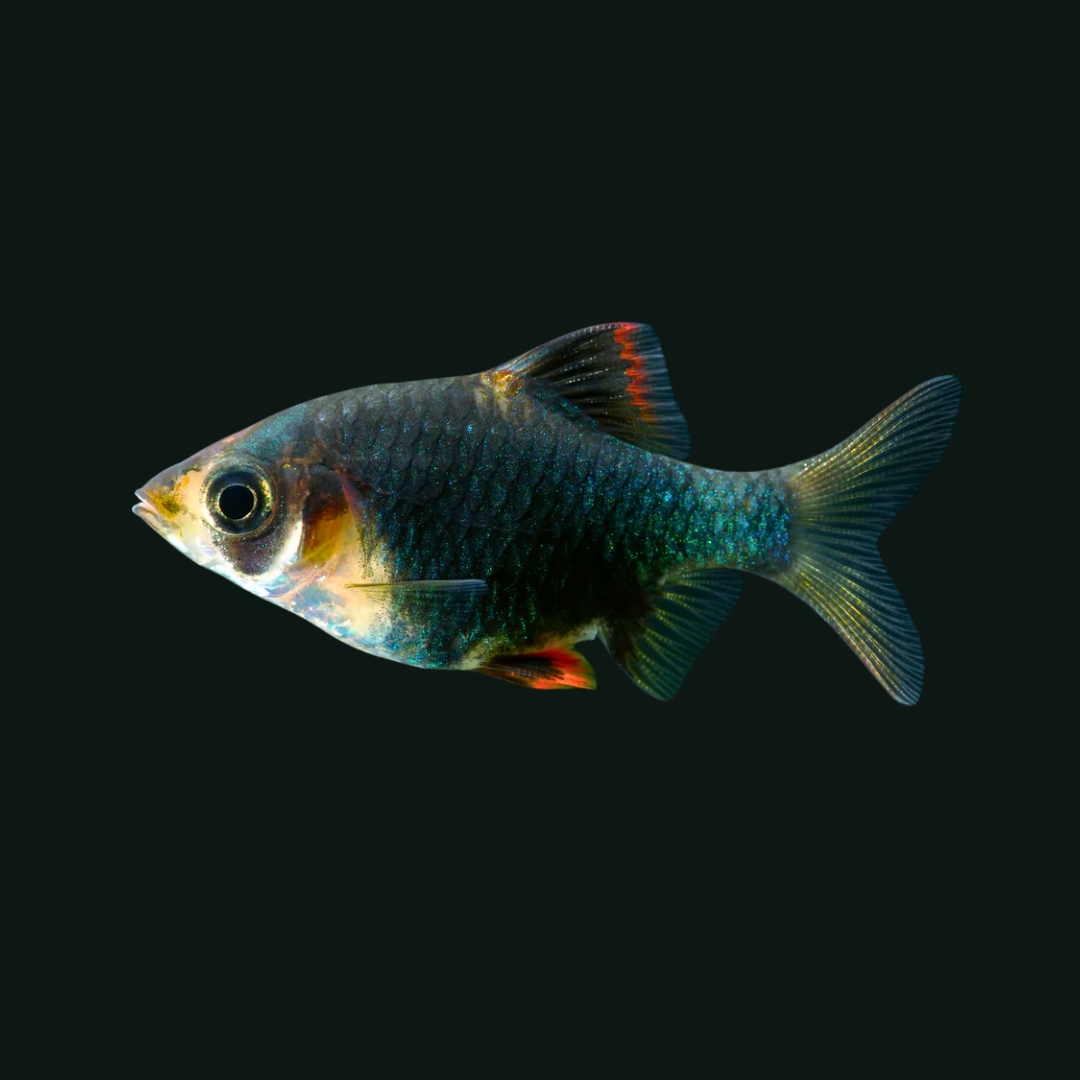
グリーン・スマトラは、スマトラとして親しまれてきた小型コイ科魚のグリーン系改良品種として流通する熱帯魚です。黒い縞模様が全身に広がったような深い緑色から黒緑色の体色を持ち、照明や角度によって落ち着いたモスグリーンに見えることがあります。赤みを帯びる吻端やヒレとの対比も印象的で、水草水槽の中でもよく目立つ存在です。 The Green Tiger Barb is a green aquarium strain of the small cyprinid fish long known in the aquarium hobby as the tiger barb. Its dark green to mossy body looks as if the black banding has spread across much of the body. Depending on lighting and viewing angle, it may appear deep green to almost blackish green, with reddish highlights on the snout and fins creating a striking contrast in planted aquariums.
丈夫で餌付きもよく、飼育自体は比較的しやすい魚です。ただし、活発で好奇心が強く、ヒレをかじる行動が出やすいため、混泳には注意が必要です。単独や少数で飼うよりも、5匹以上、できれば8匹前後以上の群れで飼育すると、同種間の小競り合いが分散されやすくなります。初心者にも親しまれていますが、群れの社会性を理解して飼うことで、本来の魅力がより引き立ちます。 It is hardy and usually accepts prepared foods readily, making it relatively easy to keep. However, it is active, curious, and prone to fin-nipping, so tank mates must be selected carefully. Keeping it in a group of at least five, preferably around eight or more, helps disperse social tension within the group. It is familiar to beginners, but its appeal is best appreciated when its schooling behavior is properly understood.
基本情報 / Basic Information
| 学名 / Scientific Name | Puntigrus sp.(スマトラ型改良品種。流通上は Puntigrus tetrazona、旧学名 Puntius tetrazona、またはそれらの改良品種として表記されることがあります) (a tiger barb-type aquarium strain; often traded under Puntigrus tetrazona or the former name Puntius tetrazona) |
|---|---|
| 通称 / Common Name | グリーン・スマトラ、モスグリーン・スマトラ、グリーンタイガーバーブGreen Tiger Barb, Moss Green Tiger Barb |
| 分類 / Family | コイ目 コイ科 スマトラ型バルブ類Order Cypriniformes, family Cyprinidae, tiger barb-type barbs |
| 英名 / English Name | Green Tiger Barb / Moss Green Tiger Barb |
| 分布 / Distribution | 改良品種としては、主に東南アジアなどの養殖場で生産された個体が流通します。原種として扱われるスマトラ型バルブ類は、スマトラ島やボルネオ島周辺の淡水域に由来するとされますが、観賞魚流通個体では長年の養殖系統や近縁種の扱いが関わるため、野生個体の自然分布とは分けて考えるのが安全です。As an aquarium strain, it is mainly produced in fish farms, especially in Southeast Asia. Wild-type tiger barb-related fishes are associated with freshwater habitats around Sumatra and Borneo, but farmed aquarium strains have a long captive history and may involve taxonomic uncertainty, so they should be considered separately from wild distributions. |
| 最大体長 / Max Size | 約6〜7cm。飼育下では5cm前後で流通・維持されることも多いです。About 6–7 cm. In aquariums, many individuals are kept or sold at around 5 cm. |
| 寿命 / Lifespan | おおよそ3〜5年。水質の安定、十分な遊泳スペース、群れでの飼育により長く健康を保ちやすくなります。Approximately 3–5 years. Stable water quality, sufficient swimming space, and group keeping help maintain long-term health. |
飼育環境 / Aquarium Environment
| 水槽サイズ / Tank Size | 最低でも45cm規格水槽以上、群れでの飼育を考えるなら60cm規格水槽以上が扱いやすいです。よく泳ぐ魚なので、個体数を増やす場合や混泳を考える場合は、90cm規格水槽以上にすると行動に余裕が出ます。A 45 cm standard tank is a practical minimum, while a 60 cm standard tank or larger is easier for group keeping. Because this fish swims actively, a 90 cm standard tank or larger provides more room when keeping a larger group or community setup. |
|---|---|
| 水温 / Temperature | 22〜26℃前後。幅広い水温に適応しますが、急な水温変化は白点病などのきっかけになりやすいため、ヒーターで安定させると安心です。 Around 22–26°C. It tolerates a moderate range, but sudden temperature changes can trigger problems such as white spot disease, so stable heating is recommended. |
| 水質 / Water Quality | 弱酸性〜中性付近を中心に、pH6.0〜7.5程度で管理しやすい魚です。極端なアルカリ性や急激な水質変化は避け、定期的な換水で硝酸塩や有機物の蓄積を抑えます。It is generally manageable around slightly acidic to neutral water, roughly pH 6.0–7.5. Avoid strongly alkaline conditions and sudden changes, and perform regular water changes to limit nitrate and organic buildup. |
| レイアウト / Layout | 前面や中央には遊泳スペースを残し、後景や側面に水草、流木、石などを配置すると落ち着きやすくなります。水草を入れる場合は、アヌビアス、ミクロソリウム、クリプトコリネなど比較的丈夫な種類が向いています。柔らかい新芽はつつかれることがあります。Leave open swimming space in the front or center, and place plants, driftwood, and stones along the back or sides to provide cover. Hardy plants such as Anubias, Microsorum, and Cryptocoryne are suitable. Tender new shoots may be nibbled. |
| 注意点 / Precautions | 少数飼育では攻撃の矛先が特定の個体や他魚に集中しやすくなります。グリーン・スマトラだけでなく、通常タイプやアルビノタイプなどのスマトラ系統と組み合わせる場合も、同程度のサイズの個体を十分な数で飼うことが大切です。また、導入直後は輸送ストレスで痩せや白点が出ることがあるため、状態確認と慎重な水合わせを行います。In small numbers, aggression may focus on a single individual or other fish. It can be grouped with regular or albino tiger barb-type fish, but individuals should be of similar size and kept in sufficient numbers. Newly purchased individuals may show stress-related weight loss or white spot, so careful acclimation and observation are important. |
餌と給餌 / Feeding
| 餌の種類 / Diet | 雑食性で、フレークフード、小粒の顆粒フード、冷凍アカムシ、冷凍ブラインシュリンプなどをよく食べます。植物質もある程度摂るため、植物性原料を含む人工飼料も組み合わせるとバランスを取りやすくなります。生き餌を使う場合は、由来や衛生状態が分かるものを選びます。It is omnivorous and readily accepts flakes, small granules, frozen bloodworms, and frozen brine shrimp. Because it also consumes some plant matter, prepared foods containing plant-based ingredients help provide balance. If live foods are used, choose sources with reliable hygiene. |
|---|---|
| 給餌のポイント / Feeding Tips | 1日1〜2回、数分で食べ切れる量を与えます。非常に食欲が強く、食べ残しや与えすぎは水質悪化につながります。群れの中で弱い個体が餌を取り損ねることもあるため、餌を複数箇所に散らすと全体に行き渡りやすくなります。Feed once or twice daily, only as much as the fish can consume within a few minutes. They have strong appetites, so overfeeding can quickly reduce water quality. Distributing food in several spots helps weaker individuals get their share. |
性格と混泳 / Temperament and Tank Mates
| 性格 / Temperament | 活発で好奇心が強く、群れの中で順位を作るような行動が見られます。水槽内をよく泳ぎ回り、同種間で追いかけ合うこともありますが、十分な数と広さがあれば行動が分散しやすくなります。It is active, curious, and often shows social ranking behavior within the group. Individuals may chase one another, but adequate group size and tank space help disperse this behavior. |
|---|---|
| 混泳の相性 / Compatibility | ヒレが長い魚や泳ぎの遅い魚との混泳は避けます。ベタ、グッピー、エンゼルフィッシュ、ロングフィン系の魚はヒレをかじられる可能性があります。相性がよい候補としては、同程度以上の体格で泳ぎが速いバルブ類、ダニオ類、レインボーフィッシュ類、底層を主に泳ぐコリドラス類やローチ類などが挙げられます。ただし、混泳可否は水槽サイズ、個体数、個体差によって変わります。Avoid long-finned or slow-moving fish. Bettas, guppies, angelfish, and long-fin varieties may have their fins nipped. Better candidates include similarly sized or larger active barbs, danios, rainbowfish, and bottom-oriented fish such as Corydoras and loaches. Compatibility still depends on tank size, group size, and individual temperament. |
病気と対策 / Diseases and Prevention
| かかりやすい病気 / Common Diseases | 白点病、尾ぐされ病、カラムナリス症、輸入直後の痩せ、内部寄生虫による体力低下などに注意します。丈夫な魚ではありますが、過密、水質悪化、急な水温変化、輸送ストレスが重なると発病しやすくなります。Watch for white spot disease, fin rot, columnaris-like infections, post-import weight loss, and weakness associated with internal parasites. Although hardy, it becomes vulnerable when overcrowding, poor water quality, sudden temperature changes, and transport stress overlap. |
|---|---|
| 対策と予防 / Prevention | 導入時は可能であれば別水槽で数日〜2週間ほど観察し、痩せ、白点、ヒレの傷み、白い糞、異常な泳ぎがないか確認します。普段の管理では、安定した水温、過密を避けた飼育、定期的な換水、食べ残しの除去が基本です。薬浴を行う場合は、症状をよく観察し、使用する薬剤の対象病名と用量を守ります。When possible, observe new arrivals in a separate tank for several days to two weeks, checking for weight loss, white spots, damaged fins, pale feces, or abnormal swimming. Routine prevention depends on stable temperature, avoiding overcrowding, regular water changes, and removing uneaten food. If medication is used, match the treatment to the symptoms and follow dosage instructions carefully. |
増やし方(繁殖) / Breeding
| 雌雄の判別 / Sexing | 成熟したメスはオスより腹部がふっくらし、抱卵すると丸みが目立ちます。オスは比較的スリムで、状態が上がると吻端やヒレの赤みが強く出やすい傾向があります。ただし、グリーン系は体色が濃いため、若い個体では判別が難しいこともあります。Mature females tend to have a fuller belly, especially when carrying eggs. Males are usually slimmer and may show stronger red coloration on the snout and fins when in breeding condition. Young individuals can be difficult to sex, especially in dark green strains. |
|---|---|
| 繁殖形態 / Reproduction | 卵をばらまくタイプの産卵魚です。親魚は卵や稚魚を保護せず、産卵後に卵を食べてしまうことがあるため、繁殖を狙う場合は親魚と卵を分ける必要があります。It is an egg-scattering species. The parents do not guard eggs or fry and may eat the eggs after spawning, so eggs and adults should be separated for intentional breeding. |
| 繁殖のポイント / Breeding Tips | 繁殖専用水槽を用意し、底にビー玉や産卵ネットを敷く、またはウィローモスなど細かい水草を多めに入れると卵が親に食べられにくくなります。親魚は冷凍アカムシや冷凍ブラインシュリンプなどでコンディションを上げてから導入します。産卵後は親をすぐに回収し、稚魚が泳ぎ出したらインフゾリア、微細な稚魚用フード、孵化したてのブラインシュリンプへ段階的に切り替えます。グリーンの体色を安定して残したい場合は、成長後の選別も重要になります。Prepare a breeding tank with marbles, a spawning grid, or dense fine-leaved plants such as Java moss to protect the eggs. Condition the adults with nutritious foods such as frozen bloodworms and frozen brine shrimp before spawning. Remove the adults immediately after spawning, and once the fry become free-swimming, feed infusoria, fine fry food, and newly hatched brine shrimp as they grow. If maintaining the green coloration is important, selection after growth is also necessary. |
雑学と豆知識 / Trivia and Fun Facts
| 1. グリーンに見える理由 / 1. Why It Looks Green | グリーン・スマトラの体色は、単純に緑色の色素だけで成り立っているわけではありません。スマトラ型バルブが持つ暗色の縞模様が広がったような黒化傾向に、黄色系の色素や光を反射する細胞が重なることで、見る角度や照明によって金属的な緑色に見えます。水草の緑に溶け込みながら、赤い吻端やヒレが差し色になるため、小型魚でありながら水槽内で強い存在感を放ちます。The green coloration is not simply a matter of green pigment alone. It appears to result from a darkened body pattern combined with yellowish pigments and reflective cells, producing a metallic green effect depending on viewing angle and lighting. The fish blends beautifully with aquatic plants while the reddish snout and fins provide contrast. |
|---|---|
| 2. 学名表記には少し注意が必要 / 2. A Note on the Scientific Name | 日本の流通では、グリーン・スマトラはスマトラの改良品種として扱われ、学名も Puntigrus tetrazona や旧学名の Puntius tetrazona に基づいて表記されることが多くあります。一方で、観賞魚として世界的に流通しているスマトラ型バルブについては、外見が似た近縁種や長年の養殖系統が関わる可能性も指摘されています。流通名だけで種を確定することは難しく、Puntigrus sp. のスマトラ型改良品種という見方も必要です。In the Japanese aquarium trade, the Green Tiger Barb is usually treated as a tiger barb strain and is often labeled as Puntigrus tetrazona or under the older name Puntius tetrazona. However, the identity of tiger barb-type fishes in the global aquarium trade is not always simple because similar related species and long-established captive lines may be involved. A trade name alone may not establish the species, so these fish can also be understood as tiger barb-type Puntigrus aquarium strains. |
| 3. 群れで飼うことには意味がある / 3. Group Keeping Has a Purpose | スマトラ類のヒレかじりは、単なる「性格の悪さ」として片付けられがちですが、実際には活発な社会行動や好奇心が水槽内で強く表れたものとも考えられます。少数飼育では、そのエネルギーが一匹の弱い個体や混泳魚に向かいやすくなります。十分な数で群れを作ると、追いかけ合いや順位づけが同種間で分散し、水槽全体としては落ち着いて見えることが多くなります。Fin-nipping is often described simply as bad temperament, but it can also be understood as an expression of strong social behavior and curiosity in the confined space of an aquarium. In small groups, this energy may focus on one weaker fish or on tank mates. In a proper group, chasing and ranking behavior is more evenly distributed within the species. |
| 4. 正規の改良品種と蛍光魚は別物 / 4. Selective Breeding and Fluorescent GM Fish Are Different | グリーン・スマトラは、通常の観賞魚流通では選択交配によって固定された色彩変異として扱われます。一方で、海外には遺伝子組換え技術によって蛍光を発する観賞魚も存在します。日本では遺伝子組換え生物の取り扱いに法規制があり、未承認の遺伝子組換え魚を一般的な販売や家庭飼育の形で扱うことは大きな問題になります。通常照明で深緑に見えるグリーン・スマトラと、ブラックライト下などで不自然に蛍光発光する魚は、背景も法的な扱いも異なるものとして区別する必要があります。The Green Tiger Barb in the regular aquarium trade is generally understood as a selectively bred color form. In contrast, fluorescent ornamental fish produced by genetic modification exist overseas. Japan regulates living modified organisms, and unapproved genetically modified ornamental fish are a serious legal issue in ordinary trade or home keeping. A dark green aquarium strain seen under normal lighting and an unnaturally fluorescent GM fish should be clearly distinguished. |
| 5. 小さな魚の背景にある大きな流通システム / 5. A Small Fish Supported by a Large Trade Network | 店頭では身近に見かけるグリーン・スマトラですが、その背景には東南アジアなどの養殖場、国際輸送、日本国内の輸入手続き、卸問屋でのトリートメント、小売店での状態管理という長い流れがあります。観賞魚として身近な存在でありながら、生体の輸入や流通には防疫や状態管理の考え方も関わっています。小さな魚を安全に迎えられるのは、見えない場所で多くの管理が積み重なっているからです。Although the Green Tiger Barb is a familiar aquarium fish, it is supported by a long chain of fish farms, international shipping, import procedures, wholesaler conditioning, and retailer care. Even familiar ornamental fish are connected to concepts of biosecurity and health management. The ease of buying such a small fish is made possible by extensive behind-the-scenes care. |
まとめ / Conclusion
グリーン・スマトラは、深い緑色の体色と活発な泳ぎが魅力のスマトラ型改良品種です。丈夫で餌付きもよく、適切な水槽サイズと安定した水質を用意すれば飼育しやすい魚ですが、ヒレかじりを防ぐためには混泳相手の選定と十分な群れの形成が重要です。 The Green Tiger Barb is a tiger barb-type aquarium strain admired for its deep green coloration and active swimming. It is hardy and feeds well, but preventing fin-nipping requires careful tank mate selection and keeping an adequate group.
水草を背景に群れで泳ぐ姿はとても美しく、スマトラらしい野性味も楽しめます。単なる入門魚としてではなく、群れの行動、改良品種としての背景、学名表記の揺れ、流通上の注意点まで含めて知ることで、この魚の魅力をより深く味わうことができます。 A group swimming against a planted background can be very impressive, while still showing the lively character typical of tiger barb-type fishes. By understanding not only its basic care but also its social behavior, selective-breeding background, naming uncertainty, and trade considerations, aquarists can appreciate this fish more deeply.

気になる道具や飼い方を見つけてみませんか?
 アイのアクアグッズ案内水草用ソイルの選び方|土・砂の違いとおすすめ商品道具の特徴や使い方、選ぶときのポイントをアイが紹介します。記事はコチラ →
 アイのアクアグッズ案内水換え・底砂掃除の道具の選び方|砂利・砂・ソイルに合うクリーナーとポンプ道具の特徴や使い方、選ぶときのポイントをアイが紹介します。記事はコチラ →
さまざまな飼育テーマをご紹介。リンク先の記事には広告・商品紹介が含まれます。
案内・紹介記事一覧へ →参考文献・参照資料
本記事では、グリーン・スマトラをスマトラ型バルブ類の改良品種として扱い、分類、分布、水質条件、行動、繁殖、観賞魚流通、遺伝子組換え生物に関する法規制について、以下の資料を参考にして内容を整理しています。
-
Froese, R. and D. Pauly. Editors. FishBase. Puntigrus tetrazona (Bleeker, 1855), Sumatra barb. FishBase Consortium. 参照日:2026年5月26日.
https://www.fishbase.se/summary/Puntigrus-tetrazona -
Froese, R. and D. Pauly. Editors. FishBase. Synonyms of Puntigrus tetrazona (Bleeker, 1855). FishBase Consortium. 参照日:2026年5月26日.
https://www.fishbase.se/Nomenclature/4766 -
Seriously Fish. Puntigrus tetrazona (Bleeker, 1855) — Tiger Barb. 参照日:2026年5月26日.
https://www.seriouslyfish.com/species/puntigrus-tetrazona/ -
Seriously Fish. The mystery of the aquarium tiger barb. 参照日:2026年5月26日.
https://www.seriouslyfish.com/its-often-said-that-a-tiger-never-loses-its-stripes-but-what-about-its-name/ -
U.S. Fish and Wildlife Service. Puntigrus tetrazona (Tiger Barb): Ecological Risk Screening Summary. 2019. 参照日:2026年5月26日.
https://www.fws.gov/sites/default/files/documents/Ecological-Risk-Screening-Summary-Tiger-Barb.pdf -
Tamaru, C. S., Cole, B., Bailey, R., Brown, C. and Ako, H. A Manual for Commercial Production of the Tiger Barb, Capoeta tetrazona, A Temporary Paired Tank Spawner. Center for Tropical and Subtropical Aquaculture. 参照日:2026年5月26日.
https://www.ctsa.org/files/publications/CTSA_1296316728612942177442.pdf -
Frankel, J. S. Inheritance of trunk striping in the Sumatran tiger barb, Barbus tetrazona. Journal of Heredity, 76(6):478–479, 1985.
https://pubmed.ncbi.nlm.nih.gov/4086793/ -
Japanese Law Translation. Act on the Conservation and Sustainable Use of Biological Diversity through Regulations on the Use of Living Modified Organisms. 参照日:2026年5月26日.
https://www.japaneselawtranslation.go.jp/en/laws/view/3252 -
Japan Biosafety Clearing House. Q&A for Cartagena Act. Ministry of the Environment, Government of Japan. 参照日:2026年5月26日.
https://www.biodic.go.jp/bch/english/cartagena/s_07.html




コメント