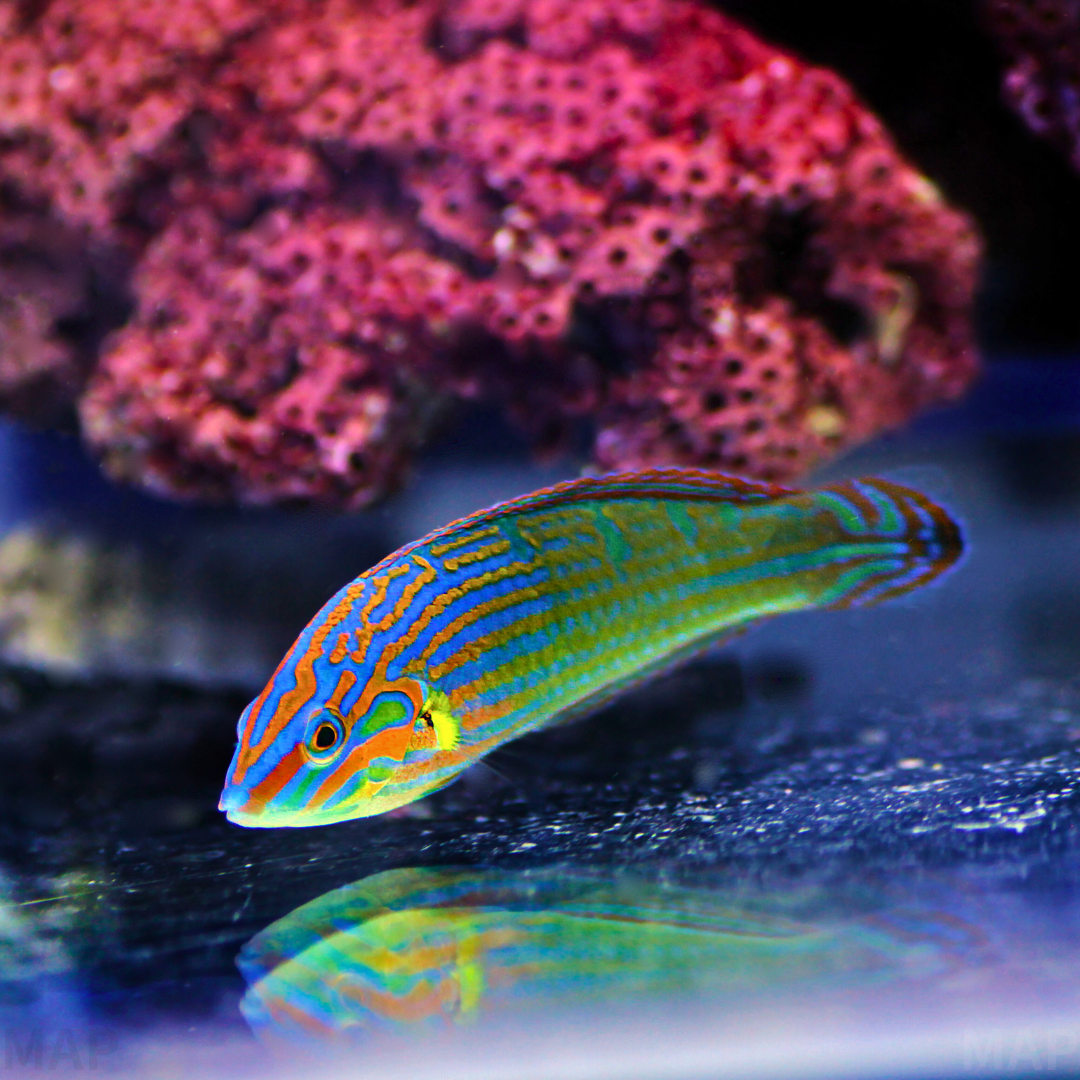
カザリキュウセンは、西部太平洋のサンゴ礁域に広く生息するベラ科の海水魚です。その名の通り、特に成熟した雄の個体は青緑色とオレンジ色の複雑で美しい縞模様を持ち、観賞魚として非常に人気があります。しかし、本種の真の魅力はその実用性にあります。サンゴに害を及ぼすヒラムシやウミウシ、さらにはシャコガイに寄生する小さな貝類などを好んで捕食するため、サンゴ水槽における最高のメンテナンスフィッシュ(お掃除役の魚)として重宝されています。性格も基本的には温和で丈夫なため、初心者から上級者まで広く愛されている魅力的な魚種です。The Melanurus Wrasse is a species of marine fish in the family Labridae, widely distributed in the coral reefs of the Western Pacific. As its name suggests, mature males in particular boast complex and beautiful stripes of blue-green and orange, making them highly popular as ornamental fish. However, the true appeal of this species lies in its utility. It is prized as one of the best maintenance fish for reef tanks because it actively preys on pests such as flatworms, nudibranchs, and small parasitic snails that affect clams. With its peaceful temperament and hardiness, it is a charming species loved by beginners and advanced aquarists alike.
基本情報 / Basic Information
学名 / Scientific Name
Halichoeres melanurus
通称 / Common Name
カザリキュウセンHoeven’s Wrasse
分類 / Family
スズキ目ベラ科ホンベラ属Labridae, genus Halichoeres
英名 / English Name
Tail-spot Wrasse, Melanurus Wrasse
分布 / Distribution
西部太平洋(日本の和歌山県以南、琉球列島、インドネシア、オーストラリアなど)Western Pacific (South of Wakayama in Japan, Ryukyu Islands, Indonesia, Australia, etc.)
最大体長 / Max Size
約12cm〜14cmApprox. 12cm – 14cm (4.7 – 5.5 inches)
寿命 / Lifespan
約3年〜5年(飼育環境による)Approx. 3 – 5 years (depending on the environment)
飼育環境 / Aquarium Environment
水槽サイズ / Tank Size
190L以上(90cm規格水槽以上を推奨)190 liters or more (Recommended: 90cm standard tank or larger)
粒の細かいサンゴ砂を3cm〜7cm以上敷き、隠れ家となるライブロックを配置する。Provide a fine sand bed of 3cm – 7cm or more and arrange live rocks for hiding places.
注意点 / Precautions
夜間に砂に潜って眠る習性があるため、底砂は必須です。また、驚くとジャンプするため隙間のないフタを用意してください。A sand bed is essential as they sleep under the sand at night. Ensure a tight-fitting lid to prevent them from jumping out.
餌と給餌 / Feeding
餌の種類 / Diet
肉食傾向の強い雑食。冷凍のイサザアミ、ブラインシュリンプ、海水魚用人工飼料。Omnivorous with carnivorous tendencies. Frozen mysis shrimp, brine shrimp, and high-quality pellets or flakes.
給餌のポイント / Feeding Tips
消化管が短いため、1日2〜3回に分けて少量ずつ与えるのが理想的です。Since they have a short digestive tract, it is ideal to feed them small amounts 2-3 times a day.
性格と混泳 / Temperament and Tank Mates
性格 / Temperament
基本的には温和ですが、同属の雄同士は激しく争うことがあります。Generally peaceful, but males of the same genus may fight aggressively.
混泳の相性 / Compatibility
他魚とは混泳しやすいですが、小型のエビやケヤリムシ、小さな貝類は捕食されるリスクがあります。Compatible with most fish, but there is a risk of them preying on small shrimp, feather dusters, and small snails.
病気と対策 / Diseases and Prevention
かかりやすい病気 / Common Diseases
白点病、吻部(口先)の擦過傷。Marine Ich (White spot disease), and abrasions on the snout.
対策と予防 / Prevention
水質を安定させ、砂を清潔に保つこと。粗すぎる砂は口先を傷つけるため避けてください。Stabilize water quality and keep the sand clean. Avoid coarse gravel as it can injure their snout.
増やし方(繁殖) / Breeding
雌雄の判別 / Sexing
雄は色彩が鮮やかで、雌や若魚には背鰭や尾鰭に黒い眼状斑があります。Males have vibrant colors, while females and juveniles have distinct black ocelli (eye spots) on their fins.
繁殖形態 / Reproduction
雌性先熟の性転換を行います。浮遊性卵を産みます。They exhibit protogynous hermaphroditism (changing from female to male). They are pelagic spawners.
繁殖のポイント / Breeding Tips
家庭用水槽での繁殖・育成は、浮遊期間が長く非常に困難です。Breeding and raising them in home aquariums is extremely difficult due to their long larval stage.
雑学と豆知識 / Trivia and Fun Facts
1. ピーター・ブリーカーによる発見と混乱の歴史 / 1. Discovery by Pieter Bleeker and Historical Confusion
本種が科学的に記載されたのは1851年のことです。オランダの魚類学者ピーター・ブリーカーがインドネシアで発見しましたが、当時は雄と雌の色彩があまりに異なるため、それぞれを別種として記載してしまいました。現在では同じ種類の雌雄であることが判明しており、雄の名であったメラヌルスが有効な学名として残っています。The species was scientifically described in 1851. Dutch ichthyologist Pieter Bleeker discovered it in Indonesia, but because the colors of males and females are so different, he initially described them as two separate species. Today, we know they are the same species, and “melanurus,” the name given to the male, remains the valid scientific name.
2. 学名に隠された「海の豚」と「黒い尾」 / 2. Meaning Behind the Scientific Name
属名の「Halichoeres」は、ギリシャ語で海を意味する「halis」と豚を意味する「choiros」を組み合わせた言葉です。砂の中を豚のように鼻先で突いて餌を探す様子から名付けられました。また、種小名の「melanurus」は「黒い尾」を意味し、雄の尾鰭の付け根にある特徴的な黒い斑点に由来しています。The genus name “Halichoeres” combines the Greek words “halis” (sea) and “choiros” (pig). It was named for their behavior of rooting through the sand for food, much like a pig. The species name “melanurus” means “black tail,” referring to the distinctive dark spot found at the base of the male’s caudal fin.
3. サンゴを守る最強の生物兵器 / 3. The Ultimate Biological Defense for Corals
リーフアクアリウムにおいて、本種は「生物兵器」とまで呼ばれるほど高い害虫駆除能力を持っています。特にコモンサンゴなどを壊滅させる小さなウミウシや、不気味に増殖するヒラムシを積極的に食べてくれます。薬物による駆除が難しいこれらの害虫に対し、自然な形で対処してくれるカザリキュウセンは、まさにサンゴの守護神と言えるでしょう。In reef aquariums, this species is so effective at pest control that it is often called a “biological weapon.” It actively preys on small nudibranchs that can devastate Montipora corals and the rapidly multiplying red planaria (flatworms). For pests that are difficult to eliminate with chemicals, the Melanurus Wrasse acts as a natural guardian for the corals.
4. 劇的な性転換のドラマ / 4. The Dramatic Transformation of Sex Change
カザリキュウセンは、最初はすべて雌として成熟しますが、ハレム(群れ)の中で最も優位な個体が雄へと性転換する「雌性先熟」の性質を持っています。もし水槽内の雄がいなくなると、最も大きな雌がわずか数日から数週間で雄特有の色彩と行動に変化し始めます。このダイナミックな生態の変化を観察できるのも、ベラ飼育の大きな醍醐味です。The Melanurus Wrasse exhibits protogynous hermaphroditism, meaning all individuals mature as females first, and the most dominant individual in a harem changes into a male. If the male is removed from the tank, the largest female will begin to change its color and behavior into a male within just a few days to weeks. Observing this dynamic biological change is one of the great joys of keeping wrasses.
5. 砂中へのパニック潜航 / 5. Panic Diving into the Sand
夜眠る時だけでなく、身の危険を感じると目にも止まらぬ速さで砂の中へ飛び込みます。このため、飼育下で底砂を敷かない「ベアタンク」は彼らにとって逃げ場のない極限状態を強いることになります。砂に潜ることで体表の寄生虫を落とす効果もあると言われており、厚く細かい砂を用意することは彼らの健康維持に直結するのです。They dive into the sand with lightning speed not only to sleep but also when they feel threatened. Because of this, a “bare-bottom” tank without substrate forces them into a state of extreme stress with no place to hide. Diving into the sand is also believed to help remove parasites from their skin, so providing a thick, fine sand bed is directly linked to maintaining their health.
まとめ / Conclusion
カザリキュウセンは、その鮮やかな美しさと、サンゴを害虫から守る高い実用性を兼ね備えた、まさにアクアリウムの「優等生」です。丈夫で飼育しやすい反面、砂中へ潜るという独特な生態を持っているため、彼らが安心して休息できるパウダー状のサンゴ砂を必ず用意してあげることが、長期飼育の最大の秘訣となります。The Melanurus Wrasse is truly an “honor student” of the aquarium world, combining vibrant beauty with high utility in protecting corals from pests. While they are hardy and easy to keep, their unique habit of burying themselves in the sand means that providing a fine, powdery coral sand bed for them to rest in is the most important secret to long-term success.
もし、あなたのサンゴ水槽にヒラムシやウミウシの影が見えたなら、あるいは水槽をもっと華やかに彩りたいなら、この知識豊富な守護神を迎え入れてみてはいかがでしょうか。適切な環境さえ整えれば、カザリキュウセンはあなたの水槽をより健全で美しいものに変えてくれる、頼もしいパートナーになってくれるはずです。If you spot flatworms or nudibranchs in your reef tank, or if you simply want to add a splash of color, consider welcoming this knowledgeable guardian. With the right environment, the Melanurus Wrasse will become a reliable partner that makes your aquarium healthier and more beautiful.
Bleeker, P.(1851).
Bijdrage tot de kennis der ichthyologische fauna van de Banda-eilanden. Natuurkundig Tijdschrift voor Nederlandsch Indië.
(ピーター・ブリーカーによる原記載文献)
Kuiter, R. H.(2002).
Fairy and Rainbow Wrasses and Their Relatives: A Comprehensive Guide to Selected Labrids. TMC Publishing.
(ベラ科の色彩変異および性的二型に関する詳細資料)




 ポチップ
ポチップ





コメント