

解説 / Description
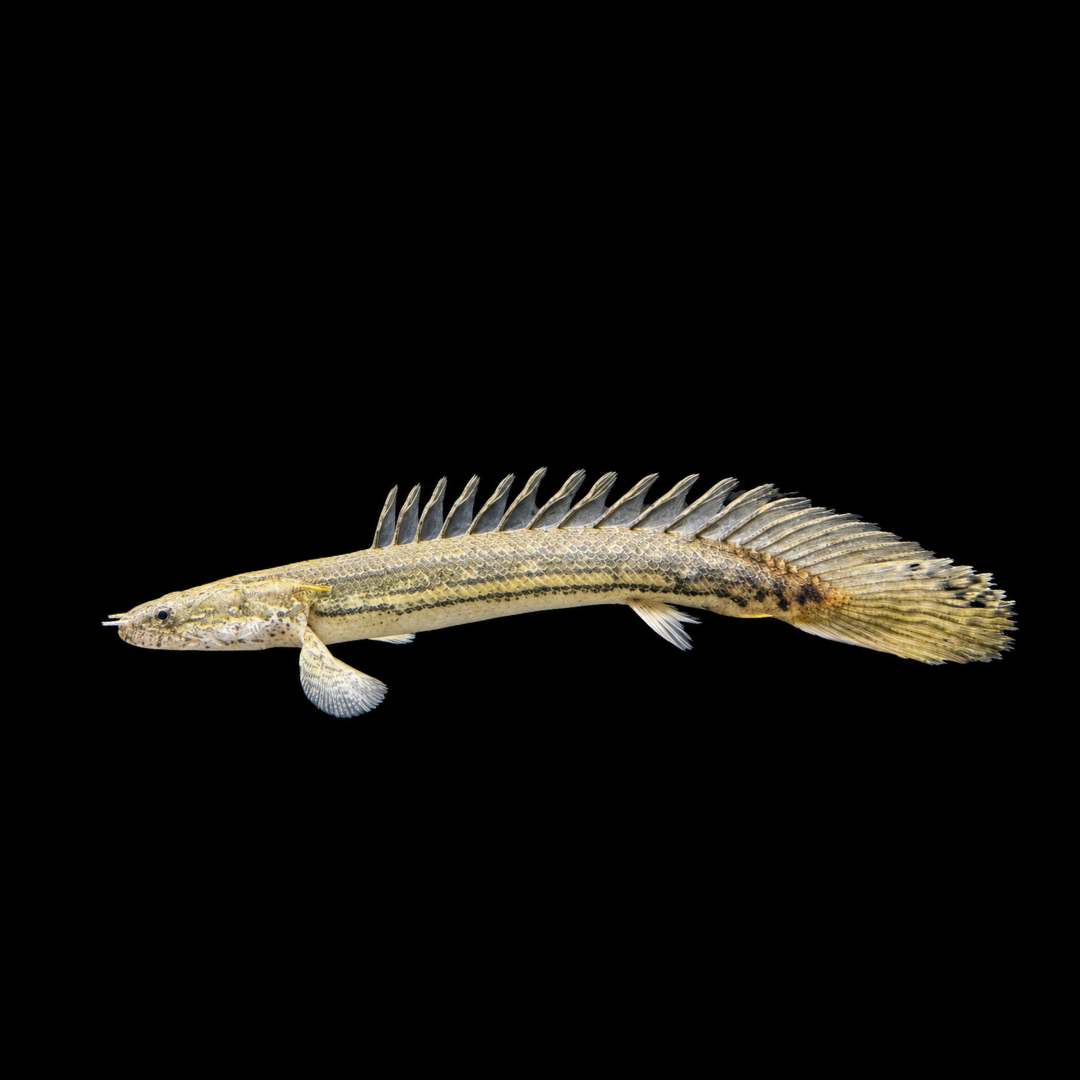
ポリプテルス・ビキールは、アフリカの大河川流域に広く分布する大型のポリプテルスです。日本の観賞魚流通では、ナイル川・チャド湖水系など東側の個体群を「ビキール・ビキール」、西アフリカの個体群を「ラプラディ」と呼び分けてきた歴史があります。しかし、2019年のポリプテルス科の包括的な再検討では、両者を形態的に明確な別亜種・別種として分ける根拠は十分ではないとして、現在はPolypterus bichirという1種にまとめる見解が示されています。細長く力強い体、成長につれて前方へ張り出す下顎、背中に連なる多数の小離鰭、硬いガノイン鱗が特徴で、成魚は大型魚水槽でもひときわ重厚な存在感を見せます。 Polypterus bichir is a large bichir widely distributed across major African river systems. In the Japanese aquarium trade, eastern populations from areas such as the Nile and Chad basins have traditionally been sold as “bichir bichir,” while West African forms have often been called “lapradei.” A comprehensive 2019 revision of the family Polypteridae, however, found no clear basis for maintaining these forms as separate species or subspecies and treated them together as a single species, Polypterus bichir. The species is distinguished by its elongated powerful body, a lower jaw that projects increasingly with growth, numerous separate dorsal finlets, and hard ganoid scales.
基本情報 / Basic Information
| 学名 / Scientific Name | Polypterus bichir ※「Polypterus bichir bichir」は現在も流通名や旧来の分類表記として見られます。The name “Polypterus bichir bichir” is still encountered in the aquarium trade and in older taxonomic treatments. |
|---|---|
| 通称 / Common Name | ビキール・ビキール、ビキール、ラプラディ(旧来の地域型・流通名として)Bichir bichir, bichir, lapradei as a historical locality or trade name |
| 分類 / Family | ポリプテルス目・ポリプテルス科・ポリプテルス属Order Polypteriformes, Family Polypteridae, Genus Polypterus |
| 英名 / English Name | Nile bichir |
| 分布 / Distribution | ナイル川、チャド、ニジェール、ボルタ、セネガルなどの主要河川流域に加え、西アフリカの一部沿岸河川やコンゴ盆地南部のカタンガ地域にも分布します。トゥルカナ湖の記録は古くから知られていますが、2019年の再検討では確実な標本・写真による裏付けが乏しいとして疑問視されています。Widely distributed through major African drainage systems including the Nile, Chad, Niger, Volta, and Senegal basins, as well as several West African coastal rivers and the Katanga region of the southern Congo basin. Historical records from Lake Turkana were regarded as questionable in the 2019 revision because of insufficient verified specimen or photographic evidence. |
| 最大体長 / Max Size | 少なくとも全長82cmに達する標本記録があります。飼育では個体差がありますが、70cm級を十分に想定して設備を準備する大型種です。Verified material reaches at least 82 cm total length. Aquarium specimens vary, but husbandry should be planned for a fish capable of reaching around 70 cm or more. |
| 寿命 / Lifespan | 本種だけを対象にした確立した標準寿命の資料は限られています。大型ポリプテルスは長期飼育になるため、10年以上の飼育期間を見据えて設備と維持費を計画するのが現実的です。A well-established species-specific lifespan is not available. As with other large bichirs, keepers should plan for a long-term commitment that can extend beyond a decade. |
飼育環境 / Aquarium Environment
| 水槽サイズ / Tank Size | 成魚の終生飼育では、体長だけでなく方向転換に必要な奥行きを重視します。最大サイズを見込むなら、180cm×90cmクラスの大型水槽を目安にすると安心です。120cmワイド水槽は幼魚から若魚の育成には使えますが、大型化した個体の最終水槽としては余裕が不足しやすいため、早い段階から大型水槽への移行計画を立てておきます。For lifelong adult care, tank depth is as important as length because the fish needs room to turn comfortably. When planning around the species’ maximum size, an aquarium around 180 × 90 cm is a practical target. A 120 cm wide tank can serve for juveniles and growing fish, but is generally too restrictive as a final home for a very large adult. |
|---|---|
| 水温 / Temperature | 24〜28℃を目安に、急変を避けて安定させます。 Maintain approximately 24–28°C and avoid abrupt temperature changes. |
| 水質 / Water Quality | 弱酸性から弱アルカリ性まで比較的幅広く適応しますが、飼育ではpH6.5〜7.5前後を一つの目安にし、数値そのものより急変を避けることを優先します。大型の肉食魚で排泄量も多いため、十分なろ過能力と定期的な換水が欠かせません。The species tolerates a fairly broad range from slightly acidic to slightly alkaline water. Around pH 6.5–7.5 is a practical aquarium target, but stability is more important than chasing a specific number. Strong filtration and regular water changes are essential because large carnivorous fish produce substantial waste. |
| レイアウト / Layout | 広い底面と移動スペースを優先し、鋭い石や尖った流木など、驚いた際に体を傷つけやすいものは避けます。底床は細かな砂を薄く敷く方法とベアタンクのどちらでも管理できます。暗色系の底床は体色が落ち着いて見えやすい傾向がありますが、発色は個体差、照明、背景、水質などにも左右されるため、特定の底砂だけで色が決まるわけではありません。Prioritize a broad floor area and unobstructed movement. Avoid sharp rocks or pointed wood that could cause injuries during sudden dashes. Fine sand or a bare-bottom setup can both work. Dark substrates may make the fish appear more deeply colored, but coloration also varies with the individual, lighting, background, and general condition. |
| 注意点 / Precautions | ポリプテルス類は肺を備え、水面の空気を取り込んで呼吸します。水面へ確実に到達できる空間を残す一方、飛び出し事故を防ぐため、フタは重く確実に固定し、配管やコード周辺の隙間もふさぎます。水面へのアクセスを妨げると強い呼吸ストレスにつながるため、浮草で全面を覆うような管理も避けます。Bichirs possess lungs and regularly take atmospheric air at the surface. Always leave clear access to the surface while securing the aquarium with a heavy, tightly fitted lid and sealing gaps around pipes and cables. Restricting surface access can cause severe respiratory stress, so dense floating plants should not be allowed to block the entire surface. |
餌と給餌 / Feeding
| 餌の種類 / Diet | 野生では小魚や甲殻類を捕食する肉食性です。飼育では沈下性の大型肉食魚用人工飼料を主食にし、エビ類や魚肉などを補助的に組み合わせると栄養管理がしやすくなります。出所の分からない活餌は寄生虫や病原体を持ち込む可能性があるため、常用は避けたほうが安全です。In the wild it is a carnivore feeding on small fishes and crustaceans. In captivity, sinking pellets formulated for large carnivorous fish make a reliable staple, with shrimp or fish flesh offered as supplements. Feeder fish of uncertain origin can introduce parasites and pathogens and are best avoided as a routine food source. |
|---|---|
| 給餌のポイント / Feeding Tips | 夜間の活動性が高く、底から中層で餌を探すため、沈む餌を確実に行き渡らせます。幼魚期は成長に必要な量をこまめに与え、成長後は体型を見ながら給餌量と回数を調整します。大型個体への過剰給餌は肥満だけでなく水質悪化にも直結するため、食べ残しを出さないことが重要です。Activity increases at night, and the fish searches for food from the bottom into the midwater zone, so sinking foods should be delivered where it can find them. Juveniles need sufficient nutrition for growth, while adults should be fed according to body condition. Overfeeding large fish quickly degrades water quality, making uneaten food especially undesirable. |
性格と混泳 / Temperament and Tank Mates
| 性格 / Temperament | 大型の捕食魚ですが、常に他魚へ攻撃を仕掛けるタイプではありません。夜行性の傾向があり、日中は落ち着いていることが多い一方、遊泳時には意外に活発です。口に入る大きさの魚や甲殻類は捕食対象になりやすく、サイズ差のある混泳には向きません。Although it is a large predator, it is not necessarily an aggressively territorial fish. It tends to be more active at night and can be surprisingly mobile when swimming. Any fish or crustacean small enough to swallow should be considered potential prey, making size-mismatched communities unsuitable. |
|---|---|
| 混泳の相性 / Compatibility | 混泳させる場合は、本種の口に入らない十分な体高とサイズがあり、過度に攻撃的でない魚を選びます。相手が大型でも、ポリプテルスの体表を執拗に吸ったり、ヒレをかじったりする個体とは相性がよくありません。同種・近縁種との混泳も可能な場合がありますが、餌の取り合いや体格差、個体間の相性を継続して観察します。Choose tank mates that are clearly too large to swallow, have sufficient body depth, and are not excessively aggressive. Even large companions are unsuitable if they repeatedly rasp the bichir’s skin or nip its fins. Cohabitation with other bichirs can work, but differences in size, feeding competition, and individual temperament must be monitored continuously. |
病気と対策 / Diseases and Prevention
| かかりやすい病気 / Common Diseases | 特にワイルド個体では、単生類の外部寄生虫Macrogyrodactylus polypteriが問題になることがあります。この寄生虫はポリプテルス属の体表やヒレから報告されており、寄生が多いと体をこすりつける、落ち着きがなくなる、体表が荒れるといった異常につながります。外傷から細菌感染が続発することもあります。Wild-caught bichirs may carry the monogenean ectoparasite Macrogyrodactylus polypteri. This parasite has been recorded from the skin and fins of Polypterus species, and heavy infestations may lead to rubbing, restlessness, and skin damage. Secondary bacterial infections can follow damaged skin. |
|---|---|
| 対策と予防 / Prevention | 新規導入魚は、可能であれば本水槽とは別のトリートメント水槽で数週間観察し、寄生虫や感染症の持ち込みを防ぎます。症状が出た場合は、寄生虫・細菌・外傷など原因を切り分けてから治療方法を選ぶことが大切です。薬剤への反応は魚種や状態によって異なるため、自己判断で濃度を増減せず、製品表示や獣医師・専門家の指示を優先してください。日常管理では、安定した水質、十分なろ過、定期的な換水、外傷を起こしにくいレイアウトが最も基本的な予防になります。Whenever possible, observe new fish for several weeks in a separate quarantine or treatment aquarium before adding them to the main tank. When symptoms appear, distinguish parasites, bacterial infection, and physical injury before selecting treatment. Medication tolerance varies with species and condition, so follow product directions and professional veterinary or specialist advice rather than improvising concentrations. Stable water quality, adequate filtration, regular water changes, and an injury-resistant setup remain the foundation of prevention. |
増やし方(繁殖) / Breeding
| 雌雄の判別 / Sexing | 成熟個体では臀鰭が最も分かりやすい判別点です。オスは臀鰭が幅広く肉厚に発達し、繁殖行動ではカップ状に曲げて使います。メスの臀鰭は比較的細く、幅も控えめです。幼魚では差が小さいため、成長してから判断したほうが確実です。The anal fin is the most useful feature for sexing mature fish. Males develop a broad, thick anal fin that can be flexed into a cup-like shape during spawning, while females have a narrower and less muscular fin. Juveniles are more difficult to sex reliably. |
|---|---|
| 繁殖形態 / Reproduction | 野生では増水期に繁殖し、成熟魚が氾濫原へ入って産卵することが報告されています。ポリプテルス類は外部受精を行い、粘着性のある卵を水草などの基質へ付着させます。繁殖期のオスは発達した臀鰭を使ってメスの産卵を補助します。In the wild, reproduction is associated with the flood season, when mature fish move into floodplain habitats to spawn. Bichirs use external fertilization and produce adhesive eggs that attach to vegetation or other substrates. During courtship, the male uses his enlarged anal fin to assist with spawning. |
| 繁殖のポイント / Breeding Tips | 本種は大型になるため、繁殖には十分に成熟した親魚と広い水槽が必要です。飼育下では、換水や水温変化を雨季の到来に見立てて産卵のきっかけにする方法が知られていますが、これは飼育経験に基づく手法で、反応には個体差があります。産卵床には細かな水草や人工産卵床を用意し、採卵する場合は卵を傷めないよう別容器へ移して管理します。孵化仔魚には一時的に外鰓が見られ、初期餌料へ移行した後は成長差による共食いを防ぐため、サイズ分けが重要になります。Because this is a very large species, breeding requires fully mature adults and a spacious aquarium. In captivity, substantial water changes and temperature shifts are sometimes used to imitate seasonal rains and encourage spawning, although responses vary among individuals. Fine plants or artificial spawning media can be provided for adhesive eggs. If eggs are collected, transfer them carefully to separate rearing conditions. Newly hatched bichirs temporarily possess external gills, and once feeding begins, regular size grading helps reduce cannibalism among unevenly growing fry. |
雑学と豆知識 / Trivia and Fun Facts
| 1. 「ビキール・ビキール」と「ラプラディ」は、現在どう扱われている? / 1. What happened to “bichir bichir” and “lapradei”? | かつては、ナイル川やチャド盆地など東側の個体群をPolypterus bichir bichir、西アフリカ側をP. bichir lapradeiとして分ける考え方が広く使われていました。ところが2019年の再検討では、背鰭棘数や鱗数などに地域差は見られるものの、それらは分布域を通して連続的に変化し、明確な境界を引けないと判断されました。そのためP. lapradeiはP. bichirのシノニムとされ、現在は一つの種の中に地域変異があるとみなす整理が有力です。観賞魚店で昔から使われてきた「ビキール・ビキール」や「ラプラディ」という名前は、地域型や流通名として理解すると混乱が少なくなります。Older classifications commonly separated eastern populations as Polypterus bichir bichir and West African populations as P. bichir lapradei. The 2019 revision found regional trends in fin-spine and scale counts, but these characters overlapped and changed continuously across the distribution. P. lapradei was therefore synonymized with P. bichir. In the aquarium trade, the familiar names “bichir bichir” and “lapradei” are best understood today as historical or locality-based trade names rather than firmly separated taxa. |
|---|---|
| 2. 発見史はナポレオンのエジプト遠征につながる / 2. Its scientific history reaches back to Napoleon’s Egyptian campaign | この魚がヨーロッパの博物学に知られるようになったきっかけは、18世紀末のエジプト遠征でした。博物学者エティエンヌ・ジョフロワ・サンティレールがナイル川で得た標本を研究し、1802年に「bichir」の名を公表しています。翌1803年にはラセペードがPolypterus bichirというラテン語化された形を用いました。長くラセペードを命名者とする資料も多く見られましたが、2019年の再検討では、ジョフロワの1802年の公表が命名規約上有効だったとする整理が示されました。古い文献と現代のデータベースで著者名や年が食い違うことがあるのは、この複雑な命名史が背景にあります。The species entered European natural history through material collected during the Egyptian campaign at the end of the eighteenth century. Étienne Geoffroy Saint-Hilaire studied Nile specimens and published the name “bichir” in 1802. Lacépède used the Latinized combination Polypterus bichir in 1803. Many later references credited Lacépède, but the 2019 revision argued that Geoffroy’s 1802 publication had already made the name available under zoological nomenclature. This history explains why authorship and date can differ among references. |
| 3. トゥルカナ湖産というイメージには注意が必要 / 3. Lake Turkana records require caution | 日本のアクアリウム界では「トゥルカナ湖産ビキール・ビキール」という呼び名が強い印象を残してきました。一方、2019年の分類学的再検討では、Polypterus bichirのトゥルカナ湖での記録は、確実に同定できる標本や写真による裏付けが不足しているとして疑問視されています。トゥルカナ湖には別種のPolypterus senegalusが確実に分布しているため、過去の記録や流通上の産地名を読む際には、種同定と産地情報を分けて考える必要があります。The name “Lake Turkana bichir bichir” has had a strong presence in Japanese aquarium culture. Taxonomic review in 2019, however, regarded records of Polypterus bichir from Lake Turkana as questionable because they lacked securely verified specimens or photographs. Polypterus senegalus is confirmed from the Lake Turkana system, so historical locality labels should be interpreted carefully and separately from species identification. |
| 4. 肺と噴水孔を使う独特の空気呼吸 / 4. Air breathing with lungs and spiracles | ポリプテルス類は一対の肺を持ち、水面の空気を取り込んで呼吸できます。さらに頭部の噴水孔を空気の取り込みに利用することも確認されています。低酸素の水域に適応した重要な仕組みですが、飼育では「空気を吸える水面」と「飛び出せないフタ」を同時に用意しなければなりません。古代魚らしい外見だけでなく、呼吸の仕組みそのものにも他の一般的な観賞魚とは大きく異なる特徴があります。Bichirs possess paired lungs and can take atmospheric oxygen at the surface. Their spiracles are also used for air intake. This respiratory system is an important adaptation to oxygen-poor habitats, but in aquaria it creates two simultaneous requirements: unobstructed access to the air and a secure lid that prevents escape. |
| 5. ガノイン鱗は材料工学でも研究されている / 5. Ganoid scales are studied in materials science | ポリプテルスの菱形の鱗は、硬い表層と性質の異なる複数の層を組み合わせた天然の複合構造です。近縁種Polypterus senegalusのガノイン鱗を対象とした研究では、貫通に抵抗しながら亀裂を局所化し、衝撃を分散させる仕組みが詳しく調べられています。硬さだけを追求するのではなく、層ごとの性質と鱗同士の連結によって防御と柔軟性を両立している点が、バイオインスパイアード材料の設計モデルとして注目されています。The diamond-shaped scales of bichirs are natural composite structures made of layers with different mechanical properties. Studies on the ganoid scales of Polypterus senegalus have shown how the layered structure resists penetration, localizes cracking, and distributes mechanical stress. This balance between protection and flexibility has made bichir armor a model for bioinspired materials research. |
| 6. 2007年、日本で世界初の人工繁殖成功が報告された / 6. A world-first captive breeding success was reported in Japan in 2007 | 神畑養魚は2007年、兵庫県の姫路養殖センターで「Polypterus bichir bichir」の人工繁殖に世界で初めて成功したと公式沿革に記録しています。入荷が不安定だった大型古代魚を国内で繁殖できたことは、日本の観賞魚流通にとって大きな転機でした。現在の分類では学名の扱いが変わっていますが、当時の名称で残るこの記録は、日本の大型魚飼育史を語るうえで重要な出来事です。Kamihata Fish Industries records that in 2007 its Himeji Breeding Center achieved what it described as the world’s first captive breeding of “Polypterus bichir bichir.” Successfully breeding a large ancient fish that had been difficult to import consistently marked an important point in the Japanese ornamental-fish trade. Although the taxonomic treatment of the name has since changed, the event remains significant in the history of bichir keeping in Japan. |
| 7. 「生きた化石」は「進化していない」という意味ではない / 7. “Living fossil” does not mean “unchanged by evolution” | ポリプテルス類は、現生条鰭類の中でも非常に早い段階で分岐した系統に属し、ガノイン鱗、独特な胸鰭骨格、肺、外鰓を持つ仔魚など、祖先的とみなされる特徴を多く残しています。そのため「生きた化石」と呼ばれることがあります。ただし、現在のポリプテルスが何億年もの間まったく変化しなかったわけではありません。古い特徴を受け継ぎながら、それぞれの環境の中で進化を続けてきた現生魚として捉えるほうが、生物学的にはより正確です。Bichirs belong to an early-diverging lineage of living ray-finned fishes and retain features considered evolutionarily ancient, including ganoid scales, a distinctive pectoral skeleton, lungs, and externally gilled larvae. This is why they are often called “living fossils.” The phrase should not be taken to mean that modern bichirs have remained literally unchanged for hundreds of millions of years; they are living species that have continued to evolve while retaining an unusual combination of ancestral traits. |
まとめ / Conclusion
ポリプテルス・ビキールは、80cm級に達する大きさと、ガノイン鱗に覆われた重厚な体つき、背中に連なる小離鰭、肺を使った空気呼吸という独特の生態を備えた大型古代魚です。かつて「ビキール・ビキール」や「ラプラディ」と呼び分けられてきた個体群も、現在は一つの種の中に見られる地域変異として整理する考え方が有力になっています。古くから親しまれてきた流通名を楽しみながら、分類学の更新もあわせて知ることで、この魚の奥深さがよりはっきり見えてきます。 Polypterus bichir is a large ancient fish capable of reaching around 80 cm, combining heavy ganoid armor, a row of separate dorsal finlets, and an unusual air-breathing system based on lungs. Populations once separated in the aquarium trade as “bichir bichir” and “lapradei” are now widely interpreted as geographic variation within a single species. Understanding both the traditional trade names and the updated taxonomy reveals how much history is contained in this remarkable fish.
飼育で何より大切なのは、幼魚の姿だけで判断せず、成魚の大きさを前提に環境を整えることです。十分な底面積を持つ大型水槽、確実な飛び出し防止、水面への呼吸経路、強力なろ過、そして無理のない混泳相手を用意できれば、成長とともに増していく迫力を長く楽しめます。水底をゆっくり進んだかと思えば、静かに水面へ浮上して一呼吸する。その一つひとつの動きに、現代の魚とは少し異なる進化の道筋が感じられることこそ、ポリプテルス・ビキールを飼う最大の魅力です。 The most important part of keeping this species is to plan for the adult rather than the juvenile seen at purchase. A very large aquarium with generous floor space, secure escape prevention, reliable access to atmospheric air, strong filtration, and carefully selected tank mates allows the fish to mature safely and display its full presence. Watching it move deliberately through the aquarium and then rise quietly to the surface for a breath offers a direct glimpse of an evolutionary path unlike that of most familiar aquarium fishes.
分布マップ
ポリプテルス・ビキールは、ナイル川、チャド湖水系、ニジェール川、ボルタ川、セネガル川などの主要河川流域に加え、西アフリカの一部沿岸河川やコンゴ盆地南部のカタンガ地域にも広く分布します。地図では、この広い分布を把握するための概略代表地点としてチャド湖周辺を示しています。
Google Earthで開く※この地図のプロットは、記事中の分布情報を視覚的に把握するための概略代表地点です。実際の採集地点や厳密な生息範囲を示すものではありません。また、トゥルカナ湖の記録については確実な標本・写真による裏付けが乏しいとされるため、この概略表示には含めていません。
参考文献・根拠資料
分類、分布、生息環境、体サイズ、空気呼吸、繁殖、疾病に関する記述を確認するため、査読論文、専門的な魚類相資料、研究機関が管理する分類データベースを中心に選定しています。観賞魚店、通販サイト、個人ブログ、まとめサイトは参考文献から除外しています。
-
分類・分布・体サイズMoritz, T. & Britz, R. (2019). Revision of the extant Polypteridae (Actinopterygii: Cladistia). Ichthyological Exploration of Freshwaters, IEF-1094, 1–96.
DOI: 10.23788/IEF-1094
Polypterus lapradeiおよびP. bichir katangaeをP. bichirのシノニムとする分類学的再検討。標本に基づく分布、形態、計数形質、最大82cm TLの記録、トゥルカナ湖など疑義のある産地記録の評価を含みます。 -
現行分類Fricke, R., Eschmeyer, W. N. & Van der Laan, R. (eds.). Eschmeyer’s Catalog of Fishes: Genera, Species, References. California Academy of Sciences. Entry: Polypterus bichir.
オンライン版:2026年7月7日更新、2026年7月27日参照
現在の有効名をPolypterus bichir Lacepède, 1803として扱い、P. lapradeiをシノニムとして整理する分類データベースです。 -
分布・生態・食性Gosse, J.-P. & Daget, J. (2003). Polypteridae. In: Paugy, D., Lévêque, C. & Teugels, G. G. (eds.), The Fresh and Brackish Water Fishes of West Africa, Vol. 1, pp. 101–112. IRD Éditions, Muséum national d’Histoire naturelle & Musée royal de l’Afrique centrale.
ISBN: 9782709915267
西アフリカ淡水魚相の標準的資料で、ポリプテルス科の識別、分布、形態、生態、食性を確認する基礎資料として使用できます。 -
生息環境・空気呼吸・注意点Graham, J. B., Wegner, N. C., Miller, L. A., Jew, C. J., Lai, N. C., Berquist, R. M., Frank, L. R. & Long, J. A. (2014). Spiracular air breathing in polypterid fishes and its implications for aerial respiration in stem tetrapods. Nature Communications, 5, 3022.
DOI: 10.1038/ncomms4022
ポリプテルス類が肺と噴水孔を利用して空気呼吸することを実験的に示した研究です。浅く低酸素になりやすい生息環境との関係や、水面へのアクセスを確保する必要性を理解する重要な根拠になります。 -
飼育管理の補助資料Wibisana, J. N., Sallan, R. A., Ota, T., Puchenkov, P., Kubo, T. & Sallan, L. (2025). Modifiable Clinical Dental Impression Methods to Obtain Whole-Mouth and Detailed Dental Traits From Vertebrates. Journal of Morphology, 286(1), e70017.
DOI: 10.1002/jmor.70017
同属のPolypterus senegalusを研究施設で継続飼育した条件が記載され、25℃での維持、ろ過、定期換水、水質監視など、ポリプテルス類の基本的な管理を考える補助資料になります。本種固有の推奨水槽寸法を示す研究ではありません。 -
雌雄判別・繁殖行動Holden, M. J. (1971). Significance of Sexual Dimorphism of the Anal Fin of Polypteridae. Nature, 232, 135–136.
DOI: 10.1038/232135b0
ポリプテルス科に特徴的な臀鰭の性的二型と、オスが発達した臀鰭を繁殖時に用いる機能を扱った資料です。記事内の雌雄判別と繁殖行動の根拠になります。 -
繁殖・卵・初期発生Britz, R. & Bartsch, P. (1998). On the reproduction and early development of Erpetoichthys calabaricus, Polypterus senegalus, and Polypterus ornatipinnis (Actinopterygii: Polypteridae). Ichthyological Exploration of Freshwaters, 9(4), 325–334.
飼育下で繁殖させたポリプテルス科魚類について、繁殖と初期発生を比較した研究です。粘着性をもつ卵や、外鰓などポリプテルス科の初期発生上の特徴を支える資料として使用できます。 -
仔魚・外鰓・発生Bartsch, P., Gemballa, S. & Piotrowski, T. (1997). The embryonic and larval development of Polypterus senegalus Cuvier, 1829: its staging with reference to external and skeletal features, behaviour and locomotory habits. Acta Zoologica, 78(4), 309–328.
DOI: 10.1111/j.1463-6395.1997.tb01014.x
ポリプテルス仔魚の発生段階、摂餌開始、行動、外鰓の変化を詳細に記載した研究です。本種そのものではなく同属種の発生研究ですが、記事内の仔魚期の説明を支える比較資料として信頼性があります。 -
病気・外部寄生虫Khalil, L. F. (1970). Further Studies on Macrogyrodactylus polypteri, a Monogenean on the African Freshwater Fish Polypterus senegalus. Journal of Helminthology, 44(3–4), 329–348.
DOI: 10.1017/S0022149X00022008
Macrogyrodactylus polypteriの寄生部位や宿主関係を扱う寄生虫学研究で、先行研究としてPolypterus bichirからの記録も整理されています。ワイルド個体で注意すべき外部寄生虫に関する記述の根拠になります。




コメント