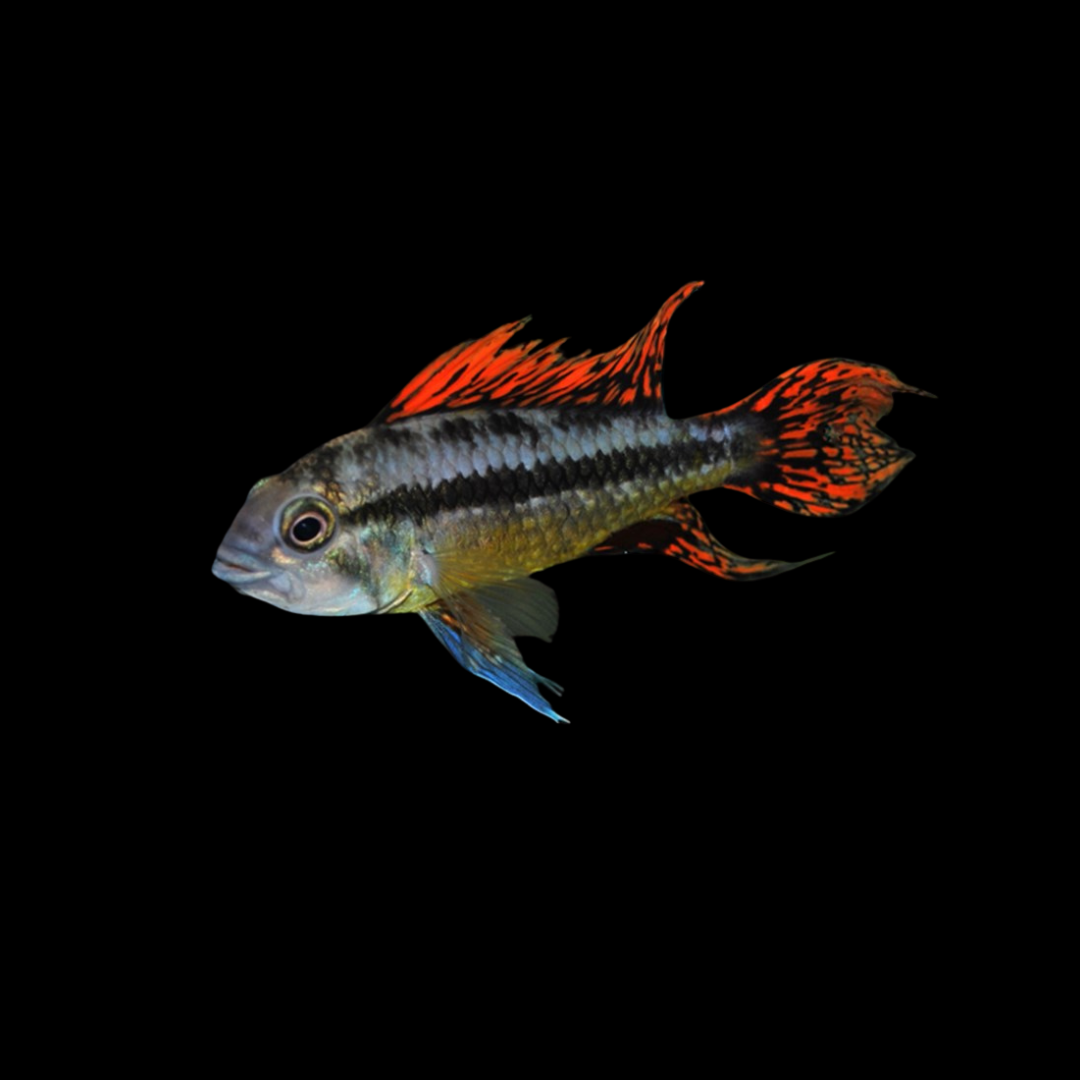
アピストグラマ・カカトイデス・ダブルレッドは、南米原産のドワーフシクリッドであるアピストグラマ・カカトイデスから作出された改良品種です。オスの背びれと尾びれに赤からオレンジの色彩と黒いモザイク模様が入り、伸長した背びれがオウムの冠羽のように見えることから、英名ではコカトゥー・ドワーフシクリッドとも呼ばれます。アピストグラマの仲間としては水質への適応幅が比較的広く、ブリード個体であれば日本の一般的な水道水にも慣れやすいため、アピストグラマ入門種として扱いやすい種類です。Apistogramma cacatuoides Double Red is a selectively bred form of the South American dwarf cichlid Apistogramma cacatuoides. Males display red to orange coloration with black mosaic markings on the dorsal and caudal fins, and the elongated dorsal fin resembles the crest of a cockatoo. Compared with many other Apistogramma species, captive-bred individuals are relatively adaptable to a wider range of aquarium conditions, making this variety one of the more approachable choices for aquarists new to dwarf cichlids.
基本情報 / Basic Information
学名 / Scientific Name
Apistogramma cacatuoides Hoedeman, 1951
通称 / Common Name
アピストグラマ・カカトイデス・ダブルレッド、カカトイデス・ダブルレッド、アピスト・カカトDouble Red Cockatoo Dwarf Cichlid, Double Red Apistogramma cacatuoides
分類 / Family
シクリッド科アピストグラマ属Family Cichlidae, genus Apistogramma
英名 / English Name
Double Red Cockatoo Dwarf Cichlid
分布 / Distribution
原種はペルーのウカヤリ川・アマゾン川流域からブラジル西部のソリモエンス川流域にかけての上部アマゾン水系に分布します。ダブルレッドは観賞魚として選別固定された改良品種で、国内流通個体の多くは海外で繁殖されたブリード個体です。The wild form occurs in the upper Amazon drainage, including the Ucayali and Amazon river systems of Peru and the Solimões drainage of western Brazil. Double Red is a selectively bred aquarium strain, and many specimens in the trade are captive-bred overseas.
最大体長 / Max Size
オスは標準体長5cm前後が目安で、伸長したヒレを含めると6〜8cmほどに見えることがあります。メスはやや小さく、4〜5cm前後が目安です。Males are usually around 5 cm in standard length and may appear about 6 to 8 cm when the extended fins are included. Females are smaller, generally around 4 to 5 cm.
寿命 / Lifespan
2〜4年ほどが目安ですが、良好な環境ではそれ以上生きることもあります。高水温で常に管理すると代謝が上がりやすいため、長期飼育では水温を高めに固定しすぎないことが大切です。The typical lifespan is around 2 to 4 years, although well-kept individuals may live longer. Constantly high temperatures can increase metabolism, so moderate and stable temperature management is important for long-term care.
飼育環境 / Aquarium Environment
水槽サイズ / Tank Size
ペア飼育なら45cm規格水槽以上でも飼育できますが、水質の安定と繁殖時の逃げ場を考えると60cm規格水槽が扱いやすいサイズです。オス1匹に対して複数のメスを入れるハーレム的な飼育を狙う場合は、60cm規格水槽以上で複数の隠れ家を用意すると安心です。A pair can be kept in a 45 cm tank or larger, but a standard 60 cm aquarium is easier to manage because it provides better water stability and more space during breeding. For a harem-style setup with one male and multiple females, a 60 cm tank or larger with several shelters is recommended.
水温 / Temperature
24〜27℃前後が基本です。低めから高めの水温まである程度の幅に順応しますが、普段の飼育では25〜26℃前後で安定させると扱いやすい魚です。A temperature of about 24 to 27°C is suitable. Although this species can adapt to a moderate range of temperatures, keeping the aquarium stable around 25 to 26°C is a practical approach for general care.
水質 / Water Quality
弱酸性〜中性付近を基本に管理します。ブリード個体は中性付近にも比較的順応しやすい一方、ワイルド由来の個体や繁殖を強く意識する場合は、やや軟水で弱酸性寄りに整えると状態を上げやすくなります。Slightly acidic to near-neutral water is the basic target. Captive-bred fish usually adapt well to near-neutral water, while wild-derived specimens or breeding pairs may do better in softer, slightly acidic conditions.
レイアウト / Layout
細かい砂を薄く敷き、流木、落ち葉、ココナッツシェル、土管などで隠れ家を複数作ると落ち着きます。メスは産卵床となる洞窟状の場所を強く守るため、視線が切れるように流木や水草を配置しておくことが重要です。A thin layer of fine sand with driftwood, leaf litter, coconut shells, or small caves helps them feel secure. Females strongly defend cave-like spawning sites, so driftwood and plants should be arranged to break lines of sight.
注意点 / Precautions
小型で繊細に見えますが、繁殖期は強い縄張り意識を見せます。特にメスが卵や稚魚を守っている時期は、同居魚を激しく追うことがあるため、繁殖を狙う場合はペア単独飼育を基本に考えると安全です。水換えは一度に大量に行わず、少量を定期的に行って水質の急変を避けることが大切です。Although small and delicate in appearance, this species can become highly territorial during breeding. Females guarding eggs or fry may chase tank mates aggressively, so pair-only setups are safest when breeding is the goal. Avoid large sudden water changes and maintain stable conditions with regular small water changes.
餌と給餌 / Feeding
餌の種類 / Diet
肉食傾向の強い雑食性です。人工飼料は小型シクリッド用の沈下性顆粒や細かいペレットを中心にし、冷凍アカムシ、ブラインシュリンプ、ミジンコなどを組み合わせると状態を上げやすくなります。This species is omnivorous with a strong carnivorous tendency. Sinking granules or fine pellets for small cichlids can be used as the staple food, supplemented with frozen bloodworms, brine shrimp, and daphnia.
給餌のポイント / Feeding Tips
一度に多く与えるより、食べ切れる量を1日1〜2回与える方が水を汚しにくくなります。発色や繁殖を意識する場合は、動物質の冷凍飼料を定期的に加えるとよいですが、アカムシに偏らせすぎると水質悪化や消化不良の原因になるため、複数の餌をローテーションすることが大切です。Feed small amounts once or twice a day, only as much as the fish can consume quickly. Frozen animal-based foods can improve condition and support breeding, but relying too heavily on bloodworms may cause water quality issues or digestive problems, so a varied feeding routine is important.
性格と混泳 / Temperament and Tank Mates
性格 / Temperament
普段は底層付近を中心に生活し、流木や隠れ家の周囲を観察しながら行動する知的な印象の強い魚です。オスは広めの縄張りを持ち、メスは産卵床の周囲を強く守るため、落ち着いた環境ほど本来の行動を観察しやすくなります。This fish usually lives near the bottom and moves around driftwood and shelters in a cautious, intelligent manner. Males hold broader territories, while females defend areas around spawning sites. A calm, well-structured aquarium makes their natural behavior easier to observe.
混泳の相性 / Compatibility
繁殖を狙わない観賞目的であれば、小型カラシンや小型ラスボラ、オトシンクルスなどとの混泳が可能な場合があります。ただし、繁殖期には同居魚への攻撃が強くなることがあるため、稚魚を残したい場合は混泳を避けるのが無難です。安心役として小型魚を入れる方法もありますが、カカトイデスでは繁殖期の攻撃性が出やすいため、導入する場合は逃げ場を十分に確保する必要があります。For display-only aquariums, it may be possible to keep them with small tetras, small rasboras, or Otocinclus. However, aggression can increase sharply during breeding, so tank mates should be avoided if raising fry is the goal. Small schooling fish are sometimes used to make dwarf cichlids feel more secure, but with A. cacatuoides, adequate hiding places are essential because breeding females can become very defensive.
病気と対策 / Diseases and Prevention
かかりやすい病気 / Common Diseases
白点病、尾ぐされ、エロモナス症状、痩せ、消化不良などに注意が必要です。輸入直後や入荷直後の個体では、環境変化によるストレスから体調を崩すことがあります。Common concerns include ich, fin rot, Aeromonas-like symptoms, emaciation, and digestive trouble. Newly imported or recently arrived specimens may become stressed and weakened by environmental changes.
対策と予防 / Prevention
導入時は水合わせを丁寧に行い、できれば別水槽で数週間様子を見ると安心です。底床の汚れ、食べ残し、急激なpH変化は体調不良の原因になりやすいため、底床の清潔さと安定した水質を保つことが予防の基本です。強い薬に弱ることもあるため、異変が出た場合は早期発見と隔離を優先することが重要です。Acclimate new fish carefully and, if possible, observe them in a separate tank for a few weeks. Dirty substrate, uneaten food, and sudden pH changes can trigger health problems, so clean bottom areas and stable water conditions are the foundation of prevention. Because small dwarf cichlids may be sensitive to strong medication, early detection and isolation are important.
増やし方(繁殖) / Breeding
雌雄の判別 / Sexing
オスは大型になり、背びれや尾びれが伸び、赤や黒の模様が強く出ます。メスは小型で丸みがあり、通常時は控えめな体色ですが、繁殖期には黄色みが強くなり、腹びれや体側の黒い模様が目立つことがあります。Males grow larger, develop elongated dorsal and caudal fins, and show stronger red and black markings. Females are smaller and rounder, usually more subdued in color, but they become bright yellow during breeding, often with darker markings on the pelvic fins and body.
繁殖形態 / Reproduction
洞窟産卵型のシクリッドです。メスがココナッツシェルや流木の下、土管などの天井や内側に産卵し、卵やふ化後の仔魚を主にメスが守ります。オスは周囲の広い縄張りを守る役割を持つことが多いですが、水槽が狭い場合はメスに追われることもあります。This is a cave-spawning cichlid. The female lays eggs on the ceiling or inner surface of a coconut shell, driftwood cavity, or similar shelter, and she mainly guards the eggs and larvae. The male often defends the broader territory, but in a small aquarium he may be chased away by the female.
繁殖のポイント / Breeding Tips
繁殖を狙う場合は、ペア単独飼育、弱酸性寄りの安定した水質、複数の洞窟状の隠れ家が基本です。産卵後はメスが非常に神経質になるため、過度な覗き込みや大きな水換えは避けます。稚魚が自由遊泳を始めたら、ブラインシュリンプの幼生など細かな餌を与えると育てやすくなります。アピストグラマ属では温度やpHが稚魚の性比に影響することが示されていますが、家庭の繁殖では無理に条件を振るより、健康に育つ安定した環境を優先することが大切です。For breeding, a pair-only setup, stable slightly acidic water, and multiple cave-like shelters are recommended. After spawning, the female becomes very sensitive, so avoid excessive disturbance and large water changes. Once fry become free-swimming, newly hatched brine shrimp and other fine foods are useful. In Apistogramma, temperature and pH have been shown to influence fry sex ratios, but in home breeding, stable and healthy rearing conditions are more important than trying to force environmental parameters.
雑学と豆知識 / Trivia and Fun Facts
1. 「カカトイデス」という名前の由来 / 1. Origin of the Name “cacatuoides”
種小名の「cacatuoides」は、オウムやコカトゥーを思わせる姿に由来するとされています。成熟したオスの背びれは前方の棘条が大きく伸び、まるで鳥の冠羽のように立ち上がります。小さな体でありながら、ヒレを広げた瞬間に水槽の主役になる存在感があり、この特徴こそが本種をアピストグラマの定番種へ押し上げた大きな理由の一つです。The species name “cacatuoides” refers to its cockatoo-like appearance. Mature males develop elongated anterior dorsal fin rays that rise like a crest. Despite its small size, a displaying male can dominate the visual impression of an aquarium, and this distinctive feature is one of the reasons the species became a classic among Apistogramma.
2. ダブルレッドとトリプルレッドの違い / 2. Double Red and Triple Red
ダブルレッドは、主に背びれと尾びれに赤からオレンジの色彩と黒いモザイク模様が入る系統として流通します。これに対してトリプルレッドは、背びれ、尾びれに加えて尻びれにも同様の色彩が強く出るものを指すことが多い呼び名です。ただし、これらは学術的な分類名ではなく観賞魚市場で使われる品種名・グレード名であるため、実際の個体では表現に幅があります。購入時は名称だけで判断せず、ヒレの色の入り方、黒い模様の出方、体型をよく見て選ぶことが大切です。Double Red usually refers to a strain with red to orange coloration and black mosaic markings mainly on the dorsal and caudal fins. Triple Red generally describes fish that also show strong coloration on the anal fin. These are not scientific taxonomic names but aquarium trade strain or grade names, so expression varies among individuals. When selecting a fish, it is better to examine the fin coloration, black patterning, and body shape rather than relying only on the trade name.
3. ブリード産地による印象の違い / 3. Differences Among Captive-Bred Lines
国内で流通するダブルレッドには、東南アジアブリードやヨーロッパブリードなど、さまざまな由来の個体が見られます。東南アジア産は流通量が多く、価格も比較的手に取りやすいため、アピストグラマの入門として選びやすい存在です。一方で、チェコなどヨーロッパ系のブリード個体は、選別や系統維持の丁寧さを評価されることがあり、赤の深さやヒレの伸びを重視する愛好家から注目されます。ただし、産地名だけで品質が決まるわけではなく、最終的には個体そのもののコンディションと飼育環境を見ることが重要です。Double Red specimens in the Japanese trade may originate from Southeast Asian, European, or other captive-bred lines. Southeast Asian-bred fish are often widely available and comparatively affordable, making them accessible for beginners. European-bred fish, including some Czech lines, are sometimes valued by hobbyists for careful selection and strain maintenance, especially when deep red coloration and fin extension are desired. However, origin alone does not determine quality; the condition of the individual fish and the care environment are what matter most.
4. メスの黄色は「かわいい」だけではない / 4. The Female’s Yellow Color Has Meaning
繁殖期のメスが見せる鮮やかな黄色は、単なる発色の美しさではなく、繁殖行動と深く結びついたサインです。産卵床の周囲で体を震わせるようにオスを誘い、産卵後は同じ黄色の体色で卵や稚魚を守る母親へと変わります。普段は控えめなメスが、繁殖期に水槽内で最も気の強い存在になる様子は、アピストグラマ飼育の大きな魅力です。The bright yellow coloration of a breeding female is not merely decorative; it is closely connected with reproductive behavior. She invites the male near the spawning site with displays, and after spawning she uses the same striking coloration while guarding the eggs and fry. Watching a normally modest female become the most determined fish in the aquarium is one of the great pleasures of keeping Apistogramma.
5. 性比に影響する環境条件 / 5. Environmental Influence on Sex Ratio
アピストグラマ属では、稚魚期の水温やpHが性比に影響することが研究で示されています。一般的には、低めの水温ではメスが多くなり、高めの水温ではオスが多くなる傾向が報告されています。ただし、これは単純に「温度を上げれば必ずオスが増える」というものではなく、種類、親の系統、飼育状態、稚魚期の管理が複雑に関わります。家庭の繁殖では性比を無理に操作しようとするより、稚魚が健康に育つ安定した水質と十分な餌を優先する方が現実的です。Studies on Apistogramma have shown that water temperature and pH during early development can influence sex ratios. In general, lower temperatures have been associated with a higher proportion of females, while higher temperatures have been associated with a higher proportion of males. However, this does not mean that simply raising the temperature will reliably produce males; species, bloodline, parental condition, and fry management all interact. In home breeding, stable water quality and adequate food are more important than trying to force a specific sex ratio.
まとめ / Conclusion
アピストグラマ・カカトイデス・ダブルレッドは、赤と黒のコントラスト、伸長する背びれ、洞窟産卵型シクリッドならではの繁殖行動を楽しめる魅力的な改良品種です。アピストグラマの中では水質への適応幅が広く、ブリード個体であれば初心者にも比較的扱いやすい一方、繁殖期の縄張り意識やメスの防衛行動には注意が必要です。Apistogramma cacatuoides Double Red is an attractive selectively bred strain with vivid red and black contrast, extended dorsal fins, and fascinating cave-spawning behavior. It is one of the more adaptable Apistogramma for beginners, especially when captive-bred, but its territorial behavior during breeding and the female’s strong parental defense should be respected.
落ち着いたレイアウト、安定した弱酸性〜中性の水質、食べ残しを出さない給餌を意識すれば、オスの華やかなディスプレイとメスの力強い子育てをじっくり観察できます。美しさだけでなく、行動の奥深さまで楽しめるため、アピストグラマ飼育の入り口としても、繁殖を学ぶ対象としても非常に優れた魚です。With a calm layout, stable slightly acidic to near-neutral water, and careful feeding, aquarists can enjoy the male’s brilliant displays and the female’s determined parental care. This fish offers not only beauty but also rich behavior, making it an excellent gateway into Apistogramma keeping and a rewarding subject for learning about dwarf cichlid breeding.
Alves, F. C. M., Rojas, N. E. T. and Romagosa, E. Reproduction of the amazonic dwarf-cichlid Apistogramma cacatuoides, Hoedeman, 1951 (Perciformes: Cichlidae) in laboratory. Boletim do Instituto de Pesca, 35(4), 2009. https://institutodepesca.org/index.php/bip/article/view/886
飼育下での繁殖、産卵、仔魚の保護、観賞魚としての繁殖可能性に関する学術的補助資料として参照しました。
Römer, U. and Beisenherz, W. Environmental determination of sex in Apistogramma (Cichlidae) and two other freshwater fishes (Teleostei). Journal of Fish Biology, 48, 714-725, 1996. https://onlinelibrary.wiley.com/doi/abs/10.1111/j.1095-8649.1996.tb01467.x
アピストグラマ属における水温およびpHと稚魚の性比の関係について、断定を避けた表現に整えるため参照しました。
Hoedeman, J. J. Notes on the fishes of the cichlid family. I. Apistogramma cacatuoides sp. n. Beaufortia, 1(4), 1-4, 1951.
本種の原記載にあたる文献です。学名と記載年の確認に関連する基礎文献として記載しています。




 ポチップ
ポチップ



コメント